


play_arrow
Listeners:
Top listeners:
00:00
00:00
volume_up
chevron_left
-
 play_arrow
Paul Verschure on consciousness and distributed adaptive control CSN Podcasts
-
 play_arrow
Edvard Moser on grid cells and entorhinal cortex CSN Podcasts
-
 play_arrow
Giacomo Rizzolatti on mirror neurons and action understanding CSN Podcasts
-
 play_arrow
Robert Axelrod on game theory and prisoner's dilemma CSN Podcasts
-
 play_arrow
Adrian Owen on disorders of consciousness and vegetative state CSN Podcasts
-
 play_arrow
Jonathan Whitlock on markerless motion capture and posterior parietal cortex CSN Podcasts
-
 play_arrow
Luis Puelles on neuroanatomy and prosomeric model CSN Podcasts
-
 play_arrow
Zoltan Molnar on subplate neurons and cortical development CSN Podcasts
- arrow_back Home
- keyboard_arrow_right Podcast
- keyboard_arrow_right Season 2021
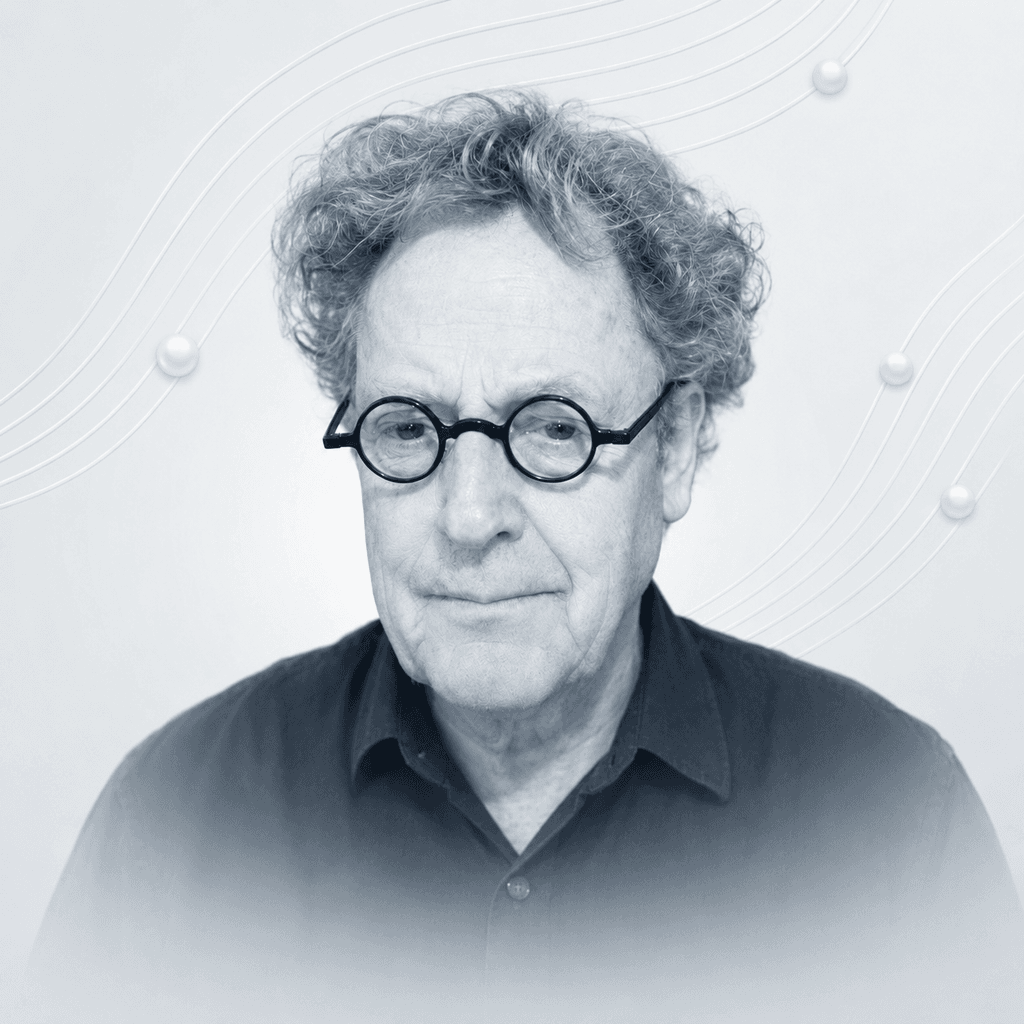
Theo Mulder on scientific collaboration and research consortium
Episode 8 30.03.2021
-
 play_arrow
PLAY EPISODE
Description arrow_drop_down

Description
What happens when you publicly criticize five major research institutions for not collaborating , and they call you back to fix it? Neuroscientist Theo Mulder shares the inside story of building a 200-person scientific consortium from scratch, and why trust and the willingness to share are the only things that make large-scale research collaboration work. Subscribe for more episodes on the science of collaboration. Theo Mulder’s career arc reads like a case study in escalating collaborative complexity: from experimental neuropsychologist to professor of movement disorders, then director of 17 institutes at the Royal Netherlands Academy of Sciences, and finally architect of a major interdisciplinary consortium linking five research partners. Each transition taught him something different about what makes collaboration succeed or fail at scale. The conversation opens with a candid origin story. In 2017, Mulder gave a public lecture criticizing five Dutch institutions , Radboud University, the University Hospital, Sint Maartenskliniek, and the Technical University in Twente , for failing to cooperate on human movement disorders despite all being specialized in the field. He expected nothing to come of it. Instead, the boards called him and said “you have a point,” launching a consortium of 200 researchers that he chaired for four years. On the defining features of collaboration, Mulder is direct: trust and the willingness to share. He cites a sign in Groningen University Hospital: “If you cannot share, you cannot multiply.” Political pressure to form large consortia is real, European science policy increasingly demands it, but without genuine trust between participants, no amount of structural incentive produces real collaboration. His experience directing the Royal Academy institutes reveals the limits of top-down collaboration. Within individual domains, humanities, biology, neuroscience, cooperation existed naturally. Between domains, it did not. Mulder learned that interdisciplinary collaboration cannot be mandated; it must be cultivated through shared problems that genuinely require multiple perspectives. The discussion addresses a practical insight often overlooked: the importance of engaging junior researchers, not just principal investigators. Mulder argues that PhD students and early-career scientists carry the collaborative flame forward as multi-year projects evolve. When COVID prevented in-person symposia, this pipeline broke , you cannot build a scientific community through boxes on a screen. On COVID’s broader lessons, Mulder notes that the pandemic proved collaboration works under pressure: vaccine development that normally takes years was accomplished in eighteen months through unprecedented scientific cooperation, driven by trust, willingness to share, and societal urgency. The lesson is that humans can collaborate at extraordinary speed when the stakes are clear. His view of human nature is balanced: Homo sapiens is a group animal with both angel and devil inside. Cooperation is one of our core social needs, alongside physical contact and the sharing of thoughts through gathering. If he could change one thing, it would be to lower the level of jealousy , the quiet saboteur of every collaborative enterprise. Part of the Ernst Strüngmann Forum series on Collaboration, produced with the Convergent Science Network.
Tagged as:
collaboration Movement Disorders research consortium scientific collaboration Trust Willingness Willingness Share
About the author call_made
CSN Podcasts
Both the triumphs of humanity and its most evil deeds have resulted from collaboration. In a time where humanity is required to aspire to the former and minimize the latter, the question arises of how collaboration arises and why it fails. Surprisingly, this phenomenon, so central to who we are, is not well understood. Hence, a collaborative effort is required to understand collaboration in its full biological, psychological, sociological, cultural, and economic complexity and to translate this understanding into operational impact. This series of podcasts is one step toward achieving these complementary goals. The Collaboration Podcast presents interviews with people who are central orchestrators of collaboration in various domains including business, government, science, art, health, sustainability, and the military. The discussions were conducted by Prof. Dr. Paul F.M.J. Verschure and members of the Program Advisory Committee of the Ernst Strungmann Forum on Collaboration (https://www.esforum.de/forums/ESF32_Collaboration.html) during 2021 and had the goal to sketch a map of opportunities, challenges, and obstacles in human collaboration. The forum took place in May 2022, and now we would like to share this series of interviews with a broader audience. The full report of the Forum will be published in 2023 by MIT Press. The podcast was produced by the Convergent Science Network (https://www.convergentsciencenetwork.org/). Context: The stability of social systems depends critically on realizing sustainable methods of “collaboration,” yet how and by which means collaboration is achieved is not clearly understood; neither are the conditions or processes that lead to its breakdown or failure. Collaboration can be understood as cooperation between agents toward mutually constructed goals. Part of the reason for our lack of understanding is that the phenomenon of collaboration is, by nature, a highly multidisciplinary problem, and effective research into its complexities has been difficult to achieve across the broad range of scientific and technical disciplines involved. The need for a fundamental understanding of collaboration, however, has become increasingly important. Not only does humankind demand answers as it attempts to address critical challenges at multiple scales (e.g., climate change, migration, enhanced automation, social and economic inequality), but ever-increasing technological and economic means of interconnecting people and societies are disrupting long-established, familiar patterns of how we interact. Radical technological changes that are ongoing have the potential to reshape collaboration in ways that are currently hard to predict or influence (e.g., by altering configurations in interaction, information creation, and modes of communication). On one hand, such changes could disrupt hitherto stable forms of collaboration by affecting critical communication channels and traditional roles, as can be observed in the rapidly changing patterns in governance, commerce, and social interaction. Conversely, technology could lead to the emergence of novel, successful forms of collaboration that deviate from traditional “hierarchical” architectures. Evidence of this can be seen in areas as diverse as highly automated manufacturing plants, the open science movement, collaborative software repositories, user-centered services, and the sharing of economy-based modes of organization. Without a fundamental understanding of the mechanisms, processes, and boundary conditions of collaboration, it is not possible to evaluate or predict which of these possible scenarios are sustainable or even plausible. The Forum “How Collaboration Arises and Why it Fails” (May 8–13, 2022, Location: Frankfurt am Main, Germany) Chairs: Andreas Roepstorff and Paul Verschure Program Advisory Committee: Jenna Bednar, Julia R. Lupp, Bhavani R. Rao , Andreas Roepstorff, Ferdinand von Siemens, and Paul Verschure
Episodes
play_arrow
play_arrow
play_arrow
play_arrow
Timestamp
- fast_forward00:00:04 - Hi, I'm Paul van Schoor and together with my colleague Andreas Roepstorf,
- fast_forward00:00:09 - we are speaking with Professor Theo Mulder about the challenges that large-scale
- fast_forward00:00:13 - scientific organizations face in building and sustaining collaboration.
- fast_forward00:00:18 - Trained as an experimental neuropsychologist, Theo was a professor at Radboud
- fast_forward00:00:22 - University before serving two terms as the Scientific Director of the Royal
- fast_forward00:00:27 - Netherlands Academy of Arts and Sciences in Amsterdam,
- fast_forward00:00:30 - after which she became the Director of the Netherlands Institute for the Advancement of Science.
- fast_forward00:00:35 - He also initiated and organized the Interdisciplinary Consortium for Clinical
- fast_forward00:00:39 - Movement Sciences and Technology, which links a large number of clinical and
- fast_forward00:00:43 - academic partners in the research of movement disorder.
- fast_forward00:00:46 - Theo, welcome to our podcast interview. It's great that you could join us.
- fast_forward00:00:51 - And maybe we could start by you just describing a little bit your trajectory
- fast_forward00:00:56 - that brought you to where you are now and the different main steps in between.
- fast_forward00:01:02 - In terms of your professional career and your experience with the important
- fast_forward00:01:08 - topic of collaboration.
- fast_forward00:01:11 - Okay, so my name is Theo Mulder.
- fast_forward00:01:14 - I'm trained as an experimental neuropsychologist in Nijmegen.
- fast_forward00:01:19 - And in 1994, I became professor of movement disorders in Nijmegen.
- fast_forward00:01:26 - And I was there until 1999 and then went to Groningen to become head of the
- fast_forward00:01:32 - Department of Human Movement Sciences and professor of Human Movement Sciences.
- fast_forward00:01:36 - And then in 1999, a remarkable career switch took place when I became the overall
- fast_forward00:01:44 - director of the 19 institutes in the Netherlands of the Royal Netherlands Academy
- fast_forward00:01:49 - of Sciences and so became the scientific director of the Royal Netherlands Academy of Sciences.
- fast_forward00:01:56 - And that I did, which was a rather grim job on the edge of politics and science.
- fast_forward00:02:01 - And that I did 10 years. That no longer is justified.
- fast_forward00:02:08 - And after that, I was one year director of the NIOF, the Netherlands Institute
- fast_forward00:02:15 - for the Advancement of Sciences.
- fast_forward00:02:18 - And then I thought, well, this is the end of the career.
- fast_forward00:02:21 - And then I gave a lecture in Nijmegen and criticized the Radboud University,
- fast_forward00:02:28 - Radboud University Hospital,
- fast_forward00:02:30 - the Sint Maartens Klinik and the Technical University in Twente,
- fast_forward00:02:33 - that they did not cooperate enough on the domain of human movement disorders
- fast_forward00:02:40 - because they were all specialized in it.
- fast_forward00:02:42 - But there was not enough cooperation in a world who was organizing itself in larger consortia.
- fast_forward00:02:51 - And I thought, under the umbrella of the Royal Academy, I thought it made sense
- fast_forward00:02:57 - to say that. And I will never hear anything about it.
- fast_forward00:03:00 - Will not hear anything about it. But that was not the case.
- fast_forward00:03:04 - The boards phoned me and said, well, you have a point.
- fast_forward00:03:07 - And then a new aspect, instead of going with my,
- fast_forward00:03:13 - in Dutch's terms, pensioen, a new part of a career started as head of a large
- fast_forward00:03:20 - scientific cooperation between five partners.
- fast_forward00:03:24 - And you're still in that collaborative process?
- fast_forward00:03:30 - Yes, and I gave that lecture in the City Theatre in Nijmegen,
- fast_forward00:03:38 - and that was in 2017, I think.
- fast_forward00:03:41 - And then they invited me to create a consortium of about 200 FTA,
- fast_forward00:03:54 - 200 full positions in science between the five partners, and we organized that, and it was termed ICMS,
- fast_forward00:04:03 - Interdisciplinary Consortium for Clinical Movement Sciences and Technology.
- fast_forward00:04:09 - And I'm still, until this day, until July the 1st, I was the chair of the board,
- fast_forward00:04:17 - but now, happily, another one is taking over.
- fast_forward00:04:21 - Okay, congratulations. So if you look at these jumps you make into managing
- fast_forward00:04:28 - these complex processes of collaboration or cooperation,
- fast_forward00:04:33 - as you call them, what are for you the defining features of collaboration?
- fast_forward00:04:39 - What makes collaboration interesting?
- fast_forward00:04:42 - In this context, what does it mean? Yes, it's a simple question,
- fast_forward00:04:48 - but it requires, as always, a difficult answer because there are many aspects of cooperation.
- fast_forward00:04:57 - The first one is that you saw a change in science policy in the Netherlands
- fast_forward00:05:02 - and also science policy in Europe.
- fast_forward00:05:04 - Instead of that single persons who were brilliant could apply for money,
- fast_forward00:05:09 - it became a sort of policy that larger consortia were formed,
- fast_forward00:05:15 - applying for much more money.
- fast_forward00:05:19 - Of course, incorporating the brilliant individuals.
- fast_forward00:05:23 - So, if you would like to play a role in Europe, you should reorganize yourself
- fast_forward00:05:32 - from individuals into consortia.
- fast_forward00:05:35 - And so, one part of cooperation is that it was a political necessity to do that.
- fast_forward00:05:42 - And the other part is that, of course, if you create an interdisciplinary group,
- fast_forward00:05:48 - you are scientific much more powerful.
- fast_forward00:05:51 - You have many more viewpoints than if you work on your own in a so-called social scientific island.
- fast_forward00:06:00 - That might be the objective to construct large consortia, but what would make
- fast_forward00:06:06 - such a consortium collaborative?
- fast_forward00:06:08 - What are the defining features? Trust.
- fast_forward00:06:12 - The only thing I think that if in Dutch, somebody say it like this,
- fast_forward00:06:21 - As je uit je bek stinkt, wil niemand met je samenwerken.
- fast_forward00:06:26 - That is not translatable. Oh, it's not.
- fast_forward00:06:31 - But that means that if there is a group of people who have joint interests and
- fast_forward00:06:37 - trust each other and are able to share and are willing to share,
- fast_forward00:06:45 - that is the seed of cooperation.
- fast_forward00:06:47 - It's a human affair. So there is a political pressure, but it will not work
- fast_forward00:06:53 - without trust and the capability or the willingness to share.
- fast_forward00:07:01 - In the Groningen University Hospital, There was a large shield in the hole and
- fast_forward00:07:09 - there is that if you cannot share, you cannot multiply.
- fast_forward00:07:12 - And that's true. That's right. But then let's jump to the period you were running
- fast_forward00:07:19 - the institutes at the Royal Academy, which are a dozen or so.
- fast_forward00:07:24 - 17 at this point. Okay. And we're talking about hundreds, if not thousands of researchers.
- fast_forward00:07:33 - So, how do you see collaboration?
- fast_forward00:07:38 - How well did collaboration come off the ground in that context?
- fast_forward00:07:44 - That was a totally different context as, for example, ICMS is because the institutes
- fast_forward00:07:51 - of the Royal Academy are in the domain of biology,
- fast_forward00:07:58 - in the domain of neuroscience,
- fast_forward00:08:00 - in the domain of the humanities.
- fast_forward00:08:02 - So within the humanities, there is cooperation and I stimulated that cooperation very strongly.
- fast_forward00:08:09 - Within the biology also, within the neuroscience also, but between the humanities
- fast_forward00:08:15 - and the neuroscience, there was none called.
- fast_forward00:08:19 - But actually there were three pillars. Okay, but how did you engineer that?
- fast_forward00:08:24 - How did you detect it? How do you measure that?
- fast_forward00:08:27 - And then also, how did you try to improve the collaboration within and between these institutes?
- fast_forward00:08:35 - Yeah, let's take as an example the Institutes of the Humanities.
- fast_forward00:08:41 - The Institutes of the Humanities are quite well known, but they are small.
- fast_forward00:08:45 - And the impetus for the cooperation was that if you unite these six institutes,
- fast_forward00:08:57 - seven institutes of the humanities into a Royal Academy Humanities Institute,
- fast_forward00:09:02 - they became also related to content.
- fast_forward00:09:06 - They became much more powerful and were a much larger power compared to the
- fast_forward00:09:13 - much larger institutes in the neuroscience and the biology domain.
- fast_forward00:09:19 - But that was not an easy process. That was absolutely not an easy process because
- fast_forward00:09:25 - not everybody was convinced that working together and joining together would
- fast_forward00:09:31 - create only positive aspects.
- fast_forward00:09:35 - Splendid isolation is a lovable concept. But
- fast_forward00:09:40 - that sounds more like you try to sort of stabilize an existing situation without
- fast_forward00:09:47 - having real control over then improving the collaborative process within or
- fast_forward00:09:54 - between these institutions. Or did I misunderstand?
- fast_forward00:09:59 - Partly that is true, but there was one main aspect.
- fast_forward00:10:03 - We managed to get a substantial amount of money to stimulate the institutes
- fast_forward00:10:16 - to work together and to open new research lines.
- fast_forward00:10:19 - So in a way, it was protecting the institutes as they were, But in the other way,
- fast_forward00:10:28 - it was also meant as a facilitator for more internal cooperation than existed before.
- fast_forward00:10:37 - Okay, but that was a big incentive for members of such an institute to then
- fast_forward00:10:45 - collaborate because more money would be made available to them.
- fast_forward00:10:49 - Yeah, and more possibility to create larger research programs,
- fast_forward00:10:54 - for example, longer, long-term research.
- fast_forward00:11:00 - Andrea? Yeah, Theo, I was very interested by your three points,
- fast_forward00:11:07 - the joint interests, the trust, and the willingness to share.
- fast_forward00:11:13 - Would you mind repeating the Dutch phrase again? I'm just trying to unpack that one.
- fast_forward00:11:18 - The Dutch phrase was, and I can translate it, if you, if you,
- fast_forward00:11:22 - if your back stings, then I don't want to work with you.
- fast_forward00:11:26 - And that means if you smell ugly, I will not cooperate with you.
- fast_forward00:11:30 - And that's the sort of thing that was meant as a metaphor that you would like
- fast_forward00:11:35 - to work together, that there is some mutual trust and even sympathy.
- fast_forward00:11:41 - And if that's not the case, then it's a top-down process to work together.
- fast_forward00:11:49 - And that never works, almost never works.
- fast_forward00:11:54 - So cooperation should grow bottom-up.
- fast_forward00:12:00 - To follow up on that one, because of the willingness to share,
- fast_forward00:12:03 - what can be shared in these processes in the scientific community?
- fast_forward00:12:08 - What is it that people are sharing? Because it doesn't seem to be only a matter
- fast_forward00:12:12 - of sharing economic resources.
- fast_forward00:12:14 - Could you tell a little bit more of what you have seen people share successfully?
- fast_forward00:12:21 - You can share money, but that's not what I meant.
- fast_forward00:12:27 - You can share knowledge. You can share infrastructure, you can share methods,
- fast_forward00:12:31 - you can share databases.
- fast_forward00:12:33 - And if you do that, you'll become a much more interdisciplinary or multidisciplinary
- fast_forward00:12:40 - power, which can solve problems which nobody can in its own.
- fast_forward00:12:46 - So by sharing, I mean especially the non-materialistic aspects of knowledge,
- fast_forward00:12:52 - infrastructure, methods, data.
- fast_forward00:12:56 - This is very interesting, but it's English because in English. Go ahead, Andreas.
- fast_forward00:13:04 - I think this point about sharing is a critically important one.
- fast_forward00:13:08 - Which kind of reservations or obstructions that you find for people actually sharing?
- fast_forward00:13:13 - Is it that they feel that they lose something when they are here,
- fast_forward00:13:16 - or is it an unwillingness to do it?
- fast_forward00:13:19 - Or what's the mechanism in that? Could you expand on that? The noise history.
- fast_forward00:13:27 - Yeah actually it's a very human mechanism if
- fast_forward00:13:31 - you if you if you have not
- fast_forward00:13:34 - the idea that all will
- fast_forward00:13:37 - profit from it and and you are
- fast_forward00:13:40 - not willing to give up something where you
- fast_forward00:13:43 - can profit from so if you if you
- fast_forward00:13:46 - don't let's let's again use the
- fast_forward00:13:49 - word trust if you don't trust the other parties in the consortium
- fast_forward00:13:52 - you are not willing to open your infrastructure you are
- fast_forward00:13:56 - not willing to uh to open data sets for
- fast_forward00:14:00 - them and that's what i
- fast_forward00:14:02 - meant if the if there and that's what what took
- fast_forward00:14:05 - place in icms there the researchers the
- fast_forward00:14:09 - professor saw that there was a plus value in in joining together and creating
- fast_forward00:14:15 - new mutual interdisciplinary research programs and i it's my strict opinion
- fast_forward00:14:21 - than it was if it was the dean who was on top of this process,
- fast_forward00:14:27 - then it would be much less easier to create such a consortium.
- fast_forward00:14:37 - Go for it. Would that mean that it has to be conceived of as a plus-sum game
- fast_forward00:14:43 - or a zero-sum game or a negative-sum game?
- fast_forward00:14:48 - Is that really what lies at the core of these collaborations?
- fast_forward00:14:52 - That the participants somehow imagine that this is not a zero-sum or a negative-sum game?
- fast_forward00:14:57 - Yeah, that's absolutely true. If the participants are not convinced that they
- fast_forward00:15:04 - can profit from that sort of cooperation in receiving large grants or having
- fast_forward00:15:12 - a more scientific power in the university or in the scientific community,
- fast_forward00:15:18 - they are not easily willing to cooperate or to join that consortium.
- fast_forward00:15:24 - So they have to see the practical, the pragmatic, and also the scientific or
- fast_forward00:15:32 - theoretical advantages of it.
- fast_forward00:15:40 - To follow this point and then I'll give it back to you Paul you describe very
- fast_forward00:15:45 - different levels at which this plays itself out there might be economic resources
- fast_forward00:15:49 - it might be power within the university or it might be the possibility to do
- fast_forward00:15:54 - to gain knowledge that you wouldn't be able to get otherwise,
- fast_forward00:15:57 - how would you actually balance these things out against each other because sometimes
- fast_forward00:16:02 - you might lose one of these accounts but win on another one,
- fast_forward00:16:06 - Can you say something about what it takes to create an environment where even
- fast_forward00:16:10 - though some incommensurable things are in a sense being exchanged,
- fast_forward00:16:15 - at the same time collaboration is maintained?
- fast_forward00:16:18 - These guys are off-demand. It's very interesting.
- fast_forward00:16:22 - The word you used, environment, is the correct word.
- fast_forward00:16:27 - You should create an environment with people from different backgrounds who
- fast_forward00:16:34 - see more or less immediately the advantages of working together.
- fast_forward00:16:42 - And you cannot manage all these aspects.
- fast_forward00:16:45 - It's not possible to manage them. It's a sort of social dynamics which appear in this process.
- fast_forward00:16:55 - For example, there is a board of the ICMS, but the main core of ICMS is the
- fast_forward00:17:02 - Council of Researchers and clinical leaders.
- fast_forward00:17:09 - They together form the core of the program and they decide the trajectories to the future.
- fast_forward00:17:16 - And of course you are saying at one side you lose something and the other side
- fast_forward00:17:23 - you win something but that's the dynamic of groups and that's the dynamic of
- fast_forward00:17:27 - science in the midst of political changes and especially in the arena of Europe,
- fast_forward00:17:34 - so there are two parts ICMS is still an experiment that is running while your
- fast_forward00:17:40 - experiment at the Royal Academy is finished So, if we now just look at that period,
- fast_forward00:17:48 - can you highlight a real success case and then explain why that was so successful
- fast_forward00:17:56 - along the lines of the model of collaboration you propose?
- fast_forward00:18:03 - Let's start in the Royal Academy. I think a success case is NIN,
- fast_forward00:18:10 - the Netherlands Institute for Neurosciences.
- fast_forward00:18:15 - In 2006, the institute was in the turmoil.
- fast_forward00:18:21 - It received not such a positive evaluation and there was instability in the
- fast_forward00:18:29 - institute. And the merger between two institutes was not well balanced and there was mistrust.
- fast_forward00:18:36 - And I think I am fascinated by science.
- fast_forward00:18:43 - I'm not a technical board member.
- fast_forward00:18:49 - I have a passion for science.
- fast_forward00:18:51 - And by recreating that institute,
- fast_forward00:18:55 - also injecting money into the institute, and to hire two novel directors and
- fast_forward00:19:04 - to reorganize the Institute in a much more social community,
- fast_forward00:19:08 - I think that was a success story within the realm of the Royal Academy.
- fast_forward00:19:15 - And that Institute, NIN, is now quite successful, as Paul knows.
- fast_forward00:19:21 - Absolutely. But Theo, in that case, it could sound like you say,
- fast_forward00:19:26 - well, you just have to pick the right people to lead.
- fast_forward00:19:29 - But how then about the sharing that you highlighted earlier, right?
- fast_forward00:19:34 - How within that context was the sharing of knowledge and infrastructure a decisive factor?
- fast_forward00:19:41 - Or would that success story hinge more around, let's say, the leaders of the process?
- fast_forward00:19:50 - Yeah, it's the leaders of the process, but it's also that the leaders,
- fast_forward00:19:57 - together with the Royal Academy, reorganized the Institute so that senior leaders,
- fast_forward00:20:03 - senior group leaders, get a more decisive voice into the future and the trajectory of the Institute.
- fast_forward00:20:13 - Institute, it was also
- fast_forward00:20:16 - governed in another way as before and they managed to get the whole community
- fast_forward00:20:27 - within the Institute behind the programs they designed themselves.
- fast_forward00:20:36 - And again, it was not a top-down, it was not a totally top-down process,
- fast_forward00:20:41 - it was down and bottom up. So what are the key features in the governance structure,
- fast_forward00:20:46 - the change in governance structure that made the difference?
- fast_forward00:20:53 - I think the division in group and the more powerful position of the group's
- fast_forward00:21:03 - leaders to redesign the future of the institute.
- fast_forward00:21:08 - So, it's also the engagement of a broader group of stakeholders in the process. Yes, absolutely.
- fast_forward00:21:18 - To contrast that, what would be an example of actually a failure? Sure.
- fast_forward00:21:25 - In that same period where the model didn't work?
- fast_forward00:21:31 - That's also a difficult question because you have longer to think about a correct
- fast_forward00:21:36 - answer to that question than to the other question.
- fast_forward00:21:42 - That's why I did the easy one first, Theo. Yeah, there
- fast_forward00:21:47 - were also institutes with a very powerful historic tradition and who played
- fast_forward00:21:59 - a large role in Dutch society and were famous, historically also famous.
- fast_forward00:22:05 - It was very difficult to reorganize these old humanities institutes.
- fast_forward00:22:12 - That's a difficult case.
- fast_forward00:22:16 - I love the humanities, and I really learned a lot of these institutes.
- fast_forward00:22:25 - For me, it's the core of our civilization, humanities.
- fast_forward00:22:30 - But it's also very difficult to change these institutes,
- fast_forward00:22:34 - who were stable sometimes for a century, and to create the Royal Academy Center
- fast_forward00:22:43 - of Humanities, that was a hell of a job,
- fast_forward00:22:47 - with many but much much negative press and people who wrote,
- fast_forward00:22:57 - maybe is the right place for Theo Mulder somewhere in the Dutch canals oh really
- fast_forward00:23:03 - okay but then could you put your finger so on one we have inertia we have organizational
- fast_forward00:23:09 - inertia there's tradition right that might go against
- fast_forward00:23:12 - successful collaboration in this case, but were there other features of then
- fast_forward00:23:18 - this Humanities Institute that made it so difficult to instill the transition?
- fast_forward00:23:25 - There were parts where, in general,
- fast_forward00:23:32 - the general age of the researchers in the Humanities Institute was around 55.
- fast_forward00:23:43 - And in the science institutes and the biology institutes, it was around 32 or
- fast_forward00:23:50 - 33. That makes a difference.
- fast_forward00:23:53 - And another difference is that not all the institutes in the humanities have
- fast_forward00:23:58 - research traditions who fit together.
- fast_forward00:24:04 - They cultivate. And in a way, a scientist is conservative.
- fast_forward00:24:08 - Conservatory uh conservative uh he
- fast_forward00:24:11 - he he embraces the methods
- fast_forward00:24:15 - he likes he embraces the methods he is successful and
- fast_forward00:24:18 - is very hesitant to change um and
- fast_forward00:24:21 - although you have the umbrella of humanities it's
- fast_forward00:24:25 - not uh um it's not all it's all not all humanities institutes are the same they
- fast_forward00:24:31 - have different traditions they have different outlooks they have different fields
- fast_forward00:24:35 - of interest and it took It took a lot of work to join these institutes into also a consortium,
- fast_forward00:24:45 - but then a consortium in the humanities.
- fast_forward00:24:49 - But it took place and now it is quite successful.
- fast_forward00:24:53 - But now if we talk about this relationship between the academy and the institutes
- fast_forward00:25:00 - and the universities or the academic institutions.
- fast_forward00:25:04 - That's, of course, not a level in which collaboration has to be organized,
- fast_forward00:25:08 - possibly around the same structures that you already indicated of objectives,
- fast_forward00:25:14 - trust, maybe methods and concepts, I don't know.
- fast_forward00:25:19 - But on top of that, there is a form of collaboration with the state itself,
- fast_forward00:25:25 - who is funding the academy, but also in parallel funding through its National
- fast_forward00:25:30 - Research Council, these other institutes and universities.
- fast_forward00:25:34 - So how effective is that process? How is that project, how is that level of the process managed?
- fast_forward00:25:41 - What are its key features and how can you make it successful? Sure.
- fast_forward00:25:47 - There are three intermingling questions.
- fast_forward00:25:51 - Let's first focus on the difference of the Royal Academy Institute and the university.
- fast_forward00:25:58 - One of the characteristics of the Academy Institute is that they have the possibility
- fast_forward00:26:03 - to focus on very long-term research programs. Some of these programs are 10 or 15 years or longer.
- fast_forward00:26:11 - And that's not always, but that's more than once a difference between how universities work.
- fast_forward00:26:21 - So that's a difference. And the point of cooperation between the institutes
- fast_forward00:26:29 - and the universities actually is based on the same preconditions,
- fast_forward00:26:35 - as I said before.
- fast_forward00:26:37 - There has to be a joint interest, there has to be a joint advantage,
- fast_forward00:26:42 - and there has to be a willingness to cooperate.
- fast_forward00:26:48 - And the directors of the institute have quite a lot of influence to manage that by themselves.
- fast_forward00:27:02 - Okay. But then you have the institute, you have the academy.
- fast_forward00:27:09 - That's what you described now. That's the within academy collaboration between the stakeholders.
- fast_forward00:27:15 - But now, how do you manage the collaborative process with, for instance,
- fast_forward00:27:19 - the Funding Council, because that also brings you closer to,
- fast_forward00:27:23 - let's say, a political strategic level of decision-making where other forms
- fast_forward00:27:27 - of interaction might drive the process?
- fast_forward00:27:31 - In the realm of the academy, it's more the level of facilitation because of
- fast_forward00:27:37 - the powerful position of the institute directors themselves.
- fast_forward00:27:41 - Themselves um uh and and
- fast_forward00:27:45 - icms was was
- fast_forward00:27:48 - a much much was was a much different process
- fast_forward00:27:51 - to build then uh then and
- fast_forward00:27:55 - then the cooperation between universities and and the royal academy institute
- fast_forward00:27:59 - because um all directors of the uh of the institutes were also university professors
- fast_forward00:28:06 - So that is one of the methods to create a bridge between the institutes and the universities.
- fast_forward00:28:15 - And that was also a method to bring in educational obligations into the institutes,
- fast_forward00:28:22 - although they're not obliged to do that.
- fast_forward00:28:25 - So by creating these co-roles and these professorships, you decrease the traditional
- fast_forward00:28:36 - tension between the institutes and the universities.
- fast_forward00:28:40 - Right, but now there are also different levels of competition within the system.
- fast_forward00:28:47 - So also being a psychologist,
- fast_forward00:28:50 - you will appreciate these probable or possible collisions or trade-offs between,
- fast_forward00:28:58 - let's say, personal objectives like building your career,
- fast_forward00:29:03 - advancing your theory, validating your hypothesis, and so on.
- fast_forward00:29:08 - While in the meantime having to find ways to interact and collaborate with the
- fast_forward00:29:14 - person has a similar kind of personal-driven or ego-driven agenda.
- fast_forward00:29:19 - So this might set up a trade-off where at some point people also have to sacrifice
- fast_forward00:29:24 - personal goals in order to be successful in the collaboration.
- fast_forward00:29:29 - So do you see that collision as a process that must be actively managed and
- fast_forward00:29:36 - understood or it has resolved itself automatically in the past.
- fast_forward00:29:42 - The situation you are describing is a situation who takes place in larger organizations
- fast_forward00:29:49 - too, in the university, in larger industrial consortia.
- fast_forward00:29:56 - And that is not specific for the Royal Academy Institute.
- fast_forward00:30:03 - It's in all larger social institutions you have these sort of tensions and if
- fast_forward00:30:13 - you create an atmosphere that these tensions can take place and resolve itself,
- fast_forward00:30:19 - then it's part of the social dynamics of groups.
- fast_forward00:30:26 - Of course, they're...
- fast_forward00:30:29 - And of course, as everywhere, there are tensions between people who work together,
- fast_forward00:30:38 - and that's not abnormal.
- fast_forward00:30:41 - And these tensions will fade away or not, but that takes place in every human group.
- fast_forward00:30:54 - But my question is, would you manage, for instance, would you try to detect
- fast_forward00:30:58 - these kinds of collisions and then really actively step in?
- fast_forward00:31:03 - And which buttons would you then push to try to remediate? Or would you just
- fast_forward00:31:08 - say, look, this is in the nature of the beast.
- fast_forward00:31:10 - There's not much I can do about that. So just let it run its course and maybe
- fast_forward00:31:14 - someone will drop out of the process.
- fast_forward00:31:17 - Yeah, in between. Because don't forget how it works.
- fast_forward00:31:24 - We talked now for about half an hour about the Royal Academy,
- fast_forward00:31:29 - although it's already five or more years ago that I ended my position as a director.
- fast_forward00:31:36 - But to answer your question, you have the so-called headquarter of the Royal
- fast_forward00:31:41 - Academy in Amsterdam, the Trippenhuis.
- fast_forward00:31:43 - And then you have the institutes who are scattered around several cities in
- fast_forward00:31:51 - the Netherlands, most in the West.
- fast_forward00:31:53 - And although you can see the tensions from a distance,
- fast_forward00:31:58 - you can see tensions within institutes, it's extremely difficult to manage that
- fast_forward00:32:04 - literally from a headquarter in another city.
- fast_forward00:32:09 - So, if you would like to manage it,
- fast_forward00:32:15 - it goes always via the director and as a support or as a,
- fast_forward00:32:21 - but it's extremely difficult to look in detail what type of human affairs take
- fast_forward00:32:30 - place in institutes who are 70 kilometers from Amsterdam.
- fast_forward00:32:34 - But okay, so we also celebrate that today is your last day as chairman of the
- fast_forward00:32:42 - board of this interdisciplinary consortium of movement science.
- fast_forward00:32:47 - Which you essentially have built up working with many people across different
- fast_forward00:32:52 - universities and clinics.
- fast_forward00:32:54 - So what lessons did you carry over from your time at the Academy into now building
- fast_forward00:33:01 - this network and this complex collaborative process really from scratch?
- fast_forward00:33:08 - There were a number of lessons. I think when I was Royal Academy Director,
- fast_forward00:33:15 - I worked much more top-down.
- fast_forward00:33:19 - One of the reasons was the distance between the headquarter,
- fast_forward00:33:24 - the Trippenhaus, the literally distance of the headquarter and the Institute,
- fast_forward00:33:29 - and also the organization of the Institute.
- fast_forward00:33:34 - The lesson number one was if you create a consortium, you should create it step
- fast_forward00:33:40 - by step, bottom up and content driven.
- fast_forward00:33:43 - And that was one of the main lessons I learned when they asked me to improve
- fast_forward00:33:49 - the cooperation between the partners I mentioned, the university hospital,
- fast_forward00:33:55 - the technical university, the Sinemizers Clinic, between clinics and research institutes.
- fast_forward00:34:00 - It was slowly, but not very slowly,
- fast_forward00:34:04 - because it started in 2018 and now it exists and is very successful,
- fast_forward00:34:12 - but slowly building the supporting frame of the content bearers, the professors,
- fast_forward00:34:21 - the senior researchers.
- fast_forward00:34:22 - And that, I think, was a lesson I learned from my history at the academy.
- fast_forward00:34:33 - Take more time. Right.
- fast_forward00:34:36 - Take more time and? Yeah, take more time and involve everyone who has a role in the process,
- fast_forward00:34:48 - step by step or as a group, in the building of that new construction.
- fast_forward00:34:53 - But it also means that you're shaping a process over time, right?
- fast_forward00:34:58 - Yeah. First you prepare the ground, you identify, I guess, the key players with
- fast_forward00:35:04 - whom you then prepare the next
- fast_forward00:35:06 - phase. So how many phases have you gone through? What was the process?
- fast_forward00:35:11 - To create ICMS, it took about four years.
- fast_forward00:35:18 - And the first phase one were the
- fast_forward00:35:23 - so-called grand meetings to have a probe whether one saw the importance of a
- fast_forward00:35:34 - more intensive cooperation between five partners in two cities.
- fast_forward00:35:39 - If that willingness was not there, or if there was too much hesitation,
- fast_forward00:35:47 - then it's sleuren aan een doodpaal.
- fast_forward00:35:53 - In my opinion, it's not very possible to create such a large consortium totally
- fast_forward00:36:01 - top-down. Phase one was the willingness to cooperate.
- fast_forward00:36:07 - Phase two was to create the social organization to manage that.
- fast_forward00:36:11 - So to create groups of senior researchers, clinicians, and let them talk with each other.
- fast_forward00:36:17 - Phase three was what is bottom-up if you have all the money you want,
- fast_forward00:36:29 - what are the three large programs you would like to work on the next 10 years
- fast_forward00:36:36 - and how would you like to subdivide?
- fast_forward00:36:39 - That was phase three. And phase four was how would you like to fill in with
- fast_forward00:36:46 - content these programs?
- fast_forward00:36:50 - And after phase four, in fact, the building was there and the people were there
- fast_forward00:36:57 - And now a joint grant process could start.
- fast_forward00:37:01 - And that's the phase we are in now. And everybody is on board and stays on board.
- fast_forward00:37:08 - Right. So it's step-like. And I learned that it is a massive advantage if you
- fast_forward00:37:18 - do not take only the head of departments and your senior professors as your
- fast_forward00:37:25 - stakeholders, but the whole community.
- fast_forward00:37:29 - Right. Andreas?
- fast_forward00:37:32 - Yes, thank you, Theo. Sorry, I was thrown off the network.
- fast_forward00:37:36 - I would like to inquire a bit more into the temporal extension or the temporal dimension.
- fast_forward00:37:44 - What is the importance of the time frame you have in front of you,
- fast_forward00:37:48 - whether it is one year, three years, five or ten years?
- fast_forward00:37:51 - Is it like an optimal spot? but is longer always better when you're trying to
- fast_forward00:37:56 - get the collaboration off the ground?
- fast_forward00:38:00 - No. Longer is not always better.
- fast_forward00:38:06 - Let's take ICMS as an example. ICMS is now a politically stable consortium,
- fast_forward00:38:16 - but it's still vulnerable.
- fast_forward00:38:17 - If in the next two years there are no large grant acquisitions,
- fast_forward00:38:28 - then it's not unthinkable that the senior scientists are saying, well,
- fast_forward00:38:35 - we have grants, but we had that grants before ICMS2 and I don't see any advantage in it.
- fast_forward00:38:43 - And it's break down again.
- fast_forward00:38:50 - So a longer period is not always better.
- fast_forward00:38:54 - It is, the proof of the putting is if the members of the consortium see that
- fast_forward00:39:00 - a consortium has more advantage than each group or each institution at its own.
- fast_forward00:39:07 - And in that phase, we are now, and Paul knows that exactly because we work together
- fast_forward00:39:13 - at the so-called Vroegfonds aanvraag.
- fast_forward00:39:16 - That's a major grant proposal in the Netherlands.
- fast_forward00:39:22 - And everybody knows that we are there because there is an ICMS.
- fast_forward00:39:27 - Nobody in its own could be part of that large grant.
- fast_forward00:39:32 - But if it's not successful, then it still has a risk. But by taking more time,
- fast_forward00:39:40 - you make the consortium more socially solid.
- fast_forward00:39:46 - And this vulnerability, is the weakness, is the strength, or is it?
- fast_forward00:39:52 - It's the weak strength.
- fast_forward00:39:56 - It's, of course, a normal part of the scientific deal.
- fast_forward00:40:03 - But if you bring together more
- fast_forward00:40:05 - than 200 senior scientists and behind them maybe 500 junior scientists,
- fast_forward00:40:12 - and in one, two, three years there is no advantage of the consortium visible,
- fast_forward00:40:19 - then there is no future.
- fast_forward00:40:23 - But I'm not that pessimistic on
- fast_forward00:40:27 - the contrary I see a
- fast_forward00:40:30 - very much positive future for
- fast_forward00:40:33 - such a consortium but only if it
- fast_forward00:40:36 - is based on and then we are back at the beginning if it is based on the willingness
- fast_forward00:40:41 - to cooperate on mutual trust and the conviction that you can answer questions
- fast_forward00:40:49 - which you cannot answer if you if you work much more monodisciplinarily.
- fast_forward00:40:59 - And I think it's a political necessity in the science policy of Europe at this
- fast_forward00:41:05 - moment, that you have these public and public-private consortia,
- fast_forward00:41:09 - because we didn't discuss the private part,
- fast_forward00:41:13 - but that's as well in Europe as in the Netherlands and in other countries,
- fast_forward00:41:17 - you have the building up.
- fast_forward00:41:20 - But Theo, I hear a little bit of possible contradiction in how you now describe
- fast_forward00:41:26 - the process, because we started out by saying, well, people have to see that
- fast_forward00:41:32 - they can gain in understanding,
- fast_forward00:41:34 - in methodology, shared infrastructure, what have you, all these good things.
- fast_forward00:41:40 - But now on the other hand you say yeah but if the seniors don't
- fast_forward00:41:43 - see in two years time that they get more money then the whole thing will again
- fast_forward00:41:48 - collapse so that seems to contradict now the goal setting because what's then
- fast_forward00:41:52 - really the objective is the collaboration a vehicle a means to an end to generate
- fast_forward00:41:58 - more money or resource in the end for,
- fast_forward00:42:01 - the principal investigators,
- fast_forward00:42:04 - right or is it the other way around so it's really the a measure of success,
- fast_forward00:42:09 - whether you can generate more grant money, because that would then contradict
- fast_forward00:42:12 - the idea of common goal setting along a more intellectual and idealistic perspective.
- fast_forward00:42:20 - I think these things are intermingled, but science runs on ideas and money.
- fast_forward00:42:27 - If you have ideas and no money, there is no science. And if you have money and
- fast_forward00:42:32 - no ideas, there is also no science.
- fast_forward00:42:34 - So such a consortium brings in new intellectual possibilities and people like that.
- fast_forward00:42:42 - And I see corporations appear who were not there in this way three years ago.
- fast_forward00:42:48 - But nevertheless, if this willingness to cooperate and if these new project
- fast_forward00:42:56 - plans are not ending in real possibilities to work together in a scientific program,
- fast_forward00:43:08 - then enthusiasm could end.
- fast_forward00:43:14 - And although everybody sees that it has more possibilities and also to solve
- fast_forward00:43:20 - not only the scientific but also the social challenge.
- fast_forward00:43:24 - So I'm not pessimistic at all. But I see the fragile aspects of such a social
- fast_forward00:43:33 - experiment bringing together 200, 250 scientists.
- fast_forward00:43:37 - But in other large collaborative projects, like take the American Brain Project,
- fast_forward00:43:43 - with those massive investments,
- fast_forward00:43:45 - if you talk with the leaders of that project, they would say,
- fast_forward00:43:49 - look, if we just managed to train a next generation of researchers who can be
- fast_forward00:43:54 - more multidisciplinary and collaborative, the project was a success.
- fast_forward00:43:57 - But in your description, the outcome is at a two-year time frame, right?
- fast_forward00:44:04 - So do you see these as comparable objectives?
- fast_forward00:44:08 - Would that also be a sufficient justification to keep everyone on board in the
- fast_forward00:44:14 - project that you have set up?
- fast_forward00:44:18 - Yes, you know that in the BRAIN project there were many tensions,
- fast_forward00:44:25 - but it's larger, but these tensions were there.
- fast_forward00:44:30 - Until now, ICMS, which is much smaller, doesn't have these tensions.
- fast_forward00:44:42 - It could appear, it can appear, but not now.
- fast_forward00:44:49 - Yes, it's a combination of these, what you term, idealistic aspects to work together,
- fast_forward00:44:57 - idealistic aspects to solve large societal challenges,
- fast_forward00:45:02 - and especially the view that you have to get more possibilities to do that than as a group at its own.
- fast_forward00:45:15 - So I'm absolutely not pessimistic, but I see how complex it is to create such
- fast_forward00:45:27 - a new and larger community between cities.
- fast_forward00:45:31 - Right but now looking at the ICMS experiment that you're stepping out of today,
- fast_forward00:45:39 - looking back do you feel like I,
- fast_forward00:45:42 - made a few mistakes there's some things I could have done better and.
- fast_forward00:45:48 - Yeah. And it's again a question of top-down and bottom-up.
- fast_forward00:45:52 - I think I learned from the Royal Academy, but if I would repeat the process.
- fast_forward00:46:02 - I would from the very start bring more people together as I did.
- fast_forward00:46:11 - Now I focused on the senior leaders, on the department heads, on the professors,
- fast_forward00:46:17 - on the associate professors, but
- fast_forward00:46:22 - under that umbrella, there is a group of hundreds of junior scientists.
- fast_forward00:46:28 - Assistant professors, professors and who are actually also the force to drive
- fast_forward00:46:39 - these experiments to a good end.
- fast_forward00:46:44 - If I would start again, I would take more time to involve a larger group of
- fast_forward00:46:53 - especially junior scientists to come aboard. Yeah, that makes sense, right?
- fast_forward00:46:58 - Because as you described earlier, it's a multi-year process, right?
- fast_forward00:47:02 - So the ones who are junior at year one are already more advanced at year three, four, right?
- fast_forward00:47:08 - And they also carry the idea. of the idea.
- fast_forward00:47:12 - But now, to sort of go towards the finish line, stepping back a little bit from
- fast_forward00:47:21 - the concrete processes you were in on collaboration,
- fast_forward00:47:25 - do you feel we learned anything from the last one and a half years of COVID-19 ruling our reality?
- fast_forward00:47:34 - How many hours we have.
- fast_forward00:47:42 - Yeah yeah yeah let's let's
- fast_forward00:47:45 - let's make it a simple answer what
- fast_forward00:47:49 - kovat learned us is that you that in in in to solve these sorts of problem you
- fast_forward00:47:56 - have to cooperate that's uh and you have and And normally it takes years to create the medicine.
- fast_forward00:48:06 - And now it took one and a half year.
- fast_forward00:48:11 - Here also it is trust and the willingness to share.
- fast_forward00:48:15 - And the societal pressure, of course. And what I think is important.
- fast_forward00:48:21 - COVID learned also that if there are large societal problems,
- fast_forward00:48:27 - problems you actually need science to solve
- fast_forward00:48:30 - them politics alone is is
- fast_forward00:48:33 - is air uh and without content you cannot solve these problems so um and i think
- fast_forward00:48:41 - that it has learned with us that we need that we actually need science to solve
- fast_forward00:48:45 - major problems in society social sciences to to manage
- fast_forward00:48:51 - all those complot theories and social insecure thoughts,
- fast_forward00:48:59 - and biological science to develop the medicines we need to cope with this new disease. Andreas?
- fast_forward00:49:13 - You mentioned at an early stage that a collaborative environment was very important.
- fast_forward00:49:18 - I wonder whether your kind of final point about the need not just to talk to
- fast_forward00:49:23 - the principal investigators and heads of institutes, but also to talk to the
- fast_forward00:49:28 - more junior researchers, is that also part of creating this collaborative environment?
- fast_forward00:49:33 - Could you tell a little bit more about if you were to start from scratch in
- fast_forward00:49:37 - designing a collaborative environment that's not just about principal investigators
- fast_forward00:49:41 - optimizing their own needs, what would you be doing then?
- fast_forward00:49:45 - It seems to be critical in this collaborative environment, isn't it?
- fast_forward00:49:55 - Yeah, Andreas, one of the points which played a major role is.
- fast_forward00:50:06 - COVID prevented the organization of real meetings between people in physical form.
- fast_forward00:50:14 - So it was not possible to organize a symposium with 200 people or 300 people.
- fast_forward00:50:25 - And on screen, that's not possible.
- fast_forward00:50:27 - So if COVID was not there, probably we could reach junior scientists more easily than now.
- fast_forward00:50:40 - Now, you can reach them in one institute, but you cannot reach a tree of 400 PhD students.
- fast_forward00:50:47 - I'm sure that if there was no COVID, we would have organized one,
- fast_forward00:50:52 - two, three, four symposia with speakers, with junior speakers,
- fast_forward00:50:57 - with senior speakers, with an interesting international speakers,
- fast_forward00:51:01 - creating junior groups, having dinners.
- fast_forward00:51:05 - And all that which is needed to build up such a social scientific community,
- fast_forward00:51:14 - was not possible and we met each other in boxes on the screen.
- fast_forward00:51:20 - And so that is also part of the answer, what would you do different?
- fast_forward00:51:26 - But some things were not possible to do different.
- fast_forward00:51:34 - Right. So, Theo, do you believe humans, in a general sense, are able,
- fast_forward00:51:44 - will ever be able to really and truly collaborate?
- fast_forward00:51:47 - Or do you think that also from a psychological, biological perspective,
- fast_forward00:51:52 - there are just intrinsic limitations in the human condition that will prevent
- fast_forward00:51:57 - us from really fully developing the potential of large-scale collaboration?
- fast_forward00:52:05 - Look, evolution has learned us that cooperation is one of the core characteristics
- fast_forward00:52:12 - of Homo sapiens. It's a group animal.
- fast_forward00:52:17 - If you look at Homo sapiens, you see an angel and a devil. And in between is everything.
- fast_forward00:52:23 - So I think cooperation is one of the social needs, which is characteristic for
- fast_forward00:52:29 - Homo sapiens. as well as physical contact and sharing thoughts by means in social gatherings.
- fast_forward00:52:38 - So I think it will be possible and it has shown that it is possible in all large
- fast_forward00:52:44 - scientific cooperations.
- fast_forward00:52:48 - But then if you could change one thing in humans, what would that be?
- fast_forward00:52:59 - So if I repeat that question, because part of the question, I thought you answer,
- fast_forward00:53:04 - if you would change one part of human being, what would that be?
- fast_forward00:53:08 - One thing in humans, let's say I give you the ultimate technology,
- fast_forward00:53:12 - you can change any piece of the human phenotype, the Homo sapiens phenotype that you want.
- fast_forward00:53:20 - Which bit would you change in order to more fluently create constructive collaboration among humans?
- fast_forward00:53:32 - I would lower the level of jealousy.
- fast_forward00:53:43 - Okay. Very good. Well, Theo Mulder, thank you very much for this conversation.
- fast_forward00:53:51 - Thank you too.
- fast_forward00:53:54 - Hi, you listened to one of our podcasts in the series on collaboration Produced
- fast_forward00:53:59 - by the Ernst Trommel Forum and the Convergent Science Network.
- fast_forward00:54:03 - You can find more episodes on our website.
Tags
Brain brain evolution Cerebellar cerebellum collaboration consciousness Cortex Cortical decision making disorders of consciousness Framework grid cells Memory mirror neurons Motor motor cortex neocortex Neural Neurons place cells Populations prediction prefrontal cortex Robots scientific collaboration Spatial

Exploring the convergence of neuroscience, robotics, and AI through conversations with leading researchers since 2010.
A project of the Convergent Science Network Foundation.
Follow us on
© CSN Podcasts. Developed by IMCreative & WEBC
Be the first to leave a comment