


play_arrow
Listeners:
Top listeners:
00:00
00:00
volume_up
chevron_left
-
 play_arrow
Paul Verschure on consciousness and distributed adaptive control CSN Podcasts
-
 play_arrow
Edvard Moser on grid cells and entorhinal cortex CSN Podcasts
-
 play_arrow
Giacomo Rizzolatti on mirror neurons and action understanding CSN Podcasts
-
 play_arrow
Robert Axelrod on game theory and prisoner's dilemma CSN Podcasts
-
 play_arrow
Adrian Owen on disorders of consciousness and vegetative state CSN Podcasts
-
 play_arrow
Jonathan Whitlock on markerless motion capture and posterior parietal cortex CSN Podcasts
-
 play_arrow
Luis Puelles on neuroanatomy and prosomeric model CSN Podcasts
-
 play_arrow
Zoltan Molnar on subplate neurons and cortical development CSN Podcasts

- arrow_back Home
- keyboard_arrow_right Podcast
- keyboard_arrow_right Season 2021
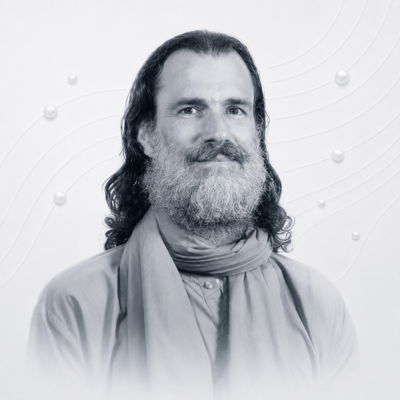
Heidi Keller on cross-cultural psychology and child development
Episode 23 30.03.2021
-
 play_arrow
PLAY EPISODE
Description arrow_drop_down

Description
What if everything we think we know about collaboration is based on only 5% of the world’s population? Developmental psychologist Heidi Keller challenges Western assumptions about teamwork, parenting, and collective action by drawing on decades of cross-cultural research with families across Africa, Asia, and South America. Subscribe for more episodes exploring how collaboration works across cultures. Heidi Keller, director of Nevet at the Hebrew University in Jerusalem, brings an evolutionary and anthropological lens to a concept most researchers treat as universal. Her longitudinal studies of families across multiple continents reveal that collaboration means fundamentally different things depending on cultural context , and that ignoring this difference has real consequences for policy, development aid, and migrant integration. The core distinction is precise. In Western middle-class contexts, collaboration is dyadic: two individuals jointly define goals and contribute as equals. In rural farming communities across Africa, Asia, and South America, collaboration means contributing to goals defined by the community , not imposed, but mutually understood as serving collective well-being. Neither model is superior, but treating the Western version as the default distorts research, policy, and intervention programs worldwide. Keller traces how these differences emerge in early childhood. Western parenting emphasizes individual agency, verbal negotiation, and autonomous decision-making from infancy. Children in rural Cameroonian Nso communities, by contrast, learn collaboration through observation, participation in household tasks, and responsiveness to the needs of others , without explicit instruction. By age three, these children demonstrate collaborative competence that Western children of the same age typically lack. The conversation challenges the assumption that collaboration requires explicit communication and shared intentionality in the way Western psychology defines it. Keller describes how Nso toddlers seamlessly coordinate household tasks, anticipate others’ needs, and contribute to collective goals through what she calls “keen observation and eager participation” , a form of collaboration that Western developmental frameworks fail to recognize because they are looking for verbal negotiation and joint attention. The ethical implications are direct. Keller argues that organizations like UNICEF, WHO, and major foundations export Western middle-class developmental norms as universal standards, intervening in cultural systems worldwide with frameworks that do not apply. The result is wasted resources and deep disrespect toward other cultures. The same dynamic plays out in how Western countries treat migrant families , pathologizing parenting practices that are adaptive in their original context. When asked whether humanity can achieve sustainable global collaboration, Keller is pessimistic: economic interests override collective well-being, and corruption undermines cooperative structures everywhere. Her proposed change is deceptively simple: stop viewing yourself as the center of the world, and develop genuine interest in how others live, believe, and raise their children. Part of the Ernst Strüngmann Forum series on Collaboration, produced with the Convergent Science Network.
Tagged as:
child development collaboration Collective cross-cultural psychology Families Across Western
About the author call_made
CSN Podcasts
Both the triumphs of humanity and its most evil deeds have resulted from collaboration. In a time where humanity is required to aspire to the former and minimize the latter, the question arises of how collaboration arises and why it fails. Surprisingly, this phenomenon, so central to who we are, is not well understood. Hence, a collaborative effort is required to understand collaboration in its full biological, psychological, sociological, cultural, and economic complexity and to translate this understanding into operational impact. This series of podcasts is one step toward achieving these complementary goals. The Collaboration Podcast presents interviews with people who are central orchestrators of collaboration in various domains including business, government, science, art, health, sustainability, and the military. The discussions were conducted by Prof. Dr. Paul F.M.J. Verschure and members of the Program Advisory Committee of the Ernst Strungmann Forum on Collaboration (https://www.esforum.de/forums/ESF32_Collaboration.html) during 2021 and had the goal to sketch a map of opportunities, challenges, and obstacles in human collaboration. The forum took place in May 2022, and now we would like to share this series of interviews with a broader audience. The full report of the Forum will be published in 2023 by MIT Press. The podcast was produced by the Convergent Science Network (https://www.convergentsciencenetwork.org/). Context: The stability of social systems depends critically on realizing sustainable methods of “collaboration,” yet how and by which means collaboration is achieved is not clearly understood; neither are the conditions or processes that lead to its breakdown or failure. Collaboration can be understood as cooperation between agents toward mutually constructed goals. Part of the reason for our lack of understanding is that the phenomenon of collaboration is, by nature, a highly multidisciplinary problem, and effective research into its complexities has been difficult to achieve across the broad range of scientific and technical disciplines involved. The need for a fundamental understanding of collaboration, however, has become increasingly important. Not only does humankind demand answers as it attempts to address critical challenges at multiple scales (e.g., climate change, migration, enhanced automation, social and economic inequality), but ever-increasing technological and economic means of interconnecting people and societies are disrupting long-established, familiar patterns of how we interact. Radical technological changes that are ongoing have the potential to reshape collaboration in ways that are currently hard to predict or influence (e.g., by altering configurations in interaction, information creation, and modes of communication). On one hand, such changes could disrupt hitherto stable forms of collaboration by affecting critical communication channels and traditional roles, as can be observed in the rapidly changing patterns in governance, commerce, and social interaction. Conversely, technology could lead to the emergence of novel, successful forms of collaboration that deviate from traditional “hierarchical” architectures. Evidence of this can be seen in areas as diverse as highly automated manufacturing plants, the open science movement, collaborative software repositories, user-centered services, and the sharing of economy-based modes of organization. Without a fundamental understanding of the mechanisms, processes, and boundary conditions of collaboration, it is not possible to evaluate or predict which of these possible scenarios are sustainable or even plausible. The Forum “How Collaboration Arises and Why it Fails” (May 8–13, 2022, Location: Frankfurt am Main, Germany) Chairs: Andreas Roepstorff and Paul Verschure Program Advisory Committee: Jenna Bednar, Julia R. Lupp, Bhavani R. Rao , Andreas Roepstorff, Ferdinand von Siemens, and Paul Verschure
Episodes

play_arrow

play_arrow

play_arrow

play_arrow
Timestamp
- fast_forward00:00:05 - Welcome to the Convergent Science and Ernst Tummund Forum podcast on collaboration.
- fast_forward00:00:10 - I'm Paul Verschoor and together with my colleague Julia Loup,
- fast_forward00:00:14 - we speak with Dr. Heidi Kelle.
- fast_forward00:00:17 - Heidi is the director of NABIT, the Greenhouse of Context-Informed Research
- fast_forward00:00:21 - and Training for Children in Need at the Paul Bauerwald School of Social Work
- fast_forward00:00:27 - and Social Welfare at the Hebrew University in Jerusalem.
- fast_forward00:00:32 - Heidi's research explores culturally specific solutions to universal developmental pathways.
- fast_forward00:00:38 - In this conversation, she elucidates how the concept of collaboration varies
- fast_forward00:00:43 - among cultures and which human traits help people with different worldviews work together.
- fast_forward00:00:49 - Welcome, Heidi. Welcome, thank you.
- fast_forward00:00:54 - Heidi, the topic of our conversation is collaboration, which is also what we
- fast_forward00:01:00 - try to understand in our upcoming workshop.
- fast_forward00:01:03 - But before we really delve into that, could you tell a little bit more about your background?
- fast_forward00:01:10 - Yeah, I'm a psychologist by training, but I think over the years I became very close to,
- fast_forward00:01:20 - evolutionary biology on the one hand and cultural anthropology on the other hand.
- fast_forward00:01:26 - And I think my concepts with which I'm working are informed by both of these science fields.
- fast_forward00:01:40 - And I have worked for many years doing longitudinal projects with families and
- fast_forward00:01:49 - children in many different parts of the world.
- fast_forward00:01:52 - So the anthropologists usually live with the population they study for an extended
- fast_forward00:02:00 - period of time and they learn the language and things like that.
- fast_forward00:02:04 - I wish I would have done that too, but my approach is different.
- fast_forward00:02:09 - So I collaborated closely with local people in diverse places,
- fast_forward00:02:17 - in different continents and different environments like urban and rural sites
- fast_forward00:02:26 - in different countries.
- fast_forward00:02:27 - And we were able to collect quite a substantial amount of families over the years.
- fast_forward00:02:38 - As I said, we followed them longitudinally over the first six years of life
- fast_forward00:02:43 - mainly and studied how culture feeds into the evolutionary preparedness of children,
- fast_forward00:02:53 - to become competent adults in their respective environments.
- fast_forward00:02:58 - Okay. So you also are trained as a developmental psychologist?
- fast_forward00:03:03 - See, when I was visiting the university, it was quite different from today.
- fast_forward00:03:11 - Actually, I never had a class or a seminar or anything in developmental psychology.
- fast_forward00:03:19 - So I'm a classical scientific autodidact.
- fast_forward00:03:24 - Okay, great. Great. So now, as a start, what is collaboration and what is it good for?
- fast_forward00:03:34 - Yeah, as with many terms we use in psychology and social sciences in general.
- fast_forward00:03:40 - We need to define the context first for which we want to offer definitions.
- fast_forward00:03:48 - So collaboration certainly is a universal concept that describes how people
- fast_forward00:03:58 - get with each other in particular task-oriented behaviors.
- fast_forward00:04:06 - And collaboration from the
- fast_forward00:04:09 - Western middle class perspective to which we all belong is certainly completely
- fast_forward00:04:15 - different than what rural villages in African or Asian or South American countries
- fast_forward00:04:26 - understand as collaboration.
- fast_forward00:04:29 - These are actually very interesting differences.
- fast_forward00:04:32 - There's very far-reaching implications for the whole socialization process and
- fast_forward00:04:37 - for developmental processes in general.
- fast_forward00:04:39 - So we understand
- fast_forward00:04:43 - that collaboration and cooperation is meant to describe a process where two
- fast_forward00:04:52 - individuals jointly contribute in setting the goals.
- fast_forward00:05:00 - So, it's a perspective that is informed by two individual agents.
- fast_forward00:05:08 - And already this dyadic emphasis is very special for the Western middle class context.
- fast_forward00:05:17 - Whereas in rural environments and also to some extent in urban environments
- fast_forward00:05:24 - in non-Western countries,
- fast_forward00:05:27 - collaboration is a process of jointly contributing to goals that are.
- fast_forward00:05:40 - That are there that are defined by the community and not by the individual agents
- fast_forward00:05:44 - but that does not mean that anything is imposed so it's a mutual understand
- fast_forward00:05:50 - understanding that this is an important process for the benefit of the community
- fast_forward00:05:56 - which is uh i mean the top priority,
- fast_forward00:06:00 - so there the distinction would be between either individuals in an interaction
- fast_forward00:06:06 - defining the goal or individuals adhering to a collectively set goal?
- fast_forward00:06:15 - Yes, yeah. Okay, but for you, is it about setting the goal in the diet or the
- fast_forward00:06:24 - diet can just pursue a common goal?
- fast_forward00:06:28 - So is the definition of the goal by the diet, by the agents involved,
- fast_forward00:06:33 - relevant for that process of collaboration?
- fast_forward00:06:39 - I think in the Western middle-class context, it's each individual of the diet,
- fast_forward00:06:47 - which is crucial for setting the goal.
- fast_forward00:06:50 - There is in the rural farm, I mainly was studying farmers, there may be differences
- fast_forward00:06:58 - with hunter gatherers and other communities. although there are also a lot of commonalities.
- fast_forward00:07:04 - The goal is set by the community and it's also, we.
- fast_forward00:07:11 - At least we believe we have an egalitarian system where everybody has the right to contribute equally.
- fast_forward00:07:19 - Whereas in many traditional farming villages,
- fast_forward00:07:24 - there are hierarchical social structures with clear-cut boundaries in terms
- fast_forward00:07:32 - of social responsibilities that the elders or the title holders in traditional
- fast_forward00:07:40 - societies define the goals.
- fast_forward00:07:43 - And there is not so much intergenerational change as is the case in our societies
- fast_forward00:07:50 - where every generation lives in a completely new environment.
- fast_forward00:07:54 - And even over the lifespan, our environments change tremendously.
- fast_forward00:08:00 - And there is a lot more environmental continuity in these villages I'm thinking of.
- fast_forward00:08:07 - Right. But now in the Western urban context, you might have people who are collaborating
- fast_forward00:08:16 - within larger industrial processes, let's say, right? So they have a job.
- fast_forward00:08:20 - And given that job, they are collaborating in a larger process without necessarily
- fast_forward00:08:27 - setting the goal of the company in which they would work.
- fast_forward00:08:32 - So how is that then different from the collaboration that you're now defining,
- fast_forward00:08:37 - where this common goal setting is a key defining feature? future?
- fast_forward00:08:44 - I'm not so familiar with the functioning of companies and so on.
- fast_forward00:08:51 - But what I understand is that it's important also that the teams who eventually
- fast_forward00:09:00 - should collaborate in order to reach common goals, that they develop a common understanding,
- fast_forward00:09:06 - a corporate identity or whatever that allows them to pursue a common goal.
- fast_forward00:09:13 - I think that there are special arrangements where each individual needs to agree
- fast_forward00:09:19 - to beforehand, whereas in other communities, the common understanding is something that is shared,
- fast_forward00:09:29 - shared by the whole community and
- fast_forward00:09:32 - and the roles are defined that each individual
- fast_forward00:09:35 - is taking that does not mean that individuals are not able to work independently
- fast_forward00:09:41 - we differentiate for instance the concept of autonomy which is important everywhere
- fast_forward00:09:48 - in the world into what we call called psychological autonomy,
- fast_forward00:09:53 - that is what we claim as important,
- fast_forward00:09:56 - that our intentions can be pursued and that we have at least the illusion of
- fast_forward00:10:04 - the free will and that we can decide what we are doing and what we are not doing,
- fast_forward00:10:11 - including how we want to live our relationships.
- fast_forward00:10:15 - Whereas in this rural farming context, we talk about action economy because
- fast_forward00:10:23 - it's important to act independently.
- fast_forward00:10:27 - There is also, I mean, independence is not describing the differences.
- fast_forward00:10:32 - Individuals are acting individually and self-responsible in all the different environments.
- fast_forward00:10:40 - But there is a difference with respect also to the proportion of the mental
- fast_forward00:10:52 - activity that is going individually into that process.
- fast_forward00:10:57 - Heidi, could we take a minute and think about a concrete example,
- fast_forward00:11:01 - say, in the Nassau farming communities of, say, Cameroon? Sure.
- fast_forward00:11:07 - And I'm thinking specifically of how a collaborative project would be engineered
- fast_forward00:11:15 - by, say, you know, a group of children,
- fast_forward00:11:19 - specifically young children.
- fast_forward00:11:23 - And maybe you can give us a little setting where how is this family or this
- fast_forward00:11:28 - group of children, you know,
- fast_forward00:11:29 - do they have, Is it like in a Western setting where you have one mother taking
- fast_forward00:11:34 - care of one child or a grandmother taking or how are the children interacting and how,
- fast_forward00:11:40 - if they have to accomplish a particular goal for the family, who sets the goal?
- fast_forward00:11:45 - How do they divide up that work? Can you just sort of put it into a concrete example for us?
- fast_forward00:11:50 - Yes, sure. I mean, the whole living arrangement is completely different.
- fast_forward00:11:55 - In the Cameroonian villages in the northwest of Cameroon, where we were working,
- fast_forward00:12:00 - and in many other rural traditional villages in different continents.
- fast_forward00:12:07 - There are households, the unit, not the individual biologically defined family.
- fast_forward00:12:15 - The household is composed of multi-generations, and it's not that static unit
- fast_forward00:12:22 - that this and that and that person belong to the household, so there is a constant coming and going.
- fast_forward00:12:29 - So for instance, that made life sometimes miserable for us when we were lacking
- fast_forward00:12:34 - to spotting children whom we wanted to follow, and we didn't find them because
- fast_forward00:12:39 - they lived in a different household. By the way, they...
- fast_forward00:12:42 - They can decide themselves from as early as two years on whether they want to
- fast_forward00:12:47 - change households or not.
- fast_forward00:12:49 - But they can also be referred without prior announcement to change the household, etc.
- fast_forward00:12:58 - So there is a fluid organization and life is in the public.
- fast_forward00:13:07 - So there are no rooms and no closed doors usually, but everybody sees what everybody
- fast_forward00:13:16 - else is doing and there is a shared space.
- fast_forward00:13:20 - So children participate in this daily life of this whole household with observing
- fast_forward00:13:30 - and imitating as major channels of learning.
- fast_forward00:13:34 - They see what others are doing, and they want to do the same,
- fast_forward00:13:39 - and they are allowed to do so.
- fast_forward00:13:41 - They are allowed to, one-year-old children, take all by themselves big machetes
- fast_forward00:13:48 - and operate them without any adult interfering.
- fast_forward00:13:53 - And so they see what the others are doing and they take on the responsibility
- fast_forward00:13:58 - for themselves to contribute to the family by participating in what everybody else is doing.
- fast_forward00:14:06 - And there are interesting descriptions, for instance.
- fast_forward00:14:11 - Also from Maya communities in Mexico,
- fast_forward00:14:15 - where adults never instruct children or tell them or evaluate them what they
- fast_forward00:14:24 - are doing or even praise them and do those kinds of things.
- fast_forward00:14:28 - Things where but they make sure
- fast_forward00:14:32 - that the children can observe what they are doing by
- fast_forward00:14:35 - arranging their sitting position or so they make sure that the child can see
- fast_forward00:14:42 - what they are doing and how they are doing it and the children imitate there's
- fast_forward00:14:46 - a great deal also of independence and as we say autonomy.
- fast_forward00:14:53 - In that the children decide themselves what they are doing and how much they
- fast_forward00:14:58 - are doing, but they are eager to contribute.
- fast_forward00:15:02 - And I think here there are these wonderful studies by the Tomasello group.
- fast_forward00:15:10 - The former Tomasello group showing how two-year-old toddlers are eager to help
- fast_forward00:15:18 - adults who obviously need help in order to do some chores or do something,
- fast_forward00:15:25 - pick up something or whatever.
- fast_forward00:15:27 - But our kind of socialization strategies kind of bring these tendencies to disappear.
- fast_forward00:15:40 - In the end, children have to, I mean, in endless arguments, mothers and fathers
- fast_forward00:15:49 - try to convince children to do this or that, and the children just don't want it.
- fast_forward00:15:54 - And the no of the child is also accepted to some degree.
- fast_forward00:16:00 - Whereas in other communities, children are eager to participate and they take
- fast_forward00:16:06 - brooms and also they operate with the artifact that also adults use.
- fast_forward00:16:11 - So it's not that there are replica made particularly for children as toys and things like that.
- fast_forward00:16:22 - So the child is acquiring a sense of self and also satisfaction and identity
- fast_forward00:16:34 - through being able to participate in the household chores.
- fast_forward00:16:40 - And there is no praise, obviously also not necessary, in order to keep them going.
- fast_forward00:16:46 - They just want to and they are allowed to do so.
- fast_forward00:16:49 - So it's interesting because in our families.
- fast_forward00:16:54 - There is a psychological sameness in the sense that everybody has the same rights.
- fast_forward00:17:08 - Also, children have the same right to discuss things or to say no or to participate
- fast_forward00:17:14 - or not participate, whereas the space is separated.
- fast_forward00:17:21 - So children have their own rooms, their own artifacts that do not share the
- fast_forward00:17:28 - lives of their parents and of adult family members.
- fast_forward00:17:32 - Whereas in these farming villages.
- fast_forward00:17:36 - Everybody shares the same space, but there are the social limits that are also
- fast_forward00:17:44 - not transmitted by instruction, but by observation and by belonging.
- fast_forward00:17:51 - And since you were addressing the peer groups, the peer groups play very important
- fast_forward00:17:58 - roles in many cultural environments.
- fast_forward00:18:03 - And children obviously spend a large part of the day with other children and
- fast_forward00:18:11 - children socialize each other and children learn from each other.
- fast_forward00:18:16 - I have often observed in the kindergarten setting here in Germany that children
- fast_forward00:18:21 - really follow with their eyes and their head movements what other children are doing.
- fast_forward00:18:28 - But they do not get in touch with each other in the sense that they do something
- fast_forward00:18:36 - independent of an adult teacher monitoring the activity or anything.
- fast_forward00:18:44 - Although we claim to have an egalitarian structure, it's very hierarchical.
- fast_forward00:18:51 - But Heidi, we covered a lot of territory now, right? So what is really interesting,
- fast_forward00:18:59 - there are many elements now popping up.
- fast_forward00:19:02 - Like we look at collaboration.
- fast_forward00:19:06 - Then we talk about, let's say, social units or basic organizational units as a household.
- fast_forward00:19:13 - We talk about self and agency. And we talk also about observational learning.
- fast_forward00:19:18 - So these are quite some things that are not necessarily the same.
- fast_forward00:19:21 - Because if you now go to a Cameroonian village, there are a lot of social behaviors going on.
- fast_forward00:19:31 - Not all of this are expressions of collaboration.
- fast_forward00:19:35 - So in that context, what are then the different patterns of social behaviors we should distinguish?
- fast_forward00:19:45 - I think that the different dimensions that you extracted from what we discussed
- fast_forward00:19:53 - before, they all belong in a way together.
- fast_forward00:19:57 - And we can say they are built in the end, a sense of self.
- fast_forward00:20:03 - So they help to define a particular cultural identity.
- fast_forward00:20:07 - And therefore, collaboration in the Cameroonian village is a major dimension
- fast_forward00:20:19 - of social life, but it's also,
- fast_forward00:20:24 - For instance, and this relates to it, of course, experiencing oneself as part of the social unit.
- fast_forward00:20:35 - For instance, infants are carried on the body of other people almost all the time.
- fast_forward00:20:42 - So they experience a sense of community through movements, through rhythmical
- fast_forward00:20:50 - stimulation and things like that. And there, the opposite is happening.
- fast_forward00:20:57 - What is happening here? Here, when I say here, I mean the Western middle-class environment.
- fast_forward00:21:04 - We want children as early as possible to develop an independent self.
- fast_forward00:21:11 - That means we do everything that they can perceive themselves as separate from others.
- fast_forward00:21:17 - We have particular interaction and mechanism that we can describe,
- fast_forward00:21:23 - like contingent reactiveness to visual information,
- fast_forward00:21:29 - to visual cues in the face-to-face context, etc., where the child is able to
- fast_forward00:21:35 - perceive him or herself as the cause of others' behavior. But it's separated.
- fast_forward00:21:41 - For instance, when a German middle-class mother or a Los Angeles middle-class
- fast_forward00:21:49 - mother, when they talk to their children,
- fast_forward00:21:54 - they pick up the sounds and facial stimuli that the children are expressing.
- fast_forward00:22:02 - But they wait until the child has finished the signal.
- fast_forward00:22:07 - And then they respond within a very short time window that the baby can perceive
- fast_forward00:22:13 - the two events as belonging, two separate events as belonging to each other.
- fast_forward00:22:18 - So the child develops a feeling of causality.
- fast_forward00:22:22 - I can cause others to behave.
- fast_forward00:22:27 - Whereas in many parts of the world, But we did those kind of studies in Cameroon
- fast_forward00:22:32 - and Maya Gratier, a French colleague, did it in India also.
- fast_forward00:22:37 - And Indian communities where vocalizations, for instance, are overlapping.
- fast_forward00:22:45 - So the one actor does not wait until the other has finished,
- fast_forward00:22:51 - but starts acting while the other is finishing.
- fast_forward00:22:55 - So also there, the ego boundaries are blurred, as we can say.
- fast_forward00:23:00 - It's not the emphasis to develop these ego boundaries and the separate self as early as possible,
- fast_forward00:23:10 - but to perceive oneself as a part of a joint action of a communal system.
- fast_forward00:23:21 - And you also are inviting me now to interrupt you whenever I please.
- fast_forward00:23:27 - Please do. I do not stop talking.
- fast_forward00:23:32 - So, I think what you're pushing towards is to say, well, there is,
- fast_forward00:23:40 - in these non-Western environments you described,
- fast_forward00:23:43 - a much more intrinsic sense of community as in the Western environment.
- fast_forward00:23:50 - And as a result of that, we have to think differently about this notion of collaboration,
- fast_forward00:23:55 - this context, because in this non-Western context, it's almost intrinsically there.
- fast_forward00:24:01 - It's a continuous part of the fabric of life, right? You can never step out of it.
- fast_forward00:24:06 - While in the Western world, we're like, oh, now we have to structure our collaboration
- fast_forward00:24:10 - because now we have all these egos together in the same space.
- fast_forward00:24:13 - I think that's a fair interpretation of what you're saying.
- fast_forward00:24:19 - Yeah, definitely, yes. And now, so this is very relevant, but now what comes
- fast_forward00:24:25 - with that is your earlier emphasis on observational learning.
- fast_forward00:24:29 - Now, in the observational learning phase in these non-Western environments,
- fast_forward00:24:34 - are there also aspects in observational learning that then fuel this intrinsic
- fast_forward00:24:42 - form, this implicit form of collaboration?
- fast_forward00:24:45 - Like what you described for instance being carried
- fast_forward00:24:49 - around continuously as part of a collective makes you part of that collective
- fast_forward00:24:53 - but are there other more explicit forms of observational learning that build
- fast_forward00:25:00 - if you want an architecture or
- fast_forward00:25:03 - behavioral patterns that allow the collaboration to continue in that form.
- fast_forward00:25:09 - Yeah the,
- fast_forward00:25:13 - There are interesting studies also with Maya children and with children in other
- fast_forward00:25:24 - non-Western environments showing that during processes of problem solving,
- fast_forward00:25:33 - children observe each other and that there is a lot of non-verbal regulation.
- fast_forward00:25:40 - Barbara Rogoff talks about fluid assemblies.
- fast_forward00:25:45 - So if you have three or four children and you ask them to solve a problem jointly,
- fast_forward00:25:57 - they will do so and they will regulate their behavior in a way that there is
- fast_forward00:26:08 - not much verbal instruction,
- fast_forward00:26:10 - you do this or I do this, and then we do this.
- fast_forward00:26:15 - But there is nonverbal mutual observation and regulation,
- fast_forward00:26:21 - whereas we did those kind of studies with German middle-class children,
- fast_forward00:26:27 - three children were asked to collaborate jointly blindly in solving a small
- fast_forward00:26:33 - problem like copying a tangram.
- fast_forward00:26:38 - And each child had a particular set of pieces.
- fast_forward00:26:41 - So not one single child was able to do it by him or herself.
- fast_forward00:26:46 - So they had to collaborate. They had to find a strategy together.
- fast_forward00:26:50 - And they weren't able to do so. They didn't know what to do as a group of three.
- fast_forward00:26:56 - Because our social life is structured as being the center, the child being the
- fast_forward00:27:04 - center of the adult attention, or...
- fast_forward00:27:08 - We organize our social life in diets.
- fast_forward00:27:11 - Even if we are in bigger groups, we always communicate in diets.
- fast_forward00:27:16 - And if we stop talking to one person, we may address a different person who
- fast_forward00:27:22 - is a bystander in this situation.
- fast_forward00:27:25 - But in other cultural environments, there is a lot of communication going on,
- fast_forward00:27:32 - both verbally and non-verbally, at the same time.
- fast_forward00:27:35 - And children participate and observe in the same time in communicative processes.
- fast_forward00:27:43 - And that's a completely different understanding also of problem solving, for instance.
- fast_forward00:27:50 - But you have done the 10-gram study also in Cameroon?
- fast_forward00:27:54 - No, that did not work because the children were not used to this material.
- fast_forward00:27:59 - We tried to, but a Palestinian master student of mine in Jerusalem did it with
- fast_forward00:28:09 - East Jerusalem Palestinian children.
- fast_forward00:28:13 - And there we had the same pattern than the Maya children.
- fast_forward00:28:17 - So they were fluidly regulating.
- fast_forward00:28:20 - They were never addressing the adult experiment, whereas the German children
- fast_forward00:28:26 - always addressed stressed the adult and they said, I can do it on my own.
- fast_forward00:28:30 - Or they did something silly and said, I'm finished.
- fast_forward00:28:34 - I mean, there was just no idea how to collaborate in a group of three.
- fast_forward00:28:41 - They may be able as two children to somehow get along with the problem.
- fast_forward00:28:48 - But as a group of three, it's already over. Heidi, the fluid synchrony in collaboration
- fast_forward00:28:56 - or the fluid collaboration that Barbara Rogoff talks about. Yeah.
- fast_forward00:29:00 - Now let's take a different example. Okay.
- fast_forward00:29:04 - In the Nassau, for example, in the children community.
- fast_forward00:29:07 - You've described the way that they engage in their daily activities.
- fast_forward00:29:11 - Is it incorrect to, or is it correct to assume that this autonomous community-related
- fast_forward00:29:19 - identity gives them, makes or enables this fluid synchrony in collaboration,
- fast_forward00:29:26 - regardless whether it's under a test situation or in everyday life?
- fast_forward00:29:30 - Have you looked at that specifically in the Nassau? We did a couple of studies with older children,
- fast_forward00:29:39 - with three to six-year-old children, with respect to those issues.
- fast_forward00:29:45 - And I think one of the differences is that the children have learned by this age to be unique.
- fast_forward00:29:57 - So they get mirrored even with their silliest contribution that this is extraordinary
- fast_forward00:30:06 - and this is fantastic and they are the biggest.
- fast_forward00:30:11 - Is for instance we we did a comparative study many years back with chinese mother
- fast_forward00:30:19 - infant diets children were three months of age and with german middle class
- fast_forward00:30:26 - berlin children beijing and berlin.
- fast_forward00:30:28 - And all middle class families by the way and so the um the german mothers always
- fast_forward00:30:36 - say you are the the biggest look at and Los Angeles mothers,
- fast_forward00:30:40 - we also had look at this strong legs,
- fast_forward00:30:43 - and you are the most wonderful boy in the world and things like that.
- fast_forward00:30:50 - And the Chinese mothers were look at these tiny little feet.
- fast_forward00:30:55 - And they were talking, addressing other people, but other people were doing
- fast_forward00:31:01 - and they were not centering the.
- fast_forward00:31:05 - Child in center stage all the time and
- fast_forward00:31:09 - I think that that makes really a
- fast_forward00:31:12 - difference this feeling of uniqueness
- fast_forward00:31:15 - or feeling as being a part of it so I think the title of one of the papers language
- fast_forward00:31:25 - behavior that we did was fitting in or sticking out so that captured this difference And children,
- fast_forward00:31:34 - I mean, very often I had the impression in German kindergartens that children
- fast_forward00:31:40 - love to do the same thing than other children, but they're not allowed to do so.
- fast_forward00:31:45 - So they have to do their own thing and to their individual interest.
- fast_forward00:31:52 - And children love singing the same song all together or drumming the same beat
- fast_forward00:32:01 - all together on drums or doing things like that.
- fast_forward00:32:04 - Children love this. But we do not give them the space to follow those activities,
- fast_forward00:32:12 - which would lead to more kind of experiences also of togetherness.
- fast_forward00:32:18 - And as humans and as cultures, we need both.
- fast_forward00:32:22 - I mean, we have all the problems with social behavior and with feelings of loneliness and things like that.
- fast_forward00:32:34 - I mean, social belonging is very important everywhere.
- fast_forward00:32:40 - Heidi, if you look at the Maya case or the Cameroonian case,
- fast_forward00:32:44 - are there control processes still at work?
- fast_forward00:32:48 - Are there gatekeepers of the collaboration that put boundaries?
- fast_forward00:32:51 - Is there any constraint on the process? Because now you describe it very much
- fast_forward00:32:55 - bottom-up, self-organizing, no constraints, no external coercion on anything. Is that really the case?
- fast_forward00:33:04 - There are no gatekeepers, there are no constraints on the process?
- fast_forward00:33:08 - Yeah, but it's more monitoring.
- fast_forward00:33:12 - Monitoring whether the child has the possibility to do the activities in question. For instance.
- fast_forward00:33:24 - The children are allowed to contribute even if they make a mess in cleaning
- fast_forward00:33:35 - the house, for instance.
- fast_forward00:33:36 - Children are allowed to clean even if they are not able to do it.
- fast_forward00:33:41 - And the mothers or older siblings or whoever is in the end cleaning the whole thing.
- fast_forward00:33:50 - But the child has developed or has experienced that he or she can contribute,
- fast_forward00:33:58 - whereas we give instructions.
- fast_forward00:34:01 - So in these environments, the children are never punished for anything?
- fast_forward00:34:06 - I would not say never. I mean, but usually not, no.
- fast_forward00:34:13 - Okay. And this contribution, this mode of contribution and identity,
- fast_forward00:34:17 - certainly you've looked at these communities on a longitudinal basis.
- fast_forward00:34:21 - Is the stability of the community dependent or reliant on this contribution,
- fast_forward00:34:28 - this culture of contribution that is cultivated from child rearing up, child development up?
- fast_forward00:34:37 - Yeah, certainly. Certainly. I think culture is, from my understanding,
- fast_forward00:34:46 - is a reflection of contextual decisions.
- fast_forward00:34:50 - And the contextual decisions is, for instance, we have analyzed cultural milieus
- fast_forward00:34:58 - in terms of degree of formal schooling,
- fast_forward00:35:02 - of age at first birth, number of children in the household, household composition,
- fast_forward00:35:09 - and things like that.
- fast_forward00:35:13 - And in these milieus, different styles, also different social styles emerge,
- fast_forward00:35:21 - that maintain to the continuity of these styles.
- fast_forward00:35:26 - But if these dimensions change, like, for instance, formal schooling becomes more.
- fast_forward00:35:35 - We have observed this also in Germany, then also the interaction styles change over time.
- fast_forward00:35:43 - So it's becoming more distant, less corporal, less proximal,
- fast_forward00:35:48 - as we say, less touching, less body contact and more face-to-face contact and more verbalization.
- fast_forward00:36:00 - And I think what's important to me is that we don't understand one context that
- fast_forward00:36:08 - has less formal schooling, not as deficit, so that we need to supplement things there.
- fast_forward00:36:13 - It's a different cultural context.
- fast_forward00:36:16 - And poverty, as is often equated with poor parenting, that's a completely unethical
- fast_forward00:36:25 - conclusion, as some colleagues and I consider.
- fast_forward00:36:30 - Continue arguing. So that's not the case. But of course, it makes a difference
- fast_forward00:36:35 - if the family or the household needs to cooperate in order to secure the economic base of the household,
- fast_forward00:36:45 - or whether there is an affluent environment where also adults can afford to
- fast_forward00:36:54 - spend a whole year or three years attending children.
- fast_forward00:37:00 - Heidi, in some sense, it sounds like the non-Western examples you list are more humane in some sense.
- fast_forward00:37:09 - They're less forcing us into a certain mode of operation, but that might not
- fast_forward00:37:14 - imply that it has no limitations.
- fast_forward00:37:18 - Because maybe in this very open way of building collaborative systems,
- fast_forward00:37:23 - you have limitations in the scaling So could your Cameroonian collaborative
- fast_forward00:37:30 - system, or the Maya example,
- fast_forward00:37:33 - give rise to an Apollo project?
- fast_forward00:37:39 - No, but they also wouldn't want to. No, no.
- fast_forward00:37:43 - They have other ideas about eternity or space.
- fast_forward00:37:48 - But you see the challenge, right? So there might be a limitation because what
- fast_forward00:37:53 - you're describing, I think, is also a collaborative system where the individual
- fast_forward00:37:57 - participants are almost exchangeable.
- fast_forward00:38:01 - So there's less specialization and it's more a collective.
- fast_forward00:38:06 - But that also means that the collective in terms of its functional impact might be, I'm saying, right?
- fast_forward00:38:12 - I'm just trying to test this on you, might be more restricted in what it can achieve.
- fast_forward00:38:20 - Um yeah that's a
- fast_forward00:38:23 - very delicate issue um one
- fast_forward00:38:27 - thing i wouldn't say it's more humane because that
- fast_forward00:38:30 - sounds like romanticizing uh this natural living conditions and and i'm strictly
- fast_forward00:38:38 - opposed uh to romanticizing that there are lots of problems in in every context
- fast_forward00:38:44 - But on the other hand, it's...
- fast_forward00:38:48 - I mean, all these cultural practices are important to adapt to and to live and
- fast_forward00:38:57 - become competent in particular contexts.
- fast_forward00:39:00 - And of course, in our kind of Western middle class context,
- fast_forward00:39:05 - there is a kind of intelligence that has been developed that is highly analytical
- fast_forward00:39:12 - and that wants to extend the boundaries of knowledge.
- fast_forward00:39:18 - And find out more about the environment and ourselves and everything.
- fast_forward00:39:26 - In other cultures' environments, thinking is more holistically oriented and
- fast_forward00:39:34 - it's not so much directed into the future or the past.
- fast_forward00:39:41 - It's more the here and now, which is important, which is adapted to that kind of living.
- fast_forward00:39:47 - And also, there are systems of thought that are not rational.
- fast_forward00:39:57 - But wait, I feel, Heidi, that you're stepping over the challenge now,
- fast_forward00:40:01 - and you try to explain the difference without yet agreeing on what that difference could be, right?
- fast_forward00:40:08 - Because my first challenge was, wouldn't these non-Western collaborative systems
- fast_forward00:40:13 - not be more restricted in their functional application?
- fast_forward00:40:18 - So irrespective of the ontology behind it.
- fast_forward00:40:22 - If we would take a collective of this Cameroonian village and we would confront
- fast_forward00:40:31 - them with a very deep challenge,
- fast_forward00:40:33 - let's say ecological collapse, Perhaps would they come up with a better solution
- fast_forward00:40:37 - than a Western collaborative team?
- fast_forward00:40:42 - So it's about the functional scalability of that collaborative system.
- fast_forward00:40:47 - Yes, I see. But let me say one thing first.
- fast_forward00:40:52 - I don't think that it is more restricted because children actually learn more
- fast_forward00:40:58 - than one communicative script.
- fast_forward00:41:02 - They learn a script to apply within children's groups and they learn a different
- fast_forward00:41:09 - script to apply interacting with adults. whereas our children only learn one script.
- fast_forward00:41:15 - So they are more restricted in the range of everyday behavior.
- fast_forward00:41:21 - And I'm sure we can observe this also, that people coming as refugees or as migrants.
- fast_forward00:41:35 - Despite all the difficulties that Western states impose on them,
- fast_forward00:41:39 - are able to adapt and acquire the new culture here and function in it and become quite successful,
- fast_forward00:41:50 - many of them.
- fast_forward00:41:52 - Whereas I know these novels from anthropologists.
- fast_forward00:42:02 - Nigel Barley, I think, was one British anthropologist who tried to survive in
- fast_forward00:42:09 - Cameroon, and he almost died, and he wasn't able.
- fast_forward00:42:14 - So I think as far as on the scale of the individual.
- fast_forward00:42:22 - Our system is not the most flexible one.
- fast_forward00:42:26 - But of course, we have, I don't know whether a better water irrigation system system,
- fast_forward00:42:33 - a better water irrigation system would be developed by communion farmers or
- fast_forward00:42:40 - by German entrepreneurs.
- fast_forward00:42:42 - That is my question, yeah. Yes, I know. I can't answer this question.
- fast_forward00:42:47 - Or probably the entrepreneur would be more successful, but on the shorthand,
- fast_forward00:42:56 - because Because they would maybe not have the destiny of the landscape in mind.
- fast_forward00:43:09 - So, yes, destroying our environment to a large extent.
- fast_forward00:43:13 - But now, Heidi, so if we now see this difference in the collaboration styles.
- fast_forward00:43:23 - So what I'm after is this idea that also from an evolutionary psychology perspective,
- fast_forward00:43:30 - do you see invariance in these non-Western examples that you also see back in
- fast_forward00:43:38 - other primates, for instance? Do you see...
- fast_forward00:43:42 - Parallels there. Observational learning, right? Capuchin monkeys are great in
- fast_forward00:43:47 - observational learning, as an example.
- fast_forward00:43:50 - Bonobos are great in collaboration.
- fast_forward00:43:52 - So, have you identified common principles there? Or are there any?
- fast_forward00:43:58 - Yes, we have a wonderful new paper coming out with Kim Bart being the leading
- fast_forward00:44:06 - author and actually it's her
- fast_forward00:44:08 - research and we were all very proud to contribute to it, a group of us,
- fast_forward00:44:16 - where we are comparing a group of non-human primates and children from a hunter-gatherer,
- fast_forward00:44:28 - from a farming community and from British middle class families.
- fast_forward00:44:33 - With respect to joint attention.
- fast_forward00:44:37 - There is this big discussion whether joint attention is a unique human capacity, etc.
- fast_forward00:44:45 - And in this SRCD monograph, which is about to come out,
- fast_forward00:44:51 - we clearly demonstrate that if you adapt the definition of joint attention away
- fast_forward00:45:00 - from the Western middle class perspective,
- fast_forward00:45:04 - then you find all forms of joint attention in all species.
- fast_forward00:45:10 - And this is, I think, from my point of view, that will be… But now,
- fast_forward00:45:16 - before reading your paper…,
- fast_forward00:45:18 - How did you redefine joint attention then in this case?
- fast_forward00:45:23 - So we did not say there must an object be included, for instance.
- fast_forward00:45:28 - But the attentional target needs to be directed towards something out of the particular diet.
- fast_forward00:45:40 - And we included different behaviors.
- fast_forward00:45:45 - So, we had an inclusive definition of joint attentional processes without having
- fast_forward00:45:57 - the triadic object-person design in mind.
- fast_forward00:46:05 - And also this design may be as an experimental artifact, but beaver observing
- fast_forward00:46:13 - children in natural situations and not in particular experimental setups.
- fast_forward00:46:19 - And there also this classical form of joint attention in the British children was less than 10%.
- fast_forward00:46:28 - So it's not a very popular behavior anyway. So the British hunter-gatherers didn't do that?
- fast_forward00:46:37 - Right. Okay. But Heidi,
- fast_forward00:46:40 - this is now creating an interesting scenario because now I could suggest that
- fast_forward00:46:46 - the Western cultures have invented something,
- fast_forward00:46:53 - right?
- fast_forward00:46:53 - Some cultural add-on to these collaborative processes that pulled them away
- fast_forward00:46:59 - from this more, let's say, biologically grounded set of collaborative principles.
- fast_forward00:47:07 - So what would that be? What pulled them away from this more,
- fast_forward00:47:12 - let's say, intrinsic, prior, collaborative principle?
- fast_forward00:47:21 - It's about collaborative principles, after all, in every case.
- fast_forward00:47:28 - And I think what is added, and
- fast_forward00:47:31 - that's a phenomenon that is related to the experience of formal schooling,
- fast_forward00:47:38 - is that the reflective mode is increasing so that the mentalizing becomes prominent.
- fast_forward00:47:46 - So the ideational probing
- fast_forward00:47:50 - with all kinds of negative
- fast_forward00:47:53 - effects also that making people very insecure about the decisions they have
- fast_forward00:48:01 - taken and that we have the opportunity cost where we can spend days and hours
- fast_forward00:48:07 - reflecting whether we took the right decision.
- fast_forward00:48:10 - I've made a prediction, and as usual, my predictions are wrong,
- fast_forward00:48:14 - because I thought you were going to say it is the ego, it's the autonomy of
- fast_forward00:48:19 - the self, because that's what you mentioned earlier.
- fast_forward00:48:23 - So is that an invention that Western culture has added to this?
- fast_forward00:48:28 - It's a particular kind of autonomy. As I said, it's a psychological autonomy,
- fast_forward00:48:34 - and that is related to this mentalizing.
- fast_forward00:48:36 - And yeah, in a way, you can define it as added to this.
- fast_forward00:48:45 - But if we want to see it in a developmental course as adding something.
- fast_forward00:48:54 - Then we also have to take into account the side effects.
- fast_forward00:48:57 - And it has a lot of side effects that we usually ignore.
- fast_forward00:49:01 - And we have a lot of ethical problems in comparing or in taking this kind of
- fast_forward00:49:10 - definition as the norm that everybody has to get to and to devaluating all the other...
- fast_forward00:49:21 - Now, is there an idea or do you have an idea where in our cultural evolution...
- fast_forward00:49:26 - This transition happened? Is it like an enlightenment invention?
- fast_forward00:49:32 - I'm not so firm with historical epochs,
- fast_forward00:49:36 - but I think Bob Levine and Sarah Levine in their 2016 books,
- fast_forward00:49:43 - they have analyzed these things and they said some turning point was with food
- fast_forward00:49:51 - accumulation, when food accumulation started,
- fast_forward00:49:54 - and some other turning point was when life became more urban in urban centers
- fast_forward00:50:02 - with the consequence of more anonymous encounters of people and not these face-to-face societies.
- fast_forward00:50:11 - And I think if you are a better historian than I am, then you may be able to
- fast_forward00:50:19 - identify those turning points.
- fast_forward00:50:21 - But you would agree that there is a cultural invention that makes the difference
- fast_forward00:50:27 - between the middle-class Western forms of collaboration and what you have observed
- fast_forward00:50:33 - in these Mayan and Cameroonian villages.
- fast_forward00:50:35 - Yes, there is a cultural invention, but I would not evaluate it as better.
- fast_forward00:50:41 - No, no, I wasn't suggesting that. No, no, I wanted just to stress this again
- fast_forward00:50:46 - because it's important, I think. No, you convinced me that you don't believe
- fast_forward00:50:51 - it is necessarily better.
- fast_forward00:50:54 - Is it also contingent on the size of the community?
- fast_forward00:50:58 - For example, the size of the farming community in Cameroon versus somewhere
- fast_forward00:51:02 - in Guatemala versus Philadelphia? Yeah.
- fast_forward00:51:06 - I think the size plays a role because the size is defining, to some extent,
- fast_forward00:51:16 - whom we know personally or at least have seen or not seen.
- fast_forward00:51:22 - Where are the limits? I think, yes, this size plays a role, and there are all
- fast_forward00:51:28 - these consequences described for the life in the big urban centers,
- fast_forward00:51:36 - but also in many urban centers, there are these village-like structures,
- fast_forward00:51:41 - not only in New York City, but also in other parts of big cities where people
- fast_forward00:51:48 - try to kind of reinvent some rural structures within larger communities.
- fast_forward00:51:57 - And by the way, also with appropriation of space.
- fast_forward00:52:02 - And for instance, in many cities in Germany, probably in other cities as well.
- fast_forward00:52:09 - Where people kind of invent little gardens in front of the side box and things like that.
- fast_forward00:52:21 - And I think this is something where common space is also created,
- fast_forward00:52:27 - that people can share all these urban gardening initiatives and things like that.
- fast_forward00:52:34 - So I think there is, although we love to live,
- fast_forward00:52:40 - and maybe also it's something that changes over the lifespan,
- fast_forward00:52:44 - that at some points we prefer the more anonymous way of life in big cities.
- fast_forward00:52:50 - And at other points in our biography, we love more the face-to-face community
- fast_forward00:52:57 - of a village or also the landscape versus the architectural environment.
- fast_forward00:53:04 - I mean, but this is mere speculation now on my side.
- fast_forward00:53:09 - So Heidi, if we look at these forms of collaboration in, for instance,
- fast_forward00:53:15 - the Cameroonian example, what would be the disruptors there?
- fast_forward00:53:19 - Under what conditions would it break down?
- fast_forward00:53:22 - This may sound paradoxical,
- fast_forward00:53:27 - but formal schooling often is interrupting these processes because I'm not against
- fast_forward00:53:36 - formal schooling everywhere,
- fast_forward00:53:38 - to make this clear.
- fast_forward00:53:40 - But if formal schooling is an offer with no consequences on changing the life reality of the people,
- fast_forward00:53:52 - not offering paid labor or other forms of existence or subsistence,
- fast_forward00:54:01 - if you want, then the formal schooling,
- fast_forward00:54:03 - in fact, is disrupting the life of the children.
- fast_forward00:54:09 - And there are examples, there are studies that are showing that children in
- fast_forward00:54:14 - the end are worse off than unschooled children in the villages.
- fast_forward00:54:19 - What do you mean by worse off? I mean, there are fractions in the family relationships
- fast_forward00:54:27 - because, for instance, there was this example.
- fast_forward00:54:32 - A Cameroonian colleague once told me that a child who had received some formal
- fast_forward00:54:38 - education has built a wall within the house.
- fast_forward00:54:42 - So in order to make clear that he is now something special or it's interrupting the generational.
- fast_forward00:54:53 - The generational relationships, because the older generation usually is the
- fast_forward00:54:59 - wiser one, and now the younger ones are able to do it.
- fast_forward00:55:03 - It's not that easy as I'm now describing it.
- fast_forward00:55:07 - And we have this in migrant families also with children, being able to speak
- fast_forward00:55:13 - the language and serving as cultural brokers for the family with positive effects.
- fast_forward00:55:21 - So it often may sound as it is this or that when I'm talking about these things.
- fast_forward00:55:29 - Of course, everything is very complex and every kind of phenotype is a lot of variability included.
- fast_forward00:55:37 - But it certainly also has these effects that it can disrupt the well-being and
- fast_forward00:55:48 - the family cohesion. Right.
- fast_forward00:55:52 - But if I listen to you correctly, in some sense you're also saying humans,
- fast_forward00:55:59 - as other primates, also are thrown in the world with an intrinsic drive to collaborate.
- fast_forward00:56:05 - Collaborate, equipped to collaborate.
- fast_forward00:56:08 - In the beginning, yes. Exactly.
- fast_forward00:56:10 - And then culture can mess it up in some sense or shape that in some form.
- fast_forward00:56:17 - So I really appreciate that point.
- fast_forward00:56:21 - But now, if you look at the field at large, you said it earlier already,
- fast_forward00:56:25 - it might appear that you have these binary distinctions, but actually there's
- fast_forward00:56:29 - a lot of complexity in between. What do you see as the most fundamental question the field must answer?
- fast_forward00:56:36 - Your field, the most fundamental question, only one.
- fast_forward00:56:40 - The ethical question, actually. Yeah. If I may add a sentence?
- fast_forward00:56:49 - Sure. Because all the big stakeholders like UNICEF, World Health Organization,
- fast_forward00:56:56 - organization are the NGOs and foundations,
- fast_forward00:56:59 - they take the Western middle class 5%.
- fast_forward00:57:07 - Portion of the world population and their
- fast_forward00:57:10 - psychology as the norm and
- fast_forward00:57:14 - without proving it intervene and
- fast_forward00:57:17 - cultural systems all over the world count the number of heads and the number
- fast_forward00:57:23 - of countries they have reached and want to impose our western they call it the
- fast_forward00:57:32 - nurturing framework play and the nurturing framework.
- fast_forward00:57:36 - And I mean, there is an enormous amount of money is just thrown out of the window,
- fast_forward00:57:45 - but there is also a deep disrespect concerning other cultures and other human beings.
- fast_forward00:57:54 - And I think that's a major task that some colleagues and I really take serious
- fast_forward00:57:59 - to work on that question more deeply.
- fast_forward00:58:04 - Right. But what's the shape of the answer that you envision to that question?
- fast_forward00:58:11 - I think we have, and this has implications also for how we deal with migrants
- fast_forward00:58:20 - and what we're doing to migrant families and children in the Western culture.
- fast_forward00:58:26 - There is so much misery, which is caused by maybe even well intentions.
- fast_forward00:58:36 - But I think respecting other cultures as having the same right to exist than
- fast_forward00:58:47 - we think of our own cultural system.
- fast_forward00:58:50 - System and to find out the strengths and the weaknesses of every cultural system
- fast_forward00:58:56 - without comparing across cultures the good things to the bad things and to kind of allow for,
- fast_forward00:59:08 - flexibility and variability. I think variability, humans wouldn't have survived
- fast_forward00:59:15 - if there wouldn't be genetic variability.
- fast_forward00:59:18 - And also psychological variability is crucial to survival.
- fast_forward00:59:22 - And we need to understand that this is the
- fast_forward00:59:26 - only way humankind can exist so that every individual finds at least circumstances
- fast_forward00:59:41 - that allow a sense of well-being.
- fast_forward00:59:46 - Right. Now, do you think this whole period of COVID has taught us anything relevant
- fast_forward00:59:52 - about human collaboration?
- fast_forward00:59:55 - It's interesting. There are some studies comparing how different countries in
- fast_forward01:00:00 - that case coped with COVID.
- fast_forward01:00:04 - I think Germany and also the Netherlands, by the way, did not do very well compared
- fast_forward01:00:12 - to Denmark, for instance.
- fast_forward01:00:14 - Denmark did much better at some
- fast_forward01:00:16 - point, but it's also through the new developments that come all the time.
- fast_forward01:00:23 - It's changing also.
- fast_forward01:00:26 - I don't know. If I look into this German discussion and the German politics,
- fast_forward01:00:36 - I can't see much that has been learned.
- fast_forward01:00:41 - But it would have been a tremendous field of learning and tremendous field of
- fast_forward01:00:48 - opportunities for learning if people would take it seriously.
- fast_forward01:00:51 - But you can see in Germany, we have these enemies of vaccination,
- fast_forward01:00:58 - and they only think of their individual rights.
- fast_forward01:01:03 - They never think of other people or of the community or anything.
- fast_forward01:01:08 - So in a sense, it's very disappointing what is going on there.
- fast_forward01:01:13 - It's also the breakdown of collaboration in that sense, right? Yeah. Yeah, yeah.
- fast_forward01:01:18 - So, but now, my last two questions, it's also in the light of this last remark,
- fast_forward01:01:25 - do you believe, if you now project to the future, will humans,
- fast_forward01:01:29 - will humanity on this global scale ever be able to really build sustainable collaboration?
- fast_forward01:01:39 - Honestly, no. I don't think so, because...
- fast_forward01:01:47 - Yeah.
- fast_forward01:01:50 - I mean, it's a very difficult question, as you know, and I certainly only can intuitively answer.
- fast_forward01:02:00 - But I think economic interests are the reigning principles in the end.
- fast_forward01:02:11 - And economic interests rarely take the well-being of people in the first place.
- fast_forward01:02:17 - And it's also in the villages I'm talking about.
- fast_forward01:02:22 - They are not representing their respective states.
- fast_forward01:02:26 - There is also everywhere is a lot of corruption and lots of things and people
- fast_forward01:02:31 - are working against each other.
- fast_forward01:02:35 - So, no, I'm an optimistic person, but I see this rather pessimistic. Right.
- fast_forward01:02:44 - So my last question then would be, but if you could change one thing in humans,
- fast_forward01:02:49 - just one thing, one feature of humans, what feature would you change so that
- fast_forward01:02:55 - they would be able to collaborate better?
- fast_forward01:03:00 - The two related features. Do not take yourself as the center of the world and
- fast_forward01:03:08 - develop interest for others.
- fast_forward01:03:10 - To really be interested about others' life and why they are believing what they
- fast_forward01:03:17 - believe and how do they see what we are doing.
- fast_forward01:03:21 - So it's very often if you interview migrant families here in Germany, as we did,
- fast_forward01:03:31 - they are so surprised that somebody is interested how they raise their children
- fast_forward01:03:38 - and why they are doing what they are doing.
- fast_forward01:03:41 - They say, I'm living here for 30 years and nobody has ever asked me a question like that.
- fast_forward01:03:46 - So I think we are not interested in other people to a sufficient extent.
- fast_forward01:03:54 - Heidi Keller, thank you very much for this collaborative effort.
- fast_forward01:03:59 - Thank you. Thank you, Heidi.
- fast_forward01:04:02 - Hi, you listened to one of our podcasts in the series on collaboration produced
- fast_forward01:04:07 - by the Ernst Trommel Forum and the Convergent Science Network.
- fast_forward01:04:11 - You can find more episodes on our website.
Tags
Brain brain evolution Cerebellar cerebellum collaboration consciousness Cortex Cortical decision making disorders of consciousness Framework grid cells Memory mirror neurons Motor motor cortex neocortex Neural Neurons place cells Populations prediction prefrontal cortex Robots scientific collaboration Spatial

Exploring the convergence of neuroscience, robotics, and AI through conversations with leading researchers since 2010.
A project of the Convergent Science Network Foundation.
Follow us on
© CSN Podcasts. Developed by IMCreative & WEBC
Be the first to leave a comment