


play_arrow
Listeners:
Top listeners:
00:00
00:00
volume_up
chevron_left
-
 play_arrow
Paul Verschure on consciousness and distributed adaptive control CSN Podcasts
-
 play_arrow
Edvard Moser on grid cells and entorhinal cortex CSN Podcasts
-
 play_arrow
Giacomo Rizzolatti on mirror neurons and action understanding CSN Podcasts
-
 play_arrow
Robert Axelrod on game theory and prisoner's dilemma CSN Podcasts
-
 play_arrow
Adrian Owen on disorders of consciousness and vegetative state CSN Podcasts
-
 play_arrow
Jonathan Whitlock on markerless motion capture and posterior parietal cortex CSN Podcasts
-
 play_arrow
Luis Puelles on neuroanatomy and prosomeric model CSN Podcasts
-
 play_arrow
Zoltan Molnar on subplate neurons and cortical development CSN Podcasts
- arrow_back Home
- keyboard_arrow_right Podcast
- keyboard_arrow_right Season 2021
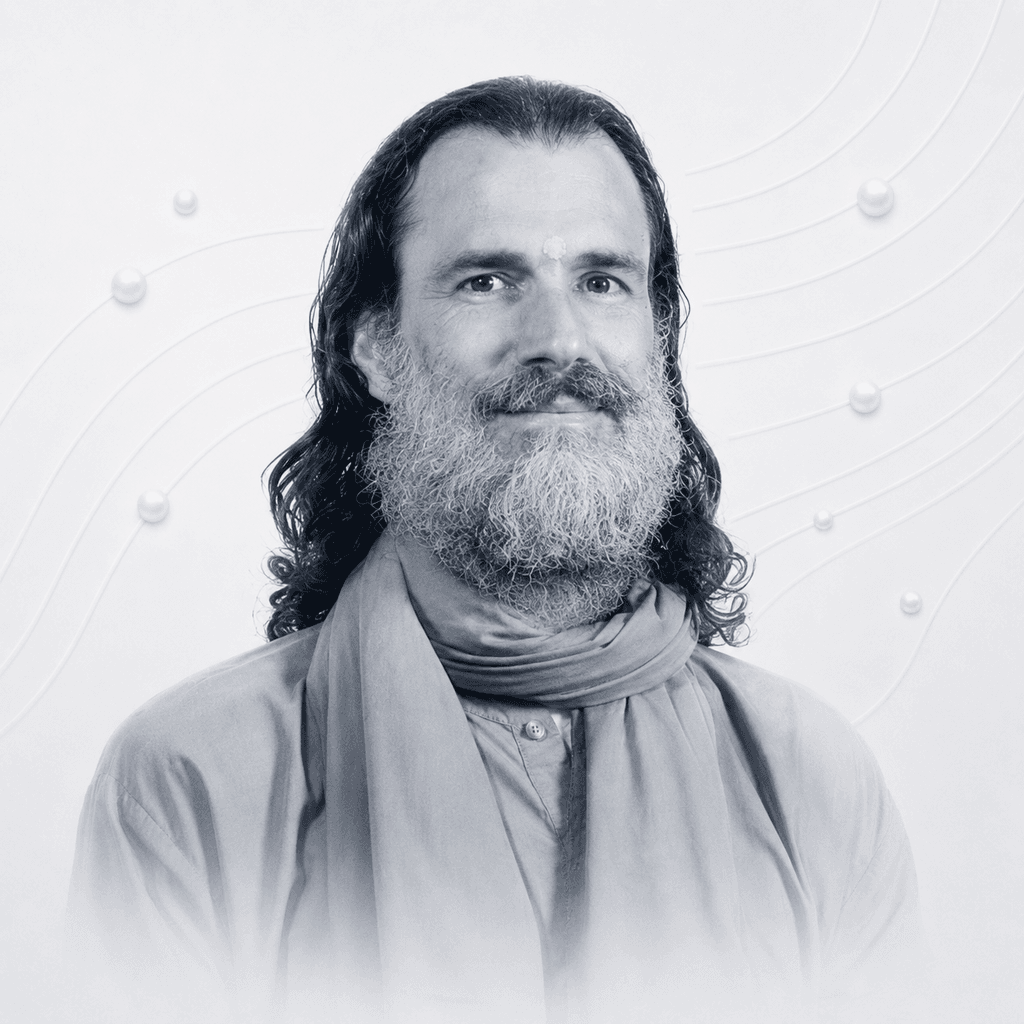
Swami Shantamritananda Puri on spiritual collaboration and humanitarian work
Episode 24 30.03.2021
-
 play_arrow
PLAY EPISODE
Description arrow_drop_down

Description
From a hut on the Arabian Sea to building a 1,500-bed hospital and 100,000 houses for the underserved , Swami Shantamritananda Puri’s journey through monastic life, disaster relief, and humanitarian collaboration across every continent reveals what happens when spiritual practice meets large-scale collective action. Subscribe for more episodes on the deepest roots of human collaboration. Swami Shantamritananda Puri, known as Shanti, brings a perspective unlike any other in this series. Trained in philosophy and Asian studies, he served briefly in the armed forces before joining a traditional ashram in South India at age 25. That ashram grew into a worldwide humanitarian mission active in virtually every country, and Shanti’s collaborative work has spanned hospital construction, disaster relief in Japan and the Philippines, public health in Papua New Guinea, interfaith dialogue with Buddhist communities in Tokyo, and scientific research initiatives in Chicago. His distinction between cooperation and collaboration is intuitive but precise: cooperation is dividing a task among more people to finish faster; collaboration is becoming something greater together , more adaptable, more resourceful, yielding intangible benefits that no participant could have achieved alone. This definition, drawn from decades of humanitarian fieldwork rather than academic theory, captures something that formal frameworks often miss. The conversation explores how spiritual communities organize collaboration at massive scale. The ashram’s humanitarian projects , building housing for 100,000 underserved people, operating disaster relief across multiple countries simultaneously , require coordinating volunteers, professionals, governments, and local communities with radically different expectations and capabilities. The binding force is not contractual obligation but shared spiritual commitment and what Puri calls the love dimension of collaboration. The most powerful segments are the stories. Puri describes volunteers building houses for elderly widows in rural India , a karate master who spent days showing off his strength, only to collapse in tears on the final day because the 70-year-old widow he was building for had been scurrying around the neighborhood each morning to gather coffee grounds and sugar to serve her builders. These moments of genuine human connection, Puri argues, are not sentimental additions to collaboration but its actual foundation. On the relationship between spiritual practice and collaborative capacity, Puri draws from both Eastern philosophy and practical experience. The concept of oneness , seeing others not as separate entities to negotiate with but as extensions of a shared humanity , transforms collaboration from a strategic calculation into a natural expression of human connection. The mother-child relationship serves as his primary metaphor: before birth, there is literal oneness; after birth, the emotional bond persists as the template for all genuine collaboration. His vision for sustainable collaboration combines administrative holism with philosophical oneness , practical organizational design informed by the recognition that every human being shares the same fundamental longing for connection and meaning. Part of the Ernst Strüngmann Forum series on Collaboration, produced with the Convergent Science Network.
Tagged as:
collaboration Disaster Relief Humanitarian humanitarian work spiritual collaboration Spiritual Practice
About the author call_made
CSN Podcasts
Both the triumphs of humanity and its most evil deeds have resulted from collaboration. In a time where humanity is required to aspire to the former and minimize the latter, the question arises of how collaboration arises and why it fails. Surprisingly, this phenomenon, so central to who we are, is not well understood. Hence, a collaborative effort is required to understand collaboration in its full biological, psychological, sociological, cultural, and economic complexity and to translate this understanding into operational impact. This series of podcasts is one step toward achieving these complementary goals. The Collaboration Podcast presents interviews with people who are central orchestrators of collaboration in various domains including business, government, science, art, health, sustainability, and the military. The discussions were conducted by Prof. Dr. Paul F.M.J. Verschure and members of the Program Advisory Committee of the Ernst Strungmann Forum on Collaboration (https://www.esforum.de/forums/ESF32_Collaboration.html) during 2021 and had the goal to sketch a map of opportunities, challenges, and obstacles in human collaboration. The forum took place in May 2022, and now we would like to share this series of interviews with a broader audience. The full report of the Forum will be published in 2023 by MIT Press. The podcast was produced by the Convergent Science Network (https://www.convergentsciencenetwork.org/). Context: The stability of social systems depends critically on realizing sustainable methods of “collaboration,” yet how and by which means collaboration is achieved is not clearly understood; neither are the conditions or processes that lead to its breakdown or failure. Collaboration can be understood as cooperation between agents toward mutually constructed goals. Part of the reason for our lack of understanding is that the phenomenon of collaboration is, by nature, a highly multidisciplinary problem, and effective research into its complexities has been difficult to achieve across the broad range of scientific and technical disciplines involved. The need for a fundamental understanding of collaboration, however, has become increasingly important. Not only does humankind demand answers as it attempts to address critical challenges at multiple scales (e.g., climate change, migration, enhanced automation, social and economic inequality), but ever-increasing technological and economic means of interconnecting people and societies are disrupting long-established, familiar patterns of how we interact. Radical technological changes that are ongoing have the potential to reshape collaboration in ways that are currently hard to predict or influence (e.g., by altering configurations in interaction, information creation, and modes of communication). On one hand, such changes could disrupt hitherto stable forms of collaboration by affecting critical communication channels and traditional roles, as can be observed in the rapidly changing patterns in governance, commerce, and social interaction. Conversely, technology could lead to the emergence of novel, successful forms of collaboration that deviate from traditional “hierarchical” architectures. Evidence of this can be seen in areas as diverse as highly automated manufacturing plants, the open science movement, collaborative software repositories, user-centered services, and the sharing of economy-based modes of organization. Without a fundamental understanding of the mechanisms, processes, and boundary conditions of collaboration, it is not possible to evaluate or predict which of these possible scenarios are sustainable or even plausible. The Forum “How Collaboration Arises and Why it Fails” (May 8–13, 2022, Location: Frankfurt am Main, Germany) Chairs: Andreas Roepstorff and Paul Verschure Program Advisory Committee: Jenna Bednar, Julia R. Lupp, Bhavani R. Rao , Andreas Roepstorff, Ferdinand von Siemens, and Paul Verschure
Episodes
play_arrow
play_arrow
play_arrow

play_arrow
Timestamp
- fast_forward00:00:05 - Welcome to the Conversion Science and Earned Student Forum podcast on collaboration.
- fast_forward00:00:10 - I'm Paul Verschure and together with my colleague Babani Rao,
- fast_forward00:00:13 - we speak with Swami Shantam Ritananda
- fast_forward00:00:16 - Puri, a Brahmacari monk at the Mata Amritananda Maya Center in Chicago.
- fast_forward00:00:23 - For his engagement in social education and spiritual activities worldwide,
- fast_forward00:00:28 - Swami Puri shares his perspectives So collaboration, how it differs from collaboration,
- fast_forward00:00:34 - elements and intangibles that are involved, and how it is interwoven in most aspects of it.
- fast_forward00:00:40 - Welcome, Shanta, to our podcast.
- fast_forward00:00:43 - Thank you. Great that you could join us.
- fast_forward00:00:47 - So before we really delve into the substance of around collaboration,
- fast_forward00:00:53 - it would be helpful that maybe you give a little sketch of your life trajectory
- fast_forward00:00:59 - that brought you to where you are today as Swami Shantan Ritannadapuri.
- fast_forward00:01:06 - Yes, okay. Okay. Well, it really started in college because I was focused on
- fast_forward00:01:14 - the humanities and it was more,
- fast_forward00:01:18 - philosophy and religion, but my focus was on Asia, including Japanese.
- fast_forward00:01:24 - But what happened is at the end of those four years, I became very inspired
- fast_forward00:01:29 - by the classical concept of justice as being like the ideal perfection in human relationships.
- fast_forward00:01:37 - So what that did is that took me to apply for officer candidate school in the
- fast_forward00:01:43 - armed forces, because I wanted to protect justice. That was my concept.
- fast_forward00:01:48 - I was accepted, but then I ended up taking an offer to work for the Japanese
- fast_forward00:01:55 - government in a rural fishing village because I spoke the language.
- fast_forward00:02:01 - And there I learned a lot about international collaboration,
- fast_forward00:02:06 - intercultural, interlingual collaboration, which really taught me quite a bit. it.
- fast_forward00:02:12 - And after some time, though, I found myself being pulled towards my deeper roots.
- fast_forward00:02:18 - And I that would be my roots in like philosophy and religion.
- fast_forward00:02:23 - So it was I think I was about 25 when I joined a traditional ashram in South
- fast_forward00:02:30 - India and began a new life in a hut on the Arabian Sea.
- fast_forward00:02:34 - And that that ashram ended up blossoming into a worldwide humanitarian mission.
- fast_forward00:02:44 - And we have people collaborating with us in every country of the world, practically.
- fast_forward00:02:52 - But I ended up, I started off by training as a novice monk.
- fast_forward00:02:58 - And I lived there for 10 years before I was sent somewhere.
- fast_forward00:03:03 - And during those 10 years, I became very involved in a variety of collaborative projects.
- fast_forward00:03:13 - The first one was the construction of a 1,500-bed hospital and a project to
- fast_forward00:03:23 - build 100,000 houses for the underserved people.
- fast_forward00:03:27 - And then I was dispatched to Tokyo for 10 years.
- fast_forward00:03:31 - And that was where I got involved in our projects in Kenya, the disaster relief
- fast_forward00:03:38 - in Japan and in the Philippines, a public health project in Papua New Guinea,
- fast_forward00:03:46 - and a lot of interfaith activities with the Buddhist community.
- fast_forward00:03:50 - And the most recent decade has landed me in Chicago area, where I've been involved
- fast_forward00:03:56 - in a lot of collaborations in the fields of youth activity and the environment,
- fast_forward00:04:03 - online education and scientific research.
- fast_forward00:04:07 - So these have all become my duties as part of that massive humanitarian organization.
- fast_forward00:04:16 - And currently, where are you located? Oh, sorry, my Bluetooth is not working.
- fast_forward00:04:21 - Hang on, I'm going to turn it off. Okay.
- fast_forward00:04:24 - Please say that again. No, so I was just asking where you're located now. Okay.
- fast_forward00:04:30 - Today? At the moment, I'm in India. Okay, good. Okay, but the home base for
- fast_forward00:04:36 - your work is now Chicago?
- fast_forward00:04:39 - Chicago, and that's where a scientific research center is going to start soon.
- fast_forward00:04:44 - Okay, great. So, well, thank you very much for that summary.
- fast_forward00:04:49 - So, to open up, so what is collaboration and what is it good for?
- fast_forward00:04:57 - I was thinking i was asking myself the
- fast_forward00:05:00 - same thing i i was thinking i i'm
- fast_forward00:05:03 - not qualified to offer a definition but but
- fast_forward00:05:07 - it was funny because when you when you when this invitation came along you know
- fast_forward00:05:11 - i asked myself that what what is it you know and uh and because i it it didn't
- fast_forward00:05:17 - approach It didn't initially evoke an immediate image,
- fast_forward00:05:24 - but then I gave it a little thought,
- fast_forward00:05:26 - and it seems to me it's similar to cooperation but feels different.
- fast_forward00:05:34 - It's not quite the same, and I knew that much.
- fast_forward00:05:37 - But what I can say is what cooperation feels like and what collaboration looks like to me.
- fast_forward00:05:47 - So for me, cooperation is like if there's one guy doing a task,
- fast_forward00:05:52 - and if you give him three more people, then the task can be done in one quarter of the time.
- fast_forward00:05:57 - That's what cooperation seems to feel like to me.
- fast_forward00:06:01 - Whereas collaboration feels really different.
- fast_forward00:06:04 - It's like through that collaboration, we become stronger and we're well-rounded.
- fast_forward00:06:12 - We have more talents. talents, we have more resources, human or otherwise,
- fast_forward00:06:17 - and so we become more adaptable to the circumstances.
- fast_forward00:06:25 - Resources that are brought in by the the participants
- fast_forward00:06:28 - um i feel that they yield more
- fast_forward00:06:32 - intangible benefits that wouldn't
- fast_forward00:06:35 - have been achieved otherwise and uh that's basically my uninitiated sense of
- fast_forward00:06:41 - the concept but but when i looked at the concept of collaboration even more
- fast_forward00:06:46 - you know i came to the conclusion that basically my whole adult life has been
- fast_forward00:06:52 - a conglomeration of various collaborations.
- fast_forward00:06:55 - And if we include these intangible goals and rewards.
- fast_forward00:07:05 - We could even say that everybody's life is kind of compromised by variegated
- fast_forward00:07:10 - and overlapping collaborations.
- fast_forward00:07:12 - And the whole world, from a holistic perspective, I felt like it was very difficult
- fast_forward00:07:19 - to come up with an example that it doesn't qualify as a collaboration of some kind.
- fast_forward00:07:25 - But now, what are these intangibles? The intangibles that I'm thinking of are,
- fast_forward00:07:33 - one would be intangible in the sense of you cannot detect it with your five senses.
- fast_forward00:07:41 - So it would be like personal growth.
- fast_forward00:07:45 - It would be trust. it would be a deeper understanding about other cultures and
- fast_forward00:07:53 - yourself and a lot of other such uh.
- fast_forward00:07:58 - Experiences, but you can't quantify
- fast_forward00:08:00 - them so easily, not like revenue or promotions or something like that.
- fast_forward00:08:08 - But now, so you've been involved in a number of really big projects that have
- fast_forward00:08:15 - collaborative aspects, but could you maybe take one or two examples where you say, look,
- fast_forward00:08:20 - it's by virtue of these following features that these projects,
- fast_forward00:08:24 - as large-scale collaboration, succeeded?
- fast_forward00:08:28 - Right. Yeah. So, I mean, I've been fortunate in a lot of ways that most of the
- fast_forward00:08:33 - people that I collaborate with have shared some similar values, I guess you could say.
- fast_forward00:08:41 - And they, in general, we all have all felt that these intangible results and goals were important.
- fast_forward00:08:50 - And we gave them, we tend to give, or I do at least, give as much importance
- fast_forward00:08:56 - to those intangibles than compared with the physical or concrete results.
- fast_forward00:09:03 - So I'll give you a few examples.
- fast_forward00:09:06 - That 100,000 house building project,
- fast_forward00:09:10 - I found that I learned how to be sensitive to the subtle cues that people are
- fast_forward00:09:20 - giving when they don't feel happy with their experience.
- fast_forward00:09:26 - And then we can adapt
- fast_forward00:09:28 - that project and what we're doing every day
- fast_forward00:09:32 - to take that into consideration initially i
- fast_forward00:09:35 - didn't quite get it i i wasn't sensitive enough to
- fast_forward00:09:38 - people's exhaustion or their cultural reactions and the culture shock but over
- fast_forward00:09:45 - time i learned a lot more about that and how to understand people's emotional
- fast_forward00:09:51 - state based on some external cues.
- fast_forward00:09:57 - And also I learned the importance of having a big heart.
- fast_forward00:10:03 - And the more people we have that have the big hearts, the better the project does.
- fast_forward00:10:10 - But can you make it a bit more tangible for us who weren't there in your project? Sure.
- fast_forward00:10:18 - Yeah, so what I would say is when these intangibles are very striking,
- fast_forward00:10:24 - then we get more people to participate the following year.
- fast_forward00:10:29 - You know, like, for example, we listen to them, and we listen to them,
- fast_forward00:10:36 - and we don't judge them, we don't...
- fast_forward00:10:41 - They're really here for. Some people come with the intention of just trying
- fast_forward00:10:45 - to get a job and have put it on their resume.
- fast_forward00:10:48 - So when they go back to Japan or wherever it is, they have a better CV or a bio.
- fast_forward00:10:52 - But my goal is to have them have a really profound experience when they join
- fast_forward00:10:59 - that, for example, the housing project.
- fast_forward00:11:01 - And so that they can learn more, not just about other cultures, but about themselves.
- fast_forward00:11:06 - And then so when they go back, yeah it looks
- fast_forward00:11:09 - good on the on the bio but also it changes
- fast_forward00:11:12 - their life and they will tell other people and other people
- fast_forward00:11:15 - will come and we will have more participation more transformation so these to
- fast_forward00:11:20 - me are it's hard to quantify that because you know the reason why increases
- fast_forward00:11:25 - is not due to like advertising or um we invested more money it's because somebody
- fast_forward00:11:31 - was inspired by participating
- fast_forward00:11:33 - and they influenced other people but no
- fast_forward00:11:37 - i have a yeah i have a question
- fast_forward00:11:40 - so you think that this kind of transformation could not
- fast_forward00:11:44 - have happened without collaboration and because you said i mean if what if they
- fast_forward00:11:49 - would uh what if there was no collaboration maybe there was an individual that
- fast_forward00:11:52 - were actually going into the field and not a bunch of people so i'm just wondering
- fast_forward00:11:56 - how do you these these things about being sensitive to whether somebody is happy or not
- fast_forward00:12:02 - being the intangibles that you had mentioned?
- fast_forward00:12:05 - Is it, can you not pick them up without collaboration?
- fast_forward00:12:10 - You can. Of course you can.
- fast_forward00:12:13 - I mean, that would be more of, but depends on how sensitive that person is and
- fast_forward00:12:18 - how sincere they are about how much focus they have on those in the first place.
- fast_forward00:12:24 - But I think a lot of people learn about it through the collaboration because
- fast_forward00:12:30 - it stimulates different parts of their individuality when they interact with
- fast_forward00:12:35 - people who are different from them and who have different values.
- fast_forward00:12:39 - But there's always a coalescence of some of those values.
- fast_forward00:12:45 - And so once you realize this person is also just as sincere as you are,
- fast_forward00:12:50 - then you can say, well, I'm wondering why he or she values such and so so much.
- fast_forward00:12:57 - I want to understand that better. So I feel that that collaborative effort really
- fast_forward00:13:02 - opens our eyes to deeper levels of our own self, too.
- fast_forward00:13:08 - Shant, I'm confused about this still. I'm sorry.
- fast_forward00:13:12 - No problem. What is really interesting now, collaboration, as you described
- fast_forward00:13:18 - it also earlier, means that you have a bunch of individuals who also coalesce around the common goal.
- fast_forward00:13:25 - But now what you're describing is the trajectory of a single individual to be
- fast_forward00:13:32 - pulled into that process because there's self-interest to be pulled in,
- fast_forward00:13:36 - like my CV will look better.
- fast_forward00:13:37 - And in some sense, I could even argue that the coordinator of the collaborative
- fast_forward00:13:43 - process has their own interest of opening their mind to a broader perspective on reality.
- fast_forward00:13:48 - But we're still not talking about collaboration now, because this is how tens
- fast_forward00:13:52 - or hundreds or thousands of people together in space and time in some way achieve that common goal.
- fast_forward00:14:01 - And I have not understood yet how you then manage that part of the project to
- fast_forward00:14:05 - actually build your thousands of houses. Thank you.
- fast_forward00:14:08 - Right so um could you just be
- fast_forward00:14:11 - you're talking about the logistics of it
- fast_forward00:14:14 - or the strategy behind it or yeah well in the end
- fast_forward00:14:17 - look you have i don't know tens hundreds of
- fast_forward00:14:20 - people working together at any point yes i'm in a project right
- fast_forward00:14:23 - okay how do you how do you keep them working together in that to achieve that
- fast_forward00:14:27 - common goal of building these houses and of course then meta level you can of
- fast_forward00:14:32 - course say yeah but building the houses is more like a metaphorical act to come
- fast_forward00:14:37 - to a deeper end But I would like to unpack that better.
- fast_forward00:14:40 - Sure, sure. Well, I mean, that is a little more of the,
- fast_forward00:14:45 - we could call it the sort of the logistics of it and how we put together the
- fast_forward00:14:53 - teams and actually do that.
- fast_forward00:14:57 - Is that an example of what you're looking for?
- fast_forward00:15:00 - Well, yeah, I would like to understand how you have these hundreds of people
- fast_forward00:15:04 - working together. Yeah, okay, okay.
- fast_forward00:15:06 - Yeah. Well, one thing is definitely trust is a big factor because I don't have,
- fast_forward00:15:14 - I'm not involved in all the dozens of countries that the people are coming from.
- fast_forward00:15:20 - So we're assuming that we have guidelines to bring the people over.
- fast_forward00:15:24 - So that part I don't really get involved in, but we trust that there's somebody
- fast_forward00:15:28 - who is coordinating it on that side.
- fast_forward00:15:30 - But before all the people come, someone like myself or another person will go
- fast_forward00:15:36 - there and make sure everything is um prepared and that it's going to be um and say,
- fast_forward00:15:47 - not a a swami i think maybe he's looking for more uh in the direction like once
- fast_forward00:15:53 - the children once the students from uh japan are actually there on the ground
- fast_forward00:15:57 - how do you actually get them involved in working on the on the project with
- fast_forward00:16:01 - the others like with the indians how does.
- fast_forward00:16:05 - That's where a lot of language issues come in
- fast_forward00:16:08 - because especially japanese people they don't speak even english
- fast_forward00:16:11 - so we have i mean i translate other
- fast_forward00:16:14 - people translate and we divide them up
- fast_forward00:16:17 - into crews of about 10 depending
- fast_forward00:16:20 - on the site and we and depending on
- fast_forward00:16:23 - how many tools we have and then we we there's no usually there's no transportation
- fast_forward00:16:29 - so they have to walk and i walk to like five to ten work sites and then i'm
- fast_forward00:16:36 - constantly running around checking in on them Did the mason arrive when he said he did?
- fast_forward00:16:42 - Because if he doesn't arrive, they're just sitting there and doing nothing because
- fast_forward00:16:45 - they've got the tools and everything, but they don't know how to lay bricks.
- fast_forward00:16:49 - So you have to go and you have sometimes the person who is in the house,
- fast_forward00:16:54 - you know, they want to communicate something to the people.
- fast_forward00:16:59 - And if they can do that, it will make the participants overjoyed and it'll give
- fast_forward00:17:04 - them a great experience.
- fast_forward00:17:06 - And then they resume the work. So there's always something we have to be constantly
- fast_forward00:17:11 - visiting every work site so that we make sure that people are able to do the
- fast_forward00:17:16 - work that they came to do,
- fast_forward00:17:19 - the tangible work, and also have a good experience so that they can communicate
- fast_forward00:17:24 - with those people and feel the impact that they're making and learning why these.
- fast_forward00:17:30 - And for the people on the recipient side, for the beneficiaries,
- fast_forward00:17:35 - they also want to understand why these college students came from all the way
- fast_forward00:17:39 - from Japan with their hard-earned money that they worked a part-time job.
- fast_forward00:17:45 - And so why have they done that? And there has to be both the...
- fast_forward00:17:51 - Physical part of providing them with the tools and help they need to build something
- fast_forward00:17:55 - as well as the i guess you could say the tools to have a good experience but
- fast_forward00:18:01 - now how so in a sort of minimal interpretation you could say well look we take
- fast_forward00:18:09 - a bunch of people with good intentions,
- fast_forward00:18:12 - right and we just put them together and then by virtue
- fast_forward00:18:15 - of the good intentions things will sort of work out
- fast_forward00:18:18 - because you give them the tools and the bricks and something will
- fast_forward00:18:21 - happen yeah but i would assume that
- fast_forward00:18:24 - that there's an additional coordination on top of
- fast_forward00:18:26 - that yes not not i don't necessarily mean like top down direction but there
- fast_forward00:18:33 - must be additional especially in to to deal with intangibles of the process
- fast_forward00:18:37 - right there must be let's say communication information yes playing a structuring
- fast_forward00:18:42 - role. Could you explain that?
- fast_forward00:18:44 - Sure. Sure. So one thing you said made me want to fill in a little blank that
- fast_forward00:18:52 - I left there is that structurally we have people making sure that these houses
- fast_forward00:18:58 - are not going to fall over tomorrow.
- fast_forward00:19:00 - They make sure that the roof is done properly with the concrete and all that.
- fast_forward00:19:05 - There are people who are watching that.
- fast_forward00:19:06 - But in terms of,
- fast_forward00:19:09 - The rest of it, basically, someone like myself is making sure that all those things take place.
- fast_forward00:19:18 - Does this always work out, or does it sometimes also fail, this process? It fails sometimes.
- fast_forward00:19:24 - I have a few examples.
- fast_forward00:19:27 - Okay. See, it's often due to lack of communication between two coordinators
- fast_forward00:19:37 - on our side or their side.
- fast_forward00:19:39 - The people who are coming from foreign countries.
- fast_forward00:19:43 - And one case, we were doing it
- fast_forward00:19:46 - on an island that had no vehicles on it anywhere, and it was very remote.
- fast_forward00:19:51 - And the only way to get the raw materials there was by boat,
- fast_forward00:19:57 - like those Venetian boats which you punt with a long end for miles and miles.
- fast_forward00:20:02 - And it was really tiresome. And the Japanese college students that year,
- fast_forward00:20:09 - they had just unloaded a bunch of boats and they were totally exhausted.
- fast_forward00:20:16 - But this one other coordinator from the project who was a little senior to me,
- fast_forward00:20:23 - he insisted that they wake up in the middle of the night and go and do it again.
- fast_forward00:20:29 - And then I knew at that point that it was not going to work.
- fast_forward00:20:33 - These guys are just going to say, I'm not going to like it at all.
- fast_forward00:20:38 - But then I said, if anybody wants to come, they're welcome to come.
- fast_forward00:20:42 - And I said, I'm going to go. I'm going to load the boat and unload it.
- fast_forward00:20:45 - And if anybody wants to join me, they can.
- fast_forward00:20:47 - And a few people came, but it left a very sour taste in their mind, in their mouth.
- fast_forward00:20:53 - And they didn't come the next year, actually.
- fast_forward00:20:56 - So it took a year for them to recuperate from that.
- fast_forward00:21:00 - But so intangibles in the end have to be constructed, right? So we have to our mind,
- fast_forward00:21:09 - assign a label or a construct or a
- fast_forward00:21:12 - process to or a value right a
- fast_forward00:21:15 - rule to an intangible so and
- fast_forward00:21:18 - you mentioned trust so how do you
- fast_forward00:21:21 - manage trust then in in this situation like
- fast_forward00:21:24 - in the case also of these students who might feel in some
- fast_forward00:21:27 - sense abused right so how is trust sure they
- fast_forward00:21:31 - probably felt a little bit um vulnerable and
- fast_forward00:21:34 - not you know i probably i
- fast_forward00:21:37 - should have protected them a little bit more because that's because
- fast_forward00:21:40 - i'm for them i'm the protector from outside influences and and but but really
- fast_forward00:21:46 - um they've over the next few years of our collaboration with them and and this
- fast_forward00:21:53 - is not just the housing project other projects as well we we build up that trust through our own.
- fast_forward00:22:01 - Actions that's the that's what i feel is most important we see that people are
- fast_forward00:22:05 - ready to to to make some kind of sacrifice of their own to further this noble
- fast_forward00:22:12 - project, whatever it may be.
- fast_forward00:22:14 - And then we share that same value and also showing some humility,
- fast_forward00:22:21 - showing some flexibility, some maturity.
- fast_forward00:22:25 - All of these qualities go towards us really trusting the character of that person
- fast_forward00:22:30 - and then say, look, I trust you fully.
- fast_forward00:22:32 - At one point, we can just say, whatever you say, we're going to go with that.
- fast_forward00:22:36 - And then they say, okay, on your side, you take care of all that. We trust you.
- fast_forward00:22:41 - Now, do you see a trade-off here between trust, which is in some sense also given, right?
- fast_forward00:22:47 - And the need to explain objectives?
- fast_forward00:22:51 - Because you could say the more trust you lose in the situation,
- fast_forward00:22:54 - the more in some you have to cudgel your participants by explaining why this
- fast_forward00:22:59 - is all very relevant and important. Do you see a trade-off there?
- fast_forward00:23:04 - Could you say a little bit one more time? I'm trying to understand what the trust and goals, right?
- fast_forward00:23:10 - So for instance, if someone loses trust in leadership, then leadership could
- fast_forward00:23:15 - respond by saying, oh, I will explain in more detail why this is super important
- fast_forward00:23:19 - for the whole world and everybody and you included. Therefore,
- fast_forward00:23:22 - you should follow my lead.
- fast_forward00:23:24 - If I trust the leader or the a coordinator blindly you don't need to tell me
- fast_forward00:23:30 - anything about planning on doing because I'll just follow you right so do you
- fast_forward00:23:35 - see also a trade off between goals explanation and trust yeah also yeah,
- fast_forward00:23:42 - Yes, I, as a leader of sorts, I will, I mean, I've learned to ask a lot of questions
- fast_forward00:23:52 - before I ask them to follow me.
- fast_forward00:23:55 - You know, I need to know what their limitations are, what their goals are and
- fast_forward00:24:01 - all that, make sure that I can help them achieve those.
- fast_forward00:24:05 - And they ask me a lot of questions also. So I think clarifying those goals ahead
- fast_forward00:24:11 - of time is really, really important.
- fast_forward00:24:14 - And then after that, once we're in the thick of it, it's a lot of just,
- fast_forward00:24:18 - you could call it blind trust.
- fast_forward00:24:20 - But there's also every night, another thing I should point out,
- fast_forward00:24:23 - every night we have meetings about how the day's work went.
- fast_forward00:24:29 - And then even the students, everybody participates in groups.
- fast_forward00:24:34 - And then we talk about how it went. Was it successful?
- fast_forward00:24:37 - What didn't work and then if it didn't work then
- fast_forward00:24:40 - the next day we don't do it we don't wait for the whole project to
- fast_forward00:24:43 - end okay so so
- fast_forward00:24:47 - that also means there's a collective if you want
- fast_forward00:24:49 - interpretation and meaning generation stage yes
- fast_forward00:24:53 - yes would that be a good way to describe it yeah i mean they the meaning what
- fast_forward00:24:59 - they learned from that day they they we tend to look at it sooner than later
- fast_forward00:25:05 - so So we understand what did we learn and then we can leverage that for the next day.
- fast_forward00:25:11 - And, um, and also funny stories. And it's, it's a time to kind of relax and,
- fast_forward00:25:16 - and get out of your head and get out of, you know, that exertion and then just
- fast_forward00:25:21 - sit and reflect without, uh, any judgment.
- fast_forward00:25:24 - And so I find it's very helpful for us, any collaboration.
- fast_forward00:25:30 - Right. But then how many, so how many people have gone through this process?
- fast_forward00:25:36 - Thousands uh-huh just just the um the housing project alone i mean there's somehow we i i got,
- fast_forward00:25:45 - engrossed in that topic but there's a lot of other you know examples right and
- fast_forward00:25:51 - how many but how many different cultures uh for that for the uh housing project or,
- fast_forward00:26:01 - let's start with housing and then in general okay so the the first few um.
- fast_forward00:26:08 - Projects alone in the housing were about
- fast_forward00:26:11 - each time about 10 to 15 countries and um
- fast_forward00:26:15 - we got up to about 20 20 countries and i think our biggest group was about 200
- fast_forward00:26:22 - people at once and that was this was another challenging one they landed in
- fast_forward00:26:29 - Ahmedabad the day that the Godhra incident took place.
- fast_forward00:26:33 - Are you familiar with that? Yeah, the Ghotra incident, do you know about that, Paul? Please explain.
- fast_forward00:26:39 - This was when, it is a very controversial thing, this is when a train got burnt
- fast_forward00:26:44 - out that was having Hindu pilgrims.
- fast_forward00:26:47 - Supported by the Muslims, and then the Hindus attacked the Muslims in the state
- fast_forward00:26:51 - of Gujarat, and thousands were killed in civil unrest.
- fast_forward00:26:55 - I mean, they were lynched, and it was like, really, it was a bloodbath,
- fast_forward00:27:01 - and it was a communal fight between the Hindus and the Muslims in the state of Gujarat.
- fast_forward00:27:07 - Very, very, very, very, very difficult.
- fast_forward00:27:10 - And that took place as the Japanese students and other people from around the
- fast_forward00:27:15 - world were on the airplanes to land right in ground zero.
- fast_forward00:27:19 - So we hid for three days in the city and then we drove to that place where we
- fast_forward00:27:25 - were building the houses.
- fast_forward00:27:26 - And it was scary in the beginning, but what happened,
- fast_forward00:27:29 - these everybody wanted to come they they
- fast_forward00:27:33 - said even if you had told me before we got on the airplane we still wanted
- fast_forward00:27:36 - to come right and then very hard work but
- fast_forward00:27:39 - they they bonded with the local people
- fast_forward00:27:42 - and they learned a traditional dance and then actually when the when the governor
- fast_forward00:27:47 - of the state came who was now the prime minister they before him and amma was
- fast_forward00:27:52 - our inspiration he um they about 150 students were doing a traditional dance
- fast_forward00:27:57 - in the traditional dress and that was the the thing that made them so happy.
- fast_forward00:28:02 - Right. Because what I want to get to is individual difference and cultural difference.
- fast_forward00:28:10 - That's why I want to look a little bit at the number. In this whole process that you now describe.
- fast_forward00:28:18 - How many individual failures are there that people just drop out of the process,
- fast_forward00:28:23 - they cannot keep up, they cannot adhere?
- fast_forward00:28:27 - What's your dropout? Yeah, I'm not so high.
- fast_forward00:28:31 - Actually, there was one woman who came after the tsunami in 2004.
- fast_forward00:28:37 - She came for rebuilding houses in the southeast of India where the tidal wave hit, the tsunami hit.
- fast_forward00:28:46 - And she came to this site once.
- fast_forward00:28:49 - And then she just never came again. And it was too hot for her.
- fast_forward00:28:52 - And I didn't know, but she had a psychological problem that she didn't notify us about.
- fast_forward00:29:03 - And she wasn't taking her medicine.
- fast_forward00:29:08 - That might not help.
- fast_forward00:29:13 - Yeah, yeah. And there are some problems like that.
- fast_forward00:29:18 - But usually, oh, another problem, I'll tell you, sharing a failure,
- fast_forward00:29:23 - is that in Kune one year, I didn't pay enough attention to the kitchen conditions.
- fast_forward00:29:32 - And dozens of people got food poisoning. And every day we were taking three
- fast_forward00:29:38 - or four people to the hospital for IV.
- fast_forward00:29:41 - But some of those same people came again.
- fast_forward00:29:44 - They really like it. Right. Not food poisoning.
- fast_forward00:29:49 - But that's interesting, right?
- fast_forward00:29:50 - Because it shows that there's a generic process here that seems to work.
- fast_forward00:29:55 - But now do you see any cultural differences there? Because you have people from
- fast_forward00:29:59 - dozens of different countries. Oh, yeah. Does that affect the process?
- fast_forward00:30:04 - It makes it more complex, for sure.
- fast_forward00:30:08 - And I and the others who are helping make it go forward, either from the foreign
- fast_forward00:30:16 - side or from the local side.
- fast_forward00:30:18 - We all understand that we have to make some adjustments of our own without burdening other people.
- fast_forward00:30:26 - And we have to sometimes talk
- fast_forward00:30:31 - individually with people who are having a problem sometimes having a big group
- fast_forward00:30:35 - discussion about certain factors that need to be addressed whether it's a foreign
- fast_forward00:30:42 - issue or a domestic issue and so there's sacrifice I would say is involved to make things.
- fast_forward00:30:51 - Right because it means you have to spend more
- fast_forward00:30:54 - energy more time you know and sometimes you
- fast_forward00:30:57 - know it's really hard to be one of the leaders because you don't get a lot of
- fast_forward00:31:01 - sleep you know you sometimes don't get food and you're walking long distances
- fast_forward00:31:05 - it's over 30 degrees celsius right so yeah it's without without wanting to tempt
- fast_forward00:31:12 - you to to let's say make racial stereotypes or cultural stereotypes,
- fast_forward00:31:17 - What are the main dimensions on which you see this variability?
- fast_forward00:31:21 - You could, for instance, imagine that people from certain cultures have not
- fast_forward00:31:26 - really been trained in speaking up, while in other cultures they speak up too much.
- fast_forward00:31:31 - So what are the main dimensions you see there in these cultural differences
- fast_forward00:31:35 - in the context of collaboration?
- fast_forward00:31:38 - Collaboration um i it depends on
- fast_forward00:31:41 - where i am because i've done
- fast_forward00:31:44 - it in so many countries that i i basically
- fast_forward00:31:47 - go by the culture of that country because it
- fast_forward00:31:50 - it's the safest way i find because look we're doing it here in australia or
- fast_forward00:31:56 - fiji or papua new guinea this is their country let's all try to adapt to their
- fast_forward00:32:01 - culture and then it's easier to get people to collaborate in that because they realize that,
- fast_forward00:32:07 - well, no, this is not US, this is not France,
- fast_forward00:32:10 - it's not UK or something like that. So it makes more sense.
- fast_forward00:32:15 - And that then also requires that I have to understand that culture,
- fast_forward00:32:20 - or whoever else is coordinating.
- fast_forward00:32:22 - Like in Papua New Guinea, I had the country director for or the CHI,
- fast_forward00:32:31 - Clinton Health Access Initiative.
- fast_forward00:32:35 - And then he was very helpful in bridging that gap. So I was a newcomer to that country.
- fast_forward00:32:41 - So you give me the solution, right?
- fast_forward00:32:44 - Because in some sense you're saying, well, we built in a reference,
- fast_forward00:32:48 - a cultural reference, and that's where we are. That's the host culture.
- fast_forward00:32:51 - Yeah. But the first question is, what is the variability across the different
- fast_forward00:32:57 - cultures that you have identified?
- fast_forward00:33:02 - Because apparently, you need
- fast_forward00:33:04 - to ground it, right? You need to put a reference in order to overcome it.
- fast_forward00:33:08 - Yeah. I find that it's somewhat due to the nation of origin of that person,
- fast_forward00:33:17 - but I find it's kind of more personality, really.
- fast_forward00:33:20 - There are very fastidious Indians, and there are some careless Japanese people,
- fast_forward00:33:29 - but not not as many as there are I would say like careless Americans because I'm from America.
- fast_forward00:33:36 - I have a question that kind of rides
- fast_forward00:33:38 - off on that question because I was gonna if I can
- fast_forward00:33:41 - just interrupt so I know a lot of the talk has been
- fast_forward00:33:44 - about goals right common goals and things like that but I
- fast_forward00:33:47 - was just wondering and it's kind of related to what Paul just
- fast_forward00:33:50 - asked you people you have one
- fast_forward00:33:53 - common goal like say building a house is a goal and but
- fast_forward00:33:56 - I find that even something as tangible as building a house the
- fast_forward00:33:59 - way that people understand the goal can be very different and
- fast_forward00:34:02 - so i was wondering if that that has a cultural element to
- fast_forward00:34:06 - it or not just like what paul is asking right what is
- fast_forward00:34:08 - the variable thing is how and you were saying it's more of an
- fast_forward00:34:11 - individual thing and not necessarily a cultural thing but
- fast_forward00:34:14 - even in terms of understanding the goal is it do do
- fast_forward00:34:17 - all people of one culture understand the goal in a
- fast_forward00:34:20 - certain way from a different cult group is there
- fast_forward00:34:22 - a cultural aspect to understanding the goal i definitely
- fast_forward00:34:27 - i i'm but i'm not
- fast_forward00:34:30 - so sure i i think the
- fast_forward00:34:33 - personal perspective is what actually determines the final experience of the
- fast_forward00:34:40 - person but my my experience is also that people come in with some preconceived
- fast_forward00:34:47 - notions about what's going to happen through this collaboration.
- fast_forward00:34:51 - And that's definitely a cultural thing that they're coming, you know,
- fast_forward00:34:56 - like, I don't know, like a US, somebody who's a, actually, I'll give you an
- fast_forward00:35:02 - example of a guy from Australia.
- fast_forward00:35:03 - He was working in the road transportation department in Australia,
- fast_forward00:35:09 - in Adelaide, and he has built so many roads.
- fast_forward00:35:13 - So he's got it in, he's an engineer and he's just looking at it from that perspective.
- fast_forward00:35:17 - All right, we're going to make a road and everything.
- fast_forward00:35:19 - No, but, uh, but when he got there, he realized that, you know,
- fast_forward00:35:22 - a lot of it is just digging holes, you know, with your own two hands and that
- fast_forward00:35:27 - the rock is in Gujarat after the earthquake and the ground is so hard that you only get blisters.
- fast_forward00:35:33 - You don't get, you can't dig hardly at all.
- fast_forward00:35:36 - And, and another guy from France, he broke his pinky finger on the first day
- fast_forward00:35:40 - and, and And he had to decide whether he was going to keep lifting,
- fast_forward00:35:44 - you know, these hollow blocks or just take it easy.
- fast_forward00:35:48 - And he kept doing it. There's a guy named Tejas.
- fast_forward00:35:51 - So they kind of continued their participation while leaving their expectations aside. side.
- fast_forward00:36:00 - And then one thing I've noticed about people is that conclusion of that two
- fast_forward00:36:07 - weeks or three weeks, however long it is, that is the most important part for them, the closure.
- fast_forward00:36:12 - And that determines a lot of their experience. They come with certain expectations
- fast_forward00:36:17 - and ideas and fantasies about how it's going to go.
- fast_forward00:36:21 - But then at the end, just seeing that
- fast_forward00:36:26 - family occupy that house for the the first time and
- fast_forward00:36:29 - everybody crying or the children's looking so
- fast_forward00:36:32 - happy with their new rooms when they were living in a
- fast_forward00:36:35 - shack until then you know that's that then they forget about all those ideas
- fast_forward00:36:40 - and they just feel so satisfied that they could even come so and that part is
- fast_forward00:36:45 - not such a cultural thing it's just your humanity that makes you realize that
- fast_forward00:36:51 - that's what i feel right Right.
- fast_forward00:36:53 - So how do you deal with dissent in that process then?
- fast_forward00:36:59 - So for instance, if you break your pinky finger, you might also at some point
- fast_forward00:37:03 - say, or at the moment this happens, you're in pain, like, look, sorry, that's it.
- fast_forward00:37:08 - I'm going home. But so dissent is of course, because people will be exhausted and tired.
- fast_forward00:37:14 - How is dissent now managed?
- fast_forward00:37:18 - We don't push anybody. If they want to leave, we do everything we can to help them.
- fast_forward00:37:24 - It is challenging, some of these things, being in a disaster area.
- fast_forward00:37:28 - In fact, I was sort of recalled from the ground zero in 2011 in the Japanese triple disaster.
- fast_forward00:37:41 - Disaster um i i went there with the idea that i i wanted to stay there a long
- fast_forward00:37:47 - time and and help but i was the only person that had to go back because i had had a surgery earlier,
- fast_forward00:37:53 - and the board of directors said there's too much radiation so you have to come
- fast_forward00:37:58 - back i was a little sad about that but i felt they have my best interest in
- fast_forward00:38:03 - mind so a little bit of dissent in my mind but all these things whether you're
- fast_forward00:38:07 - the one had that is forced to go home or you're the The one who wants to go home,
- fast_forward00:38:11 - we have to be practical and rational.
- fast_forward00:38:15 - Right. So, Shanta, we looked now at your experience with also very concrete
- fast_forward00:38:22 - projects. We have examples.
- fast_forward00:38:23 - Yeah. In your own career, you also went to offers a training school,
- fast_forward00:38:30 - you said earlier, where they will train you in a very specific way to manage human collaboration.
- fast_forward00:38:38 - Operation, which might be actually rather different in how you have been doing it.
- fast_forward00:38:43 - So could you maybe highlight a little bit?
- fast_forward00:38:46 - The difference yeah i i think i i didn't
- fast_forward00:38:49 - uh explain it properly perhaps but i was accepted but i ended up taking that
- fast_forward00:38:55 - job in japan and okay so you didn't really participate in that you know i've
- fast_forward00:39:00 - trained myself for it but i ended up getting going to boot camp in an ashram okay exactly,
- fast_forward00:39:07 - all right so but actually that was a really
- fast_forward00:39:10 - good lesson too by the way okay why was
- fast_forward00:39:13 - that a good lesson um because actually there
- fast_forward00:39:17 - was a lot of work i mean those days we didn't hire any any uh workers to do
- fast_forward00:39:22 - the work so we were the ones doing the concrete and carrying everything and
- fast_forward00:39:27 - the girls would also do it too
- fast_forward00:39:29 - you know so so girls here means adult women you know not not child labor,
- fast_forward00:39:35 - i don't understand right so so and and the idea is that you know we have to be flexible
- fast_forward00:39:43 - because the work is very strenuous and
- fast_forward00:39:47 - you if somebody needs to take a break
- fast_forward00:39:49 - you just let them because that's the that's the
- fast_forward00:39:52 - way it is and also sometimes the work changes we'll take a big pile of wood
- fast_forward00:39:57 - and move it somewhere and then you realize that no it's not supposed to be there
- fast_forward00:40:00 - where it's supposed to be somewhere else and and really it's um it's all about
- fast_forward00:40:05 - flexibility here because things change in a setting like this. Right.
- fast_forward00:40:10 - So to make it now a transition, so you did convert, right?
- fast_forward00:40:17 - And you joined an ashram and you follow Amma.
- fast_forward00:40:20 - And in some sense, you could look at this dedication now to also a religious
- fast_forward00:40:28 - framework as also a way to structure human collaboration, right?
- fast_forward00:40:33 - But if you want, there are principles also in this religious commitment that
- fast_forward00:40:39 - structure the way in which people can collaborate.
- fast_forward00:40:43 - So could you elaborate on that a bit? Very good point.
- fast_forward00:40:47 - Very good point. Yeah, I mean, if it were not for that background,
- fast_forward00:40:53 - that foundation that we are working upon,
- fast_forward00:40:56 - a lot of other things could be going on that would not necessarily be condemned in another setting.
- fast_forward00:41:05 - So, I mean, it is foregone conclusion that we have to value certain things.
- fast_forward00:41:11 - And and if if someone just um completely
- fast_forward00:41:15 - ignores some of those values then it's pretty much you know clear that he's
- fast_forward00:41:21 - in the wrong and then we can call him on it um so it would be things like patience
- fast_forward00:41:25 - humility forgiveness i mean typical uh spiritual qualities that all the faiths would
- fast_forward00:41:32 - probably would respect and and
- fast_forward00:41:36 - then also compassion and you
- fast_forward00:41:40 - know I think these qualities and many
- fast_forward00:41:43 - others also are willing to to adjust to
- fast_forward00:41:47 - other people when they when needed this is like
- fast_forward00:41:51 - the I guess you would call the lubrication for
- fast_forward00:41:55 - that machine of collaboration in in this setting And I find that really the
- fast_forward00:42:02 - concrete results are a tangible edifice that is built on the foundation of all
- fast_forward00:42:10 - these values, the intangibles.
- fast_forward00:42:13 - And without that foundation of the intangibles, I don't see how I could have
- fast_forward00:42:19 - done any of these things. Mm-hmm.
- fast_forward00:42:22 - I mean, I didn't do it. Everybody else did it. But could we elaborate this a
- fast_forward00:42:27 - little bit? Because now we have the intangibles.
- fast_forward00:42:29 - The intangibles are values that are also grounded in a religious framework.
- fast_forward00:42:35 - Is there some structure to that? Because you listed a few, like generosity, humility, and so on.
- fast_forward00:42:41 - But is there some structure to that? Is there, let's say, an absolute ground
- fast_forward00:42:46 - zero value that it has to start with, and you build the others on top of that,
- fast_forward00:42:51 - for instance. Do you see some structure to that?
- fast_forward00:42:54 - Yeah, it would have to be selflessness, I would say.
- fast_forward00:42:58 - And that comes from a deeper quality or state, which would be love,
- fast_forward00:43:03 - unconditional love, which everybody wants, but typically they don't want to give it to people.
- fast_forward00:43:10 - So it's a challenge to evoke that emotion or that flow within ourselves so that we can be selfless.
- fast_forward00:43:19 - It doesn't come selflessness doesn't just come by
- fast_forward00:43:22 - chance right so that is probably the core principle in my mind and so the core
- fast_forward00:43:29 - principle is love and from love comes selflessness yeah right but now these
- fast_forward00:43:36 - other values um like you mentioned generosity humility how do you related,
- fast_forward00:43:42 - to that very good question
- fast_forward00:43:45 - okay so um the to
- fast_forward00:43:50 - back up a little bit in the indian philosophy the
- fast_forward00:43:54 - the core principle is really um non-duality so
- fast_forward00:43:58 - it means that there's only one in this
- fast_forward00:44:01 - it sounds kind of you know um pokey you know but the idea is that if there is
- fast_forward00:44:08 - a divine power somewhere That means it's everywhere and it's we are that also
- fast_forward00:44:12 - that's the concept So so that means that if you if there's no duality then that
- fast_forward00:44:17 - that means you just like you Value your own life.
- fast_forward00:44:21 - You should value everybody else's life exactly the same way because of that
- fast_forward00:44:25 - oneness So from that is where that that real love comes because it's not a dualistic
- fast_forward00:44:30 - love It's it's a monistic one and and from that the idea is that compassion arises.
- fast_forward00:44:38 - Because just like you, if you cut your finger, you're going to treat that,
- fast_forward00:44:42 - whether it's the left hand or the right hand.
- fast_forward00:44:44 - So like that, whether it's your pain or somebody else's pain,
- fast_forward00:44:48 - you treat it the same way. That would be the compassion.
- fast_forward00:44:51 - And so from compassion, you find this selflessness.
- fast_forward00:44:56 - Because like the mother has compassion for the baby, the baby needs a lot of
- fast_forward00:45:00 - attention or has to stay up all night. The mother will stay up all night.
- fast_forward00:45:04 - That's how the selflessness comes from compassion.
- fast_forward00:45:08 - And then from selflessness really comes all the other qualities,
- fast_forward00:45:12 - I would say. Right. You know, humility, patience, and so on.
- fast_forward00:45:16 - Now, but so that raises an interesting question for the discussion on collaboration, right?
- fast_forward00:45:21 - Because now in collaboration, we have to set goals.
- fast_forward00:45:25 - Sure. Now ego comes in because you could argue that goals are on many occasions
- fast_forward00:45:34 - articulated through ego.
- fast_forward00:45:35 - Ego because some ego is going
- fast_forward00:45:38 - to say this has to happen yeah yeah so
- fast_forward00:45:41 - so if you dial down ego and we
- fast_forward00:45:44 - go to love and and selflessness we might
- fast_forward00:45:48 - rise in the goals that collaboration can achieve so how do you see that that
- fast_forward00:45:54 - potential contradiction it's uh where is the contradiction again please I was
- fast_forward00:46:01 - thinking you really hit the nail on the head,
- fast_forward00:46:05 - but then I didn't get the... But that's why I said potential.
- fast_forward00:46:09 - Potential. The point is the ego might shape goals.
- fast_forward00:46:18 - It's ego that says we need a village here and not there.
- fast_forward00:46:21 - Yeah, yeah, yeah. Right? But then to actually make that happen,
- fast_forward00:46:25 - we need collaboration. Now we've got to dial down ego.
- fast_forward00:46:28 - Right. I, well, I think.
- fast_forward00:46:32 - One of the ways is to not participate in it.
- fast_forward00:46:35 - You know, if someone else is having that problem, then, you know,
- fast_forward00:46:40 - Amma has given an example like we can flow like water instead of trying to,
- fast_forward00:46:46 - you know, if there's an obstacle,
- fast_forward00:46:47 - you don't have to try to break it and destroy it. You just flow around it.
- fast_forward00:46:51 - I'll give you an example. Again, I have so many stories from the housing project.
- fast_forward00:46:57 - We were unloading bricks from a truck,
- fast_forward00:47:01 - a lorry, and Kerala is the state where we've done a lot of it,
- fast_forward00:47:06 - and Kerala is a mostly communistic government,
- fast_forward00:47:15 - and the Communist Party,
- fast_forward00:47:17 - I mean, I don't know a whole lot about communism.
- fast_forward00:47:20 - But it doesn't seem to be like the original.
- fast_forward00:47:23 - It's just a lot of striking and and you
- fast_forward00:47:26 - know they they will try to uh stop traffic
- fast_forward00:47:30 - and all that so what they did the local union
- fast_forward00:47:34 - came and told us that we have to pay
- fast_forward00:47:36 - them even though we're unloading the
- fast_forward00:47:40 - the bricks ourselves they said you're taking our
- fast_forward00:47:43 - money so you have to pay us for it and uh
- fast_forward00:47:47 - and and then we just didn't listen to them
- fast_forward00:47:50 - we just kept unloading and but we didn't fight with them either
- fast_forward00:47:52 - and we just they they had their goals
- fast_forward00:47:55 - we had our goals and uh we didn't
- fast_forward00:47:58 - ask them to help us or anything but we kind of
- fast_forward00:48:01 - flowed around that issue so that we didn't have any conflict it's not within
- fast_forward00:48:07 - the same collaboration but if there are people who are having a temper tantrum
- fast_forward00:48:12 - or something during a project there's always a way to flow around that and not
- fast_forward00:48:16 - try to um scold them or control them,
- fast_forward00:48:21 - or criticize them.
- fast_forward00:48:25 - Just let them calm down on their own.
- fast_forward00:48:29 - Go ahead. Sorry, I interrupted you.
- fast_forward00:48:32 - No, I was saying we try not to react to that. It's a dead end.
- fast_forward00:48:37 - The ego level is a dead end for all of us.
- fast_forward00:48:41 - What I'm looking for here is what are the costs to the approach you take.
- fast_forward00:48:49 - Because in some sense, also the examples you give, in some sense,
- fast_forward00:48:54 - the collaborative process is a reactive one.
- fast_forward00:48:57 - There's a disaster somewhere. There's someone who doesn't have a house.
- fast_forward00:49:01 - So the world is dictating the goals to you.
- fast_forward00:49:06 - And now you respond based on love and compassion. Yeah.
- fast_forward00:49:12 - But I could say, but as humans, as humankind, we also need to set proactive
- fast_forward00:49:17 - goals that are purely future-oriented, where we say, look, we're going to have ecological collapse.
- fast_forward00:49:23 - And if we don't take measures now, even though that's also a reactive one,
- fast_forward00:49:28 - but the more we project ourselves in the future, the more we have to become proactive.
- fast_forward00:49:33 - And then maybe to flow around the problems is limiting.
- fast_forward00:49:38 - I think that maybe it's a slight clarification we can do here.
- fast_forward00:49:42 - I think the goal doesn't necessarily come from, which is I kind of typed out
- fast_forward00:49:45 - in the chat, the goal probably doesn't necessarily come from ego,
- fast_forward00:49:48 - but the drive to achieve a goal probably comes,
- fast_forward00:49:52 - you have to have some ego to actually to work towards a goal.
- fast_forward00:49:57 - A goal can come from compassion.
- fast_forward00:49:59 - Somebody is homeless, they need a home. So then the goal is to build a home for a person.
- fast_forward00:50:02 - There's no ego necessarily in the goal. but for example
- fast_forward00:50:05 - for you to be involved in that probably does have
- fast_forward00:50:08 - some levels of ego i mean this is what
- fast_forward00:50:11 - i would think i don't know i know but the funny the point is i'm looking for
- fast_forward00:50:16 - the limitations of the definitions that we have on the table right and and one
- fast_forward00:50:22 - potential limitation i see here is that goals are in some sense given to you
- fast_forward00:50:27 - by how the world is is evolving.
- fast_forward00:50:30 - So then the question would be, is there really no role for ego in this whole process?
- fast_forward00:50:36 - And if there is a role for ego, how is that managed?
- fast_forward00:50:40 - So I'm not excluding the possibility that goals can be set in different ways
- fast_forward00:50:47 - or that actually has no role.
- fast_forward00:50:49 - But I want to really try to be as precise about it as we can be.
- fast_forward00:50:55 - Like if we talk about proactive goal setting, can the collective do that purely
- fast_forward00:51:01 - driven by selflessness?
- fast_forward00:51:03 - Yes, I can say, if it's okay, were you going to say something more, Dr. Bhavani?
- fast_forward00:51:11 - No? Okay. So I can give you a brief failure story and an up and coming project.
- fast_forward00:51:20 - Project so uh just before corona
- fast_forward00:51:24 - or uh covid struck i was
- fast_forward00:51:28 - trying to rally up a lot of support for us
- fast_forward00:51:31 - to grow our own vegetables in chicago ashram
- fast_forward00:51:35 - ashram or the center there and uh because we have a lot of land and and and
- fast_forward00:51:40 - ama has told us to grow our own food we have to be self-sufficient so i i was
- fast_forward00:51:45 - getting everybody out there and i was putting on my boots and you know work
- fast_forward00:51:50 - clothes and going out there and trying to set an example.
- fast_forward00:51:53 - In retrospect, I think there was some ego of the leader role,
- fast_forward00:51:58 - you know, the white knight who comes in and saves the day, you know,
- fast_forward00:52:01 - which that's the, I don't like that attitude, but sometimes it may creep in every once in a while.
- fast_forward00:52:07 - And at that time, we were all fired up.
- fast_forward00:52:10 - But the problem was, you know, at that time, I could have given a little more
- fast_forward00:52:15 - consideration, I would say, to the age of all the people and myself.
- fast_forward00:52:19 - And I actually hurt my knee because I overexerted in the process of trying to
- fast_forward00:52:26 - get everybody motivated.
- fast_forward00:52:30 - And it was a little too much heavy on the leadership side.
- fast_forward00:52:35 - Could have been not so bold and pushy. So that one we lost.
- fast_forward00:52:44 - Couldn't harvest everything that we had put in the ground it's very challenging,
- fast_forward00:52:49 - but the next project that we have coming up now is extremely full of a lot of foresight which is,
- fast_forward00:52:57 - a project uh about um
- fast_forward00:53:01 - research scientific research about the efficacy of a lot of um herbs which we've
- fast_forward00:53:10 - been growing there different Western Indian Chinese etc and use those,
- fast_forward00:53:18 - scientific findings to improve those and we're going to grow them all there
- fast_forward00:53:25 - and then they're going to be made into two medicines and then they will also be
- fast_forward00:53:31 - applied to wellness on site and
- fast_forward00:53:35 - also getting those approved by the FDA in America or something like that.
- fast_forward00:53:45 - So this is a very farsighted vision that has come up in recent days.
- fast_forward00:53:51 - And we're very happy that we are on that path because it is not like a reactive
- fast_forward00:53:57 - one so much. It's an example of a rather novel and a forward-looking collaboration.
- fast_forward00:54:06 - Right.
- fast_forward00:54:08 - Okay, so...
- fast_forward00:54:10 - If you now look at the domain of collaboration and the way you shape it within
- fast_forward00:54:18 - the context of the processes where you're active, what do you see as the most
- fast_forward00:54:22 - critical challenges right now?
- fast_forward00:54:26 - Yeah, I was thinking about that earlier because the challenges tend to be,
- fast_forward00:54:34 - one would be like a myopic approach.
- fast_forward00:54:40 - You know, looking at things from a short-term standpoint,
- fast_forward00:54:47 - not really looking like you're saying for the future and just running the collaboration
- fast_forward00:54:56 - in a way that produces some short-term success.
- fast_forward00:54:59 - But in the long term, it's going to affect the collaborators and the growth
- fast_forward00:55:07 - of that whole process. So that was an example of it.
- fast_forward00:55:12 - Then in that year when we had to take the Japanese students out in the middle
- fast_forward00:55:16 - of the night, that was definitely a myopic approach.
- fast_forward00:55:19 - That's one example. Another thing is, with youth, an example from youth activities,
- fast_forward00:55:28 - in one place, I was with the coordinators for the youth summit that year.
- fast_forward00:55:36 - And it was a bunch of, I mean, I'm middle-aged now, so I'm not criticizing that,
- fast_forward00:55:42 - but it was a bunch of middle-aged leaders imposing their wisdom on the youth.
- fast_forward00:55:48 - And there was no empowerment going on there.
- fast_forward00:55:52 - I feel that disempowerment is a big challenge because if you're top-heavy on
- fast_forward00:55:59 - the leadership, that can really discourage the motivation of the people.
- fast_forward00:56:07 - Other things are, like I said, the white knight approach can be very destructive
- fast_forward00:56:12 - sometimes. It doesn't get people working together.
- fast_forward00:56:15 - The lone wolf approach also, I think, is dangerous too. and.
- fast_forward00:56:23 - Yeah, like holistic approach, I feel is really critical for all these things.
- fast_forward00:56:29 - I'm looking at it for multiple layers of benefit, like kind of like biomimicry,
- fast_forward00:56:35 - you know, approaches, so where we can get multiple results from one action.
- fast_forward00:56:41 - Uh so they so the opposite would be the atomistic approach the non-holistic approach um so,
- fast_forward00:56:50 - yeah i i we had a failure like that
- fast_forward00:56:53 - in japan once a few years ago when i was
- fast_forward00:56:56 - still living there we we wanted to have everybody
- fast_forward00:56:59 - grow a very potent um indian
- fast_forward00:57:03 - sacred herb called tulasi or tulsi and we we got everybody excited about it
- fast_forward00:57:09 - but we didn't really take into account the climate there the climatological
- fast_forward00:57:13 - challenges there and what happened was people who tried to grow them were sad
- fast_forward00:57:18 - when they died in the winter and so it was it was not a very holistic approach,
- fast_forward00:57:23 - right yeah and another one other point that comes to my mind is that you know
- fast_forward00:57:29 - um some people are When they look at the collaborations,
- fast_forward00:57:33 - they analyze micro points too much, and they lose track of the macro vision.
- fast_forward00:57:41 - So the macrocosm is what gives meaning to the microcosm, really, in a way.
- fast_forward00:57:49 - Because if you're forgetting what the macro vision is, then there's no point
- fast_forward00:57:55 - in talking about all the details because you're not going to achieve it.
- fast_forward00:57:57 - Sometimes that happens i find and then some
- fast_forward00:58:00 - people are really nitpicky about little things and they lose track
- fast_forward00:58:03 - of the macro vision right finger
- fast_forward00:58:07 - pointing is another problem that happened at the at the hospital uh site everybody
- fast_forward00:58:12 - was pointing saying it was his fault her fault why everything is delayed instead
- fast_forward00:58:16 - of trying to put together the you know uh what microsoft project the software,
- fast_forward00:58:25 - yeah so i was trying to fill
- fast_forward00:58:28 - in 1500 tasks in that in that
- fast_forward00:58:31 - uh but there's a 1500 bed 1500 tasks
- fast_forward00:58:35 - there and all i got initially was just
- fast_forward00:58:38 - finger pointing and there's there's no of
- fast_forward00:58:41 - these predecessor relationships coming out nobody
- fast_forward00:58:44 - wants to talk about what the option you know the real
- fast_forward00:58:47 - issues are and so that took a long time to you know hack my way through the
- fast_forward00:58:54 - jungle all of that right so these are a few examples in my experience right
- fast_forward00:58:59 - well that that that's a really um good list but with the finger pointing how
- fast_forward00:59:05 - do you overcome finger pointing.
- fast_forward00:59:07 - Um i what i did i mean it was my first time trying to do something like that i said you know,
- fast_forward00:59:16 - that's fine all right he may be completely the
- fast_forward00:59:19 - worst person in the whole world whatever it is you please
- fast_forward00:59:22 - just tell me what you're trying to do if it
- fast_forward00:59:26 - were if it were a perfect world what would you want
- fast_forward00:59:29 - to do and then they start telling me you know because they
- fast_forward00:59:31 - get excited they they kind of regain their vision you
- fast_forward00:59:34 - know when they're focused on somebody else being the
- fast_forward00:59:37 - bad guy they lose track of what their goal is their you
- fast_forward00:59:41 - know their end game so to speak and then they start
- fast_forward00:59:44 - when they can talk about their professional specialty and and share what they
- fast_forward00:59:48 - really want to do then i can note that down and i say how long will that take
- fast_forward00:59:52 - you what has to happen before that and what has to happen before that and then
- fast_forward00:59:56 - i finally got everybody's information and then they thought I thought it was
- fast_forward01:00:01 - going to be ready at the end of the year,
- fast_forward01:00:03 - and I told them, what you're telling me, all the data you gave me is told it's
- fast_forward01:00:08 - going to be not ready until next spring.
- fast_forward01:00:11 - And it wasn't ready until the spring. Right.
- fast_forward01:00:14 - But we calculated it properly because they cooperated or collaborated.
- fast_forward01:00:21 - Yeah. Okay. So now, did we learn anything from the COVID period we're in now?
- fast_forward01:00:30 - Like that collaboration yeah yeah a lot of it um a lot of mistakes of course you know,
- fast_forward01:00:40 - um it's it seems to be arrogance for
- fast_forward01:00:43 - us to understand the mode the modus operandi
- fast_forward01:00:46 - of covid you know it's we
- fast_forward01:00:50 - thought we knew what we were doing and all that was a
- fast_forward01:00:53 - good lesson about human ego and the
- fast_forward01:00:56 - fact that I mean what I learned is some
- fast_forward01:01:00 - of it is metaphysical I guess you could say is that I believe
- fast_forward01:01:03 - it's the total mass of all the coronavirus on the planet is like one gram or
- fast_forward01:01:10 - something supposedly and and it's basically controlling everybody on the planet
- fast_forward01:01:15 - that little one gram of something and it shows how powerful subtle things are you know you could
- fast_forward01:01:23 - take a huge bomb,
- fast_forward01:01:26 - and you still wouldn't stop the whole world.
- fast_forward01:01:28 - But something very subtle can be very powerful. That's one thing about life in general.
- fast_forward01:01:42 - Did we lose him?
- fast_forward01:01:45 - Hopefully he will come back. Yeah.
- fast_forward01:01:49 - But why don't you ask him about this definition of ego from Amo?
- fast_forward01:01:54 - Yeah, no, it actually goes well with his Tulasi story also.
- fast_forward01:01:59 - Yeah, I could. I also didn't know how much time we have.
- fast_forward01:02:05 - Yeah, that's up to Shanta, right? But it looks like he's frozen in time now. So we have forever.
- fast_forward01:02:17 - It's interesting what he was talking about in terms of, let me text him on WhatsApp.
- fast_forward01:02:24 - What he was talking about in terms of the thing about putting that,
- fast_forward01:02:27 - it's like reorientation towards your goal that help people come back.
- fast_forward01:02:31 - So this keeps on coming up. Yeah.
- fast_forward01:02:35 - Does collaboration never happen without a goal?
- fast_forward01:02:39 - Paul? I think it's absolutely at the heart of it. There must be a common goal.
- fast_forward01:02:45 - Right. It cannot happen without it, right? I'm just wondering,
- fast_forward01:02:48 - have you ever come across even one?
- fast_forward01:02:52 - He just texted me. One example that it happens without a goal?
- fast_forward01:02:58 - No, I don't think we would speak of collaboration in that case.
- fast_forward01:03:01 - Then it can be cooperative.
- fast_forward01:03:04 - He's trying to join Mac again. Maybe you have to let him in?
- fast_forward01:03:08 - Yeah, but I don't see him yet. I'm ready to click the button,
- fast_forward01:03:12 - but he has to appear first.
- fast_forward01:03:19 - I'm asking to restart soon. No problem.
- fast_forward01:03:31 - How much of collaboration also depends on respect and just making small changes
- fast_forward01:03:40 - to what your worldview is and somebody else's worldview.
- fast_forward01:03:46 - If you are trying to accomplish something as opposed to somebody else that you're
- fast_forward01:03:50 - trying to bring on board.
- fast_forward01:03:52 - I think that's a very essential aspect of actually converging, right? Oh, sorry.
- fast_forward01:03:59 - Yeah, Shanta, I'm sorry.
- fast_forward01:04:02 - My fault, I think. but but i understand
- fast_forward01:04:05 - you you try to give us a signal like okay this has
- fast_forward01:04:08 - been enough so no no i can
- fast_forward01:04:12 - talk about this all night don't worry okay great so now look we we will not
- fast_forward01:04:16 - we will not hold you up uh much longer but um so then a more sort of open question
- fast_forward01:04:26 - here is also do you believe humans,
- fast_forward01:04:30 - humanity on this planet will ever be able to establish sustainable collaboration.
- fast_forward01:04:37 - Music.
- fast_forward01:04:45 - I'm a bit of an oddball on that, I think. If I speak my mind freely,
- fast_forward01:04:51 - I feel that if we want nature to collaborate with us, we have to collaborate with her.
- fast_forward01:05:03 - And and and basically it seems to me that what's happening now in the world is uh a.
- fast_forward01:05:13 - Sort of a reaction from nature teaching us how
- fast_forward01:05:16 - to to rectify our course to you know because we're kind of we're not on a wonderful
- fast_forward01:05:21 - course at this point doesn't seem like a fold over we can do it we could be
- fast_forward01:05:26 - doing a lot better um and so mother nature seems to be leading us in that way
- fast_forward01:05:31 - so if If we don't figure it out ourselves,
- fast_forward01:05:34 - I have confidence that Mother Nature, being our mother, will guide us the right
- fast_forward01:05:41 - way and show us where we really should be focusing.
- fast_forward01:05:46 - Like how people felt early on
- fast_forward01:05:49 - in the in the now if everybody's kind of tired but
- fast_forward01:05:52 - where they learned a lot early on like how how you
- fast_forward01:05:56 - can have a good life and a and a fulfilled life
- fast_forward01:05:59 - and a and you can have contentment even amidst this
- fast_forward01:06:02 - if you just change your perception so so
- fast_forward01:06:05 - i think we're going to be if we don't
- fast_forward01:06:09 - create sustainable or
- fast_forward01:06:13 - we if we don't achieve sustainable collaboration now we can expect more lessons
- fast_forward01:06:21 - life lessons from from mother nature and and as the results of our own doings
- fast_forward01:06:29 - as well so when we start learning from those experiences,
- fast_forward01:06:33 - I think we'll be on the way to a sustainable collaboration.
- fast_forward01:06:38 - But are you optimistic that we will be able to learn from those lessons?
- fast_forward01:06:43 - Yes, because I mean, I see nature as my mother.
- fast_forward01:06:48 - So I think the mother knows what the child needs and the mother will keep giving
- fast_forward01:06:54 - those lessons until the child really gets it.
- fast_forward01:06:58 - She's very patient also. But in your answer, a lot of suffering also is implied then.
- fast_forward01:07:07 - It could be. It's up to us how much suffering has to be experienced.
- fast_forward01:07:13 - Mm-hmm, yeah.
- fast_forward01:07:16 - So, Bhavani, do you have another question or observation to share?
- fast_forward01:07:20 - Because then I will move to our last question.
- fast_forward01:07:23 - No, it's okay. Go ahead. Are you sure?
- fast_forward01:07:26 - Yeah, it's okay. Okay. So, Shantan, but if you could change one thing in humans,
- fast_forward01:07:33 - to make them better collaborators and also, in some sense, save their own existence
- fast_forward01:07:39 - on this planet and save the planet,
- fast_forward01:07:43 - what's the one thing you would change um.
- fast_forward01:07:55 - In one of the scriptures of India, there is a saying that by nature,
- fast_forward01:08:02 - the mind is facing outwards.
- fast_forward01:08:08 - I mean, you could probably call it extrovert. Is that what we say in English?
- fast_forward01:08:15 - Um i i don't
- fast_forward01:08:18 - propose to rewrite the whole you know
- fast_forward01:08:21 - story about man but and humans but
- fast_forward01:08:25 - um i think it would
- fast_forward01:08:28 - be if we want to have a sustainable collaboration and if we want to have a better
- fast_forward01:08:36 - world then a little more self-reflection built into the human being would go
- fast_forward01:08:41 - a long ways Because I think a lot of our failures come from the lack of self-reflection. Right.
- fast_forward01:08:48 - Swami Shantan Nandanda Puri, thank you very much for this conversation.
- fast_forward01:08:54 - Thank you so much for being patient with me with all my wild ideas.
- fast_forward01:08:59 - No, but what's really interesting and puzzles me tremendously is this juxtaposition
- fast_forward01:09:07 - of the tangibles and the intangibles, right?
- fast_forward01:09:09 - Because it also means, in some sense, in your model of collaboration,
- fast_forward01:09:13 - you really critically built on the ability of the mind, this extrovert mind,
- fast_forward01:09:19 - to impose an interpretation on reality.
- fast_forward01:09:24 - To give meaning and value to the tangibles. That building a house actually stands
- fast_forward01:09:29 - for something much more profound.
- fast_forward01:09:33 - So where does that ability come from? Is that learned or is that just given?
- fast_forward01:09:39 - Also the idea of the one, right? To identify with the one, which goes through
- fast_forward01:09:43 - the history of ideas from the old traditions till now. Yeah.
- fast_forward01:09:49 - Where is this coming from?
- fast_forward01:09:51 - I think it is innate. I mean, you know, that's my field of life.
- fast_forward01:09:57 - I'm in that already, so it's not fair to say that.
- fast_forward01:10:01 - But my experience also confirms it in many ways.
- fast_forward01:10:06 - I mean, it's really, I don't know how to explain it.
- fast_forward01:10:11 - It's beyond words when you're finished with
- fast_forward01:10:14 - a project like that and you've got the person
- fast_forward01:10:17 - who flew thousands of miles just to
- fast_forward01:10:20 - do something that was very difficult to help somebody and then
- fast_forward01:10:23 - you know when they're saying farewell it the
- fast_forward01:10:26 - the tears are so profound and i
- fast_forward01:10:30 - i can just remember one example that what i couldn't stop crying myself there
- fast_forward01:10:36 - were there was the recipient of the house and there was a japanese girl who
- fast_forward01:10:40 - was uh the the leader of one of the groups and she was representing her group saying
- fast_forward01:10:46 - farewell they sang a japanese song to the
- fast_forward01:10:49 - to that people like a very sort of sad song
- fast_forward01:10:53 - like saying goodbye um it's a traditional japanese
- fast_forward01:10:55 - song and and then just hearing the
- fast_forward01:10:58 - the the tune and the lyrics even though they couldn't understand what they meant
- fast_forward01:11:03 - the woman started crying something touched her and the japanese woman who was
- fast_forward01:11:09 - standing in front of her she took um that woman's They both had like a towel
- fast_forward01:11:13 - around their neck, like you do in hot places when you're working.
- fast_forward01:11:17 - And she took that woman's towel and she started wiping her eyes.
- fast_forward01:11:21 - They're wiping the tears from her eyes.
- fast_forward01:11:24 - And when she started doing that, the woman who was wiping her tears started crying.
- fast_forward01:11:30 - And then the woman who was crying took her towel and wiped her tears.
- fast_forward01:11:34 - And then I started crying, but nobody wiped my tears.
- fast_forward01:11:39 - But I mean, I'll never forget that. Every time I remember it, I just get that emotion.
- fast_forward01:11:46 - And there's no reason why I should. It's just part of our humanity.
- fast_forward01:11:50 - And the feeling of and there was another guy on that same uh year he was a karate master.
- fast_forward01:11:59 - Really the tough real tough guy you know and he
- fast_forward01:12:02 - was kind of showing off his strength and everything and i would i was looking
- fast_forward01:12:06 - at him every day when i would go to his site and i was like when is this guy
- fast_forward01:12:10 - going to just kind of be a real human being you know and it was the last day
- fast_forward01:12:16 - his house was uh it was a widow named Lakshmi.
- fast_forward01:12:22 - She was maybe almost 70.
- fast_forward01:12:25 - And her house, if you could call it that, if you just were to tap it,
- fast_forward01:12:28 - it would fall over. I can show you a photo. It's really sad.
- fast_forward01:12:32 - And then somehow he got so attached to this woman because every time they would
- fast_forward01:12:38 - come in the morning, she didn't have anything to offer them,
- fast_forward01:12:41 - but she would run around, well, as much as a 70-year-old lady can.
- fast_forward01:12:45 - She was scurrying around the neighborhood to gather water, a little bit of coffee
- fast_forward01:12:51 - grounds and sugar so she could serve them some, what we call,
- fast_forward01:12:56 - well, in English would be black coffee.
- fast_forward01:13:00 - She would make that for them and give it to them. And they knew that she didn't
- fast_forward01:13:04 - have anything, but she was going around and getting it from everybody every day.
- fast_forward01:13:08 - And so he got so attached to her when we were saying goodbye,
- fast_forward01:13:13 - he just completely collapsed.
- fast_forward01:13:16 - And he was whimpering like a dog, you know, like a little baby.
- fast_forward01:13:21 - And his friends had to pick him up. He was so emotional.
- fast_forward01:13:28 - And so if someone like that can experience those feelings of the heart, I think anybody can.
- fast_forward01:13:37 - Yeah, but these are really meaningful examples because it means that the wish of humans, the drive,
- fast_forward01:13:47 - the unconscious drive to bond with other humans, yeah
- fast_forward01:13:50 - it's also yes love this love dimension you meant
- fast_forward01:13:53 - you you mentioned earlier is really then
- fast_forward01:13:56 - the foundation that we also collaborate and
- fast_forward01:14:00 - accept each other's idiosyncrasies yeah
- fast_forward01:14:04 - there's no other way i mean the best example that that we can really get is
- fast_forward01:14:10 - that of a mother and a child because the baby is inside of her you know it is
- fast_forward01:14:16 - oneness really um but then Then somehow duality takes place.
- fast_forward01:14:21 - The baby comes out and then it's duality. But still for the mother,
- fast_forward01:14:24 - it's still part of her emotionally.
- fast_forward01:14:26 - So if we could all feel that way about everybody, think how different the world would be.
- fast_forward01:14:33 - But are you implying that if you want cultural development and economic development
- fast_forward01:14:39 - is sort of pulling us away from.
- fast_forward01:14:41 - From this intrinsic, more open-minded, love-oriented, selfless, collaborative state?
- fast_forward01:14:49 - I don't think it necessarily has to be that way.
- fast_forward01:14:52 - I don't propose to be a historian,
- fast_forward01:14:57 - but there are traditions and there are all these historical accounts of better times in old days.
- fast_forward01:15:07 - I like to feel that human beings are a little more humane in the old ancient
- fast_forward01:15:13 - times, not like 500 years, like thousands of years ago.
- fast_forward01:15:17 - And I think every country has their version of that sort of the golden years of that country.
- fast_forward01:15:25 - And I think that in those days, even though the technology was not the same
- fast_forward01:15:34 - that we had, they had their own version of that.
- fast_forward01:15:37 - And they were growing, and they were prospering, and they weren't hurting other people.
- fast_forward01:15:42 - Of course, it changed at one point, and it became darker at times.
- fast_forward01:15:46 - But I still believe that that is possible.
- fast_forward01:15:50 - It is possible to advance as a country, as a society, and as a people without
- fast_forward01:15:56 - the negative side effects.
- fast_forward01:15:58 - And the key to that is going to be, from an administrative standpoint,
- fast_forward01:16:04 - it would be holism. holism, which is a holistic perspective and then philosophically as well.
- fast_forward01:16:12 - Well, thank you very much. That was extremely insightful.
- fast_forward01:16:17 - Hi, you listened to one of our podcasts in the series on collaboration produced
- fast_forward01:16:22 - by the Ernst Trommel Forum and the Conversion Science Network.
- fast_forward01:16:26 - You can find more episodes on our website.
Tags
Brain brain evolution Cerebellar cerebellum collaboration consciousness Cortex Cortical decision making disorders of consciousness Framework grid cells Memory mirror neurons Motor motor cortex neocortex Neural Neurons place cells Populations prediction prefrontal cortex Robots scientific collaboration Spatial

Exploring the convergence of neuroscience, robotics, and AI through conversations with leading researchers since 2010.
A project of the Convergent Science Network Foundation.
Follow us on
© CSN Podcasts. Developed by IMCreative & WEBC
Be the first to leave a comment