


play_arrow
Listeners:
Top listeners:
00:00
00:00
volume_up
chevron_left
-
 play_arrow
Paul Verschure on consciousness and distributed adaptive control CSN Podcasts
-
 play_arrow
Edvard Moser on grid cells and entorhinal cortex CSN Podcasts
-
 play_arrow
Giacomo Rizzolatti on mirror neurons and action understanding CSN Podcasts
-
 play_arrow
Robert Axelrod on game theory and prisoner's dilemma CSN Podcasts
-
 play_arrow
Adrian Owen on disorders of consciousness and vegetative state CSN Podcasts
-
 play_arrow
Jonathan Whitlock on markerless motion capture and posterior parietal cortex CSN Podcasts
-
 play_arrow
Luis Puelles on neuroanatomy and prosomeric model CSN Podcasts
-
 play_arrow
Zoltan Molnar on subplate neurons and cortical development CSN Podcasts
- arrow_back Home
- keyboard_arrow_right Podcast
- keyboard_arrow_right Season 2021
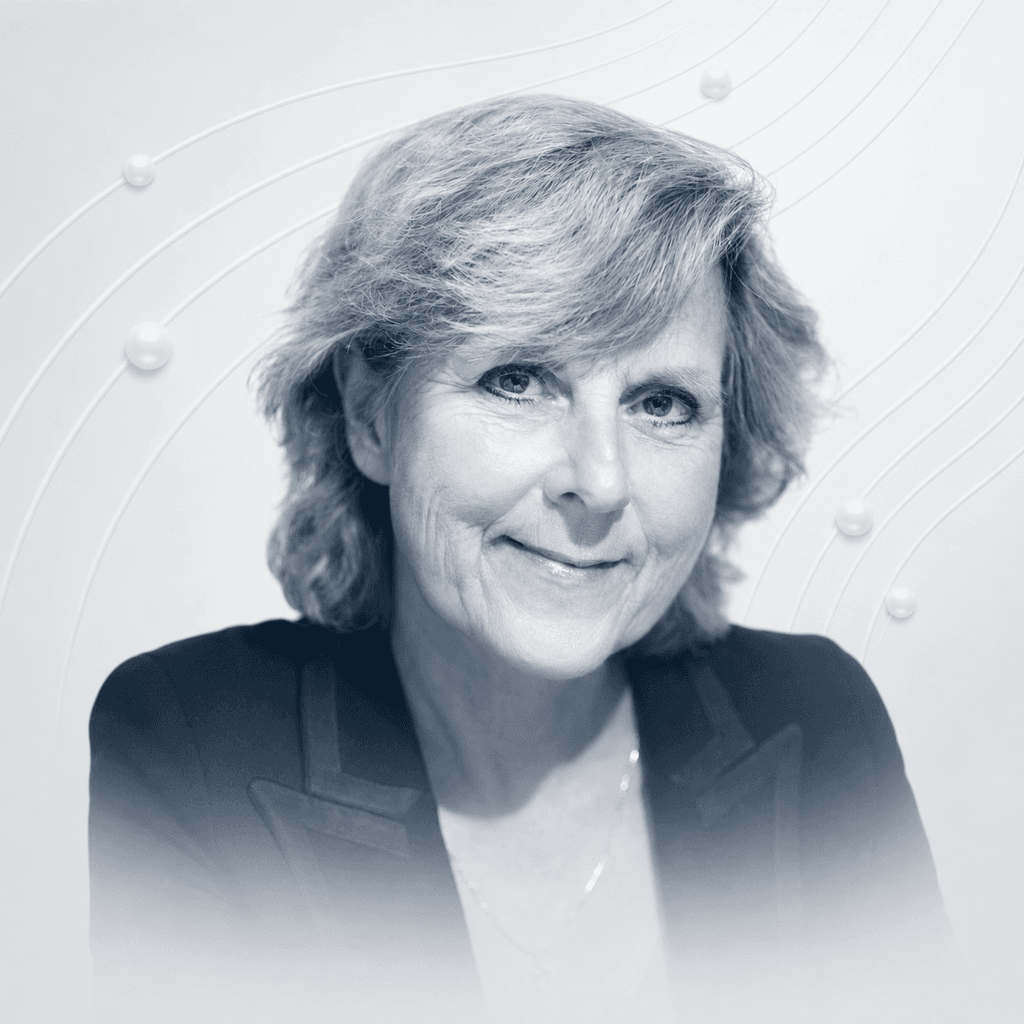
Connie Hedegaard on climate policy and EU politics
Episode 22 30.03.2021
-
 play_arrow
PLAY EPISODE
Description arrow_drop_down

Description
How do you push 27 EU member states toward a single climate target when every country has different interests? Former EU Climate Commissioner Connie Hedegaard reveals the invisible mechanics of political collaboration , from backroom negotiations to cross-sector coalition building. Subscribe for more episodes on how collaboration works under real-world pressure. Connie Hedegaard brings a rare combination of journalism, national politics, and EU-level policymaking to a conversation about what collaboration actually looks like when the stakes are planetary. Having served as Denmark’s Minister of the Environment and then as European Commissioner for Climate Action, she led the political process that produced the EU’s 40 percent climate targets for 2030 , a precursor to the Paris Agreement. The central insight is that political collaboration operates nothing like the textbook version. Hedegaard describes a process where formal institutions are only one layer of a much more complex system. Achieving climate targets required simultaneous engagement with knowledge institutions, businesses, NGOs, civil society, and informal networks , pushing buttons inside and outside the political world that most observers never see. Hedegaard draws a sharp distinction between political and academic collaboration. Researchers can pursue their own truth; politicians must find landing zones. Compromise is not a weakness but the operating system of democratic policymaking. This creates a fundamental tension when scientists produce relevant knowledge but fail to understand the decision-making processes through which that knowledge must travel to have impact. The conversation addresses the Copenhagen COP15 experience directly. Hedegaard describes how the failure to reach a binding agreement revealed the limits of multilateral collaboration when trust breaks down between major powers. The lesson was not that collaboration is impossible at scale, but that process design matters enormously , who is in the room, how information flows, and whether participants feel ownership of the outcome. On building coalitions, Hedegaard offers a concrete example: the Beyond Oil and Gas Alliance. It started not with governments but with philanthropic foundations convening stakeholders, broadening the circle, building shared understanding, and only bringing the initiative to the political arena when it was mature enough to succeed. This staged approach, starting small, building trust, then scaling, emerges as her model for effective collaboration. She identifies short-term thinking as humanity’s greatest obstacle to sustainable collaboration. If she could change one thing, it would be replacing instant self-interest with a genuine sense of responsibility for future generations , not as a catchphrase but as embedded behavior. Part of the Ernst Strüngmann Forum series on Collaboration, produced with the Convergent Science Network.
Tagged as:
climate policy Climate Targets EU politics Knowledge Political Collaboration Process
About the author call_made
CSN Podcasts
Both the triumphs of humanity and its most evil deeds have resulted from collaboration. In a time where humanity is required to aspire to the former and minimize the latter, the question arises of how collaboration arises and why it fails. Surprisingly, this phenomenon, so central to who we are, is not well understood. Hence, a collaborative effort is required to understand collaboration in its full biological, psychological, sociological, cultural, and economic complexity and to translate this understanding into operational impact. This series of podcasts is one step toward achieving these complementary goals. The Collaboration Podcast presents interviews with people who are central orchestrators of collaboration in various domains including business, government, science, art, health, sustainability, and the military. The discussions were conducted by Prof. Dr. Paul F.M.J. Verschure and members of the Program Advisory Committee of the Ernst Strungmann Forum on Collaboration (https://www.esforum.de/forums/ESF32_Collaboration.html) during 2021 and had the goal to sketch a map of opportunities, challenges, and obstacles in human collaboration. The forum took place in May 2022, and now we would like to share this series of interviews with a broader audience. The full report of the Forum will be published in 2023 by MIT Press. The podcast was produced by the Convergent Science Network (https://www.convergentsciencenetwork.org/). Context: The stability of social systems depends critically on realizing sustainable methods of “collaboration,” yet how and by which means collaboration is achieved is not clearly understood; neither are the conditions or processes that lead to its breakdown or failure. Collaboration can be understood as cooperation between agents toward mutually constructed goals. Part of the reason for our lack of understanding is that the phenomenon of collaboration is, by nature, a highly multidisciplinary problem, and effective research into its complexities has been difficult to achieve across the broad range of scientific and technical disciplines involved. The need for a fundamental understanding of collaboration, however, has become increasingly important. Not only does humankind demand answers as it attempts to address critical challenges at multiple scales (e.g., climate change, migration, enhanced automation, social and economic inequality), but ever-increasing technological and economic means of interconnecting people and societies are disrupting long-established, familiar patterns of how we interact. Radical technological changes that are ongoing have the potential to reshape collaboration in ways that are currently hard to predict or influence (e.g., by altering configurations in interaction, information creation, and modes of communication). On one hand, such changes could disrupt hitherto stable forms of collaboration by affecting critical communication channels and traditional roles, as can be observed in the rapidly changing patterns in governance, commerce, and social interaction. Conversely, technology could lead to the emergence of novel, successful forms of collaboration that deviate from traditional “hierarchical” architectures. Evidence of this can be seen in areas as diverse as highly automated manufacturing plants, the open science movement, collaborative software repositories, user-centered services, and the sharing of economy-based modes of organization. Without a fundamental understanding of the mechanisms, processes, and boundary conditions of collaboration, it is not possible to evaluate or predict which of these possible scenarios are sustainable or even plausible. The Forum “How Collaboration Arises and Why it Fails” (May 8–13, 2022, Location: Frankfurt am Main, Germany) Chairs: Andreas Roepstorff and Paul Verschure Program Advisory Committee: Jenna Bednar, Julia R. Lupp, Bhavani R. Rao , Andreas Roepstorff, Ferdinand von Siemens, and Paul Verschure
Episodes
play_arrow
play_arrow

play_arrow

play_arrow
Timestamp
- fast_forward00:00:05 - Welcome to the Convergent Science and Ernst Schumann Forum podcast on collaboration.
- fast_forward00:00:10 - I'm Paul Verhoor, and together with my colleague Andreas Roopstorf,
- fast_forward00:00:14 - we speak with Connie Hedegaard.
- fast_forward00:00:16 - Connie was European Commissioner for Climate Action in the European Commission
- fast_forward00:00:20 - and hosted the United Nations Climate Change Conference in Copenhagen in 2009
- fast_forward00:00:25 - on behalf of the Danish government.
- fast_forward00:00:28 - Currently, she chairs the European Commission's Mission Board on Adaptation to Climate Change.
- fast_forward00:00:34 - Connie discusses how collaboration occurs in a political context.
- fast_forward00:00:40 - Welcome, Connie, to our podcast. Thank you very much.
- fast_forward00:00:44 - Great that you could join us. But now before we really delve into the topic of collaboration,
- fast_forward00:00:50 - it would be extremely helpful where you could give us a bit of a sketch of your
- fast_forward00:00:56 - personal trajectory that brought you to where you are today in your professional life.
- fast_forward00:01:06 - I became a minister of the environment back in 2004 in Denmark.
- fast_forward00:01:13 - There I guess it was on day four that there was this guy in the ministry looking
- fast_forward00:01:18 - me into the eyes and said, by the way, what do you intend to do with the climate?
- fast_forward00:01:24 - That was quite a question to have after four days in the office.
- fast_forward00:01:28 - And I would say that since then that has been one of the topics that I have
- fast_forward00:01:34 - really been working with because my sense is that the more you know about climate change,
- fast_forward00:01:40 - the more you also understand why it's urgent that we address it,
- fast_forward00:01:44 - that we cope with it and that's why that's what I've been doing for five, six years as a minister,
- fast_forward00:01:50 - then five years as a EU commissioner and since the last six years or so from
- fast_forward00:01:56 - many different roles in different courts where sort of the golden thread would
- fast_forward00:02:01 - still very much be on what to do about climate change in business,
- fast_forward00:02:04 - in the investment community,
- fast_forward00:02:06 - in organizations, at Aarhus University and other places.
- fast_forward00:02:10 - But then before you became a minister, you came from an academic environment.
- fast_forward00:02:16 - No, I have an academic degree, but I was before that 14 years working as a journalist
- fast_forward00:02:23 - and had sort of a late night current affairs magazine,
- fast_forward00:02:28 - Denmark, known as Deadline, where you could sort of set each night.
- fast_forward00:02:35 - You could sort of decide what should be sort of the topic of the day.
- fast_forward00:02:40 - What is the most important thing to discuss today? And like many other people,
- fast_forward00:02:44 - I had this, you know, if it's going to be climate, can we find something else
- fast_forward00:02:50 - because it's complex, it's difficult.
- fast_forward00:02:52 - But that was at that time, of course, today would be much more sort of a natural thing.
- fast_forward00:02:58 - And you could also assume that people would have sort of a basic knowledge about
- fast_forward00:03:01 - what the challenge is all about.
- fast_forward00:03:04 - Right. So, Connie, what is collaboration and what is it good for?
- fast_forward00:03:12 - Well, as you can hear, I have a political background. In politics,
- fast_forward00:03:16 - you can't do anything unless you collaborate.
- fast_forward00:03:19 - I mean, it's not a one man or one woman show. You really have to work with others
- fast_forward00:03:25 - in order to achieve anything.
- fast_forward00:03:27 - And by the way, that is also sometimes where I see the academic world and the
- fast_forward00:03:33 - political world clashing.
- fast_forward00:03:35 - Because as a researcher, I know that many researchers are collaborating with
- fast_forward00:03:40 - others, but often you can sit there and you pursue your own truths.
- fast_forward00:03:45 - In politics, it's not enough that you believe that you yourself know what the
- fast_forward00:03:50 - truth is. I mean, you have to compromise.
- fast_forward00:03:53 - You have to give in. You have to identify landing zones.
- fast_forward00:03:59 - So compromise and collaboration, I would say, that is built in at least in the
- fast_forward00:04:05 - Danish political system, at least in the European policymaking process.
- fast_forward00:04:10 - You cannot achieve anything unless you understand not just how to work with
- fast_forward00:04:16 - other policymakers, but also
- fast_forward00:04:19 - you have to understand that decisions are not even political decisions.
- fast_forward00:04:24 - They are not just done within the formal political system.
- fast_forward00:04:30 - There are many other actors taking place in the decision-making,
- fast_forward00:04:34 - formally and informally.
- fast_forward00:04:36 - So you really have to work with the knowledge institutions.
- fast_forward00:04:41 - You have to work with business. You have to work with NGOs. You have to work with civil society.
- fast_forward00:04:48 - You really have to work with all sorts of actors.
- fast_forward00:04:54 - I normally say that when we back in 2014 finally had adopted at the EU level
- fast_forward00:05:01 - our 40% climate target for 2030.
- fast_forward00:05:05 - That was before Paris, that was in the run-out to the Paris Agreement.
- fast_forward00:05:09 - I mean, if people really knew how many buttons you had to push inside and outside
- fast_forward00:05:18 - the political world in order to make that happen.
- fast_forward00:05:22 - But I mean, I could write a whole book about how many buttons you had to push in order to pull it off.
- fast_forward00:05:28 - And that sometimes clashes with the textbook perception of how politics are being done.
- fast_forward00:05:37 - Because then you would say, yes, but politics is being done in the parliament
- fast_forward00:05:41 - or in the European institutions or whatever.
- fast_forward00:05:44 - There are some people elected to do that. But it's a much more complex game.
- fast_forward00:05:49 - And I think it gets ever more important for different stakeholders and environment
- fast_forward00:05:56 - these days who want to deal with the complex issues of our time to understand
- fast_forward00:06:02 - the complexity of decision making if they are going to make themselves heard.
- fast_forward00:06:07 - But for instance, also for the academic community, really to understand how
- fast_forward00:06:14 - these systems work, I would say is crucial in order to bring your knowledge into play.
- fast_forward00:06:22 - If you don't understand these processes, you can produce a lot of interesting
- fast_forward00:06:27 - and relevant knowledge out there.
- fast_forward00:06:29 - And then you could afterwards be really puzzled how come that the knowledge
- fast_forward00:06:34 - I have produced is not being reflected.
- fast_forward00:06:37 - So there is something there how different spheres will have to understand each
- fast_forward00:06:43 - other and benefit from each other and sort of co-fertilize each other.
- fast_forward00:06:49 - There is something I think we need to do much better.
- fast_forward00:06:53 - And I think that that is extremely difficult. It's easy to say that we should
- fast_forward00:07:00 - get rid of the silos. Everybody would sign up to that.
- fast_forward00:07:03 - But how do we really do it?
- fast_forward00:07:06 - How do we really work across silos, but not just across different knowledge
- fast_forward00:07:14 - hubs and specialties and expertises, but also between different policy levels, for instance,
- fast_forward00:07:21 - local, regional, national?
- fast_forward00:07:23 - I have a question, though.
- fast_forward00:07:25 - If we now step a little bit back from these really complex processes that you're describing,
- fast_forward00:07:30 - and I would like to learn more about them, but what are the defining features
- fast_forward00:07:36 - that makes them collaborative or not? What makes it a collaboration?
- fast_forward00:07:42 - What do people share to make it collaborative? Yeah, I think the first thing
- fast_forward00:07:49 - is to have sort of a shared perception that there is a problem,
- fast_forward00:07:52 - obviously, that at least would be in the political world.
- fast_forward00:07:56 - The other thing, if you're going to have real collaboration leading to anything,
- fast_forward00:08:01 - you need to be able to understand your counterpart's interests.
- fast_forward00:08:07 - And sometimes when results are not being produced, it is sometimes.
- fast_forward00:08:15 - Out of a lack of profound understanding of where do your counterparts come from?
- fast_forward00:08:23 - What is their profound interest?
- fast_forward00:08:25 - Where do they not look eye to eye to the problem the way you do?
- fast_forward00:08:31 - So really to understand the other and again to accept that you cannot have it
- fast_forward00:08:38 - 100% your way because the others have some other interest.
- fast_forward00:08:43 - And really to understand that
- fast_forward00:08:45 - is probably the first prerequisite for being able to create any progress.
- fast_forward00:08:51 - Thank you, Conny. This is really, really interesting. And it almost redefines
- fast_forward00:08:55 - the political process as one that has to deal with collaboration.
- fast_forward00:09:00 - Now, you have experiences both from a national Danish context and from a European context.
- fast_forward00:09:05 - Would you say that it's the same things that counts in these two arenas?
- fast_forward00:09:09 - Or did you experience fundamental differences in how collaborations unfolded
- fast_forward00:09:14 - and what might make them stop?
- fast_forward00:09:18 - I'm sure that there are differences, but I think that the main observation is
- fast_forward00:09:25 - that it is not as different as one would assume.
- fast_forward00:09:30 - I mean, if you follow the debates in Denmark, but I'm sure it goes for every
- fast_forward00:09:35 - member state of the European Union, people would normally have this perception
- fast_forward00:09:40 - that it's so different down there in Brussels.
- fast_forward00:09:44 - And then you find out that, no, actually, it's not.
- fast_forward00:09:48 - Yes, it makes a difference whether you make regulation for 5.8 million people
- fast_forward00:09:53 - in Denmark or for 500 million people in Europe.
- fast_forward00:09:57 - But basically, the mechanisms to arrive to a decision is not that different.
- fast_forward00:10:05 - The interests, the lobbyists, they are even stronger at the European level.
- fast_forward00:10:12 - I mean, it goes without saying that if you, instead of one configuration of industry,
- fast_forward00:10:16 - you have that times 27 for each, one for each member state that they are working
- fast_forward00:10:24 - together at the European level, they get really powerful and they have many resources.
- fast_forward00:10:28 - So, the sizes and the proportion and the dimension can be different,
- fast_forward00:10:36 - but basically, the tools to make policy, they would be more or less the same.
- fast_forward00:10:42 - And maybe also to the surprise of some, it does not necessarily take longer
- fast_forward00:10:47 - time from you having an idea you want to carry through in a national context,
- fast_forward00:10:55 - respectively, in a European context.
- fast_forward00:10:57 - It does not necessarily take longer
- fast_forward00:10:59 - time to get big pieces of legislation through at the European level.
- fast_forward00:11:04 - And I guess that is also linked to the fact that the processes and procedures
- fast_forward00:11:08 - are not, in principle, they are not that different.
- fast_forward00:11:13 - Now, you mentioned that almost after the fifth day as a minister for the environment,
- fast_forward00:11:18 - it became clear to you that something needed to be done about the climate, right?
- fast_forward00:11:22 - And in a sense, since then, you haven't really looked back that that has been
- fast_forward00:11:26 - the main focus for what you did.
- fast_forward00:11:27 - Do you think that there is something particular about collaborating with respect
- fast_forward00:11:32 - to the climate and these kind of long-term and large-scale projects relative
- fast_forward00:11:37 - to other types of political work?
- fast_forward00:11:39 - Or would it also be the same, that it's really the same mechanisms at the stake
- fast_forward00:11:43 - in the same toolbox that's available?
- fast_forward00:11:46 - I think there are two differences. You touched upon the one,
- fast_forward00:11:50 - the short-term versus the longer-term.
- fast_forward00:11:53 - Now, unfortunately, because we actually start to feel climate change,
- fast_forward00:11:59 - now climate change is not a theoretical thing happening 10 years from now.
- fast_forward00:12:03 - It's kicking in. We feel it. So now it's getting more into the short-term politics
- fast_forward00:12:08 - as well. And in that sense, that is good because that is where it's needed.
- fast_forward00:12:15 - But I think that there is a difference in
- fast_forward00:12:18 - the complexity because you cannot cope in a cost-efficient and meaningful and
- fast_forward00:12:27 - fast enough way with climate change unless you really work across all the silos or work with the silos.
- fast_forward00:12:36 - You know, it's about energy, obviously.
- fast_forward00:12:41 - It is about transportation. It's about how we produce our food.
- fast_forward00:12:47 - It is about our consumption patterns, meaning it's very much at the core of
- fast_forward00:12:51 - the way we grow our economies.
- fast_forward00:12:53 - It's about geo-strategy.
- fast_forward00:12:55 - It's about our relations to other parts of the world and so on and so forth.
- fast_forward00:13:00 - It more or less has it all. It's also a security issue. It's about refugees.
- fast_forward00:13:05 - So, I mean, the complexity.
- fast_forward00:13:09 - When it comes to climate change, I would argue is even bigger than if you say,
- fast_forward00:13:17 - okay, how do we reform our school system?
- fast_forward00:13:20 - Or how do we change our pension system?
- fast_forward00:13:23 - How do we make a reform there? Here it is more complex.
- fast_forward00:13:27 - And it's of course also complex because it cannot just be a national topic,
- fast_forward00:13:33 - it has also, it will also inevitably end up being also an international,
- fast_forward00:13:41 - to have an international dimension.
- fast_forward00:13:44 - And that's, of course, where another layer of complexity is added.
- fast_forward00:13:50 - But Connie, now you identified two key features, right?
- fast_forward00:13:54 - On the one hand, it is to understand that there's a common problem and then
- fast_forward00:14:00 - to also have empathy with the perspective of the other parties,
- fast_forward00:14:06 - the other silos in that discussion.
- fast_forward00:14:09 - But now, if indeed a successful collaboration starts with identifying or having
- fast_forward00:14:16 - a common view on the problem, also with climate change, this is not necessarily the case.
- fast_forward00:14:22 - So how do you shape that common understanding of the problem?
- fast_forward00:14:29 - I think when it comes to climate, the IPCC and that process has helped a lot,
- fast_forward00:14:35 - and that is contrary to many other problems.
- fast_forward00:14:38 - It is, by the way, also contrary to, for instance, biodiversity.
- fast_forward00:14:41 - It's also a hugely complex issue.
- fast_forward00:14:45 - I'm not saying that there is not science there. Of course, there's a lot of
- fast_forward00:14:49 - science, but this structured way of presenting the science in the climate field
- fast_forward00:14:54 - that we have seen through the International Panel on Climate Change,
- fast_forward00:14:58 - that has helped to provide a profound joint understanding of the problem.
- fast_forward00:15:11 - It has taken much too long for my taste.
- fast_forward00:15:14 - But I mean, even if you are Saudi Arabia, an oil nation, or you are other gas and oil or coal states,
- fast_forward00:15:21 - today, you saw it in Glasgow recently, today you will not anymore hear countries
- fast_forward00:15:29 - questioning whether there is a problem or not.
- fast_forward00:15:33 - The scientific case has been made and has been accepted, and that is one of
- fast_forward00:15:39 - the reasons why it seems that the world, broadly speaking.
- fast_forward00:15:44 - Is now moving more and faster into the hows, how to do it, what to do.
- fast_forward00:15:52 - That was the case, say, 10 years ago, where there was still a number of countries
- fast_forward00:15:58 - who would use endless time in international for us to question whether there was a real issue or not,
- fast_forward00:16:06 - or whether we could not wait for action or not.
- fast_forward00:16:08 - So science has been extremely powerful there. That's interesting, right?
- fast_forward00:16:15 - Because you're implying that all the actors, even this complex debate on climate
- fast_forward00:16:20 - change, are in the end rational and also influenced by facts.
- fast_forward00:16:27 - Would you indeed believe that?
- fast_forward00:16:31 - If it was so simple, then of course the world would have gotten its act together, say, 20 years ago.
- fast_forward00:16:37 - So it takes...
- fast_forward00:16:41 - A long time to get to the stage where you stand on a common denominator of profound.
- fast_forward00:16:50 - Recognition that we must be science-based. How do you get there?
- fast_forward00:16:56 - That's the surprising thing, right? Like you say, if everyone would have been
- fast_forward00:17:00 - rational and fact-oriented, we would have done it after the Club of Rome wrote
- fast_forward00:17:04 - this report. But that didn't happen, right?
- fast_forward00:17:07 - What's the problem? How do you overcome it? I think two things that the IPCC
- fast_forward00:17:13 - reports have got even more sort of precise, even more serious,
- fast_forward00:17:18 - even more knowledge has been produced.
- fast_forward00:17:20 - But of course, it has also helped that reality kicked in.
- fast_forward00:17:29 - And that is, of course, the negative thing, that it's not enough,
- fast_forward00:17:33 - say, back in 10, 15 years ago, it was not enough as a scientist to warn people what would come by 2020.
- fast_forward00:17:44 - 20 because somehow man
- fast_forward00:17:48 - is constructed in in
- fast_forward00:17:50 - the way that many people need to
- fast_forward00:17:54 - stand you know with with a flooded basement
- fast_forward00:17:57 - before they really understand oh that
- fast_forward00:18:00 - was what they were warning us against so it's it's a combination of ever more
- fast_forward00:18:06 - solid science ever more irrefutable science that also business and even the
- fast_forward00:18:13 - oil companies and everybody cannot any longer refuse this there.
- fast_forward00:18:18 - And then in combination with reality kicking in.
- fast_forward00:18:22 - And that also means with the economic consequences and the human consequences also being felt.
- fast_forward00:18:29 - That is, of course, pushing things further than would also be the case.
- fast_forward00:18:34 - But Connie, I don't want to be polemic about it, But this point you make now
- fast_forward00:18:40 - about also reality kicking in,
- fast_forward00:18:43 - Then you could argue that actually science has failed to get the message across.
- fast_forward00:18:47 - Because we first have to see islands disappear and jungles disappear and so
- fast_forward00:18:52 - on before, let's say, a significant group of actors.
- fast_forward00:18:59 - You can say that science has not been strong enough, even in an area where they
- fast_forward00:19:07 - are stronger and are more being listened to than in so many other areas.
- fast_forward00:19:11 - But still, I mean, we got the less than two degrees into the Copenhagen Accord
- fast_forward00:19:16 - from 2009, and their scientists were still warning us against,
- fast_forward00:19:21 - we would really feel climate change by 2020.
- fast_forward00:19:24 - So I don't think it's fair to say that people only reacted when sort of reality kicked in.
- fast_forward00:19:32 - There are also different cultures and traditions. I mean, in Europe,
- fast_forward00:19:37 - we have a tradition for having science-based politics, not just in this area, but in general.
- fast_forward00:19:43 - So there would be an inclination to listen much more to warnings coming from science.
- fast_forward00:19:50 - I mean, all things being equal, that would have a stronger weight in the political
- fast_forward00:19:56 - debate in Europe, for instance, compared to in some other areas.
- fast_forward00:20:02 - I also think, by the way, that for instance, China, they would also do that
- fast_forward00:20:07 - kind of analysis, but they have maybe not had the same interest,
- fast_forward00:20:11 - or they had thought that somebody else should do more and things like that.
- fast_forward00:20:14 - That has been a slightly different kind of discourse and discussion.
- fast_forward00:20:19 - But I think there are systems where it is natural to be science-based,
- fast_forward00:20:23 - and then there are political systems where that does not count as much.
- fast_forward00:20:29 - Andreas? us. Yeah. So thank you, Connie.
- fast_forward00:20:34 - Now, next, I would like to try to invite you into your machine room.
- fast_forward00:20:38 - So, you know, now we have been talking about general features of collaboration
- fast_forward00:20:42 - and situations where it might be more pertinent than needed.
- fast_forward00:20:46 - But you're also someone who has an enormous expertise in actually getting these things to work.
- fast_forward00:20:52 - And would it make sense to talk of a certain toolbox that you have available
- fast_forward00:20:56 - once you enter into a room and you know you need to come out with people being
- fast_forward00:21:01 - able to collaborate in ways that they couldn't do before?
- fast_forward00:21:05 - What's in your toolbox when you're facing a situation like this?
- fast_forward00:21:11 - Well, yeah, first, I think trust is absolutely a key tool.
- fast_forward00:21:18 - You must have sort of built up, it could be personally often,
- fast_forward00:21:25 - but could also be through sort of an institutional thing, we could maybe come
- fast_forward00:21:29 - back to that, but you have to have a certain level of trust,
- fast_forward00:21:32 - that there's not too much suspicion there.
- fast_forward00:21:35 - You know that your counterpart means what he or she says or is serious about
- fast_forward00:21:42 - this, and they know the same about you. So trust is really important.
- fast_forward00:21:47 - To be prepared, that was the thing I mentioned about understanding where your
- fast_forward00:21:52 - counterpart is coming from. What is their core interest?
- fast_forward00:21:55 - What is the debate in their country?
- fast_forward00:21:58 - I mean, it's easy to sit and tell India, now you should do this or that.
- fast_forward00:22:03 - But you also have to understand that, yes, but they still have 300 million people
- fast_forward00:22:06 - without access to electricity, just to take one example.
- fast_forward00:22:11 - So what is on top of your Indian counterpart? That is, how on earth will I get
- fast_forward00:22:15 - electricity to the 300 million citizens who haven't got it yet?
- fast_forward00:22:19 - I mean, to understand that, and then I think to know what you want,
- fast_forward00:22:28 - but also to have reflected on what you can live with.
- fast_forward00:22:34 - That's one of my hobby horses. I think that often, for instance,
- fast_forward00:22:38 - the way Europe does or makes policies is often that Europe, no matter what kind of topic we discuss.
- fast_forward00:22:47 - It takes so long time for the 27 member states to agree a position that they
- fast_forward00:22:52 - are so happy that now they have this position and then they go out in the world
- fast_forward00:22:56 - and then they hope that the rest of the world would subscribe to this position, but surprise,
- fast_forward00:23:00 - they don't. They have their own positions.
- fast_forward00:23:03 - So how can you both have sort of, you know, convened all the interests you need
- fast_forward00:23:09 - on your side, but also have sought the next step?
- fast_forward00:23:13 - Where are we going to land this so that we will not just have You know,
- fast_forward00:23:17 - discussions where people sit with their ideal positions, but they are not really
- fast_forward00:23:23 - inclined to move towards each other.
- fast_forward00:23:26 - And if you take, for instance, international climate conferences,
- fast_forward00:23:30 - that is often the case that there's the posturing.
- fast_forward00:23:33 - People tell you what they would like to see. Fine.
- fast_forward00:23:36 - And that can be good on day one, but it's not so good if that's what they also
- fast_forward00:23:40 - do on day 10 and then day 12. I mean, how to sort of bend your wills towards
- fast_forward00:23:47 - each other and identifying landing zones.
- fast_forward00:23:51 - And I think that those who are good at identifying landing zones,
- fast_forward00:23:55 - to read the room, to read the different positions and identify what could be common language here.
- fast_forward00:24:03 - They will also often be those who can sort of make a real impact on the outcome.
- fast_forward00:24:09 - Do you talk here about the importance of reading the room?
- fast_forward00:24:14 - Is there something about the physical co-presence that matters in these situations?
- fast_forward00:24:18 - There has been a lot of discussions about whether Brexit would have panned out
- fast_forward00:24:22 - in the same way if people had been able to actually meet up rather than meeting on Zoom.
- fast_forward00:24:27 - There is at least some ideas that there is something about being co-located
- fast_forward00:24:32 - in space that might be important in order to really do kind of the last leaps and jumps,
- fast_forward00:24:38 - both in shared understandings and also in coming up with decisions.
- fast_forward00:24:42 - What's your experience of this?
- fast_forward00:24:44 - Well, I'm not sure Brexit is a good example there because I think there were
- fast_forward00:24:49 - four years of Brexit talks before we had the lockdown due to COVID.
- fast_forward00:24:53 - And even during COVID, there were so many face-to-face meetings.
- fast_forward00:24:58 - But in general, I would say Zoom meetings can do a lot and it is useful for
- fast_forward00:25:06 - really, really many things.
- fast_forward00:25:08 - But you cannot read the room. You cannot read the faces. I can see you now.
- fast_forward00:25:14 - I can see sort of the surface of you, but I do not see the small,
- fast_forward00:25:19 - you know, the small glimpses in the eyes, the small, oh, this or that.
- fast_forward00:25:23 - Okay. If you're three in a room, in a Zoom room, it works. If you're seven, maybe it works.
- fast_forward00:25:29 - If you are 10, it's not possible. You cannot read what's really going on.
- fast_forward00:25:34 - So I would say where there are real disagreements, it is really,
- fast_forward00:25:41 - really difficult to chop over these disagreements in a virtual meeting.
- fast_forward00:25:47 - There are so many things virtual meetings can do.
- fast_forward00:25:51 - Exchange of information. You can get an impression of a different person bilaterally.
- fast_forward00:25:58 - You can have small groups working together. But if it's really tough negotiations,
- fast_forward00:26:02 - there I would argue that the limitations are because a lot of unsaid things, a lot of body language.
- fast_forward00:26:12 - Is needed in order not just to sort of, you know, I can zoom in on one and I
- fast_forward00:26:17 - can see his or her face, but I cannot read the room.
- fast_forward00:26:22 - So I cannot identify landing zones that can work for the room as such in a Zoom meeting.
- fast_forward00:26:31 - I would say that is also difficult. And the more disagreement there is,
- fast_forward00:26:37 - the less workable the Zoom tool will be.
- fast_forward00:26:43 - So do you have any particular things or routines you do in order to prepare
- fast_forward00:26:48 - yourself to enter into such a physical contested space?
- fast_forward00:26:52 - Because as you say, it's about being mentally prepared. It's about paying attention to the others.
- fast_forward00:26:57 - It's also about having a particular co-presence that allows for other people
- fast_forward00:27:01 - to see yourself or to read yourself there.
- fast_forward00:27:04 - Have you identified anything you do in order to be as constructive and effective
- fast_forward00:27:10 - as possible once you enter into that concrete space?
- fast_forward00:27:13 - I think that to really listen,
- fast_forward00:27:18 - I mean, not just hear what they say, but really listen, that is important to
- fast_forward00:27:25 - somehow show that you are willing to compromise.
- fast_forward00:27:32 - It depends on the situation. Sometimes you may go into a tough negotiation.
- fast_forward00:27:36 - You have to show that you're not willing to compromise.
- fast_forward00:27:39 - But really to be in a listening mood and to really understand what is not being said.
- fast_forward00:27:48 - That is probably one of the most important tools you have when you're going to a negotiation room.
- fast_forward00:27:56 - And how do you indicate to others that you have listened? Because in a sense,
- fast_forward00:28:00 - if the other person can't see the listening going on, then in a sense it doesn't work.
- fast_forward00:28:05 - Or if you can't see that the other person is listening, then it may not be...
- fast_forward00:28:08 - Are we talking about a physical or a virtual meeting now?
- fast_forward00:28:12 - Ideally in a physical meeting, but it counts for a virtual meeting as well.
- fast_forward00:28:15 - If the point is that trust is important, but actually realizing that the other
- fast_forward00:28:19 - is listening, or vice versa, that the other realizes that you are listening,
- fast_forward00:28:23 - If that's a defining feature, how does that get communicated?
- fast_forward00:28:27 - How does it come about? Well, I would say that in the political field,
- fast_forward00:28:31 - you can normally see when people are deviating from their written scripts.
- fast_forward00:28:40 - Normally, if you're a minister or a commissioner, you will not go into a room
- fast_forward00:28:44 - without having some kind of written preparation.
- fast_forward00:28:47 - But when you have a counterpart, if I sit there with the Chinese minister,
- fast_forward00:28:52 - I mean, you're in no doubt whether do we really listen?
- fast_forward00:28:57 - Are we getting into now where it is interesting? Are we getting into the core
- fast_forward00:29:03 - or are we hiding behind, you know, strange language or really not wanting to go into the core?
- fast_forward00:29:11 - You can read that. But when we talk about international negotiations,
- fast_forward00:29:16 - then it of course also requires that you,
- fast_forward00:29:20 - in your preparations or in your experience, that you also have some understanding
- fast_forward00:29:26 - of what kind of culture the person sitting in front of you has.
- fast_forward00:29:33 - Come from i mean is it the japanese it
- fast_forward00:29:36 - would be one thing is the chinese it's another thing is another
- fast_forward00:29:39 - european it's a sad thing you know what kind
- fast_forward00:29:42 - of sort of how frank can you
- fast_forward00:29:45 - be how polite or not polite can you be uh the person should not lose face you
- fast_forward00:29:53 - know it's important to know all these cultural codes or if you don't know them
- fast_forward00:29:59 - then at least be very much aware that that you don't know them,
- fast_forward00:30:01 - if you understand what I mean.
- fast_forward00:30:04 - Okay. But Conny, now we talk about negotiation.
- fast_forward00:30:10 - And in some sense, you could say, well, the negotiation is at the periphery
- fast_forward00:30:14 - of a collaboration because it is if you want a feeler to create a collaborative
- fast_forward00:30:21 - process with that opponent, right?
- fast_forward00:30:24 - So how does that movement then happen?
- fast_forward00:30:29 - Yeah. How do you approach that? Let's say you want to do some legislation for cars, car standards.
- fast_forward00:30:41 - And the car associations, almost as a definition, they will be against that.
- fast_forward00:30:49 - They will say it's too much.
- fast_forward00:30:51 - It will cost us too dearly. It is technologically impossible.
- fast_forward00:30:56 - You know, you will have all the arguments there. They, of course,
- fast_forward00:30:59 - know that when they say it's technologically impossible,
- fast_forward00:31:02 - they would know that, for instance, if it was when I was a commissioner,
- fast_forward00:31:05 - they would know that the commission services would have a rather clear picture
- fast_forward00:31:10 - of what is feasible and what is not feasible.
- fast_forward00:31:13 - But there it's a play, it's a game.
- fast_forward00:31:21 - But, of course, both parties know that it is in their mutual interest interests
- fast_forward00:31:25 - at a certain point when the respective positions have been made very clear.
- fast_forward00:31:32 - You also have to go into that space where you're trying to collaborate and find solutions together.
- fast_forward00:31:38 - I mean, how can I push them, the politician in that example,
- fast_forward00:31:42 - how can I push them as far as they can go?
- fast_forward00:31:48 - I cannot push them further than they have a mandate for or further than they
- fast_forward00:31:52 - really believe they can go without losing the competition to people from outside Europe or whatever.
- fast_forward00:31:58 - So how can I sort of push them to the maximum?
- fast_forward00:32:01 - And they will, of course, do the opposite. But from a certain point,
- fast_forward00:32:07 - both parties will know that it is in our mutual interest to.
- fast_forward00:32:13 - To work together on this, because they would fear that else some crazy politicians
- fast_forward00:32:20 - will just come up with something in the late night, nightly hour that they have
- fast_forward00:32:24 - no influence on, which they would not like.
- fast_forward00:32:26 - And on the other hand, seen from our perspective,
- fast_forward00:32:32 - if we don't bring them in, we would just have a hell and they can mobilize lots
- fast_forward00:32:38 - of workers and politicians in their regions that get nervous and all that.
- fast_forward00:32:44 - And so I think that in such an example, both will go to sort of the utmost of what they can do.
- fast_forward00:32:54 - And such a negotiation can take a long time, and it's not necessarily solved in one or two meetings.
- fast_forward00:33:00 - But at least I would say in the European tradition, there is also sort of this
- fast_forward00:33:06 - nobody always get it 100% their way.
- fast_forward00:33:11 - It's in the part of our democratic tradition that we know that I have to give
- fast_forward00:33:17 - you some, but you also have to give me some.
- fast_forward00:33:19 - And it's sometimes very much unsaid, but felt.
- fast_forward00:33:27 - When in this collaboration, is it my turn to sort of give you something?
- fast_forward00:33:35 - I mean, it's not not something you can write down,
- fast_forward00:33:39 - but it is just being felt in the room, at least as long as we come from the
- fast_forward00:33:45 - same democratic tradition,
- fast_forward00:33:47 - then there would be sort of a sense of what is a fair way of working together
- fast_forward00:33:54 - on this? Where is the fair deal?
- fast_forward00:33:57 - But then, in your view, are the structures in the European Commission geared
- fast_forward00:34:06 - towards towards building these kinds of collaborative engagements in terms of
- fast_forward00:34:11 - the protocols, how they're structured,
- fast_forward00:34:13 - how they're organized, the communication?
- fast_forward00:34:16 - No, I think it goes for many of our political institutions.
- fast_forward00:34:21 - For instance, climate, which is the area I know best.
- fast_forward00:34:25 - The way our organizations, our institutions, our procedures work.
- fast_forward00:34:34 - Are often much too slow. And I think that that is probably where we are being
- fast_forward00:34:42 - challenged the most in years to come,
- fast_forward00:34:44 - if we're going to deliver on all the nice targets on climate and things like
- fast_forward00:34:49 - that, that we have this, everybody should have a say.
- fast_forward00:34:53 - And, you know, it takes two months to listen to that, and you have a hearing
- fast_forward00:34:59 - there, and that takes so and so many weeks. and it has to go back and forth and back and forth.
- fast_forward00:35:05 - And somehow our systems, our administrations, are not really equipped with the mandates,
- fast_forward00:35:14 - often not equipped with the mandates to go across and to act across the silos.
- fast_forward00:35:21 - Each has their own silo-created mandate, if you will. Here, we need people to
- fast_forward00:35:28 - work together across silos in an expedient and effective manner.
- fast_forward00:35:35 - But do they have the mandate for that? And if they don't, we spend a lot of
- fast_forward00:35:41 - time getting files from here, up there,
- fast_forward00:35:46 - in the silo, down there, and then it can be sent over in the next silo,
- fast_forward00:35:49 - up and down, and then the next, up and down.
- fast_forward00:35:52 - And there it starts to be felt that we cannot move as fast and as urgent as
- fast_forward00:36:04 - the targets that we have set that we want to achieve.
- fast_forward00:36:10 - But you indicate something really important now, right?
- fast_forward00:36:14 - Because this might suggest that in order to support this notion of consensus
- fast_forward00:36:20 - and trust, you pay a price and that price is time.
- fast_forward00:36:25 - Would you see it like that, or do you see it differently? No, I agree.
- fast_forward00:36:30 - A very good example is if you take permitting, it could be for solar or for wind or whatever.
- fast_forward00:36:35 - We hear everybody, and it takes forever. You could take it in Germany.
- fast_forward00:36:39 - I think the average time to get a permitting through is maybe seven years or something like that.
- fast_forward00:36:44 - So it's very democratic. It's very inclusive.
- fast_forward00:36:47 - Everybody can have a say. But in the end, we lose time, and by losing time,
- fast_forward00:36:55 - we also risk losing competitiveness, and we risk losing some of the jobs that
- fast_forward00:37:02 - those people that we want to sort of include in all this are dependent on.
- fast_forward00:37:06 - So we have a real dilemma here, particularly when we compare to other systems.
- fast_forward00:37:14 - Take the Chinese system. They have decided that they want to,
- fast_forward00:37:18 - you know, their five-year plan, they say we want to be world leaders in this
- fast_forward00:37:22 - and that and this and that technology.
- fast_forward00:37:23 - And they throw money into the fields, resources, scientists,
- fast_forward00:37:29 - whatever, into the field, and they do not have to have all these democratic procedures.
- fast_forward00:37:34 - So how in Europe, for instance, where we want to stick to our democratic procedures,
- fast_forward00:37:41 - where we want decisions to have legitimacy.
- fast_forward00:37:46 - How can we take decisions a bit more efficient so they are a bit more fit for purpose?
- fast_forward00:37:55 - And yet still keep the core value of listening to people, having all the elements
- fast_forward00:38:05 - on the table before we take a decision.
- fast_forward00:38:08 - And there I think we have a huge dilemma and a huge democratic challenge in front of us. Right.
- fast_forward00:38:15 - Andreas? So you have been mentioning a few times the need to work across silos
- fast_forward00:38:20 - and the difficulty in, so to say, making sure that each silo doesn't follow
- fast_forward00:38:25 - their own logic, but that they come to commit to a larger perspective.
- fast_forward00:38:29 - Could you maybe reflecting back on a few successes you have had,
- fast_forward00:38:33 - where you succeeded in making things work across silos?
- fast_forward00:38:37 - What did it take to do that? Were there any kind of tricks that made it possible?
- fast_forward00:38:41 - Were there any insights that made it possible to transcend these silo thinkings?
- fast_forward00:38:48 - Well, to take one example, in the midst of the economic crisis,
- fast_forward00:38:53 - the financial crisis in Europe, we actually managed to get all member states
- fast_forward00:38:56 - behind setting a target for 2030 of 40% reductions in Europe.
- fast_forward00:39:03 - That was not a given thing.
- fast_forward00:39:05 - How could we do that at a time where there was a banking crisis,
- fast_forward00:39:09 - a financial crisis, 26 million unemployed people in Europe, and so on and so forth?
- fast_forward00:39:16 - There was a lot of other things on decision-makers' minds. And I think that they're.
- fast_forward00:39:24 - Maybe it's sad to say it, but it is not enough just to come with the science,
- fast_forward00:39:31 - the scientific case for climate, for instance.
- fast_forward00:39:34 - You also have to be able to prove the economic case and the job case.
- fast_forward00:39:42 - And these things have to go hand in hand. Because if you don't,
- fast_forward00:39:46 - if you cannot do that, you cannot convince those with the other portfolios.
- fast_forward00:39:52 - But if you really can put all this together, you can also work with those who
- fast_forward00:39:59 - may be from the outset thought, why should I bother with that?
- fast_forward00:40:05 - But then suddenly they can see, oh, there are co-benefits, oh,
- fast_forward00:40:08 - there are jobs, oh, this makes economic sense, oh, this will make our innovation scale up.
- fast_forward00:40:14 - You know, you have to identify many elements in order to overcome some of the
- fast_forward00:40:22 - silo reluctancy, if you want.
- fast_forward00:40:25 - And I think that was, for instance, what we did there.
- fast_forward00:40:28 - But we had to have also the economic case ready,
- fast_forward00:40:32 - meaning that climate people or environment people who would maybe normally be in their own silo,
- fast_forward00:40:39 - they would also have to have much more economic insight and economic expertise also in-house,
- fast_forward00:40:47 - or they will not succeed in convincing those from the other silos.
- fast_forward00:40:55 - But I guess you could argue that projecting like 20 or 25 years into the future
- fast_forward00:40:59 - at a time when Europe was in big crisis, you know, that it's a little bit...
- fast_forward00:41:06 - It's the arguments for economy and jobs are kind of difficult to really validate that support.
- fast_forward00:41:12 - Wasn't it also a matter of creating kind of a sense of a larger vision or some
- fast_forward00:41:17 - kind of a larger urgency that was needed?
- fast_forward00:41:19 - In other ways, don't you need also kind of a larger narrative that makes it
- fast_forward00:41:24 - possible to unfold all of these things in order to do that kind of transcending the silos?
- fast_forward00:41:29 - Because, you know, no one knows what's going to happen in the job market in 20 or 25 years anyway.
- fast_forward00:41:33 - There's so much uncertainty related to that. So wasn't there an element of somehow
- fast_forward00:41:38 - creating a larger narrative in it too?
- fast_forward00:41:41 - Yes, but I think that if you talk about EU and the EU institutions.
- fast_forward00:41:48 - Since 2000, well, five, six, there has been a general acceptance of the science,
- fast_forward00:42:00 - of the overall narrative, if you want.
- fast_forward00:42:02 - You can go back and you can find all sorts of European leaders saying,
- fast_forward00:42:06 - yes, we must do this. Yes, because of climate.
- fast_forward00:42:10 - Yes, because else this or that would happen.
- fast_forward00:42:12 - Already in 2010, we had our 2050 roadmap. We had the pricing of carbon and emissions
- fast_forward00:42:18 - trading scheme from back in 2006 and 2007 entering into force.
- fast_forward00:42:25 - So I think that that is just something that the urgency was there,
- fast_forward00:42:29 - the narrative was there.
- fast_forward00:42:31 - But what I'm saying is that when you then are in the midst of,
- fast_forward00:42:35 - at that time, an economic crisis or now a COVID crisis and a pandemic,
- fast_forward00:42:41 - then it is that you need also to prove that if you are serious about that agenda,
- fast_forward00:42:48 - that we all agree upon is needed and important.
- fast_forward00:42:53 - Then you must also be able to prove.
- fast_forward00:42:58 - Not only where you want to go, but also how you can get there without harming
- fast_forward00:43:04 - the jobs situation as we go.
- fast_forward00:43:09 - So I think it's more the other way around, because the basic fight to have people
- fast_forward00:43:14 - in Europe or political leaders in Europe accepting that there is an overall
- fast_forward00:43:20 - climate change challenge that we need to address,
- fast_forward00:43:23 - I think that battle was won some time ago.
- fast_forward00:43:26 - Of course, now what happened when, for instance, Ursula von der Leyen was going
- fast_forward00:43:30 - to become the new president of the EU Commission,
- fast_forward00:43:34 - she could not get through that process to land her that job until she had pledged
- fast_forward00:43:44 - to make climate part of the key narrative for Europe.
- fast_forward00:43:49 - So that is a good thing and a strong thing, and that is what they have to deliver on now.
- fast_forward00:43:57 - And in these kind of larger narratives, do you think that hope or fear were
- fast_forward00:44:01 - the more important in shaping it?
- fast_forward00:44:03 - Because again, projecting into the future, it can both be the fear of what might
- fast_forward00:44:07 - happen otherwise, or the hope that if we do this right, we are going to also
- fast_forward00:44:11 - have a competitive advantage relative to others.
- fast_forward00:44:14 - Does it make sense to separate these factors out?
- fast_forward00:44:17 - Well, I basically think you need both. Of course, if you just tell people that
- fast_forward00:44:22 - it's about gloom and doom, then
- fast_forward00:44:24 - there is a part of the population and the citizens you will not control.
- fast_forward00:44:30 - You know, get to open their ears to this kind of messages.
- fast_forward00:44:34 - So it's extremely important that there is also a positive narrative that there
- fast_forward00:44:38 - are solutions that they can see themselves in these solutions and that,
- fast_forward00:44:42 - that the solutions are not just theoretical.
- fast_forward00:44:45 - But it's tangible, something you can see, something that you want to be part of.
- fast_forward00:44:49 - Having said that though, I also do think that it is also needed that people
- fast_forward00:44:56 - understand the urgency.
- fast_forward00:44:57 - I mean, here the time factor is so crucial,
- fast_forward00:45:03 - and you can only get that message across if now and then you also remind people
- fast_forward00:45:10 - of some of the not-so-nice facts that people also have to relate to.
- fast_forward00:45:15 - So I think it's a combination.
- fast_forward00:45:17 - But if you only had the gloom and doom, I think that a portion of the populations
- fast_forward00:45:23 - would say, okay, then let's party while we still can.
- fast_forward00:45:26 - So I think it's extremely important to have both. And that is why right now
- fast_forward00:45:31 - I think that one of the most important things in this collaborative effort that
- fast_forward00:45:36 - should bring us to where we need to go is that business industries come forward
- fast_forward00:45:43 - showing their solutions,
- fast_forward00:45:45 - showing that, wow,
- fast_forward00:45:48 - that's smart. Oh, can we really do that?
- fast_forward00:45:51 - Oh, if we couple two digital solutions, how smart this could be,
- fast_forward00:45:55 - or this, whatever it is, thing or tool or product.
- fast_forward00:46:00 - Ah, that's smart. I want to be part of this.
- fast_forward00:46:03 - I mean, the electric car is a very, very good example. For example,
- fast_forward00:46:06 - when people once have had an electric car, they do not want to go back to an OECD car.
- fast_forward00:46:13 - So to have the solutions out there, to show it, I think that is absolutely key
- fast_forward00:46:19 - to move not the 20% frontrunners, but to carry the rest.
- fast_forward00:46:25 - So, Connie, what you indicated earlier is also this trade-off between expediency,
- fast_forward00:46:33 - time, and maintaining consensus and trust.
- fast_forward00:46:38 - But in some sense, also, if we now take the climate crisis as our example,
- fast_forward00:46:42 - or we can also look at COVID-19, actually, European society is running and accelerating
- fast_forward00:46:48 - towards some really serious obstacles.
- fast_forward00:46:52 - So, in a more negative perspective on that,
- fast_forward00:46:56 - what is our plan B for the collaboration if this very slow process of maintaining
- fast_forward00:47:03 - trust and consensus is just not getting us there? What's plan B?
- fast_forward00:47:09 - Yeah, and that is always a problem because as soon as you start to talk about
- fast_forward00:47:13 - plan B in politics, then you will never, ever have fulfillment of plan A.
- fast_forward00:47:18 - But I think that one place to start is, and you mentioned yourself the pandemic,
- fast_forward00:47:25 - to take some of the courage that many political leaders showed during the pandemic
- fast_forward00:47:33 - and presenting in clear language to people, what is the danger?
- fast_forward00:47:38 - What are we faced with here? What are the solutions?
- fast_forward00:47:42 - Also presenting unpleasant solutions to people. We saw that those who actually
- fast_forward00:47:47 - did so also gained respect from people, broadly speaking.
- fast_forward00:47:54 - So I think that,
- fast_forward00:47:57 - you know, to be straightforward. One of the things that I'm really scared of
- fast_forward00:48:01 - is when policymakers right now are too busy trying to tell people that we can
- fast_forward00:48:06 - make the biggest transformation maybe ever in the history of mankind without
- fast_forward00:48:12 - anybody feeling the same or without it costing anybody anything.
- fast_forward00:48:17 - I think that people look through that. I think a much more straightforward conversation.
- fast_forward00:48:24 - Sorry. sorry, a much more straightforward conversation presenting also some
- fast_forward00:48:30 - of the tough choices here, but to really show political leadership there,
- fast_forward00:48:35 - to get the knowledge out there, people understand.
- fast_forward00:48:38 - People don't believe those policymakers who tell them that, oh,
- fast_forward00:48:41 - you don't have to change anything.
- fast_forward00:48:43 - So it is not trustworthy anyhow, but to be really frank,
- fast_forward00:48:50 - and then I think that talking about collaboration, that as much as we have now
- fast_forward00:48:56 - been discussing and including big business in this conversation,
- fast_forward00:48:59 - I think it's high time to find deliberative ways to include interested citizens
- fast_forward00:49:06 - in this conversation, to have much more deliberative democracy,
- fast_forward00:49:11 - not asking people, what do you want to do with climate?
- fast_forward00:49:14 - How would people have meaningful answers to that?
- fast_forward00:49:19 - But for instance, should it be more expensive to fly or not?
- fast_forward00:49:23 - Should it be cheaper to take the train than to fly? You know, things like that,
- fast_forward00:49:28 - difficult political choices, but real choices, have established ways to include
- fast_forward00:49:36 - interested citizens in that kind of deliberations.
- fast_forward00:49:40 - I think that that would make it much easier five to ten years down the road.
- fast_forward00:49:50 - Now you're muted. You're muted, Paul. Yeah, sorry.
- fast_forward00:49:53 - Sorry, but Connie, what you're declaring is also a view going back to the Enlightenment, right?
- fast_forward00:50:00 - If we give people the knowledge, then they will also do something with that.
- fast_forward00:50:05 - So what you're speaking to are
- fast_forward00:50:07 - sort of the intrinsic properties now of the actors in the collaboration.
- fast_forward00:50:12 - And also earlier, you mentioned the role of empathy and trust.
- fast_forward00:50:16 - So in your perspective, when you walk in the room, for instance,
- fast_forward00:50:20 - think back in any situation you've been in around climate or other topics,
- fast_forward00:50:26 - do you feel that then indeed the sense or almost the drive for collaboration is a given,
- fast_forward00:50:34 - like an intrinsic feature of us as humans?
- fast_forward00:50:39 - Or is that something that you also have to cajole and create and enforce sometimes?
- fast_forward00:50:47 - Well, it's an intrinsic feature in the human being.
- fast_forward00:50:51 - I think scientists would have to tell us about that.
- fast_forward00:50:55 - But I think that in enlightened societies,
- fast_forward00:51:01 - I think that straightforward presentation of the facts and trying to include
- fast_forward00:51:07 - people who want to in the conversation, I think that leads to better results.
- fast_forward00:51:13 - That when you think you can just do it at the top and then hope that people will follow.
- fast_forward00:51:21 - I think also with social media and the digital options we have,
- fast_forward00:51:28 - we should pay more attention to better ways of including people in the conversation.
- fast_forward00:51:38 - And my impression normally is that if you really are frank with people and you
- fast_forward00:51:42 - get the knowledge out there. People are not idiots.
- fast_forward00:51:45 - Then they also understand why you do what you do or why you decide what you decide.
- fast_forward00:51:53 - But I think that it's correct that the really big risk we have also in Europe
- fast_forward00:51:57 - in years to come now, that is an increased polarization, not just because of
- fast_forward00:52:04 - climate. There are many other factors there.
- fast_forward00:52:07 - But climate can sort of push into that direction.
- fast_forward00:52:12 - And I see a huge risk in further polarization.
- fast_forward00:52:18 - But I think that to get knowledge out there, to get facts out there,
- fast_forward00:52:23 - to get straight talk out there, that is a prerequisite for avoiding that.
- fast_forward00:52:30 - And then I think that, for instance, what is very much needed in the climate
- fast_forward00:52:33 - field is to send a price signal.
- fast_forward00:52:35 - So there is a way to accommodate that, namely the way you create the tech system,
- fast_forward00:52:43 - the way you take care of people being fit for the jobs of the future through
- fast_forward00:52:49 - reskilling and upskilling.
- fast_forward00:52:52 - I mean, there are really many things that can be done so that people can see that this is also for me.
- fast_forward00:52:58 - It's not just something that those in power decide, and I'm just a victim of their decision.
- fast_forward00:53:04 - But I was also thinking about the examples you mentioned earlier,
- fast_forward00:53:07 - like as a commissioner, you walk in a room to negotiate with a Chinese minister,
- fast_forward00:53:12 - or you have to negotiate with the car industry.
- fast_forward00:53:15 - When you enter that room, do you assume these people are in this room to collaborate?
- fast_forward00:53:22 - Or not it depends very much
- fast_forward00:53:25 - on the situation i have to say i i have to
- fast_forward00:53:28 - leave here no later than a quarter past but but um it depends on the situation
- fast_forward00:53:34 - of course there would also be situations where you really feel that your counterpart
- fast_forward00:53:39 - is not here to collaborate your counterpart is here to try to prevent uh or
- fast_forward00:53:45 - yeah avoid that something is happening So,
- fast_forward00:53:48 - you cannot always count on that, but normally I think that at least in the political field,
- fast_forward00:53:59 - normally people are there to achieve some kind of outcome,
- fast_forward00:54:05 - some kind of common thing.
- fast_forward00:54:09 - And it can take too long and it can be frustrating.
- fast_forward00:54:15 - But in the end, normally some kind of common sense prevails.
- fast_forward00:54:21 - In the climate field, too slow and too little, too slow for sure.
- fast_forward00:54:28 - But I think that it's important to understand that it takes time also because
- fast_forward00:54:36 - if we talk about international politics,
- fast_forward00:54:39 - different countries have different interests and then
- fast_forward00:54:42 - that takes a long time and effort to overcome that but at a certain point there
- fast_forward00:54:49 - is the recognition that now we all have an interest in trying to move forward
- fast_forward00:54:55 - and often that point of recognition will come more or less at the same time as.
- fast_forward00:55:03 - The economic interest, big business, investors also start to see their interests
- fast_forward00:55:10 - in not holding back, but moving forward. Okay.
- fast_forward00:55:15 - So we have just a few minutes left, Connie, and there's just a few things I
- fast_forward00:55:19 - would like you to reflect on towards the end.
- fast_forward00:55:20 - So in your current position where you sit on boards of Aarhus University,
- fast_forward00:55:25 - of the KR Foundations and of others, you also have the possibility to design
- fast_forward00:55:29 - structures of collaboration by thinking about how should a university be organized,
- fast_forward00:55:34 - by thinking about, you know, which kind of grants to do, what kind of initiatives to launch.
- fast_forward00:55:39 - Launch, it's almost like designing a sphere within which particular types of
- fast_forward00:55:44 - collaborations can happen.
- fast_forward00:55:45 - Could you reflect a little bit on how do you deal with that situation? Let's take an example.
- fast_forward00:55:53 - We have now this Glasgow, we told this Beyond Oil and Gas Alliance,
- fast_forward00:56:00 - 11 countries signing up to we must go beyond oil and gas. We form an alliance.
- fast_forward00:56:06 - Where did that come from? It did not come out of the blue.
- fast_forward00:56:09 - In KR Foundation, we took the
- fast_forward00:56:11 - initiative some years ago for exactly what turned out to be this alliance.
- fast_forward00:56:17 - We convened a lot of interested philanthropic foundations and others,
- fast_forward00:56:22 - some knowledge people. You know, we convened them.
- fast_forward00:56:25 - So what do we do? We need to go beyond oil and gas.
- fast_forward00:56:29 - How to get something started here? Other foundations chipped in.
- fast_forward00:56:35 - You know, a lot of sort of stakeholders, more or less, you broaden the circle,
- fast_forward00:56:39 - you work with stakeholders.
- fast_forward00:56:41 - And at a certain point, it is right, it is mature to sort of bring it to the political arena.
- fast_forward00:56:50 - And then you identify, could Denmark be interested? Could Costa Rica be interested?
- fast_forward00:56:55 - Could others be interested?
- fast_forward00:56:57 - And there it is. And from now on, it will sort of, you know, be transparent.
- fast_forward00:57:03 - Be working with more and more states that would sign up to this.
- fast_forward00:57:08 - So that's just one example. You start, you see a need,
- fast_forward00:57:11 - and then you start, and then you sort of convene a number of stakeholders around
- fast_forward00:57:18 - a table, and the discussion starts from there, and you make sure you have some
- fast_forward00:57:23 - resources to put into it.
- fast_forward00:57:27 - Sorry. That's just one example. and
- fast_forward00:57:32 - and similarly sorry i mean
- fast_forward00:57:36 - and you also talked about universities that that universities were
- fast_forward00:57:40 - struggling also to be tied up in silos inside disciplines etc so you know are
- fast_forward00:57:44 - the similar things that can be done at a university level to ensure that people
- fast_forward00:57:49 - actually work across disciplines across sectors but there you can try and do
- fast_forward00:57:55 - it by some strategic money being set aside for exactly
- fast_forward00:57:59 - that purpose because money is sometimes a good driver for that.
- fast_forward00:58:02 - So if you say, okay, we really believe that now we have to take new steps into
- fast_forward00:58:08 - some interdisciplinary initiatives and not just the kind of interdisciplinary thing where people,
- fast_forward00:58:16 - you know, some people come with one expertise, another, and another,
- fast_forward00:58:20 - and another, and then they sit there for three hours and then they each go back.
- fast_forward00:58:23 - It's not, to me, it's not truly interdisciplinary. How can you really have different
- fast_forward00:58:31 - strings of knowledge coming together and form new insights?
- fast_forward00:58:41 - Not just that each go back to their own field afterwards, but it really,
- fast_forward00:58:45 - they come with each their component and out of that springs new insights.
- fast_forward00:58:50 - You can do that, for instance, by, as we're doing in Aarhus,
- fast_forward00:58:54 - with some strategic measures saying, okay, if you really want to do that, there is money to be had.
- fast_forward00:59:02 - Another example, I don't know, it's somehow funny that researchers doing a lot
- fast_forward00:59:11 - of research in the field of sustainability, for instance.
- fast_forward00:59:15 - Then suddenly, oh, does that also mean that our own university should sort of be sustainable?
- fast_forward00:59:22 - Should we change the way we travel?
- fast_forward00:59:25 - Should we change the way we attend conferences? Sometimes, yes,
- fast_forward00:59:30 - it's actually not just something that we do research in.
- fast_forward00:59:34 - That's where our biggest impact, of course, can be.
- fast_forward00:59:37 - But we also have a responsibility for being a workspace for thousands of people every day.
- fast_forward00:59:42 - So, there is also there sometimes where people suddenly sat together,
- fast_forward00:59:48 - 100, 200 people who wanted to do a sustainability strategy together and be involved in that work,
- fast_forward00:59:54 - where you really, across all sorts of areas at the university,
- fast_forward01:00:01 - have people collaborating on a new way of being a university, if you want.
- fast_forward01:00:08 - Around new diets, new ways of handling things in the canteen,
- fast_forward01:00:13 - new ways of handling the energy consumption or the computers being bought or
- fast_forward01:00:19 - the travel patterns, as I mentioned, or organizing conferences.
- fast_forward01:00:23 - Suddenly, it also comes to you, your place, and you have to work together in
- fast_forward01:00:29 - order to change things rather fast because else it's embarrassing.
- fast_forward01:00:34 - So, Connie, to finish up, we have some rapid-fire questions for you, just two.
- fast_forward01:00:42 - So, do you believe that humans are able to maintain and establish sustainable collaboration?
- fast_forward01:00:50 - Yes, I think we are able.
- fast_forward01:00:55 - And I think it requires structures that are supportive for that.
- fast_forward01:01:01 - And we need to organize ourselves in a way that invites for exactly that.
- fast_forward01:01:09 - It does not come automatically. If you could change one thing in humans by magic,
- fast_forward01:01:14 - what's the one thing you would change to make that happen?
- fast_forward01:01:22 - One thing. You can have two if you want.
- fast_forward01:01:26 - No, but I actually think that it would, I mean, then we are talking about really
- fast_forward01:01:32 - hypothetical things, but when it comes to addressing climate change and our
- fast_forward01:01:38 - sustainability challenges.
- fast_forward01:01:40 - Our inclination to look at our short-term interest is a huge obstacle, a huge barrier.
- fast_forward01:01:51 - I would hope that we would have a better sense of being part of sort of a longer-term
- fast_forward01:01:59 - line where what we would say about sort of having a responsibility also for
- fast_forward01:02:05 - generations to come was not just a nice catchy phrase,
- fast_forward01:02:09 - but that was more embedded in our actual behavior so that we could replace this
- fast_forward01:02:16 - instant fulfillment of my interests and my needs here and now,
- fast_forward01:02:21 - if that could be replaced by a more holistic approach and a longer-term thinking
- fast_forward01:02:27 - about what actually is good for the totality,
- fast_forward01:02:32 - yeah, that would make many things easier in the climate field. Wonderful.
- fast_forward01:02:37 - Conny Hedegaard, thank you very much for this conversation.
- fast_forward01:02:40 - Hi, you listened to one of our podcasts in the series on collaboration produced
- fast_forward01:02:45 - by the Ernst Trommel Forum and the Convergent Science Network.
- fast_forward01:02:49 - You can find more episodes on our website.
Tags
Brain brain evolution Cerebellar cerebellum collaboration consciousness Cortex Cortical decision making disorders of consciousness Framework grid cells Memory mirror neurons Motor motor cortex neocortex Neural Neurons place cells Populations prediction prefrontal cortex Robots scientific collaboration Spatial

Exploring the convergence of neuroscience, robotics, and AI through conversations with leading researchers since 2010.
A project of the Convergent Science Network Foundation.
Follow us on
© CSN Podcasts. Developed by IMCreative & WEBC
Be the first to leave a comment