


play_arrow
Listeners:
Top listeners:
00:00
00:00
volume_up
chevron_left
-
 play_arrow
Paul Verschure on consciousness and distributed adaptive control CSN Podcasts
-
 play_arrow
Edvard Moser on grid cells and entorhinal cortex CSN Podcasts
-
 play_arrow
Giacomo Rizzolatti on mirror neurons and action understanding CSN Podcasts
-
 play_arrow
Robert Axelrod on game theory and prisoner's dilemma CSN Podcasts
-
 play_arrow
Adrian Owen on disorders of consciousness and vegetative state CSN Podcasts
-
 play_arrow
Jonathan Whitlock on markerless motion capture and posterior parietal cortex CSN Podcasts
-
 play_arrow
Luis Puelles on neuroanatomy and prosomeric model CSN Podcasts
-
 play_arrow
Zoltan Molnar on subplate neurons and cortical development CSN Podcasts

- arrow_back Home
- keyboard_arrow_right Podcast
- keyboard_arrow_right Season 2021
Sten Grillner on Nobel Prize and scientific collaboration
Episode 6 30.03.2021
-
 play_arrow
PLAY EPISODE
Description arrow_drop_down

Description
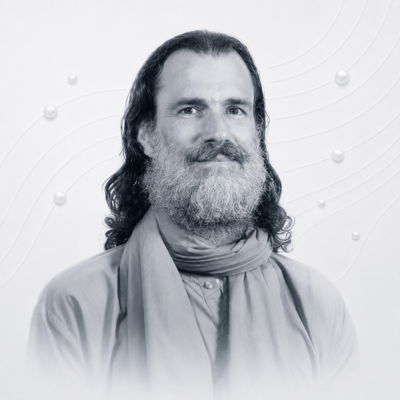
How does the Nobel Prize actually work , and what does its century-old selection process reveal about collaboration in science? Neuroscientist Sten Grillner, a former member of the Nobel Committee, takes us inside the deliberation process and explains why small-scale discovery still outperforms industrial-scale science. Subscribe for more episodes on how real-world collaboration functions. Sten Grillner, renowned for his pioneering work on neural circuits controlling locomotion at the Karolinska Institute, joins Paul Verschure for a conversation that bridges bench science, institutional governance, and international scientific diplomacy. Having served on the Nobel Committee for 14 years and participated in organizations like IBRO and the OECD Global Science Forum, Grillner offers a rare insider perspective on how collaboration operates at the highest levels of science. The conversation opens with Grillner’s research trajectory , decades spent analyzing the neural networks that coordinate movement, using the lamprey as a model organism. His discovery that basal ganglia circuitry has been conserved for 500 million years, from lamprey to humans, demonstrates how working on an unfashionable model system can yield fundamental insights that bandwagon science misses entirely. The Nobel Prize selection process emerges as a fascinating case study in structured collaboration. Grillner describes a system designed over a century ago that still functions: international nominations, written evaluations, historical records that allow committees to revisit past deliberations, and rotating membership that prevents institutional capture. The critical design feature is institutional memory , decisions are not made in isolation but against a documented history of prior assessments. When the system fails, the reasons are instructive. The 2017 Nobel Prize in Literature crisis, where internal conflicts within the Swedish Academy forced a one-year cancellation, illustrates what happens when collaboration breaks down through interpersonal dysfunction. Grillner notes that science prizes have avoided similar crises partly because committee members rotate, whereas the Academy’s lifetime appointments created irresolvable tensions. On the question of large-scale versus small-scale science, Grillner draws a clear distinction. Infrastructure projects like the Human Genome Project serve as enablers , platforms that allow individual researchers to ask questions they could not ask before. But novel discoveries remain the province of individual brains or small teams. The answer is not either-or, but the balance matters: jumping on bandwagons is expensive and rarely produces breakthroughs. His advice for improving scientific collaboration is characteristically direct: stop jumping on the bandwagon each time. Sometimes you have to look away from where everyone else is looking to find what matters. Part of the Ernst Strüngmann Forum series on Collaboration, produced with the Convergent Science Network.
Tagged as:
collaboration Nobel Committee Nobel Prize scientific collaboration Selection Process
About the author call_made
CSN Podcasts
Both the triumphs of humanity and its most evil deeds have resulted from collaboration. In a time where humanity is required to aspire to the former and minimize the latter, the question arises of how collaboration arises and why it fails. Surprisingly, this phenomenon, so central to who we are, is not well understood. Hence, a collaborative effort is required to understand collaboration in its full biological, psychological, sociological, cultural, and economic complexity and to translate this understanding into operational impact. This series of podcasts is one step toward achieving these complementary goals. The Collaboration Podcast presents interviews with people who are central orchestrators of collaboration in various domains including business, government, science, art, health, sustainability, and the military. The discussions were conducted by Prof. Dr. Paul F.M.J. Verschure and members of the Program Advisory Committee of the Ernst Strungmann Forum on Collaboration (https://www.esforum.de/forums/ESF32_Collaboration.html) during 2021 and had the goal to sketch a map of opportunities, challenges, and obstacles in human collaboration. The forum took place in May 2022, and now we would like to share this series of interviews with a broader audience. The full report of the Forum will be published in 2023 by MIT Press. The podcast was produced by the Convergent Science Network (https://www.convergentsciencenetwork.org/). Context: The stability of social systems depends critically on realizing sustainable methods of “collaboration,” yet how and by which means collaboration is achieved is not clearly understood; neither are the conditions or processes that lead to its breakdown or failure. Collaboration can be understood as cooperation between agents toward mutually constructed goals. Part of the reason for our lack of understanding is that the phenomenon of collaboration is, by nature, a highly multidisciplinary problem, and effective research into its complexities has been difficult to achieve across the broad range of scientific and technical disciplines involved. The need for a fundamental understanding of collaboration, however, has become increasingly important. Not only does humankind demand answers as it attempts to address critical challenges at multiple scales (e.g., climate change, migration, enhanced automation, social and economic inequality), but ever-increasing technological and economic means of interconnecting people and societies are disrupting long-established, familiar patterns of how we interact. Radical technological changes that are ongoing have the potential to reshape collaboration in ways that are currently hard to predict or influence (e.g., by altering configurations in interaction, information creation, and modes of communication). On one hand, such changes could disrupt hitherto stable forms of collaboration by affecting critical communication channels and traditional roles, as can be observed in the rapidly changing patterns in governance, commerce, and social interaction. Conversely, technology could lead to the emergence of novel, successful forms of collaboration that deviate from traditional “hierarchical” architectures. Evidence of this can be seen in areas as diverse as highly automated manufacturing plants, the open science movement, collaborative software repositories, user-centered services, and the sharing of economy-based modes of organization. Without a fundamental understanding of the mechanisms, processes, and boundary conditions of collaboration, it is not possible to evaluate or predict which of these possible scenarios are sustainable or even plausible. The Forum “How Collaboration Arises and Why it Fails” (May 8–13, 2022, Location: Frankfurt am Main, Germany) Chairs: Andreas Roepstorff and Paul Verschure Program Advisory Committee: Jenna Bednar, Julia R. Lupp, Bhavani R. Rao , Andreas Roepstorff, Ferdinand von Siemens, and Paul Verschure
Episodes
play_arrow

play_arrow
play_arrow

play_arrow
Timestamp
- fast_forward00:00:05 - Hi, I'm Paul Vachure, and today I'm speaking with Professor Dr.
- fast_forward00:00:08 - Stan Grillner of the Karolinska Institute.
- fast_forward00:00:10 - We're looking at the complexities of fostering collaboration in science.
- fast_forward00:00:15 - As one of the foremost experts on the physiological basis of behavior,
- fast_forward00:00:19 - Professor Grillner chaired the Nobel Prize Committee for Physiology or Medicine
- fast_forward00:00:23 - for 20 years and is currently the Secretary General of the International Brain
- fast_forward00:00:28 - Research Organization.
- fast_forward00:00:31 - Stan, before we really dive into the issue of collaboration,
- fast_forward00:00:36 - could you give us a short summary of the trajectory that brought you to where
- fast_forward00:00:41 - you are today in your science and in your activities?
- fast_forward00:00:51 - I started off by being interested in the intrinsic function of the networks
- fast_forward00:00:58 - that coordinate locomotion, which was mostly a spinal affair,
- fast_forward00:01:06 - and interested in the intrinsic function of how these networks operate,
- fast_forward00:01:15 - which meant that we had to identify the neurons,
- fast_forward00:01:20 - the properties of the neurons, with synaptic properties and a network,
- fast_forward00:01:27 - and in doing so, also, simulation was a very important aspect,
- fast_forward00:01:33 - which it has been for the last little bit more than 30 years,
- fast_forward00:01:39 - together with detailed detailed biology detailed analysis,
- fast_forward00:01:46 - so it has been very much a bottom-up approach to the networks.
- fast_forward00:01:57 - So we then,
- fast_forward00:02:05 - From working on mammals, we then decided it was really too difficult,
- fast_forward00:02:10 - too complex, you could not get the information.
- fast_forward00:02:13 - And then we made a rapid change over to.
- fast_forward00:02:20 - The simplest vertebrate group available, the laboratory.
- fast_forward00:02:26 - The laboratory had several advantages in that you could have the spinal cord,
- fast_forward00:02:33 - which is a natural slice.
- fast_forward00:02:36 - You could have that in vitro, you could induce activity in the networks, etc.
- fast_forward00:02:43 - When we had solved that, which took some time,
- fast_forward00:02:49 - we then proceeded to look at the brainstem mechanism undermines spatial orientation
- fast_forward00:03:01 - and in particular the tectum etc.
- fast_forward00:03:07 - And at some point we felt that we had analyzed the different networks that coordinate
- fast_forward00:03:16 - movements efficiently well.
- fast_forward00:03:19 - So we need to understand the forebrain mechanism that determines when a given
- fast_forward00:03:25 - pattern of behavior of a given network is called interaction.
- fast_forward00:03:29 - And in doing so, we analyzed the basal ganglia as one central bone.
- fast_forward00:03:40 - We had thought wrongly that the basal ganglia of the lamprey,
- fast_forward00:03:51 - which actually diverged from 760 million years ago,
- fast_forward00:03:54 - from the lineage leading to the mammals,
- fast_forward00:04:00 - that it would be a very simplified circuit.
- fast_forward00:04:08 - But we were all with it, and it turned out the basal ganglia in great detail,
- fast_forward00:04:15 - and the similar properties as in manholes, the same type of neurons,
- fast_forward00:04:23 - the same type of connectivity,
- fast_forward00:04:25 - the same type of transmitters, the same type of organization.
- fast_forward00:04:30 - So it then turned out that the basic angle had the same.
- fast_forward00:04:38 - Had essentially evolved very early in vertebrate evolution, some 500 million years ago.
- fast_forward00:04:46 - And the basic circuit is there, was there already then.
- fast_forward00:04:51 - And what has happened then is that you have, presumably, modules that control
- fast_forward00:05:00 - different patterns of behavior, that release different patterns of behavior.
- fast_forward00:05:04 - Behavior and what has happened during evolution is that you have kept the structure there,
- fast_forward00:05:09 - but you have instead multiplied the number of modules to control patterns of behavior.
- fast_forward00:05:22 - So, essentially, with the development of complex mental behavior from lamprey to man,
- fast_forward00:05:35 - I would gradually multiply the units to control more and more patterns.
- fast_forward00:05:43 - But all that work you've done, as you were at Karolinska Institute,
- fast_forward00:05:47 - right? Over all these decades.
- fast_forward00:05:52 - I started in Gothenburg, but since 1975, I've been in Stuttgart. Right, exactly.
- fast_forward00:06:02 - And we met in the 90s in the context of the Organization for Economic Cooperation
- fast_forward00:06:09 - and Development Global Science Forum,
- fast_forward00:06:11 - discussing international national collaboration and cooperation, excuse me.
- fast_forward00:06:19 - But then also, of course, being a faculty member at Karolinska,
- fast_forward00:06:24 - you also were involved or got involved in the panels that would discuss who
- fast_forward00:06:30 - would earn the Nobel Prize.
- fast_forward00:06:33 - So when did that happen? In what period were you on those panels?
- fast_forward00:06:38 - I started to be on the panel in 1986.
- fast_forward00:06:43 - And then I was a member of the Nobel Committee for about 14 years.
- fast_forward00:06:52 - I was also, of course, a member of the Nobel Assembly that is a larger entity
- fast_forward00:06:57 - with 50 professors from the Korean Institute, but the Nobel Committee is essentially
- fast_forward00:07:04 - smaller altogether. together.
- fast_forward00:07:07 - It's a small committee which is six and then it's a little bit large which is about 15.
- fast_forward00:07:13 - Right. I have the privilege of taking part.
- fast_forward00:07:18 - But now, would you see that as a collaborative process? Is it a form of collaboration?
- fast_forward00:07:26 - I would say that the process of selecting is very much a process So what makes it so?
- fast_forward00:07:38 - What makes that a collaborative process?
- fast_forward00:07:42 - Let me just say that I think that,
- fast_forward00:07:46 - Nobel Prize is started in 1901 and actually that was after the deaths of Nobel and his donation.
- fast_forward00:07:58 - Actually the Academy of Science wasn't particularly interested,
- fast_forward00:08:02 - the Kalinska Institute was not particularly interested and the King at the time
- fast_forward00:08:08 - so it was a very bad idea to have an international prize.
- fast_forward00:08:12 - So it took several years before the Academy of Science and the Karinska Institute agreed to do this.
- fast_forward00:08:29 - But then what it turned out that when they started, they had designed a very interesting structure
- fast_forward00:08:38 - that is still used today, so it was very insightful, when you are inviting,
- fast_forward00:08:49 - then universities around the world, academies around the world to nominate candidates.
- fast_forward00:08:58 - Candidates, but then each time when the nominations come in at the end of January,
- fast_forward00:09:08 - then you have a meeting and you go over all the different nominations.
- fast_forward00:09:14 - Of course, many of them have been nominated earlier, but the first time you
- fast_forward00:09:20 - have a little written account, whether it's interesting or perhaps not so interesting.
- fast_forward00:09:27 - We have lots of nominations that are more friends or deans, etc.
- fast_forward00:09:33 - But those that are interesting go further to making a little bit deeper analysis,
- fast_forward00:09:44 - sort of like two, three pages.
- fast_forward00:09:51 - By one or two experts within the committee that either concludes that,
- fast_forward00:09:56 - well, this looks interesting, and if it passes that barrier,
- fast_forward00:10:02 - then you ask one or several,
- fast_forward00:10:09 - people to make an in-depth analysis.
- fast_forward00:10:13 - And that's the thing that takes three, four weeks to write, because you really
- fast_forward00:10:17 - need to read up on what has been done, what has been dominated.
- fast_forward00:10:25 - And one thing that is important in the Nobel Prize is that it's a discovery.
- fast_forward00:10:34 - It is not a lifetime achievement, so it's a distinct discovery,
- fast_forward00:10:39 - sometimes a set up very closely.
- fast_forward00:10:44 - And that, I think, has been very important.
- fast_forward00:10:49 - But then, after several years,
- fast_forward00:10:54 - if you still have different specialists that come along,
- fast_forward00:10:58 - everybody agrees that this seems is to be a possibility that has the appropriate
- fast_forward00:11:06 - scientific height or value,
- fast_forward00:11:09 - and then it starts to be a possible candidate.
- fast_forward00:11:17 - And strange enough, as I said before, this way of dealing with the price or
- fast_forward00:11:28 - dealing with the process of selecting,
- fast_forward00:11:31 - was conceived of at the very beginning.
- fast_forward00:11:35 - And I think it's no other prize that has that structure, that has a written account and a history.
- fast_forward00:11:43 - So, I mean, you can go back when you discuss something.
- fast_forward00:11:48 - But remember, X said that 10 years ago, couldn't be right, must be right,
- fast_forward00:11:56 - or something like that too.
- fast_forward00:11:58 - I think the discussion in general within the committee, which is a more important structure.
- fast_forward00:12:09 - Is usually very collegial. Of course, different people have a little bit different
- fast_forward00:12:16 - interests and inclinations, but in general,
- fast_forward00:12:19 - people are very enthused over being able to select something that is a very good tries.
- fast_forward00:12:30 - Stan, what you're describing is a procedure, and this procedure actually sets
- fast_forward00:12:37 - up two forms of collaboration, if you want, because now you have a collaboration,
- fast_forward00:12:43 - at the time itself with the panel, but then you have a collaboration over time
- fast_forward00:12:48 - with what that panel and its members might have deliberated previously.
- fast_forward00:12:56 - So do you see different aspects to these forms of collaboration?
- fast_forward00:13:06 - I think what has led to that the Nobel Prize has survive with comparatively
- fast_forward00:13:15 - few mistakes is this history that you can go back.
- fast_forward00:13:20 - It is not the meeting that you're sitting in. You go back and you have different
- fast_forward00:13:26 - comments that can come in.
- fast_forward00:13:28 - Gradually you have an acceptance that this is good or perhaps not so good.
- fast_forward00:13:36 - And I mean what is very important is that when you select a prize you have the
- fast_forward00:13:46 - right combination of people and it's a worthy prize,
- fast_forward00:13:50 - so this is an interesting point you raise because it means people the members of the panel,
- fast_forward00:13:58 - and in the end of the outside world world, feel also, if you want,
- fast_forward00:14:03 - a weight on their shoulders of making the proper decision.
- fast_forward00:14:08 - People are loyal to the idea to create and to facilitate the words of the recipient.
- fast_forward00:14:18 - How would you define that sense of responsibility?
- fast_forward00:14:23 - Is that a responsibility to whom? It's a responsibility to the price,
- fast_forward00:14:27 - as some abstract notion, or is it the responsibility towards scientific standards?
- fast_forward00:14:34 - What's that common objective that is exerting this moral pressure?
- fast_forward00:14:42 - No, I think it's a respect for
- fast_forward00:14:45 - science and also acceptance of the idea that you should be able to select very
- fast_forward00:14:56 - good science that is sort of highlighted to the public and also with a reward to the recipient.
- fast_forward00:15:04 - So I think it's a scientific idea and it is the determinant.
- fast_forward00:15:16 - I mean, it of course varies. There are different places. But now I could also
- fast_forward00:15:21 - argue that, like you said, in
- fast_forward00:15:25 - its origins there was actually not much appreciation for the whole idea.
- fast_forward00:15:31 - So that meant that also those that were proposing to actually put in place this
- fast_forward00:15:37 - procedure had to convince a critical environment.
- fast_forward00:15:40 - So I could also argue why people are so worried about doing it properly is that
- fast_forward00:15:45 - they want to avoid any serious criticism from the outside world. Is that playing a role?
- fast_forward00:15:55 - I'm not sure, I must realize that this was the first major scientific prize.
- fast_forward00:16:02 - It was a new conception of a prize not to the best Swede or best Nordic, it was international.
- fast_forward00:16:13 - That was a foreign idea at the time.
- fast_forward00:16:22 - I think that, I mean, in the beginning, I don't know how important it was considered.
- fast_forward00:16:28 - Of course, it was important, but gradually, I think it has taken on...
- fast_forward00:16:39 - On an important aspect of promoting the best science and it's also,
- fast_forward00:16:54 - it's often basic science not only
- fast_forward00:16:57 - of course but it is also
- fast_forward00:17:00 - highlighting that you have very
- fast_forward00:17:04 - basic discoveries that often has
- fast_forward00:17:06 - led to very new insights right
- fast_forward00:17:09 - but now that we tell so so the
- fast_forward00:17:13 - unexpected usefulness yes but
- fast_forward00:17:16 - now look that it would also
- fast_forward00:17:19 - be good to look at the failures of the procedure right because
- fast_forward00:17:22 - it has worked let's say 99 of
- fast_forward00:17:26 - the time but there also have been dramatic
- fast_forward00:17:28 - failures also recently in the
- fast_forward00:17:31 - panel dealing with literature and i don't want to necessarily go
- fast_forward00:17:34 - into that the discussion of why
- fast_forward00:17:37 - that would be exactly and the personalities involved but more
- fast_forward00:17:40 - apparently then the procedure that we just described discussed and also this
- fast_forward00:17:46 - sort of shaping of the process through a sense of responsibility was not enough
- fast_forward00:17:53 - right so So apparently there was a bug in the procedure that got exploited.
- fast_forward00:17:58 - I mean, it was a very severe bug in the interaction within the Swedish Academy.
- fast_forward00:18:13 - And there was a lot of personal problems and which I have no real insight in
- fast_forward00:18:24 - but I mean it didn't look good but I don't think actually the process of selecting,
- fast_forward00:18:34 - The laureates were severely criticized.
- fast_forward00:18:43 - Well, but actually, one year was skipped for the Nobel Prize.
- fast_forward00:18:48 - I mean, it was skipped because the Academy got into a civil war.
- fast_forward00:19:00 - And a lot of people left, the secretary left,
- fast_forward00:19:03 - and it was almost that it would collapse, but then it was refurnished by adding
- fast_forward00:19:14 - new members, and then it's probably on the track again.
- fast_forward00:19:19 - It's better in the I think the selection the literature of course is very difficult to assure,
- fast_forward00:19:31 - it's so much simpler with science but what I try to get to here is why the failure
- fast_forward00:19:39 - right so because this might tell us something about how collaboration works
- fast_forward00:19:42 - but I mean essentially the Swedish Academy,
- fast_forward00:19:48 - failed because of personal interaction and it was not primarily a question.
- fast_forward00:19:54 - I mean, they do a lot of other things.
- fast_forward00:19:58 - And so I don't think, I mean,
- fast_forward00:20:04 - they had to cancel the price for one year and that was, I mean, it was really terrible.
- fast_forward00:20:14 - But is there anything you could imagine you could change in the way the protocol
- fast_forward00:20:21 - is defined of collaboration to converge on the decision that could avoid such
- fast_forward00:20:30 - a catastrophic failure in the future?
- fast_forward00:20:38 - I mean it's I don't know I mean the Swedish Academy is a special case and,
- fast_forward00:20:47 - The committees that run on the Academy of Science, Physics and Chemistry,
- fast_forward00:20:56 - and Medicine, I think, has been little problems.
- fast_forward00:21:03 - And I mean the thing is also that whereas the members of the Nobel Committee
- fast_forward00:21:14 - for these three different prizes it is rotating,
- fast_forward00:21:20 - the Swedish Academy the members of the Swedish Academy has been lifetime informants
- fast_forward00:21:26 - and it was thought that you cannot resign,
- fast_forward00:21:30 - You were not allowed to resign.
- fast_forward00:21:33 - As a consequence of the turmoil, you are not allowed to leave the academy.
- fast_forward00:21:39 - And there's only 18, and it was, I guess, a couple of them that never came,
- fast_forward00:21:45 - and so forth. for the Swedish community, I really.
- fast_forward00:21:53 - Had difficulties in having an opinion of more than that.
- fast_forward00:21:59 - It was an organization and it was surprising that it worked so well for so many years. Yes.
- fast_forward00:22:08 - But now you also have been very much involved in, let's say,
- fast_forward00:22:12 - more the international almost diplomacy around science and scientific initiatives.
- fast_forward00:22:20 - I mentioned the Global Science Forum of the OECD, but you also have been involved
- fast_forward00:22:25 - in Ebro and other organizations.
- fast_forward00:22:28 - So are the patterns you see in this international collaboration in the science community,
- fast_forward00:22:34 - do you see commonalities with how you look at collaboration within this Nobel
- fast_forward00:22:40 - Prize election process?
- fast_forward00:22:45 - Or do you see them as very separate processes?
- fast_forward00:22:51 - I mean, I would say that the Nobel Prize Award process is something rather different,
- fast_forward00:23:01 - but I mean, I would say that if you are in the board of FEMS or if you are in the board of IPRO,
- fast_forward00:23:14 - it's.
- fast_forward00:23:18 - If you have I mean the thing is that you have rather much rotation and you have
- fast_forward00:23:24 - people coming in and out different background but nevertheless.
- fast_forward00:23:29 - Most of the time you can have a board that works rather nicely together and
- fast_forward00:23:35 - you have a few things that you do and then you like to take out a few things and,
- fast_forward00:23:42 - sometimes Sometimes you have bad fights, but more often people work together.
- fast_forward00:23:49 - In the international organization where you have people appointed from very
- fast_forward00:23:56 - different parts of the world, etc., it's sometimes different.
- fast_forward00:24:00 - But now there's in some sense also possible contradiction here between the two
- fast_forward00:24:04 - processes of collaboration, right? Because as you said earlier,
- fast_forward00:24:08 - in the Nobel Prize, it's really about the specific discovery.
- fast_forward00:24:13 - And that's not something that a huge community in the end will put their name
- fast_forward00:24:16 - to, at least certainly not in the life sciences.
- fast_forward00:24:20 - While on the other hand, if you look at these international organizations,
- fast_forward00:24:23 - it's all about building large communities, building large shared infrastructure.
- fast_forward00:24:28 - But in some sense, with the Nobel Prize, you're not rewarding people for that
- fast_forward00:24:32 - effort. It's really about the individual making that one discovery before anyone else does.
- fast_forward00:24:39 - So is that telling us something very deep about scientific collaboration,
- fast_forward00:24:44 - or is that just an accident?
- fast_forward00:24:52 - I think the
- fast_forward00:24:59 - importance of the individual Nobel Prizes are not so much the individuals that
- fast_forward00:25:09 - are rewarded as it is put the torchlight on a given discovery.
- fast_forward00:25:19 - Discovery and given development and it's possible benefit for mankind or why it is interesting.
- fast_forward00:25:32 - So I've argued it has been grants to develop Nobel museum where there exists one,
- fast_forward00:25:44 - but I I have been argued there that you should see the different places in life
- fast_forward00:25:55 - sciences, for instance,
- fast_forward00:25:57 - year after year,
- fast_forward00:25:59 - as sort of an illustration of how science has evolved.
- fast_forward00:26:05 - So you point to different areas that have been of primary importance.
- fast_forward00:26:14 - And sometimes prices get all very fast and others remain there.
- fast_forward00:26:22 - So I think the importance.
- fast_forward00:26:27 - It's not the individual, it is that you put the torchlight on an important part
- fast_forward00:26:34 - of science, that then means you can take off.
- fast_forward00:26:39 - But even though your emphasis is on the habit system and a dorsolateral stratum,
- fast_forward00:26:44 - value and incentives do shape behavior.
- fast_forward00:26:48 - And so in some sense, a Nobel Prize and prizes like the Nobel Prize,
- fast_forward00:26:53 - and others, do emphasize very much the individual,
- fast_forward00:26:58 - while in parallel, actually, we spend a lot of time talking about building large
- fast_forward00:27:04 - communities and infrastructure.
- fast_forward00:27:06 - But is that maybe more expressing a dream about how science could be?
- fast_forward00:27:16 - Putting it at an industrial scale actually the
- fast_forward00:27:19 - actual practice is it's just a
- fast_forward00:27:22 - small group of people if an individual really pushes
- fast_forward00:27:26 - a certain issue to the limit for you let me take the example the human genome
- fast_forward00:27:33 - project it was very important but it was not a major discovery we didn't understand
- fast_forward00:27:40 - anything from that but it It was a platform to take off,
- fast_forward00:27:44 - which has benefited a number of researchers and,
- fast_forward00:27:50 - of course, I think you can apply the same sort of reasoning around infrastructure for neuroscience.
- fast_forward00:28:03 - And neuroscience.
- fast_forward00:28:04 - I mean, the brain is the same sort of thing, or you can also take the development
- fast_forward00:28:12 - of simulation tools and neuroinformatics and so forth.
- fast_forward00:28:17 - So I think it's two types of development.
- fast_forward00:28:22 - One very important is that you put platforms and then you have all the individual
- fast_forward00:28:27 - researchers that pick what is interesting and see.
- fast_forward00:28:33 - And funny relations that have not been possible to reveal with ISIS.
- fast_forward00:28:39 - Yeah, but actually the Human Genome Project is a good example because the result was,
- fast_forward00:28:45 - in the end, not because of a large community working together but actually the
- fast_forward00:28:50 - individual having the insight that doing it with automated screening would speed
- fast_forward00:28:55 - up the whole process tremendously.
- fast_forward00:28:59 - Absolutely, but it's an infrastructure development, and when you had reached
- fast_forward00:29:04 - it, it was suddenly possible to ask questions you couldn't ask before.
- fast_forward00:29:09 - Yeah, but isn't there a risk then that they put the cart in front of the horse?
- fast_forward00:29:12 - Because maybe who says we need that specific infrastructure to get the Nobel
- fast_forward00:29:19 - Prize that we all strive towards?
- fast_forward00:29:21 - I'm not talking about Nobel Prizes in this context.
- fast_forward00:29:25 - No, no, no. You see what I'm saying, right? Because maybe the infrastructure
- fast_forward00:29:29 - an individual researcher needs is a much smaller scale to lead to breakthroughs
- fast_forward00:29:35 - in the field, certainly in the life sciences, right?
- fast_forward00:29:38 - Yeah, no, no, but let me rephrase.
- fast_forward00:29:42 - The fact that you have the Human Genome Project and you have all the other genomes
- fast_forward00:29:48 - has allowed all the small guys to ask a lot of interesting questions which they
- fast_forward00:29:54 - couldn't have asked without.
- fast_forward00:29:56 - Okay, that's fair enough. So it's like an enabler, but still... Yeah, it's an enabler.
- fast_forward00:30:03 - And I mean, the world of infrastructure is very important, but it doesn't,
- fast_forward00:30:07 - I mean, You can even ask sometimes if it's science or not.
- fast_forward00:30:11 - That is predictive. You do exactly that. You cut here.
- fast_forward00:30:16 - So it's, in a sense, very low-level science. But to the benefit of all the different
- fast_forward00:30:22 - researchers that like to ask questions.
- fast_forward00:30:27 - But then the infrastructure, in some sense, becomes a backbone for collaboration,
- fast_forward00:30:34 - even if the individual users don't directly collaborate.
- fast_forward00:30:38 - Is that the reality of the science as you see it?
- fast_forward00:30:47 - Yeah. I mean, essentially,
- fast_forward00:30:55 - of course, if you suddenly pose a question, you think that's very interesting.
- fast_forward00:31:04 - And then you realize that in order to pursue this, you need also to look at
- fast_forward00:31:10 - that and look at that, which people that you may not know have dealt with.
- fast_forward00:31:16 - Then it's conducive to create collaboration.
- fast_forward00:31:20 - But I mean, then it's motivated of the project.
- fast_forward00:31:24 - Right. So, in science, I think it's always very important that you have a specific
- fast_forward00:31:32 - question or a set of questions that you can answer. Sure.
- fast_forward00:31:37 - Then, for the individual scientists
- fast_forward00:31:40 - or also the young scientists who are growing into their careers,
- fast_forward00:31:44 - do you see it as a collaborative process or a more competitive process that
- fast_forward00:31:50 - is predicated on the shared infrastructure?
- fast_forward00:31:55 - I think for training people, I think it's very important.
- fast_forward00:32:06 - That they have rather much freedom so they can make mistakes and also make discoveries.
- fast_forward00:32:16 - Of course, within the framework that you think is interesting that they're funded for.
- fast_forward00:32:23 - So I think sometimes you hear about
- fast_forward00:32:31 - labs that put two postdocs on the same project and make them compete.
- fast_forward00:32:38 - And that's not exactly what I prefer. Right.
- fast_forward00:32:42 - But does it work? Because the thing is, after the Second World War there was
- fast_forward00:32:47 - this famous report by Vannevar Bush on science, the endless frontier,
- fast_forward00:32:54 - where a decisive argument was made, look, science also won the war.
- fast_forward00:32:58 - And it's by virtue of these large-scale collaborative projects that gave us
- fast_forward00:33:03 - the super fortress and the atomic bomb that we can guarantee prosperity for our society.
- fast_forward00:33:09 - And then that industrial-scale science, grounded much more in physics and engineering,
- fast_forward00:33:14 - became a bit like a standard. it.
- fast_forward00:33:16 - So that raises now the question, is that the model we should strive towards
- fast_forward00:33:22 - in this domain of life science and in particular in neuroscience?
- fast_forward00:33:26 - Is it this large-scale, industrial-scale collaboration that as in to discover
- fast_forward00:33:32 - the Higgs boson, you have teams of a thousand plus physicists working together and lies the data.
- fast_forward00:33:37 - Is that the future for this domain or is it more individuals and small teams
- fast_forward00:33:43 - that maybe share tools, but that as individuals and small teams will actually
- fast_forward00:33:48 - make the breakthroughs that this field needs.
- fast_forward00:33:51 - So is it going to diverge from this Vannevar-Busch model of collaboration,
- fast_forward00:33:56 - large-scale industrial, or is it converging?
- fast_forward00:33:59 - So what's your view there? Where are we going?
- fast_forward00:34:03 - I mean, I think, I mean, to have large-scale efforts is clearly,
- fast_forward00:34:10 - sometimes they're useful, like you had the Human Genome Project.
- fast_forward00:34:16 - But the novelty and the,
- fast_forward00:34:24 - unique contributions is very often small scale.
- fast_forward00:34:29 - It's individual brains, a couple of individual with your brains that interact.
- fast_forward00:34:35 - But I mean, they need a person infrastructure. They need the money. They need all this.
- fast_forward00:34:41 - And so it's not either or. Okay.
- fast_forward00:34:49 - So then, do you believe that humans, if we take neuroscience as our use case,
- fast_forward00:34:57 - will be able to really fully realize the potential of collaboration?
- fast_forward00:35:03 - Or will they always be just approximating it and then stumble at the last moment,
- fast_forward00:35:08 - as for instance in the case of the Nobel Prize for Literature?
- fast_forward00:35:13 - Or do you think it's possible? Do you see that's a real possibility to realize this?
- fast_forward00:35:20 - I mean, it's always statistics. Sometimes it's successful.
- fast_forward00:35:25 - I want your prediction, not your statistics. No, no, no.
- fast_forward00:35:30 - I think it's essentially collaborations will work well in a certain proportion of the cases.
- fast_forward00:35:41 - In other cases, due to personal things, it may never work.
- fast_forward00:35:48 - You irritate yourself immensely on some little detail and it's gone.
- fast_forward00:35:56 - But if you could change one thing in the average neuroscientist,
- fast_forward00:36:01 - let's say, what would it be?
- fast_forward00:36:03 - What's the thing you would change so that they can more effectively collaborate
- fast_forward00:36:07 - and get to target understanding the human brain?
- fast_forward00:36:12 - Not to jump on a bandwagon each time.
- fast_forward00:36:19 - But jumping on a bandwagon is also a form of collaboration.
- fast_forward00:36:25 - Yeah, it's a rather expensive type. But it might be the way to get your resources, right?
- fast_forward00:36:32 - Because this is where the field is interested in.
- fast_forward00:36:35 - It may be a way to get resources, but if the aim is to reveal and understand
- fast_forward00:36:43 - new important aspects, sometimes you have to look away.
- fast_forward00:36:51 - That's a good point, especially coming from you, having been on,
- fast_forward00:36:57 - let's say, a vertebrate animal model that was not necessarily an F1 center of attention,
- fast_forward00:37:03 - the lamprey, which in the end really led to a lot of breakthroughs in this domain
- fast_forward00:37:08 - of understanding motor control and behavior.
- fast_forward00:37:12 - So, if you look back upon our last question, look back upon our experience in
- fast_forward00:37:18 - the so-called global science forum,
- fast_forward00:37:21 - do you think it is wise to speak of things like a global science forum in this context?
- fast_forward00:37:30 - Because maybe what you need is also the variability of different approaches
- fast_forward00:37:34 - without trying to coordinate too much, and in that sense also create risks of building bandwagons.
- fast_forward00:37:45 - I mean, the Global Science Forum, its strengths was probably that you have representatives
- fast_forward00:37:52 - for the different governments that could discuss about science and agree about
- fast_forward00:38:02 - certain types of collaborations.
- fast_forward00:38:09 - And if you remember,
- fast_forward00:38:12 - when we were both part of the process that set up the International Geoinformatics
- fast_forward00:38:18 - Coordinating Facility, INCF, it was a very laborious process,
- fast_forward00:38:24 - lots of disagreement.
- fast_forward00:38:30 - But then finally, we had a proposal there, and that was reached.
- fast_forward00:38:34 - And then the Global Science science forum played a role in that it accepted
- fast_forward00:38:42 - the proposal after having to redo it several times.
- fast_forward00:38:48 - But then the process was that the different ministers of research in the different
- fast_forward00:38:56 - OECD countries all recommended their governments that it was a way to go.
- fast_forward00:39:05 - Which didn't happen the first time around. No, no, it didn't.
- fast_forward00:39:10 - So that was interesting, right? That this only happened once the request really
- fast_forward00:39:16 - became very concrete in terms of a building and infrastructure.
- fast_forward00:39:20 - Something more abstract, which was collaborative, actually.
- fast_forward00:39:23 - As a collaborative network was considered too abstract to gain political traction.
- fast_forward00:39:30 - It had to be concretized into concrete.
- fast_forward00:39:35 - It was a business plan, Hedberton, actually.
- fast_forward00:39:40 - It was called a business plan. Yes. But if you look back upon that process,
- fast_forward00:39:45 - which took more than 10 years, do you think it could have been done more efficiently?
- fast_forward00:39:51 - Absolutely. Okay, what was the biggest fly in the ointment there, you think?
- fast_forward00:40:01 - Well, I mean, it was that different stakeholders had very different interests,
- fast_forward00:40:10 - and some of them had very difficult to listen and listen and remember, if you remember.
- fast_forward00:40:21 - Right. Which actually brings you back to your Nobel Prize procedure of remembering,
- fast_forward00:40:27 - right, of what was discussed.
- fast_forward00:40:29 - All right. All right, Stan Grillner, thank you very much for this conversation. Thank you.
- fast_forward00:40:34 - Thank you. Stan, you're off the hook now. Very good. Thank you very much.
- fast_forward00:40:39 - Okay, I think this was interesting and cool.
- fast_forward00:40:44 - There were a lot of things that I would have liked to pursue,
- fast_forward00:40:47 - but I understood, given your time constraints, I sort of cut some corners here and there.
- fast_forward00:40:56 - But to me, this is an important issue for how we think about neuroscience,
- fast_forward00:41:00 - where we are still at the beginning, right?
- fast_forward00:41:04 - We're not even close to understanding how the brain works.
- fast_forward00:41:08 - And there is a little bit of sort of a naive physics-oriented intuition,
- fast_forward00:41:14 - like, oh, if we make it big, then the magic will happen, as we saw in the Human Brain Project.
- fast_forward00:41:22 - And for some strange reason in neuroscience, we just don't manage.
- fast_forward00:41:29 - And maybe it tells us something very fundamental in the end about… Yeah,
- fast_forward00:41:32 - I mean, what was interesting was the US train initiative,
- fast_forward00:41:40 - because, I mean, after the brain fluid was presented, it just took a few weeks
- fast_forward00:41:48 - before the human brain initiative was conceived.
- fast_forward00:41:53 - And with lots of money, which was very good, of course.
- fast_forward00:41:56 - But then you had this committee, about 10 people,
- fast_forward00:42:03 - that sort of designed the program.
- fast_forward00:42:14 - I mean, it was several of our colleagues.
- fast_forward00:42:22 - And what happened then was that you had the,
- fast_forward00:42:30 - They represented different areas and they were to decide if they could focus on something.
- fast_forward00:42:39 - My proposition there would be that you should have focused on one problem and
- fast_forward00:42:49 - then you would have people sort of working on different levels on that.
- fast_forward00:42:56 - So they would work independently and then Once a year, you should have them
- fast_forward00:43:03 - in a symposium, and they were telling about what they had accomplished, et cetera.
- fast_forward00:43:10 - But, of course, for all the members of the committee, that was meant that their
- fast_forward00:43:18 - areas, for most of them, it was meant that their areas would be outside.
- fast_forward00:43:25 - So they couldn't agree on that.
- fast_forward00:43:28 - Exactly. so actually so the phrase nanotechnology was a big player there as
- fast_forward00:43:33 - well right and I once asked this lady Corey Brackman who was then the spokesperson
- fast_forward00:43:39 - for the American Brain Project,
- fast_forward00:43:42 - and I asked her but isn't that a
- fast_forward00:43:44 - risk for your project because now you go to the lowest common denominator between
- fast_forward00:43:49 - all these different fields which means in the end you won't do anything and
- fast_forward00:43:53 - she got all agitated and she said but you know the president the president of
- fast_forward00:44:00 - the United States asked us to do this. That was her only answer.
- fast_forward00:44:04 - I mean, Corey Borgman is seriously quite good. I mean, yeah, I mean, yeah.
- fast_forward00:44:11 - I like her a lot, but she is overstating her research on the worm teleradictus.
- fast_forward00:44:23 - Yeah, but I don't think she cares anymore because now she leads this Zuckerberg
- fast_forward00:44:27 - Center, right? Half time.
- fast_forward00:44:30 - Oh, half time. Okay. She is flying back and forth. But she is rather good.
- fast_forward00:44:37 - To me it was an illustration. But I think it was an illustration that they could
- fast_forward00:44:46 - not decide. Exactly. That's what I meant.
- fast_forward00:44:49 - So they said that the first—and I actually talked with her about that also—and.
- fast_forward00:44:59 - She said that, well, the first five years we will set up all these new techniques
- fast_forward00:45:05 - that will help us solve the brain.
- fast_forward00:45:07 - And during the next five years, we will do that.
- fast_forward00:45:10 - Exactly. Yeah, I remember that.
- fast_forward00:45:13 - And then I asked Terry, and then Terry said, well, if we just train a few postdocs
- fast_forward00:45:19 - across these disciplines, that would be great.
- fast_forward00:45:24 - But it's interesting, but in both cases, it has not been a devastating success, right?
- fast_forward00:45:29 - And this is something that we should think about that, because what does it
- fast_forward00:45:32 - mean for shaping progress in understanding mind and brain, because apparently
- fast_forward00:45:38 - we haven't understood that process.
- fast_forward00:45:40 - As much as in the Nobel Prize, there's a clear procedure and it works,
- fast_forward00:45:44 - but we haven't found it yet for understanding mind and brain.
- fast_forward00:45:49 - I think it was in Neuron, and this was just when it started,
- fast_forward00:45:59 - the brain project or the brain initiatives.
- fast_forward00:46:04 - I wrote something about the brain initiatives where I actually argued,
- fast_forward00:46:09 - as I argued now, that you should have a focus.
- fast_forward00:46:15 - Look, and actually we made the same point in the Global Science Forum to say
- fast_forward00:46:19 - no, we need use cases to focus.
- fast_forward00:46:23 - Otherwise, the alternative is what we have seen now.
- fast_forward00:46:26 - So I fully agree with that, but okay.
- fast_forward00:46:31 - They didn't listen, Stan, I'm sorry. I know, but soon they will become much wiser. Let's hope so.
- fast_forward00:46:41 - Yeah, I don't expect that.
- fast_forward00:46:45 - Hi, you listened to one of our podcasts in the series on collaboration produced
- fast_forward00:46:50 - by the Ernst Stroman Forum and the Conversion Science Network. work.
- fast_forward00:46:54 - You can find more episodes on our website.
Tags
Brain brain evolution Cerebellar cerebellum collaboration consciousness Cortex Cortical decision making disorders of consciousness Framework grid cells Memory mirror neurons Motor motor cortex neocortex Neural Neurons place cells Populations prediction prefrontal cortex Robots scientific collaboration Spatial

Exploring the convergence of neuroscience, robotics, and AI through conversations with leading researchers since 2010.
A project of the Convergent Science Network Foundation.
Follow us on
© CSN Podcasts. Developed by IMCreative & WEBC
Be the first to leave a comment