


play_arrow
Listeners:
Top listeners:
00:00
00:00
volume_up
chevron_left
-
 play_arrow
Paul Verschure on consciousness and distributed adaptive control CSN Podcasts
-
 play_arrow
Edvard Moser on grid cells and entorhinal cortex CSN Podcasts
-
 play_arrow
Giacomo Rizzolatti on mirror neurons and action understanding CSN Podcasts
-
 play_arrow
Robert Axelrod on game theory and prisoner's dilemma CSN Podcasts
-
 play_arrow
Adrian Owen on disorders of consciousness and vegetative state CSN Podcasts
-
 play_arrow
Jonathan Whitlock on markerless motion capture and posterior parietal cortex CSN Podcasts
-
 play_arrow
Luis Puelles on neuroanatomy and prosomeric model CSN Podcasts
-
 play_arrow
Zoltan Molnar on subplate neurons and cortical development CSN Podcasts
- arrow_back Home
- keyboard_arrow_right Podcast
- keyboard_arrow_right Season 2021
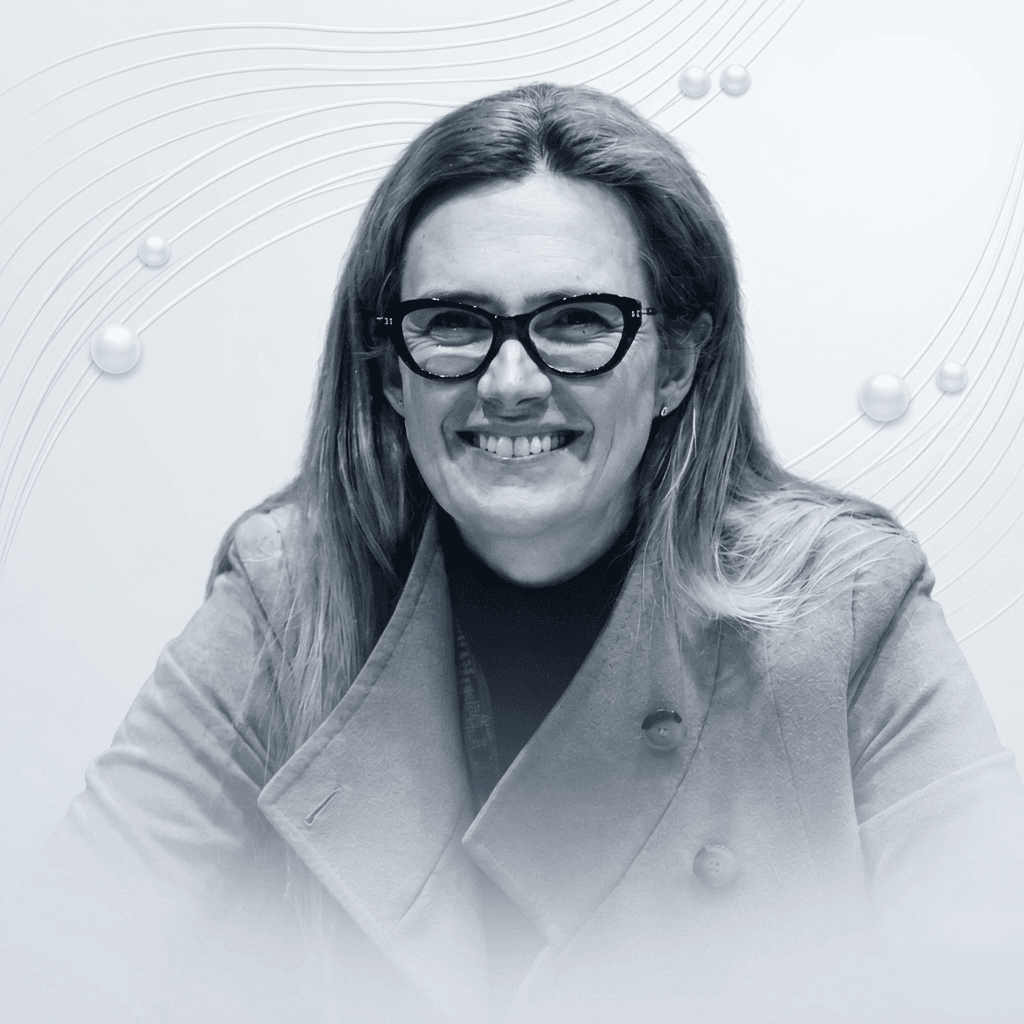
Meg Jones on United Nations and international collaboration
Episode 14 30.03.2021
-
 play_arrow
PLAY EPISODE
Description arrow_drop_down

Description
From Doctors Without Borders to the United Nations to Fairtrade International , what does a career spent inside the world’s largest collaborative institutions reveal about why global cooperation works and when it fails? Meg Jones unpacks the mechanics of international collaboration and why compassion may be the most underrated driver of collective action. Subscribe for more episodes on real-world collaboration. Meg Jones has spent her career at the intersection of international development, trade policy, and humanitarian action. Her trajectory , from studying Japan’s post-war reconstruction as an exchange student, through 15 years at the United Nations, to leading Fairtrade International’s Australia/New Zealand operations , gives her an unusually grounded perspective on collaboration across cultures, institutions, and power asymmetries. Jones defines collaboration through an African proverb: “Alone I can go fast, together we go far.” But she adds critical structure to that idea. Effective collaboration requires four elements: a shared vision, clarity about what each participant contributes and receives, agreed leadership, and trust. Without trust, she argues, nothing survives difficulty , and difficulty is guaranteed. The United Nations serves as her primary case study. Established from the rubble of World War II to ensure atrocities would never recur, the UN represents collaboration’s highest ambition: sovereign nations voluntarily coordinating without surrendering sovereignty. Jones traces how this framework produced the Millennium Development Goals and the Sustainable Development Goals , concrete examples of 193 countries agreeing on shared targets despite radically different interests. But the conversation does not shy away from failure. Jones describes how UN collaborations break down when institutional incentives reward individual agency performance over collective impact, when trust erodes between partners operating at different speeds, and when the gap between headquarters strategy and field reality becomes too wide. Her experience with trade facilitation in developing countries illustrates how collaboration must adapt to local context or risk irrelevance. The discussion turns to religion and spirituality as underexplored dimensions of collaboration. Jones argues that faith traditions have historically provided the moral frameworks and community structures that sustain cooperation across generations , a resource that secular institutions often overlook. On sustainability, Jones makes a pointed argument: if the science of collaboration does not integrate environmental sustainability as a core principle, it will miss the defining challenge of our time. The disposal of billions of COVID masks at $400 per biohazard bag illustrates how even crisis response generates new collaborative problems. When asked what she would change about humans, Jones chooses compassion , the ability to see past visual, linguistic, and cultural barriers to recognize shared vulnerability. If every person looked at another and saw someone who could catch COVID, collaboration would follow naturally. Part of the Ernst Strüngmann Forum series on Collaboration, produced with the Convergent Science Network.
Tagged as:
Development Goals Fairtrade International international collaboration United Nations Without
About the author call_made
CSN Podcasts
Both the triumphs of humanity and its most evil deeds have resulted from collaboration. In a time where humanity is required to aspire to the former and minimize the latter, the question arises of how collaboration arises and why it fails. Surprisingly, this phenomenon, so central to who we are, is not well understood. Hence, a collaborative effort is required to understand collaboration in its full biological, psychological, sociological, cultural, and economic complexity and to translate this understanding into operational impact. This series of podcasts is one step toward achieving these complementary goals. The Collaboration Podcast presents interviews with people who are central orchestrators of collaboration in various domains including business, government, science, art, health, sustainability, and the military. The discussions were conducted by Prof. Dr. Paul F.M.J. Verschure and members of the Program Advisory Committee of the Ernst Strungmann Forum on Collaboration (https://www.esforum.de/forums/ESF32_Collaboration.html) during 2021 and had the goal to sketch a map of opportunities, challenges, and obstacles in human collaboration. The forum took place in May 2022, and now we would like to share this series of interviews with a broader audience. The full report of the Forum will be published in 2023 by MIT Press. The podcast was produced by the Convergent Science Network (https://www.convergentsciencenetwork.org/). Context: The stability of social systems depends critically on realizing sustainable methods of “collaboration,” yet how and by which means collaboration is achieved is not clearly understood; neither are the conditions or processes that lead to its breakdown or failure. Collaboration can be understood as cooperation between agents toward mutually constructed goals. Part of the reason for our lack of understanding is that the phenomenon of collaboration is, by nature, a highly multidisciplinary problem, and effective research into its complexities has been difficult to achieve across the broad range of scientific and technical disciplines involved. The need for a fundamental understanding of collaboration, however, has become increasingly important. Not only does humankind demand answers as it attempts to address critical challenges at multiple scales (e.g., climate change, migration, enhanced automation, social and economic inequality), but ever-increasing technological and economic means of interconnecting people and societies are disrupting long-established, familiar patterns of how we interact. Radical technological changes that are ongoing have the potential to reshape collaboration in ways that are currently hard to predict or influence (e.g., by altering configurations in interaction, information creation, and modes of communication). On one hand, such changes could disrupt hitherto stable forms of collaboration by affecting critical communication channels and traditional roles, as can be observed in the rapidly changing patterns in governance, commerce, and social interaction. Conversely, technology could lead to the emergence of novel, successful forms of collaboration that deviate from traditional “hierarchical” architectures. Evidence of this can be seen in areas as diverse as highly automated manufacturing plants, the open science movement, collaborative software repositories, user-centered services, and the sharing of economy-based modes of organization. Without a fundamental understanding of the mechanisms, processes, and boundary conditions of collaboration, it is not possible to evaluate or predict which of these possible scenarios are sustainable or even plausible. The Forum “How Collaboration Arises and Why it Fails” (May 8–13, 2022, Location: Frankfurt am Main, Germany) Chairs: Andreas Roepstorff and Paul Verschure Program Advisory Committee: Jenna Bednar, Julia R. Lupp, Bhavani R. Rao , Andreas Roepstorff, Ferdinand von Siemens, and Paul Verschure
Episodes
play_arrow
play_arrow
play_arrow
play_arrow
Timestamp
- fast_forward00:00:04 - Hi, I'm Paul Fusciaro and today I'm speaking with Meg Jones about collaboration
- fast_forward00:00:09 - in large multinational organizations.
- fast_forward00:00:12 - Meg has a background in international studies and economics,
- fast_forward00:00:15 - having studied in Australia, Indonesia, Malaysia, and the Netherlands.
- fast_forward00:00:19 - She's a senior expert in trade and United Nations Sustainable Development Goals
- fast_forward00:00:24 - and has held senior roles in economic empowerment at United Nations for over a decade.
- fast_forward00:00:30 - So what I would like to start with is just to understand a little bit your professional
- fast_forward00:00:34 - trajectory that brought you to where you are today.
- fast_forward00:00:37 - So if you understand a little bit the context in which you have been looking
- fast_forward00:00:40 - and experiencing human collaboration.
- fast_forward00:00:44 - Thank you very much, Paul. It's a delight to be on your show today.
- fast_forward00:00:47 - Listen, collaboration has basically been the backbone of my professional career.
- fast_forward00:00:51 - I started off when I was in high school, very interested in how the Japanese
- fast_forward00:00:56 - had managed to rebuild themselves from the rubble of World War II into the economic
- fast_forward00:01:01 - superpower in what was then the 80s.
- fast_forward00:01:03 - And that was really my first dive into collaboration, going to Japan as an exchange
- fast_forward00:01:08 - student and understanding the Japanese way of thinking from the inside out.
- fast_forward00:01:13 - And then after that, I worked in the latter years for Medicine Frontier,
- fast_forward00:01:17 - Doctors Without Borders, and also with the United Nations for 15 years.
- fast_forward00:01:22 - And I'm currently now with Fair Trade International in their Australian New
- fast_forward00:01:28 - Zealand office, which is, of course, also about collaboration.
- fast_forward00:01:31 - So really, the whole piece has been around looking at how you can actually bring
- fast_forward00:01:37 - people together to take projects to scale or to replicate. But it really is about the scale aspect.
- fast_forward00:01:45 - Okay. But then, so maybe you started now, as you experienced this early on in
- fast_forward00:01:55 - Japan, and ending up where you are now in an NGO.
- fast_forward00:02:01 - But how would you define collaboration? So what is collaboration and...
- fast_forward00:02:08 - What are the underlying features? Yep. Well, I think, you know,
- fast_forward00:02:11 - Paul, there's an African proverb that says, alone I can go fast and together
- fast_forward00:02:16 - we go far. And I really think it's that recognition.
- fast_forward00:02:20 - Collaboration is bringing a group of people or entities together to achieve
- fast_forward00:02:25 - something, whether that's a task or a goal.
- fast_forward00:02:28 - It really is bringing more than one person or entity together to achieve a common task or goal.
- fast_forward00:02:34 - And I think what that really requires is a vision. The people who are going
- fast_forward00:02:37 - to be part of this collaboration need to recognize a common vision.
- fast_forward00:02:41 - They need to see what it is that they can contribute to that and what it is
- fast_forward00:02:45 - they're going to get out of that.
- fast_forward00:02:46 - And they need to agree on leadership as well. I think this is how in some ways
- fast_forward00:02:50 - it differs from cooperation.
- fast_forward00:02:51 - I think you can cooperate without necessarily a strong leadership component
- fast_forward00:02:56 - in place, but collaboration, you really need to have leadership there.
- fast_forward00:03:01 - So what you highlight here, there's goals, objectives, there's incentives. But also leadership.
- fast_forward00:03:10 - So do you see other underlying features that stand out?
- fast_forward00:03:15 - Or these would, for you, be the three pillars, if you want, of human collaboration?
- fast_forward00:03:20 - I think human collaboration is around goals, it is around incentives and leadership,
- fast_forward00:03:24 - but the make or break in the mix, if you like, is trust.
- fast_forward00:03:29 - If there's trust between partners, then you'll be able to continue,
- fast_forward00:03:33 - even when things do become difficult, but without trust, nothing will be achieved,
- fast_forward00:03:38 - essentially, and the thing will fall apart.
- fast_forward00:03:40 - But, I mean, as you know, I worked for the United Nations for 15 years and I
- fast_forward00:03:44 - think the United Nations is the platform for collaboration par excellence.
- fast_forward00:03:50 - I mean, it was established for that out of the rubble of the World War II.
- fast_forward00:03:53 - It was really the purpose was to bring the nations of the world together to
- fast_forward00:03:57 - ensure that the atrocities that had taken place preceding and during the Second
- fast_forward00:04:02 - World War never happened again.
- fast_forward00:04:04 - Game um and so that was
- fast_forward00:04:07 - when it's the forum where um at at
- fast_forward00:04:10 - a you know governmental level the governments of the world actually agree to
- fast_forward00:04:14 - not in any way give up their sovereignty they retain their sovereign rights
- fast_forward00:04:19 - but it is a forum for collaboration um for if you like the greater good whether
- fast_forward00:04:25 - that's human rights and i worked at the office of the united nations um human rights,
- fast_forward00:04:29 - Commission for Human Rights, or if it's in trade, I worked in trade for many years.
- fast_forward00:04:33 - Or as is essential to our response to the COVID pandemic, the World Health Organization.
- fast_forward00:04:39 - Governments coming together there to share the results of their scientific research
- fast_forward00:04:45 - and their experience in innovation in tackling the virus at the national level.
- fast_forward00:04:51 - But now if we take the United Nations as our example of collaboration,
- fast_forward00:04:57 - Certainly, it aspires to be the example of collaboration in the same sense.
- fast_forward00:05:04 - What would be then the objective, when you start with the goal?
- fast_forward00:05:08 - What is the goal? In order for also antagonized countries to just communicate?
- fast_forward00:05:17 - Or is it also to achieve a common objective in a more constructive sense?
- fast_forward00:05:23 - Well, the overarching goal of the United Nations is about peace and security.
- fast_forward00:05:27 - Really, that's central to the UN. And I think what we've seen with globalisation
- fast_forward00:05:31 - and other factors is that peace and security can be impacted by factors even
- fast_forward00:05:38 - beyond the general factors. I mean, for example...
- fast_forward00:05:42 - Ill health like we're experiencing at the moment, the pandemic that we're experiencing
- fast_forward00:05:46 - at the moment, or the race towards the conservation of water resources,
- fast_forward00:05:51 - the ownership of water resources.
- fast_forward00:05:53 - There are many circumstances in which the United Nations acts as the convening
- fast_forward00:05:58 - force for discussions around which collaborations can form and produce from.
- fast_forward00:06:04 - But as such, has it achieved that goal or is it effective in achieving this goal?
- fast_forward00:06:14 - I think yes. In many ways, yes.
- fast_forward00:06:18 - Of course, I can only speak to my own experience in forming collaborations as
- fast_forward00:06:23 - an international civil servant as part of the UN machinery. I can share some experience on that.
- fast_forward00:06:29 - But before I do that, I think it's worth acknowledging that from the time of
- fast_forward00:06:34 - the Millennium Development Goals, which were promulgated under Kofi Annan's
- fast_forward00:06:37 - leadership to now the Sustainable Development Goals, MDGs ran 2000 to 2015,
- fast_forward00:06:43 - and then we've got the Sustainable Development Goals now from 2015 to 2030.
- fast_forward00:06:47 - I mean, this is where the member states of the United Nations have agreed,
- fast_forward00:06:50 - basically, the development agenda.
- fast_forward00:06:52 - And the purpose of that is to focus and concentrate trade resources around the
- fast_forward00:06:57 - 17 goals, which include, of course, health and human rights and climate change.
- fast_forward00:07:06 - But in the context of, if I can just go back to answer your specific question
- fast_forward00:07:10 - about where has the UN been successful, one small example.
- fast_forward00:07:13 - I worked as the, I headed up the program for women's economic empowerment at
- fast_forward00:07:19 - the International Trade Centre, which is part of the UN in Geneva. either.
- fast_forward00:07:24 - It's where the World Trade Organization makes the trade rules or the member
- fast_forward00:07:28 - states, it's the WTO, establish the rules that govern international trade.
- fast_forward00:07:32 - And the International Trade Bank is all about putting those rules into practice,
- fast_forward00:07:37 - working with the private sector.
- fast_forward00:07:38 - So the UN is public sector largely and then working with the private sector
- fast_forward00:07:42 - to help small and medium-sized companies export.
- fast_forward00:07:45 - And within that context, I was responsible for women's economic empowerment,
- fast_forward00:07:50 - currently a sustainable development goal number five.
- fast_forward00:07:53 - And I think in terms of that whole, what we did was we put together a collaboration
- fast_forward00:07:59 - because the thing about the UN is that it is vast,
- fast_forward00:08:06 - it is under-resourced, whether you're talking about human or financial resources,
- fast_forward00:08:10 - the UN is under-resourced and that's why it needs to leverage its collaborating,
- fast_forward00:08:14 - its convening power to form collaborations between private public sector,
- fast_forward00:08:19 - academics, NGOs, to achieve those goals.
- fast_forward00:08:22 - And that's what we did under Women's Economic Empowerment when we established
- fast_forward00:08:26 - what was then called the Global Platform for Action for Sourcing from Women
- fast_forward00:08:30 - Vendors, which is now called SheTrades.
- fast_forward00:08:34 - But then, so for the United Nations, there are two different collaborative processes
- fast_forward00:08:41 - that we could analyze. On the one hand, it is a body where countries try to collaborate.
- fast_forward00:08:46 - On the other hand, it's a body formed by humans who internally always have to
- fast_forward00:08:52 - collaborate to serve, in some sense, the collaboration between nations.
- fast_forward00:08:58 - So if we take your pillars of collaboration of goals, incentives,
- fast_forward00:09:04 - and leadership, how would that translate to these two different processes?
- fast_forward00:09:11 - Because in some sense, you also face, of course, a massive heterogeneity in
- fast_forward00:09:17 - terms of the players at both these levels.
- fast_forward00:09:20 - Yes, yes, you do. And again, that's where I think collaboration comes from,
- fast_forward00:09:25 - cooperation and cooperation you get between homogenous entities.
- fast_forward00:09:28 - And when you talk about collaboration, it really is heavy lifting because there
- fast_forward00:09:32 - is a lot more heterogeneity amongst the players there when you're talking about collaboration.
- fast_forward00:09:38 - So I think you're right, and the UN is probably one of the most diverse institutions
- fast_forward00:09:44 - on the face of the planet, by definition.
- fast_forward00:09:46 - It's got 100 member states that are coming together to try to agree goals,
- fast_forward00:09:50 - which is why if there's any outcome such as sustainable development goals,
- fast_forward00:09:54 - I mean, what could you do on sustainable development?
- fast_forward00:09:58 - There are thousands of things you could do on that front. So for the member
- fast_forward00:10:03 - states of the United Nations to come together to narrow that down to just 17
- fast_forward00:10:06 - is in and of itself difficult.
- fast_forward00:10:09 - An achievement yeah because also behind
- fast_forward00:10:12 - that i think this is the other thing that the um that the
- fast_forward00:10:15 - un is very good at um it's good at iteration
- fast_forward00:10:18 - it's good at iteration the iteration is very slow but it's good at iteration
- fast_forward00:10:22 - because it has a long institutional memory stemming stemming back to the second
- fast_forward00:10:26 - world the end of the second world war so for example and and learnings are taken
- fast_forward00:10:30 - on board so for example whereas the millennium development goals that first
- fast_forward00:10:34 - set of eight goals which was promulgated in 2000,
- fast_forward00:10:37 - was really the reporting on achievements was done by developing and least developed
- fast_forward00:10:42 - countries to the United Nations reporting in.
- fast_forward00:10:45 - What we see in the Sustainable Development Goals, this set of 17 goals,
- fast_forward00:10:50 - it's actually an agenda that's owned by developing least developed and developed
- fast_forward00:10:55 - countries, its public sector and its private sector.
- fast_forward00:11:00 - Corporations have also taken up or recognised responsibilities under the Sustainable
- fast_forward00:11:05 - Development Goals and are reporting on those as well, and I think that's a major step forward.
- fast_forward00:11:10 - Academia is also playing a role in that as well. Lots of research going around
- fast_forward00:11:13 - how to better achieve those goals and achieve the outcomes.
- fast_forward00:11:16 - And of course, NGOs have always been central to the achievement of development
- fast_forward00:11:20 - goals, including in this instance.
- fast_forward00:11:23 - But then you could, of course, so first we have to establish these goals and
- fast_forward00:11:28 - indeed the Sustainable Development Goals are a very good example of that.
- fast_forward00:11:31 - Yes. But now you could also then argue, well, maybe that's just the lowest common
- fast_forward00:11:36 - denominator around which we could actually group all these heterogeneity in objectives,
- fast_forward00:11:44 - in interests, and so on, which means that the sustainable development goals
- fast_forward00:11:49 - in the end are so broad and ill-defined that they will give you little traction in the real world.
- fast_forward00:11:56 - So isn't that the continuous problem, the problem of compromise,
- fast_forward00:12:00 - because you have a lot of hidden conflicting forces that you have to act against?
- fast_forward00:12:08 - You could look at it like that. And yet I would say there's nothing wrong with
- fast_forward00:12:13 - sharing of experience on the lowest common denominator.
- fast_forward00:12:16 - Because once you've got a good baseline, then you can keep building on that.
- fast_forward00:12:19 - But unless people have, unless countries share in that common denominator,
- fast_forward00:12:23 - you will never be, there will always be these large gaps in development status.
- fast_forward00:12:28 - And I think you could use the current pandemic as a casing point there.
- fast_forward00:12:32 - If you're looking at, if you're pushing,
- fast_forward00:12:35 - if you juxtapose vaccine nationalism with vaccine equity, for example,
- fast_forward00:12:41 - which is the difference between Australia wanting all Australians to be vaccinated
- fast_forward00:12:45 - versus making that vaccine available in the Pacific, our nearest neighbours,
- fast_forward00:12:50 - that kind of juxtaposition, I think that's important to look at.
- fast_forward00:12:54 - And also in terms when you're fighting something new like COVID,
- fast_forward00:12:59 - using the WTO as that platform for the sharing of scientific breakthroughs,
- fast_forward00:13:05 - if you like, for sharing of experience on what works at the national level in
- fast_forward00:13:09 - the different countries and what could work by definition,
- fast_forward00:13:12 - or one would hope, in different regions as well because, of course,
- fast_forward00:13:15 - COVID as a virus is going to spread rapidly.
- fast_forward00:13:20 - More quickly in a given region even as it does globally but now you what you
- fast_forward00:13:26 - also mentioned that maybe these things go together you said look united nations
- fast_forward00:13:31 - very good iterating a process yes and this is how you would build up from the
- fast_forward00:13:35 - baseline so to develop the collaboration over time,
- fast_forward00:13:40 - by stretching out the time in some sense the participating players are changing
- fast_forward00:13:45 - continuously because the process runs over a longer period of time than the
- fast_forward00:13:50 - presence of the individual players.
- fast_forward00:13:52 - Is that a reaction to overcoming this challenge of the lowest common denominator, you say?
- fast_forward00:13:59 - Yes, well, I think it is. I mean, because countries also, even if you look at
- fast_forward00:14:03 - the, if we move now to the human rights context,
- fast_forward00:14:07 - countries have a reporting requirement every four years to report on the discharging
- fast_forward00:14:12 - of their obligations under international treaties at the national level,
- fast_forward00:14:15 - or how they've changed legislation, regulation,
- fast_forward00:14:18 - administrative instructions to bring
- fast_forward00:14:21 - themselves into alignment with their international treaty obligations.
- fast_forward00:14:24 - And that must be done every four years, irrespective of changes in government.
- fast_forward00:14:28 - And I think that's important to remember as well. I mean, that's what countries
- fast_forward00:14:32 - are held to. It doesn't matter who's in power today.
- fast_forward00:14:35 - Left, right, centre, makes no difference. The country can have the reporting
- fast_forward00:14:39 - requirement. And, of course, there has to be what's called a...
- fast_forward00:14:46 - A progressive, there we go, I'm looking for the word, progressive realisation
- fast_forward00:14:51 - of rights. So there has to be progression.
- fast_forward00:14:54 - So that's the operative word there. And again, when countries go to report on
- fast_forward00:15:00 - the realisation of human rights obligations at the national level,
- fast_forward00:15:04 - the committees under the treaties share, they make observations and they share
- fast_forward00:15:08 - how other countries have actually overcome the obstacles that that country may
- fast_forward00:15:13 - identify as being being an impediment to their realisation of rights.
- fast_forward00:15:17 - So I think it's a really good forum for as countries feel the pressure,
- fast_forward00:15:22 - they report, they draw down new information on how they can improve and then
- fast_forward00:15:27 - they apply that over the next three, four years and they report again.
- fast_forward00:15:29 - So there is that progressive, iterative movement through the achievement of
- fast_forward00:15:38 - goals, whether it's sustainable development goals or human rights goals there as well.
- fast_forward00:15:42 - And what the UN also does to further accelerate the realisation of those goals
- fast_forward00:15:49 - is to, it hosts regional meetings.
- fast_forward00:15:52 - And this is useful from the perspective of, because you talked about heterogeneity
- fast_forward00:15:57 - before, any cultural, linguistic differences as well.
- fast_forward00:16:03 - Because sometimes there is that feeling that's expressed that,
- fast_forward00:16:06 - oh, you can't compare region A with region B. We're so different in terms of
- fast_forward00:16:11 - religion or language or many other factors.
- fast_forward00:16:15 - And so the UN is, again, the convening power in the different regions for regional
- fast_forward00:16:20 - meetings as well to share knowledge.
- fast_forward00:16:22 - But how did that then translate to the actual day-to-day work you were doing
- fast_forward00:16:29 - when you were working on all these issues of female, of women empowerment?
- fast_forward00:16:34 - So how did it now translate? late, right? So, and how you reach out.
- fast_forward00:16:41 - Yeah, well, I think you raised a very good point before about the people because
- fast_forward00:16:46 - I tell you one thing, collaboration really only works with the right mix of people.
- fast_forward00:16:54 - There can be this view that if you line up institution A, B,
- fast_forward00:16:59 - C, D, this natural progression will lead you to outcomes E and F or something like that.
- fast_forward00:17:04 - But I'm telling you from long experience and working across a range of collaborations,
- fast_forward00:17:08 - it's the people at the table.
- fast_forward00:17:11 - That we'll make that collaboration work or not.
- fast_forward00:17:16 - Yeah, so it's not just about the organisations or institutions.
- fast_forward00:17:19 - It's about the people who are sent, if you like, or opt in to represent those organisations.
- fast_forward00:17:25 - And the most successful collaborations I've worked in have been the people you
- fast_forward00:17:30 - know will get out of bed at 3am and fall across broken glass because this has to be done now.
- fast_forward00:17:36 - This is the critical operation. And that gets back down to what I was talking
- fast_forward00:17:40 - about before about trust.
- fast_forward00:17:41 - You know, good leadership, good leadership and trust.
- fast_forward00:17:46 - Trust that the vision that we've set for ourselves or the task before us can
- fast_forward00:17:50 - be achieved no matter how ominous it may appear.
- fast_forward00:17:54 - And trust in each other that collectively, once again, to that point about alone
- fast_forward00:17:59 - I can go fast, but together we go far.
- fast_forward00:18:03 - But collectively, we can actually achieve solid runs on the board.
- fast_forward00:18:06 - And that is where the collaboration is.
- fast_forward00:18:10 - If you've got five people, it's no longer a collaboration between five people.
- fast_forward00:18:14 - It really is five organizations or five institutions, say five organizations.
- fast_forward00:18:19 - And when you've got five organizations at the table, then you get that longevity,
- fast_forward00:18:23 - that temporal aspect, the longevity aspect as well, which I think is really important.
- fast_forward00:18:27 - It goes beyond the people. I think good collaboration starts with the people,
- fast_forward00:18:31 - the right people, the right entities, and then you can get those results.
- fast_forward00:18:36 - Every time with that it's the what are then the the traits of of.
- fast_forward00:18:43 - The perfect collaborator, you talk about people, what are they?
- fast_forward00:18:47 - I think it comes down to... I'll give you an example of how it worked around
- fast_forward00:18:51 - this notion of the people involved.
- fast_forward00:18:55 - Sure. I think it comes down to you have to correctly identify what you're solving
- fast_forward00:18:59 - for. What is the problem?
- fast_forward00:19:03 - Because if you get a good problem definition, then you can actually come up with a solution.
- fast_forward00:19:06 - So in terms of economic empowerment of women, again, there's 100 ways you could approach that.
- fast_forward00:19:12 - Working for the United Nations for a Trade Institute, we had to achieve that through trade, right?
- fast_forward00:19:17 - So then one of the problems we realized was actually ascertaining where do women
- fast_forward00:19:24 - business owners, in which sectors are they concentrated?
- fast_forward00:19:28 - Now, sitting at my desk in Geneva, how am I going to find out that?
- fast_forward00:19:30 - Because there was no research in the topic or very little research that,
- fast_forward00:19:35 - you know, they're in textiles and clothing kind of, but what else are they in?
- fast_forward00:19:39 - It's a bit It's a bit anecdotal, you know. So then we worked.
- fast_forward00:19:44 - So then we've got to figure out which organizations to work with.
- fast_forward00:19:46 - So we chose to work with, reach out to the International Federation of Business
- fast_forward00:19:50 - and Professional Women because it was the largest organization of business women
- fast_forward00:19:54 - on the business and professional women on the planet.
- fast_forward00:19:57 - They're active in over 90 countries, 30,000 members.
- fast_forward00:20:00 - And the first step, so they were the first people I reached out to,
- fast_forward00:20:04 - was the International Federation of Business and Professional Women.
- fast_forward00:20:06 - And with an agreement to survey their members.
- fast_forward00:20:10 - Because I had so many members to find out what those sectors were.
- fast_forward00:20:14 - Also at that time, collaborating very closely with a group called We Connect
- fast_forward00:20:17 - because they're all about connecting women business owners with corporations
- fast_forward00:20:21 - and they had the corporate networks.
- fast_forward00:20:24 - We Connect is a membership-based organization of corporations that want to increase
- fast_forward00:20:29 - sourcing goods and services from companies owned by women.
- fast_forward00:20:31 - So we had the private sector there. As the UN, we knew the supply side.
- fast_forward00:20:36 - We have deep connections into women business owners as in developing and least developed countries.
- fast_forward00:20:40 - So we had the supply side sorted out. We needed guidance on the sectors,
- fast_forward00:20:45 - which we got through the feedback from the survey from the International Federation
- fast_forward00:20:48 - of Business and Professional Women, and then working with WeConnect on the demand
- fast_forward00:20:52 - side with the corporations to bring that together.
- fast_forward00:20:55 - So we had our first meeting, and it was only 27 people.
- fast_forward00:20:59 - But again, they were representatives of about 14 different organisations to
- fast_forward00:21:05 - determine how we'd move forward. And we decided to focus on procurement,
- fast_forward00:21:08 - came up with some ideas around that, started running annual meetings.
- fast_forward00:21:12 - And to date, SheTrades, there's been $80 million of worth of sales from goods
- fast_forward00:21:18 - and services from companies owned by women in developing and least developed countries.
- fast_forward00:21:22 - That's pretty good, Paul. It's $8 million that otherwise wouldn't have gone
- fast_forward00:21:27 - into the pockets of women in the developing world.
- fast_forward00:21:29 - Right. No, no, I know. I understand. But you said earlier that what really matters
- fast_forward00:21:35 - to make a successful collaboration is the people around that table,
- fast_forward00:21:41 - right? Yes, that's right.
- fast_forward00:21:43 - What was special about the people around that table to lead to this success?
- fast_forward00:21:50 - What did they bring to that table to make that happen? Was it in the trust, for instance?
- fast_forward00:21:54 - Was that the main thing? Or was it also a sense of taking initiative,
- fast_forward00:21:58 - accepting risk? I don't know. I'm guessing.
- fast_forward00:22:02 - Well, I think, I don't know. I'm guessing it's a really good place to start
- fast_forward00:22:05 - because if you're looking to bring people around the table to collaborate on something,
- fast_forward00:22:11 - a good place to start is by recognizing we have a problem and saying,
- fast_forward00:22:16 - I don't know, I'm guessing that this could be a way forward,
- fast_forward00:22:18 - but I really need the input of the people around this table to figure out what
- fast_forward00:22:22 - is the best chances of working going forward.
- fast_forward00:22:26 - You know, I think in terms of the qualities in the people, humility goes a long way, I think.
- fast_forward00:22:31 - Humility, experience, and then the trust is built over time.
- fast_forward00:22:35 - But firstly, it has to be trust in the vision to get people together to be part
- fast_forward00:22:40 - of identifying, okay, the problem, but what are the solutions to the problem?
- fast_forward00:22:43 - What are the options we have before us? and then out of that comes almost like
- fast_forward00:22:48 - the rules and regulations around how you make decisions as well because that's
- fast_forward00:22:53 - an important part in a collaboration as well.
- fast_forward00:22:55 - You know, there has to be a way to make decisions and under a collaboration that has to happen.
- fast_forward00:23:03 - I wouldn't necessarily say quickly, but it has to happen decisively so you can
- fast_forward00:23:08 - keep moving forward, you know, and therefore there has to be trust in the leadership.
- fast_forward00:23:11 - So, and that's, I think, also valuable because there is trust in the leadership there.
- fast_forward00:23:19 - But now, could you also give an example where it just didn't work out?
- fast_forward00:23:25 - Because these features were absent.
- fast_forward00:23:28 - Yeah, I think they just naturally fall apart, Paul. I've been involved in some
- fast_forward00:23:34 - non-status where there's an indication that we must do something.
- fast_forward00:23:42 - We always must do something.
- fast_forward00:23:44 - But then certain parties just don't come to the table. They just don't come to the meetings.
- fast_forward00:23:49 - And the less people turn up, then you're just not going to be able to achieve.
- fast_forward00:23:53 - Well, you starve the process through your absence. Yes, you start the process
- fast_forward00:23:59 - through your actions, which is a tactic.
- fast_forward00:24:00 - It's a tactic used also by some players in different international games because
- fast_forward00:24:07 - there's the substance of the process.
- fast_forward00:24:10 - Yes. But now, in the example you gave us, we speak about women empowerment.
- fast_forward00:24:17 - The success of that story is also
- fast_forward00:24:20 - how you summarized it, is to bring more money to the pockets of women.
- fast_forward00:24:25 - Absolutely. But do you also see that as, let's say, a struggle against another
- fast_forward00:24:31 - form of, let's say, power and control that is maybe more dominated by males?
- fast_forward00:24:40 - And do you see that converge or do you see that diverge?
- fast_forward00:24:44 - Because that would suggest that there are two realms of collaboration,
- fast_forward00:24:49 - possibly, that will never meet. Right.
- fast_forward00:24:54 - And then we have to indeed support one real more because the other one is really
- fast_forward00:24:58 - dominant, the top-down, power-based one. So how do you look at that?
- fast_forward00:25:04 - I did a lot of work with governments, and I think, firstly, in many instances,
- fast_forward00:25:08 - you need to get different ministries to collaborate, to agree to collaborate
- fast_forward00:25:13 - with you to achieve the common goal.
- fast_forward00:25:15 - And that might sound like that should be automatic, but it isn't.
- fast_forward00:25:19 - Typically, the UN deals with the Ministry of Foreign Affairs. that's
- fast_forward00:25:23 - un level um my interlocutors with
- fast_forward00:25:26 - the ministry of trade i did a lot of work in agriculture so
- fast_forward00:25:29 - then there's a ministry of agriculture and somewhere in there there's
- fast_forward00:25:32 - usually a ministry of women's affairs so it's four different ministries and
- fast_forward00:25:37 - with four different briefs and rarely do those four different ministers come
- fast_forward00:25:41 - into the same room around a topic like economic empowerment and then you need
- fast_forward00:25:46 - to convince them as to why that's important so So if I go back to the example,
- fast_forward00:25:50 - one of the areas that came out of the survey in which women were concentrated was coffee.
- fast_forward00:25:58 - So, okay, fine. So then you have to look for an organisation,
- fast_forward00:26:02 - bring them in. So we worked with the International Women's Coffee Alliance.
- fast_forward00:26:06 - Then I did some work in Uganda, Burundi, East Africa.
- fast_forward00:26:12 - And a lot of that was with, firstly, the doorways was the Ministry of Foreign
- fast_forward00:26:16 - Affairs and the Ministry of Women's Affairs.
- fast_forward00:26:18 - Bringing the Ministry of Trade, talking to these ministers about how important
- fast_forward00:26:23 - it was for them to support this process of women's economic empowerment in the company,
- fast_forward00:26:26 - for them to recognise the role of women in the copy value chain,
- fast_forward00:26:30 - that women do most of the work and they're down at the very poorly paid end of that.
- fast_forward00:26:35 - And to ask ministers questions, I won't name the country, but one of the countries
- fast_forward00:26:41 - in East Africa decided to issue export certificates, sorry, export licences,
- fast_forward00:26:46 - very lucrative, their actual licence to export coffee.
- fast_forward00:26:49 - They issued 10 of them and they all went to men. So I asked the Minister of
- fast_forward00:26:52 - Trade, was that intentional?
- fast_forward00:26:54 - And he said, oh, but we went through the, we made that information available
- fast_forward00:26:57 - through the Chamber of Commerce.
- fast_forward00:27:01 - And then how many women are part of the Chambers of Commerce?
- fast_forward00:27:05 - And if you're growing coffee in remote and, by definition, high-altitude areas,
- fast_forward00:27:08 - typically miles from capital, how are you going to even know about that because
- fast_forward00:27:12 - you're not plugged into that kind of a network?
- fast_forward00:27:15 - So it was really talking about if you want to actually achieve outcomes across
- fast_forward00:27:20 - the value chain, they're equitable, really looking at the role of men and women
- fast_forward00:27:24 - there and ensuring that the information goes out to women.
- fast_forward00:27:27 - And so to your question on collaboration, how do you do that?
- fast_forward00:27:29 - But again, I think our role was bringing around the table the people who played
- fast_forward00:27:35 - key roles in coffee and getting them to recognize themselves how important it
- fast_forward00:27:42 - was to have the women at the table.
- fast_forward00:27:44 - When we had these meetings, for example, invariably the women would say,
- fast_forward00:27:48 - we work so hard on improving on good agricultural practices to improve the quality
- fast_forward00:27:54 - and quantity of coffee. We get the stuff.
- fast_forward00:27:57 - Ready, you know, we grow the stuff, it goes into bags. And then the time it
- fast_forward00:28:02 - goes to market is typically a time when it rains heavily and the roads are washed out, you know.
- fast_forward00:28:07 - And so having the Ministry of Public Works at the table too to also recognise
- fast_forward00:28:12 - their role in women's economic empowerment through the export of coffee,
- fast_forward00:28:15 - you know, to show that this is a hugely collaborative effort that hugely needs
- fast_forward00:28:19 - the support of the government for that to happen in a very practical sense.
- fast_forward00:28:24 - You raise questions about men and women's power dynamics, And you see these
- fast_forward00:28:27 - play out in these meetings. These women are not used to speaking to men in power.
- fast_forward00:28:31 - So part of our role was in generating confidence and the women to be able to
- fast_forward00:28:36 - speak up to help them articulate what their concerns were.
- fast_forward00:28:40 - But honestly, Paul, this is the thing about the United Nations.
- fast_forward00:28:43 - Once you've built those relationships, you've built the confidence,
- fast_forward00:28:45 - you've built the trust, and you've actually shone light into a dark area,
- fast_forward00:28:50 - like, for example, how important the Ministry of Public Works is to women's
- fast_forward00:28:52 - economic empowerment. on rebuilding the feeder roads, you know,
- fast_forward00:28:55 - back up the hill so the coffee can come down.
- fast_forward00:28:58 - Then people realised the value of having tables to be able to share that information.
- fast_forward00:29:05 - They also realised the value in some of the research that we did on the importance
- fast_forward00:29:08 - of women's economic empowerment in terms of breaking into generational poverty
- fast_forward00:29:12 - as well, women spending on their health, the education of children, very important areas.
- fast_forward00:29:17 - So it's a big picture. And I think that's the thing about collaboration.
- fast_forward00:29:20 - Once you get those parties together, once they start to listen And once they
- fast_forward00:29:23 - build relationships in and of
- fast_forward00:29:25 - themselves, this is the role of the land to bring those people together.
- fast_forward00:29:29 - And then when they're there, this is when they stick in this blue because export
- fast_forward00:29:34 - is so important in this country.
- fast_forward00:29:36 - It's a top foreign exchange earner.
- fast_forward00:29:38 - And clearly, the education and health of children is very important as well.
- fast_forward00:29:43 - So these collaborations tend to stick and play out for the best of the time.
- fast_forward00:29:48 - So this is very clear, right? And it also seems like almost that you have a
- fast_forward00:29:54 - recipe to make, at least to make progress in this. Yes. Like progress.
- fast_forward00:30:01 - In some sense, start simple, bring all the stakeholders together,
- fast_forward00:30:04 - have to communicate and so on.
- fast_forward00:30:06 - But in some sense, after 15 years of doing that, you stepped out of it.
- fast_forward00:30:11 - Even though these are hugely important challenges for humanity when you were
- fast_forward00:30:15 - really playing a very relevant role.
- fast_forward00:30:17 - So did you step out because you thought, okay, it's all solved now and someone
- fast_forward00:30:23 - else can do it because the recipe is clear?
- fast_forward00:30:25 - Or did you also step out because actually it's also a very challenging and draining activity?
- fast_forward00:30:32 - That you only can sustain for a certain amount of time. So why did you step out of it?
- fast_forward00:30:41 - First, when I started in the year 2000 on what was then what I call gender and
- fast_forward00:30:45 - trade, there was so little known about that.
- fast_forward00:30:48 - It was just a gut feeling that I had that this was so important and there was
- fast_forward00:30:51 - so little research and nothing being done at the World Trade Organization at all at that time.
- fast_forward00:30:58 - And I really felt the need to fight in this very important area. I knew it was important.
- fast_forward00:31:04 - It's just that we hadn't devised things yet.
- fast_forward00:31:07 - Like one of the first projects I worked on with the ITC was to come up with
- fast_forward00:31:12 - a methodology for a gender-sensitive value chain analysis, not just a value
- fast_forward00:31:16 - chain looking at coffee but where are women along the value chain.
- fast_forward00:31:19 - So, you know, I spent 15 years working with governments and people to put these
- fast_forward00:31:24 - tools together to build the structure that is now our SheTrades that continues today.
- fast_forward00:31:30 - There's a meeting to buy in October, another buyer-sellers meeting in October,
- fast_forward00:31:33 - and it's a few years along the track now. So these things are in place.
- fast_forward00:31:37 - I get very passionate about building things, about collaborations to tackle new problems.
- fast_forward00:31:43 - When structures are in place, I'm happy and super happy to pass these things
- fast_forward00:31:49 - over and have them keep working.
- fast_forward00:31:52 - I'm very happy to build collaborations. I think that's perhaps one, it is a skill that I have.
- fast_forward00:31:58 - It's playing out now in Australia. I work now in COVID in Australia as well.
- fast_forward00:32:02 - In addition to my work with Fairtrade, I work as a community engagement worker
- fast_forward00:32:06 - on COVID and I work in the vaccination clinics here.
- fast_forward00:32:08 - And Paul, the reason I do that is because our government has worked very hard
- fast_forward00:32:12 - with the medical fraternity here and the scientific community to do what they can to tackle the virus.
- fast_forward00:32:19 - But Paul, my whole life has been about collaboration. It brings in the people.
- fast_forward00:32:22 - So, I work as a community engagement worker in public housing.
- fast_forward00:32:26 - I work on the trust element. I work with the people. We have very strict rules
- fast_forward00:32:31 - here about who can and cannot get vaccinated.
- fast_forward00:32:33 - You can only get vaccinated in Australia if you're 40 years and above.
- fast_forward00:32:39 - But as a community engagement worker, my role, for example, was to speak when it's cleaning,
- fast_forward00:32:45 - the guy who is the supervisor for the cleaning crews that go into our public
- fast_forward00:32:50 - housing to do the deep cleaning and to sterilise all the touch points.
- fast_forward00:32:58 - He asked me, could his staff be vaccinated? Most of them are under 40 and mostly under 30.
- fast_forward00:33:03 - The technical answer is no, but it's my role there to go back app and speak
- fast_forward00:33:07 - to the decision makers and make the case as to why it's really important for
- fast_forward00:33:12 - those that are cleaning public housing towers to actually be vaccinated.
- fast_forward00:33:16 - Otherwise, they're going to be vectors for disaster. So, this is the thing again.
- fast_forward00:33:20 - It's great to have a collaboration. The thing about collaboration too,
- fast_forward00:33:23 - I think there always needs to be room to move for improvement as well.
- fast_forward00:33:28 - And so, it can't be clicky. A collaboration can't be clicky.
- fast_forward00:33:31 - There has to be room in there and there always has to be
- fast_forward00:33:34 - room to recognize the human factor so every collaboration i've
- fast_forward00:33:37 - worked on it's always been around the people like when
- fast_forward00:33:40 - we looked at coffee it wasn't coffee as a commodity to say there's a lot of
- fast_forward00:33:43 - money going into good agricultural practices and this and that um but really
- fast_forward00:33:47 - looking at the people uh what it is that the most vulnerable most disadvantaged
- fast_forward00:33:51 - groups in in that in that value chain what it is they lack um and again to go
- fast_forward00:33:56 - back to collaboration One of the pieces we built into that, because ITC doesn't do finance,
- fast_forward00:34:00 - we brokered the first ever sale of a million dollars worth of coffee from an
- fast_forward00:34:06 - association of women coffee growers in Burundi that we helped set up to plug
- fast_forward00:34:13 - them into banking and finance options as well because.
- fast_forward00:34:18 - There aren't many banks in remote rural areas where coffee is grown,
- fast_forward00:34:22 - and women typically don't have bank accounts in many of those places.
- fast_forward00:34:25 - And so you can talk about economic empowerment, but then you can expose people
- fast_forward00:34:29 - to vulnerability, to attack, actually, quite literally, if you're giving them
- fast_forward00:34:33 - – if they then have money and they don't have a place to store it.
- fast_forward00:34:38 - But now you put your finger on what you do now and that you're,
- fast_forward00:34:43 - as focusing on the community, you see yourself as building trust,
- fast_forward00:34:48 - trying to build trust. Yes. Trust in what?
- fast_forward00:34:52 - What do you want people to trust? I think this is the thing about collaboration.
- fast_forward00:34:57 - Each member of a collaboration, when you're looking at something,
- fast_forward00:35:01 - they either opt in or they opt out.
- fast_forward00:35:03 - And opting in requires sharing in a common vision.
- fast_forward00:35:07 - So you can share in the vision but then you have to
- fast_forward00:35:10 - you have to also have to share in believe in the
- fast_forward00:35:12 - leadership the group that's leading that the group or the person
- fast_forward00:35:15 - typically the entity that's leading that yeah so you need to trust in the vision
- fast_forward00:35:20 - as it's been articulated and typically one would hope you've had some role in
- fast_forward00:35:24 - in in discussing that with the other members of the of the collaboration um
- fast_forward00:35:29 - and the leadership yeah so i think it's that trust in the vision and trust in leadership.
- fast_forward00:35:33 - But there's sort of an ethical issue in that as well, because in some sense,
- fast_forward00:35:37 - you are also a mediator between a larger system, which is in the end your government,
- fast_forward00:35:45 - who imposes certain measures in response to this emergency,
- fast_forward00:35:50 - which you might not necessarily always agree with, right?
- fast_forward00:35:55 - Yes, exactly. Or that you might find limiting.
- fast_forward00:35:58 - But on the other hand, you also know people do have to support this.
- fast_forward00:36:02 - There has to be some compromise in order for us all to get through this with minimal damage.
- fast_forward00:36:07 - So where does the ethics then come in in that decision making?
- fast_forward00:36:11 - I see the bidirectionality, right? You speak to the people, to the community,
- fast_forward00:36:16 - but you also speak with representatives of the system when that system is actually
- fast_forward00:36:21 - not working in a way that you think is proper.
- fast_forward00:36:24 - But where would you draw that line?
- fast_forward00:36:28 - Well, I mean, I suppose that's again a typical role that I've played in most of these things.
- fast_forward00:36:32 - It's been finding, it's been arguing the case for the exceptions to the rules,
- fast_forward00:36:37 - and each case is different.
- fast_forward00:36:40 - So, yes, in terms of our government says you can only be vaccinated 40 and above
- fast_forward00:36:47 - unless there are certain circumstances like health issues,
- fast_forward00:36:51 - this kind of thing, but to be that voice for the cleaners because I understand the system.
- fast_forward00:36:57 - So this is the thing, where there is a collaboration as there is around COVID,
- fast_forward00:37:00 - there needs to be entry points for that.
- fast_forward00:37:03 - And so, if you like, that is the role that I play. In terms of ethics,
- fast_forward00:37:07 - then it comes down to, because I'm part of the COVID vaccination world,
- fast_forward00:37:15 - if you like, decision-making world,
- fast_forward00:37:16 - then it comes down to knowing the players and how far they will go.
- fast_forward00:37:21 - And then it's a call on your own ethics, I suspect, as to how hard and when you want to push.
- fast_forward00:37:31 - Because there will be aspects also of Australian politics and governance that
- fast_forward00:37:37 - you might not agree with.
- fast_forward00:37:39 - Yes. And just to communicate to community members, well, let's trust the system.
- fast_forward00:37:44 - Let's assume that they mean well.
- fast_forward00:37:47 - Let's assume they have also our best interests at heart.
- fast_forward00:37:51 - And then you're back to science, Paul. Then you're back to science because it's
- fast_forward00:37:54 - like with the AstraZeneca vaccine, for example,
- fast_forward00:37:57 - it can cause blood clots in very rare cases and it isn't around typical clotting
- fast_forward00:38:07 - modalities like deep vein thrombosis and illnesses like that.
- fast_forward00:38:11 - It has to do with platelets in the blood, which is very different to deep vein thrombosis.
- fast_forward00:38:17 - So, then it's taking the science and talking to the community.
- fast_forward00:38:21 - It's trusting the governments, trusting in the science, and taking that to the
- fast_forward00:38:24 - community and saying, listen, if you don't, AstraZeneca presents some risks,
- fast_forward00:38:28 - but if you get COVID, you're 10 times more likely to get blood clots.
- fast_forward00:38:31 - That kind of relaying of information back into the community as well.
- fast_forward00:38:36 - Okay. So, but that means you also build, let's say, a ground truth that has
- fast_forward00:38:41 - to be the scientific evidence in some way that you communicate to community members.
- fast_forward00:38:47 - So then, of course, you have this onslaught right now of disinformation in that domain.
- fast_forward00:38:54 - So then how do you deal with this?
- fast_forward00:38:58 - Well, I think, and this is what I've said too, I've pitched this to our management
- fast_forward00:39:02 - as well, then you need to bring in the community leaders from a range of diverse backgrounds.
- fast_forward00:39:08 - There needs to be engagement, even with those who hold what one might consider
- fast_forward00:39:13 - to be the views which are furthest from your own.
- fast_forward00:39:17 - It is to actually engage because if you don't engage, you then ostracise and
- fast_forward00:39:20 - that can lead to its own set of problems. ones.
- fast_forward00:39:24 - And typically, I found over the years that people, they just want to be heard.
- fast_forward00:39:30 - And sometimes once they've been heard, that's all they really needed.
- fast_forward00:39:33 - It's a strange kind of like set of circumstances, but it does seem to be that
- fast_forward00:39:37 - people need to be heard no matter what their views are.
- fast_forward00:39:39 - And once they've been heard, the mere telling of whatever it is their truth
- fast_forward00:39:42 - is seems to, in some ways, diffuse them.
- fast_forward00:39:44 - That doesn't mean you have to take it, you don't have to integrate that into
- fast_forward00:39:48 - your own templates for where to from here in terms of what it is you're going to deliver,
- fast_forward00:39:52 - But you will need to build out a bubble over here that talks about how to also
- fast_forward00:39:57 - engage that group of people as well in the discussion as you move forward,
- fast_forward00:40:02 - even if it's in the opposite direction to what they want.
- fast_forward00:40:06 - Okay. But in some sense, what you seem to express is to also respect if you
- fast_forward00:40:13 - want the agency of every individual in that process.
- fast_forward00:40:17 - Process, but to be heard also means I am acknowledged and I'm affirmed as a
- fast_forward00:40:24 - human being with my opinion.
- fast_forward00:40:25 - So does it really come down to something relatively straightforward like that,
- fast_forward00:40:30 - that we don't listen to what you say?
- fast_forward00:40:33 - No, it does. I think the problem with collaboration comes with the digital age
- fast_forward00:40:39 - in many ways because whereas before you could get people in a room,
- fast_forward00:40:43 - you know yourself well because you've been to many conferences.
- fast_forward00:40:45 - You go to conferences because you're asked to speak.
- fast_forward00:40:49 - But the real joy of going to conferences is the discussions on the margins because
- fast_forward00:40:55 - that's where the frontiers are.
- fast_forward00:40:58 - The frontiers are discussed on the margins because these are ideas which haven't
- fast_forward00:41:01 - yet fully formed. You know, nobody's actually giving a paper on this yet because
- fast_forward00:41:04 - it hasn't actually, it hasn't, it's coming together and you can feel it coming
- fast_forward00:41:07 - together, but it hasn't quite stuck yet.
- fast_forward00:41:09 - So I think those in-person meetings are so rich in what you learn,
- fast_forward00:41:13 - obviously, in the main plenaries and in the workshops and whatnot.
- fast_forward00:41:16 - But certainly in the discussions on the margins, when you really get the electricity
- fast_forward00:41:21 - of thought, you know, and I really miss that because at the moment with the
- fast_forward00:41:25 - COVID lockdown, because what, because unfortunately,
- fast_forward00:41:29 - the flip side of that, and it's been brought out obviously with some of the
- fast_forward00:41:34 - antics of Cambridge Analytica and the persuadables.
- fast_forward00:41:39 - I think the antithesis of that electricity of thought and its exploration of
- fast_forward00:41:43 - frontier knowledge and what could crystallise is the phenomena of the persuadables
- fast_forward00:41:49 - being persuaded by a campaign launched out of somewhere over social media.
- fast_forward00:41:55 - And then you get an ever-expanding understanding of
- fast_forward00:41:59 - something which is just fundamentally false and depending
- fast_forward00:42:04 - on your education system you've either been trained or not
- fast_forward00:42:06 - in analytical thinking or critical thinking and if you haven't and if you surround
- fast_forward00:42:12 - yourself with like-minded people whether that's virtually or literally or physically
- fast_forward00:42:18 - even it's more virtually than not then where where are the counterpoints you
- fast_forward00:42:22 - know where is the where the people to present as other yeah and I think.
- fast_forward00:42:27 - Now we're still in the tail end, hopefully, of this COVID crisis.
- fast_forward00:42:33 - You also engaged then with the new NGO.
- fast_forward00:42:37 - Yes. What are the lessons? So do you have a rule book for yourself now?
- fast_forward00:42:42 - You say, okay, well, given my experience, we did the UN, we did COVID,
- fast_forward00:42:48 - we've seen also how things don't work.
- fast_forward00:42:50 - So now I have a new rule book and there are certain things I should change in
- fast_forward00:42:55 - how I approach building collaboration.
- fast_forward00:42:57 - Do you have such a rule book right now or new rules in the rule book?
- fast_forward00:43:01 - I think I just have experience in the rule book, Paul. um one
- fast_forward00:43:04 - of them is around because coming i mean
- fast_forward00:43:07 - i work for the united nations so that by definition is
- fast_forward00:43:10 - um a whole range of difference you want to talk
- fast_forward00:43:13 - about difference it's all there you know it's by nationality by religion
- fast_forward00:43:16 - by language by anything you know coming back
- fast_forward00:43:19 - to australia now it's it's now i'm you
- fast_forward00:43:22 - know australia i'm an australian in australia this is a different
- fast_forward00:43:25 - thing um yet what i see
- fast_forward00:43:27 - is is that same thing here that the people tend
- fast_forward00:43:31 - towards people who look like
- fast_forward00:43:33 - themselves or speak like themselves but this there's still this grouping thing
- fast_forward00:43:36 - so i think that um to form collaborations that are really going to affect change
- fast_forward00:43:41 - over time um those bonds these these seeming bonds if you like need to be broken
- fast_forward00:43:47 - and people need to be brought in or at least offer the opportunity to participate
- fast_forward00:43:51 - in collaborations to achieve a common objective.
- fast_forward00:43:55 - You can't have one group of people calling the shots. Not in this country. We're very diverse.
- fast_forward00:44:02 - You really need to have all sorts of difference represented in our decision-making
- fast_forward00:44:09 - processes in this country.
- fast_forward00:44:11 - And that's what I'm trying to do today in my role as well. Right.
- fast_forward00:44:15 - But that also then talks about this balance between running fast on your own
- fast_forward00:44:21 - or running further in collaboration.
- fast_forward00:44:25 - And there might be collisions sometimes, right? So maybe you can see very clearly
- fast_forward00:44:31 - how things might go off the rails.
- fast_forward00:44:33 - But then, of course, you could run fast on your own to try to mitigate that.
- fast_forward00:44:39 - But on the other hand, they say, look, but we still have to fuel this collaborative
- fast_forward00:44:43 - process to maybe make these mistakes, but come out better at the end.
- fast_forward00:44:47 - So how do you balance that?
- fast_forward00:44:49 - Well, I think each member of the collaboration has their own terms of reference,
- fast_forward00:44:55 - if you like. And that, to me, is what a collaboration is.
- fast_forward00:44:58 - I mean, in that first example that I gave about the International Trade Center,
- fast_forward00:45:02 - we were the platform, but we had the International Women's Coffee Alliance working on coffee.
- fast_forward00:45:07 - We had We Connect working with the large corporations, you know, these kinds of things.
- fast_forward00:45:13 - And I think this is the thing. It's not my role to tell the different entities how to do their job.
- fast_forward00:45:19 - And I think this is, with the age benefit, I don't know, Asian experience potentially,
- fast_forward00:45:24 - it's not so much a slowing down.
- fast_forward00:45:29 - It's an ability to re-articulate or remind people of our common objective,
- fast_forward00:45:35 - why it's important and to celebrate the wins, you know. And I think that's the
- fast_forward00:45:41 - other thing about a collaboration.
- fast_forward00:45:42 - You have to celebrate the wins, and that has to be interpreted in the language
- fast_forward00:45:47 - of the different entities.
- fast_forward00:45:48 - Like for coffee, for IWCA, it was really important that that contract for a
- fast_forward00:45:54 - million dollars worth of coffee out of Burundi reverberated through their membership,
- fast_forward00:45:58 - you know, that they all got to hear that.
- fast_forward00:46:01 - And when the corporates bought, were able to secure those contracts too,
- fast_forward00:46:05 - that that was celebrated in their community as well.
- fast_forward00:46:07 - So I think it's about celebrating collectively, but also as individual entities
- fast_forward00:46:11 - as well and further spreading.
- fast_forward00:46:14 - Right. But now in some sense, there's a
- fast_forward00:46:17 - trade-off in this balancing of
- fast_forward00:46:21 - running fast on your own or in a small group or
- fast_forward00:46:24 - or good and getting further uh but
- fast_forward00:46:27 - the issues of course the some of
- fast_forward00:46:30 - the crises we face including covid these
- fast_forward00:46:34 - are really emergencies and also if we look at the climate crisis we're facing
- fast_forward00:46:38 - right now globally these are emergence where we might not have that much time
- fast_forward00:46:43 - so does that mean that at some points we have to say okay sorry collaboration
- fast_forward00:46:49 - is important important,
- fast_forward00:46:50 - but we just don't have the time to make it happen,
- fast_forward00:46:53 - so we have to go top down and impose.
- fast_forward00:46:57 - Is that something that you see in the future, or do you think that we have enough
- fast_forward00:47:01 - time to actually in a collaborative fashion address these fundamental challenges?
- fast_forward00:47:09 - There are going to be different groups acting on climate change.
- fast_forward00:47:15 - It's a matter of how they all come together, whether it's the COP or some other
- fast_forward00:47:18 - entity, where decisions can be made.
- fast_forward00:47:20 - But decisions must be made, and that's what I was saying before about one of
- fast_forward00:47:23 - the features of collaboration being leadership and people's trust in that leadership,
- fast_forward00:47:30 - that a decision has to be made and that it is followed through on.
- fast_forward00:47:33 - And there have been times when, as a leader, I have had different people,
- fast_forward00:47:36 - members of the collaboration, come up with an emergency that needs to be solved
- fast_forward00:47:40 - right now, and I have made decisions and called the shots.
- fast_forward00:47:43 - And there have been different feedback on that, that they were not consulted
- fast_forward00:47:51 - or this or that, you know, this kind of thing.
- fast_forward00:47:54 - But then again, I think this is one of the qualities of leadership.
- fast_forward00:47:58 - Leaders have to be able to, should be people who can lead. I mean,
- fast_forward00:48:02 - it sounds ridiculous, but that's what I'm saying. I think leaders should be able to lead.
- fast_forward00:48:07 - We do need to collaborate we need to consult that's hugely important and I think
- fast_forward00:48:12 - also one of the highlights of a good leader is to ensure that the right people
- fast_forward00:48:16 - in the room or that all of the people who need to be in the room are in the room,
- fast_forward00:48:20 - and then you can further break them down into working groups on A,
- fast_forward00:48:23 - B, C, D there's too many people and just break them into different working groups
- fast_forward00:48:26 - and give them their to-do and let themselves identify which part of collaboration,
- fast_forward00:48:32 - they want to pick up and work on great and then just manage that you know coordinate
- fast_forward00:48:36 - that But yeah, I think actually calling it, like making a call when you have
- fast_forward00:48:41 - to, is extremely important.
- fast_forward00:48:42 - And I think that's what we're facing with climate change also, Bob.
- fast_forward00:48:46 - Really, I think even from Germany to Belgium recently, the rains and floods,
- fast_forward00:48:49 - to other countries which have been experiencing the brunt of this.
- fast_forward00:48:53 - I mean, ideally bringing it close to the Pacific now, countries are going underwater.
- fast_forward00:48:58 - Yeah. In your experience, who stands out as leaders who did it right?
- fast_forward00:49:07 - And what made them stand out?
- fast_forward00:49:11 - The New Zealand Prime Minister. Look at that woman. My God. Yeah.
- fast_forward00:49:15 - You know? I mean, she's a woman and a half, that one.
- fast_forward00:49:19 - When that Australian guy shot the massacred people worshipping in the mosque,
- fast_forward00:49:28 - you know, and she donned a hijab and spoke of sorrow and she refused to say his name.
- fast_forward00:49:34 - Wow. You know, that kind of leadership. She was the first person,
- fast_forward00:49:40 - I think, to, if I recall correctly, to shut down a city, let alone a country, in response to COVID.
- fast_forward00:49:46 - You know, she called that very early and she put people, because when small
- fast_forward00:49:51 - business is closed, they bleed, you know, and the ramifications are vast.
- fast_forward00:49:56 - I mean, I lead the development of the cut flower category at Fairtrade.
- fast_forward00:50:03 - We're setting up Fairtrade certified cut roses into Australia now.
- fast_forward00:50:06 - Now, it's a new category here on top of coffee, tea, chocolate,
- fast_forward00:50:08 - and all the rest of it that Fairtrade does.
- fast_forward00:50:10 - And our florists are closed. We're in lockdown. It's our fifth lockdown in Victoria.
- fast_forward00:50:14 - The florists are closed. So that causes enormous hardship to the florists in Victoria.
- fast_forward00:50:22 - But also, for example, at the farm level, we import roses from East Africa.
- fast_forward00:50:28 - I've got a project funded by the Enhanced Integrated Framework, which is part of the WTO.
- fast_forward00:50:34 - I'm in Ethiopia you know where Ethiopia is right now it's in dire straits Tigray
- fast_forward00:50:39 - province yeah so we locked down in Melbourne and you have the echo's.
- fast_forward00:50:46 - In east africa but so anyway but leadership just
- fast_forward00:50:50 - in turn okay prime minister okay yes in
- fast_forward00:50:53 - our during this is is number one on the list do you have other examples um or
- fast_forward00:50:58 - is she so exemplary and far above the rest no i think um in india yes the hugging
- fast_forward00:51:08 - tonight yeah um what why do i think that But she's,
- fast_forward00:51:11 - of the many reasons, I think she's amazing.
- fast_forward00:51:16 - You know, she has that amazing university down in Cruella there,
- fast_forward00:51:21 - and she has a hospital, she's built a hospital and a university and she integrated
- fast_forward00:51:26 - the neuroscience part of the university into the hospital. It's actually not
- fast_forward00:51:32 - on the university grounds at all.
- fast_forward00:51:34 - It's in the hospital because what she wanted to see, as you know,
- fast_forward00:51:37 - Paul, she wanted to see the academics working very closely with the problems
- fast_forward00:51:42 - and solving real problems.
- fast_forward00:51:44 - And I think that's, and with astonishing outcomes, they have a little probe
- fast_forward00:51:48 - that they can test whether or not the lips have been, they have the skin cancers
- fast_forward00:51:54 - on the lips from chewing the pan and whatnot.
- fast_forward00:51:56 - And so I think that's, I think the way she conceives, she conceptualises not
- fast_forward00:52:02 - only problems but solving problems and her amazing ability to mobilise millions
- fast_forward00:52:06 - in that regard is astonishing as well.
- fast_forward00:52:09 - So, Paul, I think that speaks to something else.
- fast_forward00:52:12 - I mean, we've been largely talking about governmental responses and we've completely
- fast_forward00:52:16 - ignored the power of religion to convene as well. And clearly there's a lot in that as well.
- fast_forward00:52:24 - Yeah, but in some sense, globally, and certainly in the Western world,
- fast_forward00:52:28 - religion is losing ground, right?
- fast_forward00:52:30 - And then the question is, what are the alternative frameworks works that we
- fast_forward00:52:34 - can then deploy to again, re-stabilize large scale collaboration.
- fast_forward00:52:41 - You think that, and yet here in Australia, it is Anglicare, for example, the Anglican Church,
- fast_forward00:52:47 - the Catholic Church, which have provided strong responses, which are big players
- fast_forward00:52:52 - in aged care here, and collaborating with the government about the situations
- fast_forward00:52:57 - of management of COVID in care facilities here.
- fast_forward00:53:01 - You um the church at least in australia retains
- fast_forward00:53:05 - uh quite a lot of its um if
- fast_forward00:53:08 - you like influence i was gonna say power but i think
- fast_forward00:53:11 - it's more influence these days um and is
- fast_forward00:53:14 - still very active in areas such as homelessness and so um it's on the decline
- fast_forward00:53:20 - but i think it's only it's it's a function of individualism in many ways people
- fast_forward00:53:25 - coming up don't desire religions it's a people People are picking and choosing
- fast_forward00:53:29 - spirituality over religion, whatever that may mean to them.
- fast_forward00:53:33 - But I don't think that that's going to last long, to tell you the truth.
- fast_forward00:53:37 - I think whether it's Confucianism, Islam, Christianity.
- fast_forward00:53:41 - Or any one of a number of faiths with long history,
- fast_forward00:53:46 - I think that there will be, if you like, a renaissance of traditional religions
- fast_forward00:53:52 - in the not-too-distant future as people get frustrated with the outcomes outcomes
- fast_forward00:53:57 - of selecting or picking and choosing and what they think is going to work for them.
- fast_forward00:54:03 - Right. So to go to the conclusions or the finish line in that sense,
- fast_forward00:54:10 - do you believe humans will ever be able to really collaborate in a sustainable
- fast_forward00:54:15 - way on a global scale? Is it even possible?
- fast_forward00:54:20 - We collaborate. I think the sustainability is a concept which is now taking
- fast_forward00:54:26 - root in the minds of just about everybody around the planet.
- fast_forward00:54:28 - When we look at microplastics in fish and so on and so forth,
- fast_forward00:54:32 - the awareness is growing there.
- fast_forward00:54:33 - And as we live through the impact of the changing weather patterns and so on,
- fast_forward00:54:38 - I think we're starting to realise that sustainability,
- fast_forward00:54:42 - needs to be integrated into probably all aspects of decision-making,
- fast_forward00:54:46 - particularly decision-making done by groups who are collaborating to achieve an outcome.
- fast_forward00:54:50 - I think whatever the outcome was that we were looking for before the goal,
- fast_forward00:54:54 - whatever goal with the collaborations were coming together just to achieve before,
- fast_forward00:54:59 - in terms of the process of realising that goal, there's going to need to be
- fast_forward00:55:04 - a stronger look, a stronger understanding of an integration of the sustainability there.
- fast_forward00:55:10 - I think it's really important, the works that you're doing, Convergent Science
- fast_forward00:55:13 - Network, because I think that in particular, as you know, there's very little
- fast_forward00:55:18 - work that's been actually done on the science, such as there may be one, of collaboration.
- fast_forward00:55:23 - And I think it's really timely, Paul, that you're looking at this.
- fast_forward00:55:27 - What is it? What are the basic pillars of collaboration?
- fast_forward00:55:31 - Because I think if sustainability has not yet been integrated into collaborations,
- fast_forward00:55:38 - then it needs to be a factor which is urgently considered,
- fast_forward00:55:42 - whether that's looking looking at how to dispose of the millions and billions
- fast_forward00:55:48 - of masks that are being discarded.
- fast_forward00:55:51 - Yeah, different ways of dealing with the virus.
- fast_forward00:55:56 - Biohazard waste. In Australia, it costs $400 to dispose of a 35-litre garbage
- fast_forward00:56:03 - bag of biohazard waste, which is basically what we use.
- fast_forward00:56:07 - When we change masks and the gloves and so on, that's $400 a go.
- fast_forward00:56:13 - That's really expensive.
- fast_forward00:56:15 - So I think the science is really important. What you're looking at now is really important.
- fast_forward00:56:18 - And if you can weave in sustainability, I think that would be a big win for the planet.
- fast_forward00:56:22 - But do you believe humans will be able to do it
- fast_forward00:56:25 - to collaborate on a
- fast_forward00:56:28 - large we do paul i don't know how much political science you've done
- fast_forward00:56:31 - but if you go back way back to social contract theory that's what we
- fast_forward00:56:34 - do you know we give up some of our rights to be governed um by a by a sovereign
- fast_forward00:56:38 - and it's always been about the it's always been about property um the protection
- fast_forward00:56:43 - of property whether it's your physical property or or you yourself as you know
- fast_forward00:56:48 - property in terms of enslavement i mean this is basic social contract theory,
- fast_forward00:56:52 - we've always collaborated with each other to defend against the other as well,
- fast_forward00:56:57 - against the attacker, you know.
- fast_forward00:57:01 - That one's political science 101, and I think that's a really big part of collaboration as well.
- fast_forward00:57:05 - I mean, you need to watch something like Mars Attacks or something,
- fast_forward00:57:08 - one of those movies, you know, where there's some existential threat coming
- fast_forward00:57:12 - from afar, and then all of a sudden we're pushed to collaborate.
- fast_forward00:57:16 - And actually, you don't have to watch Mars Attacks. You can just use COVID as
- fast_forward00:57:19 - a casing point, you know.
- fast_forward00:57:20 - You know, I think, and again, and I really, I believe in the United Nations
- fast_forward00:57:24 - as the platform for collaboration, because no matter what it is,
- fast_forward00:57:28 - whether it's a threat to peace and security, or whether it's a threat to health,
- fast_forward00:57:31 - the UN, we have been successful and humanity has been successful.
- fast_forward00:57:34 - But that's interesting, right?
- fast_forward00:57:35 - Because you say, we can do it as long as we're on the threat.
- fast_forward00:57:39 - Yes. As long as there's a threat, we can do it. But then, so,
- fast_forward00:57:43 - but if you could change one thing in humans to make them more effective in collaborating,
- fast_forward00:57:48 - what is the one thing you would change?
- fast_forward00:57:53 - Listen is the first thing that comes to mind. Have people be a little bit more patient and listen?
- fast_forward00:58:01 - No, I would, no, no, no, no. I'd say compassion. I would, if I could turn up
- fast_forward00:58:06 - the volume on anything, it would be compassion.
- fast_forward00:58:08 - Because I think if people were more compassionate, they would,
- fast_forward00:58:10 - by definition, they would listen more.
- fast_forward00:58:12 - But if people were more compassionate, if I looked at you, Paul,
- fast_forward00:58:15 - and if I didn't see a Caucasian male, if I saw, if I weren't blocked by what
- fast_forward00:58:21 - I see, do you know what I mean?
- fast_forward00:58:22 - Or if I weren't reacting either positively or negatively against what I see,
- fast_forward00:58:27 - if I looked at you as somebody who might catch COVID, you know what I mean?
- fast_forward00:58:31 - If I looked at you and didn't speak white, black, and brown,
- fast_forward00:58:33 - if I thought, oh, there's someone, an entity that could catch COVID,
- fast_forward00:58:37 - and if everybody in front of me I saw as somebody who could catch COVID,
- fast_forward00:58:40 - I think that would amp up the compassion.
- fast_forward00:58:43 - So I think compassion can be something which can overcome become the visual,
- fast_forward00:58:50 - oral in terms of linguistic and different accents and so on,
- fast_forward00:58:55 - or reactions against different, I'm sure wearing a cross or a hijab or something. I think compassion.
- fast_forward00:59:02 - If you're looking at a collaboration, if you're looking to achieve a goal,
- fast_forward00:59:06 - if humans could be more compassionate, I think we would collaborate more easily.
- fast_forward00:59:11 - We could perhaps also have compassion for our planet and work more effectively
- fast_forward00:59:14 - on sustainable outcomes as well. So, Mick Jones, thank you very much for this conversation.
- fast_forward00:59:20 - Thank you very much. Hi, you listened to one of our podcasts in the series on
- fast_forward00:59:25 - collaboration produced by the Ernst Trumund Forum and the Conversion Science Network.
- fast_forward00:59:31 - You can find more episodes on our website.
Tags
Brain brain evolution Cerebellar cerebellum collaboration consciousness Cortex Cortical decision making disorders of consciousness Framework grid cells Memory mirror neurons Motor motor cortex neocortex Neural Neurons place cells Populations prediction prefrontal cortex Robots scientific collaboration Spatial

Exploring the convergence of neuroscience, robotics, and AI through conversations with leading researchers since 2010.
A project of the Convergent Science Network Foundation.
Follow us on
© CSN Podcasts. Developed by IMCreative & WEBC
Be the first to leave a comment