


play_arrow
Listeners:
Top listeners:
00:00
00:00
volume_up
chevron_left
-
 play_arrow
Paul Verschure on consciousness and distributed adaptive control CSN Podcasts
-
 play_arrow
Edvard Moser on grid cells and entorhinal cortex CSN Podcasts
-
 play_arrow
Giacomo Rizzolatti on mirror neurons and action understanding CSN Podcasts
-
 play_arrow
Robert Axelrod on game theory and prisoner's dilemma CSN Podcasts
-
 play_arrow
Adrian Owen on disorders of consciousness and vegetative state CSN Podcasts
-
 play_arrow
Jonathan Whitlock on markerless motion capture and posterior parietal cortex CSN Podcasts
-
 play_arrow
Luis Puelles on neuroanatomy and prosomeric model CSN Podcasts
-
 play_arrow
Zoltan Molnar on subplate neurons and cortical development CSN Podcasts
- arrow_back Home
- keyboard_arrow_right Podcast
- keyboard_arrow_right Season 2021
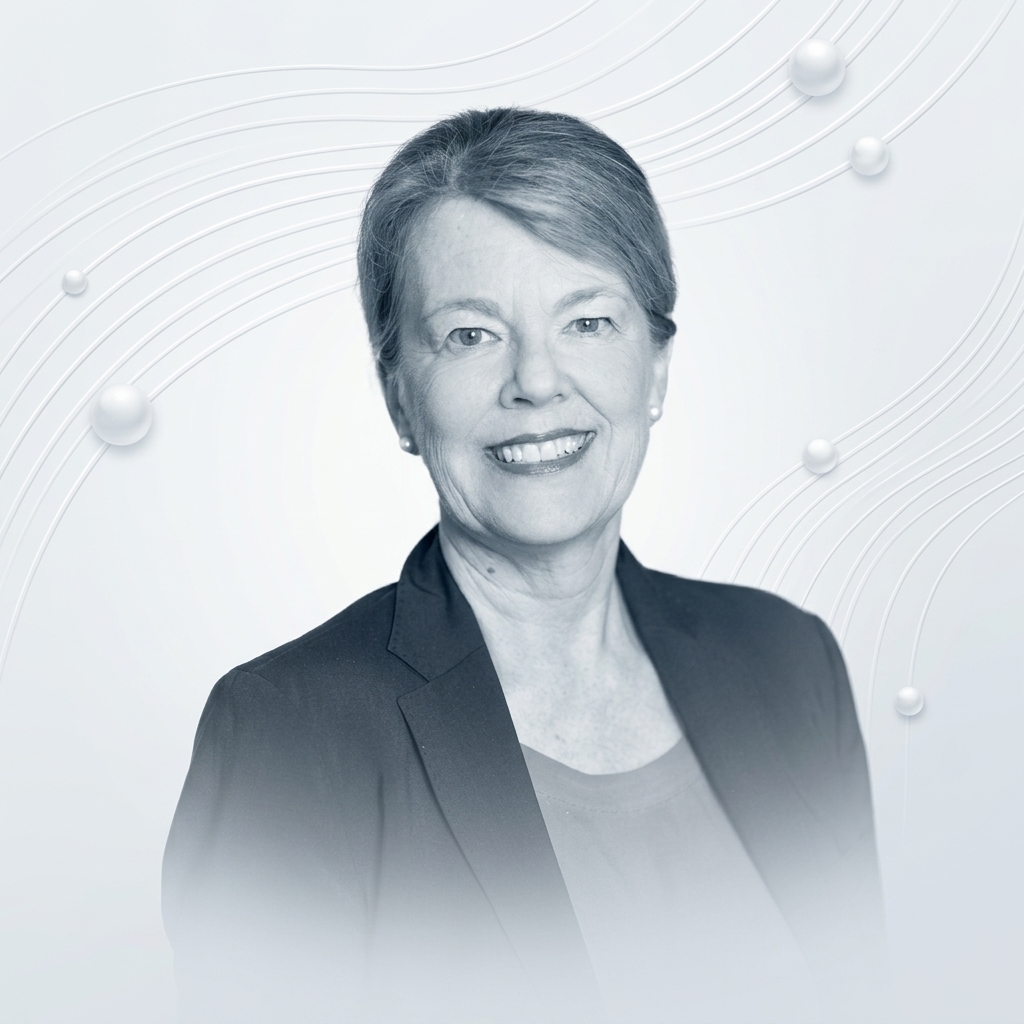
Ilona Schmiel on orchestral management and Tonhalle Zürich
Episode 3 30.03.2021
-
 play_arrow
PLAY EPISODE
Description arrow_drop_down

Description
How do you align 104 musicians, a world-class conductor, management teams, sponsors, and audiences toward a single artistic vision , while navigating a global pandemic? Ilona Schmiel, artistic and executive director of the Tonhalle-Gesellschaft Zürich, reveals the collaborative architecture behind one of Europe’s oldest orchestras. Subscribe for more episodes on how collaboration works in practice. Ilona Schmiel’s trajectory spans opera singing, the Olympic Winter Games opening ceremony in Lillehammer, Arena di Verona productions, and leadership of major German and Swiss musical institutions. At 30, she became the youngest artistic director in Germany , and a woman in a field dominated by men. Since 2014, she has led the Tonhalle Orchestra Zürich, founded in 1868 and recognized as Switzerland’s top symphonic ensemble. The conversation reveals how orchestral collaboration operates as a layered system. At the artistic level, the chief conductor, Paavo Järvi, provides the vision. But translating that vision into organizational reality requires management to achieve the same level of quality through entirely different means: scheduling, logistics, communication, fundraising, and stakeholder alignment. The objective must be defined first; without it, participants talk past each other and never reach a result. Schmiel describes the orchestra’s internal hierarchy as both enabling and constraining. The Western symphonic tradition prescribes clear roles, concertmaster, section leaders, individual musicians, creating a structure where collaboration happens within defined boundaries. But this hierarchy also means that when the conductor’s interpretation conflicts with a musician’s instinct, the collaborative process must absorb that tension without breaking. The discussion addresses the cultural dimension of collaboration directly. Managing an orchestra in Switzerland means navigating a consensus culture where decisions require broad buy-in. Schmiel contrasts this with more hierarchical organizational cultures, noting that Swiss consensus-building is slower but produces more durable commitment. The skill is learning to guide through consensus rather than imposing direction. COVID-19 tested every assumption about how the organization collaborates. Remote work broke down the informal communication channels that sustain trust between musicians and management. Schmiel learned that when in-person interaction disappears, communication must become clearer, more deliberate, and more polite , because there is no opportunity to explain context in person. The pandemic also forced a reckoning with relevance: if cultural institutions cannot demonstrate their value to society beyond entertainment, they will not survive the next crisis. On the broader role of arts organizations, Schmiel sees the Tonhalle as representing the human dimension of society , protecting and advancing what makes us human alongside economic considerations. This places her in a playing field with actors far beyond the musical world, requiring collaboration with policymakers, educators, and community organizations. When asked what she would change to improve collaboration, Schmiel’s answer is practical: financial independence. With sufficient resources, organizations can pursue quality without compromise, and then return that value to sponsors and society. The constraint is not human nature but economic dependency. Part of the Ernst Strüngmann Forum series on Collaboration, produced with the Convergent Science Network.
Tagged as:
collaboration Musicians orchestral management
About the author call_made
CSN Podcasts
Both the triumphs of humanity and its most evil deeds have resulted from collaboration. In a time where humanity is required to aspire to the former and minimize the latter, the question arises of how collaboration arises and why it fails. Surprisingly, this phenomenon, so central to who we are, is not well understood. Hence, a collaborative effort is required to understand collaboration in its full biological, psychological, sociological, cultural, and economic complexity and to translate this understanding into operational impact. This series of podcasts is one step toward achieving these complementary goals. The Collaboration Podcast presents interviews with people who are central orchestrators of collaboration in various domains including business, government, science, art, health, sustainability, and the military. The discussions were conducted by Prof. Dr. Paul F.M.J. Verschure and members of the Program Advisory Committee of the Ernst Strungmann Forum on Collaboration (https://www.esforum.de/forums/ESF32_Collaboration.html) during 2021 and had the goal to sketch a map of opportunities, challenges, and obstacles in human collaboration. The forum took place in May 2022, and now we would like to share this series of interviews with a broader audience. The full report of the Forum will be published in 2023 by MIT Press. The podcast was produced by the Convergent Science Network (https://www.convergentsciencenetwork.org/). Context: The stability of social systems depends critically on realizing sustainable methods of “collaboration,” yet how and by which means collaboration is achieved is not clearly understood; neither are the conditions or processes that lead to its breakdown or failure. Collaboration can be understood as cooperation between agents toward mutually constructed goals. Part of the reason for our lack of understanding is that the phenomenon of collaboration is, by nature, a highly multidisciplinary problem, and effective research into its complexities has been difficult to achieve across the broad range of scientific and technical disciplines involved. The need for a fundamental understanding of collaboration, however, has become increasingly important. Not only does humankind demand answers as it attempts to address critical challenges at multiple scales (e.g., climate change, migration, enhanced automation, social and economic inequality), but ever-increasing technological and economic means of interconnecting people and societies are disrupting long-established, familiar patterns of how we interact. Radical technological changes that are ongoing have the potential to reshape collaboration in ways that are currently hard to predict or influence (e.g., by altering configurations in interaction, information creation, and modes of communication). On one hand, such changes could disrupt hitherto stable forms of collaboration by affecting critical communication channels and traditional roles, as can be observed in the rapidly changing patterns in governance, commerce, and social interaction. Conversely, technology could lead to the emergence of novel, successful forms of collaboration that deviate from traditional “hierarchical” architectures. Evidence of this can be seen in areas as diverse as highly automated manufacturing plants, the open science movement, collaborative software repositories, user-centered services, and the sharing of economy-based modes of organization. Without a fundamental understanding of the mechanisms, processes, and boundary conditions of collaboration, it is not possible to evaluate or predict which of these possible scenarios are sustainable or even plausible. The Forum “How Collaboration Arises and Why it Fails” (May 8–13, 2022, Location: Frankfurt am Main, Germany) Chairs: Andreas Roepstorff and Paul Verschure Program Advisory Committee: Jenna Bednar, Julia R. Lupp, Bhavani R. Rao , Andreas Roepstorff, Ferdinand von Siemens, and Paul Verschure
Episodes
play_arrow
play_arrow
play_arrow
play_arrow
Timestamp
- fast_forward00:00:04 - Hi, I'm Paul Verschoor, and together with my colleague Ferdinand from Siemens,
- fast_forward00:00:08 - we are speaking today with Ilona Schmiel about collaboration in the arts.
- fast_forward00:00:13 - Ilona trained as an opera singer and is the executive and artistic director
- fast_forward00:00:17 - of the Tonehalle in Zurich.
- fast_forward00:00:19 - So I'm Paul Verschoor with the Conversion Science Network with my colleague Ferdinand Siemens.
- fast_forward00:00:28 - And we're speaking with Ilona Schmiel, who is the director of the Tonehalle
- fast_forward00:00:36 - in Zurich, on the topic of collaboration.
- fast_forward00:00:40 - But maybe to start, Ilona, it would be very, very useful if you give us a little
- fast_forward00:00:45 - bit of a sketch of your background and how you ended up in the role that you have today.
- fast_forward00:00:51 - Yes. Hello to everyone at first, and I'm very happy being part of this podcast
- fast_forward00:00:55 - series. and of course I would love to give you a short introduction.
- fast_forward00:01:00 - I was trained as a musician, as an opera singer.
- fast_forward00:01:04 - I failed with my voice so I studied then becoming a teacher.
- fast_forward00:01:10 - I didn't become a teacher because I was not someone who was happy with the system
- fast_forward00:01:15 - of education in Germany and worldwide.
- fast_forward00:01:18 - I studied also ancient languages, Latin, Greek and cultural and media management
- fast_forward00:01:24 - And then my first part was as an organizer in the staff of the Donau Eschinger Musiktage in 1993,
- fast_forward00:01:33 - afterwards at the Olympic Festival Lillehammer for the opening ceremony during Olympic Winter Games.
- fast_forward00:01:39 - And then I went to Italy for the Arena di Verona productions and then I make a short cut.
- fast_forward00:01:48 - My first bigger position was then from 1998 in the concert hall in Bremen, Die Glocke.
- fast_forward00:01:56 - I was the artistic and managing director there.
- fast_forward00:01:59 - The youngest ones in Germany were 30 years old and as a woman it was really
- fast_forward00:02:04 - a surprise for everyone.
- fast_forward00:02:06 - So after four and a half years, I took over the Beethoven Fest in Bonn,
- fast_forward00:02:10 - and there I was the intendant and artistic director, so editing 10 pieces.
- fast_forward00:02:19 - Beethoven fests over 11 years and after that i got really in a very very interesting offer.
- fast_forward00:02:30 - Moving to zurich since august 2014 i'm now artistic and executive director of the tonale society,
- fast_forward00:02:39 - and we are running the tonale orchestra which was founded in 1868 with 104 musicians
- fast_forward00:02:47 - actually It's one of the oldest orchestras in Switzerland and definitely the
- fast_forward00:02:51 - top orchestra of Switzerland,
- fast_forward00:02:53 - the ambassador of Switzerland for great symphonic music. And we are also running the Concert Hall.
- fast_forward00:03:00 - Okay, well, that's quite a career that you had.
- fast_forward00:03:04 - Who would have thought, I guess, when you started as a singer?
- fast_forward00:03:09 - In our case, we really would like to understand the notion of collaboration,
- fast_forward00:03:15 - which can mean very many different things for different people.
- fast_forward00:03:19 - And in some sense, you have been exposed to different aspects of collaboration
- fast_forward00:03:23 - in this more artistic domain in which you're active.
- fast_forward00:03:26 - So how would you define collaboration?
- fast_forward00:03:31 - Collaboration is, for me, finding a way, bringing together the best ideas,
- fast_forward00:03:37 - empowering people that they can really get a sense of common objectives and
- fast_forward00:03:46 - trying to make sure that everything is possible, that you can have success,
- fast_forward00:03:54 - but that you can fail at the same time.
- fast_forward00:03:58 - And then, what do you see as the defining features?
- fast_forward00:04:02 - So if you talk about collaboration, what do you see as the defining features of collaboration?
- fast_forward00:04:12 - In an artistic level, it means quality.
- fast_forward00:04:15 - In a level dealing with collaboration in the organization, in the management,
- fast_forward00:04:20 - it means how we can make sure that we achieve the common objectives.
- fast_forward00:04:26 - What is the way? What are the steps behind that?
- fast_forward00:04:30 - And if we are talking about collaborations with people in other countries,
- fast_forward00:04:35 - then we have to define what is our mindset?
- fast_forward00:04:38 - What's the cultural background and how can we come together in the sense of communication?
- fast_forward00:04:45 - But so but you describe different aspects
- fast_forward00:04:49 - to also the implementation of it right but for
- fast_forward00:04:51 - instance in your definition you you also mentioned
- fast_forward00:04:55 - this idea of objective yeah so
- fast_forward00:04:58 - common objective do is that for you a central feature
- fast_forward00:05:01 - of of the collaborative projects that that you know about that you're experienced
- fast_forward00:05:06 - with it is uh the first thing what we have to define if we don't have that We
- fast_forward00:05:13 - are talking around and we're just then chatting,
- fast_forward00:05:18 - but we will never reach really a result.
- fast_forward00:05:21 - And if you think in an artistic view, you have to bring together,
- fast_forward00:05:25 - for example, 104 musicians.
- fast_forward00:05:27 - They have a clear structure, they have a clear hierarchy, and they have also
- fast_forward00:05:32 - clear vision because there is a chief conductor like Pavel Yevi at the moment
- fast_forward00:05:37 - since 1920, who is one of the really top conductors.
- fast_forward00:05:42 - But, for example, they have a clear vision and this vision from the leading
- fast_forward00:05:47 - figure is being transferred to the musicians.
- fast_forward00:05:51 - If you have to interpret that or to translate that to the management team,
- fast_forward00:05:57 - then this means that we have the same eye level of quality of having the same vision.
- fast_forward00:06:03 - And we have to find a way to interpretate in our own way the steps to reach
- fast_forward00:06:11 - these common objectives.
- fast_forward00:06:13 - But now this is interesting, right? Because if you describe the orchestra,
- fast_forward00:06:19 - in some sense, orchestras are also built in a very specific Western musical
- fast_forward00:06:24 - tradition, which is actually very hierarchical, right?
- fast_forward00:06:28 - And so in that sense, you could say it's also built as a hierarchy,
- fast_forward00:06:31 - in some sense, to also reduce the degrees of freedom in the collaborative process.
- fast_forward00:06:38 - In some sense, that some of the participants are not necessarily active collaborators anymore.
- fast_forward00:06:44 - They're more executing a task, right?
- fast_forward00:06:48 - There are these extremes in the process. process and so so so how how should
- fast_forward00:06:54 - we balance that in order to get the quality of collaboration.
- fast_forward00:06:58 - That you that you want and you need you always need to find this balance that
- fast_forward00:07:04 - they have the most freedom they can get out of it,
- fast_forward00:07:07 - If they don't have it, if they are only executing, then you never will reach
- fast_forward00:07:12 - these very, very important highest quality.
- fast_forward00:07:16 - Yeah, but if you have a big orchestra, like with the numbers you just mentioned,
- fast_forward00:07:21 - there is also a structure to that.
- fast_forward00:07:23 - So you want to make sure your conductor has maximum freedom in sort of developing
- fast_forward00:07:29 - the piece, even though also the conductor works within the envelope of a composed piece already.
- fast_forward00:07:35 - But then when it moves down into the orchestra, the freedom that you give to
- fast_forward00:07:41 - the participants becomes more and more controlled.
- fast_forward00:07:45 - So how would you scale that? That's not totally the aspect how Pavel,
- fast_forward00:07:51 - for example, conducts. Because when he's giving a concert, it's definitely that
- fast_forward00:07:55 - every musician has to be very, very careful, very attentive.
- fast_forward00:07:59 - Because every night something new happens. And it happens because there is something
- fast_forward00:08:05 - coming out of the orchestra,
- fast_forward00:08:07 - for example, from the oboe soloist, where he feels there's tonoid,
- fast_forward00:08:11 - another tempo, there's a rubato, and he is then guiding this person and the
- fast_forward00:08:16 - whole orchestra through that process.
- fast_forward00:08:18 - And it is more an exchange in the way of collaboration and communication,
- fast_forward00:08:25 - which at the end empowers everyone for that highest level. Right.
- fast_forward00:08:31 - But there's an interesting tension now, right?
- fast_forward00:08:34 - Because on the one hand, there's an envelope of interaction,
- fast_forward00:08:38 - which could be the composed piece.
- fast_forward00:08:39 - But then within that envelope, there's movement, and that movement is structured
- fast_forward00:08:44 - also along hierarchical lines.
- fast_forward00:08:47 - So at what point does that stop to be collaboration?
- fast_forward00:08:55 - At the end, there's a clear bar, there's a clear timing, and there's a clear final.
- fast_forward00:09:00 - Definitely, it stops. And there are also in between some aspects of no-goes.
- fast_forward00:09:07 - And these little no-goes, they are defined during the rehearsal process,
- fast_forward00:09:12 - where the way, how we interpretate something is done.
- fast_forward00:09:18 - And then at the end, the result is coming up in the concert.
- fast_forward00:09:22 - Through it but it's a it's a different process if
- fast_forward00:09:25 - you compare it with the management then these
- fast_forward00:09:29 - are totally different aspects how we achieve
- fast_forward00:09:32 - goals but there's so what
- fast_forward00:09:35 - you sketch here is also this transition from a very deliberate and conscious
- fast_forward00:09:40 - process to a more habitual collective process right so initially there's a conscious
- fast_forward00:09:47 - searching for how all the pieces might fit together all the What pieces are
- fast_forward00:09:51 - the different actors in that context?
- fast_forward00:09:55 - But through the rehearsal process, you start to make what was deliberate initially more habitual.
- fast_forward00:10:03 - So it can be actually performed in a comprehensive way.
- fast_forward00:10:07 - There's this transition point from the deliberation to the habit execution.
- fast_forward00:10:12 - So how do you value that in the collaborative process? So when do you say,
- fast_forward00:10:21 - well, this is still collaboration and this is execution?
- fast_forward00:10:24 - Or would you capture it all under that same notion of the orchestra members
- fast_forward00:10:28 - are collaborating with the conductor to deliver the piece?
- fast_forward00:10:33 - I would say it with your last sentence. They are together, they are collaborating
- fast_forward00:10:38 - at any time, but they are offering different qualities, different ideas,
- fast_forward00:10:45 - musical ideas, and they are collaborating.
- fast_forward00:10:47 - During different rehearsal aspects. Right. And I think the huge ability of great
- fast_forward00:10:53 - conductors is to work with these offering musical ideas.
- fast_forward00:10:59 - If it's just a conductor who is doing his own stuff, then he or she would never
- fast_forward00:11:07 - react to that in that way.
- fast_forward00:11:09 - Right. And on the highest level of quality, this is one of the secrets.
- fast_forward00:11:14 - When there are then at the end these fantastic moments where you never experienced
- fast_forward00:11:19 - before what you could get out of it. And then it's unique.
- fast_forward00:11:22 - But this only happens if you have a very, very strong collaborative idea,
- fast_forward00:11:27 - a very strong collaboration working process.
- fast_forward00:11:30 - And then at the end, in the concert, there's a certain freedom. Right.
- fast_forward00:11:36 - But this is really very interesting. But now,
- fast_forward00:11:40 - in some sense, you could also argue, So you also link the notion of the aesthetical
- fast_forward00:11:45 - quality to that sort of collaborative aspect of the performance,
- fast_forward00:11:52 - which also would give it a quality of being, let's say, creative and surprising.
- fast_forward00:11:58 - But on the other hand, you could also, but maybe that can only be detected by
- fast_forward00:12:02 - the real experts. Maybe if I listened to this performance for the first time,
- fast_forward00:12:07 - I would not be able to pick up these subtle variations, right?
- fast_forward00:12:12 - So what's the resolution here?
- fast_forward00:12:16 - I won't agree about that. Because if it's a very, very single concert,
- fast_forward00:12:22 - which has a huge impact and which is unique,
- fast_forward00:12:26 - I'm absolutely sure that even a person who has never attended a concert will
- fast_forward00:12:30 - feel that there's something very, very special happening.
- fast_forward00:12:35 - We are speaking about, at the end, about something where we don't have really the right words.
- fast_forward00:12:44 - This is then a magic moment which you can only have in the live concert situation
- fast_forward00:12:51 - you will never have that for example at the moment in a streaming concert.
- fast_forward00:12:57 - Podcast download whatever so these technical devices they help us but the real
- fast_forward00:13:04 - experience about that moment and about this special collaboration in that moment
- fast_forward00:13:08 - is only something which you can get in the live concert situation,
- fast_forward00:13:13 - So you're saying our podcast interview will not be an aesthetical highlight of the day.
- fast_forward00:13:20 - It's fine. I'm just kidding. But so that, okay, there are many other sides to
- fast_forward00:13:26 - your experience are extremely interesting.
- fast_forward00:13:28 - But if we stick now to just this aspect of the performance and how it comes
- fast_forward00:13:33 - about, now within the process that you sketched,
- fast_forward00:13:37 - There are, of course, many different characters and personalities that all have
- fast_forward00:13:42 - to be managed carefully to actually play their part constructively.
- fast_forward00:13:47 - So now how does that come in to that process?
- fast_forward00:13:53 - I mentioned earlier with this caricature of the Western musical tradition,
- fast_forward00:13:57 - very hierarchically organized.
- fast_forward00:13:59 - You also make it very clear this is not the full picture.
- fast_forward00:14:02 - But now, in order to keep that structure together, you have to manage 100,
- fast_forward00:14:09 - 200 people, maybe even more, who in the end collectively have to produce that piece.
- fast_forward00:14:14 - So how do you manage the actors in that system?
- fast_forward00:14:20 - At first, the education level of all these musicians nowadays is very, very high.
- fast_forward00:14:27 - And the process how they are coming into
- fast_forward00:14:31 - an orchestra how they have
- fast_forward00:14:34 - to go step by step before they are
- fast_forward00:14:37 - arriving in a professional orchestra is a
- fast_forward00:14:40 - very hard process in their education and they
- fast_forward00:14:43 - have to give an audition and during
- fast_forward00:14:46 - this audition they are only having the
- fast_forward00:14:49 - chance to show their ability and their instrumental
- fast_forward00:14:52 - skills they're even not talking with each
- fast_forward00:14:55 - other which is something in the future where I would say it's
- fast_forward00:14:59 - so important to get an idea what is it for
- fast_forward00:15:02 - a person what's kind of personality with whom we
- fast_forward00:15:05 - are being connected afterwards but at the moment it's just an audition and the
- fast_forward00:15:10 - first part of the audition is even behind a curtain so that you have no idea
- fast_forward00:15:14 - who is sitting there who is standing there who is playing you have no idea you
- fast_forward00:15:18 - just listen to the music and the music they have to play these are.
- fast_forward00:15:25 - Pieces, bits of pieces, which they know before,
- fast_forward00:15:29 - and this is the most hardest process, so they only show their musical,
- fast_forward00:15:34 - instrumental quality in this very short amount of time, sometimes three to five
- fast_forward00:15:40 - minutes, it's not more, when they have this audition.
- fast_forward00:15:43 - They have to put in all their impact all their passion all their roots everything they try to,
- fast_forward00:15:51 - interpretate with their instrument only within this very short amount of time
- fast_forward00:15:56 - and then in the second round or the third round when they get there maybe they are elected they get.
- fast_forward00:16:04 - The possibility to perform with the orchestra and then they are for one year on trial,
- fast_forward00:16:09 - and during that year it happens
- fast_forward00:16:13 - that the group it depends a little bit is this a
- fast_forward00:16:16 - solo position or is it a group in the first violin
- fast_forward00:16:19 - section or double bass section for example so it depends really where is the
- fast_forward00:16:25 - position but during that year not only the sectionals the groups are voting
- fast_forward00:16:31 - for that person the whole orchestra at the end is voting if they want to have this person being a
- fast_forward00:16:38 - member of the orchestra and if she or he
- fast_forward00:16:41 - gets then definitely the confirmation
- fast_forward00:16:44 - that she is elected then they
- fast_forward00:16:48 - are there for life they have a position for life so this is something which
- fast_forward00:16:51 - is a really interesting hard process and it's it's also a question if we change
- fast_forward00:16:59 - that in the future it's the european way of having that process being a member
- fast_forward00:17:04 - but coming back to your question all these,
- fast_forward00:17:08 - aspects where do you come from what have you learned before where are your roots
- fast_forward00:17:12 - what's your language very often it's a language issue you seem or it seems to
- fast_forward00:17:20 - be that they are understanding each other musically.
- fast_forward00:17:23 - But when they are then rehearsing and speaking with each other,
- fast_forward00:17:28 - they are having totally different mindsets and mentalities.
- fast_forward00:17:32 - And also the question, what are the expectations being today in orchestra musicians?
- fast_forward00:17:38 - They are totally different.
- fast_forward00:17:40 - But Ilona, this is extremely challenging, right?
- fast_forward00:17:44 - Because it also means that if the group dynamic that is existing before a new
- fast_forward00:17:51 - potential member enters,
- fast_forward00:17:53 - that group dynamic could strongly bias the future evolution of an orchestra
- fast_forward00:18:00 - and not necessarily in the direction you might want if you are the artistic
- fast_forward00:18:05 - leader of such an environment.
- fast_forward00:18:08 - So do you think this is a wise process? So the group deciding in this way,
- fast_forward00:18:13 - is it always leading to good outcomes?
- fast_forward00:18:15 - Because you already mentioned that you might have to reconsider that.
- fast_forward00:18:20 - So in a broader perspective, not just for Tonehalle, but in a general perspective,
- fast_forward00:18:25 - do you feel this process is healthy and effective or does it lead to sort of
- fast_forward00:18:30 - a conformity to a group thing that might on the long term not really be a good artistic environment?
- fast_forward00:18:40 - We are talking about the highest quality and we are talking also about a special orchestra sound.
- fast_forward00:18:46 - And what the group knows very very well during the rehearsal processes over
- fast_forward00:18:51 - some months with a new member if the sound and mentality of this person will fit into the group.
- fast_forward00:19:00 - Okay but in your experience have you have you seen this go off the rails this
- fast_forward00:19:05 - process that for instance you know that the artistic leader had a vision on
- fast_forward00:19:10 - on how the orchestra should develop but you saw the group collectively and implicitly
- fast_forward00:19:15 - was sort of moving in a different direction that was almost unstoppable.
- fast_forward00:19:22 - I would say in orchestras with a very high quality, that happens not so often.
- fast_forward00:19:27 - But if you're really in this middle section of quality and positioning,
- fast_forward00:19:32 - that happens very often.
- fast_forward00:19:34 - Because then a group is able to create an own quality. and this not always matches
- fast_forward00:19:44 - with the artistic leaders' visions.
- fast_forward00:19:46 - So in your experience what have been the most dramatic failures of that model of collaboration?
- fast_forward00:19:55 - Like a whole, let's say, high level orchestra actually just fragmenting,
- fast_forward00:20:00 - I think the huge challenge at the moment is to find really leaders,
- fast_forward00:20:05 - leaders for positions, open positions where all over the world,
- fast_forward00:20:09 - for example, a viola leader, section leader.
- fast_forward00:20:12 - We have over the world 10, 15 of the top positions there at the moment auditioning.
- fast_forward00:20:21 - And you have all over the world only a few who are able to take over that position.
- fast_forward00:20:27 - And I think there it is so hard to find the right candidate and to see in the
- fast_forward00:20:33 - way if a group is possible to let in a strong figure, a person with a strong character,
- fast_forward00:20:41 - because this person with a strong character will guide and influence and give
- fast_forward00:20:45 - an impact to the whole group and at the end to the whole orchestra as well.
- fast_forward00:20:49 - I think there is an aspect where we have to be very careful.
- fast_forward00:20:53 - Okay i cannot i cannot um
- fast_forward00:20:56 - decide this process because as an
- fast_forward00:20:59 - artistic and executive director you are
- fast_forward00:21:02 - only involved being part of that you're sometimes trying to give me a sort of
- fast_forward00:21:08 - mediation when when it's going totally wrong but i'm not electing these people
- fast_forward00:21:14 - sure not electing But I can consult, of course, the group.
- fast_forward00:21:20 - I can consult together with the chief conductor if this matches as a team.
- fast_forward00:21:26 - And this is a very, very good team between Pava and me that we can consult in
- fast_forward00:21:32 - a way group that they find the right quality and that they accept a strong character
- fast_forward00:21:37 - and that they find really an ideal candidate.
- fast_forward00:21:41 - Candidate but so it's not
- fast_forward00:21:44 - that in your area their classic stories or
- fast_forward00:21:48 - anecdotes like oh orchestra x in 1950 collapsed because they went off the rails
- fast_forward00:21:53 - and became a pathological uh group oh okay so but but now if you look at all
- fast_forward00:22:02 - of these groups evolve right they grow and the the members of the group.
- fast_forward00:22:07 - In themselves also have a personal trajectory of growth, which of course can also lead to conflict.
- fast_forward00:22:13 - So how is that managed, the personal growth of the members of a complex environment
- fast_forward00:22:20 - like an orchestra and the overall direction that the collective is taking under
- fast_forward00:22:24 - the leadership of their artistic director?
- fast_forward00:22:29 - The main part is that the collaboration works very well with the artistic director,
- fast_forward00:22:35 - with the chief conductor, like Pavel.
- fast_forward00:22:38 - But on the other hand, you need to give them, to every member in the orchestra,
- fast_forward00:22:44 - give them a possibility to show their own musical quality.
- fast_forward00:22:49 - And we do that, for example, with Chamber Music, that they have their own series
- fast_forward00:22:52 - where they can really curate and invent programs and where they can get and
- fast_forward00:22:59 - enhance their visibility on their own.
- fast_forward00:23:01 - So on the other hand, they need, besides sitting in the group,
- fast_forward00:23:06 - having a fixed position,
- fast_forward00:23:08 - we give them really a space and a possibility to be part of the bigger construction
- fast_forward00:23:16 - of the concert hall. Right.
- fast_forward00:23:17 - So that also means you acknowledge that every individual has sort of a space
- fast_forward00:23:23 - of exploration that this does not necessarily fit in the envelope of the larger
- fast_forward00:23:28 - collective, but you give an other channel for that.
- fast_forward00:23:31 - Yes. More smaller, where people say, look, go explore, right?
- fast_forward00:23:36 - Find new boundaries, but within the broader picture, this is what we're doing.
- fast_forward00:23:41 - Right? It's sort of that kind of balance that you're trying to strike.
- fast_forward00:23:44 - Yeah. Okay. So, on the other hand, of course, what we should never forget for
- fast_forward00:23:50 - complex organizations like the Tone Hall, there's a whole structure, infrastructure,
- fast_forward00:23:55 - management structure around, in the end, the performers and the orchestra.
- fast_forward00:24:01 - So, does that operate on similar principles or does that follow a different
- fast_forward00:24:07 - kind of managerial model?
- fast_forward00:24:10 - I would say it's a different kind of a managerial model because in the management
- fast_forward00:24:15 - team, we couldn't only work like here's the guidance and let's go for it.
- fast_forward00:24:22 - And I would say in the morning, every morning, come on, today we are doing that
- fast_forward00:24:26 - and the result at the end of the day should be that.
- fast_forward00:24:28 - So it's a different model definitely because we
- fast_forward00:24:32 - are not on stage but we need on the same eye
- fast_forward00:24:35 - level be being very productive and being very creative so for example at the
- fast_forward00:24:42 - moment during dealing with COVID-19 we learned at the management organization
- fast_forward00:24:48 - how to enrich and how to raise up our flexibility,
- fast_forward00:24:55 - Normally, we have planned, let's say, years in advance, months in advance, now we are planning.
Tags
Brain brain evolution Cerebellar cerebellum collaboration consciousness Cortex Cortical decision making disorders of consciousness Framework grid cells Memory mirror neurons Motor motor cortex neocortex Neural Neurons place cells Populations prediction prefrontal cortex Robots scientific collaboration Spatial

Exploring the convergence of neuroscience, robotics, and AI through conversations with leading researchers since 2010.
A project of the Convergent Science Network Foundation.
Follow us on
© CSN Podcasts. Developed by IMCreative & WEBC
Be the first to leave a comment