


play_arrow
Listeners:
Top listeners:
00:00
00:00
volume_up
chevron_left
-
 play_arrow
Paul Verschure on consciousness and distributed adaptive control CSN Podcasts
-
 play_arrow
Edvard Moser on grid cells and entorhinal cortex CSN Podcasts
-
 play_arrow
Giacomo Rizzolatti on mirror neurons and action understanding CSN Podcasts
-
 play_arrow
Robert Axelrod on game theory and prisoner's dilemma CSN Podcasts
-
 play_arrow
Adrian Owen on disorders of consciousness and vegetative state CSN Podcasts
-
 play_arrow
Jonathan Whitlock on markerless motion capture and posterior parietal cortex CSN Podcasts
-
 play_arrow
Luis Puelles on neuroanatomy and prosomeric model CSN Podcasts
-
 play_arrow
Zoltan Molnar on subplate neurons and cortical development CSN Podcasts
- arrow_back Home
- keyboard_arrow_right Podcast
- keyboard_arrow_right Season 2021
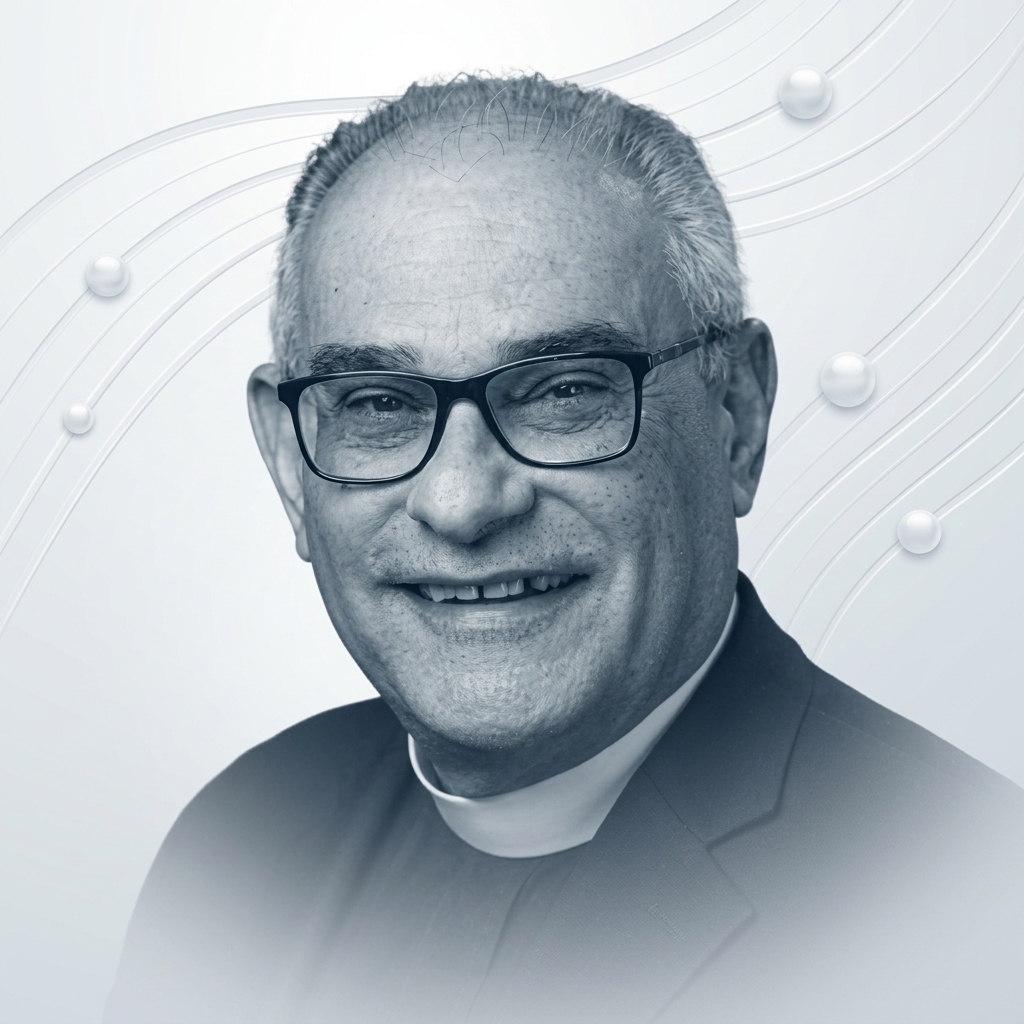
Rafael Malpica Padilla on religious collaboration and Lutheran Church
Episode 18 30.03.2021
-
 play_arrow
PLAY EPISODE
Description arrow_drop_down

Description
What happens when a global religious organization operating in 90 countries tries to practice genuine collaboration instead of top-down mission work? Rafael Malpica Padilla, executive director of the Evangelical Lutheran Church in America’s global mission, reveals how theology, power dynamics, and neighbor love reshape what partnership means across cultures. Subscribe for more episodes on collaboration in practice. Rafael Malpica Padilla brings a perspective rarely heard in discussions of organizational collaboration: that of a religious leader managing partnerships across 90 countries while navigating the tension between institutional power and authentic mutuality. Born and raised Lutheran in Puerto Rico, ordained as a pastor, elected bishop of the Caribbean synod, and now leading the ELCA’s global Service and Justice division, his trajectory spans local parish work to international diplomacy. His definition of collaboration rests on three pillars: differentiation (understanding what each partner uniquely brings), complementarity (identifying where skills and competencies intersect), and capacity for implementation. But the conversation quickly moves beyond frameworks into the messy reality of practicing these principles across vast cultural and economic divides. The central tension Malpica-Padilla describes is the shift from a mission model , where Western churches send resources and expertise to “receiving” countries , to a companionship model built on mutual respect and shared learning. This transformation required the ELCA to confront its own institutional power honestly. When you control the funding, genuine partnership demands constant vigilance against the subtle ways money distorts relationships. The conversation explores how religious belief both enables and complicates collaboration. Shared faith provides a powerful foundation for trust and common purpose, but theological differences, even within the same denomination, can fracture partnerships. Malpica-Padilla describes navigating disagreements over social issues where companion churches in different countries hold fundamentally different positions, requiring the organization to maintain relationship without demanding uniformity. On the role of technology and social media, Malpica-Padilla raises a concern that connects directly to collaboration: the way platforms profit from hate and misinformation undermines the social fabric that makes cooperation possible. From a theological perspective, he frames this as a question about what Jesus of Nazareth , not the institutional Christ constructed by sociopolitical ideologies , would say about these dynamics. His assessment of humanity’s collaborative capacity is honest: trapped between Luther’s negative anthropology (humans as “a bag full of worms”) and Marx’s positive anthropology (which failed because it could not account for sin). The answer lies not in optimism or pessimism but in work , holding governments accountable, building resilient communities, and recognizing that sufficient resources exist for everyone. If he could change one thing, it would be to give every human being neighbor love , the capacity to displace attention from your own needs and concentrate on serving others. Not conversion, but the fundamental reorientation that makes collaboration possible. Part of the Ernst Strüngmann Forum series on Collaboration, produced with the Convergent Science Network.
Tagged as:
collaboration Global Institutional Power Lutheran Church Neighbor Love religious collaboration
About the author call_made
CSN Podcasts
Both the triumphs of humanity and its most evil deeds have resulted from collaboration. In a time where humanity is required to aspire to the former and minimize the latter, the question arises of how collaboration arises and why it fails. Surprisingly, this phenomenon, so central to who we are, is not well understood. Hence, a collaborative effort is required to understand collaboration in its full biological, psychological, sociological, cultural, and economic complexity and to translate this understanding into operational impact. This series of podcasts is one step toward achieving these complementary goals. The Collaboration Podcast presents interviews with people who are central orchestrators of collaboration in various domains including business, government, science, art, health, sustainability, and the military. The discussions were conducted by Prof. Dr. Paul F.M.J. Verschure and members of the Program Advisory Committee of the Ernst Strungmann Forum on Collaboration (https://www.esforum.de/forums/ESF32_Collaboration.html) during 2021 and had the goal to sketch a map of opportunities, challenges, and obstacles in human collaboration. The forum took place in May 2022, and now we would like to share this series of interviews with a broader audience. The full report of the Forum will be published in 2023 by MIT Press. The podcast was produced by the Convergent Science Network (https://www.convergentsciencenetwork.org/). Context: The stability of social systems depends critically on realizing sustainable methods of “collaboration,” yet how and by which means collaboration is achieved is not clearly understood; neither are the conditions or processes that lead to its breakdown or failure. Collaboration can be understood as cooperation between agents toward mutually constructed goals. Part of the reason for our lack of understanding is that the phenomenon of collaboration is, by nature, a highly multidisciplinary problem, and effective research into its complexities has been difficult to achieve across the broad range of scientific and technical disciplines involved. The need for a fundamental understanding of collaboration, however, has become increasingly important. Not only does humankind demand answers as it attempts to address critical challenges at multiple scales (e.g., climate change, migration, enhanced automation, social and economic inequality), but ever-increasing technological and economic means of interconnecting people and societies are disrupting long-established, familiar patterns of how we interact. Radical technological changes that are ongoing have the potential to reshape collaboration in ways that are currently hard to predict or influence (e.g., by altering configurations in interaction, information creation, and modes of communication). On one hand, such changes could disrupt hitherto stable forms of collaboration by affecting critical communication channels and traditional roles, as can be observed in the rapidly changing patterns in governance, commerce, and social interaction. Conversely, technology could lead to the emergence of novel, successful forms of collaboration that deviate from traditional “hierarchical” architectures. Evidence of this can be seen in areas as diverse as highly automated manufacturing plants, the open science movement, collaborative software repositories, user-centered services, and the sharing of economy-based modes of organization. Without a fundamental understanding of the mechanisms, processes, and boundary conditions of collaboration, it is not possible to evaluate or predict which of these possible scenarios are sustainable or even plausible. The Forum “How Collaboration Arises and Why it Fails” (May 8–13, 2022, Location: Frankfurt am Main, Germany) Chairs: Andreas Roepstorff and Paul Verschure Program Advisory Committee: Jenna Bednar, Julia R. Lupp, Bhavani R. Rao , Andreas Roepstorff, Ferdinand von Siemens, and Paul Verschure
Episodes
play_arrow

play_arrow

play_arrow

play_arrow
Timestamp
- fast_forward00:00:05 - Hi, I'm Paul Verchure and together with my colleague Julia Loop,
- fast_forward00:00:08 - we are speaking with Reverend Dr.
- fast_forward00:00:10 - Rafael Malpica on the role of collaboration in social justice movements and
- fast_forward00:00:14 - religious organizations.
- fast_forward00:00:16 - From his early work as a parish minister in Puerto Rico to his role as Bishop
- fast_forward00:00:20 - of the Caribbean Synod and Director of Global Missions, Rafael has worked in
- fast_forward00:00:25 - over 70 countries with different groups of people on programs that address development work,
- fast_forward00:00:31 - advocacy, as well as ethnic and racial programs.
- fast_forward00:00:35 - Rafael, welcome to the podcast.
- fast_forward00:00:37 - Thank you. It's a great pleasure that you're here with us.
- fast_forward00:00:42 - So, Rafael, could you give a short description of your biographical trajectory
- fast_forward00:00:48 - that brought you where you are today, also in our podcast?
- fast_forward00:00:54 - Thank you, Paul and Julia, for this opportunity to be in conversation with you.
- fast_forward00:00:59 - As my name may suggest, I am of a Hispanic or Latino background.
- fast_forward00:01:06 - I was born and raised as a Lutheran in the island of Puerto Rico.
- fast_forward00:01:12 - And I did my undergrad in Puerto Rico and then my theological studies at the
- fast_forward00:01:19 - Lutheran Theological Seminary in Philadelphia.
- fast_forward00:01:22 - I returned to Puerto Rico, where I was ordained and served my first parish.
- fast_forward00:01:29 - And then when the Evangelical Lutheran Church in America, the EOCA,
- fast_forward00:01:33 - came together as a merger of three church bodies in the United States,
- fast_forward00:01:38 - I was elected the bishop of the Caribbean Synod, that is, Puerto Rico and the U.S.
- fast_forward00:01:43 - Virgin Islands. So I served as bishop in the Caribbean Synod and then came to
- fast_forward00:01:51 - join the churchwide staff as part of the Division for Global Mission as area
- fast_forward00:01:57 - secretary for Latin America,
- fast_forward00:01:59 - then became the executive director
- fast_forward00:02:01 - for the Division for Global Mission for about 16 years or 17 years.
- fast_forward00:02:09 - And now this February, as the EOCA entered into a new redesign,
- fast_forward00:02:15 - I was appointed executive director of a new home area known as Service and Justice,
- fast_forward00:02:24 - bringing together all of our global work in terms of mission,
- fast_forward00:02:27 - development work, advocacy,
- fast_forward00:02:31 - and ethnic and racial ministries.
- fast_forward00:02:35 - Over how many countries is your organization active?
- fast_forward00:02:39 - We are active in about 90 countries with companions primarily from member churches
- fast_forward00:02:47 - of the Lutheran World Federation, but then other organizations and churches as well.
- fast_forward00:02:52 - Okay. So, Rafael, could you give me your definition of collaboration and what it is good for?
- fast_forward00:02:59 - Well, I think that collaboration is coming together to build on each other's
- fast_forward00:03:07 - strength and to provide a space where the skill competencies that we all bring
- fast_forward00:03:13 - come together to address a specific issue.
- fast_forward00:03:17 - As we collaborate, there are three things that are really important.
- fast_forward00:03:22 - First, that we understand the differentiation between the two collaborators,
- fast_forward00:03:28 - whether whether individuals or entities, what each one brings,
- fast_forward00:03:32 - their own idiosyncrasies, their own identities.
- fast_forward00:03:37 - Then what is the complementarity between those two companions,
- fast_forward00:03:44 - what they can work together, what is the intersectionality between those skills and competencies?
- fast_forward00:03:50 - And then the third question, who has the capacity to implement and how can we
- fast_forward00:03:56 - do that either Either individually,
- fast_forward00:03:58 - together, or any other ways that will benefit the goal that we have before us.
- fast_forward00:04:08 - But now, in your view, so this is a very comprehensive definition,
- fast_forward00:04:15 - but is that also predicated on, let's say, the context of a church,
- fast_forward00:04:21 - the religious context in which you operate?
- fast_forward00:04:24 - Or do you see this as a generic model that would work outside and inside the
- fast_forward00:04:29 - context in which you are actually active?
- fast_forward00:04:32 - Well, I think that it came up primarily within the context of a church and my work there.
- fast_forward00:04:41 - But in my experience, it's something that works across sectors.
- fast_forward00:04:48 - It is something that will work outside of a church structure because the basis
- fast_forward00:04:56 - for this understanding of collaboration comes from outside of the church.
- fast_forward00:05:02 - I was very influenced by the work of Paulo Freire, a Brazilian educator.
- fast_forward00:05:11 - And Paulo Freire understands that journey toward collaboration as paying attention to the other world.
- fast_forward00:05:23 - That we meet in that venture of coming together. So I would say that it will
- fast_forward00:05:27 - work outside of a church setting as well.
- fast_forward00:05:30 - But also in your example now, there is a shared sense then of,
- fast_forward00:05:36 - let's say, the humanity, like the coming together,
- fast_forward00:05:39 - also a form of, let's say, an empathy towards the other and a flexibility in
- fast_forward00:05:47 - case there might be collision between objectives.
- fast_forward00:05:50 - Would that be correct to say? Yes, that is central.
- fast_forward00:05:54 - I mean, in addition to, I mean, theological or educational perspective that
- fast_forward00:06:01 - will inform our notion of collaboration,
- fast_forward00:06:04 - I think that there is something more fundamental and basic, and it is what you just shared, Paul.
- fast_forward00:06:11 - How do we understand the other? I say, from my perspective of a church,
- fast_forward00:06:18 - that the biggest missiological question is not the theory behind mission.
- fast_forward00:06:23 - It is very simple. And that missiological question is, how do I engage the other?
- fast_forward00:06:28 - Because if I am not able to see the face of God in the other,
- fast_forward00:06:33 - or to see the relationality between me and the other, then my engagement with
- fast_forward00:06:40 - the other is one in which I made that other the object of my actions.
- fast_forward00:06:45 - And that is not collaboration.
- fast_forward00:06:48 - So otherness, or alterity as Levinas will define it, is key for this understanding
- fast_forward00:06:55 - of collaboration. Very clear.
- fast_forward00:06:59 - But then, now there's an interesting relationship, because you might argue that
- fast_forward00:07:06 - this idea of the other as someone to relate to and to understand,
- fast_forward00:07:11 - as opposed to instrumentalizing or controlling, might exist prior to a religious
- fast_forward00:07:19 - elaboration of the other.
- fast_forward00:07:22 - So would you agree with that would you see that that is actually a more fundamental
- fast_forward00:07:28 - let's say human drive or instinct on which religion also is predicated,
- fast_forward00:07:35 - Sure. It is that basic core of our shared humanity.
- fast_forward00:07:41 - It is our common understanding of ourselves.
- fast_forward00:07:47 - And if, I mean, if we go, you know, philosophically on this.
- fast_forward00:07:53 - There are some people that say that you need that other to gain your self-understanding.
- fast_forward00:08:00 - So the process is reversed. It is not me making the other an object of my action,
- fast_forward00:08:07 - because at the end of the day,
- fast_forward00:08:09 - it is that engagement with the other that I achieve my self-consciousness.
- fast_forward00:08:16 - So there is this dynamic relationship between the I and the Tao,
- fast_forward00:08:23 - where they both need each other.
- fast_forward00:08:25 - They need that basic humanity. And if we use that as a basic principle,
- fast_forward00:08:31 - then, as you said, we can expand that theologically,
- fast_forward00:08:34 - we can expand that anthropologically, and develop systems that will allow us to achieve the end,
- fast_forward00:08:42 - which is the common good for that other and myself and the community that is
- fast_forward00:08:48 - formed through that engagement.
- fast_forward00:08:50 - I have a quick question.
- fast_forward00:08:53 - I'd like to go back for a second, Raphnail, if we could, to the way that you
- fast_forward00:08:58 - described collaboration in this three-step fashion.
- fast_forward00:09:01 - Understanding the differences of the other, understanding where there's intersection
- fast_forward00:09:07 - or complementary interests, and then a capacity to implement.
- fast_forward00:09:13 - I could imagine that understanding the differences in the people that are involved
- fast_forward00:09:19 - in a collaboration might pose a few problems.
- fast_forward00:09:22 - What binds people together to get you to look then for the intersection or the
- fast_forward00:09:28 - commonalities between not only the differences, but the commonalities?
- fast_forward00:09:32 - What binds you together beyond the belief structure?
- fast_forward00:09:37 - Obviously, the belief structure would do that. But are there other factors or
- fast_forward00:09:42 - methods that you use to get past the differences?
- fast_forward00:09:46 - Well, I think that the first step is to acknowledge the differences,
- fast_forward00:09:52 - not to assume those differences. So when two cultures meet, they never meet on a level plane.
- fast_forward00:09:58 - There is what I will call the asymmetries in the relationship.
- fast_forward00:10:03 - Those are the differences, whether those are historical, social,
- fast_forward00:10:08 - political, economically, economical.
- fast_forward00:10:09 - Economical so once you understand those
- fast_forward00:10:13 - differences that is the differentiation then you can move toward that complementarity
- fast_forward00:10:19 - so you acknowledge the differences but the difference are not used for a the
- fast_forward00:10:25 - domination of one over the other or the exclusion so at the end the basic question when when we meet.
- fast_forward00:10:35 - Another person is whose subjectivity is going to be raised to the level of normativity.
- fast_forward00:10:42 - And that is always a transactional relationship.
- fast_forward00:10:46 - That is the give and take between the differentiation and the complementarity to create then a new.
- fast_forward00:10:53 - So you have your story and my story, but when they meet, it's a new reality.
- fast_forward00:10:59 - It is our story. And then we need to create the conditions for,
- fast_forward00:11:04 - while maintaining our specific differentiation,
- fast_forward00:11:09 - how do we live in that space that brings us together and create a new reality
- fast_forward00:11:16 - that, for me, is basic, is the stepping stone towards something else.
- fast_forward00:11:22 - And that's something else in the engagement of human is how can we build together
- fast_forward00:11:29 - a better world for you and for me?
- fast_forward00:11:33 - I would say that that is the basic goal.
- fast_forward00:11:37 - But now, Rafael, so the way you describe it now in a very objective,
- fast_forward00:11:41 - neutral way, you can see how that would work in a small collective like our
- fast_forward00:11:46 - conversation right now, maybe a family.
- fast_forward00:11:49 - But if I start to scale that
- fast_forward00:11:52 - now to hundreds or thousands of millions how
- fast_forward00:11:56 - do I maintain those principles so
- fast_forward00:12:00 - how do you see that scaling occur also look at your own organization in which
- fast_forward00:12:04 - you're active which entails thousands of people so how do you get that scaling
- fast_forward00:12:10 - step from these very core human values into a complex collaborative system system.
- fast_forward00:12:19 - I would say, I mean, and it may sound reductionist, but it is a basic,
- fast_forward00:12:26 - simple communication and engagement with the other.
- fast_forward00:12:29 - When I meet you, your life is a text, either as an individual,
- fast_forward00:12:39 - as a society, or, you know, as a community.
- fast_forward00:12:43 - My life is a text. So as some philosophers propose.
- fast_forward00:12:48 - The key is how do we enter into conversation so that we could create this intertextuality,
- fast_forward00:12:58 - this meeting of the horizons, yours and mine.
- fast_forward00:13:03 - And you need to really work hard on that because you have to come to the table
- fast_forward00:13:10 - assuming a level playing field,
- fast_forward00:13:14 - that the other has the same value as you have,
- fast_forward00:13:19 - that the other has the capacity to articulate his or her own context so that
- fast_forward00:13:26 - that context will meet mine and then together envision that new reality.
- fast_forward00:13:33 - That will serve as the starting point for our conversations.
- fast_forward00:13:38 - And that's the system that we use when we engage, for example,
- fast_forward00:13:43 - this very small community or the government of South Sudan to address the issue
- fast_forward00:13:48 - of health care in Juva or whatever system.
- fast_forward00:13:51 - It is that basic principle of understanding the differences,
- fast_forward00:13:56 - identifying the complementarity, and then empowering individuals to engage together
- fast_forward00:14:05 - that new horizon that we are creating.
- fast_forward00:14:10 - Raphael, I understand. However, what I was trying to see is whether religious
- fast_forward00:14:17 - frameworks are also not so effective because they're very sophisticated systems
- fast_forward00:14:23 - to actually stabilize and consolidate collaborative processes.
- fast_forward00:14:29 - Because they do give a shared ontology, for instance.
- fast_forward00:14:33 - You say, well, if we are part of the same church, the same religion,
- fast_forward00:14:39 - there are certain things we agree to that we're not going to question.
- fast_forward00:14:42 - There are certain rules of conduct, for instance. There are certain realities that we just accept.
- fast_forward00:14:48 - We're not questioning them. So, would you agree with the point of view that
- fast_forward00:14:56 - religion is a scaling step in collaboration because it takes away a lot of ambiguity
- fast_forward00:15:01 - and potential sources of conflict?
- fast_forward00:15:04 - We believe in a similar reality, and also we believe in the methods to access that reality,
- fast_forward00:15:12 - and we believe in certain value systems that make us conduct in certain ways,
- fast_forward00:15:17 - even when the immediate situation looks very adverse.
- fast_forward00:15:23 - Yes, that's true. I think that in religion, we can find either that tool that
- fast_forward00:15:30 - will allow us for that engagement.
- fast_forward00:15:34 - Some shared values, either in a sophisticated way or in the very basic ways
- fast_forward00:15:42 - that we saw it, for example, in the Latin American context with the Christian-based communities.
- fast_forward00:15:48 - There we saw it come to a very basic understanding.
- fast_forward00:15:55 - But at the same time, and that's the flip side of religion, it has the capacity
- fast_forward00:16:00 - to divide. And rather than bring us together, it creates those divisions.
- fast_forward00:16:07 - So that's why we need to always find systems that give us those check and balance
- fast_forward00:16:17 - to avoid those pitfalls.
- fast_forward00:16:21 - Right. But can you elaborate on those pitfalls exactly? Why would a system that
- fast_forward00:16:27 - on the one hand enhances collaboration or stabilizes it also instill division?
- fast_forward00:16:33 - What's the mechanism here exactly? Why does this happen?
- fast_forward00:16:38 - Can you say that, ask the question again? Well, you said yourself earlier that
- fast_forward00:16:43 - religion, even though it might also enhance collaboration, can also lead to
- fast_forward00:16:48 - division and in that way obstruct collaboration.
- fast_forward00:16:51 - So can you explain why that happens? And do you have examples of this kind of breakdown?
- fast_forward00:16:58 - Well, I would say that in my experience,
- fast_forward00:17:03 - when we engage that other, whether it is a religious other or political other,
- fast_forward00:17:11 - again, we are going back to what is that common denominator that will allow
- fast_forward00:17:19 - for the greater engagement.
- fast_forward00:17:21 - And I would say that at the end of that day is our shared humanity.
- fast_forward00:17:27 - Whether you understand that from a religious context or a political context,
- fast_forward00:17:32 - both of us as human beings have needs, have aspirations, have dreams for a better society.
- fast_forward00:17:42 - And those are things that transcend political or religious system that goes to the basic need.
- fast_forward00:17:52 - The mother in a community in Africa wants to provide better health care and
- fast_forward00:17:59 - better food and better housing for their child.
- fast_forward00:18:04 - I find that same mother in the south house of Chicago.
- fast_forward00:18:08 - So my job or my role from this position is then how can I become a broker.
- fast_forward00:18:19 - A midwife, so that those two stories meet together and create that shared space?
- fast_forward00:18:26 - And then the functions of people like me and organizations like either church
- fast_forward00:18:34 - or NGOs or even governments is how do we support that system that has been created,
- fast_forward00:18:42 - that shared space of humanity that brings together the hopes and aspirations.
- fast_forward00:18:49 - But Rachel, that's indeed, this common humanity is like the foundation.
- fast_forward00:18:55 - Right, on which we can build the collaboration.
- fast_forward00:18:57 - You yourself said earlier that if we start to elaborate that also in a religious
- fast_forward00:19:04 - context or in a context of ideas, of knowledge systems, this might also lead
- fast_forward00:19:09 - to collisions, because also religions can collide.
- fast_forward00:19:12 - Because the dogmas might be different, and people might get confused about the
- fast_forward00:19:18 - reality behind the dogma.
- fast_forward00:19:21 - So, what's your experience of this kind of breakdown?
- fast_forward00:19:26 - How can we overcome that? Well, we can overcome it,
- fast_forward00:19:31 - and this is my very personal opinion, And I'm sure that there will be theologians
- fast_forward00:19:40 - that will disagree with me.
- fast_forward00:19:42 - But as you said, the problem with the religious encounter is when that encounter is mediated by faith.
- fast_forward00:19:50 - Dogmatism, by my need to clearly, not only to clearly state what I believe,
- fast_forward00:19:59 - but at the end, to make you believe in my own system.
- fast_forward00:20:03 - However, if we go to a very basic definition of religion using the Latin root,
- fast_forward00:20:10 - that means religare, to reconnect.
- fast_forward00:20:13 - And basically, the common denominator of every religious system is then how that religare,
- fast_forward00:20:23 - that reconnecting happens between an individual and God, however they define their God,
- fast_forward00:20:30 - and then between individuals themselves.
- fast_forward00:20:34 - So if we understand religion as that ability for us to reconnect with one another
- fast_forward00:20:42 - based Based on some shared principles,
- fast_forward00:20:46 - we have a better chance to avoid that pitfall of dogmatism that leads then to
- fast_forward00:20:57 - the imposition of my subjectivity as normative for everyone.
- fast_forward00:21:03 - We go to a specific example because your work and the capacity of this global
- fast_forward00:21:09 - mission, I could imagine that you encounter many different groups of people
- fast_forward00:21:14 - in many different cultural settings.
- fast_forward00:21:17 - And so there certainly cannot be one size fits all to manage the different things
- fast_forward00:21:23 - that go on in these different groups.
- fast_forward00:21:26 - For example, what would happen, say, in Germany, in a church in Germany would
- fast_forward00:21:34 - be perhaps different than in the Sudan or in.
- fast_forward00:21:39 - In wherever in Latin America, I could imagine that the cultural values of these
- fast_forward00:21:44 - different countries would somehow infiltrate the narrative between you as a
- fast_forward00:21:52 - global missions program and the individual groups.
- fast_forward00:21:57 - How do you manage this potential conflict that I see, at least?
- fast_forward00:22:04 - Well, that's why, again,
- fast_forward00:22:07 - going back to Paulo Freire and the hermeneutical or interpretation cycle of
- fast_forward00:22:15 - Latin American, either pedagogy or theology,
- fast_forward00:22:19 - which is always the action-reflection method.
- fast_forward00:22:22 - It is, you always need to be in that conversation between the context and to reflect on that.
- fast_forward00:22:31 - And once you agree on something, you need to do more reflection.
- fast_forward00:22:37 - So it is that constant dynamic between action and reflection that allows you,
- fast_forward00:22:45 - A, to identify the pitfalls and then to build system to go beyond that.
- fast_forward00:22:52 - Because if you don't do it, then you just want to level the playing field using your own tools.
- fast_forward00:22:59 - So, for example, I had a, as I said, I am Latino by birth,
- fast_forward00:23:09 - and the missionaries that came
- fast_forward00:23:11 - to Puerto Rico were from Swedish background people from the United States.
- fast_forward00:23:21 - We Puerto Ricans are fun people.
- fast_forward00:23:25 - We love our music and dancing. And I was doing that during the day.
- fast_forward00:23:29 - But when it came time to worship,
- fast_forward00:23:32 - Then I have to worship like the Swedes. There were elements of my story that
- fast_forward00:23:38 - were not allowed in that relationship between me and the other.
- fast_forward00:23:43 - So as I say, I was Puerto Rican by day and Lutheran by night.
- fast_forward00:23:49 - How is that managed nowadays? And then you have to come to that point that you
- fast_forward00:23:59 - have to deconstruct that system.
- fast_forward00:24:02 - And in deconstructing that system,
- fast_forward00:24:05 - you need to come with your own story, with your own idiosyncrasy and meeting
- fast_forward00:24:12 - that other and then engaging to that conversation of what is the common,
- fast_forward00:24:18 - what is the shared space and how from that shared space we continue to build
- fast_forward00:24:25 - without the imposition of one to the other.
- fast_forward00:24:29 - Because once you enter into that, we are talking about, you know, colonizing.
- fast_forward00:24:35 - You draw a line between your story and my story.
- fast_forward00:24:40 - And usually when you do that, God is on my side and God justifies whatever actions I want to do on you.
- fast_forward00:24:48 - I mean, that is the history of humankind right there.
- fast_forward00:24:53 - So we need to deconstruct that system. And the only way for us to deconstruct
- fast_forward00:24:59 - that system is to engage in otherness and embracing.
- fast_forward00:25:08 - Differences right now i get
- fast_forward00:25:12 - that and and i i agree with you however
- fast_forward00:25:15 - this is not easy right so it
- fast_forward00:25:18 - means what you're describing the route you're describing is also a route of
- fast_forward00:25:23 - of reflection and meditation and intellectual effort so do you believe are you
- fast_forward00:25:29 - assuming or how do you communicate that or how do you educate people to follow that route especially
- fast_forward00:25:37 - in the face of very fundamental existential threats.
- fast_forward00:25:41 - So how do you approach that from the perspective of your church?
- fast_forward00:25:47 - Well, as you said, we need to do it really by educating people.
- fast_forward00:25:54 - We need to present what we understand is the core of our beliefs and how that shows up.
- fast_forward00:26:11 - I usually say to people, and this may sound simple, at times it may sound offensive.
- fast_forward00:26:20 - And I am speaking of the American context now in the United States.
- fast_forward00:26:25 - I say to people, if I offend you, I must apologize.
- fast_forward00:26:38 - As I try to seek together that better place for all of us here in the United States context. it.
- fast_forward00:26:49 - But if the gospel offends you, then you have to pick it up with someone else.
- fast_forward00:26:56 - Jimmy Carter, our former president,
- fast_forward00:26:59 - has said, how could you describe yourself as a Christian nation?
- fast_forward00:27:07 - And right now we have an impasse in our Congress where a sector of the political
- fast_forward00:27:14 - spectrum don't want to invest $3.5 trillion to provide health care, child care.
- fast_forward00:27:23 - Tax credit for children, building the human infrastructure. structure.
- fast_forward00:27:30 - So I criticize that from a religious perspective.
- fast_forward00:27:35 - And the basic common denominator between the one that I shared with you earlier is what Jesus said.
- fast_forward00:27:44 - Jesus came to give life abundantly for us. That is my bottom line.
- fast_forward00:27:51 - That's what I engage. So my job from the perspective of global mission or service
- fast_forward00:27:57 - and justice is how can I engage any other,
- fast_forward00:28:00 - whether it is a political other, a religious other, so that together we can
- fast_forward00:28:06 - build a society where there is sufficient,
- fast_forward00:28:10 - sustainable livelihood for all, because that's what Jesus came to do.
- fast_forward00:28:16 - Now, within my own church, I have people that will label me as a political animal
- fast_forward00:28:22 - because they operate not from the perspective of the way of Jesus,
- fast_forward00:28:27 - but from the perspective of American civil religion.
- fast_forward00:28:30 - And that is different. So that process of education, as Paulo Freire said,
- fast_forward00:28:36 - is very interesting because from the perspective of the oppressed,
- fast_forward00:28:41 - the educational process will lead to your own liberation.
- fast_forward00:28:44 - But then there is an onus on you, and that is, how do you free your own oppressor? Mm-hmm.
- fast_forward00:28:53 - And that is really the challenge. But I would like to go back in time a bit because your career,
- fast_forward00:29:00 - a large part of it, also developed in parallel to a lot of turmoil in Latin America. Right?
- fast_forward00:29:09 - Revolutions, dictatorships, attempts to build democratic societies,
- fast_forward00:29:15 - in which I would imagine you also as becoming more active and increasingly more
- fast_forward00:29:23 - active and more important in your church was trying to have an influence, was trying to mediate.
- fast_forward00:29:31 - So can you describe that process and what the impact has been of that on your
- fast_forward00:29:39 - own thinking and on the countries in point?
- fast_forward00:29:46 - The hardest part of that for any individual or for a church is that you need
- fast_forward00:29:56 - to have clarity about what is about to happen to you.
- fast_forward00:30:03 - You cannot do it from a non-committed perspective.
- fast_forward00:30:09 - There were many that engage the Latin America reality or the reality of life
- fast_forward00:30:17 - under apartheid in South Africa from what I will call that intellectual perspective.
- fast_forward00:30:26 - Let's understand this to see how we can work with it.
- fast_forward00:30:35 - The process that I envision is harder because the first step is for you to be
- fast_forward00:30:46 - immersed in the reality that you seek to understand or to address.
- fast_forward00:30:54 - So you have to be committed.
- fast_forward00:30:57 - You have to put, as we say here in the United States, some skin in the game.
- fast_forward00:31:05 - And then that will determine the level of engagement for you as an individual
- fast_forward00:31:13 - or as a church as you accompany those process.
- fast_forward00:31:17 - I firmly believe in one of Karl Marx's critique of Feuerbach,
- fast_forward00:31:25 - a philosophical system.
- fast_forward00:31:27 - And Karl Marx, in his Thesis 11, says, the purpose of the philosopher,
- fast_forward00:31:33 - and I will translate it, the purpose of the theologian is not to understand
- fast_forward00:31:37 - the world, but to change it.
- fast_forward00:31:40 - Now, in order for you to create that space where change could happen,
- fast_forward00:31:48 - you need to put some skin.
- fast_forward00:31:50 - You cannot pretend to engage it from a noncommittal space.
- fast_forward00:31:57 - Right now in the United States, my church, the Evangelical Lutheran Church in
- fast_forward00:32:03 - America, is one of the whitest denominations in this country.
- fast_forward00:32:09 - 96% white.
- fast_forward00:32:12 - So now we want to be new, younger, and diverse.
- fast_forward00:32:16 - We want to invite people from other ethnic communities.
- fast_forward00:32:19 - My own conversation or my conversation with my own church, thinking about that
- fast_forward00:32:26 - change is just to raise a simple question.
- fast_forward00:32:30 - What will give you the idea that because we are saying now that we want to be more diverse,
- fast_forward00:32:38 - Latinx people, African-American people will be coming to our church when we
- fast_forward00:32:44 - historically, as a church, have not been present in their struggles? goals.
- fast_forward00:32:52 - And that is the key for us.
- fast_forward00:32:57 - And I would say the church or any organization that engages communities,
- fast_forward00:33:03 - for you to really be successful, you need to be part of that struggle.
- fast_forward00:33:08 - That's what the church rediscovered after Second Vatican Council in the Latin American context.
- fast_forward00:33:16 - And that's why you You had two churches, you have the hierarchy and you have
- fast_forward00:33:20 - the church of the poor, you have the Christian-based communities.
- fast_forward00:33:24 - But are you saying with that, that during the time of the dictatorships in Latin America,
- fast_forward00:33:32 - so we're speaking the 70s, 80s, that also your church did not have sufficient
- fast_forward00:33:38 - skin in that game to be of any influence?
- fast_forward00:33:42 - Well, in that particular case, not that much.
- fast_forward00:33:50 - We had missionaries that were serving there, and it was during that time of
- fast_forward00:33:57 - the Pinochet dictatorship that an organization to serve with marginalized,
- fast_forward00:34:04 - economically marginalized societies came together.
- fast_forward00:34:09 - Together, EPES is a popular education health care entity.
- fast_forward00:34:17 - So there was some skin, but in terms, and that transformation happened in communities.
- fast_forward00:34:25 - So people's lives were touched and resiliency was built on those communities.
- fast_forward00:34:31 - But for our engagement in the political scene, we didn't have that much skin.
- fast_forward00:34:41 - There was a German missionary, Helmut Frenz, who was, you know,
- fast_forward00:34:46 - he was really that voice from the religious church that really,
- fast_forward00:34:51 - really confronted Pinochet.
- fast_forward00:34:53 - So I think that the church has to be part of those process for liberation.
- fast_forward00:35:02 - When marginalized peoples raise their voices, look at what happened in Namibia, for example.
- fast_forward00:35:10 - Ninety-some percent of the membership of that population at that time were Lutherans. Why?
- fast_forward00:35:18 - Because the church was thriving. The church was part, not necessarily because
- fast_forward00:35:23 - the church saw itself as a protagonist,
- fast_forward00:35:25 - but the church was one more among many that were working together to really
- fast_forward00:35:31 - work toward the liberation and transformation of those societies.
- fast_forward00:35:36 - And transformation is not just cosmetic changes that we bring to any system.
- fast_forward00:35:43 - Transformation, because all systems will allow for transformation.
- fast_forward00:35:47 - And that's how they keep minority people happy, because we think that we are
- fast_forward00:35:52 - making progress, but we are not.
- fast_forward00:35:54 - Because at the end, the system leads to homeostasis, to that balance,
- fast_forward00:35:59 - and that's how they keep their hegemonity from a system perspective.
- fast_forward00:36:06 - Transformation needs displacement, and that is displacement to the margins.
- fast_forward00:36:12 - That was the experience of the Latin American churches. That was the experience
- fast_forward00:36:16 - of the church in Namibia, of the church in South Africa.
- fast_forward00:36:20 - And I believe that that is where God is calling the church in the context of the United States.
- fast_forward00:36:28 - When you have, you know, the rise of nativism and populism from the right,
- fast_forward00:36:36 - or some people will say fascism.
- fast_forward00:36:39 - So where is the church going? And I believe that God is calling Jesus' church
- fast_forward00:36:46 - to a new exodus, an exodus to the margin.
- fast_forward00:36:53 - And it is there in the margins that we will find those others.
- fast_forward00:36:57 - And those others will become not the object of our actions.
- fast_forward00:37:02 - They become our liberators.
- fast_forward00:37:06 - They will become the disruptors for hegemonic systems that do engage from the
- fast_forward00:37:16 - perspective of doing something for others,
- fast_forward00:37:19 - not doing things with and among, so that not only the life of the other is transformed,
- fast_forward00:37:26 - but also my life is transformed.
- fast_forward00:37:29 - So transformation needs to happen on both sides. Raphael, but in terms of displacement,
- fast_forward00:37:35 - you could also argue that that becomes now a rearguard battle almost, right?
- fast_forward00:37:41 - Because the bigger struggle, the ones you mentioned, nationalism,
- fast_forward00:37:46 - nativism, the fascism that's on the rise, the neoliberal forces that are on
- fast_forward00:37:52 - the rise, in some sense, you are evading a direct confrontation with those.
- fast_forward00:37:59 - And you say, well, let's then focus on the ones that have been displaced by
- fast_forward00:38:05 - these main forces that now seem to structure our society.
- fast_forward00:38:09 - So is that not becoming, are you now not marginalizing society?
- fast_forward00:38:15 - The potential of your religion and your church to bring about a more larger
- fast_forward00:38:22 - change in society, or do I not understand the process?
- fast_forward00:38:25 - No, because it is not an either-or type of process, it's both-and.
- fast_forward00:38:30 - At the same time that we journey toward the margin to find,
- fast_forward00:38:36 - those oppressed and work together in their liberation, at the same time that
- fast_forward00:38:41 - we do that, that we need to also address the system.
- fast_forward00:38:47 - So we have a social statement, the social teaching of this church.
- fast_forward00:38:53 - Adopted in 1993 in Peace for God's World, described the church in three unique ways.
- fast_forward00:39:00 - And most ELCA members will agree with two wholeheartedly.
- fast_forward00:39:05 - We say first that the church is to be a healing presence in the world.
- fast_forward00:39:10 - That is when we go to the margins, etc.
- fast_forward00:39:14 - Second one says that the church is to be a reconciling presence in the world.
- fast_forward00:39:20 - And no one questions that because at the end of the day, we try to do that,
- fast_forward00:39:25 - to become bridges between individuals.
- fast_forward00:39:28 - And here come the third one that gave us pause.
- fast_forward00:39:32 - The church is to be a disturbing presence in the world.
- fast_forward00:39:38 - And it is precisely that disturbing
- fast_forward00:39:41 - presence through our advocacy efforts
- fast_forward00:39:45 - on Capitol Hill at the United Nations
- fast_forward00:39:48 - a state public a state legislature it is that disrupting presence that addresses
- fast_forward00:39:57 - the larger question so it's not either
- fast_forward00:39:59 - or it is both and I find this very interesting because if you are not.
- fast_forward00:40:07 - Intimately involved with a group like this it's
- fast_forward00:40:10 - very easy to to equate global missions
- fast_forward00:40:13 - as as you said earlier as the swede who
- fast_forward00:40:16 - comes into puerto rico and and brings in
- fast_forward00:40:19 - their top down system of whatever
- fast_forward00:40:22 - and you're describing a completely different situation and
- fast_forward00:40:26 - i find that a really positive change um it
- fast_forward00:40:30 - and in your position as as global in
- fast_forward00:40:34 - global missions i assume you have quite a
- fast_forward00:40:36 - lot of influence in the ecla how do
- fast_forward00:40:40 - you practically um is
- fast_forward00:40:43 - this is this localized is this organized on a local level like the the um going
- fast_forward00:40:49 - to the state legislatures or drives to food drives or uh is it at a local level
- fast_forward00:40:56 - how does it scale up from the local level to a more effective national level,
- fast_forward00:41:01 - say in the United States? Yes.
- fast_forward00:41:06 - We try to use the learning from our global engagement to understand and to work in the local context.
- fast_forward00:41:22 - Why do we do that? Well, because Because before, we needed to go outside of
- fast_forward00:41:28 - the United States to find the world.
- fast_forward00:41:30 - Well, the reality is that the whole world is living next door to us.
- fast_forward00:41:37 - So from that perspective, we are using a word that was coined by a Roman Catholic
- fast_forward00:41:44 - theologian here in Chicago, the word gloco, global and local.
- fast_forward00:41:50 - So it is a glocal reality. And in that global reality, we start from that base
- fast_forward00:41:58 - of, you know, transformation in India, in the local communities.
- fast_forward00:42:04 - How do we organize to provide better food or to address health care needs?
- fast_forward00:42:11 - Needs or in these days, the impact of COVID on Black communities in the United States,
- fast_forward00:42:21 - the issue of refugees from Haiti or from Latin America, and how that starts
- fast_forward00:42:31 - as providing services to those communities.
- fast_forward00:42:35 - Engaging them, reconciling them.
- fast_forward00:42:38 - So that's the healing and the reconciling. But we cannot stop there.
- fast_forward00:42:42 - We need to advocate in state legislature, for example, in Texas,
- fast_forward00:42:47 - that have passed these laws.
- fast_forward00:42:50 - From my perspective, horrific law about abortion.
- fast_forward00:42:56 - How can we engage in supporting women's reproductive rights?
- fast_forward00:43:01 - But at the same time that we do that with the Texas legislature,
- fast_forward00:43:05 - how do we work with the U.S.
- fast_forward00:43:07 - Congress through our office in the United States?
- fast_forward00:43:10 - Right now, we have the situation with COVID. How
- fast_forward00:43:13 - do we engage through the United Nations to address addressed the issue of intellectual
- fast_forward00:43:19 - property so that we can produce and challenge the big pharma to allow for the
- fast_forward00:43:26 - generic production of vaccines so that people in Africa,
- fast_forward00:43:33 - where we only have 1% of the population vaccinated, can have access to that.
- fast_forward00:43:37 - I can love them. I can feed them.
- fast_forward00:43:40 - I can do all that but if i don't work with the system that will allow us that transformation.
- fast_forward00:43:49 - Then nothing will happen we will get stuck so it has to be it has to be really
- fast_forward00:43:54 - comprehensive but rafael well the consequence of what you're saying is that in order to disrupt,
- fast_forward00:44:03 - you have to set your targets to disrupt and that in some sense now becomes a
- fast_forward00:44:08 - discussion that is not only within the confines of a religious organization.
- fast_forward00:44:15 - Now you are a social organization that has political objectives by necessity,
- fast_forward00:44:21 - as you also just summarized them, right?
- fast_forward00:44:23 - When you say, look, we have to defend female reproductive rights, and rightly so.
- fast_forward00:44:28 - But that in itself is now also a political commitment.
- fast_forward00:44:32 - So that means, how do you shape that? How do you shape then the political agenda
- fast_forward00:44:37 - that tells you where to disrupt and where to be, let's say, compliant and empathic.
- fast_forward00:44:44 - Yeah, we do that through various ways. So, for example, as we have been talking,
- fast_forward00:44:51 - the educational component is really important.
- fast_forward00:44:53 - We need to educate our people and we have networks throughout the church that
- fast_forward00:44:59 - do provide for that engagement.
- fast_forward00:45:03 - We need to provide the tools for individuals to really engage the issue,
- fast_forward00:45:08 - to understand it. We have a strong social teaching policy basis.
- fast_forward00:45:14 - And then we have what I will call the system to deliver that.
- fast_forward00:45:19 - So we have a very strong advocacy network as, you know, state legislatures where
- fast_forward00:45:27 - we have offices throughout the United States and then in Congress.
- fast_forward00:45:31 - And we have the way to activate those networks. That is important.
- fast_forward00:45:37 - But here comes the issue. And that is the issue that is affecting the Evangelical
- fast_forward00:45:44 - Lutheran Church in America today.
- fast_forward00:45:47 - And that is that that particular engagement in this blue and red reality of
- fast_forward00:45:55 - the United States is seen as partisan.
- fast_forward00:45:58 - So many people that sit in the pews of our congregation think that us from the
- fast_forward00:46:07 - national offices, we are too liberal. We are too liberal.
- fast_forward00:46:12 - This is what I say. This is what I say, and I don't apologize for it.
- fast_forward00:46:20 - I cannot allow any political ideology to claim for itself what belongs to the gospel.
- fast_forward00:46:30 - So when I engage, and when I engage to advocate for women's reproductive rights,
- fast_forward00:46:37 - I am not supporting Joe Biden's agenda.
- fast_forward00:46:42 - I am not against Donald Trump's agenda. I am following the way of Jesus.
- fast_forward00:46:51 - And I have to explain that. And that is the hardest thing for people to understand.
- fast_forward00:46:59 - There is a cartoonist here called the Naked Pastor, and he has a cartoon that you have a church.
- fast_forward00:47:05 - And then you see these people inside the church leaning against the door and
- fast_forward00:47:11 - Jesus is outside the door.
- fast_forward00:47:15 - And the caption reads, they are saying, don't let him in. He will change everything.
- fast_forward00:47:22 - Right. We need to change the mindset of Jesus.
- fast_forward00:47:27 - As one of my friends and former bosses says, Jesus did not come to die.
- fast_forward00:47:33 - We need to do away with those atonement theories, sir.
- fast_forward00:47:37 - Jesus came to live. It was his mission, his radical mission that placed him on the cross.
- fast_forward00:47:46 - And if we are a group of people that bear that name, we must be open to assume that consequence.
- fast_forward00:47:56 - So that is at the heart of everything we do.
- fast_forward00:48:00 - It is to follow the way of Jesus, which was a way not only for those that follow
- fast_forward00:48:06 - him, it was the way for everyone.
- fast_forward00:48:10 - Whether they were in or out.
- fast_forward00:48:14 - Okay, I understand. So your commitment, if you want, to the teachings of Jesus,
- fast_forward00:48:23 - define then implicitly already where your political commitments will lie.
- fast_forward00:48:30 - But still within that, you will prioritize, right?
- fast_forward00:48:33 - So for instance, we on the one hand can look at ecological collapse.
- fast_forward00:48:37 - We can look at the rights of female reproduction and a whole slew of political
- fast_forward00:48:45 - challenges where you still will have to prioritize where you're going to put your emphasis.
- fast_forward00:48:50 - So then how do you do this prioritization?
- fast_forward00:48:54 - Well, we do that in conversation with the people.
- fast_forward00:48:59 - I cannot prioritize from my office at the building in Chicago or from my home.
- fast_forward00:49:07 - The priority will come from my engagement with the communities.
- fast_forward00:49:13 - One staff member asked me the other day, Rafael, I like when you speak about
- fast_forward00:49:19 - liberation as the outcome. come?
- fast_forward00:49:21 - How can we shape that liberation?
- fast_forward00:49:25 - He said, we never shape someone else's liberation.
- fast_forward00:49:27 - We need to engage with those communities in conversation, and they will define
- fast_forward00:49:32 - how liberation will look like.
- fast_forward00:49:34 - Then I need to decide whether or not I will join that cause,
- fast_forward00:49:38 - whether or not I will join that struggle.
- fast_forward00:49:40 - Well, the church produces, as I said, social statement.
- fast_forward00:49:45 - I have budget priorities. I have a programmatic emphasis. All of that is secondary.
- fast_forward00:49:53 - That helps me make decisions.
- fast_forward00:49:57 - What is key and where the priority comes is when I enter into conversation with that other.
- fast_forward00:50:04 - And in that conversation, they define how they understand their context and
- fast_forward00:50:11 - how liberation will look like.
- fast_forward00:50:14 - And then the question comes to me, are you willing to walk with them?
- fast_forward00:50:20 - And then I align the resources according to those programmatic priorities, but they set the agenda.
- fast_forward00:50:27 - So you're not talking about top-down, but rather this concept of being immersed
- fast_forward00:50:33 - within the group and accompanying the needs or responding to the needs of the
- fast_forward00:50:40 - people that you walk with.
- fast_forward00:50:43 - Yeah. All politics, as someone said, is local.
- fast_forward00:50:47 - All engagement is local. I cannot come from the outside and say, this is what you need.
- fast_forward00:50:53 - I need to listen to you and carefully listen to what that other is saying.
- fast_forward00:50:58 - And then I need to make the decision whether or not I will join in that walk.
- fast_forward00:51:04 - And when I commit, I need to understand that when I go into that walk is not
- fast_forward00:51:11 - to redirect so that my outcome.
- fast_forward00:51:17 - Will be the goal. I have to commit so that their outcome becomes a reality.
- fast_forward00:51:27 - And that's always hard, especially for Americans that always like to be on the driver's seat.
- fast_forward00:51:33 - We need to be in the passenger seat and really listening to those communities.
- fast_forward00:51:38 - And that happens outside of the United States, but this also happens here as
- fast_forward00:51:42 - we listen to those vulnerable communities.
- fast_forward00:51:45 - But now still in that collective process, there might be disagreement or even stalemate.
- fast_forward00:51:52 - So how do you break these deadlocks then in such a process?
- fast_forward00:51:58 - That is the hard question. That is hard.
- fast_forward00:52:03 - And there is not a magic wand for us to do that.
- fast_forward00:52:07 - It's all, I would say, it's all about sitting down and listening to the other.
- fast_forward00:52:14 - It is about that give and take it is, uh, uh, for us to never lose the elasticity.
- fast_forward00:52:21 - Uh, just imagine a, a, a rubber band when things go bad is when the rubber band loses it elasticity.
- fast_forward00:52:29 - So you, you know, go to one side or the other in any engagement.
- fast_forward00:52:34 - I always need to, to, to work on the, on that possibility of yes,
- fast_forward00:52:39 - expanding, but then coming to that center.
- fast_forward00:52:42 - And the key is for us to identify what is that common center,
- fast_forward00:52:47 - what is that shared space that will provide for the stretching and the coming back together.
- fast_forward00:52:54 - And we have talked about many possible ones.
- fast_forward00:52:58 - Our shared humanity, the shared space for engagement and how we define it. And then...
- fast_forward00:53:05 - For some of us, in certain contexts, the way of Jesus, that basic way of Jesus of life,
- fast_forward00:53:14 - full life for all of God's children, whether those children are Christians or
- fast_forward00:53:21 - Muslims or atheists or no faith, because we are building in a better world.
- fast_forward00:53:27 - I believe that God's dream for the world was for the world to be a reflection
- fast_forward00:53:34 - of that extreme relationality that we find in our understanding of God.
- fast_forward00:53:41 - And at the end, I think that we can work together with people of all faiths
- fast_forward00:53:45 - and even with civil society to create that kind of world.
- fast_forward00:53:50 - The question for us is, how are we going to address the isms that are rising
- fast_forward00:53:57 - up that gets in the way of that?
- fast_forward00:54:01 - That is really the hard political question.
- fast_forward00:54:04 - But then, Rafael, to propagate that within your own organization.
- fast_forward00:54:08 - So, before we look at how it relates to outside organizations,
- fast_forward00:54:11 - I assume you also rely on a hierarchical structure in which these considerations
- fast_forward00:54:18 - are being made and communicated,
- fast_forward00:54:21 - because otherwise it will be not handleable, right?
- fast_forward00:54:25 - Yeah. So, how does hierarchy then work within that context?
- fast_forward00:54:32 - I would say it is an instrument. It is an instrument for achieving that goal,
- fast_forward00:54:41 - for achieving that goal.
- fast_forward00:54:44 - I have never believed in trickle-down anything, trickle-down economics or anything else.
- fast_forward00:54:49 - So the dangers of understanding hierarchy in that sense is problematic.
- fast_forward00:54:55 - But yes, for example, we have this space for, you know, we call it ideation, coming together.
- fast_forward00:55:04 - So we bring some members of the Conference of Bishops.
- fast_forward00:55:07 - We bring people from the congregations. We bring community organizers and we
- fast_forward00:55:13 - create this space where we can bounce the idea from,
- fast_forward00:55:19 - you know, each other and then and then agree on on on those three things that are critical.
- fast_forward00:55:27 - A, to identify the strengths of each member around the table.
- fast_forward00:55:33 - Two, or second, what's the complementarity?
- fast_forward00:55:37 - And the third one, who has the capacity to do what?
- fast_forward00:55:43 - And the structure facilitates that conversation.
- fast_forward00:55:50 - Right. But now if we look outside of the organization,
- fast_forward00:55:54 - there you will also encounter or sometimes maybe even compete or collaborate
- fast_forward00:55:59 - with other religious organizations who maybe make very different assumptions about the world.
- fast_forward00:56:07 - So how do you structure collaboration between different religious organizations?
- fast_forward00:56:14 - You mentioned Muslims earlier, it might be indeed Islam, it might be Hinduism,
- fast_forward00:56:20 - Buddhism, or the different variations we see on Christianity or the Judeo-Christian tradition.
- fast_forward00:56:26 - So how do you allow this to collaborate in a constructive way?
- fast_forward00:56:32 - Well, as I have been saying, you need to come together and create the space
- fast_forward00:56:39 - for that conversation and for the identification of that person.
- fast_forward00:56:46 - Common denominator that will allow for that collaboration. That is key.
- fast_forward00:56:51 - But if you find yourself in a situation that after that process of consultation,
- fast_forward00:56:58 - because of either that dogmatism or those strong differences that you cannot
- fast_forward00:57:05 - identify a possible complementarity,
- fast_forward00:57:10 - what I do do is I move on.
- fast_forward00:57:13 - There is a management theory developed by a French woman and a Japanese fellow,
- fast_forward00:57:22 - the Blue Ocean Strategy.
- fast_forward00:57:25 - And in the Blue Ocean Strategy, the principle
- fast_forward00:57:29 - of that theory is that you never engage your competition
- fast_forward00:57:32 - because you will create the red ocean where
- fast_forward00:57:36 - they are feeding on each other so you try
- fast_forward00:57:38 - to create move on and create your
- fast_forward00:57:41 - blue ocean so if i cannot find
- fast_forward00:57:45 - a common space for collaboration i do not engage the resistance because that
- fast_forward00:57:51 - that that i will use time and energy and efforts there i just move on to create
- fast_forward00:57:58 - that blue ocean And for that, I need to find,
- fast_forward00:58:02 - you know, the meeting of the minds, people that are willing to build not on
- fast_forward00:58:13 - their specificity, but on their commonality.
- fast_forward00:58:18 - So it is hard work. It is hard work. You have to be very selective about who
- fast_forward00:58:24 - are who are who will be your strategic allies.
- fast_forward00:58:28 - But also in that conversation, you need to have very clear in your mind what
- fast_forward00:58:35 - are your non-negotiable.
- fast_forward00:58:38 - I am willing to negotiate, but you need to understand what are your non-negotiables,
- fast_forward00:58:44 - because I cannot cross that line.
- fast_forward00:58:48 - And to identify that is very important.
- fast_forward00:58:51 - So what are the non-negotiables for ELCA?
- fast_forward00:59:00 - I don't know if at this moment I can identify those, but if I use the social teachings,
- fast_forward00:59:10 - one non-negotiable is our understanding of economic life, which is sufficient,
- fast_forward00:59:21 - sustainable livelihood for all. That is a non-negotiable.
- fast_forward00:59:27 - Justice, equity is a non-negotiable.
- fast_forward00:59:34 - Dismantling, patriarchal, dehumanizing system is a non-negotiable for us.
- fast_forward00:59:43 - And I will say, at the end of the day, is the way of Jesus.
- fast_forward00:59:50 - There is a philosopher, a theologian here in the United States by the name of John Caputo,
- fast_forward01:00:01 - and he wrote a book playing on WWJD,
- fast_forward01:00:07 - What Will Jesus Do? That was the old one.
- fast_forward01:00:10 - Well, his new WWJD is What Will Jesus Deconstruct?
- fast_forward01:00:17 - And in his theory, he says that Jesus is the main deconstructionist for the church.
- fast_forward01:00:25 - And the challenge for the church is that irreducible gap.
- fast_forward01:00:30 - He uses the word irreducible gap between Jesus and itself.
- fast_forward01:00:35 - I don't want to say it is irreducible because what I'm trying to do is precisely
- fast_forward01:00:41 - to reduce that gap between Jesus that is called deconstructionist and the church as it exists today.
- fast_forward01:00:49 - And I believe that that will be my non-negotiable, which is the way of Jesus,
- fast_forward01:00:55 - the gospel of Jesus, which is that which stands to deconstruct all these isms
- fast_forward01:01:02 - and this self-centeredness of either individual, of nations.
- fast_forward01:01:08 - It is Jesus that stands against American exceptionalism, against individualism,
- fast_forward01:01:16 - against nativism, and that will be my non-negotiable.
- fast_forward01:01:21 - I cannot reduce Jesus to an ATM that gives blessing to people.
- fast_forward01:01:29 - No, Jesus is that deconstructionist that comes.
- fast_forward01:01:34 - Do you see the social media companies like the big tech companies,
- fast_forward01:01:41 - Google, Facebook, Twitter, and so on, also then as being at loggerheads with
- fast_forward01:01:47 - these non-negotiables?
- fast_forward01:01:49 - Well, look at what happened. Look at what happened yesterday here in the United States with Facebook.
- fast_forward01:01:56 - And that is the conversation that we had early on in all political analysis programs.
- fast_forward01:02:06 - So we are debating that. What is the role of these companies in,
- fast_forward01:02:10 - for example, benefiting from hate, from misinformation?
- fast_forward01:02:15 - Information uh so then the
- fast_forward01:02:18 - question is from a
- fast_forward01:02:21 - church perspective is i mean what
- fast_forward01:02:24 - what will jesus say in that
- fast_forward01:02:27 - context how can you bring jesus into into that into that conversation and and
- fast_forward01:02:34 - and that is always the the difficult thing because you know in my experience
- fast_forward01:02:42 - many christians don't want to bring Jesus into it, they bring Christ,
- fast_forward01:02:47 - and Christ is a human construction.
- fast_forward01:02:52 - So we build Christ with our sociopolitical ideologies.
- fast_forward01:03:00 - But Jesus of Nazareth, that is clear.
- fast_forward01:03:03 - Well, clearer, some theologians will say.
- fast_forward01:03:07 - So that's the question. How can we bring the disruption?
- fast_forward01:03:14 - That Jesus brings to those lives of isms that are so prevalent in our context.
- fast_forward01:03:23 - Right. So to follow up from that, do you believe also now, if we look at these
- fast_forward01:03:29 - challenges we face, also the last one here with social media,
- fast_forward01:03:32 - do you believe humanity will be able to create,
- fast_forward01:03:38 - manage, and sustain collaborative, constructive collaboration ever?
- fast_forward01:03:43 - Ever, or are we just incapable?
- fast_forward01:03:49 - Paul, if I answer that question for you, I can sell a lot of books.
- fast_forward01:03:55 - But that is really a very important question. I don't know.
- fast_forward01:04:02 - I don't know. At times I feel that I am trapped between Luther and Karl Marx
- fast_forward01:04:07 - because Luther had a very negative anthropology.
- fast_forward01:04:13 - He described human beings as a bag full of worms. On the other hand,
- fast_forward01:04:18 - Marx had a very positive anthropology, and that's why his system failed.
- fast_forward01:04:25 - He wasn't able to factor in that small world, word, sin.
- fast_forward01:04:31 - So how do you live between those two? I think that at the end of the day,
- fast_forward01:04:37 - I need to believe in the potential of humanity.
- fast_forward01:04:46 - But there are certain things that we need to do.
- fast_forward01:04:53 - We will not solve this problem with just nice cliches or ideas.
- fast_forward01:05:01 - We really need to get to work on the basis and really, really hold.
- fast_forward01:05:10 - We the people, as the U.S. Constitution says, so we the people need to rise up.
- fast_forward01:05:15 - We the people need to hold our governments accountable and say enough is enough.
- fast_forward01:05:24 - Enough is enough. There are enough resources in this world for all of us to
- fast_forward01:05:31 - have and enjoy that life full and abundant than Jesus promised.
- fast_forward01:05:35 - So how do we get at it? Not by making everyone Christian,
- fast_forward01:05:39 - but working from our basic humanity that we have the capacity to build resilient
- fast_forward01:05:47 - communities where people will enjoy life and happiness.
- fast_forward01:05:53 - But we'd have to get to work to that. But every individual human has to be able
- fast_forward01:05:59 - to get that message, right?
- fast_forward01:06:00 - So if I would give you magic powers and you could change one feature of humans
- fast_forward01:06:06 - so that they would be able to actually establish collaboration,
- fast_forward01:06:11 - what is the one feature you would change?
- fast_forward01:06:16 - I will either, I don't know if I will call it a change of feature or appropriate one.
- fast_forward01:06:24 - And here I will be, you know, of course, I will come at this from my religious
- fast_forward01:06:31 - perspective that is deeply rooted in social transformation.
- fast_forward01:06:35 - And that is what we Lutherans understand in what happens to us through justification.
- fast_forward01:06:47 - Justification is a big theological word.
- fast_forward01:06:50 - But Luther said that God comes to us to free ourselves from us so that we can
- fast_forward01:07:00 - concentrate on the other.
- fast_forward01:07:01 - So if every human being can
- fast_forward01:07:05 - receive that gift to displace our eyesight from our own belly button and engage
- fast_forward01:07:15 - the other and concentrate on serving the neighbor in need,
- fast_forward01:07:22 - neighbor love, that's what I will give to everyone.
- fast_forward01:07:25 - One, my magic one, will give every human being neighbor love.
- fast_forward01:07:32 - And if we do that, then I think that we can go back and dream the dream that
- fast_forward01:07:37 - God dreamt when God decided to create and we have messed it up,
- fast_forward01:07:45 - but neighbor love can get us there to that original intent.
- fast_forward01:07:51 - Great. Rafael Malpica Padilla, thank you very much for this conversation.
- fast_forward01:07:55 - Thank you so much. Really appreciate it. Thank you, Paul and Julia,
- fast_forward01:07:59 - for the opportunity. A pleasure to be in conversation.
- fast_forward01:08:03 - Hi, you listened to one of our podcasts in the series on collaboration produced
- fast_forward01:08:08 - by the Ernst Trumund Forum and the Conversion Science Network.
- fast_forward01:08:12 - You can find more episodes on our website.
Tags
Brain brain evolution Cerebellar cerebellum collaboration consciousness Cortex Cortical decision making disorders of consciousness Framework grid cells Memory mirror neurons Motor motor cortex neocortex Neural Neurons place cells Populations prediction prefrontal cortex Robots scientific collaboration Spatial

Exploring the convergence of neuroscience, robotics, and AI through conversations with leading researchers since 2010.
A project of the Convergent Science Network Foundation.
Follow us on
© CSN Podcasts. Developed by IMCreative & WEBC
Be the first to leave a comment