


play_arrow
Listeners:
Top listeners:
00:00
00:00
volume_up
chevron_left
-
 play_arrow
Paul Verschure on consciousness and distributed adaptive control CSN Podcasts
-
 play_arrow
Edvard Moser on grid cells and entorhinal cortex CSN Podcasts
-
 play_arrow
Giacomo Rizzolatti on mirror neurons and action understanding CSN Podcasts
-
 play_arrow
Robert Axelrod on game theory and prisoner's dilemma CSN Podcasts
-
 play_arrow
Adrian Owen on disorders of consciousness and vegetative state CSN Podcasts
-
 play_arrow
Jonathan Whitlock on markerless motion capture and posterior parietal cortex CSN Podcasts
-
 play_arrow
Luis Puelles on neuroanatomy and prosomeric model CSN Podcasts
-
 play_arrow
Zoltan Molnar on subplate neurons and cortical development CSN Podcasts
- arrow_back Home
- keyboard_arrow_right Podcast
- keyboard_arrow_right Season 2021
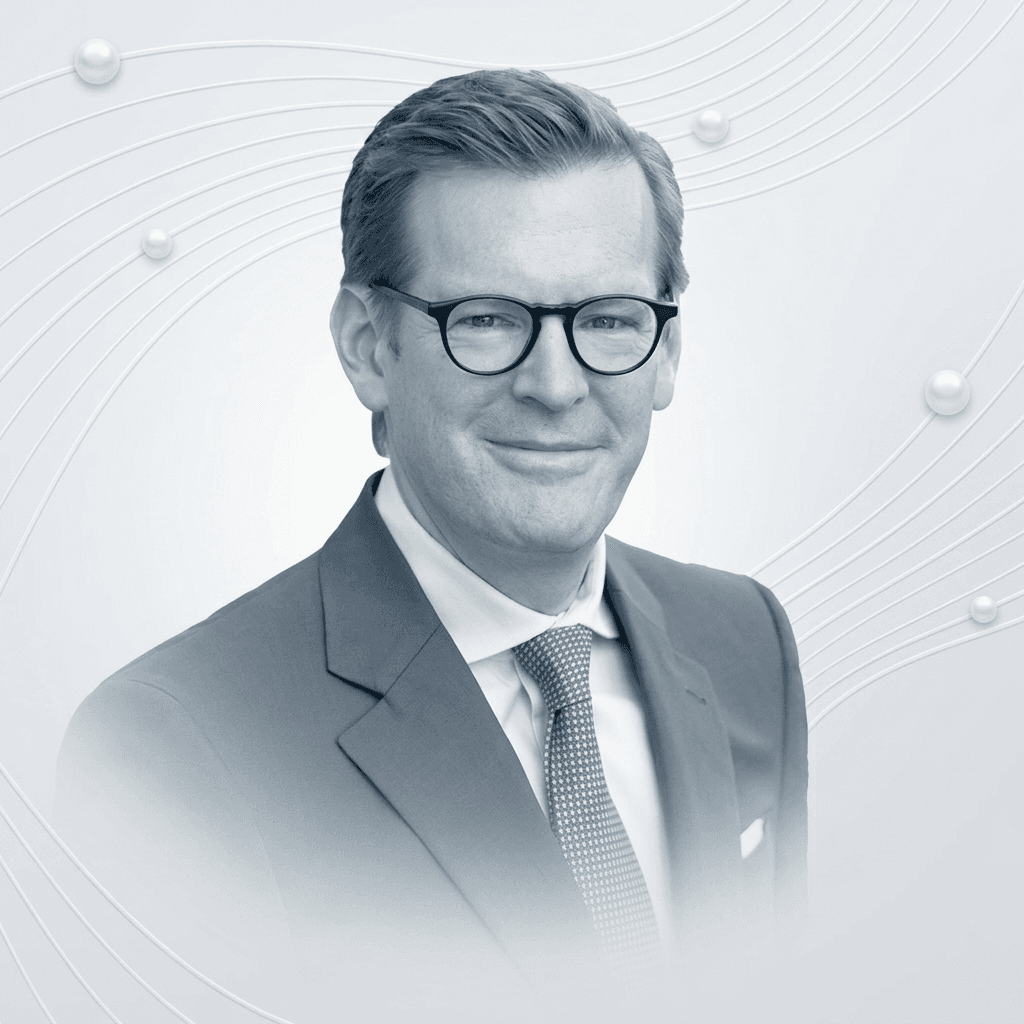
Alexander Nuyken on financial transactions and Ernst & Young
Episode 1 30.03.2021
-
 play_arrow
PLAY EPISODE
Description arrow_drop_down

Description
What does the collapse of Lehman Brothers, the culture of Japanese banking, and a €40 billion utility deal reveal about how collaboration actually works in high-stakes financial transactions? Alexander Nuyken, EY’s Life Science Strategy and Transactions Leader for EMEIA, shares lessons from two decades of deal-making across continents. Subscribe for more episodes on collaboration under real-world pressure. Alexander Nuyken’s career reads like a stress test for collaborative capacity: lawyer turned investment banker at Lehman Brothers, survivor of the 2008 financial crisis, absorbed into Japanese bank Nomura, then UBS, and finally Ernst & Young , each transition demanding rapid adaptation to radically different organizational cultures and collaborative norms. The conversation opens with a practical insight about what EY actually hired Nuyken to do: not expand their competencies but expand their ability to understand what clients need. His role is to connect dots across sectors, geographies, and professional disciplines , a form of collaboration that requires translating between worlds that speak different languages even when they share the same vocabulary. Nuyken defines collaboration through the lens of financial transactions, where the stakes are measured in billions and the participants include lawyers, bankers, regulators, corporate boards, and sometimes governments across multiple jurisdictions. The defining feature is alignment around a common goal under extreme time pressure, where trust must be established rapidly because there is no time to build it organically. The most revealing segment addresses what happens when collaboration fails in this environment. Nuyken describes how cultural differences between organizations, not just national cultures but corporate cultures, create friction that can derail transactions worth billions. The Lehman-to-Nomura transition illustrated this viscerally: a high-intensity American trading culture absorbed into a Japanese institution with fundamentally different assumptions about hierarchy, communication, and decision-making speed. On remote collaboration, Nuyken was ahead of the curve. Long before COVID, his EMEIA role required managing teams across Europe, the Middle East, India, and Africa through video calls and digital tools. His observation is that technology enables connection but does not create trust , that still requires the human elements of reliability, transparency, and follow-through. The discussion connects financial collaboration to broader societal challenges. Nuyken argues that the same principles governing successful transactions , clear goal alignment, regulatory frameworks, trust between parties with different interests , apply to challenges like climate change, but at a scale where the regulatory mechanisms are far weaker and the goal fragmentation far greater. His proposed change to humanity is long-term thinking across generations: recognizing that we are not here just for our own good, and that failing to pass what we have inherited to the next generation represents our greatest collective failure. Part of the Ernst Strüngmann Forum series on Collaboration, produced with the Convergent Science Network.
Tagged as:
collaboration Cultures Ernst & Young financial transactions Lehman Brothers
About the author call_made
CSN Podcasts
Both the triumphs of humanity and its most evil deeds have resulted from collaboration. In a time where humanity is required to aspire to the former and minimize the latter, the question arises of how collaboration arises and why it fails. Surprisingly, this phenomenon, so central to who we are, is not well understood. Hence, a collaborative effort is required to understand collaboration in its full biological, psychological, sociological, cultural, and economic complexity and to translate this understanding into operational impact. This series of podcasts is one step toward achieving these complementary goals. The Collaboration Podcast presents interviews with people who are central orchestrators of collaboration in various domains including business, government, science, art, health, sustainability, and the military. The discussions were conducted by Prof. Dr. Paul F.M.J. Verschure and members of the Program Advisory Committee of the Ernst Strungmann Forum on Collaboration (https://www.esforum.de/forums/ESF32_Collaboration.html) during 2021 and had the goal to sketch a map of opportunities, challenges, and obstacles in human collaboration. The forum took place in May 2022, and now we would like to share this series of interviews with a broader audience. The full report of the Forum will be published in 2023 by MIT Press. The podcast was produced by the Convergent Science Network (https://www.convergentsciencenetwork.org/). Context: The stability of social systems depends critically on realizing sustainable methods of “collaboration,” yet how and by which means collaboration is achieved is not clearly understood; neither are the conditions or processes that lead to its breakdown or failure. Collaboration can be understood as cooperation between agents toward mutually constructed goals. Part of the reason for our lack of understanding is that the phenomenon of collaboration is, by nature, a highly multidisciplinary problem, and effective research into its complexities has been difficult to achieve across the broad range of scientific and technical disciplines involved. The need for a fundamental understanding of collaboration, however, has become increasingly important. Not only does humankind demand answers as it attempts to address critical challenges at multiple scales (e.g., climate change, migration, enhanced automation, social and economic inequality), but ever-increasing technological and economic means of interconnecting people and societies are disrupting long-established, familiar patterns of how we interact. Radical technological changes that are ongoing have the potential to reshape collaboration in ways that are currently hard to predict or influence (e.g., by altering configurations in interaction, information creation, and modes of communication). On one hand, such changes could disrupt hitherto stable forms of collaboration by affecting critical communication channels and traditional roles, as can be observed in the rapidly changing patterns in governance, commerce, and social interaction. Conversely, technology could lead to the emergence of novel, successful forms of collaboration that deviate from traditional “hierarchical” architectures. Evidence of this can be seen in areas as diverse as highly automated manufacturing plants, the open science movement, collaborative software repositories, user-centered services, and the sharing of economy-based modes of organization. Without a fundamental understanding of the mechanisms, processes, and boundary conditions of collaboration, it is not possible to evaluate or predict which of these possible scenarios are sustainable or even plausible. The Forum “How Collaboration Arises and Why it Fails” (May 8–13, 2022, Location: Frankfurt am Main, Germany) Chairs: Andreas Roepstorff and Paul Verschure Program Advisory Committee: Jenna Bednar, Julia R. Lupp, Bhavani R. Rao , Andreas Roepstorff, Ferdinand von Siemens, and Paul Verschure
Episodes
play_arrow
play_arrow
play_arrow
play_arrow
Timestamp
- fast_forward00:00:05 - Hi, I'm Paul Verschure and together with my colleague Ferdinand van Siemens,
- fast_forward00:00:09 - we are speaking today with Alexander Neuken about collaboration in large-scale
- fast_forward00:00:14 - financial transactions such as mergers and acquisitions.
- fast_forward00:00:18 - Alexander is a partner at Ernst & Young where he leads lifetime strategy and
- fast_forward00:00:22 - transactions for Europe, Middle East, India and Africa.
- fast_forward00:00:27 - Would you, as a start, it would really be helpful
- fast_forward00:00:30 - i think if you situate a little bit your expertise
- fast_forward00:00:33 - by giving us like a very short summary of
- fast_forward00:00:37 - of where you're coming from your career development
- fast_forward00:00:40 - and how you ended up where you are right now with with your experience understanding
- fast_forward00:00:45 - of of collaboration yeah so maybe first of all i can start with my with my career
- fast_forward00:00:52 - path um it is really not a straight line i would say the only continuum is life sciences.
- fast_forward00:01:00 - That's everything else is basically a little bit, looks like a random walk,
- fast_forward00:01:06 - but it adds up to a certain pool of knowledge and experience that's very valuable today.
- fast_forward00:01:11 - So I started out as a lawyer. I'm a lawyer by training, not a scientist.
- fast_forward00:01:17 - But by coincidence, basically my
- fast_forward00:01:21 - first transactions were life science transactions. It was not my choice.
- fast_forward00:01:25 - It was just kind of given as a first task, selling a life science business.
- fast_forward00:01:30 - And then thereafter, another one and thereafter, another one.
- fast_forward00:01:33 - So it piled up that I got very interested.
- fast_forward00:01:39 - After a few years, two and a half years of being a lawyer, I switched in banking
- fast_forward00:01:45 - through the catalyst of an MBA.
- fast_forward00:01:48 - So I did the MBA in Fontainebleau, a short program, 10 months.
- fast_forward00:01:53 - And then I basically entered into the banking world at Lehman at the time.
- fast_forward00:02:01 - That was when I joined it, a thriving firm, very eager to grow and hunt in the
- fast_forward00:02:09 - market, very successfully so.
- fast_forward00:02:12 - So 2006, far away from the financial crisis. And then in 2008,
- fast_forward00:02:17 - all the engines stopped all of a sudden.
- fast_forward00:02:21 - I was involved in great deals, very interesting experience, very intense time,
- fast_forward00:02:26 - very many sleepless nights.
- fast_forward00:02:28 - So that was a super experience, but it stopped all in 2008 when the world changed
- fast_forward00:02:37 - and Lehman went bankrupt.
- fast_forward00:02:40 - I was lucky to then be taken over by Nomura, the Japanese investment bank.
- fast_forward00:02:46 - So very different culture, very different approach, but they were keen to include
- fast_forward00:02:52 - or integrate the Lehman crowd.
- fast_forward00:02:55 - And so we had a second life after Lehman.
- fast_forward00:03:01 - Then later I moved on to UBS for another three, four years.
- fast_forward00:03:06 - And 2015, I joined EY. why and the ask to join you why first of all i was quite
- fast_forward00:03:13 - skeptical saying okay i've done,
- fast_forward00:03:16 - a lot of i've gained a
- fast_forward00:03:19 - lot of transaction experience i'm a banker to some degree a lawyer yes i can
- fast_forward00:03:24 - i i can combine those two worlds but for me um the accounting firms were always
- fast_forward00:03:29 - doing the financial due diligence which is not my cup of tea so i was kind of
- fast_forward00:03:33 - skeptical what to do there but the
- fast_forward00:03:35 - interesting there was an interesting proposition um they They came with,
- fast_forward00:03:38 - they said, we know very much what we can do.
- fast_forward00:03:42 - We are very much self-centered around our competencies, but we don't really
- fast_forward00:03:47 - know what the, or we are less good at knowing what our clients really need,
- fast_forward00:03:53 - want, and to bring a holistic perspective on to the table.
- fast_forward00:03:57 - So we're not talking about our competencies, but more talking about the opportunities
- fast_forward00:04:02 - in the market and how to capture them with a joint offering and really connecting the dots.
- fast_forward00:04:09 - That was a very appealing proposition to me because I can bring in my expertise
- fast_forward00:04:16 - on the sector, my previous knowledge, my network, and combine a lot of elements
- fast_forward00:04:22 - throughout the career that I collected.
- fast_forward00:04:25 - I joined EY in 2015, and since then I'm running in EMEA, so Europe,
- fast_forward00:04:33 - Middle East, India, and Africa, so a pretty diverse and broad sector or broad geography,
- fast_forward00:04:40 - the health, science, and wellness, how it's called here now, sector.
- fast_forward00:04:45 - So that includes pharma, it includes medtech, it includes consumer health,
- fast_forward00:04:49 - so all sorts of different areas.
- fast_forward00:04:53 - And on top of it, it also includes healthcare.
- fast_forward00:04:58 - So that's healthcare services, hospitals, provider, payer organizations,
- fast_forward00:05:03 - which is not so much my area of expertise.
- fast_forward00:05:05 - But given the broad perimeter and given my role being based out of Frankfurt,
- fast_forward00:05:11 - running a team that is based in London, even before Corona and before we stopped
- fast_forward00:05:17 - being able to meet in person, I was already very,
- fast_forward00:05:23 - very, very intensively working remotely.
- fast_forward00:05:29 - Working connected across regions and developing collaborative approaches that
- fast_forward00:05:39 - were new to the firm also.
- fast_forward00:05:42 - Also, because originally the approach was very much centered around an individual
- fast_forward00:05:47 - with a franchise, with a team underneath, all sitting together at the same place.
- fast_forward00:05:53 - And the beauty of the organization is we have so much competency in various
- fast_forward00:05:59 - areas that are combined much stronger than separated and on individual pockets.
- fast_forward00:06:06 - And combining that, bringing all of that together, and bringing that to the
- fast_forward00:06:11 - value of the client, that's basically my task and my journey here. Okay.
- fast_forward00:06:21 - So, Alexander, thank you for
- fast_forward00:06:23 - that summary. But there's a lot of elements in this and a lot to unpack.
- fast_forward00:06:31 - So, maybe as a start, through this whole trajectory, what do you see as the
- fast_forward00:06:42 - patterns of collaboration?
- fast_forward00:06:43 - If you would give a characterization of how you see collaboration in these different
- fast_forward00:06:49 - domains where you're active, so not only you and your team, but also you and your clients,
- fast_forward00:06:54 - you and different industries that you might want to bring together,
- fast_forward00:06:57 - is there a pattern to what you might want to call collaboration in that context?
- fast_forward00:07:03 - Yeah, I think the key element
- fast_forward00:07:07 - or the first step is really to get an
- fast_forward00:07:11 - understanding of the different interests and
- fast_forward00:07:15 - align on goals or how we call it on purpose on the joint key factors that make
- fast_forward00:07:26 - people drive and pull the whole carriage in the same direction.
- fast_forward00:07:32 - Because that's the center point for being able to collaborate, really.
- fast_forward00:07:39 - Otherwise, you're having loose ends or people, in the worst case,
- fast_forward00:07:44 - even pulling the string in different directions.
- fast_forward00:07:47 - And that's really a bad and not a good start.
- fast_forward00:07:55 - We were talking about common goals, right? You said, look, you have to identify
- fast_forward00:07:58 - the common goals. But now in the complex structures you're in,
- fast_forward00:08:03 - common goals could vary depending on the operating level, right?
- fast_forward00:08:07 - The common goal of, let's say, a manager you deal with or a legal expert you
- fast_forward00:08:12 - deal with might be different from the more abstract goal of the organization itself.
- fast_forward00:08:19 - So how do you then define that?
- fast_forward00:08:21 - Those goals yeah i think the
- fast_forward00:08:24 - the key is to to um
- fast_forward00:08:27 - acknowledge the multiple facets of it
- fast_forward00:08:30 - like you described right so um the question is can you combine all the different
- fast_forward00:08:36 - ambitions goals intentions into one aggregated bigger thing that's basically
- fast_forward00:08:44 - the purpose of of us doing something together,
- fast_forward00:08:49 - of an organization being an organization, actually.
- fast_forward00:08:55 - There is some bigger goal behind it. And if you can crystallize that,
- fast_forward00:09:00 - identify that, and then break it down into different elements that are supporting this,
- fast_forward00:09:09 - and then ideally get people excited about the bigger
- fast_forward00:09:15 - goal, but recognize that, for example, a smaller goal is my next paycheck, right?
- fast_forward00:09:21 - So this all needs to tie together and be consistent.
- fast_forward00:09:26 - If you are creating contradictions in between, it doesn't help you.
- fast_forward00:09:31 - So being not an inclusive, not diverse environment.
- fast_forward00:09:36 - Excluding people, things like that, that's That's all distraction and not helping
- fast_forward00:09:42 - to service the purpose and align people behind your goal.
- fast_forward00:09:47 - So this is very important that you have this bigger picture,
- fast_forward00:09:54 - vision that you can transport and people are aligning behind it.
- fast_forward00:10:00 - So that collaboration, on the one hand, you say, is characterized by the sharing of goals.
- fast_forward00:10:07 - Yeah. But are there other defining features?
- fast_forward00:10:15 - What do you mean by other defining features? I mean, the goals can be multiple faceted. It can be pay.
- fast_forward00:10:22 - It can be... If we take goal as one feature, another goal might,
- fast_forward00:10:28 - for instance, be, let's say, communication or it might be trust.
- fast_forward00:10:32 - Yes, of course. I mean, that needs to be, communication is extremely important,
- fast_forward00:10:38 - I think, to transport the goal, to align people behind it.
- fast_forward00:10:44 - In particular, when you're working remotely in different geographies,
- fast_forward00:10:50 - communication is the key element.
- fast_forward00:10:54 - At the moment, it feels a little bit, in COVID times, that we are,
- fast_forward00:10:59 - We are chasing our own shadow by lining up call after call,
- fast_forward00:11:04 - but to get people who are sitting in a completely different place in a completely
- fast_forward00:11:09 - different setting with very different individual experiences,
- fast_forward00:11:14 - how that setting works for the one,
- fast_forward00:11:17 - for the employee who is alone in his 20 square meter apartment,
- fast_forward00:11:25 - sitting there for two years in lockdown.
- fast_forward00:11:28 - Down is is a different experience than um for example
- fast_forward00:11:31 - for myself with a full house of of kids and and um
- fast_forward00:11:35 - and family around me that uh where
- fast_forward00:11:39 - you probably less are less dependent on external
- fast_forward00:11:42 - contacts let's put it that way right so um everyone has a different experience
- fast_forward00:11:47 - there and you need to acknowledge that and you need to to kind of communicate
- fast_forward00:11:54 - in a way that you you get the buy-in and the engagement from the various parties.
- fast_forward00:12:02 - And in the old times, just anecdotally, when you got the idea of a joint project
- fast_forward00:12:11 - and starting something,
- fast_forward00:12:14 - the first question of some colleagues was, what's in for me?
- fast_forward00:12:19 - So why should I do this?
- fast_forward00:12:22 - How much can I earn with it, et cetera?
- fast_forward00:12:25 - I think that's the wrong start for that conversation because,
- fast_forward00:12:29 - I mean, ultimately that's an important question,
- fast_forward00:12:33 - but I think it takes out a little bit the spirit of where we want to go with
- fast_forward00:12:42 - the organization or with the collaboration.
- fast_forward00:12:45 - And that's something that took me a while to understand how to get that, how to make that happen,
- fast_forward00:12:58 - that people are not asking the first question, what's in for me,
- fast_forward00:13:01 - but what's the overarching goal,
- fast_forward00:13:08 - why do we discuss this collaboration in the first place, etc.
- fast_forward00:13:13 - And then, ultimately, it needs to work for everyone.
- fast_forward00:13:17 - It should not be a loss-making proposition for any individual involved.
- fast_forward00:13:20 - But then you bring it back to goal again, right? With communication,
- fast_forward00:13:24 - for instance, communication is often highly structured in organizations.
- fast_forward00:13:30 - And to get the buy-in of all the layers of such a structure might require also
- fast_forward00:13:37 - a very specific approach towards communication that is serving those goals.
- fast_forward00:13:42 - So do you also see that you do that, that you structure the communication process
- fast_forward00:13:46 - to also serve this idea of building a sense of common goal?
- fast_forward00:13:55 - Yeah, and I think the way to structure this is it's a process, right?
- fast_forward00:14:02 - It's not that I have the idea of how it looks like and then basically infiltrate
- fast_forward00:14:08 - the team and dump it on the team.
- fast_forward00:14:12 - It's an evolution. evolution um and
- fast_forward00:14:15 - uh it's it's a process that has lots
- fast_forward00:14:18 - of iterations and lots of
- fast_forward00:14:22 - uh joint thinking and out of the box thinking um how to how to make this happen
- fast_forward00:14:29 - how to evolve it it's also try and error to some degree right so um you fail
- fast_forward00:14:35 - on on certain things you you undertake and then you ask Ask yourself, why did it fail?
- fast_forward00:14:41 - Why did I not get the buy-in from my counterparty? Why did he not support this?
- fast_forward00:14:47 - For me, it was absolutely logical that this is the right thing to do.
- fast_forward00:14:51 - And then you get pushback.
- fast_forward00:14:53 - So you need to ask yourself, what's driving the other person?
- fast_forward00:14:56 - Why is it not feasible to do it this way? And how can we make it work?
- fast_forward00:15:03 - Then, in that respect, so that means you have a very, if you want,
- fast_forward00:15:07 - customized approach to the communication.
- fast_forward00:15:10 - And then a third dimension that speaks, that is, of course, trust.
- fast_forward00:15:14 - Because if you try to bring partners together and also deal with this multi-level
- fast_forward00:15:20 - structure of the organization, there are many links of trust that you have to
- fast_forward00:15:26 - engineer or also assess.
- fast_forward00:15:29 - So how do you deal with that? Yeah, that's a good point. And I think when I
- fast_forward00:15:33 - joined the organization, it was initially the banker coming into this environment.
- fast_forward00:15:40 - Bankers are sharks and they are not really regarded as very collaborative and team able or whatever.
- fast_forward00:15:51 - So I had to overcome a degree of skepticism.
- fast_forward00:15:55 - And I think the way to,
- fast_forward00:15:59 - I solved it as maybe there's better ways to do it I don't know but the way I
- fast_forward00:16:04 - solved it I choose the battles where it sounded it looked to me like there's
- fast_forward00:16:09 - more promising to get to get collaboration going so I didn't try to run through
- fast_forward00:16:18 - the wall with where people were,
- fast_forward00:16:20 - reserved and not inclusive and said no we don't want to don't mess up with this
- fast_forward00:16:25 - account. We don't want you here.
- fast_forward00:16:28 - So I choose opportunities where I could create positive examples.
- fast_forward00:16:35 - And I firmly believe in leading with examples or really living the way,
- fast_forward00:16:42 - um as an example for for others to
- fast_forward00:16:45 - to follow and then um hopefully people
- fast_forward00:16:48 - buy in and over time i must realize this is this
- fast_forward00:16:51 - has been quite quite successful so people start uh
- fast_forward00:16:55 - seeing the the successes seeing how it can work working together and we get
- fast_forward00:17:01 - more out of it so uh why not trying it as well with this guy so this is a little
- fast_forward00:17:08 - bit that's interesting right because you you take the trust challenge very much
- fast_forward00:17:12 - as you as a trusted mediator,
- fast_forward00:17:15 - right? How do people trust you as mediator?
- fast_forward00:17:18 - Which of course is a necessary condition to get anything done.
- fast_forward00:17:23 - On the other hand, you have to bring parties together that might not trust each
- fast_forward00:17:28 - other a priori, neither all the players within an organization, right?
- fast_forward00:17:34 - So now it's your task as the mediator to have people also trust each other so
- fast_forward00:17:40 - the common goal can be achieved.
- fast_forward00:17:43 - So do you approach that in a systematic way or do you also leave that to the
- fast_forward00:17:48 - organizations themselves?
- fast_forward00:17:50 - No, I think the way we developed it from there, so basically first was creating
- fast_forward00:17:56 - a few examples, but then trying to systematically scan the market for where
- fast_forward00:18:01 - can we create additional cases like that.
- fast_forward00:18:04 - So how do we, because it's in various geographies, I created my first positive
- fast_forward00:18:10 - examples in the Nordic region.
- fast_forward00:18:12 - So I had a few very successful and very, very positive experiences working with
- fast_forward00:18:21 - the colleagues in Sweden and in Denmark.
- fast_forward00:18:23 - And then I ventured out into other regions to replicate that example.
- fast_forward00:18:28 - So basically saying, look, it worked very well working together.
- fast_forward00:18:32 - Here's the outcome. This is how we achieved it.
- fast_forward00:18:34 - And this is working successful. You get just in deal terms or in transaction
- fast_forward00:18:41 - terms, that's my home tab, you get bigger deals, bigger fees. You get better outcome.
- fast_forward00:18:46 - You really create relationships with a client that are lasting longer.
- fast_forward00:18:51 - You get all sorts of other services included into the mix. So you really can
- fast_forward00:18:56 - create a franchise jointly. And that was...
- fast_forward00:19:02 - If you just tell them in theory that this can work, people are skeptical.
- fast_forward00:19:06 - They have done it a different way over years. And why should this guy who is
- fast_forward00:19:12 - coming from the outside be able to change that? But if you can...
- fast_forward00:19:18 - Pinpoint certain examples that really bring it to life, how it could look like,
- fast_forward00:19:24 - how good it looks like in that term, then people are getting curious and want
- fast_forward00:19:30 - to have the same. So people start approaching.
- fast_forward00:19:33 - Instead of me pushing at closed doors,
- fast_forward00:19:37 - it's more that they invite me me
- fast_forward00:19:39 - then to to join the and and replicate this
- fast_forward00:19:43 - and this is then taking place in france
- fast_forward00:19:46 - in spain in other countries where people realize okay
- fast_forward00:19:49 - there's value in working together okay but but that that's if you want the so
- fast_forward00:19:54 - so far we looked at it very much from a positive reinforcement perspective right
- fast_forward00:19:58 - like you bring people together because they share goals and because they can
- fast_forward00:20:03 - achieve common outcomes that they would all value positively.
- fast_forward00:20:07 - But the difficulty, of course, of these situations is that there are also conflicting goals.
- fast_forward00:20:14 - And there are also conflicts in communication. There are conflicts in objectives.
- fast_forward00:20:19 - And then the positive approach might not always work very well.
- fast_forward00:20:23 - Because people just look at the world differently. Now, how do you approach
- fast_forward00:20:28 - these more conflictuous situations?
- fast_forward00:20:31 - How do you resolve them? Is it always about bringing people back onto the path
- fast_forward00:20:35 - of the common goal, or are there also negative elements that are part of the
- fast_forward00:20:40 - interaction that you say, if we don't do this, we fail?
- fast_forward00:20:45 - Look, I think it very much depends on the universe or the environment you're
- fast_forward00:20:51 - operating in and how you can sanction misbehavior or whatever.
- fast_forward00:20:59 - So if I look back into banking times, it was very easy.
- fast_forward00:21:04 - It's a little bit organized like an army. You have the general on top and then
- fast_forward00:21:08 - a lot of people marching with marching orders.
- fast_forward00:21:12 - And they are given a task. They know the direction.
- fast_forward00:21:16 - If they fail to achieve it or if they work not basically in the sense of what
- fast_forward00:21:22 - has been given as a task, they usually
- fast_forward00:21:25 - very soon lose their role in the organization. So that's very easy.
- fast_forward00:21:31 - In a partnership, it's not like that. You cannot enforce things,
- fast_forward00:21:36 - in particular if you are not, in a legal sense,
- fast_forward00:21:43 - the boss of any of those people you are working with.
- fast_forward00:21:47 - So you are more like a peer and you need to make other peers aware.
- fast_forward00:21:54 - Realize that it's an advantage working with you. There's no much sanction.
- fast_forward00:21:59 - Of course, if someone is misbehaving consistently and not collaborative,
- fast_forward00:22:05 - et cetera, on the long run, you will fail, even in a partnership.
- fast_forward00:22:10 - But as an immediate way to get people going, there is not so many sanctions you can do.
- fast_forward00:22:17 - You can just, and that was a learning I took from one of my mentors when I joined.
- fast_forward00:22:23 - He said, identify the 10, 20% of people who are really leading,
- fast_forward00:22:29 - who really want to lead this in a certain direction,
- fast_forward00:22:32 - who are willing to for the change that's needed, who embrace this opportunity working with you.
- fast_forward00:22:40 - 50, 60% of the rest of the organization will follow and they will always be
- fast_forward00:22:46 - the rest that is never going to follow because they don't want to.
- fast_forward00:22:51 - They are not able to. they then leave them
- fast_forward00:22:54 - just leave them behind it's not that the organization
- fast_forward00:22:56 - will change and and you need to identify those
- fast_forward00:23:00 - who are willing to to embrace the change
- fast_forward00:23:03 - and and i took that very seriously i don't i don't think it's worth it's worth
- fast_forward00:23:08 - spending or wasting your time on battles you cannot win people ultimately then
- fast_forward00:23:14 - self-select to be not part of this journey and if they They self-select not
- fast_forward00:23:19 - to be part of the journey.
- fast_forward00:23:20 - And you will see that ultimately in their performance, in their numbers, and they will fail.
- fast_forward00:23:26 - So probably not worth spending too much time trying to pull them also into the
- fast_forward00:23:32 - same direction. In default, right.
- fast_forward00:23:35 - Do you think that also culture is a relevant factor in this for you?
- fast_forward00:23:39 - Because you are dealing with a huge swath of territory from Scandinavia to Africa.
- fast_forward00:23:46 - So, is culture an important dimension on which you would approach collaboration across these regions?
- fast_forward00:23:55 - Not really. I think the beauty of our organization, we are a global organization.
- fast_forward00:24:01 - We are present in so many cultures. I've been working with people in Saudi Arabia.
- fast_forward00:24:06 - I've been working with people in UK, in Germany, in Africa, in India.
- fast_forward00:24:12 - Yeah, they all have different cultures, but the culture, if we want to be successful as an organization,
- fast_forward00:24:21 - we need to accept certain cultural differences on the one side.
- fast_forward00:24:28 - But we must not compromise on our values, on our standards.
- fast_forward00:24:35 - So even in countries where it's harder to navigate with a Western European mindset,
- fast_forward00:24:46 - let's put it that way, and where the country as such is less liberal,
- fast_forward00:24:50 - we need to find ways within the firm to stick to our values and live our values
- fast_forward00:24:58 - without creating too much of a contradiction to the local setup.
- fast_forward00:25:04 - Up yeah so it's a it's a it's a fine line but it's very important that um for
- fast_forward00:25:11 - example um we we are in in saudi arabia we are employer of um.
- fast_forward00:25:18 - Probably as many women as as men yeah and um
- fast_forward00:25:21 - of course we appreciate and acknowledge local
- fast_forward00:25:24 - differences so we have working spaces that are reserved for women only if they
- fast_forward00:25:30 - don't feel comfortable working next to men etc that's a cultural thing you would
- fast_forward00:25:35 - not see that in germany or in other places but um that's the that's the fine
- fast_forward00:25:40 - line acknowledge local differences
- fast_forward00:25:42 - but don't compromise on what we do
- fast_forward00:25:45 - and how we do it and have core values that are globally the same well that's
- fast_forward00:25:52 - interesting alexander right because in some sense we have moral norms because
- fast_forward00:25:58 - we are part of broader collaborative processes that form our society society.
- fast_forward00:26:05 - And that's what you say, right? You try to also adhere to those norms,
- fast_forward00:26:10 - even if there are cultural challenges to those, or let's say regional challenges.
- fast_forward00:26:15 - But that also might mean that there is a point of contradiction that's just
- fast_forward00:26:21 - not sustainable anymore,
- fast_forward00:26:23 - and that you would have to choose to either proceed with a project and compromise
- fast_forward00:26:27 - your norm, or give up on a project.
- fast_forward00:26:30 - So how is that balancing act realized so
- fast_forward00:26:35 - our our policy is to not
- fast_forward00:26:39 - compromise on our values so if they
- fast_forward00:26:41 - have a conflict there then we rather
- fast_forward00:26:44 - not do a project even if it would be
- fast_forward00:26:47 - a highly profitable project that's
- fast_forward00:26:51 - that's very clear um is that
- fast_forward00:26:54 - something that uh we we live in every situation i cannot tell because I don't
- fast_forward00:27:02 - have visibility on that and I'm not at a level where I have visibility into that.
- fast_forward00:27:12 - I can only tell from my immediate environment.
- fast_forward00:27:16 - Luckily, I was never in such a conflict yet,
- fast_forward00:27:21 - but clearly when it comes to the quality of work and if we cannot deliver the
- fast_forward00:27:27 - the quality that I have signed up for and our organization is pursuing or delivering,
- fast_forward00:27:40 - then we would rather stop the project.
- fast_forward00:27:44 - But would organizations like yours or banks that you worked for also have explicit
- fast_forward00:27:50 - protocols and monitoring processes for that that are also effective in those situations?
- fast_forward00:27:57 - Yeah, absolutely. We do have a rigorous compliance process that starts with...
- fast_forward00:28:09 - The uh really with within knowing your customer no reviewing the background of that customer,
- fast_forward00:28:19 - to make i mean for most of the cases where i work
- fast_forward00:28:21 - with clients it's not it's not an issue it's the big names um from beyer to
- fast_forward00:28:27 - novartis to whoever that they are known in the market and we are working for
- fast_forward00:28:32 - a long time together but clearly if there's a new client we would we would,
- fast_forward00:28:40 - clearly look into into the background and then there is a there's a rigorous
- fast_forward00:28:46 - onboarding process and for every project that's being taken on there is a conflict
- fast_forward00:28:51 - check and a compliance process that is very,
- fast_forward00:28:57 - very closely monitored.
- fast_forward00:28:58 - And any concern from a reputational issue or whatever is being raised and then
- fast_forward00:29:10 - may end the relationship before it actually has started.
- fast_forward00:29:16 - Right. So we looked at it also rather abstract now, right? So sort of general
- fast_forward00:29:22 - principles based on your experience and insight.
- fast_forward00:29:27 - But maybe we can also look at more concrete examples.
- fast_forward00:29:30 - And I think with the Lehman Brothers example, it's a very dramatic one where
- fast_forward00:29:35 - in some sense you could argue collaboration at different scales sort of was
- fast_forward00:29:44 - not really sustainable.
- fast_forward00:29:46 - So, do you see Lehman Brothers as a failure of collaboration or would you say
- fast_forward00:29:52 - that was beyond the control of the organization itself?
- fast_forward00:29:55 - I think in hindsight, and it's a few years back, so certainly the dust has settled
- fast_forward00:30:02 - on a few questions, but in hindsight it was primarily a leadership failure.
- fast_forward00:30:09 - So not acknowledging at the right time that standalone the organization is not.
- fast_forward00:30:20 - Not set up to survive given that the organization back then was coming out of a,
- fast_forward00:30:27 - environment where long-term commitments
- fast_forward00:30:30 - were short-term funded and the the
- fast_forward00:30:34 - environment on the funding side and the the short-term funding was no longer
- fast_forward00:30:41 - possible there was huge huge mark-to-mark adjustments on assets that were on the balance sheet.
- fast_forward00:30:54 - The prop trading activities were basically turning out to be a disaster.
- fast_forward00:31:01 - A lot of mortgage loans that were of no value at the time.
- fast_forward00:31:09 - And then you have the margin call, and then all of a sudden your funding explodes or implodes better.
- fast_forward00:31:15 - So I think that was probably a leadership issue that,
- fast_forward00:31:22 - I mean, on that level, you should
- fast_forward00:31:25 - have visibility on the factors that are managing your balance sheet,
- fast_forward00:31:38 - etc.
- fast_forward00:31:39 - And that was far beyond my pay grade at the time. So we are just doing what
- fast_forward00:31:46 - we were basically supposed to, i.e.
- fast_forward00:31:51 - Advise on transactions. And that was, in principle, a thriving business.
- fast_forward00:31:56 - It was just the whole setup was not sustainable at the time.
- fast_forward00:32:01 - What is interesting about it, though, is that if we go back to this issue of
- fast_forward00:32:06 - building effective collaboration through common goals,
- fast_forward00:32:10 - still, that whole organization had structured itself around common goals that
- fast_forward00:32:18 - it would have been able to sustain were it not the case that there was a large
- fast_forward00:32:23 - implosion of the mortgage market.
- fast_forward00:32:25 - And so, in some sense, what is interesting about that, we also look at an artifact of goal setting.
- fast_forward00:32:35 - And it has to mean any change in the industries you look at with respect to
- fast_forward00:32:41 - goal setting so that these artifacts that are massive disasters can be avoided.
- fast_forward00:32:49 - Have you seen changes in that?
- fast_forward00:32:55 - You mean in the immediate banking environment or more broadly?
- fast_forward00:33:00 - Well, look, to put it more bluntly, you could say, look, the system was driven
- fast_forward00:33:07 - by monetary gain at any level of organization.
- fast_forward00:33:11 - And that led also to exactly this very risky structuring of the balance sheet.
- fast_forward00:33:19 - However this was the way to motivate the
- fast_forward00:33:22 - organization and its different members to keep on marching
- fast_forward00:33:25 - in the army behind that general now so essentially this was all monetary gain
- fast_forward00:33:31 - oriented for the members of the organization and the shareholders and this in
- fast_forward00:33:36 - some sense was one of the key contributing factors to the collapse so so then
- fast_forward00:33:42 - of course we can now start to generalize and say, okay, has that changed?
- fast_forward00:33:45 - Or are we still facing similar risks? Because in some sense,
- fast_forward00:33:49 - also the way you described goals, for many economic entities,
- fast_forward00:33:53 - it is about value. It's also about shareholder value.
- fast_forward00:33:56 - So has that attitude towards setting common goals along monetary gain changed
- fast_forward00:34:04 - since your experience at Lehman Brothers?
- fast_forward00:34:09 - I'm probably not in a position to give a general answer throughout the industry.
- fast_forward00:34:14 - I think clearly regulators have given it a lot of thought what went wrong and
- fast_forward00:34:19 - how to prevent this from happening again.
- fast_forward00:34:23 - And there's a balance to find, right? The banks are somewhat like fuel to a,
- fast_forward00:34:32 - motor, you know, or like the oil in the engine.
- fast_forward00:34:35 - It's absolutely needed in order to keep it rolling and going.
- fast_forward00:34:40 - But But I mean, there can go a lot wrong there if you don't,
- fast_forward00:34:49 - You need to give it the right framework. It's clearly an environment that's
- fast_forward00:34:54 - more monetary driven than any other organization I've been working in before.
- fast_forward00:35:00 - So law firms and their self-perception are part of the legal system of our Rechtsstaat.
- fast_forward00:35:08 - I don't know the equivalent word in English, but basically curator of the legal system to some degree.
- fast_forward00:35:18 - So an important stakeholder banks are a similar thing to the economy, right?
- fast_forward00:35:24 - They are needed in order to finance growth, finance investments.
- fast_forward00:35:31 - Or ultimately the pensions of millions of people in a functioning banking system.
- fast_forward00:35:39 - So if you do regulation too tight and prevent them from acting profitably,
- fast_forward00:35:48 - then we don't have a bank anymore in Europe.
- fast_forward00:35:51 - That's part of the global set up.
- fast_forward00:35:54 - So you see that too tight regulation is also potentially damaging.
- fast_forward00:36:01 - On the other hand, how do you secure that people are acting ethically and not
- fast_forward00:36:08 - only to their own immediate monetary advantage?
- fast_forward00:36:14 - To be honest, I can't answer that question.
- fast_forward00:36:19 - But you know what? There's an interesting consequence of this,
- fast_forward00:36:22 - Alexander. That's not in a leadership position there. No, look,
- fast_forward00:36:25 - I'm not asking you, okay?
- fast_forward00:36:27 - We're just having a conversation about these issues from our own perspective.
- fast_forward00:36:32 - But what you bring up now is, of course, another aspect to collaboration,
- fast_forward00:36:36 - which is the extra organizational collaboration.
- fast_forward00:36:39 - Because as you say, also a bank has an internal structure, has also an internal
- fast_forward00:36:43 - structure to organize its collaboration and interaction with other organizations.
- fast_forward00:36:48 - Of its kind, but it's again embedded in a broader structure of collaborative
- fast_forward00:36:53 - entities, which we call society.
- fast_forward00:36:56 - And actually, these also might have opposing goals. And as a result,
- fast_forward00:37:00 - a society might say, well, look, we have to regulate what these commercial entities
- fast_forward00:37:07 - do in order to find balance,
- fast_forward00:37:10 - right, to find enough local incentive for organizations to push ahead and explore,
- fast_forward00:37:16 - floor, while in the meantime, making sure that we don't cause damage.
- fast_forward00:37:21 - So how do you see that balancing? Do you think this is something that we have
- fast_forward00:37:27 - to put in place properly and that also these commercial entities should contribute to?
- fast_forward00:37:32 - Or do you see it more as a competition or an arms race between commercial entities
- fast_forward00:37:37 - running ahead and just exploring and societies catching up with trying to regulate? Right.
- fast_forward00:37:43 - Look, I think there is a balance that's useful for both sides ultimately,
- fast_forward00:37:47 - because if you are acting in a regulated environment and things,
- fast_forward00:37:52 - investment opportunities, for example, are thoroughly tested and checked and
- fast_forward00:37:59 - tick boxes from a regulatory standpoint.
- fast_forward00:38:02 - Point, if the regulation is designed in a sense that they want to basically
- fast_forward00:38:07 - make sure that fraud and other elements are extinct and people are not entering
- fast_forward00:38:17 - into stupid investments.
- fast_forward00:38:20 - Because the risk is beyond their horizon,
- fast_forward00:38:24 - they cannot evaluate the risk, then I
- fast_forward00:38:27 - think it's useful because it's creating trust and trust is a
- fast_forward00:38:30 - very important element also for the for
- fast_forward00:38:33 - the one who who is offering the the
- fast_forward00:38:37 - opportunity the investment opportunity or the
- fast_forward00:38:40 - whatever it is the service that it
- fast_forward00:38:43 - is um delivered in a in a regulated tested and monitored environment so that
- fast_forward00:38:51 - but basically people who are doing wrong are early identified and excluded from the market.
- fast_forward00:39:02 - But do you see this as a competitive process between society and commercial
- fast_forward00:39:06 - entities or as also a more collaborative project?
- fast_forward00:39:10 - I think in that regard, if it's done in this way, it depends really much on the mindset.
- fast_forward00:39:17 - But if it's done in the way I described, it's collaborative because it's also
- fast_forward00:39:20 - in the interest of the organization subject to the regulation, right?
- fast_forward00:39:24 - Because it gives you a seal of, okay, I'm part of a regulated environment where
- fast_forward00:39:30 - people can trust that I'm offering a standardized or systematic offering that people can,
- fast_forward00:39:37 - without knowing the details, they can trust that this is properly done while
- fast_forward00:39:43 - in a complete kind of free Western style, Western in the sense of.
- fast_forward00:39:53 - Cowboy style environment everyone does what he thinks how can an,
- fast_forward00:40:02 - Normal person who needs to secure
- fast_forward00:40:05 - the little money they have know where to invest and where not to invest.
- fast_forward00:40:11 - It's not possible or which service to buy or not to buy.
- fast_forward00:40:14 - If there's no common standard and there's no monitoring of the quality, then it's hard, right?
- fast_forward00:40:23 - Okay. That's very interesting because that really means that if we want to anchor
- fast_forward00:40:28 - trust, then trust is also anchored in regulation that a society provides.
- fast_forward00:40:34 - It's not necessarily an intrinsic feature of a commercial entity.
- fast_forward00:40:38 - That's good regulation. There's also other intentions on some of the regulations.
- fast_forward00:40:48 - I mean, even in the political spectrum,
- fast_forward00:40:52 - if I think back on the discussions we had after the Lehman bankruptcy,
- fast_forward00:40:59 - I think there have been a lot of voices also who have no understanding of the
- fast_forward00:41:04 - banking market and the banking world,
- fast_forward00:41:07 - And they were overshooting in their ambitions in order to regulate this.
- fast_forward00:41:15 - And that was not with the intention to strengthen the local banking market.
- fast_forward00:41:24 - It was rather sometimes with the intention to rather kill it.
- fast_forward00:41:27 - So that's a different approach. And we need to be careful,
- fast_forward00:41:32 - not everyone who is raising his voice in that context of regulation is actually
- fast_forward00:41:40 - doing it to the benefit of the society. They have more...
- fast_forward00:41:46 - More a political agenda or whatever yeah that's that's not necessarily positive
- fast_forward00:41:52 - but now in your experience so if you look back all such a more recent projects
- fast_forward00:41:56 - what do you see as the factors that lead to the breakdown of collaboration.
- fast_forward00:42:04 - Um so breakdown of collaboration is really when the um,
- fast_forward00:42:14 - when the goals or the intentions diverge. And that can happen even during a process, right?
- fast_forward00:42:22 - So people don't see any value anymore in pulling the carriage in the same direction.
- fast_forward00:42:29 - They rather want to get some pieces out of it and pull it in a different direction.
- fast_forward00:42:35 - That's how collaboration breaks down.
- fast_forward00:42:38 - Very often there's a
- fast_forward00:42:41 - personal agenda coming to it maybe also
- fast_forward00:42:44 - miscommunication leading to to to
- fast_forward00:42:47 - kind of uh yeah getting
- fast_forward00:42:51 - the transporting the the the discussion on a on a personal level i think that's
- fast_forward00:42:57 - that's the ingredients to make it make things fail if if people feel um They're
- fast_forward00:43:05 - not recognized properly, valued properly,
- fast_forward00:43:09 - have their own agenda above the joint agenda, things like that.
- fast_forward00:43:16 - That's where collaboration breaks down and people are reacting quite sensitively on the.
- fast_forward00:43:27 - This type of behavior or element factor there's also a fragmentation of that
- fast_forward00:43:32 - goal structure right and it becomes more individual goals so that the opposition
- fast_forward00:43:36 - gets gets amplified yeah but now so um,
- fast_forward00:43:42 - we're still in this sort of covet situation as you also described yourself earlier
- fast_forward00:43:46 - do you think that this period has actually told us something fundamental about
- fast_forward00:43:54 - how we collaborate is this It should be extract lessons from the current period.
- fast_forward00:44:01 - Yeah, I think, of course, there's fundamental changes in how we see this collaboration evolving.
- fast_forward00:44:07 - I mean, in the past, you had obviously phone calls, Skype calls,
- fast_forward00:44:14 - what have you, were possible.
- fast_forward00:44:17 - But usually, people were meeting in person in a conference room.
- fast_forward00:44:22 - Lots of internal meetings taking place with people you already know,
- fast_forward00:44:27 - you have seen before, you have a feeling for the other person.
- fast_forward00:44:32 - And there was a lot of waste of time and resources by getting everyone in the
- fast_forward00:44:40 - same room, in particular if you're working across such a big region.
- fast_forward00:44:47 - So just a single meeting for
- fast_forward00:44:50 - an hour per day is already killing the whole day because you are traveling back
- fast_forward00:44:55 - and forth i think this is going away now there will be physical meetings and
- fast_forward00:45:02 - physical interactions and they need to be there where you need to build personal
- fast_forward00:45:06 - trust you You need to have someone,
- fast_forward00:45:09 - really, you have to look into the eyes of your counterpart to be able to get
- fast_forward00:45:16 - a feeling for the situation, for the person.
- fast_forward00:45:19 - I think these tools, which we are using right now, is bridging that to some
- fast_forward00:45:25 - degree, but it will not make personal meetings redundant, in particular not
- fast_forward00:45:31 - in a deal environment where you do M&A,
- fast_forward00:45:35 - you need to develop you need to,
- fast_forward00:45:39 - some people call it you need to eat a steak so basically you know what I mean
- fast_forward00:45:45 - really building a personal rapport but in many cases,
- fast_forward00:45:53 - We will switch to meetings like this one.
- fast_forward00:45:58 - Alexander, this is a very implementational perspective.
- fast_forward00:46:03 - But I could also imagine that if you observe how our governments have been handling
- fast_forward00:46:08 - this crisis, that as an expert in collaboration, you would think,
- fast_forward00:46:11 - well, this could have been done better or this could have been done differently.
- fast_forward00:46:16 - Do you have that impression?
- fast_forward00:46:19 - Like if we would have left it to you and
- fast_forward00:46:23 - your colleagues would we have been coming
- fast_forward00:46:26 - out of this crisis sooner i i
- fast_forward00:46:31 - don't know i mean the the issue with the crisis is that um no one really had
- fast_forward00:46:37 - a recipe at the beginning and a lot was kind of digging in the dark and trying
- fast_forward00:46:44 - things and even Even if you look at the vaccination programs,
- fast_forward00:46:48 - at the time when the vaccines were ordered, none of them was actually existing as an approved product.
- fast_forward00:46:58 - And no manufacturing capability was already available at that point in time.
- fast_forward00:47:04 - So it all had to be built. and you are betting basically on something you cannot
- fast_forward00:47:12 - predict because the outcome of clinical trials, for example, is unpredictable.
- fast_forward00:47:18 - There is some degree of likelihood, maybe, yes, but it's unpredictable.
- fast_forward00:47:22 - So in essence, where we are today is...
- fast_forward00:47:28 - Is an outcome of too many factors to say, okay, I would have clearly a better recipe.
- fast_forward00:47:37 - Maybe I would have been bolder in ordering vaccines.
- fast_forward00:47:41 - Maybe I would have been faster in implementing certain measures to really distance people quicker.
- fast_forward00:47:56 - Yeah, fine, okay. Okay, but that's all in hindsight and we are all smart in hindsight, right?
- fast_forward00:48:01 - So it's very hard to tell, even as of today and with a little hindsight we have on the crisis,
- fast_forward00:48:13 - what really would have made the big difference.
- fast_forward00:48:17 - And we are living in democratic societies with a lot of room for discussion
- fast_forward00:48:24 - and a lot of margin for error and marching in different directions.
- fast_forward00:48:30 - And we, to some degree, have to accept that if you want to retain a free country.
- fast_forward00:48:35 - You can also rule like in China, but then, you know, what's...
- fast_forward00:48:44 - But, you know, what's interesting, though, is that in some sense,
- fast_forward00:48:48 - you also can see that collaboration has not necessarily flourished I think there's
- fast_forward00:48:55 - some real highlights, right?
- fast_forward00:48:56 - I think the way scientists have stepped up to the plate and really delivered is really amazing.
- fast_forward00:49:04 - On the other hand, at the pharma industry level, again, we start to see a more mixed picture.
- fast_forward00:49:09 - And certainly for logistics distribution, I think,
- fast_forward00:49:13 - That could have been handled much better, but okay, fine. This is how it is.
- fast_forward00:49:18 - But now humanity is facing a much broader crisis, which is the ecological crisis
- fast_forward00:49:22 - we're facing for the planet and also our future generation.
- fast_forward00:49:27 - So do you expect, do you believe that humanity overall will be able to ever and on time create
- fast_forward00:49:38 - global collaboration to really address this very existential threat that's facing us?
- fast_forward00:49:47 - Yeah, I'm a little bit more skeptical on that one.
- fast_forward00:49:50 - I think we have a little bit of common sense in most of the European countries in that regard.
- fast_forward00:49:59 - But looking at the global debate, it's very tough to find common ground.
- fast_forward00:50:05 - I mean, the argument from emerging countries, be it China or other countries,
- fast_forward00:50:13 - is clearly that we are coming from a different place.
- fast_forward00:50:18 - And for us, it's more easy to demand restrictions and limit ourselves because
- fast_forward00:50:22 - we already developed and they are just on the journey and they have the right
- fast_forward00:50:26 - to thrive and develop their economy. and they don't want anyone to block that evolution.
- fast_forward00:50:35 - Because in most of the cases, on a short- to mid-term basis,
- fast_forward00:50:42 - it's more expensive to implement environmental protection.
- fast_forward00:50:47 - On a long-term basis, probably the better option, but people don't tend to think long-term.
- fast_forward00:50:54 - They don't tend to think in two or three generations. They may regret by then
- fast_forward00:50:59 - what they've done before.
- fast_forward00:51:01 - And we have a lot of regrets what we've done to our environment here.
- fast_forward00:51:07 - But clearly, that's not how governments think and take.
- fast_forward00:51:14 - And that's why I'm not so optimistic that we get really something achieved on a global scale.
- fast_forward00:51:22 - And again, if we in Europe reduce our CO2 emission by 2%, it's a drop in the
- fast_forward00:51:32 - ocean compared to the global scale.
- fast_forward00:51:35 - So I think it's the right thing to do.
- fast_forward00:51:39 - But again, on a global scale, I'm a little bit skeptic that we'll really achieve
- fast_forward00:51:45 - something over the next few years.
- fast_forward00:51:47 - But now if you would have a magic wand and you could change one thing.
- fast_forward00:51:52 - That would allow humans to collaborate better? What's the one thing you would then change?
- fast_forward00:52:02 - Oh, it's a tough one. I don't want to give away my wish so quickly without proper thinking.
- fast_forward00:52:08 - To be honest, I don't really know what's the missing link.
- fast_forward00:52:16 - Maybe more long-term thinking, more thinking in generations.
- fast_forward00:52:20 - We are all here just a generation to pass through to the next one what we have inherited.
- fast_forward00:52:31 - And if you don't, that's probably the biggest lacking thing that people recognize
- fast_forward00:52:38 - that, that they are not here for their own good.
- fast_forward00:52:43 - And yeah, that would be my wish, maybe. I don't know. I need to talk about it.
- fast_forward00:52:50 - Good. And I will get back to you on that wish.
- fast_forward00:52:53 - But I think it speaks to an issue you mentioned earlier, right?
- fast_forward00:52:57 - That also collaboration breaks down because people don't identify with the common
- fast_forward00:53:03 - goal, but the common goal collapses into a fragmented set of competing goals.
- fast_forward00:53:07 - And I think this is very interesting to see that I think there's a naivete on
- fast_forward00:53:13 - our side that we believe people have similar education, similar expectations and norms as we do.
- fast_forward00:53:20 - And therefore, we expect that they
- fast_forward00:53:23 - might also adhere to our ideas about democracy and fairness and so on.
- fast_forward00:53:27 - But that's just not the case. And if you are a farmer in sub-Saharan Africa
- fast_forward00:53:34 - and you are practically no subsistence level,
- fast_forward00:53:39 - should we expect that person to immediately understand democracy and understand
- fast_forward00:53:45 - fairness and global warming and the challenges that go along with it?
- fast_forward00:53:50 - So I think there's this huge discrepancy between levels of expectation and knowledge
- fast_forward00:53:57 - and also appreciation of these challenges, which is asking a lot,
- fast_forward00:54:02 - I think, from us, from us Europeans,
- fast_forward00:54:05 - who indeed have profited, of course, more than others maybe over the centuries.
- fast_forward00:54:09 - But now we're facing all the same challenge. But I think it's really this issue
- fast_forward00:54:13 - of not being able to find the common goals and communicate the common goals.
- fast_forward00:54:18 - And what's interesting, of course, if we take your experience as a reference,
- fast_forward00:54:23 - there you'll see there's this balancing between the goal structure of an organization
- fast_forward00:54:28 - and the regulation around it.
- fast_forward00:54:30 - But of course, for global warming, the probability to find regulation that will
- fast_forward00:54:35 - work globally is very small.
- fast_forward00:54:39 - So it really has to be intrinsic to organizations. And there we see it actually
- fast_forward00:54:43 - over at the smaller scale, that's really difficult to accomplish.
- fast_forward00:54:48 - So it's a massive challenge. Well, my personal view actually is that just we
- fast_forward00:54:54 - have to augment human cognition, that our cognitive machinery is not sufficiently
- fast_forward00:54:59 - prepared to deal with the timescales, as you described,
- fast_forward00:55:02 - to really appreciate the problem and respond to it properly.
- fast_forward00:55:06 - But that's another discussion.
- fast_forward00:55:08 - But humans, of course, evolved to collaborate at a certain scale.
- fast_forward00:55:12 - I mean, evolution prepared us for running around in the savannah and maybe cooperate
- fast_forward00:55:20 - with dozens of others and not more, right?
- fast_forward00:55:23 - So our brain has, in that sense, certain biases and deficits that are not necessarily
- fast_forward00:55:29 - helping to operate at the scale we have to operate it now.
- fast_forward00:55:34 - And that's part of our evolution, I would say. I mean, a few years back,
- fast_forward00:55:39 - obviously, communication was much more difficult,
- fast_forward00:55:43 - fragmented, and very much relying on personal interactions, which is not possible
- fast_forward00:55:50 - at the same scale like we communicate now with this technology where we have video calls,
- fast_forward00:55:58 - pulling people in from various...
- fast_forward00:56:01 - And a minute later or half an hour later, I have a call with a completely different
- fast_forward00:56:08 - setup from completely different continents.
- fast_forward00:56:10 - And this is basically going in a row as a whole day from morning to evening. I know.
- fast_forward00:56:17 - So I think we are quite adaptive to things, fortunately.
- fast_forward00:56:24 - Oh, we are. This is definitely true. True. So Ferdinand, do you have a question for Alexander?
- fast_forward00:56:34 - No, I think it was a fascinating discussion listening to you.
- fast_forward00:56:38 - And it turns out that I had noted down some questions, but you've asked them.
- fast_forward00:56:43 - So I crossed them out. I'm psychic. Very interesting.
- fast_forward00:56:49 - So Alexander, I would like to thank you very much for this conversation.
- fast_forward00:56:53 - It was really very insightful and a great start for our podcast series.
- fast_forward00:56:59 - Hi, you listened to one of our podcasts in the series on collaboration produced
- fast_forward00:57:04 - by the Ernst Trommel Forum and the Convergent Science Network.
- fast_forward00:57:08 - You can find more episodes on our website.
Tags
Brain brain evolution Cerebellar cerebellum collaboration consciousness Cortex Cortical decision making disorders of consciousness Framework grid cells Memory mirror neurons Motor motor cortex neocortex Neural Neurons place cells Populations prediction prefrontal cortex Robots scientific collaboration Spatial

Exploring the convergence of neuroscience, robotics, and AI through conversations with leading researchers since 2010.
A project of the Convergent Science Network Foundation.
Follow us on
© CSN Podcasts. Developed by IMCreative & WEBC
Be the first to leave a comment