


play_arrow
Listeners:
Top listeners:
00:00
00:00
volume_up
chevron_left
-
 play_arrow
Paul Verschure on consciousness and distributed adaptive control CSN Podcasts
-
 play_arrow
Edvard Moser on grid cells and entorhinal cortex CSN Podcasts
-
 play_arrow
Giacomo Rizzolatti on mirror neurons and action understanding CSN Podcasts
-
 play_arrow
Robert Axelrod on game theory and prisoner's dilemma CSN Podcasts
-
 play_arrow
Adrian Owen on disorders of consciousness and vegetative state CSN Podcasts
-
 play_arrow
Jonathan Whitlock on markerless motion capture and posterior parietal cortex CSN Podcasts
-
 play_arrow
Luis Puelles on neuroanatomy and prosomeric model CSN Podcasts
-
 play_arrow
Zoltan Molnar on subplate neurons and cortical development CSN Podcasts
- arrow_back Home
- keyboard_arrow_right Podcast
- keyboard_arrow_right Season 2021
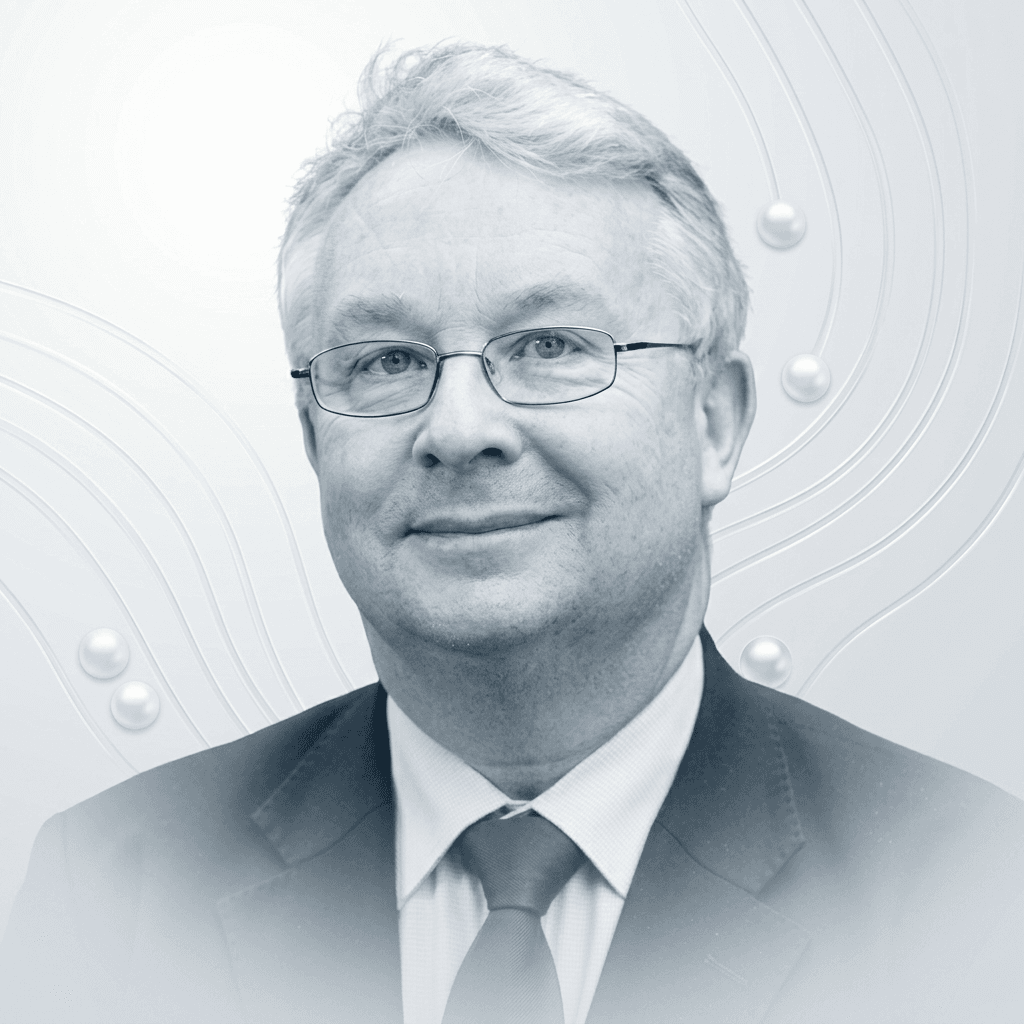
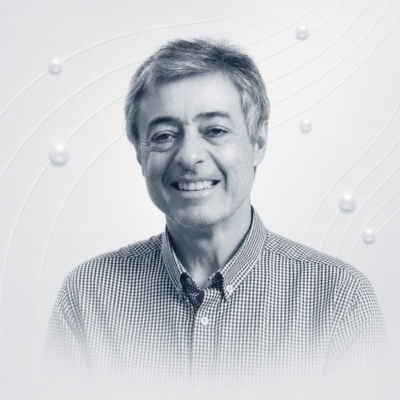
Martin McKee on public health and health policy
Episode 4 30.03.2021
-
 play_arrow
PLAY EPISODE
Description arrow_drop_down

Description
How do you translate academic research into policy that actually saves lives , across 50 countries, through political upheaval, and during a global pandemic? Public health scholar Martin McKee reveals why the gap between evidence and policy is not an information problem but a collaboration problem. Subscribe for more episodes on how real-world collaboration works. C. Martin McKee, professor of European public health at the London School of Hygiene and Tropical Medicine, has spent over 30 years building collaborative infrastructure between researchers and policymakers across Europe. His creation of the European Observatory on Health Systems and Policies , a partnership linking universities, the WHO, the World Bank, the European Commission, and multiple national governments , provides a masterclass in how to make knowledge useful to power. The conversation opens with a fundamental insight about academic-policy collaboration: researchers consistently provide information that policymakers do not need, delivered too late to matter. McKee’s solution was to build a permanent interface , not a one-off advisory panel but an ongoing partnership where researchers and policymakers develop shared understanding over time. The Observatory has provided background material for most rotating EU presidencies and fed into G20 deliberations, demonstrating that sustained collaboration between knowledge and power is possible when the architecture is right. McKee traces the evolution of public health collaboration through concrete examples. His work building connections across Europe after the fall of the Berlin Wall in 1989 revealed how political transformation creates both opportunities and obstacles for health cooperation. Countries emerging from Soviet control needed health system reform but lacked the institutional frameworks for evidence-based policymaking. Building those frameworks required not just technical expertise but cultural sensitivity and long-term relationship investment. The discussion addresses the COVID-19 pandemic as both a triumph and failure of collaboration. McKee describes how the rapid development of vaccines demonstrated extraordinary scientific cooperation, while the political response in many countries revealed how easily collaboration breaks down when leaders prioritize short-term political survival over public health evidence. The UK’s response serves as a case study in how institutional capture by ideological advisors can override established collaborative mechanisms. On disinformation, McKee connects media manipulation directly to public health outcomes. When powerful interests use racism and xenophobia to undermine the welfare state model , telling the working class that their suffering is caused by immigrants rather than austerity , the resulting social fragmentation destroys the trust that public health collaboration requires. Despite these challenges, McKee finds grounds for optimism in the evolutionary argument for cooperation: in any situation involving repeated interactions, collaboration produces better outcomes than competition. His proposed change to humanity is the art of listening , combined with the humility to recognize that no matter how powerful you are, something is always above you. Part of the Ernst Strüngmann Forum series on Collaboration, produced with the Convergent Science Network.
Tagged as:
Health Collaboration health policy public health Researchers Policymakers
About the author call_made
CSN Podcasts
Both the triumphs of humanity and its most evil deeds have resulted from collaboration. In a time where humanity is required to aspire to the former and minimize the latter, the question arises of how collaboration arises and why it fails. Surprisingly, this phenomenon, so central to who we are, is not well understood. Hence, a collaborative effort is required to understand collaboration in its full biological, psychological, sociological, cultural, and economic complexity and to translate this understanding into operational impact. This series of podcasts is one step toward achieving these complementary goals. The Collaboration Podcast presents interviews with people who are central orchestrators of collaboration in various domains including business, government, science, art, health, sustainability, and the military. The discussions were conducted by Prof. Dr. Paul F.M.J. Verschure and members of the Program Advisory Committee of the Ernst Strungmann Forum on Collaboration (https://www.esforum.de/forums/ESF32_Collaboration.html) during 2021 and had the goal to sketch a map of opportunities, challenges, and obstacles in human collaboration. The forum took place in May 2022, and now we would like to share this series of interviews with a broader audience. The full report of the Forum will be published in 2023 by MIT Press. The podcast was produced by the Convergent Science Network (https://www.convergentsciencenetwork.org/). Context: The stability of social systems depends critically on realizing sustainable methods of “collaboration,” yet how and by which means collaboration is achieved is not clearly understood; neither are the conditions or processes that lead to its breakdown or failure. Collaboration can be understood as cooperation between agents toward mutually constructed goals. Part of the reason for our lack of understanding is that the phenomenon of collaboration is, by nature, a highly multidisciplinary problem, and effective research into its complexities has been difficult to achieve across the broad range of scientific and technical disciplines involved. The need for a fundamental understanding of collaboration, however, has become increasingly important. Not only does humankind demand answers as it attempts to address critical challenges at multiple scales (e.g., climate change, migration, enhanced automation, social and economic inequality), but ever-increasing technological and economic means of interconnecting people and societies are disrupting long-established, familiar patterns of how we interact. Radical technological changes that are ongoing have the potential to reshape collaboration in ways that are currently hard to predict or influence (e.g., by altering configurations in interaction, information creation, and modes of communication). On one hand, such changes could disrupt hitherto stable forms of collaboration by affecting critical communication channels and traditional roles, as can be observed in the rapidly changing patterns in governance, commerce, and social interaction. Conversely, technology could lead to the emergence of novel, successful forms of collaboration that deviate from traditional “hierarchical” architectures. Evidence of this can be seen in areas as diverse as highly automated manufacturing plants, the open science movement, collaborative software repositories, user-centered services, and the sharing of economy-based modes of organization. Without a fundamental understanding of the mechanisms, processes, and boundary conditions of collaboration, it is not possible to evaluate or predict which of these possible scenarios are sustainable or even plausible. The Forum “How Collaboration Arises and Why it Fails” (May 8–13, 2022, Location: Frankfurt am Main, Germany) Chairs: Andreas Roepstorff and Paul Verschure Program Advisory Committee: Jenna Bednar, Julia R. Lupp, Bhavani R. Rao , Andreas Roepstorff, Ferdinand von Siemens, and Paul Verschure
Episodes
play_arrow
play_arrow
play_arrow

play_arrow
Timestamp
- fast_forward00:00:04 - Hi, I'm Paul Verschoor and today
- fast_forward00:00:06 - I'm speaking with Martin McKee about collaboration and global health.
- fast_forward00:00:10 - Martin is a medical doctor and a professor of European public health at the
- fast_forward00:00:14 - London School of Hygiene and Tropical Medicine, former chair of the UK Society
- fast_forward00:00:19 - for Social Medicine and past president of the European Public Health Association.
- fast_forward00:00:24 - So I'm here with Professor Martin McKee, professor of European public health
- fast_forward00:00:29 - at London School of Hygiene and Tropical Medicine And also, you have a very
- fast_forward00:00:34 - illustrious and extensive CV.
- fast_forward00:00:37 - So why don't you start to give me a short summary in your trajectory,
- fast_forward00:00:43 - your professional trajectory, that brought you where you are today?
- fast_forward00:00:49 - Okay, well, it is rather complicated, I guess. Whenever I was at school,
- fast_forward00:00:54 - I wanted to study politics, philosophy, economics. I came from a medical family,
- fast_forward00:00:58 - and my parents persuaded me correctly that there was more job security in medicine.
- fast_forward00:01:02 - So I trained in internal medicine. I worked in laboratory medicine.
- fast_forward00:01:06 - I'm afraid I got a little bit disillusioned because it wasn't clear how relevant
- fast_forward00:01:10 - the work I was doing, peptide biochemistry, was to the patients that I was seeing
- fast_forward00:01:15 - in the outpatient clinics and in the wards.
- fast_forward00:01:18 - So I moved into public health. I'd always had an interest in the broader policy
- fast_forward00:01:23 - arena and in politics, not from a party political point of view,
- fast_forward00:01:29 - but from looking at politics as a subject of research.
- fast_forward00:01:33 - And I was appointed at the London School of Hygiene and Tropical Medicine as
- fast_forward00:01:40 - a senior lecturer to a new post to develop links with Europe in 1989.
- fast_forward00:01:45 - In November 1989, just as a wolf, Kim was brought down in Berlin.
- fast_forward00:01:50 - And I had the task of building connections across the continent.
- fast_forward00:01:54 - So I worked for a number of years building up collaborative links.
- fast_forward00:01:59 - And then in 1997, I was invited to work with the World Health Organization at
- fast_forward00:02:05 - what was the Ljubljana Conference on Health System Strengthening.
- fast_forward00:02:10 - And out of that, I and three other colleagues developed something that we called
- fast_forward00:02:15 - the European Observatory on Health Systems and Policies.
- fast_forward00:02:18 - So this was a partnership of universities, the London School of Hygiene,
- fast_forward00:02:22 - the London School of Economics, and a number of European governments,
- fast_forward00:02:26 - initially the Norwegians, the Swedes, the Finns, and then subsequently many
- fast_forward00:02:32 - more, and the World Health Organization subsequently joined by the World Bank
- fast_forward00:02:36 - and the European Commission.
- fast_forward00:02:39 - And what that was all about was I was continuing to do my research,
- fast_forward00:02:44 - which is broadly based in public health, population health,
- fast_forward00:02:48 - but this was a mechanism by which we could take our work and the work of colleagues
- fast_forward00:02:54 - and translate it into policy, working with policymakers. makers.
- fast_forward00:02:59 - So over the more than 20 years that we've been working, we've provided the background
- fast_forward00:03:04 - material for most of the rotating presidencies of the European Union.
- fast_forward00:03:08 - We're fed into work by the G20 and we've done a lot of work with national governments,
- fast_forward00:03:14 - helping to evaluate their reforms, making proposals about what they might do.
- fast_forward00:03:19 - And really, we've continued ever since to do that.
- fast_forward00:03:24 - So that's a complex, a very complex multi-scale process, right?
- fast_forward00:03:29 - If you set up such an advisory body.
- fast_forward00:03:33 - But now, given that broad experience, how would you define collaboration?
- fast_forward00:03:41 - What is it exactly?
- fast_forward00:03:43 - Well, it's a two-way process, and we have thought a great deal about this.
- fast_forward00:03:49 - There is a real problem in academia in that we are often providing information
- fast_forward00:03:54 - that is not what politicians, policymakers need to know, and we're providing it too late.
- fast_forward00:04:00 - Or, and I think it was one of the American presidents who said he needed more
- fast_forward00:04:05 - one-handed economists because they were always saying, on the one hand this,
- fast_forward00:04:10 - on the other hand that. And often the advice is not contextualized.
- fast_forward00:04:14 - It doesn't really relate to the situation that the policymaker finds themselves in.
- fast_forward00:04:20 - On the other hand, as a scientist, we get very frustrated with policymakers
- fast_forward00:04:25 - who ask us for simple answers to complex problems and don't realize that,
- fast_forward00:04:31 - in fact, things do take time to change.
- fast_forward00:04:33 - Often trying to change a policy is like steering an oil tanker.
- fast_forward00:04:37 - So I think the key point here is that we see ourselves in the observatory as
- fast_forward00:04:42 - sitting between the researchers.
- fast_forward00:04:44 - Within the observatory, of course, we have our partners who are the policymakers.
- fast_forward00:04:49 - They're often senior officials in their governments or in the international agencies.
- fast_forward00:04:54 - And I and others are primarily researchers.
- fast_forward00:04:58 - You referred to my CV. I've published quite a bit of work over the years.
- fast_forward00:05:03 - But we are occupying that middle space of trying to bridge the gap and communicate one to the other.
- fast_forward00:05:10 - Now, as a researcher, this is a benefit to me because then I get ideas for research.
- fast_forward00:05:15 - And hopefully it's a benefit to our policymaker colleagues because we do the
- fast_forward00:05:19 - research that they want rather than things that we might otherwise do that will not be relevant.
- fast_forward00:05:24 - But what you emphasize now is very much a communication function,
- fast_forward00:05:29 - a translation function between two worlds. But both worlds are,
- fast_forward00:05:34 - again, complex collaborative systems.
- fast_forward00:05:37 - If we first would go to this world of medicine that you would represent towards
- fast_forward00:05:42 - the policymakers, how would you define collaboration in that world?
- fast_forward00:05:49 - What are its key features?
- fast_forward00:05:51 - Why does it work? What is it about?
- fast_forward00:05:54 - I think almost the same as there are for collaboration anywhere else.
- fast_forward00:05:57 - There was a systematic review by Inver about 20 years ago, and that highlighted
- fast_forward00:06:03 - the importance of trusted relationships.
- fast_forward00:06:05 - Relationships it's really important that you
- fast_forward00:06:08 - and your colleagues whether they're other researchers or policy makers
- fast_forward00:06:11 - have each other's mobile phone numbers or whatsapp nowadays
- fast_forward00:06:15 - so you're communicating now i will
- fast_forward00:06:18 - be called by a minister on a sunday evening asking for an answer to a question
- fast_forward00:06:23 - because they've got my mobile phone number and you know that's actually very
- fast_forward00:06:28 - important i think uh it's um important that you always spell out the limitations
- fast_forward00:06:34 - to your work, the limits to generalizability.
- fast_forward00:06:37 - You don't make grandiose claims. I think listening is incredibly important.
- fast_forward00:06:43 - And I think also perhaps a dose of what's called imposter syndrome is probably
- fast_forward00:06:48 - quite helpful, because I think one sees in science that there are some giant egos.
- fast_forward00:06:54 - And sadly, during the COVID pandemic, we have seen a number of people with giant
- fast_forward00:06:59 - egos, some of whom have got Nobel Prizes, who have got things terribly,
- fast_forward00:07:03 - terribly wrong because they never seem to doubt themselves.
- fast_forward00:07:09 - Whereas I think it helps if you're constantly doubting yourself.
- fast_forward00:07:13 - That may be a bit easier for someone like me who is working across a wide range
- fast_forward00:07:18 - of fields and is drawing on a range of disciplines and therefore is dependent on other people.
- fast_forward00:07:23 - And so you're constantly checking.
- fast_forward00:07:25 - But I think not having a giant ego, having a lot of self-doubt,
- fast_forward00:07:29 - but also having that confidence, which is crucial to be able to say something and engage with others.
- fast_forward00:07:36 - Because often you do find that there are researchers, I'm talking more about
- fast_forward00:07:40 - the collaboration with policymakers here, I guess, where they go to a meeting
- fast_forward00:07:43 - and they basically say, well, I can't make any comment on that because I don't
- fast_forward00:07:48 - have the precise answer, which may be true,
- fast_forward00:07:50 - but they may be able to draw on analogies, or they may be able to explain mechanisms
- fast_forward00:07:55 - or they may be able to point to theories that would help, but they may feel
- fast_forward00:07:59 - that they are unable to do so.
- fast_forward00:08:01 - And there's a gendered element to this as well, it has to be said.
- fast_forward00:08:04 - Men tend to be more confident than women, unfortunately, for lots of reasons
- fast_forward00:08:09 - that we're familiar with.
- fast_forward00:08:10 - Right. But this is now circling around the issue of trust, basically, right? Trust.
- fast_forward00:08:16 - Your point would be to establish and maintain trust, you have to find this fine
- fast_forward00:08:22 - balance between confidence and self-doubt.
- fast_forward00:08:26 - I think you do. I think you do. You need to be constantly questioning yourself because things change.
- fast_forward00:08:32 - You know, lots of things that I thought were true at the beginning of the pandemic are now known or not.
- fast_forward00:08:38 - You know, I was with those people who said, well, face masks are probably not
- fast_forward00:08:42 - going to be very effective.
- fast_forward00:08:44 - I was clearly wrong, but I think I realized that relatively early.
- fast_forward00:08:48 - Other people still haven't fully accepted that. uh you
- fast_forward00:08:51 - know so all of these are you know
- fast_forward00:08:54 - you're on you're on a journey and uh it was
- fast_forward00:08:57 - Maynard Keynes in the UK who said when the facts change
- fast_forward00:09:00 - I change my mind what do you do sir and I think I think you need to have that
- fast_forward00:09:05 - but listening is terribly terribly important and understanding and and I think
- fast_forward00:09:11 - also listening not just to learn from other people but listening to recognize
- fast_forward00:09:17 - when they don't understand something,
- fast_forward00:09:19 - because they say something and there is a clue,
- fast_forward00:09:22 - verbal or nonverbal, that means that they have, we say, got the wrong end of the stick.
- fast_forward00:09:28 - Now I'm doing what I shouldn't be doing because you shouldn't be speaking in
- fast_forward00:09:32 - idioms and things like that, particularly where you're working across languages.
- fast_forward00:09:36 - But then I think making sure that even though you're both speaking English,
- fast_forward00:09:44 - you both understand it in the same way.
- fast_forward00:09:46 - And that's often not the case because the framing
- fast_forward00:09:50 - of the problem can be different and that influences
- fast_forward00:09:53 - how the words are meant but now when you say um you might you might detect that
- fast_forward00:09:58 - someone has the wrong end of the stick right in some sense that that is also
- fast_forward00:10:02 - a conclusion you get from updating your model about the other and understanding
- fast_forward00:10:07 - okay a bunch of their premises are actually Unfortunately, they've still found it.
- fast_forward00:10:11 - But now if that is, let's say, a peer from the medical community or it's a policymaker,
- fast_forward00:10:17 - how do you respond to that conflict now between world models?
- fast_forward00:10:23 - Well, it depends very much that it is a partnership.
- fast_forward00:10:27 - And everybody involved has to be willing to change their views.
- fast_forward00:10:32 - I've written elsewhere about denialism, which is, and also about cognitive biases.
- fast_forward00:10:39 - So we do know in the literature, we do a lot of work in the observatory on cognitive
- fast_forward00:10:42 - biases, because we're well aware that the things we say can easily be misinterpreted.
- fast_forward00:10:47 - So we want to understand how we can use language in a way that reduces the possibility
- fast_forward00:10:53 - of it being misinterpreted.
- fast_forward00:10:54 - And the difficulty is that we do know that when people have strongly held views
- fast_forward00:10:59 - about something, correcting them will actually reinforce that strongly held view.
- fast_forward00:11:04 - And there is good experimental evidence of this studies looking at weapons of
- fast_forward00:11:09 - mass destruction and gun control and things where subjects are asked their views
- fast_forward00:11:13 - beginning at the beginning and then given an authoritative correction.
- fast_forward00:11:17 - We also know that people's political framing may influence how they interpret evidence.
- fast_forward00:11:22 - A classic study, a randomized trial, in which people were given different explanations
- fast_forward00:11:28 - for the etiology of diabetes.
- fast_forward00:11:30 - But before, at the beginning, they were asked if they were registered Democrats
- fast_forward00:11:35 - or Republicans, a study in the United States.
- fast_forward00:11:37 - And those people who were given the explanation relating to the social determinants
- fast_forward00:11:43 - of health, the built environment, the obesogenic environment,
- fast_forward00:11:45 - if they were registered Democrats, they were more likely to support population
- fast_forward00:11:50 - level community interventions than the ones told we don't know what it is.
- fast_forward00:11:54 - Whereas the registered Republicans were less likely.
- fast_forward00:11:58 - So we need to understand all of these things, and everybody needs to be willing
- fast_forward00:12:02 - to reflect on their own biases.
- fast_forward00:12:05 - And that often requires a bit of work to make sure they understand the role of biases.
- fast_forward00:12:10 - Yeah, but Martin, what I was really asking is that, take the COVID situation also in the UK.
- fast_forward00:12:16 - We've seen pretty intense debate about should we open up early or late,
- fast_forward00:12:21 - and then you have, let's say, people speaking for the economy, Thank you.
- fast_forward00:12:25 - Pushing for opening up early, while the medical experts would say,
- fast_forward00:12:28 - look, that's a road to disaster, and we should postpone it.
- fast_forward00:12:32 - So now we have two opposing worldviews based on different premises,
- fast_forward00:12:35 - where I would be confident you would feel very strongly about the more medical position.
- fast_forward00:12:41 - But then how do you bridge that gap in terms of the communication and issues
- fast_forward00:12:46 - and also the bias issues that you just sketched out?
- fast_forward00:12:49 - That is extremely difficult. So at the very beginning of the pandemic,
- fast_forward00:12:53 - we wrote a paper in Nature Medicine, which made the case that it is not health versus the economy.
- fast_forward00:12:59 - We looked at what had happened in 1918.
- fast_forward00:13:01 - We showed that in a study of 43 American cities, those that closed down first
- fast_forward00:13:06 - and remained closed longer bounced back more rapidly by 1925.
- fast_forward00:13:11 - And we have made the case repeatedly. But there is a problem here.
- fast_forward00:13:16 - Many Many people, I think, are persuaded by the arguments, but there are those.
- fast_forward00:13:20 - This is where the politics really does come in.
- fast_forward00:13:24 - It's really fascinating the way in the United Kingdom there's a very,
- fast_forward00:13:27 - very clear overlap between people who supported Brexit and those people who
- fast_forward00:13:33 - reject restrictions with COVID.
- fast_forward00:13:37 - Part of this is because both come from a libertarian perspective,
- fast_forward00:13:40 - but there are people that you just have to accept you will never convince.
- fast_forward00:13:45 - And so that's just impossible you have
- fast_forward00:13:48 - to work on the people who are in the middle ground
- fast_forward00:13:51 - and I think there we have seen a movement in
- fast_forward00:13:54 - fact on this particular issue I'm quoted in the main article in one of the Sunday
- fast_forward00:13:59 - papers today the Observer newspaper where I've been making the case that we
- fast_forward00:14:04 - should be reopening on Monday with considerable caution and that is a view held
- fast_forward00:14:08 - by And I think most people from public health, not everybody,
- fast_forward00:14:12 - but most people, given the emergence of a new variant.
- fast_forward00:14:16 - But I think we're also hearing that now echoed by, and I was just listening
- fast_forward00:14:20 - to the radio, a man who owns a pub.
- fast_forward00:14:23 - Who was also expressing caution and saying that, yes, he wants to open,
- fast_forward00:14:27 - but he will be taking lots of precautions and so on.
- fast_forward00:14:31 - So I think people are recognizing the argument that it's very well to open up,
- fast_forward00:14:36 - but if you're going to have to close down again, and we're now coming into potentially
- fast_forward00:14:39 - a third wave, they can see the economic arguments.
- fast_forward00:14:43 - And also, people are now becoming more familiar, particularly in big business.
- fast_forward00:14:49 - They're reading the very good work in the Financial Times, making the clear
- fast_forward00:14:53 - point that the countries that have had the least amount of COVID public health
- fast_forward00:14:58 - damage have also done best in terms of the economy.
- fast_forward00:15:01 - Evidence in Sweden, in the Nordic countries, for example, that Sweden decided
- fast_forward00:15:07 - that it would not impose restrictions elsewhere.
- fast_forward00:15:10 - It's had a far higher death toll than Finland or Norway, and it's actually had
- fast_forward00:15:14 - a larger negative impact on its economy.
- fast_forward00:15:17 - But we're getting there. But there's an interesting consequence of this, right?
- fast_forward00:15:20 - Because in some sense, if we frame it again around the question of how do we
- fast_forward00:15:25 - collaborate, in some sense you're saying, well, collaboration is possible among like-minded people.
- fast_forward00:15:31 - But if there's too much divergence in the premises people make about the world,
- fast_forward00:15:37 - in this case about COVID-19, there is no way to close that gap.
- fast_forward00:15:43 - Yeah, I think you're right there. I don't think there is. And you see this with
- fast_forward00:15:46 - AIDS denial, Holocaust denial, climate change denial, and so on.
- fast_forward00:15:51 - And that's something that you've got to understand why people are holding those firm views.
- fast_forward00:15:57 - If I was a psychiatrist, I would say this is a delusion. It's a firmly held
- fast_forward00:16:02 - view, unshakable by reason.
- fast_forward00:16:04 - But there are many reasons why people do it. Now, there was an American author
- fast_forward00:16:09 - who famously said, it's very difficult to get a man to change his mind.
- fast_forward00:16:14 - It's very difficult to get a man to know something if his income depends on him not knowing it.
- fast_forward00:16:22 - And we see this very much with disinformation and fake news because there are
- fast_forward00:16:28 - different motivations.
- fast_forward00:16:29 - There are some people who are just stubborn. There are some people who have
- fast_forward00:16:34 - a particular worldview which is based on individualism and libertarianism and so on.
- fast_forward00:16:41 - Captured, if you drive between the border of Vermont and New Hampshire,
- fast_forward00:16:46 - Vermont with a socialist senator,
- fast_forward00:16:48 - and in New Hampshire, the bumper plates all say, live free or die.
- fast_forward00:16:54 - So you can see the culture that influences that. Then, of course,
- fast_forward00:16:57 - you often in science have to be aware that there are powerful vested interests.
- fast_forward00:17:01 - We know most about this from the tobacco industry and the way in which they
- fast_forward00:17:06 - have sought to cast doubt on secondhand smoke.
- fast_forward00:17:09 - We published a paper in The Lancet many years ago showing how they had a secret
- fast_forward00:17:14 - testing plant that was doing experiments but not publishing until it worked
- fast_forward00:17:19 - out the conditions that would give the results it wanted,
- fast_forward00:17:22 - and would then commission independent researchers to do that experiment,
- fast_forward00:17:26 - having tried all the other ones.
- fast_forward00:17:28 - And it explicitly said, we are about to do it.
- fast_forward00:17:31 - Creating doubt. There's a book called Merchants of Doubt, which is about that.
- fast_forward00:17:35 - And then the other thing we're facing in science at the minute is state actors
- fast_forward00:17:39 - that are seeking to undermine science as a means of undermining trust in democratic institutions.
- fast_forward00:17:46 - So we're seeing some of the anti-vaccine movement and pro-vaccine movement coming
- fast_forward00:17:51 - from the same country in the same way that this particular country,
- fast_forward00:17:55 - your listeners will be aware of which one I'm talking about,
- fast_forward00:17:58 - are supporting both the Black Lives Matter and the Ku Klux Klan in the United States,
- fast_forward00:18:03 - because it is about creating, it is about undermining trust.
- fast_forward00:18:07 - And in some areas of science, like vaccines in particular, they know that certain
- fast_forward00:18:12 - messages will be communicated very rapidly.
- fast_forward00:18:16 - By the online anti-vaccine community and will get much greater spread than if
- fast_forward00:18:21 - they were creating disinformation about something that nobody cared about.
- fast_forward00:18:25 - Right. But Martin, what's interesting now is that on the one hand,
- fast_forward00:18:28 - you put your finger on the issue of incentives, right? And incentives pertain to goals.
- fast_forward00:18:34 - And often the idea is we can overcome many of our conflicts and disagreements
- fast_forward00:18:40 - because we share common goals.
- fast_forward00:18:43 - But then do you think that's still the case in this confines of the COVID crisis
- fast_forward00:18:50 - where you would say, well, human life, quality of life should be our largest common goal?
- fast_forward00:18:57 - But we could start to doubt that
- fast_forward00:18:59 - now, given the divergence we see in the approaches that people propose.
- fast_forward00:19:04 - I think we see that much more in the United States than we do in Europe.
- fast_forward00:19:08 - You know, the anti-lockdown movement in Europe is still relatively small.
- fast_forward00:19:12 - Of course, some of it is being funded from the United States. We know that.
- fast_forward00:19:16 - We've already seen with the Great Barrington Declaration the links to some of
- fast_forward00:19:21 - the people who fund climate change denial and so on.
- fast_forward00:19:25 - But I think you do see that much more there than you do here.
- fast_forward00:19:30 - And that, you know, I think when you are, this is where I think there is a view
- fast_forward00:19:36 - in science, which some people will say, well, you should look at each paper in its own rights.
- fast_forward00:19:42 - You should look purely at the methodology and you should say,
- fast_forward00:19:46 - you know, you should ignore who funds it.
- fast_forward00:19:48 - You should ignore any of these influences is because you should be able to judge
- fast_forward00:19:52 - the paper in and of itself.
- fast_forward00:19:55 - I think we now have a lot of evidence that that is not the case.
- fast_forward00:19:58 - For example, the work I mentioned on the smoking bans, the second-hand smoke,
- fast_forward00:20:04 - because there was nothing wrong with the studies that were being done,
- fast_forward00:20:09 - It was just that there were lots of other studies that had been done that were not being published,
- fast_forward00:20:13 - or there was a lot of work that was done at that time,
- fast_forward00:20:17 - which was looking at essentially because the early work on secondhand smoke
- fast_forward00:20:23 - had been looking at the lung cancer or heart disease in the wives of men who
- fast_forward00:20:32 - either smoked or didn't smoke.
- fast_forward00:20:34 - So the exposure was to secondhand smoke was that their husband smoked.
- fast_forward00:20:39 - And the control was women who lived with a husband who didn't smoke.
- fast_forward00:20:43 - Then there was a wealth of research that was undertaken to try to demonstrate
- fast_forward00:20:47 - that those women or those families were in some way different in other ways,
- fast_forward00:20:52 - like their consumption of certain fruit or certain vegetable or something like that.
- fast_forward00:20:58 - And by trawling through the data or by having pet birds in the house,
- fast_forward00:21:04 - you know, completely ludicrous ideas. is.
- fast_forward00:21:06 - And so there was nothing actually wrong with the study. It was just that there
- fast_forward00:21:11 - were all sorts of other studies that had not been done.
- fast_forward00:21:14 - And so therefore, I think that is why in public health, we do pay probably more
- fast_forward00:21:20 - attention than elsewhere to why studies, to who funded studies and where they
- fast_forward00:21:26 - came from, because we do know that that can influence them.
- fast_forward00:21:29 - Studies that show, for example, economic analyses of the impact of smoking bans
- fast_forward00:21:34 - on bar and restaurant takings in a systematic review done by Stan Glantz at UCSF.
- fast_forward00:21:40 - The only factor that was related to whether the study would find an adverse
- fast_forward00:21:44 - effect or not was who funded it.
- fast_forward00:21:48 - What I'm interested in is this goal setting in the collaborations that you're
- fast_forward00:21:54 - familiar with in this domain of public health.
- fast_forward00:21:57 - Because so So far, you have not really brought that to the foreground as a structuring element.
- fast_forward00:22:03 - Well, often we assume it's that by sharing common goals, we can actually work together.
- fast_forward00:22:08 - So how strong is actually the role of then the common goals in the processes
- fast_forward00:22:16 - that you are involved in?
- fast_forward00:22:18 - No, you don't. And I think you do need to understand what the goals are.
- fast_forward00:22:23 - In general, the collaborations that I tend to be involved in,
- fast_forward00:22:27 - we may not share the same goals exactly.
- fast_forward00:22:29 - So, you know, I will work with politicians of a very wide range of political
- fast_forward00:22:33 - complexions within the broad democratic process, but from centre right to centre left.
- fast_forward00:22:41 - And we may, I mean, I'm very cautious,
- fast_forward00:22:44 - very careful not to say what my own personal political views are.
- fast_forward00:22:48 - I think people would be, they may make assumptions, but often I think they might be wrong.
- fast_forward00:22:54 - But I think that what you try to do is it's a bit like a Venn diagram.
- fast_forward00:22:58 - You're trying to find that bit of overlap where your values and their values
- fast_forward00:23:02 - coincide, recognizing that particularly for policymakers, there will always be two sets of goals.
- fast_forward00:23:09 - One is making the world a better place, hopefully, and the other is progressing
- fast_forward00:23:14 - their own careers. years.
- fast_forward00:23:15 - As Benjamin Disraeli, a British prime minister, said, now I have ascended the greasy pole.
- fast_forward00:23:21 - And that's always the case. And I think that's why those of us who are involved
- fast_forward00:23:26 - in this arena need to spend time reading political biographies, political diaries.
- fast_forward00:23:35 - One I've just finished reading is by a junior foreign office minister in the
- fast_forward00:23:39 - United Kingdom, Alan Duncan, Lincoln, which is a very irreverent
- fast_forward00:23:46 - and disparaging commentary on his colleagues.
- fast_forward00:23:49 - And each page, you're quite shocked at the language he uses.
- fast_forward00:23:53 - He talks about one very clearly not very bright MP who had gone to a book festival
- fast_forward00:23:58 - and asked, why did he go there? Can he even read a book?
- fast_forward00:24:02 - I mean, many of us would have doubted that, to be honest, but in his own party.
- fast_forward00:24:07 - And so I think that helps a lot to understand these influences.
- fast_forward00:24:14 - But, you know, it also sheds light on their values.
- fast_forward00:24:17 - So, for example, in health systems research, we look at Charles de Gaulle,
- fast_forward00:24:23 - a right-wing politician.
- fast_forward00:24:25 - But when de Gaulle came back after the Second World War and wanted to expand
- fast_forward00:24:29 - health insurance, there was a lot of pressure from the big French captains of
- fast_forward00:24:35 - industry saying we can't afford it.
- fast_forward00:24:37 - And he said, even though he was a right-wing politician, don't tell me what we cannot do.
- fast_forward00:24:43 - When I was in London organising the Free French, you were here collaborating with the Nazis.
- fast_forward00:24:51 - And he talked about La France Profonde and he talked about engagement with the
- fast_forward00:24:56 - people and all the rest of it.
- fast_forward00:24:58 - So you get an understanding of the values of people, I think,
- fast_forward00:25:01 - by reading around and understanding. People have many complex multirations.
- fast_forward00:25:08 - Isn't this something that actually the current period puts in evidence?
- fast_forward00:25:12 - For instance, a few decades ago, we could even go back to the Second World War,
- fast_forward00:25:17 - there were implicit objectives and values in society that were just shared almost automatically.
- fast_forward00:25:24 - Well, right now, maybe we live in a society that's in that sense much more fragmented
- fast_forward00:25:30 - with respect to its objectives and values. You bring up issues like ego,
- fast_forward00:25:34 - where you bring up issues like short-term gain,
- fast_forward00:25:37 - may be trumping long-term objectives.
- fast_forward00:25:42 - So is that something that you would also see in your environment,
- fast_forward00:25:46 - that we have sort of a fragmentation of objectives?
- fast_forward00:25:49 - I think you do, but I think there are a couple of problems here.
- fast_forward00:25:52 - One is that in some countries you're seeing a massive polarization.
- fast_forward00:25:55 - The United States at the minute, we've just seen Liz Cheney ejected from the
- fast_forward00:26:00 - Republican leadership.
- fast_forward00:26:01 - The Republican Party in the United States has almost nothing in common with the party of Lincoln.
- fast_forward00:26:09 - And that was the case, a paper a number of years ago when the Tea Party movement
- fast_forward00:26:15 - was coming out and it looked at the values and the surveys of legislatures from
- fast_forward00:26:21 - the Republican Party in Congress,
- fast_forward00:26:23 - splitting them by Tea Party or not, and the Democrats.
- fast_forward00:26:26 - Now, the non-Tea Party ones and the Democrats overlapped a lot.
- fast_forward00:26:30 - The Tea Party were out in the extreme.
- fast_forward00:26:32 - You've seen this, particularly the rise of identity politics Again,
- fast_forward00:26:37 - we're now seeing in the United Kingdom a complete realignment of politics in
- fast_forward00:26:42 - that the Conservative Party, which was once seen as the sort of party of the
- fast_forward00:26:49 - landowners and of capital,
- fast_forward00:26:51 - is now shifting to identity politics and social conservatism.
- fast_forward00:26:55 - And in that way is actually increasing support in traditional Labour or socialist
- fast_forward00:27:01 - areas, while the Socialist Party,
- fast_forward00:27:04 - the Labour Party, is making gains in traditional conservative areas.
- fast_forward00:27:07 - So there's a sort of turning round.
- fast_forward00:27:10 - And I think the identity politics is changing things.
- fast_forward00:27:13 - And of course, with identity politics, you do actually go back to,
- fast_forward00:27:18 - in many ways, pre-Enlightenment values.
- fast_forward00:27:20 - So in my own part, where I was born in Northern Ireland, the leading unionist
- fast_forward00:27:25 - party there has just elected as a leader, someone who believes that the earth
- fast_forward00:27:30 - was created 6,000 years ago and rejects evolution.
- fast_forward00:27:34 - I have no idea how he explains the emergence of new variants of COVID,
- fast_forward00:27:38 - but we have a geological feature there, the Giant's Causeway.
- fast_forward00:27:45 - And his party insisted on having a plaque in the visitor center there saying
- fast_forward00:27:51 - that there is also a view that this was created by God so many years ago.
- fast_forward00:27:56 - So, you know, that's what you're saying. And in a way, that takes us back to
- fast_forward00:28:00 - the days before Galileo.
- fast_forward00:28:03 - And so that makes it challenging. But the other thing is the constant quest
- fast_forward00:28:07 - to be visible on a 24-hour news cycle.
- fast_forward00:28:11 - And therefore, there is what a former Lord Chief Justice in the United Kingdom
- fast_forward00:28:17 - called binge lawmaking, you know, putting out initiatives, making announcements,
- fast_forward00:28:21 - never following them up.
- fast_forward00:28:23 - And that, of course, becomes problematic because that is almost putting this
- fast_forward00:28:29 - sort of drive to advance the ego of the politicians on speed. Right.
- fast_forward00:28:35 - And it makes it very difficult because it erodes trust in politics.
- fast_forward00:28:41 - There is a, you know, it really does undermine trust.
- fast_forward00:28:45 - And I think it was Metternich who said, after getting news of Talleyrand having
- fast_forward00:28:49 - died, I wonder what he meant by that.
- fast_forward00:28:53 - And this is where you're constantly trying to interpret what a politician says.
- fast_forward00:28:58 - There's a famous quotation in the United Kingdom on September the 11th, 2001.
- fast_forward00:29:05 - Where a minister sent out a memo saying, today is a good day to bury bad news.
- fast_forward00:29:10 - And so you're often asking, why are they making this announcement on this day?
- fast_forward00:29:16 - What are they diverting from? Here in the United Kingdom, whenever they need to bury something,
- fast_forward00:29:21 - they announce that they will have a new royal yacht, for example,
- fast_forward00:29:25 - or somebody has been in touch through the spiritual world with Princess Diana or something.
- fast_forward00:29:33 - So stories come out and you think, Well, this is the dead cat and bones as we talk about it.
- fast_forward00:29:38 - But now this is, in some sense, of course, not a very optimistic outlook.
- fast_forward00:29:41 - So if you now bring that just to the domain of medicine, where you have also
- fast_forward00:29:46 - your professional track record, there you could argue, well,
- fast_forward00:29:50 - there's always a shared underlying value, which is to protect human life.
- fast_forward00:29:56 - On the other hand, is that value actually really so systematically adhered to
- fast_forward00:30:03 - by all the members of that profession?
- fast_forward00:30:06 - And how is it then balanced against the short-term interests that people have?
- fast_forward00:30:12 - So are you optimistic about that? Or what's your view?
- fast_forward00:30:16 - I think it is sometimes problematic whenever people still stay very tightly
- fast_forward00:30:24 - within their own discipline or within their own area, because I think that there
- fast_forward00:30:29 - can very easily become a groupthink.
- fast_forward00:30:31 - I remember this from my days many, many years ago in peptide biochemistry,
- fast_forward00:30:35 - whenever one of my colleagues had all of these bizarre ideas about what this
- fast_forward00:30:40 - particular peptide would do,
- fast_forward00:30:41 - never actually did the studies, but having talked about them for a while,
- fast_forward00:30:45 - that became the new position.
- fast_forward00:30:47 - And then they would leap on from that. And it was a bit like,
- fast_forward00:30:50 - you know, the knight's move thinking, two to the forward and one to the left,
- fast_forward00:30:55 - but it was sequential so that after a few of these studies,
- fast_forward00:30:58 - you were off in a complete fantasy world and never having done the empirical work to develop it.
- fast_forward00:31:04 - So I think there is a case for moving outside one's disciplinary silos.
- fast_forward00:31:09 - I think there are also many examples of where, I mean, we've seen this with
- fast_forward00:31:14 - face coverings, actually, where the aerosol scientists and the epidemiologists
- fast_forward00:31:18 - and so on, we're not talking together.
- fast_forward00:31:20 - And so I think that there can be a problem in that there are different paradigms.
- fast_forward00:31:24 - We see it in medicine very much with the rise of evidence-based medicine.
- fast_forward00:31:28 - Now, we all absolutely agree that where possible, we should be doing randomized controlled trials.
- fast_forward00:31:35 - I've done randomized controlled trials. We recently did a very complex cluster
- fast_forward00:31:39 - randomized controlled trial of an intervention for hypertension management in
- fast_forward00:31:43 - deprived areas of Colombia and Malaysia published in The Lancet.
- fast_forward00:31:47 - So, you know, I'm fully bought into randomized controlled trials,
- fast_forward00:31:50 - but there are many things that cannot be evaluated by randomized controlled trials.
- fast_forward00:31:55 - And then there are people who will say, unless we have not only a randomized
- fast_forward00:31:59 - controlled trial, but a meta-analysis, we have no evidence, and therefore we should do nothing.
- fast_forward00:32:04 - And that was the problem with face coverings, whereas there are other designs and those.
- fast_forward00:32:11 - Designs like natural experiments may give you insights in situations where you
- fast_forward00:32:17 - cannot do randomized controlled trials.
- fast_forward00:32:20 - I think that also takes us back to the very early work on causality by Bradford Hill.
- fast_forward00:32:26 - People often forget that within the nine criteria of causality,
- fast_forward00:32:30 - there were some that were purely empiricist.
- fast_forward00:32:33 - So they were about the sequencing of events and whether or not,
- fast_forward00:32:38 - you know, essentially a physical, you know, was there a clear cause and effect?
- fast_forward00:32:42 - If I keep dropping this pen to the desk, will it always fall? Yes, it always will.
- fast_forward00:32:46 - But there was also some ideas that were taken from Kant, Immanuel Kant,
- fast_forward00:32:51 - which was looking at the rationale, the mechanisms, the.
- fast_forward00:32:59 - So I think that sometimes in science, we are trapped within our paradigms.
- fast_forward00:33:04 - And unless somebody has done the experiment of the type that we do, we reject it.
- fast_forward00:33:10 - And this is, of course, the longstanding
- fast_forward00:33:13 - dichotomy between science and the arts that we have often seen.
- fast_forward00:33:17 - Right. But what I'm worried about is whether enough people in medicine actually
- fast_forward00:33:24 - know what they mean when they speak of evidence-based.
- fast_forward00:33:27 - Because the real understanding of what evidence means seems very limited,
- fast_forward00:33:32 - restricted to a more dogmatic belief in a simple algorithm that things have to go through,
- fast_forward00:33:38 - which is then used to, in some sense, obstruct any kind of change of the existing paradigm. that.
- fast_forward00:33:47 - Yeah, I totally agree. The example I use in all of this is, in reality,
- fast_forward00:33:52 - we're looking at very complex causal relationships.
- fast_forward00:33:57 - And they're often complex, by which I mean from the mathematics of complexity,
- fast_forward00:34:02 - the relationship is determined by the starting conditions, the associations
- fast_forward00:34:06 - are often nonlinear, and there are positive and negative feedback loops,
- fast_forward00:34:09 - which means that you You can explain why something happened,
- fast_forward00:34:12 - but it's very difficult to predict it.
- fast_forward00:34:15 - And you see that in a way, there are methods that can be used,
- fast_forward00:34:19 - comparative qualitative analysis, which is basically a sort of Boolean algebraic approach.
- fast_forward00:34:24 - You know, what are the conditions that are necessary? What are the conditions
- fast_forward00:34:27 - that are sufficient using case studies?
- fast_forward00:34:30 - So these can help you a little bit. The example I often use is what explains
- fast_forward00:34:36 - the suffering of people living in the eastern part of the Democratic Republic of the Congo?
- fast_forward00:34:41 - And the answer is the growth of mobile phones.
- fast_forward00:34:45 - Because the growth of mobile phones, they use chips that contain tantalum.
- fast_forward00:34:50 - These people live over mines where coltan ore is mined.
- fast_forward00:34:54 - Nobody, no warlord, none of the greater powers would have any interest whatsoever
- fast_forward00:35:00 - in the bit of forest that they live in, was it not for the tantalum below their feet.
- fast_forward00:35:04 - So their suffering, their villages being burnt, are ultimately linked to the
- fast_forward00:35:10 - growth of mobile phones.
- fast_forward00:35:12 - That is a complex causal link.
- fast_forward00:35:15 - Similarly, staying in the Democratic Republic of the Congo, the civil war,
- fast_forward00:35:20 - the breakaway of Katanga, that was largely driven by the fact that they were
- fast_forward00:35:25 - sitting on top of deposits of uranium.
- fast_forward00:35:27 - And in the 1960s, the West and Russia needed uranium.
- fast_forward00:35:32 - So the death of Patrice Lumbumba and others, you know, that was ultimately related
- fast_forward00:35:37 - to the work being done in the Manhattan Project.
- fast_forward00:35:40 - Now, these are very tenuous, very tortuous, very complex causal pathways. ways.
- fast_forward00:35:45 - But if we're looking at a global policy level in the G20 or something like that,
- fast_forward00:35:51 - there are things that we need to understand.
- fast_forward00:35:53 - Blood diamonds would be another example.
- fast_forward00:35:56 - These are not amenable to clinical trials. Right.
- fast_forward00:36:00 - But what I also get from the way that you talk about collaboration is also as such,
- fast_forward00:36:05 - collaboration is not necessarily something we really
- fast_forward00:36:08 - fully understand so but if we now go back to
- fast_forward00:36:11 - the observatory and your current activities also around policy making in the
- fast_forward00:36:18 - uk what what do you see as your successes in in collaborating across these domains
- fast_forward00:36:25 - what has been the success story for the observatory.
- fast_forward00:36:29 - To really show, look, we did manage by very specific interventions to raise
- fast_forward00:36:35 - awareness and make important things change.
- fast_forward00:36:38 - I think probably more at a European level. So I think you can see that we fed
- fast_forward00:36:43 - very much into the directive on cross-border care, looking at what the issues were there.
- fast_forward00:36:50 - We did a lot of case studies. We looked at existing cross-border collaborations.
- fast_forward00:36:54 - For example, in that triangle between Achenliege and Maastricht,
- fast_forward00:36:58 - for example, across the French-Spanish border and the Pyrenees across the Northern Irish border.
- fast_forward00:37:04 - So that was in particular, that was important.
- fast_forward00:37:06 - We've done a lot of work looking at the contribution of health to the economy,
- fast_forward00:37:11 - demonstrating how better health feeds into economic growth through people being
- fast_forward00:37:16 - more productive and participating more in the labour force, by which I mean
- fast_forward00:37:21 - healthy people work more hours per week and they don't retire early.
- fast_forward00:37:24 - Their investment in their own education if they have an expectation of the future
- fast_forward00:37:28 - takes us into issues of time preference and discounting and issues of how people
- fast_forward00:37:33 - who are healthy will invest in small and medium enterprises into their own business.
- fast_forward00:37:38 - So we've done a lot of work on that.
- fast_forward00:37:39 - We've shaped the health and all policies agenda feeding into the 2006 Finnish
- fast_forward00:37:44 - presidency, and which then became mainstreamed in European health policy.
- fast_forward00:37:51 - A lot of work in individual countries and primary care, for example,
- fast_forward00:37:54 - the role of primary care and strengthening that.
- fast_forward00:37:58 - We've been involved in individual level analysis. I was on a review of the recent Finnish reforms.
- fast_forward00:38:04 - For example, chronic disease management, I think our work on looking at the
- fast_forward00:38:11 - challenges of getting integrated chronic disease management and taking us away from it.
- fast_forward00:38:18 - But Martin, is there the route always to transform the argument into an economic one?
- fast_forward00:38:26 - No, it's not. It is often about finding a solution for a minister who is faced with a problem.
- fast_forward00:38:36 - But that is usually also a problem of cost and controllability.
- fast_forward00:38:41 - Sometimes, but many of these things are cheaper.
- fast_forward00:38:44 - High-quality primary care actually saves money. Not doing things that are ineffective save money.
- fast_forward00:38:51 - Is that the route? Is that the way to the politician's heart to make an economic argument?
- fast_forward00:38:57 - It often is because the health minister often has to make the argument to the finance minister.
- fast_forward00:39:03 - And that's the key. You're not trying to convince the health minister often.
- fast_forward00:39:07 - You're helping the health minister to convince the minister of the treasury
- fast_forward00:39:11 - or the finance minister. So you're helping them to make those cases.
- fast_forward00:39:15 - Now, often there are, but not always, I mean, some of the things may be,
- fast_forward00:39:20 - you just actually want, you know, in the Eastern European countries,
- fast_forward00:39:24 - there was a clear case for arguing for better health, just simply because that,
- fast_forward00:39:28 - like education and physical infrastructure,
- fast_forward00:39:30 - the internet, and so on, these were contributors to economic growth in their own right.
- fast_forward00:39:36 - Looking at that symbiotic relationship between health, health systems,
- fast_forward00:39:40 - and economic growth, which include looking at the contribution of health to
- fast_forward00:39:46 - the medical industrial complex, to regional development,
- fast_forward00:39:51 - to hospitals and universities working with small and medium enterprises that
- fast_forward00:39:56 - they do in some of the Italian regions, for example.
- fast_forward00:39:59 - So you're making a lot of arguments, but fundamentally, you're listening to their concerns.
- fast_forward00:40:05 - And some of the concerns may not be economical. They may be simply that there
- fast_forward00:40:10 - is a political agenda behind this because they're getting attacked because there
- fast_forward00:40:15 - are failures in the health system.
- fast_forward00:40:17 - In Hungary, many years ago, there was a fire in Hungary.
- fast_forward00:40:21 - A fire that burnt out of control and the family were killed.
- fast_forward00:40:24 - And that was a stimulus to do something about emergency services because of the politics of it.
- fast_forward00:40:31 - When I chaired a midterm review for the State Council in China of their health
- fast_forward00:40:36 - systems, part of it was because there was widespread popular discontent with
- fast_forward00:40:41 - the health system and they wanted to find ways of reducing that.
- fast_forward00:40:44 - So there are a There are a number of motivations, but they fundamentally come
- fast_forward00:40:49 - back to that a politician has a problem.
- fast_forward00:40:51 - Okay, but then now there are two ways to interpret that, right?
- fast_forward00:40:55 - Because on the one hand, here I have a politician with a problem within their
- fast_forward00:40:58 - own complex collaborative system.
- fast_forward00:41:01 - They bring in the experts to advise on that problem.
- fast_forward00:41:05 - And this now could have two possible effects, right?
- fast_forward00:41:08 - One could be that the politician in case can just say, okay,
- fast_forward00:41:11 - I asked for advice and we're going to do X.
- fast_forward00:41:14 - And X might be unrelated to the advice. Or they could actually follow up the
- fast_forward00:41:18 - advice, which might, of course, disrupt the system they're in.
- fast_forward00:41:22 - So what's the common pattern here? Well, it varies, actually.
- fast_forward00:41:26 - And the thing is that it's hugely important if you are giving advice to understand the system.
- fast_forward00:41:31 - There are far too many consultants, which we are not.
- fast_forward00:41:35 - I mean, we're absolutely not. We're not the big consultancy companies.
- fast_forward00:41:39 - And these are people where we know the countries.
- fast_forward00:41:42 - In the observatory, we publish very detailed what we call health system and
- fast_forward00:41:46 - transition profiles, 150 up to 300 page analyses of each health system,
- fast_forward00:41:51 - working with our colleagues in the country. you absolutely have to understand it.
- fast_forward00:41:56 - You cannot go to Hungary without understanding the history of the early 20th century.
- fast_forward00:42:03 - You cannot go to Austria without understanding the federalized or Germany,
- fast_forward00:42:08 - the decentralized system, to Finland without understanding the nature of the.
- fast_forward00:42:16 - How the country works. You need to understand the politics, because often in
- fast_forward00:42:21 - coalition governments, the health
- fast_forward00:42:22 - minister is frequently a member of the minority party in the coalition.
- fast_forward00:42:27 - And so therefore, there are other things other than the relative power of the minister.
- fast_forward00:42:33 - But the minister of health may not just be junior in terms of the hierarchy,
- fast_forward00:42:39 - but may be coming from a different political perspective.
- fast_forward00:42:41 - And you need to understand that too. Right.
- fast_forward00:42:45 - Go ahead, Martin. Sorry. But that means you might, from a medical perspective,
- fast_forward00:42:51 - have the same message that you ever present in different forms dependent on the recipient.
- fast_forward00:42:57 - Yeah, absolutely. Yeah. Because you're working with them to try and find a solution.
- fast_forward00:43:03 - You can just say, go and read my paper. And a lot of the time we do. Many simple questions.
- fast_forward00:43:10 - So we also do rapid reviews.
- fast_forward00:43:12 - We have a network. We have a COVID response monitor on the internet.
- fast_forward00:43:16 - We have a financial crisis monitor, which we ran during the financial crisis.
- fast_forward00:43:20 - And there's a load of information. They'll say, how do they do this in Sweden?
- fast_forward00:43:23 - We say, go and look at our webpage because our Swedish colleagues have written it down.
- fast_forward00:43:28 - Or they'll say, what do you know about such and such? And we'll give them a
- fast_forward00:43:32 - paper. And we may have written the paper. Somebody else may have written the paper.
- fast_forward00:43:35 - So there's part of that. And probably 80% of our work with our partners is that,
- fast_forward00:43:41 - just saying, look, it's all been written here, just go and read it.
- fast_forward00:43:44 - But the more difficult ones are the ones where you're working carefully with them.
- fast_forward00:43:49 - You're trying to understand what the nature of the problem really is.
- fast_forward00:43:52 - And the nature of the problem may not be the one that they say it is.
- fast_forward00:43:56 - There may be something else that's there.
- fast_forward00:43:58 - And what they're trying to fix is not the issue.
- fast_forward00:44:02 - So that requires quite a lot of work. But then there are two elements to this
- fast_forward00:44:07 - because on the one hand, how you describe it, the observatory then is also likely
- fast_forward00:44:11 - proactive because people have questions, you already answer it.
- fast_forward00:44:15 - So that work has already been done. Yeah. So if you have this proactive perspective,
- fast_forward00:44:21 - that means you're predicting the future in these different health,
- fast_forward00:44:25 - broader healthcare systems.
- fast_forward00:44:27 - Yeah, sort of. It was famously said, I think Bevan, who created the National
- fast_forward00:44:34 - Health Service in England, said, why do I need a crystal ball when I can read the book?
- fast_forward00:44:38 - Because he referred to New Zealand doing the same 10 years earlier.
- fast_forward00:44:41 - So from that point of view, the problems that we face are generally ones that
- fast_forward00:44:47 - somebody else has faced already.
- fast_forward00:44:48 - Or the things that we know about primary care, mental health, hospitals.
- fast_forward00:44:53 - I've got this particular thing about hospitals, having spent a lot of my time
- fast_forward00:44:58 - working in them. and hospital design, what the hospital of the future will be like, things like that.
- fast_forward00:45:05 - I have to say the Netherlands does this particularly well, but not many other countries do.
- fast_forward00:45:12 - So we sort of know the things that are likely to come up. Now,
- fast_forward00:45:15 - obviously, with COVID, it was different in many ways.
- fast_forward00:45:19 - And I'm the rapporteur for a pan-European commission on health and sustainable development.
- fast_forward00:45:24 - I'm one of a handful of medics on it. I've got two former prime ministers and
- fast_forward00:45:29 - three former presidents and a lot of people from central banks and so on.
- fast_forward00:45:36 - And so there we're getting into new areas, more challenging areas,
- fast_forward00:45:43 - and particularly our involvement with the G20 and so on.
- fast_forward00:45:46 - So that's taking us into a slightly new area, but global financial instruments and so on.
- fast_forward00:45:51 - But this does mean that as an organization, the
- fast_forward00:45:55 - observatory has its own internal goals it
- fast_forward00:45:58 - tries to realize so what's that goal is a
- fast_forward00:46:01 - goal let's say uh quality of life uh
- fast_forward00:46:04 - life expectancy um how would you no no no it's not no because it is a partnership
- fast_forward00:46:10 - and it's not it's not like a research grant where we go to the governments and
- fast_forward00:46:15 - the european commission and the
- fast_forward00:46:16 - who and say we want money um the universities put my time into the pot.
- fast_forward00:46:23 - Other people put time or the Belgian government provide the offices,
- fast_forward00:46:27 - for example, or, you know, different things.
- fast_forward00:46:31 - A lot of it is money being put into it. WHO put staff as well into it. So it is a partnership.
- fast_forward00:46:39 - And as such, the partnership is governed by our board.
- fast_forward00:46:43 - And the board has representatives from all the parties, and they decide what
- fast_forward00:46:47 - the priorities are, which have shifted over time, but they're broadly... How have they shifted?
- fast_forward00:46:53 - Well, just, I suppose, in terms of content, we've moved away,
- fast_forward00:46:58 - I suppose, from an initial more
- fast_forward00:47:00 - descriptive approach to a more analytic approach, more rapid responses.
- fast_forward00:47:06 - But this is more about the detail, I suppose, more than anything else.
- fast_forward00:47:13 - So the objective must be defined. Is your objective to just provide proper advice
- fast_forward00:47:19 - to whatever any government asks, or is your objective internally defined like,
- fast_forward00:47:24 - we want to improve Factor X for society?
- fast_forward00:47:28 - No, it's not. We want to improve the quality of evidence being used in policy
- fast_forward00:47:32 - and health in Europe. That's fundamentally it.
- fast_forward00:47:35 - That involves working on both sides of the equation. So that involves running
- fast_forward00:47:39 - a summer school, for example, in Venice every year, virtually last year and
- fast_forward00:47:43 - this year, but normally supported by the Veneto region, which is a partner.
- fast_forward00:47:47 - And that brings together senior policymakers with academics and practitioners.
- fast_forward00:47:52 - We do the same at the European Health Forum at Gastein. We have a session for
- fast_forward00:47:56 - permanent secretaries and people like that working,
- fast_forward00:48:00 - bringing, convening people to help to support them to understand what questions
- fast_forward00:48:06 - they can ask and what are answerable, and then to make sure that our staff are
- fast_forward00:48:10 - listening and understand what the questions are.
- fast_forward00:48:12 - So it is really about improving the quality of evidence in policymaking,
- fast_forward00:48:17 - working on both the quality of the evidence and working on the policymaking.
- fast_forward00:48:20 - But that's, of course, not always unambiguous, right?
- fast_forward00:48:25 - Because also the evidence might not always be complete, while the person asking for the advice,
- fast_forward00:48:30 - the government asking for the advice, might actually utilize the evidence in
- fast_forward00:48:35 - a global policy intervention that might go against some basic values of the observatory.
- fast_forward00:48:41 - So how do you balance that?
- fast_forward00:48:43 - Well, I don't think we've ever had that problem, to be perfectly honest.
- fast_forward00:48:46 - I mean, I can see your point. I can understand that there could be theoretical
- fast_forward00:48:50 - ways in which this would be done.
- fast_forward00:48:52 - And, you know, we have endless examples of how Alfred, I mean,
- fast_forward00:48:56 - Alfred Nobel's discovery of dynamite was, of course, incredibly useful for mining
- fast_forward00:49:01 - and for construction and so on.
- fast_forward00:49:03 - But one of the reasons he gave his prices was a feeling of guilt about the use of it in wartime.
- fast_forward00:49:09 - Nuclear power is the same. But I think we're probably less worried about that
- fast_forward00:49:15 - in the area of health policy. you know, I think there is definitely a shared
- fast_forward00:49:21 - value about inclusive societies.
- fast_forward00:49:23 - In our work with, you know, we've been talking more recently about how,
- fast_forward00:49:29 - you know, in health, we need to be moving to including investing and innovating.
- fast_forward00:49:35 - So there is a sense that we would not be comfortable with a health policy that
- fast_forward00:49:42 - said, this is only providing healthcare for a a particular racial group.
- fast_forward00:49:46 - I mean, that clearly would not be something we would have anything to do with.
- fast_forward00:49:50 - But then if you look at our partners, I can't imagine that they would do that either.
- fast_forward00:49:55 - Okay. But that also means that you will not proactively pursue a controversial policy issue.
- fast_forward00:50:03 - For instance, in my own case, very active in neurorehabilitation,
- fast_forward00:50:07 - chronic stroke patients are often told, well, you have to learn to cope with
- fast_forward00:50:11 - it because we cannot do anything for you, even though this is factually untrue.
- fast_forward00:50:16 - It has become a policy guideline because it saves a lot of money that way.
- fast_forward00:50:23 - We have to act here, right? Yeah, and I think if you look at a recent policy
- fast_forward00:50:28 - brief we did on long COVID, for example, a condition that is relatively neglected.
- fast_forward00:50:33 - We actually initiated that, led that, we published a policy brief jointly with
- fast_forward00:50:38 - WHO, but that was an initiative that came from us.
- fast_forward00:50:40 - And it came from us because I'm working with colleagues who
- fast_forward00:50:43 - are concerned about that particularly patient groups so we're
- fast_forward00:50:46 - bringing the work we're doing in academia into our
- fast_forward00:50:50 - work where we're hearing about these issues you know
- fast_forward00:50:53 - wearing my university hat not my observatory hat we did an early paper on how
- fast_forward00:50:58 - covid was a complex multi-system disease right and we're team working now we
- fast_forward00:51:02 - tried very hard to bring clinicians of different types neurologists cardiologists
- fast_forward00:51:08 - and respiratory physicians and others across europe together and we failed.
- fast_forward00:51:13 - One of the things where I will say we have had real problems in doing,
- fast_forward00:51:17 - and we have not succeeded in everything we've done.
- fast_forward00:51:21 - I recently edited a book on the future of the hospital.
- fast_forward00:51:25 - I've been very anxious for many years as a physician myself that we should get
- fast_forward00:51:30 - the clinicians to engage much more with policymakers because they often quite rightly complain.
- fast_forward00:51:38 - Into the vacuum and to the ether in some way. And I've been working very hard
- fast_forward00:51:43 - to try to bring sort of the representatives of medicine to come and say, well, what is it?
- fast_forward00:51:48 - Let's have a positive vision going forward.
- fast_forward00:51:50 - Now, this book on the hospital did that a bit.
- fast_forward00:51:54 - So for example, we had, I think, some good material on frailty and older people.
- fast_forward00:52:00 - We've talked about stroke services, integrated stroke services,
- fast_forward00:52:03 - integrated management of respiratory disease and things like that.
- fast_forward00:52:07 - By some very engaged clinical champions.
- fast_forward00:52:10 - But it's been very, very hard work.
- fast_forward00:52:14 - Right. So, you know, if we could get that, that's a challenge which we haven't solved yet.
- fast_forward00:52:21 - Well, but this is actually the big challenge we're facing, right?
- fast_forward00:52:24 - Because we also know the current healthcare systems are not sustainable unless
- fast_forward00:52:28 - really we think very fundamentally how we approach that and also definitely
- fast_forward00:52:33 - bring in, let's say, more technology.
- fast_forward00:52:35 - So the question then becomes, can we accomplish this transition through a collaborative
- fast_forward00:52:42 - continuous process or does it really require some resolution where just a new
- fast_forward00:52:48 - generation of physicians has to take over? So which of these trajectories will it be?
- fast_forward00:52:54 - I wish I knew, but we've certainly been making that point. And this is our include,
- fast_forward00:52:57 - invest, innovate, because by including everybody, then hopefully, and having policies,
- fast_forward00:53:03 - and we've advocated very clearly for policies that actually minimize the burden
- fast_forward00:53:08 - of disease, because a lot of the problems we see with COVID are because so many
- fast_forward00:53:12 - people lead precarious existence.
- fast_forward00:53:14 - Their life is precarious in terms of their income, their employment,
- fast_forward00:53:18 - their food security with the rise of food banks, and their housing.
- fast_forward00:53:21 - So therefore, Therefore, they can't isolate, they find difficulty going for
- fast_forward00:53:25 - a test because of the consequences, but also they're vulnerable to all sorts
- fast_forward00:53:29 - of other illnesses as well.
- fast_forward00:53:30 - So we need to look at the including and making sure they've access to early
- fast_forward00:53:35 - care when needed before complications arise, the so-called ambulatory care sensitive conditions.
- fast_forward00:53:40 - We need to invest because investment saves lives.
- fast_forward00:53:44 - One of the things we're doing in this Pan-European Commission work from my colleagues
- fast_forward00:53:48 - here from from the banking side, are arguing we need to look at healthcare after
- fast_forward00:53:52 - the pandemic, separate out the running costs and the investment,
- fast_forward00:53:56 - the revenue investment.
- fast_forward00:53:58 - And we should account for them separately. And they're arguing that the International
- fast_forward00:54:02 - Monetary Fund and so on should favor investment, even as it may want to question
- fast_forward00:54:09 - how much you spend on the running costs.
- fast_forward00:54:11 - But investment to change and innovation. And the innovations that,
- fast_forward00:54:15 - of course, we need, We need the technical innovations.
- fast_forward00:54:19 - We've been looking in particular at organizational innovations too.
- fast_forward00:54:23 - We've been looking at task shifting, but not task shifting as traditionally thought of.
- fast_forward00:54:27 - A recent paper we published under report for the European Commission looked
- fast_forward00:54:32 - at the shifting of responsibilities and roles between among healthcare workers,
- fast_forward00:54:36 - different types of healthcare workers, between healthcare workers and patients
- fast_forward00:54:40 - and carers, and between both of them and machines. Right.
- fast_forward00:54:43 - And so we're reconceptualizing the nature of these relationships in a way that
- fast_forward00:54:50 - is hopefully trying to lead to some sort of a paradigm shift.
- fast_forward00:54:54 - Because when we talk about task shifting, we're often saying,
- fast_forward00:54:57 - can we just give a job to somebody who's cheaper and it's more complicated.
- fast_forward00:55:00 - But the transition, of course, also is now really questioning fundamentals of
- fast_forward00:55:06 - the medical industrial complex,
- fast_forward00:55:08 - which is very hierarchical and also very much controlled by big egos that have
- fast_forward00:55:12 - become big egos by the culture and their own education.
- fast_forward00:55:16 - So this is, of course, not conducive to the change that you're now describing.
- fast_forward00:55:21 - So what are the key factors now to build this new collaborative medical system
- fast_forward00:55:27 - where the different stakeholders are more tightly integrated?
- fast_forward00:55:31 - Well, that's where I would look to the work of Mariana Mazzucato in particular,
- fast_forward00:55:35 - and look at the relationship between the capital markets and industry and so on.
- fast_forward00:55:41 - Essentially, we have a situation at the minute in medical technology and pharmaceuticals
- fast_forward00:55:45 - particularly, where governments are paying twice.
- fast_forward00:55:48 - They're paying much of the cost of discovering and developing the drugs,
- fast_forward00:55:53 - the early, the risky costs, and then they're paying high prices for the drugs.
- fast_forward00:56:00 - And, you know, and there's a lack of transparency.
- fast_forward00:56:03 - We published a paper in JAMA recently where we tried to work out how much it
- fast_forward00:56:08 - really does cost to produce a new drug by going to security and exchange commission filings.
- fast_forward00:56:14 - Very difficult to work out. It was a lot of hard work. And we estimate that
- fast_forward00:56:18 - it's a lot less money than the companies are claiming.
- fast_forward00:56:22 - And the experience of the Drugs for Neglected Diseases initiative would support
- fast_forward00:56:26 - that. But then I think, as Mariana is saying, then if governments are investing,
- fast_forward00:56:31 - then they're entitled to a return on their investment.
- fast_forward00:56:34 - Now, we already do have lots of mechanisms, advanced purchase agreements,
- fast_forward00:56:38 - and we have procurement for innovation and pre-competitive procurement and things like that.
- fast_forward00:56:47 - So I think we need to look at those. But I think what we need to do is to be
- fast_forward00:56:52 - very clear about who is winning in all of this. Where is the power and,
- fast_forward00:56:57 - quote the Latin, quobono, quobono, who benefits?
- fast_forward00:57:01 - That's absolutely crucial. Okay, but that brings us to the incentives, right?
- fast_forward00:57:06 - So on the other hand, what I was trying to emphasize is the idea that we have to move from a,
- fast_forward00:57:11 - how do you move from a hierarchically structured system that's also very much
- fast_forward00:57:15 - short-term oriented to a more egalitarian stakeholder relationship that you were just describing?
- fast_forward00:57:21 - Describing, where also relations between, let's say, the patients and the healthcare
- fast_forward00:57:26 - system and the healthcare providers, industrial providers, need to shift.
- fast_forward00:57:32 - How do you achieve that? Is that the question of communication?
- fast_forward00:57:36 - Is the question of just deploying a new generation of core players?
- fast_forward00:57:43 - How do we make that transition?
- fast_forward00:57:45 - Yeah, so, you know, it's a $64,000 question. You know, how do we make the world a better place?
- fast_forward00:57:50 - And fundamentally, this is actually going to be about institutions and politics.
- fast_forward00:57:54 - It's not going to be something that we will do bridging that gap between research
- fast_forward00:57:58 - and policy and health. because what you're talking about is stakeholder capitalism.
- fast_forward00:58:02 - You're talking about reform of the capital markets, in particular private equity and accountability.
- fast_forward00:58:08 - You're looking at transnational relationships, particularly with financial flows,
- fast_forward00:58:14 - in a world in which there is free movement of goods, services,
- fast_forward00:58:19 - and capital, but not of people.
- fast_forward00:58:21 - There are lots of issues which are going to have to be addressed there.
- fast_forward00:58:24 - And that fundamentally is about re-engaging with society. And unfortunately,
- fast_forward00:58:29 - as we're seeing in many countries, maybe Biden will change that, actually.
- fast_forward00:58:35 - And I think maybe some of the people in the G20 are seeing that we need to do things differently.
- fast_forward00:58:40 - We can learn, but I'm in the United Kingdom. them.
- fast_forward00:58:44 - Will Hutton has been writing for two or three decades about the benefits of
- fast_forward00:58:48 - the Rhineland capitalism model with union representatives on the boards of companies,
- fast_forward00:58:54 - of the role of the regional banks in investment and all sorts of things like
- fast_forward00:58:59 - that, the more long-term investment.
- fast_forward00:59:01 - Also, more recently, we have seen when you move to a more Anglo-Saxon model
- fast_forward00:59:05 - of capitalism, some of the problems that have arisen with the payment company
- fast_forward00:59:08 - and things like that. I think.
- fast_forward00:59:11 - There is a recognition among many people, and I have a book,
- fast_forward00:59:17 - Values, by Mark Carney, who's former governor of the Bank of England.
- fast_forward00:59:23 - And he is making many of these arguments,
- fast_forward00:59:26 - a former governor of the Bank of Canada and the Bank of England.
- fast_forward00:59:29 - So there are a lot of people in senior positions who are making these arguments,
- fast_forward00:59:32 - but that doesn't mean that they're going to happen. happen, and particularly
- fast_forward00:59:36 - in some countries, to go back to what we were saying earlier about the rise of identity politics.
- fast_forward00:59:44 - What would you see as the ray of hope in that transition?
- fast_forward00:59:48 - What's the best example you could give us of what that future,
- fast_forward00:59:52 - rethinking the hospital, rethinking health systems, is going or must move towards?
- fast_forward00:59:58 - What's the best example you would have today?
- fast_forward01:00:02 - Yeah, that's a really difficult question. this one. I don't know that I need
- fast_forward01:00:05 - to think a little bit more because I think there are lots of good things around
- fast_forward01:00:09 - in different places, but I'm not sure.
- fast_forward01:00:11 - I couldn't say that there's one country that's absolutely got it right.
- fast_forward01:00:16 - This is where maybe I think a roadmap is needed.
- fast_forward01:00:21 - If we don't sketch out these future scenarios, also interested stakeholders
- fast_forward01:00:26 - have nothing to put their teeth in.
- fast_forward01:00:28 - Right so so i think that there will be a need to
- fast_forward01:00:31 - develop and also to include in that a rethinking how
- fast_forward01:00:34 - the different moving parts really work work together and
- fast_forward01:00:37 - are organized because i think the way the system works today is not necessarily
- fast_forward01:00:43 - so so effective for a large list of reasons and then a number of which we we
- fast_forward01:00:49 - have we have discussed but what what would you see as the biggest risk of the healthcare system?
- fast_forward01:00:56 - I think the biggest risk is actually populism because populism thrives by creating
- fast_forward01:01:03 - divisions in society, by othering people.
- fast_forward01:01:06 - We saw this in the 1930s. I think a number of us are very worried that we could
- fast_forward01:01:11 - actually see the 20th century as our dress rehearsal for the 21st because we
- fast_forward01:01:16 - have now got a situation which frankly was unimaginable 20 years ago in the United States,
- fast_forward01:01:23 - where one of the major parties,
- fast_forward01:01:26 - the party of Lincoln, is actually,
- fast_forward01:01:28 - you know, 75% of its supporters believe that the last presidential election was stolen,
- fast_forward01:01:34 - and which are supporting an armed insurrection on the center of government.
- fast_forward01:01:41 - That, for any European who knows the history of the 20th century,
- fast_forward01:01:45 - is incredibly worrying.
- fast_forward01:01:48 - But at what point do you believe do we have to bring issues of disinformation
- fast_forward01:01:54 - in the domain of public mental health?
- fast_forward01:01:59 - Bringing in disinformation, did you say? Well, the challenge of disinformation
- fast_forward01:02:03 - and the effects of disinformation can also be seen as a public mental health risk.
- fast_forward01:02:09 - Absolutely. And you will see whenever we publish it, the background material
- fast_forward01:02:14 - for the Pan-European Commission,
- fast_forward01:02:16 - we actually have a model of the determinants of health, which has at its heart
- fast_forward01:02:21 - the relationship between humans, animals, and the natural environment, one health.
- fast_forward01:02:25 - But then it has a whole series of things which are the typical prerequisites
- fast_forward01:02:30 - for health, which improve health.
- fast_forward01:02:32 - So going back to the Ottawa Charter, peace, water, shelter, and so on,
- fast_forward01:02:36 - but working conditions, digital inclusion, access to justice,
- fast_forward01:02:41 - for example, we argue why all of these are important.
- fast_forward01:02:43 - But going the other way, damaging health, we obviously have conflict,
- fast_forward01:02:48 - organized crime, corruption, populism, racism, disinformation,
- fast_forward01:02:54 - cybercrime, cyberattacks, and so on.
- fast_forward01:02:56 - So I think that is now recognized as within the realm of public health.
- fast_forward01:03:03 - And we've, I in my own writing, have argued organized crime,
- fast_forward01:03:06 - corruption are central to understanding
- fast_forward01:03:09 - public health and also digital exclusion in all sorts of ways.
- fast_forward01:03:16 - So, you know, I think that that's there. I think there's an interesting challenge
- fast_forward01:03:24 - here to concretize that.
- fast_forward01:03:26 - For instance, I'm also active in ETMO, which is the European Observatory for Disinformation.
- fast_forward01:03:35 - And also there, I try to link disinformation to mental health because I think
- fast_forward01:03:39 - this opens up approaches to actually respond to it, which right now are not being considered.
- fast_forward01:03:43 - Now disinformation is very much considered in the realm of, let's say,
- fast_forward01:03:47 - media journalism, but much less in the domain of health and medical response.
- fast_forward01:03:53 - And I think this is a bridge that also needs to be built.
- fast_forward01:03:56 - I agree. So, but then if you could, so do you believe humans will ever manage
- fast_forward01:04:02 - to really collaborate effectively?
- fast_forward01:04:07 - Well, there is a book which I've, forgive me, I've forgotten the author is about human kindness.
- fast_forward01:04:15 - And it starts with the story of the well-known story in English literature of
- fast_forward01:04:20 - Lord of the Flies, in which it's a sort of Hobbesian analysis.
- fast_forward01:04:24 - Hobbes talked about how in the absence of a strong power to keep people in order,
- fast_forward01:04:28 - life is nasty, brutish, and short.
- fast_forward01:04:31 - And in Lord of the Flies, you have young boys who are wrecked on an island,
- fast_forward01:04:36 - and they all fight among themselves and kill each other, and it all descends
- fast_forward01:04:40 - to sort of primeval emotions and so on.
- fast_forward01:04:42 - And there was an example, a contrary
- fast_forward01:04:45 - example, where some young boys were shipwrecked in an island in Tonga.
- fast_forward01:04:50 - For over a year and then were rescued. And in fact, it was the opposite. They all collaborated.
- fast_forward01:04:55 - There is a book called The Evolution of Collaboration, which is based on the
- fast_forward01:05:00 - idea of the iterative prisoner's dilemma.
- fast_forward01:05:02 - It is actually intrinsically better for people to collaborate and cooperate
- fast_forward01:05:06 - unless you're in a situation where you only have a single interaction.
- fast_forward01:05:11 - So should you give a tip to a taxi driver in a city you'll never visit again?
- fast_forward01:05:16 - There's an argument from self-interest, not. But in any other situation,
- fast_forward01:05:21 - there is an argument for collaboration.
- fast_forward01:05:23 - And people would argue that from an evolutionary perspective,
- fast_forward01:05:26 - collaboration actually has many benefits.
- fast_forward01:05:29 - So I think maybe I would be a bit optimistic. But the problem is there are powerful
- fast_forward01:05:34 - vested interests, political, economic, and others.
- fast_forward01:05:37 - And in particular, those who are using racism and xenophobia to undermine the
- fast_forward01:05:43 - European model of the welfare state by telling people, as happened in the 1930s, okay,
- fast_forward01:05:49 - you to the petty bourgeoisie, you've had a dreadful situation.
- fast_forward01:05:55 - You've suffered from austerity, but it's not our fault. It's the fault of them,
- fast_forward01:06:00 - the others, the people who are identifiably different.
- fast_forward01:06:02 - And they're doing that because essentially these are the people who are promoting
- fast_forward01:06:08 - that message just don't want to pay taxes.
- fast_forward01:06:10 - They don't want to pay for the the white working class or whoever.
- fast_forward01:06:16 - And what they're doing is dividing them among themselves.
- fast_forward01:06:19 - And I think that is terribly worrying, fueled by a media that is dominated by
- fast_forward01:06:24 - a very small number of people. Okay.
- fast_forward01:06:26 - And this might also be an irreversible trend by now, right?
- fast_forward01:06:29 - Because so much power has been accumulated in a very tiny slice of society that
- fast_forward01:06:35 - there might not be a way back. I don't know how optimistic you are about that.
- fast_forward01:06:39 - Well, you know, if we look back to the beginning of the 20th century,
- fast_forward01:06:43 - Theodore Roosevelt, who was a Republican, unlike his namesake,
- fast_forward01:06:47 - he was the one that broke up the monopolies of the Standard Oil and others.
- fast_forward01:06:52 - And so he used what he called the bully pulpit.
- fast_forward01:06:55 - And the Bell Corporation was broken up, the power of the Bell Corporation under
- fast_forward01:07:00 - the Reagan administration.
- fast_forward01:07:02 - You can never tell in this world.
- fast_forward01:07:05 - The last question on this topic would be, if I could give you the magic wand
- fast_forward01:07:11 - to just change humans in any way necessary,
- fast_forward01:07:15 - what's the one thing you would change so that I could manage to collaborate
- fast_forward01:07:19 - effectively on these challenging Well,
- fast_forward01:07:22 - you know, I'm not sure I would like to give me any power like that at all.
- fast_forward01:07:25 - I think having, I've already complained about other people having too much power.
- fast_forward01:07:28 - But I think the art of listening, I think, and British Judge Lord Denning said,
- fast_forward01:07:36 - no matter how high you be, you know, the law is always above you.
- fast_forward01:07:41 - To recognize, I think, I think humility and ability to listen,
- fast_forward01:07:47 - I think is always incredibly important. All right, Martin McKee,
- fast_forward01:07:51 - thank you very much for this conversation.
- fast_forward01:07:54 - Thank you very much indeed. Hi, you listened to one of our podcasts in the series
- fast_forward01:07:58 - on collaboration produced by the Ernst Trumund Forum and the Conversion Science Network.
- fast_forward01:08:04 - You can find more episodes on our website.
Tags
Brain brain evolution Cerebellar cerebellum collaboration consciousness Cortex Cortical decision making disorders of consciousness Framework grid cells Memory mirror neurons Motor motor cortex neocortex Neural Neurons place cells Populations prediction prefrontal cortex Robots scientific collaboration Spatial

Exploring the convergence of neuroscience, robotics, and AI through conversations with leading researchers since 2010.
A project of the Convergent Science Network Foundation.
Follow us on
© CSN Podcasts. Developed by IMCreative & WEBC
Be the first to leave a comment