


play_arrow
Listeners:
Top listeners:
00:00
00:00
volume_up
chevron_left
-
 play_arrow
Paul Verschure on consciousness and distributed adaptive control CSN Podcasts
-
 play_arrow
Edvard Moser on grid cells and entorhinal cortex CSN Podcasts
-
 play_arrow
Giacomo Rizzolatti on mirror neurons and action understanding CSN Podcasts
-
 play_arrow
Robert Axelrod on game theory and prisoner's dilemma CSN Podcasts
-
 play_arrow
Adrian Owen on disorders of consciousness and vegetative state CSN Podcasts
-
 play_arrow
Jonathan Whitlock on markerless motion capture and posterior parietal cortex CSN Podcasts
-
 play_arrow
Luis Puelles on neuroanatomy and prosomeric model CSN Podcasts
-
 play_arrow
Zoltan Molnar on subplate neurons and cortical development CSN Podcasts
- arrow_back Home
- keyboard_arrow_right Podcast
- keyboard_arrow_right Season 2021
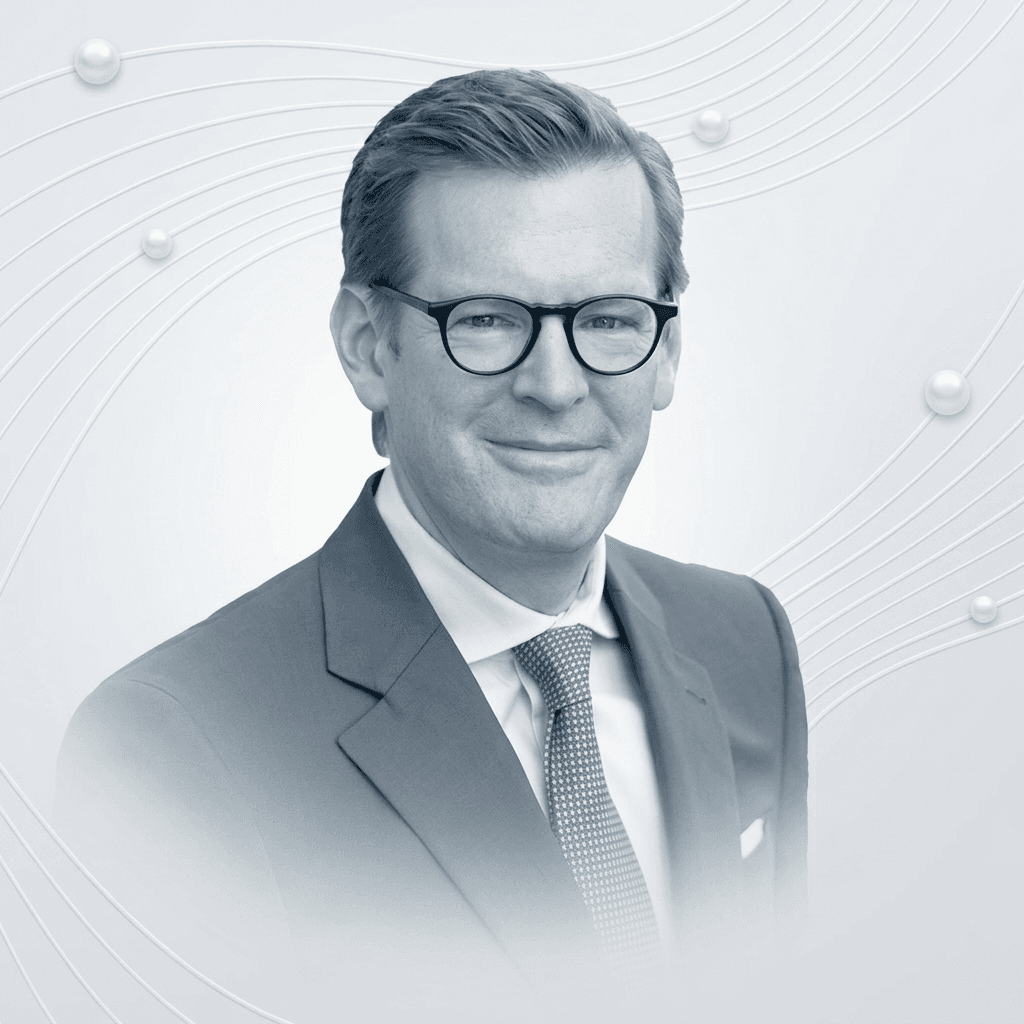
Alexander Nuyken on digital health and healthcare transformation
Episode 5 30.03.2021
-
 play_arrow
PLAY EPISODE
Description arrow_drop_down

Description
The healthcare system is on the brink of collapse , not from disease but from cost. Alexander Nuyken, EY’s Life Science Strategy Leader, explains how digital health is forcing an unprecedented collaboration between doctors, tech companies, hospitals, and patients, and why the stakeholders who resist this transformation will be the ones who disappear. Subscribe for more episodes on how collaboration reshapes industries. In this second conversation, Alexander Nuyken shifts from financial transactions to the digital transformation of healthcare , a domain where collaboration is not optional but existential. The current system of brick-and-mortar hospitals, in-person diagnostics, and fragmented patient data is economically unsustainable. Digital health offers a path forward, but only if radically different stakeholders learn to work together. Nuyken identifies three areas where digital health creates transformative value. First, data aggregation: the massive amounts of health data generated daily in hospitals and through patient activities are almost entirely lost. When aggregated across millions of patients, this data reveals patterns in disease development, treatment efficacy, and risk factors that individual doctor-patient interactions cannot capture. The diabetes example illustrates how correlating eating behavior with disease outcomes could enable preventive intervention at a stage when lifestyle changes still matter. Second, remote monitoring: keeping patients in their homes rather than warehousing them in expensive hospital infrastructure reduces costs while improving quality of life. Continuous monitoring of rehabilitation progress, disease trajectory, and vital signs can be conducted remotely, freeing hospital capacity for cases that genuinely require it. Third, diagnostic collaboration at global scale: connected telehealth solutions enable patients to consult the best experts anywhere in the world. Algorithms can handle the 995 out of 1,000 standard test interpretations, routing only the genuinely complex cases to human specialists , who might be in China, Finland, or the United States. The conversation addresses the resistance this transformation generates. Doctors face a dual threat: potential redundancy as AI handles routine diagnostics, and challenges to professional self-image when machine predictions contradict clinical judgment. Nuyken argues that doctors who view AI as a partner rather than a threat will be the ones who succeed , using technology to focus on complex cases while routine work is handled cost-efficiently. The collaboration challenge is structural. Healthcare involves an unusually complex stakeholder landscape: patients, doctors, hospitals, insurance companies, pharmaceutical firms, technology providers, and regulators , each with different incentives, timelines, and definitions of success. Digital health requires all of them to share data, align standards, and accept that their traditional roles will change fundamentally. On the question of impact, Nuyken is confident: digital health is already extending life expectancy through prevention, early monitoring, and better-informed treatment decisions. The trajectory is clear, even if the precise numbers are not yet measurable. Part of the Ernst Strüngmann Forum series on Collaboration, produced with the Convergent Science Network.
Tagged as:
collaboration digital health healthcare transformation
About the author call_made
CSN Podcasts
Both the triumphs of humanity and its most evil deeds have resulted from collaboration. In a time where humanity is required to aspire to the former and minimize the latter, the question arises of how collaboration arises and why it fails. Surprisingly, this phenomenon, so central to who we are, is not well understood. Hence, a collaborative effort is required to understand collaboration in its full biological, psychological, sociological, cultural, and economic complexity and to translate this understanding into operational impact. This series of podcasts is one step toward achieving these complementary goals. The Collaboration Podcast presents interviews with people who are central orchestrators of collaboration in various domains including business, government, science, art, health, sustainability, and the military. The discussions were conducted by Prof. Dr. Paul F.M.J. Verschure and members of the Program Advisory Committee of the Ernst Strungmann Forum on Collaboration (https://www.esforum.de/forums/ESF32_Collaboration.html) during 2021 and had the goal to sketch a map of opportunities, challenges, and obstacles in human collaboration. The forum took place in May 2022, and now we would like to share this series of interviews with a broader audience. The full report of the Forum will be published in 2023 by MIT Press. The podcast was produced by the Convergent Science Network (https://www.convergentsciencenetwork.org/). Context: The stability of social systems depends critically on realizing sustainable methods of “collaboration,” yet how and by which means collaboration is achieved is not clearly understood; neither are the conditions or processes that lead to its breakdown or failure. Collaboration can be understood as cooperation between agents toward mutually constructed goals. Part of the reason for our lack of understanding is that the phenomenon of collaboration is, by nature, a highly multidisciplinary problem, and effective research into its complexities has been difficult to achieve across the broad range of scientific and technical disciplines involved. The need for a fundamental understanding of collaboration, however, has become increasingly important. Not only does humankind demand answers as it attempts to address critical challenges at multiple scales (e.g., climate change, migration, enhanced automation, social and economic inequality), but ever-increasing technological and economic means of interconnecting people and societies are disrupting long-established, familiar patterns of how we interact. Radical technological changes that are ongoing have the potential to reshape collaboration in ways that are currently hard to predict or influence (e.g., by altering configurations in interaction, information creation, and modes of communication). On one hand, such changes could disrupt hitherto stable forms of collaboration by affecting critical communication channels and traditional roles, as can be observed in the rapidly changing patterns in governance, commerce, and social interaction. Conversely, technology could lead to the emergence of novel, successful forms of collaboration that deviate from traditional “hierarchical” architectures. Evidence of this can be seen in areas as diverse as highly automated manufacturing plants, the open science movement, collaborative software repositories, user-centered services, and the sharing of economy-based modes of organization. Without a fundamental understanding of the mechanisms, processes, and boundary conditions of collaboration, it is not possible to evaluate or predict which of these possible scenarios are sustainable or even plausible. The Forum “How Collaboration Arises and Why it Fails” (May 8–13, 2022, Location: Frankfurt am Main, Germany) Chairs: Andreas Roepstorff and Paul Verschure Program Advisory Committee: Jenna Bednar, Julia R. Lupp, Bhavani R. Rao , Andreas Roepstorff, Ferdinand von Siemens, and Paul Verschure
Episodes
play_arrow
play_arrow
play_arrow
play_arrow
Timestamp
- fast_forward00:00:05 - Hi, I'm Paul Verschure and together with my colleague, Fernand van Siemens,
- fast_forward00:00:08 - we are speaking today with Alexander Neuken about the role of collaboration
- fast_forward00:00:12 - in the emerging area of digital health.
- fast_forward00:00:15 - As partner and head of the life sciences sector in strategy and transactions
- fast_forward00:00:19 - at Ernst & Young, Alexander leads mergers and acquisitions in pharmaceutical,
- fast_forward00:00:24 - consumer health, and medtech areas.
- fast_forward00:00:27 - We're meeting for the second time now, Alex Neuken. and
- fast_forward00:00:32 - now in the follow-up discussion from our first
- fast_forward00:00:35 - interview we would like to look at a bit more
- fast_forward00:00:37 - detail at the question of of digital health developments in digital health and
- fast_forward00:00:43 - what it really means for the notions and questions around collaboration so so
- fast_forward00:00:48 - alex maybe you can situate a little bit that discussion by saying why why digital
- fast_forward00:00:54 - health is an important topic for you
- fast_forward00:00:56 - and also in your professional activities?
- fast_forward00:01:02 - We are generating a ton of data points every day in hospitals,
- fast_forward00:01:11 - at doctors, in our daily lives that are completely lost.
- fast_forward00:01:16 - They are only individually used for each individual patient, if at all, if at max.
- fast_forward00:01:22 - So, and then they are basically lost because they come, they basically are used
- fast_forward00:01:32 - for a direct interaction between patient and doctor.
- fast_forward00:01:35 - So, I have this and that symptom, I took this and that medication or did this
- fast_forward00:01:40 - and that workout and now this and that hurts.
- fast_forward00:01:43 - This type of information is in an aggregated way very valuable because it allows us to draw.
- fast_forward00:01:55 - Conclusions on certain patterns or development paths for diseases where it's
- fast_forward00:02:02 - far too late to start when this is developed.
- fast_forward00:02:07 - Take diabetes, for example, and the use of sugar.
- fast_forward00:02:12 - If you have.
- fast_forward00:02:15 - Much earlier feedback on your lifestyle and what it means to your health.
- fast_forward00:02:20 - And if you get aggregated data from millions of patients in the world and can
- fast_forward00:02:27 - make more accurate predictions about what behavior is driving which outcomes,
- fast_forward00:02:35 - in theory, we all We all know of that.
- fast_forward00:02:37 - But if you basically live through your life and get pointers and alarm signals
- fast_forward00:02:45 - or warning signals already at a time when you can still do something about it,
- fast_forward00:02:50 - it's much more efficient.
- fast_forward00:02:51 - And also many diseases like Alzheimer's, et cetera, we don't really know the genesis of those.
- fast_forward00:02:57 - We don't know the drivers and triggers. The more data we can collect,
- fast_forward00:03:02 - aggregate, and analyze,
- fast_forward00:03:04 - the better we will get a view on what's actually causing the disease,
- fast_forward00:03:13 - what's the trajectory, what might be early warning signals that you should take
- fast_forward00:03:19 - serious, and on which basis you should consult a doctor or something like that.
- fast_forward00:03:25 - That's one area of connectivity that will create value for the wider community.
- fast_forward00:03:33 - The other area is we have extremely high infrastructure costs for keeping people
- fast_forward00:03:44 - into settings that are built out of brick and mortar.
- fast_forward00:03:49 - So, hospitals, intensive care units, and then all sorts of rehab infrastructures.
- fast_forward00:04:01 - The issue is our system is at a point where we are no longer going to be able
- fast_forward00:04:09 - to afford all of this expensive infrastructure.
- fast_forward00:04:15 - One way to reduce costs is to put people back in their home setting where they
- fast_forward00:04:19 - want to live anyway much more favorably than sitting basically in a bunker somewhere
- fast_forward00:04:31 - and being monitored all the time.
- fast_forward00:04:34 - If you do that with digital tools.
- fast_forward00:04:39 - You enable them to be in their home setting and have the right monitoring of
- fast_forward00:04:45 - their rehab, of their evolution, of their disease, and allow them to go back to a more normal life.
- fast_forward00:04:53 - So that's another area where I think digital health is creating big, big opportunities.
- fast_forward00:05:00 - And then another area is on the diagnostic side.
- fast_forward00:05:04 - If you go to a single doctor with your pain and ask for a diagnosis,
- fast_forward00:05:16 - you may or may not get the right answer.
- fast_forward00:05:19 - There's a lot of potential for human error,
- fast_forward00:05:24 - and maybe not the best-suited person is looking at what has been taken as a
- fast_forward00:05:34 - picture, monitored, or whatever.
- fast_forward00:05:36 - With connected telehealth solutions,
- fast_forward00:05:42 - you can more easily consult the best experts in the the world do much of the
- fast_forward00:05:50 - diagnosis remotely who are not doing anything else but looking at.
- fast_forward00:05:56 - And based on an algorithm that selects the cases that are relevant so you basically
- fast_forward00:06:00 - have a monitoring tool already that basically filters out out of thousand cases
- fast_forward00:06:07 - the five or ten that that really need a doctor to look at.
- fast_forward00:06:11 - Out of the 1,995 are probably standard and can be very easily recognized by a machine.
- fast_forward00:06:21 - And the five where really an expert needs to look at, this can be a Chinese doctor or a U.S. doctor.
- fast_forward00:06:30 - However, he is looking at those. And he's not doing anything else but looking
- fast_forward00:06:33 - at these pictures so that he has comparability.
- fast_forward00:06:36 - And that's his day job. He's being paid for this." That's telehealth.
- fast_forward00:06:41 - That's the opportunity to get the best opinion and the most accurate analysis
- fast_forward00:06:46 - of what the doctor can see.
- fast_forward00:06:51 - Those are three areas, just to exemplify it, where I see value created for the
- fast_forward00:06:56 - patient, for the community by reducing costs,
- fast_forward00:06:59 - for the development of the medical knowledge to address stress disease as better.
- fast_forward00:07:07 - Right. So Alex, there's a little connectivity issue. I don't know if you noticed.
- fast_forward00:07:14 - No, I didn't. I could always hear and see myself very well.
- fast_forward00:07:19 - I don't know if you could. Do you have connectivity hiccups? Yes, a little bit.
- fast_forward00:07:26 - Alexander's voice doesn't get through.
- fast_forward00:07:31 - Okay, fine. But Alex, if there's something on your side you know you can do, but okay.
- fast_forward00:07:38 - We move on. Okay, so there's three areas, right? It's basically big data on the one hand.
- fast_forward00:07:44 - Then we have at-home treatment and diagnostics telehealth.
- fast_forward00:07:50 - So this is also a little bit, if you want, the ambition and dream of digital health.
- fast_forward00:07:56 - But for each of these three, do you have actual examples where this dream has
- fast_forward00:08:01 - been realized in a substantial way?
- fast_forward00:08:08 - Yeah, I think in each field. Field, this is already something that's not just
- fast_forward00:08:16 - kind of 10 years out thinking.
- fast_forward00:08:20 - This is already existing. So in telemedicine, for example, or telediagnostics, such tool exists.
- fast_forward00:08:32 - So there are players who do this. It's just not yet fully established practice.
- fast_forward00:08:39 - There are some hurdles to take.
- fast_forward00:08:41 - Number one is, first of all, the hurdle of we do what we are used to.
- fast_forward00:08:48 - So technology advancement is not coming through if doctors are not willing to adapt and innovate,
- fast_forward00:09:01 - the way they deal with their patients or they do their business.
- fast_forward00:09:08 - Call it business, it is somewhat a passion, probably also, or there needs to
- fast_forward00:09:12 - be, otherwise it's not successful.
- fast_forward00:09:14 - But anyway, the other aspect is that in COVID, we saw a boost in telehealth,
- fast_forward00:09:27 - in the sense that there has been many more applications or many more treatments
- fast_forward00:09:33 - being done remotely, prescriptions being made remotely, and things like that.
- fast_forward00:09:42 - So there was an increase, I don't recall the number, but it was clearly more
- fast_forward00:09:49 - than double-digit growth.
- fast_forward00:09:51 - So probably more than 100% type of growth in that area. So I don't want to point
- fast_forward00:10:00 - to specific names in terms of this is the single company that is doing it.
- fast_forward00:10:05 - But if you look at the collaboration that,
- fast_forward00:10:10 - for example, J&J and Apple have on the applications of the Apple Watch,
- fast_forward00:10:15 - that you can actually get medical grade information out of your watch and use
- fast_forward00:10:23 - that for your monitoring is one example. There are more than that.
- fast_forward00:10:28 - If you take the da Vinci robot for surgery treatments.
- fast_forward00:10:35 - The doctor can sit anywhere in the world and treat you on the robot,
- fast_forward00:10:40 - in particular for very complex and complicated operations where you cannot bring
- fast_forward00:10:46 - the patient to the doctor.
- fast_forward00:10:48 - This is a very interesting way to get the patient treated with really laser-sharp accuracy.
- fast_forward00:10:59 - I've seen this tool myself. I looked at a DaVinci, and it was demonstrated how
- fast_forward00:11:08 - it operates. It's really fascinating.
- fast_forward00:11:10 - You can really millimeter precisely make cuts and everything,
- fast_forward00:11:13 - so it's really super sharp.
- fast_forward00:11:18 - No, I can't hear you. I actually know the DaVinci very well. I've also used it.
- fast_forward00:11:25 - So we have this development of digital health. It's also, if you want,
- fast_forward00:11:30 - disrupting the current organization of how health is provided.
- fast_forward00:11:36 - So how does that change? I mean, does it bring in new stakeholders in the process?
- fast_forward00:11:41 - And how are these stakeholders in the end, if you want, motivated to participate in that process?
- fast_forward00:11:48 - Yeah, of course. And this is clearly at the frontier of innovation and also
- fast_forward00:11:57 - at the frontier of sectors.
- fast_forward00:11:59 - So there is the sharp distinction between health care and tech that's getting blurry.
- fast_forward00:12:06 - So there are new players entering the health universe.
- fast_forward00:12:09 - You saw Amazon and Google entering the space, Apple being interested in the space.
- fast_forward00:12:17 - So the tech players, Microsoft, having a lot of life science activity,
- fast_forward00:12:25 - really genuinely interested in the space and developing their business case for it.
- fast_forward00:12:36 - So you have lots of players that
- fast_forward00:12:39 - you would not naturally associate in the first
- fast_forward00:12:42 - place with health and the health sector are coming
- fast_forward00:12:45 - into into play and they want to play in this
- fast_forward00:12:49 - field big time so that's clearly a shift the classic farmer players play their
- fast_forward00:12:56 - role they are interested in in particular in particular when it comes to new
- fast_forward00:13:04 - payment or reimbursement models for their drugs,
- fast_forward00:13:07 - if you are outcome based paid by the insurance. So if your drug is really only.
- fast_forward00:13:15 - Reimbursed when it helps the patient, you need to have tools to monitor the
- fast_forward00:13:20 - patient health and confirm that robustly to the payer organization.
- fast_forward00:13:28 - So you need to demonstrate that this medication prolonged the life of the patient.
- fast_forward00:13:34 - I mean, it's easy to prove if it cured
- fast_forward00:13:39 - the patient but in many cases cancer treatments
- fast_forward00:13:42 - are not a cure but just a life
- fast_forward00:13:45 - prolongation and how do
- fast_forward00:13:48 - you monitor that and how do you prove that your
- fast_forward00:13:51 - drug was the cause for that and yeah these kind of questions but then so let's
- fast_forward00:13:58 - then zoom in for instance in some sense you want to change medical practice
- fast_forward00:14:03 - and that means you have to overcome the habits that now are in place in terms
- fast_forward00:14:09 - of treatment guidelines,
- fast_forward00:14:10 - the training of medical staff, and so on,
- fast_forward00:14:13 - which might give you an inertia in actually managing this reorientation towards digital health.
- fast_forward00:14:20 - So how do you get that community on board in this process?
- fast_forward00:14:26 - It's all about education and the right incentives.
- fast_forward00:14:33 - It's easy to say, it's hard to be done.
- fast_forward00:14:36 - So education starts in a medical, in a med school and in the practice year, et cetera.
- fast_forward00:14:43 - And doctors usually do as they are trained. They even use the devices they are trained on.
- fast_forward00:14:50 - That's why med tech players are very keen on getting medical students using
- fast_forward00:14:54 - their innovations because that's then how you start the life cycle of the product
- fast_forward00:14:59 - because until their retirement, they probably stick to that device in doing their treatments.
- fast_forward00:15:04 - At least that was the case in the past. So this one theme,
- fast_forward00:15:09 - how to break into this, the medical education and how do you train doctors that
- fast_forward00:15:18 - are already practicing and active,
- fast_forward00:15:20 - so beyond their initial training to change the direction.
- fast_forward00:15:26 - That's one thing. The other thing is the incentives.
- fast_forward00:15:30 - And they're clearly monetary incentives that also count.
- fast_forward00:15:35 - If you are basically, as a medical practice.
- fast_forward00:15:39 - Getting benefits from these tools that directly translate into profitability of the practice,
- fast_forward00:15:50 - this then it clearly is an incentive that is very
- fast_forward00:15:52 - strong but now on the
- fast_forward00:15:55 - other hand so when we spoke last time about collaboration
- fast_forward00:15:59 - in your broader business environment you emphasize very much this notion of
- fast_forward00:16:05 - goals and and motivation um but in some sense now you seem to emphasize more
- fast_forward00:16:12 - this idea of okay let's bring up a new generation because the current one is
- fast_forward00:16:16 - actually already lost for this purpose.
- fast_forward00:16:18 - So is goal setting then not anymore an option?
- fast_forward00:16:24 - It is.
- fast_forward00:16:26 - The goal should be for anyone in the medical profession to treat the patient
- fast_forward00:16:33 - in the best possible way and ideally cure his disease or prevent him from getting the disease.
- fast_forward00:16:41 - So So that's part of the purpose of the medical profession.
- fast_forward00:16:48 - So anything that can be brought under that definition of the purpose of what
- fast_forward00:16:57 - we are doing should be already considered.
- fast_forward00:17:00 - And then I think the next step is really to get alignment between the goal of
- fast_forward00:17:11 - making the patient's life a better one and,
- fast_forward00:17:15 - with what the doctor is actually permitted and incentivized to do from all the environment around it,
- fast_forward00:17:26 - be it is it too burdensome and complicated on the data protection side to actually get into this.
- fast_forward00:17:35 - There are no lawyers. They are scared of this heavy lifting on the legal side.
- fast_forward00:17:46 - Then the easiness of use, so there
- fast_forward00:17:51 - are no technicians, they don't really necessarily understand the device,
- fast_forward00:17:56 - or the technology or the software, what it actually does and how reliable it is.
- fast_forward00:18:02 - I think that is one other element where you need to get their buy-in.
- fast_forward00:18:08 - So make their life as easy as possible and make it for them as beneficial as
- fast_forward00:18:14 - possible. I think that's the other element.
- fast_forward00:18:18 - And so, first of all, it needs to have proven positive impact on the treatment.
- fast_forward00:18:24 - Second, it needs to be beneficial and easy to use and beneficial to their… But
- fast_forward00:18:30 - you're saying for those stakeholders in the medical profession,
- fast_forward00:18:33 - this idea of higher quality of care would still be a relevant component in getting
- fast_forward00:18:42 - their buy-in? It's a component.
- fast_forward00:18:44 - I think it is. I truly believe
- fast_forward00:18:47 - that that's the majority of the medical profession is genuinely willing to improve
- fast_forward00:18:59 - the lives of their patients and better the outcome of their treatment. Okay.
- fast_forward00:19:06 - Absolutely no doubt about that but it also needs to be made easy and be facilitated
- fast_forward00:19:13 - by the organization or the system because what we too often have is scarcity of resources,
- fast_forward00:19:22 - constraints in terms of um yeah of of willingness to support this type of innovation
- fast_forward00:19:31 - because it's not regarded as valuable by the reimbursement system.
- fast_forward00:19:36 - They are not getting paid for it. Why should they do it?
- fast_forward00:19:40 - These are all blockers and obstacles.
- fast_forward00:19:44 - Yeah. But now the other side, also another stakeholder group you mentioned, are now the patients.
- fast_forward00:19:51 - As opposed to going to the hospital, you want them to stay at home,
- fast_forward00:19:55 - and now they get interfaced to interventions and monitoring and diagnostics through technology.
- fast_forward00:20:02 - So how do you get them to go along with that?
- fast_forward00:20:06 - Because they might say, well, I prefer to speak with a human being directly
- fast_forward00:20:10 - physically at the hospital.
- fast_forward00:20:13 - Yeah, and that's interesting to see that we had this COVID effect.
- fast_forward00:20:18 - So people did not want to see a doctor physically, but they wanted to get medical advice.
- fast_forward00:20:26 - And here the solution came in. And this is a little bit like with Amazon shopping or other things.
- fast_forward00:20:35 - Once you're getting used to it and you see this is, oh, this is easy.
- fast_forward00:20:39 - I just click on a few buttons and then I get next day my delivery.
- fast_forward00:20:44 - The same applies to other things in life.
- fast_forward00:20:48 - So people will not go back to their previous behaviors, sitting in a waiting
- fast_forward00:20:55 - room at the doctors for two hours in order to get an appointment but rather do it online and.
- fast_forward00:21:02 - Get it more easily with less burden you
- fast_forward00:21:05 - don't need to drive through the city you're not sitting in a room with all sorts
- fast_forward00:21:10 - of coughing and sniffing people who are severely ill and you get more sick out
- fast_forward00:21:15 - of this waiting room than you entered it that's not what people want and if
- fast_forward00:21:20 - they recognize the easiness of the interaction.
- fast_forward00:21:23 - And like we do now have a picture of them and not just talking to a machine.
- fast_forward00:21:29 - I think that people will learn to use it and appreciate it.
- fast_forward00:21:35 - But there's a very central question then of trust, right?
- fast_forward00:21:43 - So how do you then instill trust in that end user, In this case,
- fast_forward00:21:49 - the patient in that new pipeline of communication with the provision of healthcare.
- fast_forward00:22:00 - Yeah, I think, I mean, first of all, and that's balancing maybe a little bit
- fast_forward00:22:05 - my statement from before, you need to have the proper regulation in place that protects data.
- fast_forward00:22:13 - And you need to trust that this regulation is not only on paper,
- fast_forward00:22:21 - but also the practice, the lived practice, right?
- fast_forward00:22:26 - So that's number one. You need to have trust in the system that it's not being
- fast_forward00:22:31 - abused, it's not being hacked, it's safe, your data is at a safe spot, things like that.
- fast_forward00:22:38 - So that's clearly a prerequisite to give your data.
- fast_forward00:22:48 - And then the second point is that people are willing to contribute to medical development.
- fast_forward00:22:59 - So I think a lot get hooked up with the fact that they are not only providing
- fast_forward00:23:07 - their own data, but this is for a higher good.
- fast_forward00:23:11 - So there is medical advancement that's being enabled through that.
- fast_forward00:23:16 - And second, the they are getting something back on the long term,
- fast_forward00:23:22 - they that's, that's a little bit the quid pro quo.
- fast_forward00:23:26 - So if I get my data points, if I'm a diabetic, for example, I give I share my
- fast_forward00:23:32 - data points on my disease development, maybe in four or five years time.
- fast_forward00:23:40 - This aggregated data of millions of diabetes patients and their life cycle in
- fast_forward00:23:47 - terms of disease development may have positive impact on how I'm going to be
- fast_forward00:23:52 - treated because we are much smarter around the disease.
- fast_forward00:23:55 - And we have much better predictability of next steps and intervene more early
- fast_forward00:24:03 - than we usually do because normally when we intervene today,
- fast_forward00:24:08 - it's simply too late to fix it.
- fast_forward00:24:11 - So you can just kind of try to keep the status quo, which is already an advanced disease state.
- fast_forward00:24:17 - However, if you talk about trust,
- fast_forward00:24:20 - it will move also not so
- fast_forward00:24:23 - much towards words do i trust the person with
- fast_forward00:24:26 - my data but more do i trust what
- fast_forward00:24:29 - now this machine is telling me to do yeah that's the other thing but interestingly
- fast_forward00:24:34 - um i have the feeling that this is people need guidance in particular in territory
- fast_forward00:24:43 - where they don't know what to do so in particular when they They are ill,
- fast_forward00:24:47 - and they are looking for guidance.
- fast_forward00:24:50 - And the doctor is usually a trusted person, but my sense is,
- fast_forward00:24:56 - and I might be wrong, I haven't basically had personally the experience,
- fast_forward00:25:02 - but my sense is that people are also taking orders from a computer if it tells
- fast_forward00:25:08 - them this is now the right thing to do.
- fast_forward00:25:13 - For example, there are...
- fast_forward00:25:16 - Digital health apps that you use for side effects on diseases that can tell you you're vomiting,
- fast_forward00:25:30 - so you need to take this or that.
- fast_forward00:25:33 - That's possible.
- fast_forward00:25:36 - That's a simple algorithm that sits behind it and that exists.
- fast_forward00:25:41 - So people would actually follow that.
- fast_forward00:25:46 - Well, sure. I mean, humans would do that. But if you talk about digital health,
- fast_forward00:25:50 - also as you mentioned earlier, this might become more and more a central component
- fast_forward00:25:54 - that we have some AI system,
- fast_forward00:25:57 - that in the end just will guide your intervention and will tell you what to do.
- fast_forward00:26:04 - And it might not be one-on-one matched anymore to a human, a human expert.
- fast_forward00:26:10 - So that would very much, of course, raise the challenge. But how do you then
- fast_forward00:26:15 - assure that that end user has trust?
- fast_forward00:26:19 - Like, look at the discussion we have now around the COVID vaccination,
- fast_forward00:26:24 - where actually the hesitancy about vaccination is surprisingly high.
- fast_forward00:26:31 - So, if we already, and it's also very easily manipulated, apparently,
- fast_forward00:26:37 - because we only have to hear one story about a 0.001 percentage risk for blood
- fast_forward00:26:44 - clots, and there goes one third of your population,
- fast_forward00:26:48 - even in educated populations like Germany.
- fast_forward00:26:51 - So trust, now, if you want to advance this digital health agenda,
- fast_forward00:26:56 - do you believe that instilling trust can actually be managed in a coordinated and rational way?
- fast_forward00:27:07 - Um yeah it's a good it's a good question i
- fast_forward00:27:11 - think um it's very
- fast_forward00:27:14 - situational right so if you are if you
- fast_forward00:27:17 - have cancer and you know that your options
- fast_forward00:27:20 - are you don't do anything and live for
- fast_forward00:27:23 - another two months or you at least try alternatives um you're probably in a
- fast_forward00:27:29 - different situation and have
- fast_forward00:27:32 - a higher willingness to try whatever hands come to you to try to pick it.
- fast_forward00:27:41 - If you are in your normal life, not ill or at least not diagnosed with anything
- fast_forward00:27:48 - and have your habits and your kind of lifestyle and et cetera,
- fast_forward00:27:54 - you probably don't listen to someone who's telling you you should not smoke
- fast_forward00:27:59 - or you should not drink or you should not whatever,
- fast_forward00:28:02 - because simply it's pleasure, it's fun and you don't yeah,
- fast_forward00:28:08 - you don't think of the end.
- fast_forward00:28:11 - But once you've got the cancer, once you've got your liver disease or whatever
- fast_forward00:28:15 - it is, then you start, oh whoops, I need to change something and I need help
- fast_forward00:28:20 - and I trust now whoever is telling me what I should do.
- fast_forward00:28:24 - The expert. Right. I believe that for me, complex With complex technologies,
- fast_forward00:28:30 - we have certification schemes and ISO standards and whatever.
- fast_forward00:28:35 - So would you think that would be sufficient to assure trust?
- fast_forward00:28:40 - If we say, okay, here you have an AI system, it will tell you what to do,
- fast_forward00:28:45 - and it is certified by the European Medicine Authority.
- fast_forward00:28:51 - I don't think that is the stamp of trust that makes the difference.
- fast_forward00:28:57 - Okay. It lives with the examples, the use cases, the conviction that others
- fast_forward00:29:06 - are using it, that I know they have good experience with it. Let me try it too.
- fast_forward00:29:11 - I think that you need these examples. You need to bring it to life.
- fast_forward00:29:15 - Trust cannot be imposed by a stamp.
- fast_forward00:29:19 - Okay. But still, that's what we do with many complex technologies,
- fast_forward00:29:23 - right? Airplanes get certified. Yeah.
- fast_forward00:29:28 - Yeah, but I'm not saying we should not certify things.
- fast_forward00:29:34 - I think we need standards and they can be implemented with this level of certification,
- fast_forward00:29:39 - but that itself does not create trust.
- fast_forward00:29:42 - Sure. Okay. So it's a necessary condition, but it's not sufficient.
- fast_forward00:29:47 - So what would be sufficient then? What would be the magic transition to assure trust? Sure.
- fast_forward00:29:57 - I think a big is understanding. So you need to find a convincing and.
- fast_forward00:30:08 - A transparent way of showcasing the benefits versus the downsides.
- fast_forward00:30:15 - I think if people get the feeling you are hiding something or you are just kind
- fast_forward00:30:21 - of showing the shiny side and not making clear what the whole picture looks like,
- fast_forward00:30:29 - people don't want to...
- fast_forward00:30:30 - I mean, you see this in this vaccinations topic that you raised.
- fast_forward00:30:35 - Number one is the single bad message that kills or at least makes people uncertain.
- fast_forward00:30:43 - So I don't want to get a blood clot.
- fast_forward00:30:47 - I don't have COVID right now. Why should I?
- fast_forward00:30:51 - The risk is high perceived, even if it's not high statistically.
- fast_forward00:30:58 - But if you are the one getting it, you probably say, why did I then get into
- fast_forward00:31:04 - this? So I think that's one thing.
- fast_forward00:31:07 - And the other one is that if people have the feeling they are pushed in a direction
- fast_forward00:31:18 - without the proper explanation,
- fast_forward00:31:22 - then it's causing resistance.
- fast_forward00:31:24 - That's a little bit the strange animals of Querdenker in Germany,
- fast_forward00:31:34 - and they probably exist everywhere in the world, who are all about being manipulated.
- fast_forward00:31:42 - So if you start thinking, okay, someone is trying to manipulate me here,
- fast_forward00:31:46 - then they are creating resistance as well.
- fast_forward00:31:50 - Right. Very obscure arguments, to be honest.
- fast_forward00:31:53 - But obscure arguments seem to work.
- fast_forward00:31:58 - So the other possible source to instill trust in those end users,
- fast_forward00:32:04 - as you say, might be evidence, knowledge.
- fast_forward00:32:07 - But do you believe that is sufficiently developed in all these domains?
- fast_forward00:32:12 - Because there, of course, the risk might be that evidence as such is very opaque
- fast_forward00:32:17 - for a non-informed outsider.
- fast_forward00:32:22 - So here I am, now I have cancer, I get some complicated immune therapy.
- fast_forward00:32:27 - Okay, it will take me ages to figure out what that really means.
- fast_forward00:32:34 - And that is also then the role of the expert in today's system that I talk to
- fast_forward00:32:39 - my doctor because my doctor knows, so I don't need to know, but I trust my doctor.
- fast_forward00:32:44 - So if we remove that authority from the delivery of healthcare and replace that with technology,
- fast_forward00:32:53 - how then do we find an alternative to that authority that tells us what to do?
- fast_forward00:33:04 - Because in some sense, what's interesting, our traditional healthcare system
- fast_forward00:33:07 - has reduced collaboration by making the patient really a patient that means
- fast_forward00:33:12 - disempowered, lack of autonomy, you're told what to do.
- fast_forward00:33:16 - But if we move to digital health, we also are actually proposing a different
- fast_forward00:33:21 - kind of system where the end user, the patient, is more empowered,
- fast_forward00:33:25 - autonomous, and an agent in the whole system.
- fast_forward00:33:28 - So that requires also quite a cultural change in how we deliver healthcare.
- fast_forward00:33:35 - Is it really realistic in most of the societies that we live in?
- fast_forward00:33:41 - I think it is realistic to some degree.
- fast_forward00:33:44 - I think the issue is that you need options to be able to make a decision as a patient.
- fast_forward00:33:53 - If you are with a deadly disease at your stadium where doctors tell you you
- fast_forward00:34:01 - have six months to live, I think you are running out of options, right?
- fast_forward00:34:05 - So you take what you get and you are very much relying on the person because
- fast_forward00:34:10 - you don't have oversight.
- fast_forward00:34:12 - You cannot make a judgment call yourself. You don't have anything to base your
- fast_forward00:34:18 - judgment on except for maybe a stomach feeling. But you don't understand the treatment.
- fast_forward00:34:25 - You don't understand the options anyway.
- fast_forward00:34:28 - So you need to get a steer.
- fast_forward00:34:31 - Otherwise, you're not doing the right thing. So the increased autonomy is maybe
- fast_forward00:34:36 - more for the preventative space where you have the options to continue your
- fast_forward00:34:41 - disastrous lifestyle or change it.
- fast_forward00:34:44 - Change your habits, stop smoking, stop drinking, stop whatever is detrimental to your health.
- fast_forward00:34:51 - And find alternatives to have a life that is satisfying and gives enough pleasures as well.
- fast_forward00:35:01 - This is interesting because the transition to a healthcare that's more preventive than reactive,
- fast_forward00:35:09 - and that's also what you're describing now, indeed requires more agency of that
- fast_forward00:35:14 - patient to say, look, I'm part of this broader society,
- fast_forward00:35:17 - and I want to be a productive member of this society without becoming a burden
- fast_forward00:35:23 - to myself, my family, and society.
- fast_forward00:35:27 - But that, of course, requires a very different mindset.
- fast_forward00:35:31 - And the question now is, are we educating people sufficiently to also step into that boat?
- fast_forward00:35:39 - I think this is a process that takes time. It's looking back at the environmental
- fast_forward00:35:45 - movement and how people think today about the environment versus how they thought
- fast_forward00:35:51 - maybe 20 years ago has shifted dramatically.
- fast_forward00:35:55 - And I think the same is going to happen when it comes to health and their own behaviors.
- fast_forward00:36:01 - I think this is nothing that you can generate overnight.
- fast_forward00:36:06 - Night sure but then will we achieve this point on time before our health care system collapses.
- fast_forward00:36:12 - Yeah good question i don't know um i felt
- fast_forward00:36:15 - this always uh at the brink of collapse exactly so
- fast_forward00:36:19 - surviving somehow because we are subsidizing it uh out of the tax uh income
- fast_forward00:36:25 - etc so sure the level of services um there are different ways to do it so right
- fast_forward00:36:33 - but but now we have different moving parts in this now and one of them we haven't really highlighted yet,
- fast_forward00:36:39 - and that's the tech companies right for
- fast_forward00:36:42 - tech companies these are new markets and it
- fast_forward00:36:45 - might have been adolescence it might have been group x in society oh no health
- fast_forward00:36:51 - is a great market for us right so so then do you think that the issues we just
- fast_forward00:36:58 - discussed about about goals patient quality quality of life and health, trust,
- fast_forward00:37:04 - are then also goals that these stakeholders easily relate to or also sincerely relate to.
- fast_forward00:37:14 - Yeah, I think, I mean, why not? Yeah, it's not, I mean, ultimately everyone
- fast_forward00:37:20 - who is, they are all businesses.
- fast_forward00:37:22 - Yeah, they are trying to generate revenues.
- fast_forward00:37:26 - I don't blame anyone for doing that. Even someone who is a doctor or running
- fast_forward00:37:31 - a hospital is ultimately somewhat a business.
- fast_forward00:37:34 - I understand that, Alex, but take Facebook, right?
- fast_forward00:37:39 - Yeah. If Facebook would give me health advice, I would really be very concerned
- fast_forward00:37:43 - because we know, actually, Facebook is in full-out assault on health,
- fast_forward00:37:50 - certainly on mental health in our society, in order to drive revenue because,
- fast_forward00:37:54 - in the end, they're an advertisement company.
- fast_forward00:37:56 - Right? So it's okay. This is then a dilemma we got to work with because they
- fast_forward00:38:03 - have proven to be unreliable and they have proven to be really undercutting
- fast_forward00:38:08 - and eroding the foundations of our society.
- fast_forward00:38:11 - And now, in some sense, we want to bring them into a domain that is very central
- fast_forward00:38:17 - to our individual and collective well-being.
- fast_forward00:38:19 - Yeah i think um first
- fast_forward00:38:23 - of all i haven't seen any initiative on the health side from facebook yet i
- fast_forward00:38:28 - can't comment on that um but i would not cut all the tech companies over the
- fast_forward00:38:34 - same uh over the same judgment or i don't know if i'm expressing that correctly but um.
- fast_forward00:38:47 - There is a lot of good that anyone who has access to data,
- fast_forward00:38:54 - to health data of patients or whatever it is, and using that in the right way can contribute.
- fast_forward00:39:02 - And I don't really care if it's coming from Google, which is also an advertising
- fast_forward00:39:07 - company to some degree, or if it's coming from something that's been built from scratch.
- fast_forward00:39:14 - But if you look at the pattern that people are using,
- fast_forward00:39:21 - or the search words they are using when they look for health advice,
- fast_forward00:39:26 - etc., I think there's a lot of information that we can gain from it.
- fast_forward00:39:30 - You're not getting the right answer from Google. That's not what I'm saying.
- fast_forward00:39:34 - So don't Google if you're sick. That's making it worse. but.
- fast_forward00:39:42 - There is a lot of information that we can gain from what people are looking
- fast_forward00:39:47 - for when they have a certain disease.
- fast_forward00:39:49 - I think that's super helpful.
- fast_forward00:39:51 - Sure, but if that information is with Google or Facebook, you're never going
- fast_forward00:39:54 - to get it unless you pay for it.
- fast_forward00:39:56 - It's more the other way around, right? We know Google has been shipping a lot
- fast_forward00:40:00 - of NHS data from the UK to its own servers, not accessible by anyone else anymore.
- fast_forward00:40:07 - I was more reacting to this point that you say, well, all these big tech companies,
- fast_forward00:40:12 - in the end, it's all about revenue.
- fast_forward00:40:13 - So as long as they optimize revenue by delivering healthcare,
- fast_forward00:40:16 - it will probably be okay.
- fast_forward00:40:19 - And at least that's how I took your answer. And that's why I wanted to push
- fast_forward00:40:23 - back or challenge that a little bit by saying, well, this has not always worked
- fast_forward00:40:27 - out so well, right? because they make sure of you.
- fast_forward00:40:30 - I mean, it's not for sure if they are basically just taking data and store it
- fast_forward00:40:37 - somewhere where it's no longer accessible, then something went terribly wrong.
- fast_forward00:40:41 - I wonder who made the contracts under which they do it or why you're not suing
- fast_forward00:40:46 - them until they basically no longer exist.
- fast_forward00:40:51 - But, you know, I don't know anyone else who has the cap
- fast_forward00:40:58 - capability the reach and the breadth to to
- fast_forward00:41:01 - you you wouldn't start it from scratch now or who should start it is you do
- fast_forward00:41:06 - you think the government should do it i doubt it that they are doing a better
- fast_forward00:41:09 - job in that so but there there lays an interesting challenge right because we
- fast_forward00:41:15 - do know we have to bring in technology to advance this it's absolutely necessary,
- fast_forward00:41:21 - but for that goals and trust
- fast_forward00:41:24 - has to be aligned and also
- fast_forward00:41:27 - developed and okay what's the longer path
- fast_forward00:41:30 - here or what's the shorter path here and you could also in one scenario could
- fast_forward00:41:36 - be either a conglomerate of more european companies as as a fresh entry of course
- fast_forward00:41:42 - that's difficult in itself or you just say well europe and different nations
- fast_forward00:41:47 - have to just set that up as a more a public.
- fast_forward00:41:51 - Organization, as we have public healthcare systems, we also should have public
- fast_forward00:41:55 - digital healthcare systems. Would you find it a plausible alternative?
- fast_forward00:42:00 - I'm not so sure. If I look at what our public initiatives around the COVID tracker have delivered,
- fast_forward00:42:10 - I think that would have been a task relatively. It was too easy. Yes, I agree.
- fast_forward00:42:17 - It has been a complete disaster.
- fast_forward00:42:20 - I mean, you're absolutely right. But there's a dilemma here, right?
- fast_forward00:42:23 - So, certainly from the perspective of now the collaborating stakeholders,
- fast_forward00:42:28 - and this is a shifting landscape,
- fast_forward00:42:30 - and there is urgency to get this together on time, we might also pay a very
- fast_forward00:42:37 - high price if we just step in with the existing tech giants.
- fast_forward00:42:42 - Because yeah you i think you need
- fast_forward00:42:45 - to find yeah you need to define the framework the accessibility
- fast_forward00:42:48 - of data and the ownership of data i think that's that's
- fast_forward00:42:51 - a key and that is a regulatory thing to do the rest i think should be the market
- fast_forward00:42:57 - enforcement so if you basically enforce them to keep the data on european servers
- fast_forward00:43:03 - so you have still access and control that you have kind of a.
- fast_forward00:43:09 - Neutral surveyor who
- fast_forward00:43:12 - gets access to verify that everything is treated
- fast_forward00:43:15 - properly that you they are
- fast_forward00:43:18 - not in they need to anonymize data
- fast_forward00:43:21 - things like that these type of thing can be enforced by law and that's that's
- fast_forward00:43:27 - a legal regulator has to do i think that's the framework to to provide and then
- fast_forward00:43:31 - the rest is basically let them find the best solution and something that really
- fast_forward00:43:36 - works There are businesses that need to make things work,
- fast_forward00:43:39 - otherwise they are not going to succeed.
- fast_forward00:43:42 - When the state is starting something.
- fast_forward00:43:46 - I mean, who is suing the government four years later for not having properly
- fast_forward00:43:52 - delivered on something?
- fast_forward00:43:53 - It's not possible. Right. But this is interesting, right?
- fast_forward00:43:57 - Government comes. Sure. But that means you're trusting then the market to sort
- fast_forward00:44:03 - of come up with the proper answers.
- fast_forward00:44:05 - However, I would see a challenge there with this question of evidence, right?
- fast_forward00:44:12 - This is also, of course, the big challenge of the pharmaceutical industry,
- fast_forward00:44:15 - Because there they would say, well, certain things we just don't pursue anymore
- fast_forward00:44:19 - because we don't think the market is interesting enough.
- fast_forward00:44:22 - So if we now start to rely on market mechanisms to do that, they might not serve
- fast_forward00:44:28 - the actual goals and values of a healthcare system we want to build.
- fast_forward00:44:32 - But you see, I mean, look at the rare disease area.
- fast_forward00:44:36 - You have diseases with, I don't know, 1,000 patients globally per year or less
- fast_forward00:44:42 - than 1,000, 100 patients.
- fast_forward00:44:45 - And you can still make it work that you find solutions for them by giving the right incentives.
- fast_forward00:44:50 - How did they do it? You get it reimbursed.
- fast_forward00:44:53 - I mean, the 100 patients per year, they don't make a huge difference to the healthcare system.
- fast_forward00:44:59 - Even if you reimburse the medication with a million of dollars per medication,
- fast_forward00:45:05 - per treatment, they do it, and that works.
- fast_forward00:45:08 - So we have a treatment for deadly diseases that are extremely rare.
- fast_forward00:45:14 - So that's a way how we made it work for both sides the pharma company sees value
- fast_forward00:45:23 - in spending money on it because they can.
- fast_forward00:45:27 - They can earn money with it. And for those patients who were death sentenced
- fast_forward00:45:32 - before, we have now a solution.
- fast_forward00:45:34 - So I think that's the markets you create by setting the right incentives or
- fast_forward00:45:43 - balancing those things.
- fast_forward00:45:46 - But so, Alex, in what timeframe do you think we can really start to speak,
- fast_forward00:45:51 - let's say, in Europe about digital healthcare being the standard of care?
- fast_forward00:45:59 - Oh, the standard of care, I think we are still some way out.
- fast_forward00:46:05 - An evolving digital health ecosystem, we can observe already today.
- fast_forward00:46:14 - And I think there are big learnings out of the crisis and some heavy advancements
- fast_forward00:46:24 - that will remain valid even after COVID is our daily news flow.
- fast_forward00:46:33 - And I think it's an accelerator. So we definitely, I would say,
- fast_forward00:46:38 - over the next five to 10 years, we see dramatic changes in medical health and
- fast_forward00:46:45 - how patients are treated.
- fast_forward00:46:47 - And what's the biggest risk that we face in growing in that direction?
- fast_forward00:46:54 - Yeah, losing the trust of the people. So it comes back to what we discussed.
- fast_forward00:47:00 - People are very nervous about.
- fast_forward00:47:06 - Single examples, even they are statistically maybe not meaningful,
- fast_forward00:47:12 - even a single data leak week can already cause the loss of trust and reverse
- fast_forward00:47:20 - some of the developments or slow them dramatically down. Right.
- fast_forward00:47:26 - So we need to be very careful that this doesn't happen.
- fast_forward00:47:30 - And how would the stakeholder landscape then shift by the time we're there?
- fast_forward00:47:34 - So how many of the stakeholders that are central now will have fallen out of the boat by then?
- fast_forward00:47:44 - Let's say hospitals, right? We might not need that many hospitals anymore or
- fast_forward00:47:48 - centers, health centers, because everything has moved to that home context.
- fast_forward00:47:54 - Yeah, I think there definitely will be a shift, but we will not get rid of hospitals at all.
- fast_forward00:48:03 - They need to adapt to this new environment.
- fast_forward00:48:08 - I think it also allows them to get more efficient, patient
- fast_forward00:48:11 - so uh more predictability on
- fast_forward00:48:15 - how long patients stay better manage manageable
- fast_forward00:48:19 - workflows in the hospital that allows
- fast_forward00:48:22 - them also to become more profitable because that's the other part of the equations
- fast_forward00:48:26 - hospitals are at least if they are not part of a bigger group rarely profitable
- fast_forward00:48:32 - they are usually loss making and we need to solve that otherwise the system
- fast_forward00:48:37 - i mean we can only afford this,
- fast_forward00:48:42 - to some extent.
- fast_forward00:48:44 - Ultimately, the system is at the brink, as I said, of color.
- fast_forward00:48:49 - And would you expect that this also will have a measurable impact on life expectancy in Europe?
- fast_forward00:48:57 - It definitely will. Definitely will. I'm pretty sure there's impact.
- fast_forward00:49:04 - No. But But, I mean, life expectancy is growing, and I'm pretty sure it will
- fast_forward00:49:11 - further grow with, in particular,
- fast_forward00:49:14 - prevention and change of lifestyle that can only be steered through early monitoring,
- fast_forward00:49:22 - through big data collection, and through better learning about what behavior
- fast_forward00:49:28 - has which consequences.
- fast_forward00:49:31 - Right. Ferdinand, would you like to add something? Do you have a question?
- fast_forward00:49:38 - Well, I have maybe a question that picks up on something that we discussed before,
- fast_forward00:49:45 - just a new sort of angle on this adoption issue, because maybe let me just briefly come back to that.
- fast_forward00:49:55 - Because you said, well, the doctors that need to have the right incentives to
- fast_forward00:50:01 - adopt these new technologies and that in general they care for the um i mean
- fast_forward00:50:07 - the health of the patients,
- fast_forward00:50:09 - i'm just wondering um whether there could not be more resistance from the doctors
- fast_forward00:50:14 - for two reasons i mean one um one possibility of these new technologies is is
- fast_forward00:50:22 - that it will make a lot of doctors redundant.
- fast_forward00:50:26 - Right so if you don't have to go to a doctor maybe you just look into a screen
- fast_forward00:50:30 - and the camera can detect your i don't know your health status or so then maybe
- fast_forward00:50:35 - you don't need to go to the doctor,
- fast_forward00:50:37 - and so there might be instrumental reason for doctors to resist these kind of
- fast_forward00:50:42 - technologies and the second point is um i mean these technologies they could
- fast_forward00:50:48 - also threaten in some sense, the self-image of the doctor.
- fast_forward00:50:52 - I mean, I think you like to have this competence, right?
- fast_forward00:50:58 - And if a machine is making a prediction that is not consistent with your own
- fast_forward00:51:03 - expertise, so to speak, not consistent with your own opinion,
- fast_forward00:51:08 - maybe then they will also resist because it somehow undermines them or they
- fast_forward00:51:12 - don't trust it because, you know, it's not what they thought,
- fast_forward00:51:15 - but actually the machine might be much better than the doctors.
- fast_forward00:51:18 - I was just wondering whether you could briefly comment on this.
- fast_forward00:51:22 - Yeah, definitely there is this notion of doctors may be redundant or we may
- fast_forward00:51:29 - need less doctors for certain things.
- fast_forward00:51:31 - Things, taking, for example, standard diagnostics tools,
- fast_forward00:51:40 - so reading out the pictures of an MRI or an ultrasound,
- fast_forward00:51:48 - diagnosis.
- fast_forward00:51:52 - And then a computer taking over a lot of that job by pre-selecting or filtering the pictures.
- fast_forward00:52:00 - That is something that's being discussed.
- fast_forward00:52:04 - My sense is that doctors that recognize this rather as an opportunity than a
- fast_forward00:52:11 - threat will be the ones that are more successful because they will adapt this earlier.
- fast_forward00:52:16 - They can treat more patients.
- fast_forward00:52:20 - They can be more effective in how they do it.
- fast_forward00:52:23 - They see the AI as a partner, as an enabler, because it helps them to only focus
- fast_forward00:52:30 - on the really difficult cases.
- fast_forward00:52:32 - And all the standard stuff is being done by a very cost-efficient aid,
- fast_forward00:52:38 - which has basically just the acquisition cost.
- fast_forward00:52:43 - And then the rest is maybe a little bit of maintenance.
- fast_forward00:52:46 - But it's not asking for a monthly salary like other doctors.
- fast_forward00:52:53 - One second, I need to give some signals.
- fast_forward00:52:57 - I have someone here asking for my next advice.
- fast_forward00:53:05 - But the thing is, that threat, I think, I mean, the concern exists.
- fast_forward00:53:12 - I see this in various discussions, but again, the doctors who take this on as
- fast_forward00:53:19 - an opportunity rather than a threat will be the ones that will be successful with it, in my view.
- fast_forward00:53:25 - Okay, Alex, thank you very much for this conversation.
- fast_forward00:53:29 - We learned a lot about… Hi, you listened to one of our podcasts in the series
- fast_forward00:53:35 - on collaboration produced by the Ernst Trommel Forum and the Convergent Science
- fast_forward00:53:40 - Network. You can find more episodes on our website.
Tags
Brain brain evolution Cerebellar cerebellum collaboration consciousness Cortex Cortical decision making disorders of consciousness Framework grid cells Memory mirror neurons Motor motor cortex neocortex Neural Neurons place cells Populations prediction prefrontal cortex Robots scientific collaboration Spatial

Exploring the convergence of neuroscience, robotics, and AI through conversations with leading researchers since 2010.
A project of the Convergent Science Network Foundation.
Follow us on
© CSN Podcasts. Developed by IMCreative & WEBC
Be the first to leave a comment