


play_arrow
Listeners:
Top listeners:
00:00
00:00
volume_up
chevron_left
-
 play_arrow
Paul Verschure on consciousness and distributed adaptive control CSN Podcasts
-
 play_arrow
Edvard Moser on grid cells and entorhinal cortex CSN Podcasts
-
 play_arrow
Giacomo Rizzolatti on mirror neurons and action understanding CSN Podcasts
-
 play_arrow
Robert Axelrod on game theory and prisoner's dilemma CSN Podcasts
-
 play_arrow
Adrian Owen on disorders of consciousness and vegetative state CSN Podcasts
-
 play_arrow
Jonathan Whitlock on markerless motion capture and posterior parietal cortex CSN Podcasts
-
 play_arrow
Luis Puelles on neuroanatomy and prosomeric model CSN Podcasts
-
 play_arrow
Zoltan Molnar on subplate neurons and cortical development CSN Podcasts
- arrow_back Home
- keyboard_arrow_right Podcast
- keyboard_arrow_right Season 2021
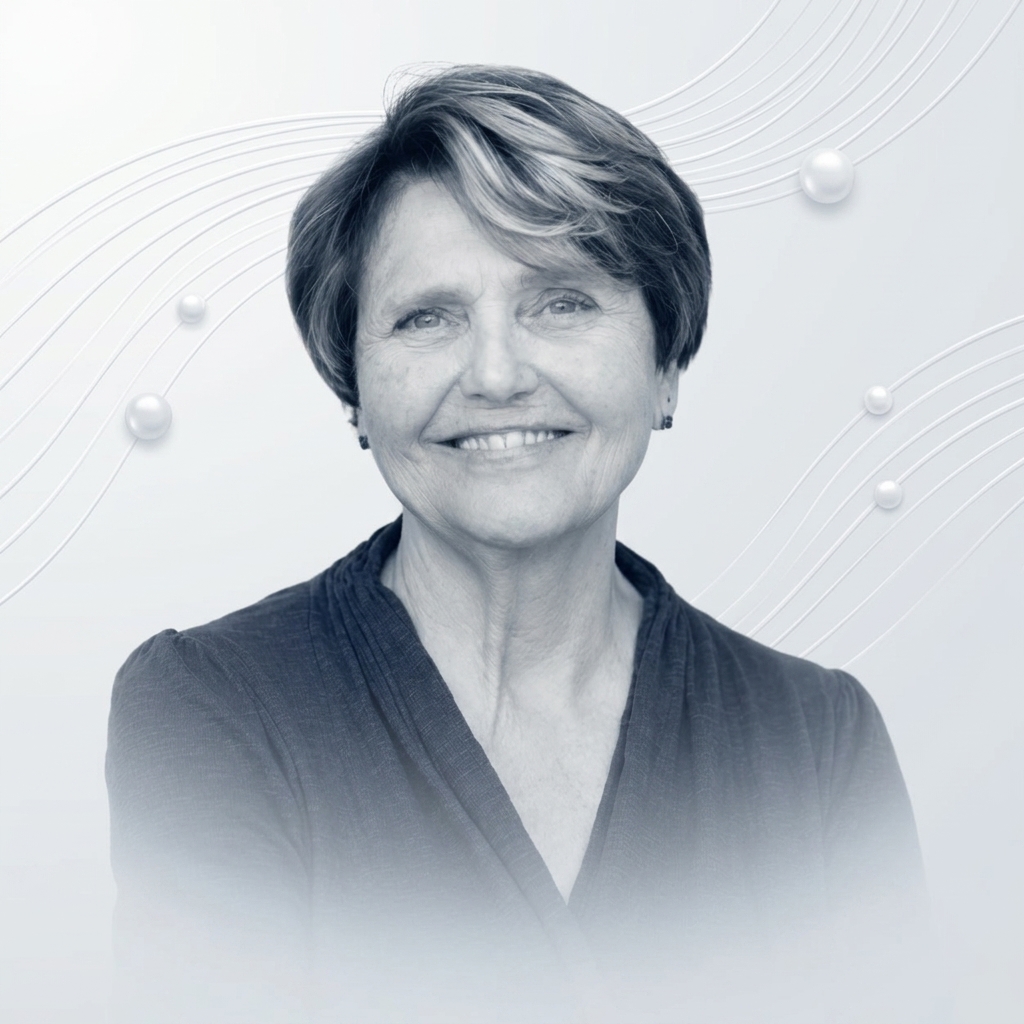
Susan Fitzpatrick on scientific collaboration and interdisciplinary research
Episode 7 30.03.2021
-
 play_arrow
PLAY EPISODE
Description arrow_drop_down

Description
There is nothing in science that is not collaborative , yet our reward systems actively punish teamwork. Susan Fitzpatrick, president of the James S. McDonnell Foundation, explains why interdisciplinary research fails, what makes small-scale collaboration succeed, and why billion-dollar brain initiatives may be asking the wrong questions. Subscribe for more episodes exploring real-world collaboration. Susan Fitzpatrick brings 28 years of experience funding scientific research to a conversation that cuts through the mythology of the lone genius. Starting from her own trajectory , a biochemist who discovered the power of science communication while recording textbooks for blind students , she traces how the McDonnell Foundation evolved from outsourcing grant management to actively building research communities at the edges of established disciplines. The core argument is precise: true collaboration requires synergy, not just proximity. Fitzpatrick distinguishes between implicit collaboration (building on others’ published work) and active collaboration (combining knowledge from multiple sources to answer questions no single discipline can address). She illustrates this with the foundation’s work on Williams Syndrome, where understanding the path from genetic deletion to behavioral phenotype demands geneticists, neuroimagers, cognitive scientists, and clinicians working together , not just side by side. The conversation reveals hard-won lessons about what makes interdisciplinary collaboration work. Fitzpatrick identifies the critical failure point: researchers who arrive at collaborative workshops already knowing what they want to say, rather than being willing to have their understanding changed. The foundation learned to screen for intellectual humility , people who could tolerate not being the expert in the room. On large-scale science, Fitzpatrick is direct. She argues that massive brain initiatives like the European and American brain projects have generated useful tools but failed to answer fundamental questions , because the questions themselves were poorly defined. “They keep saying the brain, but what brain? Whose brain? Whose brain when? Whose brain in which context?” She contrasts this with CERN, where the question was specific enough to organize thousands of collaborators effectively. The discussion addresses the perverse incentives in academic science that undermine collaboration. Tenure committees demanding single-authored publications, the pressure to brand individual contributions, and the marketing of originality all select against collaborative temperaments. Fitzpatrick suggests these systems have, to some extent, selected for sociopaths. Her proposed fix is both practical and philosophical: eliminate the scarcity mindset , the zero-sum assumption that someone else’s gain means your loss. If she could CRISPR one thing, it would be that gene. The real barrier to collaboration is not structural but psychological: people who cannot see themselves in a shared future will not invest in building one. Part of the Ernst Strüngmann Forum series on Collaboration, produced with the Convergent Science Network.
Tagged as:
collaboration interdisciplinary research scientific collaboration Whose Brain
About the author call_made
CSN Podcasts
Both the triumphs of humanity and its most evil deeds have resulted from collaboration. In a time where humanity is required to aspire to the former and minimize the latter, the question arises of how collaboration arises and why it fails. Surprisingly, this phenomenon, so central to who we are, is not well understood. Hence, a collaborative effort is required to understand collaboration in its full biological, psychological, sociological, cultural, and economic complexity and to translate this understanding into operational impact. This series of podcasts is one step toward achieving these complementary goals. The Collaboration Podcast presents interviews with people who are central orchestrators of collaboration in various domains including business, government, science, art, health, sustainability, and the military. The discussions were conducted by Prof. Dr. Paul F.M.J. Verschure and members of the Program Advisory Committee of the Ernst Strungmann Forum on Collaboration (https://www.esforum.de/forums/ESF32_Collaboration.html) during 2021 and had the goal to sketch a map of opportunities, challenges, and obstacles in human collaboration. The forum took place in May 2022, and now we would like to share this series of interviews with a broader audience. The full report of the Forum will be published in 2023 by MIT Press. The podcast was produced by the Convergent Science Network (https://www.convergentsciencenetwork.org/). Context: The stability of social systems depends critically on realizing sustainable methods of “collaboration,” yet how and by which means collaboration is achieved is not clearly understood; neither are the conditions or processes that lead to its breakdown or failure. Collaboration can be understood as cooperation between agents toward mutually constructed goals. Part of the reason for our lack of understanding is that the phenomenon of collaboration is, by nature, a highly multidisciplinary problem, and effective research into its complexities has been difficult to achieve across the broad range of scientific and technical disciplines involved. The need for a fundamental understanding of collaboration, however, has become increasingly important. Not only does humankind demand answers as it attempts to address critical challenges at multiple scales (e.g., climate change, migration, enhanced automation, social and economic inequality), but ever-increasing technological and economic means of interconnecting people and societies are disrupting long-established, familiar patterns of how we interact. Radical technological changes that are ongoing have the potential to reshape collaboration in ways that are currently hard to predict or influence (e.g., by altering configurations in interaction, information creation, and modes of communication). On one hand, such changes could disrupt hitherto stable forms of collaboration by affecting critical communication channels and traditional roles, as can be observed in the rapidly changing patterns in governance, commerce, and social interaction. Conversely, technology could lead to the emergence of novel, successful forms of collaboration that deviate from traditional “hierarchical” architectures. Evidence of this can be seen in areas as diverse as highly automated manufacturing plants, the open science movement, collaborative software repositories, user-centered services, and the sharing of economy-based modes of organization. Without a fundamental understanding of the mechanisms, processes, and boundary conditions of collaboration, it is not possible to evaluate or predict which of these possible scenarios are sustainable or even plausible. The Forum “How Collaboration Arises and Why it Fails” (May 8–13, 2022, Location: Frankfurt am Main, Germany) Chairs: Andreas Roepstorff and Paul Verschure Program Advisory Committee: Jenna Bednar, Julia R. Lupp, Bhavani R. Rao , Andreas Roepstorff, Ferdinand von Siemens, and Paul Verschure
Episodes
play_arrow
play_arrow
play_arrow

play_arrow
Timestamp
- fast_forward00:00:06 - Hi, I'm Paul Vesure, and together with my colleague Jenna Petnar,
- fast_forward00:00:09 - we are speaking today with Suzanne M.
- fast_forward00:00:12 - Fitzpatrick about how collaborations are built and maintained between a private
- fast_forward00:00:17 - philanthropic foundation and a scientific community.
- fast_forward00:00:20 - Trained in biochemistry and neurology, Suzanne is the president of the James
- fast_forward00:00:25 - S. MacDonald Foundation. So, Suzanne, welcome.
- fast_forward00:00:29 - Great that you could join us. and to kick it off, could you maybe give us a
- fast_forward00:00:35 - short description of your trajectory through life and your career that brought
- fast_forward00:00:40 - you to the point where you are now?
- fast_forward00:00:44 - Oh, my heavens. That's become a bit of a mythology, but I will go ahead.
- fast_forward00:00:50 - Well, you started with heaven.
- fast_forward00:00:54 - So, I mean, like many people who work for private funders of academic research,
- fast_forward00:01:01 - I started life as an academic researcher.
- fast_forward00:01:03 - And so I trained as a biochemist and biophysicist at Cornell Medical College
- fast_forward00:01:10 - and then at Yale University.
- fast_forward00:01:12 - And during that time, and this is going to actually sound a little weird,
- fast_forward00:01:16 - but during that time, I worked in a lab that was based on using NMR spectroscopy
- fast_forward00:01:23 - or what they would call MR spectroscopy now.
- fast_forward00:01:25 - And And so it's, you know, big instrument science, you get a limited amount of time on it.
- fast_forward00:01:31 - And so when you're not scheduled for time on the instrument,
- fast_forward00:01:35 - you either commit with the other people who are in the lab who do have their
- fast_forward00:01:41 - time on the instrument or you look for other things to do.
- fast_forward00:01:45 - And so I wound up, you know, recording science textbooks for the blind and working
- fast_forward00:01:50 - with a local high school that was trying to improve their science education.
- fast_forward00:01:54 - And I became really interested in these areas where science sort of moves into the public.
- fast_forward00:02:02 - What happens when we take science out of the lab and really try to integrate it?
- fast_forward00:02:08 - I can tell you reading science textbooks for blind students was an enormous
- fast_forward00:02:12 - insight because it also reinforced for me how much we rely on visual representations of data, images,
- fast_forward00:02:23 - and what do you do when you can't see those, right?
- fast_forward00:02:26 - How do you describe so much of what we take for granted in science?
- fast_forward00:02:32 - So the whole communication of science became very interesting to me.
- fast_forward00:02:36 - And I realized that, you know, to continue on my path of doing academic bench
- fast_forward00:02:42 - research was not really what I wanted to do.
- fast_forward00:02:45 - I wanted to take science more out into the world.
- fast_forward00:02:48 - And so that's really what motivated me to move into not-for-profit administration.
- fast_forward00:02:54 - But I haven't really moved very, I mean, I haven't very moved very much because
- fast_forward00:02:57 - I've been at the James S. McDonnell Foundation for 28 years.
- fast_forward00:03:01 - So the good thing is it's not been the same foundation. It has evolved a lot
- fast_forward00:03:07 - over that time period, which actually has made it a very rewarding and stimulating place to work.
- fast_forward00:03:14 - So what are the objectives of the foundation and how did it change?
- fast_forward00:03:19 - So the foundation, when I joined it, was primarily supporting,
- fast_forward00:03:23 - well, first of all, it wasn't actually running its own programs in-house.
- fast_forward00:03:28 - So it would outsource, it would come up with a programmatic focus that it wanted to fund.
- fast_forward00:03:33 - But then the actual management of the program, so the getting of the grants
- fast_forward00:03:37 - and the making of the grant decisions,
- fast_forward00:03:39 - was kind of outsourced to an academic scientist who would do this from their
- fast_forward00:03:46 - institution to some extent.
- fast_forward00:03:48 - And the recommendations would come back to the foundation's board of directors,
- fast_forward00:03:52 - and they would make their final funding decisions.
- fast_forward00:03:55 - So when I joined the foundation, it was because the foundation wanted to move
- fast_forward00:04:00 - that aspect of its work in-house.
- fast_forward00:04:05 - So we wanted to take more of an active role in shaping the programs,
- fast_forward00:04:11 - deciding what areas we were going to be funding, how we were going to manage
- fast_forward00:04:15 - these competitions, and bringing our grantees together.
- fast_forward00:04:20 - So actually in creating a community to some extent, rather than just individual
- fast_forward00:04:26 - funders who happen to have support by the foundation.
- fast_forward00:04:29 - So that community aspect that bringing people together I think really speaks
- fast_forward00:04:35 - to the issue that we're talking about which is collaboration because many of
- fast_forward00:04:40 - the areas that we were trying to fund and this is.
- fast_forward00:04:44 - This is actually sort of a philosophical route that runs through private funders of research,
- fast_forward00:04:50 - is that you're often looking for these either niche areas, so an area that might
- fast_forward00:04:56 - have been overlooked by the larger,
- fast_forward00:04:59 - more governmental funders, or you are looking for emerging areas of research
- fast_forward00:05:06 - that often occur at the edges of fields or where several fields are kind of
- fast_forward00:05:12 - reaching out to each other.
- fast_forward00:05:14 - And we've often called this the informal college, right? There is no identified academic discipline.
- fast_forward00:05:20 - There is no, there isn't as of yet societies and journals and this identity.
- fast_forward00:05:26 - But you can see that there are people who want to move, you know, into this area.
- fast_forward00:05:31 - So one of our early signature programs was supporting the area of what is now
- fast_forward00:05:36 - cognitive neuroscience, right?
- fast_forward00:05:38 - So people from cognitive science and cognitive psychology who are working with
- fast_forward00:05:42 - neuroscientists and linguists and philosophers.
- fast_forward00:05:44 - And so by its very nature, the field requires the integration of knowledge from
- fast_forward00:05:53 - across different disciplines.
- fast_forward00:05:55 - And you can only do that through collaboration.
- fast_forward00:05:58 - So we would often begin to fund team-based research or center-based research
- fast_forward00:06:05 - or, you know, projects where people were coming together.
- fast_forward00:06:12 - This was still, we primarily still
- fast_forward00:06:15 - did this through the more traditional investigator-initiated research,
- fast_forward00:06:21 - but it really led us to think about whether we shouldn't be funding these kind
- fast_forward00:06:27 - of collaborative activities explicitly.
- fast_forward00:06:30 - Right?
- fast_forward00:06:30 - And so that's where we began to also make this evolution for ourselves of saying,
- fast_forward00:06:37 - how could we help identify where these areas are and what kind of skills and
- fast_forward00:06:46 - expertise and knowledge base need to come around together around them?
- fast_forward00:06:51 - Because these are questions that will not be answered by anyone discipline alone. Right.
- fast_forward00:06:56 - So that's that's really how we've been evolving. And so, you know,
- fast_forward00:06:59 - as knowledge moves and as other funders come into fields, you're constantly
- fast_forward00:07:04 - then creeping along this edge yourself,
- fast_forward00:07:07 - you know, trying to stay on this kind of on this kind of edge at this at the
- fast_forward00:07:13 - edge of this work. Right.
- fast_forward00:07:14 - So now you mentioned that strategically, you therefore really wanted to enhance
- fast_forward00:07:21 - collaboration between certain researchers or disciplines.
- fast_forward00:07:25 - So then what do you actually exactly mean with that? How would you define collaboration?
- fast_forward00:07:33 - So this is interesting because I've been thinking about this quite a bit lately.
- fast_forward00:07:37 - So one, I think what's funny is there's absolutely nothing in science that is
- fast_forward00:07:42 - not collaborative, right?
- fast_forward00:07:43 - I mean, even though we have this image of the lone wolf genius and the person
- fast_forward00:07:49 - working in their garage.
- fast_forward00:07:50 - And I mean, in reality, all of science is collaborative because we are always
- fast_forward00:07:55 - building on the work that has come before us.
- fast_forward00:07:58 - So I would say that that's a form of implicit collaboration,
- fast_forward00:08:02 - that we use knowledge that has been generated by others, we contribute to it,
- fast_forward00:08:08 - and we hope that others will use our knowledge.
- fast_forward00:08:10 - So that itself is kind of an implicit collaborative process.
- fast_forward00:08:14 - And I think we don't talk about this enough in science.
- fast_forward00:08:19 - And I think it's even become something that recently is really falling by the
- fast_forward00:08:27 - wayside as people, you know, have to like now brand and market themselves, right?
- fast_forward00:08:33 - And you have to have your idea. And this has to be your thing.
- fast_forward00:08:36 - And this has to be, you know, your original contribution, which I think is,
- fast_forward00:08:42 - you know, I think it's true. People do generate original scholarship,
- fast_forward00:08:45 - but it's not without the context of all the other work that's going on in the field around you.
- fast_forward00:08:52 - What's interesting is that I was looking for a definition, at least let's say
- fast_forward00:08:57 - the working definition that you would use when you look at this complex process
- fast_forward00:09:03 - of scientific collaboration.
- fast_forward00:09:06 - So what would you look for? What would be the features? How would you use those
- fast_forward00:09:10 - features and so on? What is it?
- fast_forward00:09:13 - So one of the things that we would look for particularly is a question where
- fast_forward00:09:18 - you really do need to bring knowledge from different disciplines together.
- fast_forward00:09:22 - So I like the definition of, let's say, synergy that information science uses, right?
- fast_forward00:09:28 - That it means that you have to combine knowledge or information from different
- fast_forward00:09:34 - sources, right, from multiple sources.
- fast_forward00:09:37 - So that, I think, is the idea. So maybe the best thing would be to give you
- fast_forward00:09:42 - an example of one of the collaborative ideas that we funded.
- fast_forward00:09:47 - So Williams syndrome, very well-known syndrome in the neurosciences,
- fast_forward00:09:52 - a genetic deletion. We know it very well.
- fast_forward00:09:58 - It's been characterized very highly at the genetic level.
- fast_forward00:10:02 - Right. How does it act? So how does that genetic?
- fast_forward00:10:06 - Defect actually wind up leading to the syndrome, right?
- fast_forward00:10:12 - How does it affect the development of the nervous system?
- fast_forward00:10:16 - How does it affect the structure of the nervous system? How does that affect
- fast_forward00:10:20 - cognitive aspects of what's going on?
- fast_forward00:10:23 - And then how does it ultimately lead to the phenotype and the behavior of individuals
- fast_forward00:10:27 - who have been diagnosed with Williams syndrome?
- fast_forward00:10:30 - This is not a question that any one field can answer.
- fast_forward00:10:34 - The geneticist will tell you about the genetics of it. The structural MR person
- fast_forward00:10:38 - will tell you what the brain structure might look like.
- fast_forward00:10:41 - The functional imager will do some tasks and show you the pictures comparing
- fast_forward00:10:46 - Williams syndrome with normal typically development children.
- fast_forward00:10:49 - And then you will have some phenotypic description or some behavioral description
- fast_forward00:10:55 - that often can be quite unrelated related to these other issues, right?
- fast_forward00:11:01 - So the only way that you could build an integrated understanding of what actually
- fast_forward00:11:06 - is Williams syndrome is by bringing people who are interested in this problem,
- fast_forward00:11:13 - but working at it from very different perspectives and using very different
- fast_forward00:11:17 - tools to come together and say, how do we develop a shared understanding of this?
- fast_forward00:11:24 - I think that's the important part what is it that we all want to know and what
- fast_forward00:11:30 - is it that we're trying to understand.
- fast_forward00:11:32 - That we can only do that if we
- fast_forward00:11:35 - agree to work together and share our knowledge and build a common understanding
- fast_forward00:11:39 - so those are the kinds of questions we have often looked for and and then you
- fast_forward00:11:47 - have to look for the kind of people who are willing to do that right who really
- fast_forward00:11:51 - want to build a shared understanding.
- fast_forward00:11:54 - So I know that you're trying to push me on this question, but I think what's
- fast_forward00:12:00 - important is to step through this idea about what do we mean by collaboration, right?
- fast_forward00:12:05 - So I talked about the implicit collaboration.
- fast_forward00:12:07 - This is explicit collaboration, right? These are people who are coming together
- fast_forward00:12:11 - for a particular reason,
- fast_forward00:12:13 - and they're already very busy people, And they're going to take on more work
- fast_forward00:12:18 - because it really matters to them that they have an understanding that.
- fast_forward00:12:25 - Bridges across from their disciplines.
- fast_forward00:12:29 - So that's one example of a place.
- fast_forward00:12:32 - And what you'd hope and what you find out is actually by constraining each level
- fast_forward00:12:38 - of analysis by the levels above and below it, people really have to also sharpen
- fast_forward00:12:44 - what they think is their knowledge.
- fast_forward00:12:47 - So, I mean, going back to Williams syndrome, you might have,
- fast_forward00:12:50 - people might be familiar with it as being described as the cocktail party syndrome.
- fast_forward00:12:55 - That individuals with Williams syndrome are supposed to be very loquacious.
- fast_forward00:13:01 - They will come up to you and they will talk and they will make all kinds of,
- fast_forward00:13:05 - you know, and they're supposed to be highly social.
- fast_forward00:13:07 - But actually, if you do a very good linguistic analysis of their verbal output,
- fast_forward00:13:13 - it's really pretty impoverished.
- fast_forward00:13:16 - And so this idea that they had this preserved communication and this preserved
- fast_forward00:13:20 - language ability was actually not true. It had become a cartoon of the syndrome to some extent.
- fast_forward00:13:27 - Only by having people from outside of that level of analysis,
- fast_forward00:13:32 - people who are understanding at the genetic level and trying to understand at
- fast_forward00:13:35 - the neural level, who would push on this and say, you need to help me to understand
- fast_forward00:13:40 - what you mean by this preserved communication,
- fast_forward00:13:44 - of preserved cognition.
- fast_forward00:13:46 - We're going to need a more careful way of thinking about this.
- fast_forward00:13:49 - So I think it's that willingness to also put your work under a microscope a
- fast_forward00:13:56 - little bit and let others critically examine it in that spirit,
- fast_forward00:14:02 - because on the other side of this,
- fast_forward00:14:04 - it's going to be better and it's going to lead to more impressive science.
- fast_forward00:14:10 - So, Susan, I wonder if I might jump in and ask you to go back.
- fast_forward00:14:15 - You mentioned earlier about the formation of these communities.
- fast_forward00:14:18 - Could you tell us a little bit more about what happens at those meetings?
- fast_forward00:14:24 - What does this collaboration process feel like between these scientists when they meet up?
- fast_forward00:14:32 - Yeah. So, so it's, it's interesting because there are some times where some
- fast_forward00:14:38 - of these people might know each other and other times not, or some people may
- fast_forward00:14:43 - know some people who are part of the group and not all.
- fast_forward00:14:47 - So one of the things that we all, that, that I think is important is you have
- fast_forward00:14:50 - to start with a social activity.
- fast_forward00:14:55 - I mean, you have to start with dinner or reception or something,
- fast_forward00:14:58 - because you have to break bread.
- fast_forward00:15:00 - I mean, you have to form the fact that we are a group of people who are coming together for a purpose.
- fast_forward00:15:07 - I have found actually that people who skip the opening night kind of dinner
- fast_forward00:15:13 - or reception or exchange and just arrive and try to drop in in the morning,
- fast_forward00:15:18 - never get really integrated into the group.
- fast_forward00:15:21 - I mean, they always, you know, they, they sort of sit outside of it a little bit.
- fast_forward00:15:26 - They get gradually pulled in, but their first two days are fairly awkward because
- fast_forward00:15:31 - they were not there from the beginning.
- fast_forward00:15:33 - So I think that making these decisions.
- fast_forward00:15:38 - Social activities non-optional is actually very important. But in the beginning,
- fast_forward00:15:43 - they're uncomfortable.
- fast_forward00:15:43 - People come in and they're looking around and they want to know who else is
- fast_forward00:15:47 - there, and they want to know, you know, what this is, you know,
- fast_forward00:15:50 - there's a certain, you know, concern to some extent, right?
- fast_forward00:15:55 - Particularly if you've asked them not to do their traditional academic thing
- fast_forward00:16:00 - of giving their talk of, here's who I am and here's what I do.
- fast_forward00:16:04 - You know, if you push them beyond
- fast_forward00:16:06 - that, I mean, you can see that there's a certain amount of nervousness.
- fast_forward00:16:11 - And it's not until you really can begin to develop this trust.
- fast_forward00:16:20 - I think the trust component is really important. And that's often a role that
- fast_forward00:16:26 - the foundation plays is to some extent, we've asked you to come and be part of this group as a guest.
- fast_forward00:16:35 - So there's a hospitality component to this.
- fast_forward00:16:38 - And I don't mean just in serving, you know, canopies and a beverage,
- fast_forward00:16:43 - but I mean, there's a sense that we've got your back on this, right?
- fast_forward00:16:48 - That you are not going to be embarrassed. You are not going to be made to feel uncomfortable.
- fast_forward00:16:53 - We're not going to waste your time. this is something
- fast_forward00:16:56 - that you are here because we know
- fast_forward00:16:59 - you care about this and this is an issue that you really
- fast_forward00:17:02 - want to contribute to and that everyone else who's in
- fast_forward00:17:05 - this room has that same intention right so there's there's that kind of um helping
- fast_forward00:17:11 - to build trust then there's the then there's the you know the gradually getting
- fast_forward00:17:18 - to know one another and then there's always the moment where you know whether
- fast_forward00:17:22 - it's going to work or not.
- fast_forward00:17:23 - And that's when somebody will finally say, you know, I've been listening to
- fast_forward00:17:28 - these talks for two days and I don't understand what you're talking about.
- fast_forward00:17:33 - You're using this phrase that to me means this, but I realize you're using it
- fast_forward00:17:39 - in a completely different way and I don't understand it.
- fast_forward00:17:42 - And that's when you know this is actually going to work, that people are now
- fast_forward00:17:47 - willing to step outside of what they know and begin to look at it as, what don't we know?
- fast_forward00:17:58 - You know, that's what's really, that's really the important part that we're
- fast_forward00:18:01 - going to find something new here by working together.
- fast_forward00:18:05 - And it's always, it's always magical, actually.
- fast_forward00:18:09 - You know, it's always incredible when, when that happens, because it then changes
- fast_forward00:18:14 - the whole dynamic of the way people interact with each other.
- fast_forward00:18:18 - But it's, it takes a certain amount of time and you have to have that patience.
- fast_forward00:18:22 - I mean, to develop this shared language, to develop this shared understanding really takes time.
- fast_forward00:18:29 - So in general, when we funded collaborative activity programs,
- fast_forward00:18:34 - we fund them for fairly long periods of time, some for a decade,
- fast_forward00:18:39 - because it does take, I mean, it doesn't take a decade, but it does take time.
- fast_forward00:18:45 - And people have to know that they've got that time, you know,
- fast_forward00:18:48 - that they're not going to solve some problem that has been, you know,
- fast_forward00:18:52 - dogging science for, you know, decades in a weekend.
- fast_forward00:18:58 - That's not what's going to happen. Susanne, your Williams syndrome example,
- fast_forward00:19:03 - that started off in such a more, let's say, social, informal context,
- fast_forward00:19:13 - and then it built up to a collaborative research effort.
- fast_forward00:19:19 - Was that research effort successful and also proportional to the investments you made in it?
- fast_forward00:19:26 - Yeah, I would say so, because it did really enrich our understanding.
- fast_forward00:19:31 - Well, it did a number of things. It really enriched our understanding of Williams syndrome, right?
- fast_forward00:19:36 - Because again, there were these isolated bits and pieces of information,
- fast_forward00:19:41 - but it wasn't until you really began to put them together that you begin to
- fast_forward00:19:46 - see sort of the gaps and the lacunae in our understanding. Right.
- fast_forward00:19:51 - So by filling that in, you really did get a much richer understanding of the syndrome,
- fast_forward00:19:57 - which really led to a much different understanding of what the actual capacities,
- fast_forward00:20:03 - skills, abilities of individuals with Williams syndrome was because they had now a filled out.
- fast_forward00:20:12 - Yeah, but that's a risk.
- fast_forward00:20:14 - That might be a bit of a low bar, no?
- fast_forward00:20:17 - Because in some sense, you, from your position, would like to see,
- fast_forward00:20:22 - if you want, a significant increase in understanding and knowledge by virtue
- fast_forward00:20:27 - of engineering this collaborative effort.
- fast_forward00:20:30 - And in some sense, I could say, well, if I put a few scientists together for
- fast_forward00:20:34 - a workshop on that topic, and they write a volume together on that,
- fast_forward00:20:38 - I could also say like, oh, yeah, there's more integrated knowledge now because
- fast_forward00:20:41 - they wrote a volume together, right?
- fast_forward00:20:42 - So I guess that's not really your measure of success in this case. It must be. No.
- fast_forward00:20:49 - I mean, what we would measure is how much does also do individual research projects
- fast_forward00:20:56 - begin to change as a result of this, right? Right.
- fast_forward00:20:58 - So, I mean, that's the other weird aspect of collaboration, right?
- fast_forward00:21:03 - There's this part where everyone says, okay, here's my part. Here's your part.
- fast_forward00:21:07 - Here's another, we're going to stick all the puzzle pieces together and it's going to work. Right.
- fast_forward00:21:11 - That's not what this is about. This is about growing a broader understanding
- fast_forward00:21:17 - that you have also of your own.
- fast_forward00:21:20 - So, yes, we would, we would like there to be this richer understanding,
- fast_forward00:21:25 - but sometimes with identifying the limits is also really important.
- fast_forward00:21:30 - And one of the things that I think we learned, and I think many of the people
- fast_forward00:21:34 - involved in the Williamson-Jones collaborative learned was how difficult it
- fast_forward00:21:39 - actually is to build an integrated understanding that crosses levels of analysis, right?
- fast_forward00:21:44 - That it's very, it's, it's not just, we can just stick the pieces together. They're.
- fast_forward00:21:52 - There is a certain amount of gappiness to the knowledge base right now that
- fast_forward00:21:59 - is really difficult to solve.
- fast_forward00:22:01 - And we have to be honest and kind of forthright about that instead of wanting
- fast_forward00:22:06 - to tell these very neat stories.
- fast_forward00:22:09 - So what you began to see was people being more comfortable with the fact that
- fast_forward00:22:12 - their knowledge was gappy and that they didn't have to fill in with a lot of
- fast_forward00:22:18 - hand-waving and making broad assumptions or big leaps or building bridges too
- fast_forward00:22:25 - far across some of these gaps in their knowledge, right?
- fast_forward00:22:28 - That acknowledging that, yes, we actually don't understand how this genetic
- fast_forward00:22:33 - defect affects the central nervous system in a way that leads to this cognitive,
- fast_forward00:22:39 - these cognitive changes that manifests as this behavior.
- fast_forward00:22:42 - And that, can we do that?
- fast_forward00:22:46 - That's then, again, for us, That's the interesting part where people begin to
- fast_forward00:22:51 - think, how could we do this?
- fast_forward00:22:54 - And can we do it? However, there's an interesting aspect to this that I feel
- fast_forward00:23:00 - you didn't elaborate that much yet.
- fast_forward00:23:03 - Because in some sense, you are also taking a position where we say,
- fast_forward00:23:07 - okay, we as foundations see an opportunity.
- fast_forward00:23:12 - Now we want to bring these scientists together so that they actually see the
- fast_forward00:23:16 - same opportunity. So, this is a very interesting difference in perspective.
- fast_forward00:23:21 - But then, of course, you have to measure these outcomes. You now,
- fast_forward00:23:25 - as you said it implicitly, you have to now assess the quality of that collaborative
- fast_forward00:23:31 - effort with criteria that the scientists themselves don't have because they're
- fast_forward00:23:35 - not aware that this is even possible.
- fast_forward00:23:37 - So what would be those criteria and how big a proportion of the participants
- fast_forward00:23:43 - in that process would actually satisfy those criteria?
- fast_forward00:23:49 - So that's interesting, because there isn't really a good science yet of collaboration, right?
- fast_forward00:23:56 - I mean, there isn't, I would love to say that, you know, oh,
- fast_forward00:24:00 - we use the, the, the Joe Blow metric of, you know, of a successful collaboration.
- fast_forward00:24:06 - Oh, you don't? Are you not using the Joe Blow?
- fast_forward00:24:10 - How are we in this business? You know, but there isn't there isn't those kind of metrics.
- fast_forward00:24:17 - So actually, I think you hit on the question, the word that that we've really
- fast_forward00:24:22 - focused on, which is this satisfying question.
- fast_forward00:24:26 - Right. What what do you feel is satisfying?
- fast_forward00:24:29 - When when do you feel like this is worth your time? So I think that's one metric
- fast_forward00:24:35 - that we will use, that we have used.
- fast_forward00:24:38 - Who stays involved, right? Who continues to come back meeting after meeting,
- fast_forward00:24:43 - you know, year after year, week after week?
- fast_forward00:24:47 - Who is continuing to share their information, to push their own work in new directions?
- fast_forward00:24:53 - What are the people who were training during this time look like?
- fast_forward00:24:59 - So each of these labs has postdocs and graduate students in them.
- fast_forward00:25:03 - How do they come out of this process, right? What do they look like?
- fast_forward00:25:07 - And what does their work look like?
- fast_forward00:25:08 - I mean, we can do some kind of, you know, altmetric, bibliometric kind of measures.
- fast_forward00:25:14 - We've done some network analysis and we've looked at spread of information and these kinds of things.
- fast_forward00:25:19 - But I think it's more this feel of these human characteristics that I think
- fast_forward00:25:28 - from the a foundation's perspective,
- fast_forward00:25:30 - we would find more satisfying, right?
- fast_forward00:25:35 - But I do think it is important to look at this, like, you know,
- fast_forward00:25:39 - is this new way of looking at this having any influence on the field, right?
- fast_forward00:25:45 - So you begin to look, are papers being decided?
- fast_forward00:25:47 - Is it changing the way discussions are going? Are there now sessions at,
- fast_forward00:25:52 - you know, professional society meetings that are representing this kind of work?
- fast_forward00:25:56 - Is it spreading through the community?
- fast_forward00:25:58 - So we certainly look at all those aspects of it, but from the foundation's perspective,
- fast_forward00:26:04 - it's more this slightly intangible kind of aspect of it that we have found.
- fast_forward00:26:13 - Does it really change the people? There are interesting tensions here, right?
- fast_forward00:26:17 - Now things become interesting because on the one criteria, you could argue,
- fast_forward00:26:21 - criteria, the more explicitly they get defined, the more unidimensional they become.
- fast_forward00:26:28 - So that means to adhere to criteria in some sense will then pull you away from
- fast_forward00:26:33 - a multidisciplinary collaboration.
- fast_forward00:26:36 - But then the alternative might be that you relax your criteria,
- fast_forward00:26:42 - and that means that the the quality of the science is going to suffer,
- fast_forward00:26:46 - or the funder ends up in some self-fulfilling prophecy of confirmation bias.
- fast_forward00:26:54 - Like, oh, it's all very great that we're doing, right? So how do you balance that?
- fast_forward00:27:01 - Yes. I mean, this is the hard part. And yes, one of the things that you as a
- fast_forward00:27:05 - funder have to be very careful of is your own confirmation bias.
- fast_forward00:27:09 - In fact, you know, there's an old cartoon from the New Yorker where one character
- fast_forward00:27:15 - is greeting another character and it says, welcome to the Ford Foundation.
- fast_forward00:27:19 - You'll never eat a bad meal or hear an honest word.
- fast_forward00:27:25 - So I mean so we rarely use
- fast_forward00:27:29 - like people telling us this is the most exciting thing they've
- fast_forward00:27:32 - ever been part of a submit like that's not
- fast_forward00:27:34 - the metric that we use right but you
- fast_forward00:27:38 - can get a sense of that from like again from the commitment right I mean no
- fast_forward00:27:43 - one is going to commit to years of working with somebody if they if they did
- fast_forward00:27:49 - not feel like this was make was improving their own scholarship and making their work better, right?
- fast_forward00:27:56 - And like I said, then you can begin to see the spread of these ideas,
- fast_forward00:28:00 - which in the beginning might have actually been quite radical, into the field, right?
- fast_forward00:28:07 - You can begin to see more of this work going.
- fast_forward00:28:09 - But I think it does come back to this, who do you have in the room at the beginning, right?
- fast_forward00:28:14 - So to some extent, you do have to have some individuals Individuals who have,
- fast_forward00:28:21 - you know, who are, who are, you know, quite prominent in their field, right?
- fast_forward00:28:27 - I mean, then you need the junior people who have the energy.
- fast_forward00:28:31 - You need a good mix of men and women. You need a good mix of diversity of ideas.
- fast_forward00:28:37 - And you also need to have what I say, what I often call them is like the friendly naysayers.
- fast_forward00:28:44 - The people who are not quite sure this is a good idea, but they're open minded
- fast_forward00:28:50 - enough to to become involved, at least initially. Right.
- fast_forward00:28:56 - And so can you win? Do they get won over as part of the process?
- fast_forward00:29:01 - Right. I mean, they serve two roles.
- fast_forward00:29:03 - One is they again put this little check sometimes on the enthusiasm. orgasm.
- fast_forward00:29:09 - But also when you begin to see that they get really engaged in the conversations,
- fast_forward00:29:15 - the discussions, and might even change their own minds about the work.
- fast_forward00:29:20 - That to me is another metric. So these are these informal, I mean,
- fast_forward00:29:25 - I hate to say it, but this is the expertise to some extent of a foundation program officer.
- fast_forward00:29:32 - This is what we do. This is what we know.
- fast_forward00:29:36 - And so I'm not willing to often be self-congratulatory about these things because they're fragile and,
- fast_forward00:29:45 - you know, you won't know for 20, 30 years whether they were actually successful or not, right?
- fast_forward00:29:52 - I mean, you can have your short-term measures, the long-term measures of has
- fast_forward00:29:58 - it really altered altered, the way the field might be talking about some of
- fast_forward00:30:03 - these questions, is that takes,
- fast_forward00:30:07 - a longer period of time.
- fast_forward00:30:09 - And you might actually have to wait till the second generation,
- fast_forward00:30:13 - you know, the children and grandchildren of the collaborative sort of come along
- fast_forward00:30:18 - to see how much of an impact that's really had.
- fast_forward00:30:20 - For the sufferers of Williams syndrome, that might be a little bit,
- fast_forward00:30:24 - a very long time window. Yeah.
- fast_forward00:30:27 - Yes, but again, if you have a better understanding of the condition,
- fast_forward00:30:31 - right, if you really, I mean, and there are certainly short-term progress that
- fast_forward00:30:37 - is made, right, better characterization of the genetics, better characterization of the cognition.
- fast_forward00:30:42 - I mean, if you're working on a very limited understanding of the phenotype,
- fast_forward00:30:47 - it's also very difficult for you to understand what's the best way to support
- fast_forward00:30:51 - these individuals as they pursue their lives, what's the best way.
- fast_forward00:30:55 - So you can, you know, are you going to fix Williams syndrome by understanding
- fast_forward00:31:01 - the genetic defect or are you going to have to really understand the developmental trajectory,
- fast_forward00:31:08 - the interacting unfolding that's going on over time?
- fast_forward00:31:12 - And I think this is one of the issues that definitely came out of that collaborative,
- fast_forward00:31:18 - right, that if you really understand and have a deep respect for the developmental
- fast_forward00:31:24 - process, the idea that you're going to fix something by going back to its initial
- fast_forward00:31:30 - cause is probably fairly unlikely.
- fast_forward00:31:33 - And so we're going to have to look for interventions that actually interact
- fast_forward00:31:38 - with this unfolding developmental trajectory.
- fast_forward00:31:41 - And that, you know, might be a better way. And again, to be a better supportive,
- fast_forward00:31:46 - you're not going to, I mean, in many ways, individuals with developmental syndromes are,
- fast_forward00:31:54 - don't need to be fixed.
- fast_forward00:31:57 - I mean, enabled to live their lives in the world, you know.
- fast_forward00:32:05 - So this is what the two of you are referring to.
- fast_forward00:32:08 - And as someone who is not in your field, I'm not really sure what the Williams syndrome is.
- fast_forward00:32:15 - But I get a sense that there is some need for expediency, right?
- fast_forward00:32:23 - That is, it would be great if you could have results sooner rather than later,
- fast_forward00:32:27 - because Because people's lives hang on, and the quality of their lives rest
- fast_forward00:32:33 - on the progress of this science.
- fast_forward00:32:36 - So thinking, you've been talking a lot about the structure of these communities
- fast_forward00:32:41 - and how deliberately you as a foundation think about who should be in that room.
- fast_forward00:32:50 - How do you structure then what happens inside that room to encourage the building
- fast_forward00:32:58 - of that trust that you spoke so eloquently about earlier?
- fast_forward00:33:01 - That's like kind of the necessary ingredient.
- fast_forward00:33:04 - And then how does that structure shape? How much are you thinking about the
- fast_forward00:33:10 - rate of progress of this project?
- fast_forward00:33:15 - So one, Jenna, Williams syndrome is not a life-threatening developmental disability, right?
- fast_forward00:33:23 - So there is certainly a need for better understanding and better support,
- fast_forward00:33:28 - better educational systems and these kinds of things.
- fast_forward00:33:30 - But it's not like it requires, you know, something, an immediate intervention, right?
- fast_forward00:33:38 - Now, there are other areas where you could see something like that.
- fast_forward00:33:42 - I mean, I think, you know, if
- fast_forward00:33:45 - you really wanted to, I mean, to use a very contemporary example, right?
- fast_forward00:33:51 - I mean, if you really wanted to understand why the Miami condominium complex collapsed, right?
- fast_forward00:34:00 - There's an immediacy about that. And I think this is the kind of question that
- fast_forward00:34:06 - I think very quickly, you know, you're going to need a group of experts to come
- fast_forward00:34:12 - together around this problem.
- fast_forward00:34:15 - And you're going to find it's not a single cause, right, that there were all kinds of things.
- fast_forward00:34:20 - And it's going to go from the engineering perspective all the way up to the
- fast_forward00:34:25 - social governance issues around these things.
- fast_forward00:34:29 - But if we want this to be better in the future, we're going to have to bring
- fast_forward00:34:34 - that kind of information together, and it's going to have to happen relatively quick.
- fast_forward00:34:38 - So there is some place where I think you need to foster that kind of dialogue.
- fast_forward00:34:44 - So how do you do that? I mean, it's very different depending on the question.
- fast_forward00:34:49 - And so every one of our collaborative activity awards, and we probably have
- fast_forward00:34:53 - had 30 or 40 of them now, look very different in their structure.
- fast_forward00:34:59 - So there are some that I would call like the hub and spoke kind of structure, right?
- fast_forward00:35:04 - There's a central core group of people, and then there are these connections
- fast_forward00:35:11 - to them where people are contributing to a different extent and on different points.
- fast_forward00:35:18 - Then there's this highly sort of network piece where these people really do come together.
- fast_forward00:35:27 - And to get back to Paul's earlier question, this is a place where you can actually
- fast_forward00:35:31 - do some scholarship because when they initially come in, they have very few
- fast_forward00:35:37 - connections amongst each other.
- fast_forward00:35:38 - They might have read a paper or maybe cited somebody one time.
- fast_forward00:35:43 - And over time, you can see how their connections and their networks grow.
- fast_forward00:35:48 - So the hub and spoke structure and the network structure require a very different
- fast_forward00:35:53 - kind of support, both financially and socially, right?
- fast_forward00:35:58 - Because the hub and spoke, it's how do you keep the outlying groups kind of
- fast_forward00:36:05 - engaged all the time when they're not part of the core center, right? Right.
- fast_forward00:36:09 - So you really have to think about are you going to how are you going to pull those people in?
- fast_forward00:36:13 - Is it going to be through, you know, an annual meeting?
- fast_forward00:36:17 - Is it going to be through regular dialogue?
- fast_forward00:36:19 - Is it by creating strong links between each one of those core with the core?
- fast_forward00:36:28 - Right. Or do you begin to think about how you could build little links between
- fast_forward00:36:33 - them that will keep them linked? So a lot of it depends on the question that's
- fast_forward00:36:37 - being asked and the kind of experts that are actually engaged.
- fast_forward00:36:44 - So I don't mean to be vague about this. It's just that it is highly unique to each.
- fast_forward00:36:51 - There's no magic formula.
- fast_forward00:36:53 - And I've heard a few other foundations have said, oh, here's how we do it.
- fast_forward00:36:59 - We, you know, you get this kind and it has to be this number of people and they
- fast_forward00:37:04 - have to, you know, represent this, you know, these many different disciplines
- fast_forward00:37:07 - and they have to meet this many times.
- fast_forward00:37:10 - And, you know, I'm not sure that that any of that would hold up to scrutiny
- fast_forward00:37:15 - because I think every single one of these has its own dynamic,
- fast_forward00:37:19 - has its own personality,
- fast_forward00:37:21 - has its own, and you have to be willing as the funder to let that structure emerge.
- fast_forward00:37:29 - I mean, there are times that you may want to come in and say.
- fast_forward00:37:33 - All right, this is going sideways a little bit now.
- fast_forward00:37:37 - I mean, I can tell you, I have one collaborative group where it was co-led and
- fast_forward00:37:42 - each of the co-leaders was emailing me almost simultaneously telling me why
- fast_forward00:37:48 - they didn't feel like they wanted to work with the other person, right?
- fast_forward00:37:52 - So, I mean, talk about, and it was based on this issue of trust.
- fast_forward00:37:57 - They didn't trust one another.
- fast_forward00:37:59 - And so to some extent you have to say, okay, this is not gonna work.
- fast_forward00:38:02 - I mean, this is not gonna work.
- fast_forward00:38:03 - So how do we salvage this? Do we then just accept that this is not going to
- fast_forward00:38:08 - work and you let them go off in their own direction and hope that there's some
- fast_forward00:38:17 - other way that you can bring this back together again?
- fast_forward00:38:21 - But sometimes it just doesn't work.
- fast_forward00:38:23 - And you could have all the right ingredients, right?
- fast_forward00:38:26 - You could have all your checklist items checked off and it's not going to work
- fast_forward00:38:31 - because the personalities or the trust or the prior experience that individuals have had intrudes.
- fast_forward00:38:41 - And you won't know that until you try.
- fast_forward00:38:44 - So, okay, so this is fascinating. And you're anticipating exactly where I was
- fast_forward00:38:48 - hoping to go next, which is just to explore the failures of collaboration,
- fast_forward00:38:52 - which is a very real thing.
- fast_forward00:38:54 - And you've just laid out an explanation, which is based on personalities,
- fast_forward00:39:01 - you know, which of course happens.
- fast_forward00:39:02 - To what extent do you think it might, but you've also been talking about trust
- fast_forward00:39:08 - and about how structure contributes to the building up of trust.
- fast_forward00:39:14 - So to what extent do you think that structure might be related to failure as well?
- fast_forward00:39:19 - Yes, I think, I think it, it does.
- fast_forward00:39:23 - So if, if the person who is kind of the lead, who's taking the lead on this, right?
- fast_forward00:39:30 - Is the person who first, so there's different ways that the foundation has supported
- fast_forward00:39:35 - collaboratives, right?
- fast_forward00:39:36 - Sometimes we have gone out and sort of tried and put a group together around a problem.
- fast_forward00:39:41 - Sometimes someone brings us an idea, right? And they really want to build a
- fast_forward00:39:46 - collaborative around a certain project.
- fast_forward00:39:48 - What you find out later is that that person really just wants to build their own science.
- fast_forward00:39:56 - And what they really want from their collaborators is that the collaborators
- fast_forward00:40:00 - are going to give him or her what they need, right?
- fast_forward00:40:05 - That often turns into a disaster, right? Because that undermines every aspect
- fast_forward00:40:11 - of what you're trying to do with collaboration, the shared common knowledge,
- fast_forward00:40:15 - the shared problem, the contribution,
- fast_forward00:40:19 - the learning from one another, the change that's going to occur within each person.
- fast_forward00:40:24 - But sometimes you just don't know that until they've started working.
- fast_forward00:40:28 - But invariably, that's a complete and utter failure. So if somebody just wants
- fast_forward00:40:35 - something and they need it to get it from other people, then that's not going
- fast_forward00:40:40 - to work as a collaborative process.
- fast_forward00:40:42 - Is there a way to mitigate that? Like, is there a way for you to recognize that
- fast_forward00:40:46 - before you get involved in it?
- fast_forward00:40:49 - And it can be hard until you, unless you know the person very well,
- fast_forward00:40:55 - like there are some people who, or for instance, there's somebody who would
- fast_forward00:41:01 - say, I want to really put this collaborative group together and I want to involve X.
- fast_forward00:41:07 - Because, you know, that's the
- fast_forward00:41:09 - big name in the field and this would be wonderful to get them involved.
- fast_forward00:41:12 - And I would say, you have X in the room and you have nobody else in the room.
- fast_forward00:41:19 - Because that person does not want to collaborate, you know, and they don't want
- fast_forward00:41:23 - to be part of a collaborative process.
- fast_forward00:41:25 - So sometimes you can mitigate it. If you know the field well enough that,
- fast_forward00:41:29 - you know, the different actors that are involved,
- fast_forward00:41:32 - if you don't, if I, if I, if we don't know the field well enough to know all
- fast_forward00:41:39 - of that, then it's a risk.
- fast_forward00:41:41 - Then you just have to say, okay, let's hope that this is going to work.
- fast_forward00:41:48 - And you've talked about it enough about, you know, what does it have to have?
- fast_forward00:41:53 - Who's in there? I mean, we also get, you know, we will ask for proposals and plans as part of this.
- fast_forward00:41:59 - We'll get external advice on this, you know, from people who will say,
- fast_forward00:42:04 - gee, this is a great idea and this is exactly what needs to happen.
- fast_forward00:42:07 - They don't have the right people at the table. Right. Right.
- fast_forward00:42:11 - Then you can rethink that, then you can mitigate it to some extent by saying,
- fast_forward00:42:15 - could we get some of those people at the table?
- fast_forward00:42:18 - Or are they open? Here to unpack, on the one hand, if we speak of success or
- fast_forward00:42:25 - failure, that's not binary.
- fast_forward00:42:27 - So you spoke about 30 plus projects, the collaborative projects that you have supported.
- fast_forward00:42:34 - Now over those 30, how many were failures?
- fast_forward00:42:39 - See, you're acting like one of my board members now, Paul. They always want
- fast_forward00:42:44 - to hear about the failures.
- fast_forward00:42:45 - And so in reality, I don't think any of them fail.
- fast_forward00:42:49 - No, but that's exactly the point I want to get to, right? So what is failure
- fast_forward00:42:53 - in this? You're less successful.
- fast_forward00:42:56 - Exactly. I mean, failure to me would mean that it fell completely apart.
- fast_forward00:43:04 - Nothing got learned. And in fact, a lot of bridges got burned.
- fast_forward00:43:09 - Right. That to me would actually be a failure. And I think Jen is right.
- fast_forward00:43:12 - You usually can mitigate the situation so that that does not happen because invariably, you know,
- fast_forward00:43:20 - you live to go for another day and this whole opportunity may resurface at a
- fast_forward00:43:26 - different point. You don't want everything.
- fast_forward00:43:29 - This was my premise to try to see what are the dimensions that underlie success or failure.
- fast_forward00:43:37 - Right. So because now we highlighted more the psychological one of personality and needs,
- fast_forward00:43:45 - but maybe there are other aspects that will influence how you scale in which
- fast_forward00:43:52 - your project on that more continuous dimension of success.
- fast_forward00:43:57 - Right. So you can think about it as, did it succeed scientifically?
- fast_forward00:44:01 - Did actually new research and
- fast_forward00:44:04 - scholarship that really enlarged the problem that we were interested in.
- fast_forward00:44:11 - Is it having an impact on the field? Is it changing the way people are thinking about this problem?
- fast_forward00:44:18 - So you can look at the scientific aspect of that.
- fast_forward00:44:23 - What we also look for is, are we moving beyond, you know, the metaphor,
- fast_forward00:44:27 - you know, so when someone says, oh, brain tumors spread just like,
- fast_forward00:44:33 - you know, forest fires, do they really?
- fast_forward00:44:36 - You know, I mean, it's nice to sort of have that, you know, and people can get
- fast_forward00:44:40 - very excited about this idea, but it's not until you push on the metaphor, right?
- fast_forward00:44:43 - So you can have the, so then I guess it's like the scientific,
- fast_forward00:44:47 - there's the linguistic shared language approach.
- fast_forward00:44:50 - And I think there's this social generational aspect that I think is a really important metric.
- fast_forward00:44:57 - How does it change the field going forward, right?
- fast_forward00:45:01 - Does it open up new opportunities for junior scholars? Is it opening new ground?
- fast_forward00:45:09 - Is it creating new opportunities so that you can see a next generation of scholars
- fast_forward00:45:16 - who move much more comfortably into this interstitial space that was between
- fast_forward00:45:22 - two or three disciplines, right?
- fast_forward00:45:25 - So I think at each of those levels, you have to have a different level of metric.
- fast_forward00:45:32 - Some are going to be more successful and some will be more successful than others
- fast_forward00:45:36 - some might be really successful would you like some tea maybe you want a drink thank you.
- fast_forward00:45:46 - So some might be really successful at the
- fast_forward00:45:49 - intergenerational aspect of this and maybe they never really got to pressing
- fast_forward00:45:57 - enough on the metaphorical language and that's going to happen in the future
- fast_forward00:46:01 - I think the most important part is also the scientific depth,
- fast_forward00:46:07 - that it doesn't stay at the surface, right?
- fast_forward00:46:11 - That the science really was deep.
- fast_forward00:46:15 - Right. But now to judge that.
- fast_forward00:46:19 - That was the other thing I wanted to unpack, because as you said earlier,
- fast_forward00:46:22 - once we get a proposal from that community or that group of researchers,
- fast_forward00:46:29 - researchers we will have experts look at that but these
- fast_forward00:46:31 - are other researchers so now now we have an other form of
- fast_forward00:46:35 - collaboration because we have two groups of researchers or
- fast_forward00:46:38 - one is in some sense proposing something and the quality that assessed by others
- fast_forward00:46:42 - so how do you how do you work with that how do you structure yeah so in some
- fast_forward00:46:48 - so in some way even the way that we interpret those results when they come back
- fast_forward00:46:53 - um sometimes somebody will say you know,
- fast_forward00:46:57 - this is a this is going to be a really difficult problem you know uh you know
- fast_forward00:47:03 - there's some good people involved here or whatever but i'm not convinced they're
- fast_forward00:47:07 - going to be able to pull it off that's not a reason for us not to support it right i mean.
- fast_forward00:47:14 - Excuse me that's a reviewer doing their due diligence
- fast_forward00:47:17 - right what's interesting is when you
- fast_forward00:47:20 - have a reviewer who says wow i really
- fast_forward00:47:23 - want to be a part of this how do i get involved in this
- fast_forward00:47:26 - thing right so again they
- fast_forward00:47:29 - can help they can help with that because they'll also can
- fast_forward00:47:32 - one they can identify whether the question is
- fast_forward00:47:35 - interesting whether you've got the right expertise and whether you've got the
- fast_forward00:47:40 - right mix of personalities to make something pull off because they often know
- fast_forward00:47:46 - know the individuals better so even how you pick reviewers is part of the process
- fast_forward00:47:51 - right you want I want people who are familiar with the foundation,
- fast_forward00:47:54 - familiar with what we're trying to do.
- fast_forward00:47:56 - I mean, I don't just go out and pick a name out of the phone book, right?
- fast_forward00:48:00 - I also have trusted, I have trusted advisors that I use to help me make these kinds of decisions.
- fast_forward00:48:07 - But you will, that also constrains your room for maneuver because for your own
- fast_forward00:48:14 - credibility and the trust people would place in you,
- fast_forward00:48:17 - you also have to make sure that you stay roughly within the realms of what these
- fast_forward00:48:23 - experts would find tolerable.
- fast_forward00:48:26 - Yes. But you pick the experts who have, by their own track record,
- fast_forward00:48:32 - you know, are people who are open to new ideas, who have taken risks in their own career,
- fast_forward00:48:40 - who, you know, are not somebody who's.
- fast_forward00:48:44 - Been overly narrow.
- fast_forward00:48:47 - It's a good balance. Oftentimes, we don't call them reviewers, we call them advisors.
- fast_forward00:48:55 - They're giving us their advice.
- fast_forward00:48:58 - If you go against the advice of your advisors all the time, you won't have very many after a while.
- fast_forward00:49:06 - Sometimes it's also an iterative process. We've gone back and forth where we've
- fast_forward00:49:12 - taken some of the comments from the advisors that we've gotten and gone back to the group and said,
- fast_forward00:49:19 - here's some of the feedback that we're getting. What do you think?
- fast_forward00:49:22 - So it itself is a collaborative process, right?
- fast_forward00:49:25 - I mean, getting to the point where we're going to say, okay,
- fast_forward00:49:29 - let's launch this thing isn't itself a collaborative process.
- fast_forward00:49:33 - So I don't know if we're going to have time, but I wanted to talk about one
- fast_forward00:49:36 - other thing that we've done professionally that I have found really interesting,
- fast_forward00:49:43 - and that's collaborating with other funders.
- fast_forward00:49:46 - That's exactly where I was about to go.
- fast_forward00:49:50 - You're a psychic. Please, tell us about that process.
- fast_forward00:49:55 - This was something that, again, it can be done quite deliberate,
- fast_forward00:50:01 - and it raises many of the same issues.
- fast_forward00:50:04 - Private foundations, by their nature, are idiosyncratic and individual, right?
- fast_forward00:50:11 - So how do you get more than one private funder to work together?
- fast_forward00:50:17 - And we've done it a number of times.
- fast_forward00:50:22 - We had this long-running program with the Pew Charitable Trust that was called
- fast_forward00:50:26 - the McDonald Pew Program in Cognitive Neuroscience.
- fast_forward00:50:30 - We had a joint effort with the MacArthur Foundation that lasted a number of years.
- fast_forward00:50:36 - And we have, and currently we're part of something called the Brain Tumor Funders
- fast_forward00:50:40 - Collaborative, which is a six-funder organization, virtual organization,
- fast_forward00:50:46 - has no real structure, that works collaboratively.
- fast_forward00:50:50 - And for each of those, we have found, in fact, the Brain Tumor Funders Collaborative was a deliberate,
- fast_forward00:50:57 - intentional coming together because many of the funders in brain tumor felt
- fast_forward00:51:05 - like there needed to be more collaboration among brain tumor researchers.
- fast_forward00:51:09 - And we all said, well, if we're asking researchers to collaborate,
- fast_forward00:51:15 - why aren't we collaborating?
- fast_forward00:51:17 - Like, you got a bunch of small funders, small independent funders giving out piecemeal grants.
- fast_forward00:51:24 - What if we actually came together and worked together?
- fast_forward00:51:27 - And we found that collaboration is not that easy.
- fast_forward00:51:30 - It takes time, and it takes this building of trust, and it takes this mutual
- fast_forward00:51:35 - respect. It takes a willingness to recognize other ways of knowing.
- fast_forward00:51:41 - You know, for instance, I come at brain tumor from my neuroscience perspective.
- fast_forward00:51:47 - There are others who come to them because they've lost a family member to brain tumor.
- fast_forward00:51:51 - So what they see as important or interesting and what I see as important and
- fast_forward00:51:57 - interesting, we really had to learn from one another in doing that.
- fast_forward00:52:03 - But what I've often found too is that what collaboration among funders does
- fast_forward00:52:09 - not work is when I have an idea and
- fast_forward00:52:12 - I've got a project that I want to have funded and now I shop it around.
- fast_forward00:52:17 - I say, this is too expensive for the James S. McDonald Foundation.
- fast_forward00:52:21 - Do you want to kick in a million?
- fast_forward00:52:24 - Invariably, that doesn't float anybody's boat. Why doesn't that work?
- fast_forward00:52:28 - What if it's a great idea?
- fast_forward00:52:30 - Why wouldn't that work? I think it's, again, it's because of this distributed
- fast_forward00:52:34 - decision-making, this idiosyncratic nature, this sense that this is not really, this isn't ours, right?
- fast_forward00:52:44 - This is yours, and we're going to fund it. So what we have found works much
- fast_forward00:52:49 - better is to reach out to a funder that has a shared interest in the areas that
- fast_forward00:52:55 - we're interested in and say,
- fast_forward00:52:56 - hey, we're thinking about trying to do something in this field,
- fast_forward00:53:00 - but it's going to take more resources than what we can do alone.
- fast_forward00:53:04 - Is this something you would be interested in? And we can go through the exploratory
- fast_forward00:53:09 - process together, right? Right.
- fast_forward00:53:12 - So you're saying that this process of defining even the project's ambitions needs to be inclusive.
- fast_forward00:53:21 - I think it does, because it's very rare that you're going to come up with a
- fast_forward00:53:26 - project that really fits your mission, your foundation's mission,
- fast_forward00:53:30 - your foundation's vision.
- fast_forward00:53:31 - It's going to map perfectly onto somebody else's mission and vision, right?
- fast_forward00:53:35 - So you also realize that by doing this, does it enrich your original vision
- fast_forward00:53:44 - or is this something that's going to now dilute your original vision?
- fast_forward00:53:49 - And that gave us a lot of insights also into the research collaboratives that
- fast_forward00:53:55 - we're funding, that people who are coming together,
- fast_forward00:53:59 - each of them has to have their own interests and their own research,
- fast_forward00:54:04 - to some extent, enriched by the process,
- fast_forward00:54:07 - not diluted by the process.
- fast_forward00:54:09 - That's interesting. And so I think that's… It really speaks to what you mentioned
- fast_forward00:54:15 - in the beginning, because it would mean that a common goal has really to be
- fast_forward00:54:21 - a shared goal and not an adopted goal, right?
- fast_forward00:54:24 - This is really what you're articulating here very explicitly.
- fast_forward00:54:27 - And it has to be a goal with added value for the recipient.
- fast_forward00:54:33 - Right. I think this is a very clear conclusion from that. But have you found
- fast_forward00:54:39 - these collaborations with other institutions and foundations so far successful enough?
- fast_forward00:54:44 - Or is it still a process in the making? You're getting there.
- fast_forward00:54:49 - So I would say that the McDonald-Pugh program, which ran for a little over a decade,
- fast_forward00:54:56 - was a successful collaboration because both the Pew Charitable Trust and the
- fast_forward00:55:03 - McDonald Foundation had been looking at the possibility of doing something in
- fast_forward00:55:06 - the area of this emerging sort of cognitive neuroscience field, right?
- fast_forward00:55:11 - What was interesting is that we had very different goals, right?
- fast_forward00:55:15 - The foundation wants to understand the mind-brain problem, right?
- fast_forward00:55:18 - Right. That's what we're interested in.
- fast_forward00:55:20 - Like what Pew is interested in is how does a unique academic discipline emerge and become solidified?
- fast_forward00:55:29 - So they were interested much more in the structure of things like should there be a summer institute?
- fast_forward00:55:35 - Should they have its own journal? Should they have a society? Right.
- fast_forward00:55:40 - Once those institutions were sort of in place, they declared victory and kind of moved on.
- fast_forward00:55:47 - Right. I mean, we said, wait a minute, do we still understand the mind-brain problem?
- fast_forward00:55:52 - No, like we now have a field that's explicitly focused on studying this problem.
- fast_forward00:55:57 - But I'd say we're no closer to answering it than we were, you know, 10 years ago.
- fast_forward00:56:02 - I still think we're not very close to answering the question,
- fast_forward00:56:05 - despite all the research that has been done.
- fast_forward00:56:07 - So that's why the foundation has stayed in that field.
- fast_forward00:56:10 - Right. Because we're interested in the scientific question, not the structures
- fast_forward00:56:15 - around it. So that was a collaboration that worked because while we had a shared interest,
- fast_forward00:56:22 - We somehow managed to make it work, even though we had somewhat shared,
- fast_forward00:56:26 - not shared goals, outcome goals.
- fast_forward00:56:31 - MacArthur Foundation had a very different agenda than the foundation.
- fast_forward00:56:36 - And actually, it never really gelled.
- fast_forward00:56:39 - I mean, the two foundations were just too different from our underlying philosophy.
- fast_forward00:56:44 - And so I think it was not as successful. I think the work that got done,
- fast_forward00:56:49 - this was one of their networks in early experience and child development,
- fast_forward00:56:53 - the work that got done through there was really quite good, really excellent science.
- fast_forward00:57:00 - But I would say our collaboration, the collaboration between the two funders
- fast_forward00:57:04 - was less than successful.
- fast_forward00:57:07 - Brain Tumor Funders Collaborative is amazing. I mean, it's been around,
- fast_forward00:57:10 - we've been working together now for almost 20 years.
- fast_forward00:57:12 - Yeah and even though
- fast_forward00:57:16 - except for myself almost every other partner has rotated
- fast_forward00:57:19 - out so okay we're
- fast_forward00:57:24 - sustaining we're working it's working both as a class as a funder collaborative
- fast_forward00:57:29 - and i think the science that it has changed actually the nature of even how
- fast_forward00:57:35 - funders disease disease-specific funders and advocacy groups interact with the scientific community.
- fast_forward00:57:42 - I mean, it has totally created a new model of collaboration because we consider
- fast_forward00:57:49 - the brain tumor funders collaborative, the funders, the researchers,
- fast_forward00:57:54 - the advocates, the patients.
- fast_forward00:57:56 - So it's a very different approach.
- fast_forward00:57:59 - Right. Given this long experience you have with collaboration in the research
- fast_forward00:58:06 - community between funding organizations and so on,
- fast_forward00:58:10 - what do you see as the critical questions that you will have to answer to yourself
- fast_forward00:58:17 - and your organization to further improve your ability to instill collaboration?
- fast_forward00:58:24 - What are the critical issues right now? So I think, again, collaborative science
- fast_forward00:58:30 - is, in some ways, the way of the future right now, right?
- fast_forward00:58:37 - I mean, almost all funders are looking at how to get teams of people working together.
- fast_forward00:58:43 - And this whole science of team science is kind of emerging right now.
- fast_forward00:58:48 - So I think the challenge for the field is exactly the questions that you've been asking.
- fast_forward00:58:53 - What are we going to use to determine whether these approaches are actually
- fast_forward00:59:00 - getting us better science?
- fast_forward00:59:03 - I mean, there's this implicit, and we're as guilty of it as anyone.
- fast_forward00:59:08 - We have this implicit sense that for some of the kinds of questions that we're asking.
- fast_forward00:59:16 - You really must, getting back to the original, you know, information theory
- fast_forward00:59:21 - and synergy, that it requires that you have information from multiple sources, right?
- fast_forward00:59:30 - But is that, how will we know that that's really true?
- fast_forward00:59:36 - So I think this deeper understanding of collaboration that you've been sort
- fast_forward00:59:41 - of pushing at is exactly the challenge going forward.
- fast_forward00:59:46 - Because now collaboration is everywhere. And so when something is everywhere, it's nowhere.
- fast_forward00:59:52 - And so to some extent, we have to now begin to think about collaboration for
- fast_forward00:59:58 - collaboration's sake, whatever that is,
- fast_forward01:00:00 - right, which gets us back to everyone just shoving their puzzle piece together
- fast_forward01:00:04 - versus this true building of this shared understanding around a common problem.
- fast_forward01:00:12 - So, to our conclusions, Suzanne, one thing is, if you look at the domain of
- fast_forward01:00:21 - neuroscience, there have been massively ambitious initiatives,
- fast_forward01:00:25 - the European Brain Project, the American Brain Project, huge investments to
- fast_forward01:00:31 - build industrial-scale collaboration in the field of neuroscience.
- fast_forward01:00:36 - Science and we now after about
- fast_forward01:00:38 - eight to ten years of that we cannot really
- fast_forward01:00:41 - say it was a massive success so so that would also then make you make you sort
- fast_forward01:00:47 - of question a little bit whether humans are as such actually capable to collaborate
- fast_forward01:00:52 - on any sort of significant scale right so so what's your view on that do you
- fast_forward01:00:56 - think that humans will be able in the end under ideal circumstances to
- fast_forward01:01:01 - really, truly collaborate as we wish they would or not.
- fast_forward01:01:07 - Well, again, I think it depends, right? So most of the work that we've done
- fast_forward01:01:12 - has been what I would call small-scale collaborations.
- fast_forward01:01:15 - In fact, you know, I don't think you can have a group of people.
- fast_forward01:01:20 - I don't think you can have more than 18 people, right?
- fast_forward01:01:23 - I mean, 18 people. 8-0 or 18? 1-8 or 8-0?
- fast_forward01:01:27 - What was your number? 1-8. 1-8. 1-8.
- fast_forward01:01:30 - Okay. 18. Because that's how many people you can sit around like a table and
- fast_forward01:01:36 - have everybody see one another other when you're having a conversation.
- fast_forward01:01:38 - That's the maximum. You can't go more than that.
- fast_forward01:01:41 - So I think, you know, clearly there have been wonderful large-scale collaborations.
- fast_forward01:01:46 - CERN is an example of one. High Protocol, you know, most high energy physics,
- fast_forward01:01:51 - you know, has thousands of collaborators, the space program,
- fast_forward01:01:55 - all this kind of stuff, right?
- fast_forward01:01:56 - I think there's a difference between when you're trying to, when you don't actually
- fast_forward01:02:02 - know what you're trying to answer versus when you're trying to answer something.
- fast_forward01:02:06 - So I think that's part of the problem with some of these enormous brain initiatives,
- fast_forward01:02:12 - which I'm on the record of being very much against.
- fast_forward01:02:17 - I mean, I think these very top-down, large-scale initiatives where it's not
- fast_forward01:02:23 - quite clear what you want to know, they're very good at some things.
- fast_forward01:02:28 - They've generated a lot of tools. We now have a lot of different ways that we
- fast_forward01:02:33 - could acquire data and ways of analyzing data.
- fast_forward01:02:36 - Have they answered any basic, really important questions?
- fast_forward01:02:40 - I think you're right. To a large extent, they've been a failure,
- fast_forward01:02:43 - but that's because I don't know what they're.
- fast_forward01:02:47 - What they're studying. I mean, they keep saying the brain.
- fast_forward01:02:52 - I don't know, like what brain? Whose brain? Whose brain when?
- fast_forward01:02:56 - Whose brain in what context? The brain doing what? I mean, they act as though
- fast_forward01:03:01 - there's some static brain that we're going to understand.
- fast_forward01:03:04 - And so it's just the wrong question. I think around the right question,
- fast_forward01:03:09 - maybe humans can collaborate because there's this need to create a shared understanding, right?
- fast_forward01:03:15 - People collaborated to build giant cathedrals because they really wanted to,
- fast_forward01:03:20 - and it took, you know, generations.
- fast_forward01:03:22 - But is there enough in these kinds of things to make anyone really want to contribute?
- fast_forward01:03:31 - So we have, like, these more small-scale collaborations. Right.
- fast_forward01:03:38 - And I think, you know, we'll learn a lot from these large-scale collaborations,
- fast_forward01:03:47 - and maybe what we'll get is a better taxonomy of the kinds of questions for
- fast_forward01:03:52 - which they're suitable and the kinds of questions for which they're not.
- fast_forward01:03:56 - I mean, that might be a part of the learning.
- fast_forward01:03:59 - But now, in some sense, this isn't defined. The last question that I would like
- fast_forward01:04:03 - us to look at is that, okay, I give you access to the latest CRISPR technology.
- fast_forward01:04:08 - You can genetically re-engineer humans, what's the one thing you would change
- fast_forward01:04:12 - in humans so that we'd be better able to really collaborate?
- fast_forward01:04:19 - I don't know. Because, again, in my experience, and maybe I live a very sheltered
- fast_forward01:04:28 - existence, but in my experience, most humans do want to collaborate with one another.
- fast_forward01:04:34 - In fact, I'm always, in many ways, amazed that people will come to a workshop.
- fast_forward01:04:42 - Because they're invited and contribute as good citizens who come in goodwill
- fast_forward01:04:49 - and share their information and want to work together and oftentimes leave having
- fast_forward01:04:57 - made a new friend or a new collaborator.
- fast_forward01:05:01 - I mean, I feel it's more natural in many ways to do it.
- fast_forward01:05:06 - I think it's the the perverse incentives that we've set up in many of our systems
- fast_forward01:05:11 - that are what discourage collaboration.
- fast_forward01:05:14 - I mean, you know, the rewarding of faux individual contributions, right?
- fast_forward01:05:22 - The, I mean, you know, tenure committees saying, you don't have enough single-authored publication.
- fast_forward01:05:29 - A person saying, well, because I work as part of a group. I mean,
- fast_forward01:05:33 - I can't just Just tell my collaborators to forget it. I need a single-offit publication.
- fast_forward01:05:40 - So, I mean, I think most people want to work together.
- fast_forward01:05:45 - I think science has selected, to some extent, sociopaths who don't want to work
- fast_forward01:05:51 - together because the reward system rewards them.
- fast_forward01:05:54 - But I think most people want to share. I think most people want to learn from
- fast_forward01:05:59 - one another. And so I'm not, I'm, I ha I'm more hopeful actually that, um.
- fast_forward01:06:07 - That creating a shared vision is really what's, what's important.
- fast_forward01:06:12 - And no, I think that's, you know, we have this, we have our newest collaborative
- fast_forward01:06:18 - is a collaborative on collective memory.
- fast_forward01:06:21 - So cultural collective memory, right. And, and what we're trying to understand is exactly this point.
- fast_forward01:06:27 - How is it that we as individuals share a cultural, our cultural knowledge?
- fast_forward01:06:35 - How do we build these, you know, collective memories?
- fast_forward01:06:39 - How do we act on them?
- fast_forward01:06:41 - And I think some of the resistance that we're seeing right now,
- fast_forward01:06:45 - particularly in the U.S., where our populations have become quite polarized.
- fast_forward01:06:51 - Is that we don't have this shared vision anymore.
- fast_forward01:06:55 - So it's that your vision is taking away my vision.
- fast_forward01:06:59 - And what I think we have to get back to is this, how are we all contributing
- fast_forward01:07:03 - to a shared vision? And I think if we could do that, I think you would see this,
- fast_forward01:07:09 - at least a diminution of some of this polarization.
- fast_forward01:07:13 - I think what many people are really afraid of is that they don't see themselves
- fast_forward01:07:17 - in the future. And I think that's something that we could do.
- fast_forward01:07:21 - So that's where I think the heart, maybe if I could fix anything with CRISPR,
- fast_forward01:07:28 - it would be the scarcity mindset gene. Is there a scarcity mindset gene?
- fast_forward01:07:35 - That somehow you getting something means I have to get less.
- fast_forward01:07:38 - So if we could fix the zero-sum, we need to fix the zero-sum gene,
- fast_forward01:07:44 - if we could identify that and CRISPR it, maybe we could solve a lot of problems. Fantastic.
- fast_forward01:07:51 - Susanne Fitzpatrick, thank you very much for this conversation.
- fast_forward01:07:54 - Hi, you listened to one of our podcasts in the series on collaboration produced
- fast_forward01:07:59 - by the Ernst Trumman Forum and the Convergent Science Network.
- fast_forward01:08:03 - You can find more episodes on our website.
Tags
Brain brain evolution Cerebellar cerebellum collaboration consciousness Cortex Cortical decision making disorders of consciousness Framework grid cells Memory mirror neurons Motor motor cortex neocortex Neural Neurons place cells Populations prediction prefrontal cortex Robots scientific collaboration Spatial

Exploring the convergence of neuroscience, robotics, and AI through conversations with leading researchers since 2010.
A project of the Convergent Science Network Foundation.
Follow us on
© CSN Podcasts. Developed by IMCreative & WEBC
Be the first to leave a comment