


play_arrow
Listeners:
Top listeners:
00:00
00:00
volume_up
chevron_left
-
 play_arrow
Paul Verschure on consciousness and distributed adaptive control CSN Podcasts
-
 play_arrow
Edvard Moser on grid cells and entorhinal cortex CSN Podcasts
-
 play_arrow
Giacomo Rizzolatti on mirror neurons and action understanding CSN Podcasts
-
 play_arrow
Robert Axelrod on game theory and prisoner's dilemma CSN Podcasts
-
 play_arrow
Adrian Owen on disorders of consciousness and vegetative state CSN Podcasts
-
 play_arrow
Jonathan Whitlock on markerless motion capture and posterior parietal cortex CSN Podcasts
-
 play_arrow
Luis Puelles on neuroanatomy and prosomeric model CSN Podcasts
-
 play_arrow
Zoltan Molnar on subplate neurons and cortical development CSN Podcasts
- arrow_back Home
- keyboard_arrow_right Podcast
- keyboard_arrow_right Season 2021
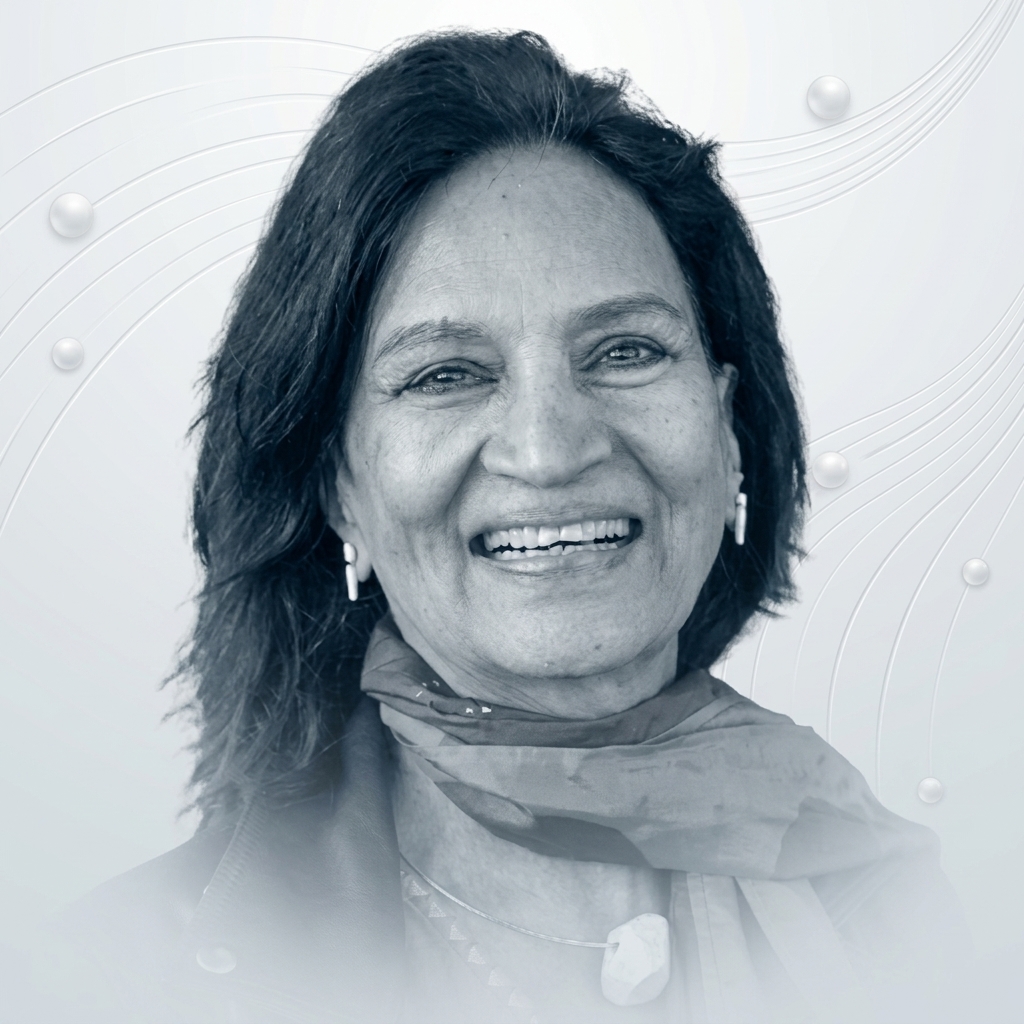
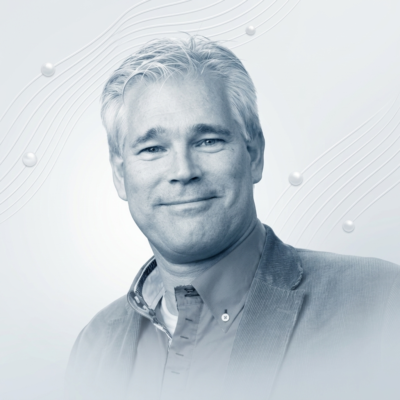
Deepa Narayan on power and love and global development
Episode 12 30.03.2021
-
 play_arrow
PLAY EPISODE
Description arrow_drop_down

Description
What if the missing ingredient in every failed development project, broken institution, and dysfunctional team is not better rules but love? Deepa Narayan, who spent 35 years working on global poverty, including 20 years with the UN and World Bank, argues that power without love produces coercion, and love without power produces sentimentality. Real collaboration requires both. Subscribe for more episodes on how collaboration works in practice. Deepa Narayan brings an unusual combination of lived experience and institutional authority to the question of collaboration. She has lived in villages for a decade working with women’s groups, served as senior advisor to the World Bank, and conducted hundreds of interviews across India on masculinity, femininity, and the hidden dynamics that determine whether people cooperate or dominate. Her framework is built on two pillars: power and love. Most development work and organizational theory focuses exclusively on power and rules. Narayan argues this is why so much of it fails. She identifies three types of power , power over (coercion), power with (shared), and power within (internal) , and insists they cannot be separated. In practice, most large organizations and families default to power over, even when they claim otherwise. The love component is not sentimental. Narayan defines it as the human longing for connection, appreciation, and belonging , needs so fundamental that when they are violated, individuals and societies break down. Her research on masculinity in India reveals how boys as young as seven are taught to suppress vulnerability, dominate others, and equate manhood with control. This socialization produces adults incapable of the emotional openness that genuine collaboration requires. The conversation connects personal and structural dynamics with striking directness. Narayan asks why one in three women worldwide experiences physical violence from intimate partners, and traces the answer through the same power dynamics that undermine institutional collaboration. When organizations reward dominance and punish vulnerability, they replicate at scale what dysfunctional families produce at the individual level. On development practice, Narayan draws from analyzing hundreds of successful community-led groups. The pattern is consistent: groups that sustain collaboration over time combine clear power-sharing structures with genuine care for members as whole human beings. Groups that focus only on rules and incentives eventually collapse when external pressure arrives. Her analysis of education is particularly pointed. Schools, she argues, deepen gender stereotypes rather than challenging them, perpetuating the very dynamics that make collaboration difficult. Yet research shows that when children receive different messages, they influence their parents’ decisions , because those decisions come from love. Every channel for changing minds and hearts must be used simultaneously. When asked what she would change about humans, Narayan’s answer is immediate: fill every human being with love, the feeling of being loved and supported by a hundred people, then let them go to do their own thing. It is the lack of feeling appreciated and valued that destroys individuals and societies alike. Part of the Ernst Strüngmann Forum series on Collaboration, produced with the Convergent Science Network.
Tagged as:
global development Groups Individuals Societies love
About the author call_made
CSN Podcasts
Both the triumphs of humanity and its most evil deeds have resulted from collaboration. In a time where humanity is required to aspire to the former and minimize the latter, the question arises of how collaboration arises and why it fails. Surprisingly, this phenomenon, so central to who we are, is not well understood. Hence, a collaborative effort is required to understand collaboration in its full biological, psychological, sociological, cultural, and economic complexity and to translate this understanding into operational impact. This series of podcasts is one step toward achieving these complementary goals. The Collaboration Podcast presents interviews with people who are central orchestrators of collaboration in various domains including business, government, science, art, health, sustainability, and the military. The discussions were conducted by Prof. Dr. Paul F.M.J. Verschure and members of the Program Advisory Committee of the Ernst Strungmann Forum on Collaboration (https://www.esforum.de/forums/ESF32_Collaboration.html) during 2021 and had the goal to sketch a map of opportunities, challenges, and obstacles in human collaboration. The forum took place in May 2022, and now we would like to share this series of interviews with a broader audience. The full report of the Forum will be published in 2023 by MIT Press. The podcast was produced by the Convergent Science Network (https://www.convergentsciencenetwork.org/). Context: The stability of social systems depends critically on realizing sustainable methods of “collaboration,” yet how and by which means collaboration is achieved is not clearly understood; neither are the conditions or processes that lead to its breakdown or failure. Collaboration can be understood as cooperation between agents toward mutually constructed goals. Part of the reason for our lack of understanding is that the phenomenon of collaboration is, by nature, a highly multidisciplinary problem, and effective research into its complexities has been difficult to achieve across the broad range of scientific and technical disciplines involved. The need for a fundamental understanding of collaboration, however, has become increasingly important. Not only does humankind demand answers as it attempts to address critical challenges at multiple scales (e.g., climate change, migration, enhanced automation, social and economic inequality), but ever-increasing technological and economic means of interconnecting people and societies are disrupting long-established, familiar patterns of how we interact. Radical technological changes that are ongoing have the potential to reshape collaboration in ways that are currently hard to predict or influence (e.g., by altering configurations in interaction, information creation, and modes of communication). On one hand, such changes could disrupt hitherto stable forms of collaboration by affecting critical communication channels and traditional roles, as can be observed in the rapidly changing patterns in governance, commerce, and social interaction. Conversely, technology could lead to the emergence of novel, successful forms of collaboration that deviate from traditional “hierarchical” architectures. Evidence of this can be seen in areas as diverse as highly automated manufacturing plants, the open science movement, collaborative software repositories, user-centered services, and the sharing of economy-based modes of organization. Without a fundamental understanding of the mechanisms, processes, and boundary conditions of collaboration, it is not possible to evaluate or predict which of these possible scenarios are sustainable or even plausible. The Forum “How Collaboration Arises and Why it Fails” (May 8–13, 2022, Location: Frankfurt am Main, Germany) Chairs: Andreas Roepstorff and Paul Verschure Program Advisory Committee: Jenna Bednar, Julia R. Lupp, Bhavani R. Rao , Andreas Roepstorff, Ferdinand von Siemens, and Paul Verschure
Episodes
play_arrow

play_arrow
play_arrow
play_arrow
Timestamp
- fast_forward00:00:04 - Hi, I'm Paul Vesure, and together with my colleague Babani Rao,
- fast_forward00:00:09 - we are speaking with Dr. Deepa Narayan.
- fast_forward00:00:13 - For over 25 years, Deepa advised United Nations and various NGOs on issues related
- fast_forward00:00:19 - to poverty, gender, and development.
- fast_forward00:00:23 - She served as Senior Advisor to the Vice President's Office of the Poverty Reduction
- fast_forward00:00:28 - Group at the World Bank, and has extensive experience with local,
- fast_forward00:00:33 - community-driven approaches to improving the quality of life.
- fast_forward00:00:37 - Maybe to start our dialogue and analysis of collaboration,
- fast_forward00:00:42 - maybe you can just describe with your background, your different roles,
- fast_forward00:00:46 - and how you grew into the person you are today with respect to these fundamental
- fast_forward00:00:53 - discussions around collaboration.
- fast_forward00:00:55 - What a simple question.
- fast_forward00:00:58 - Yeah, I will start simple, you know.
- fast_forward00:01:03 - Okay well i'm going to talk about a
- fast_forward00:01:06 - bit about my professional life and then of course the personal
- fast_forward00:01:09 - is important um i've worked on poverty issues for the last 35 years i've lived
- fast_forward00:01:15 - in villages for about 10 years i've worked with women's groups i worked with
- fast_forward00:01:21 - small ngos and then Then I spent almost 20 years with the UN and then with the World Bank.
- fast_forward00:01:29 - And at the World Bank, the last five years, I was senior advisor.
- fast_forward00:01:33 - My interest has always been value-based change.
- fast_forward00:01:38 - And at the time, I couldn't have articulated it like that.
- fast_forward00:01:43 - But that's what I've been interested in. And on a personal basis,
- fast_forward00:01:47 - I come from a family of five kids.
- fast_forward00:01:50 - And when there are five kids fighting for attention and resources,
- fast_forward00:01:55 - you either compete or you collaborate.
- fast_forward00:01:59 - There are only two things. And I think it was mostly passive collaboration and
- fast_forward00:02:07 - sometimes active and intentional collaboration when we would gang up to get
- fast_forward00:02:12 - something out of my parents or out of,
- fast_forward00:02:15 - you know, grandparents or something like that.
- fast_forward00:02:17 - And I've also studied collaboration, particularly in the area of poverty and
- fast_forward00:02:25 - women's groups, as well as what makes large-scale programs and projects work.
- fast_forward00:02:33 - Lastly, in the last two years during COVID,
- fast_forward00:02:37 - I've done a big piece of research interviewing men, highly educated men and boys,
- fast_forward00:02:47 - young boys going to school, as young as seven years old, trying to understand
- fast_forward00:02:51 - what it means to be a man. What does masculinity mean?
- fast_forward00:02:56 - All right. Well, that's a good one to keep for our conclusions,
- fast_forward00:03:00 - I guess. Yes. I think it's central.
- fast_forward00:03:04 - Central. Okay, well, then we will bring it up earlier.
- fast_forward00:03:08 - But now, so before we go into the specifics, right?
- fast_forward00:03:14 - So what is collaboration and what is it good for?
- fast_forward00:03:19 - I mean, there are many definitions, but intuitively, I think what it means is,
- fast_forward00:03:24 - when two or more individuals or groups or communities or countries come together
- fast_forward00:03:31 - to achieve a shared goal with some degree of volunteerism,
- fast_forward00:03:38 - so it's not based on coercion.
- fast_forward00:03:42 - Okay. So what you emphasize is shared goal and volition.
- fast_forward00:03:50 - Volition, yep. But if we talk about defining features of collaboration,
- fast_forward00:03:56 - Would these be the two outstanding defining features for you, or would you see others?
- fast_forward00:04:05 - For me right now, what I would say, particularly based on the work on masculinity
- fast_forward00:04:11 - and then looking back at community-led development,
- fast_forward00:04:14 - where I did an analysis of hundreds of groups that succeeded at the local level,
- fast_forward00:04:21 - I would say that there are two things that are critical for sustained collaboration,
- fast_forward00:04:27 - collaboration over time, and that is power and love.
- fast_forward00:04:34 - And most of development and most of the work and collaboration focuses on power and rules.
- fast_forward00:04:41 - And I think the missing ingredient is love.
- fast_forward00:04:47 - And that's what I've learned from the hundreds of interviews I've done with
- fast_forward00:04:50 - men and before that with women.
- fast_forward00:04:53 - But let's see what that then exactly means, right?
- fast_forward00:04:57 - So if we have goals, intention,
- fast_forward00:05:02 - or volition, or absence of coercion, and love and power, what do these things actually really mean?
- fast_forward00:05:13 - Because you also applied that to individuals, to groups, but also institutions and countries.
- fast_forward00:05:19 - Yeah. Right. So now I have some sort of matrix structure and I want to plug in your definitions.
- fast_forward00:05:25 - Exactly. Absolutely. Absolutely. I knew you would do that. I'm so predictable.
- fast_forward00:05:33 - That's perfect. I think codification is important to achieve large-scale success.
- fast_forward00:05:41 - But I think there's been, in everything that I see, there's been one missing ingredient.
- fast_forward00:05:46 - And the missing ingredients are things that we can't see.
- fast_forward00:05:49 - So I think what's been missing and needs to be spelled out in collaboration
- fast_forward00:05:54 - is the underlying values and human passions.
- fast_forward00:05:59 - And that's kind of hard to put into boxes, right?
- fast_forward00:06:03 - So let me talk about the framework of power and love, which is what I'm going
- fast_forward00:06:09 - to be calling Feminism X,
- fast_forward00:06:12 - resulting from these 250 interviews with men and before that,
- fast_forward00:06:17 - 600 interviews with women, educated women.
- fast_forward00:06:21 - So, in terms of when you think about collaboration, it's, you assume it's about shared power, right?
- fast_forward00:06:32 - People that there are two things that come out in terms of power.
- fast_forward00:06:36 - One is what kind of power and usually it's been power over people which gets
- fast_forward00:06:42 - into coercion, even though it's not meant to be.
- fast_forward00:06:46 - And the other kinds of power is power with.
- fast_forward00:06:51 - Which is shared power, which comes into what I was talking about,
- fast_forward00:06:55 - which is collaboration in the way I'm talking about it.
- fast_forward00:07:00 - And the third kind of power is power within or internal power.
- fast_forward00:07:06 - And I think we don't separate out these different kinds of power.
- fast_forward00:07:13 - And most of what we see, especially in large organizations, but also the community
- fast_forward00:07:17 - and the family level, is the first one, which is power over.
- fast_forward00:07:22 - So let me start with the family or with couples, and then you can apply the
- fast_forward00:07:26 - same framework to organizations.
- fast_forward00:07:29 - So why is it today that we still have one in three women around the world experiencing
- fast_forward00:07:37 - physical and sexual violence?
- fast_forward00:07:40 - One in three, right? And no country is spared.
- fast_forward00:07:44 - It's in the West, it's in India, it's in Africa,
- fast_forward00:07:48 - it's uh it's in sweden
- fast_forward00:07:51 - so that is
- fast_forward00:07:54 - power over and what's been totally lacking
- fast_forward00:07:57 - in feminism and in organization development is the other aspect which is love
- fast_forward00:08:02 - so what do i mean by love love to me is kindness caring compassion and collaboration
- fast_forward00:08:11 - so kindness caring sharing, collaboration,
- fast_forward00:08:17 - compassion.
- fast_forward00:08:18 - And without that, you can achieve collaboration, but when there are difficulties,
- fast_forward00:08:25 - it's going to fall apart or it's going to be sabotaged.
- fast_forward00:08:29 - So that the internal honoring of people and tapping into that is difficult primarily
- fast_forward00:08:41 - because we've ignored its power.
- fast_forward00:08:43 - So now let me come to communities, right? So we talked about individuals.
- fast_forward00:08:49 - So individuals, what I'm finding, by the way, I'll just say this in terms of
- fast_forward00:08:53 - my discussions with men, is masculinity and power are completely intertwined.
- fast_forward00:09:02 - So when you ask them, what does it mean to be a man? It's all about power,
- fast_forward00:09:07 - being muscular, being strong.
- fast_forward00:09:09 - And there's nothing wrong with that. But if that's the only song you can sing, it's rather limited.
- fast_forward00:09:18 - No cisgender man talked about love.
- fast_forward00:09:23 - As a core attribute of masculinity, right? But they were very comfortable talking about power.
- fast_forward00:09:32 - So when I talked to women and asked women, what are the three words that come
- fast_forward00:09:38 - to your mind when you think about being a woman?
- fast_forward00:09:41 - It was many women talked about love, nurturing, kindness, mother.
- fast_forward00:09:48 - And only one woman talked about power. So the problem is that power without
- fast_forward00:09:55 - love is abusive and love without power invites abuse.
- fast_forward00:09:59 - And you can apply this at the organizational level, you know,
- fast_forward00:10:05 - how a large company is organized and manages its workers.
- fast_forward00:10:11 - Or you can think about it in terms of global collaboration or negotiation.
- fast_forward00:10:20 - So the thing about this whole setup is that collaboration happens when rules
- fast_forward00:10:28 - or boundaries are clear.
- fast_forward00:10:31 - And if the focus is only on formal rules and not informal rules based on trust
- fast_forward00:10:39 - and love and dignity, it falls apart.
- fast_forward00:10:43 - So the indicator that it's all
- fast_forward00:10:47 - about power is when there's lots of litigation, like in the U.S. Mm-hmm.
- fast_forward00:10:57 - But you seem to see this dialectic between power and love.
- fast_forward00:11:02 - Yeah. Would that be correct? And then you also match that to the sexes, right?
- fast_forward00:11:09 - And the challenge is how we have,
- fast_forward00:11:12 - I think each individual has both power and love within themselves,
- fast_forward00:11:17 - but that the way society has defined masculinity or has defined male roles and
- fast_forward00:11:25 - female roles has divided it.
- fast_forward00:11:29 - It's outsourced power to men and love to women.
- fast_forward00:11:32 - And the problem is, how can both men and women integrate power and love within
- fast_forward00:11:39 - themselves and be valued for it?
- fast_forward00:11:43 - Okay. On the other hand, I could also argue that love implies power.
- fast_forward00:11:50 - How can you argue that? Well, love is something like... Blame that.
- fast_forward00:11:56 - Love, the love, love can be withheld, right?
- fast_forward00:12:01 - So that means with that, I exert also power as long as the other is in need of that love, right?
- fast_forward00:12:12 - And similarly, the power of a carer over the one that needs care,
- fast_forward00:12:20 - right, in itself is also exerted as an expression of love.
- fast_forward00:12:26 - So I'm not sure whether I can see what you're saying, but if we dig a little
- fast_forward00:12:32 - bit deeper, I think these boundaries are maybe not as clear cut.
- fast_forward00:12:37 - So is that something we should worry about?
- fast_forward00:12:40 - Or you think for your analysis of collaboration, that's more academic discussion and not really?
- fast_forward00:12:47 - No, I think the question you're raising is important. But what I'm saying is
- fast_forward00:12:52 - that if it's only love in the sense of caring, kindness, love does not mean anything goes.
- fast_forward00:13:01 - Right? Love has to be boundaried. So when there's abuse, you have to have a
- fast_forward00:13:07 - boundary and say, no, it's not all right.
- fast_forward00:13:11 - So in that sense, love and power go together in sort of an infinity circle.
- fast_forward00:13:16 - But what I'm arguing has happened is that the two have separated, right?
- fast_forward00:13:25 - And that's the problem.
- fast_forward00:13:28 - And so let me just say one more thing. So if you think about,
- fast_forward00:13:32 - let me draw the parallels between my work at communities where we looked at
- fast_forward00:13:37 - literally hundreds of cases of community action where, whether it was an irrigation or sanitation or,
- fast_forward00:13:44 - you know, child care and in large scale projects,
- fast_forward00:13:49 - what we found is that what distinguished successful ones from not so successful
- fast_forward00:13:56 - ones was the clarity in rules of how to solve conflict.
- fast_forward00:14:04 - And so that comes back again to how do you manage power and love,
- fast_forward00:14:10 - but if it is only based on legal rules without goodwill,
- fast_forward00:14:18 - it still doesn't work. Mm-hmm.
- fast_forward00:14:22 - Okay, I understand, but that seems to hint at an underlying universe of traits
- fast_forward00:14:32 - and issues that go beyond the surface expression of power and love.
- fast_forward00:14:38 - Because, for instance, you mentioned trust, but maybe we also have to think of reciprocity, right?
- fast_forward00:14:44 - It's also about the risk people engage in, if you talk in the case of love,
- fast_forward00:14:49 - right? It's risky, but if that risk is reciprocated, then there is some sort of balance.
- fast_forward00:14:56 - So isn't that underlying force, if you want, not one of reciprocity?
- fast_forward00:15:03 - Yeah, well, love is, I mean, what is love? Love is really about trust,
- fast_forward00:15:08 - trusting that the other person is there for you, has your back.
- fast_forward00:15:15 - That's the expression that kept coming back from these interviews.
- fast_forward00:15:18 - Use. Somebody has my back, right?
- fast_forward00:15:21 - So love is, the foundation of love is trust.
- fast_forward00:15:27 - And without that trust and attachment, nothing is possible.
- fast_forward00:15:31 - It gets into abuse and isolation and violations, et cetera.
- fast_forward00:15:38 - And love is relational, right?
- fast_forward00:15:42 - So the moment it's relational, there has to be reciprocity. And that reciprocity has to be consistent.
- fast_forward00:15:51 - So once you get into power and love imbuing each other,
- fast_forward00:16:00 - then you have other ways of enforcing collaboration or ensuring collaboration
- fast_forward00:16:09 - rather than total dependence on litigation and formal rules,
- fast_forward00:16:15 - agreements that you'd already made.
- fast_forward00:16:17 - Right. But now, can you give examples of also how did you come to that insight?
- fast_forward00:16:23 - So you looked at complex collaborative processes, and at some point in your
- fast_forward00:16:30 - mind that penny must have dropped.
- fast_forward00:16:31 - Like, hey, this is the way, these are the dimensions in which I can analyze
- fast_forward00:16:35 - this. So how did that happen? What was the example?
- fast_forward00:16:39 - That happened very, very recently. Definitely. And because I'm also,
- fast_forward00:16:45 - you know, my background is in policy.
- fast_forward00:16:48 - And in the policy world, you don't talk about love.
- fast_forward00:16:52 - It was a lot to talk about power itself, which is really from political science and sociology.
- fast_forward00:16:58 - And then psychology contributes individuals. Actually, it's a very good question.
- fast_forward00:17:03 - The penny dropped for me when I started looking and re-looking at the patents,
- fast_forward00:17:07 - and this comes back to coding, men's interviews.
- fast_forward00:17:14 - And one of the interviews that was most telling for me is actually two things.
- fast_forward00:17:22 - One is what I already told you I realized at the end of 10 episodes.
- fast_forward00:17:28 - So rather than writing a book, I did a podcast called What's a Man?
- fast_forward00:17:33 - And one of the things when I was doing almost the last podcast cast was at the
- fast_forward00:17:42 - realization that men had been so open about so many issues about their sexual life,
- fast_forward00:17:48 - their work lives, all their problems.
- fast_forward00:17:52 - But love was something that they had great difficulty talking about.
- fast_forward00:17:58 - Even father's love, right? Or love as couples or love for children, etc.
- fast_forward00:18:04 - That was one. The second was this man who spoke about, who's very successful,
- fast_forward00:18:12 - who's a CEO of a large international company, who's very competitive,
- fast_forward00:18:17 - who's very proudly a good negotiator and quite assertive or even aggressive,
- fast_forward00:18:28 - aggressive, I would call as he using his words.
- fast_forward00:18:31 - Guards but in his personal life he said I can't be aggressive and so with my
- fast_forward00:18:39 - wife I have to use a different approach and what he's struggling with is he cannot stop competing.
- fast_forward00:18:51 - And when I talked to him about his friends he said there's never a time when I can drop my guard
- fast_forward00:18:58 - when we as friends get together
- fast_forward00:19:01 - we're still always competing in terms of who
- fast_forward00:19:04 - has more who has a better wife who has more money etc so I asked him is there
- fast_forward00:19:10 - any time that you have within you feel you don't have to be on guard and he
- fast_forward00:19:17 - thought and he said when we're drunk.
- fast_forward00:19:25 - And then he started feeling sad about it, right?
- fast_forward00:19:29 - But that was a deep confession and the penny didn't drop then.
- fast_forward00:19:33 - But then when I started thinking about what is really happening here,
- fast_forward00:19:37 - it was his inability to let go of competition because of the deep insecurity
- fast_forward00:19:43 - that if you're not constantly competing, you're not a man.
- fast_forward00:19:50 - And I think that's the problem in terms of male-female relationships,
- fast_forward00:19:54 - which is all about power and love gets squeezed out.
- fast_forward00:19:58 - So how can you bring back love in here? And that's a struggle if I think of
- fast_forward00:20:02 - it in the power and love framework.
- fast_forward00:20:04 - Right. But now, would that imply that in terms of collaboration,
- fast_forward00:20:09 - we also have to look at two realms of collaboration, one realm based on power
- fast_forward00:20:14 - and competition, another realm based on love?
- fast_forward00:20:17 - And the two are really segregated?
- fast_forward00:20:21 - No. Okay. It's this infinity circle, right,
- fast_forward00:20:26 - that has to go around because I was really inspired by Martin Luther King who
- fast_forward00:20:31 - talks about power without love is abuse.
- fast_forward00:20:37 - I mean, my version of it is power without love is abusive and love without power is anemic.
- fast_forward00:20:47 - And what I see is that power without love is abusive, and love without power invites abuse.
- fast_forward00:21:00 - Yeah, I understand.
- fast_forward00:21:03 - Can you give me an example? Earlier you mentioned, for instance,
- fast_forward00:21:10 - water management as early examples that you looked at.
- fast_forward00:21:14 - So can you reanalyze that example in these terms?
- fast_forward00:21:21 - How does that work along these dimensions of power and love?
- fast_forward00:21:28 - So I worked a lot on both domestic water supplies in villages and urban areas as well as irrigation.
- fast_forward00:21:38 - And if there is, you could have the rules of tailenders and people near the source of water.
- fast_forward00:21:48 - And the conflict is always between those who are close to the water and those
- fast_forward00:21:52 - who are further away, right?
- fast_forward00:21:54 - Because those who are close to the source use up more or can control whether the tap is on or not.
- fast_forward00:22:00 - Now, you can have all the rules about it, right? But if there's ill will,
- fast_forward00:22:05 - if there are no other connections, social connections,
- fast_forward00:22:08 - social capital or trust between
- fast_forward00:22:12 - those groups nothing is going to happen you're just
- fast_forward00:22:15 - going to fight forever so that good will that comes in comes in through mutual
- fast_forward00:22:20 - relations in some other realm that then provides the foundation for reciprocity
- fast_forward00:22:28 - and trust if the only relationship is through the through water.
- fast_forward00:22:35 - It's very difficult to hold when that resource becomes even more scarce.
- fast_forward00:22:41 - Right? So as resources get scarce, the fights get harsher and collaboration
- fast_forward00:22:49 - becomes a distant dream.
- fast_forward00:22:50 - And whoever is the strongest, whoever has the most money, whoever is going to
- fast_forward00:22:56 - use the most muscle and power wins.
- fast_forward00:22:58 - It becomes a winner and loser framework and collaboration is a horizontal framework
- fast_forward00:23:04 - or needs to be a horizontal framework for it to last.
- fast_forward00:23:08 - So you're saying in order to build collaboration,
- fast_forward00:23:13 - you first have to define, let's say, a neutral playground where there are no
- fast_forward00:23:17 - resources at stake to build trust from which you can then again return to the
- fast_forward00:23:24 - situation where there is something at stake.
- fast_forward00:23:26 - Exactly, exactly, exactly.
- fast_forward00:23:29 - And the easiest way to think about this is to look at a family or a couple, right?
- fast_forward00:23:34 - Every family goes through ups and downs. And what is it that helps you survive?
- fast_forward00:23:40 - It's that reciprocity and trust and respect that can help you through.
- fast_forward00:23:47 - Without that it's not possible to solve
- fast_forward00:23:50 - problems as they arise and problems are going
- fast_forward00:23:53 - to be going to consistently arise but now
- fast_forward00:23:57 - in case of the water management that that
- fast_forward00:24:00 - that you mentioned earlier did you also
- fast_forward00:24:04 - look at certain interventions and how well they would work in building trust
- fast_forward00:24:08 - or did you analyze this from an outside perspective and did you see examples
- fast_forward00:24:14 - where it worked because Because people build troughs in this neutral ground
- fast_forward00:24:17 - and other examples where that didn't happen. I mean, how did you come to that insight?
- fast_forward00:24:23 - I mean, there are different examples. One, there's a vast literature on irrigation.
- fast_forward00:24:27 - There's a lot of published literature. There are four villages that I worked
- fast_forward00:24:31 - in very deeply, actually in Timor. And...
- fast_forward00:24:38 - Which was very dry and drinking water, clean drinking water was a huge problem.
- fast_forward00:24:44 - And I spent about three years visiting these communities with the research team
- fast_forward00:24:49 - and there were interventions, et cetera.
- fast_forward00:24:53 - Where did it work the best? It worked the best where men started supporting
- fast_forward00:25:01 - the women because drinking water or carrying water,
- fast_forward00:25:04 - fetching water is primarily a women's job all around the world, right?
- fast_forward00:25:09 - So where the male leaders and the spouses wanted to support this effort.
- fast_forward00:25:20 - There it worked. But if the men were not supportive of this effort, it did not work.
- fast_forward00:25:30 - We went through the same motions, the same processes,
- fast_forward00:25:34 - the same meetings they created men's
- fast_forward00:25:37 - groups women's groups and talked to the village leader and there
- fast_forward00:25:40 - would be a facilitator who would go out etc etc it did not last but then was
- fast_forward00:25:47 - that because of individuals who would be disruptive of the process or of a social
- fast_forward00:25:54 - factor of how the group overall was organized?
- fast_forward00:25:59 - No, I think the group organizations were very similar, right?
- fast_forward00:26:03 - Because after a while, you learn what's needed.
- fast_forward00:26:06 - It was this underlying idea.
- fast_forward00:26:10 - Animosity or lethargy that led to systems not working?
- fast_forward00:26:21 - It's neglect, right? Because again, you have limited time, attention, and money.
- fast_forward00:26:27 - If they don't go into solving the water problem that women are facing,
- fast_forward00:26:33 - it's not going to happen.
- fast_forward00:26:35 - So it's, does it become a priority problem? because men also see it as a problem
- fast_forward00:26:41 - and are willing to put their resources and work with women to support it.
- fast_forward00:26:46 - That's what made a difference.
- fast_forward00:26:48 - Okay. But now, also Bhavani observed this in the chat.
- fast_forward00:26:55 - So now we understand a little bit the sort of personal level of collaboration
- fast_forward00:27:01 - and these dimensions of power and love.
- fast_forward00:27:04 - But earlier you also said that you see this cut through different levels of
- fast_forward00:27:11 - organization, also the institutions of even two countries.
- fast_forward00:27:14 - So how should I imagine power we can imagine also at the level of countries,
- fast_forward00:27:20 - but how would love in that sense generalize?
- fast_forward00:27:25 - Let me talk a minute about power, because I think power also is not a unitary
- fast_forward00:27:32 - phenomenon. It has many different forms and shapes.
- fast_forward00:27:35 - And the one that we're most familiar
- fast_forward00:27:37 - with is power over, even though it's supposed to be collaborative.
- fast_forward00:27:44 - Organizations have unequal, countries have unequal power.
- fast_forward00:27:48 - Whether you look at the UN, there is a body that can veto, has veto power, right?
- fast_forward00:27:56 - So it's not completely flat. So it's power, it's whether the power is equally
- fast_forward00:28:04 - distributed or not, that's one.
- fast_forward00:28:06 - And then within that body, if there is the love, peace comes in,
- fast_forward00:28:13 - if there is, it's based on values of mutuality, respect,
- fast_forward00:28:20 - dignity, and kindness, caring.
- fast_forward00:28:22 - And what I see is that when that's not present.
- fast_forward00:28:30 - At the first sign of trouble, when conflicts arise, it takes a long time to solve it.
- fast_forward00:28:41 - Or people get squashed within and are not treated with respect.
- fast_forward00:28:46 - So, again, taking the most obvious recent examples,
- fast_forward00:28:52 - most companies have wonderful slogans about mutuality, respect,
- fast_forward00:29:01 - worth, human potential, etc. Right.
- fast_forward00:29:05 - And yet the Me Too movement emerged out of these companies and more and more
- fast_forward00:29:12 - is emerging, including from sports organizations where girls were abused,
- fast_forward00:29:16 - little girls were abused.
- fast_forward00:29:18 - That's not mutuality or love or reciprocity.
- fast_forward00:29:23 - So we think it's
- fast_forward00:29:26 - power with it's a collaborative process but
- fast_forward00:29:30 - usually it's power over and where
- fast_forward00:29:34 - there is power over there is very little scope for kindness dignity respect
- fast_forward00:29:43 - and caring compassion which is together is the package of love but which country in the world,
- fast_forward00:29:53 - do you believe right now gets the closest to that ideal at this point in time?
- fast_forward00:30:02 - I think that's very difficult. I think if you think in terms of human satisfaction,
- fast_forward00:30:08 - happiness, etc., you know the answer.
- fast_forward00:30:11 - It's always the Nordic. It's the Nordic block that emerges at the top.
- fast_forward00:30:16 - But in terms of.
- fast_forward00:30:20 - Violence against women, I was very surprised to see that if you just look at
- fast_forward00:30:27 - that indicator, even the Nordic
- fast_forward00:30:29 - countries don't do well in the human development, in the social norms.
- fast_forward00:30:34 - I was shocked to see that the level of violence in India and Sweden was almost the same against women.
- fast_forward00:30:44 - Right. Yeah, those statistics are not encouraging. You're absolutely right. Right.
- fast_forward00:30:49 - But now, on the other hand, decisions at the level of countries are again made
- fast_forward00:30:54 - by individuals. These individuals act in groups.
- fast_forward00:30:57 - These groups are not necessarily that large, but these are groups of power.
- fast_forward00:31:03 - Right. So in that sense, would that be the difference?
- fast_forward00:31:07 - Because now we can look at the situation you described earlier for the water
- fast_forward00:31:10 - management, where you said, well, in the social structure, what's the saying?
- fast_forward00:31:14 - So maybe this can be individual disruptors.
- fast_forward00:31:17 - So also, do you believe at the level of countries interacting and collaborating,
- fast_forward00:31:21 - it will depend on individuals in these groups that exert the power and it will make the difference?
- fast_forward00:31:30 - I think it depends. It always depends on individuals eventually.
- fast_forward00:31:33 - But it also depends on the individual and the country motivations.
- fast_forward00:31:43 - I think you're going to see a sea of change as we change the conversation away from...
- fast_forward00:31:57 - How do I call it, one-manship, right?
- fast_forward00:32:01 - And the reality is that the world is dominated by male leaders, right?
- fast_forward00:32:06 - And the COVID example shows that a lot of the countries led by female leaders
- fast_forward00:32:13 - actually did a lot better than those by male leaders.
- fast_forward00:32:17 - That doesn't mean that men can't change or male leadership cannot change.
- fast_forward00:32:23 - I think it can, but it needs to change again in terms of integrating these values
- fast_forward00:32:28 - of respect and dignity for all rather than the goal of achieving my goal,
- fast_forward00:32:36 - being obsessed by achieving my goal at all costs.
- fast_forward00:32:39 - I think that's the problem, which is why some of these,
- fast_forward00:32:45 - whether it's the World Trade Association or large organizations get paralyzed
- fast_forward00:32:52 - because it's hard to come to a decision to collaborate when interests and sizes are so different.
- fast_forward00:33:03 - Right. But so this is then in some sense also a tragedy of this gender or sex-related
- fast_forward00:33:11 - dimensions of power and love,
- fast_forward00:33:13 - because I understand, of course,
- fast_forward00:33:15 - that you're saying, look, ideally they're linked in your infinity cycle.
- fast_forward00:33:22 - But maybe it is not really feasible. Maybe they are by necessity incompatible.
- fast_forward00:33:31 - Because take the example of the man you just mentioned who discovered that actually
- fast_forward00:33:35 - he was always competing.
- fast_forward00:33:38 - But in some sense, for that person to survive in the competitive environment,
- fast_forward00:33:43 - he will have been completely conditioned for his whole career to hide his internal state.
- fast_forward00:33:52 - To not reveal anything, because otherwise you will never, never succeed, right?
- fast_forward00:33:57 - So that in some sense, you have to deny a part of yourself in order to survive
- fast_forward00:34:02 - in that specific environment, which will preclude you ever returning to the other side of love.
- fast_forward00:34:10 - And the same might hold if you start at the end of love, right?
- fast_forward00:34:14 - So do you see it's possible to bring these together in some balanced form?
- fast_forward00:34:19 - Or would you say, and therefore men and women have to actually work together
- fast_forward00:34:24 - because they bring these different perspectives to the table?
- fast_forward00:34:28 - I think unless we bring as societies and as a world community power and love
- fast_forward00:34:35 - together, we're going to become extinct.
- fast_forward00:34:40 - We already see that in the excesses of climate change. We see that in the excesses
- fast_forward00:34:47 - of billionaires when there is mass poverty around the world, including in the US.
- fast_forward00:34:53 - So I don't think we can survive without power and love coming together.
- fast_forward00:34:58 - I think the second thing is the operative word that you used is this is just
- fast_forward00:35:02 - conditioning, right? No child, no baby is born grabbing for power.
- fast_forward00:35:10 - It's total conditioning, and
- fast_forward00:35:13 - that's why I interviewed 7-year-old boys and 8-year-old boys and girls.
- fast_forward00:35:19 - If this gender training starts very, very early, and so as long as boys are
- fast_forward00:35:24 - being taught not to be emotional, we're going to get unidimensional men.
- fast_forward00:35:31 - And as men don't change, women are leaving men and choosing to live on their own.
- fast_forward00:35:38 - I don't think these are recipes for a happy or fulfilling or thriving world
- fast_forward00:35:44 - in which the environment is cared for and in which we care for each other.
- fast_forward00:35:49 - So I don't think it's a choice.
- fast_forward00:35:50 - I think it's an absolute necessity for survival.
- fast_forward00:35:55 - Okay. We as human beings have to change. Mm-hmm.
- fast_forward00:36:00 - And sorry, the last thing, may I just add one other thing, Paul?
- fast_forward00:36:05 - And I don't think it's not, I think it's absolutely the case that men and women
- fast_forward00:36:10 - have to, women have to be given more opportunity and space to come together
- fast_forward00:36:15 - with men in decision making.
- fast_forward00:36:18 - And both men and women, but particularly men, have to both be given the space
- fast_forward00:36:25 - and integrate love and power.
- fast_forward00:36:28 - Because love and power is basically the masculine and feminine archetypes in
- fast_forward00:36:32 - which every human being has that, whether you're trans or whether you're gender fluid or LGBTQ or A+.
- fast_forward00:36:42 - We all have it.
- fast_forward00:36:44 - And it's socialization and cultural conditioning and expectations that have
- fast_forward00:36:49 - created this bifurcation that is harming both women and men.
- fast_forward00:36:53 - Right. Now, as a challenge, you could also argue that there's a trade-off here,
- fast_forward00:37:00 - that if we want to live our full identity and our full potential,
- fast_forward00:37:07 - it would preclude any form of large-scale collaboration because collaboration
- fast_forward00:37:12 - also always implies a compromise.
- fast_forward00:37:15 - It always implies a trade-off.
- fast_forward00:37:17 - Like, I cannot pursue all my immediate hedonistic drives and instincts because
- fast_forward00:37:24 - there's not a time constant at play.
- fast_forward00:37:27 - There are other drives at play from others, and I have to compromise.
- fast_forward00:37:31 - So there might be a trade-off here.
- fast_forward00:37:34 - While you seem to say it adds.
- fast_forward00:37:38 - But how can you be sure about that? Why is there no trade-off here?
- fast_forward00:37:42 - I don't think there's a trade-off in terms of human happiness and survival,
- fast_forward00:37:49 - because I think we will make different choices.
- fast_forward00:37:51 - And I think what's really being called for is both for men and women,
- fast_forward00:37:58 - a more feminine leadership, a more caring leadership, a more caring person for which,
- fast_forward00:38:05 - You don't get hurt and others don't get hurt. I think it's a different lens to look at.
- fast_forward00:38:10 - And that as long as we look at a lens of more, more, more, we're going to be
- fast_forward00:38:16 - back to the same manipulation without changing outcomes.
- fast_forward00:38:22 - Okay. But now, it's okay. We have to come together.
- fast_forward00:38:27 - Humans are facing massive challenges, right? This we don't need to discuss. us.
- fast_forward00:38:33 - So now we have to act. And you are also proposing we have to bring love and
- fast_forward00:38:37 - power together by also more parity in how power and love is distributed.
- fast_forward00:38:43 - So from an operational perspective, that would then suggest,
- fast_forward00:38:48 - okay, we have to redesign the United Nations.
- fast_forward00:38:50 - We need, let's say, a body, an international body that in this more even-handed
- fast_forward00:38:55 - way structures collaboration on a global level based on these values of love
- fast_forward00:39:02 - and power. Is that what you would be advocating?
- fast_forward00:39:05 - Or having worked at the World Bank and seen the cost of reorganizations.
- fast_forward00:39:15 - Constant reorganizations, I would say, yes, it's important to have large organizations
- fast_forward00:39:25 - reflecting these values, which they currently don't.
- fast_forward00:39:30 - And I think that's not the only way to bring about change.
- fast_forward00:39:34 - I think we need new organizations that may
- fast_forward00:39:37 - be more networks that provide the pressure to change from the bottom up so that
- fast_forward00:39:49 - the top doesn't function disconnected from the populations. And you're beginning to see it.
- fast_forward00:39:57 - But I think that's what needs to happen is that I think a lot of change can
- fast_forward00:40:01 - happen within organizations and where it's not possible.
- fast_forward00:40:05 - I think you need counter forces to make that happen, to push for that.
- fast_forward00:40:10 - I mean, the Black Lives Matter movement in the U.S.
- fast_forward00:40:13 - Is a wonderful example of that, of how change is happening, not because the
- fast_forward00:40:19 - government thought of it or some large organization thought about it, but endless change.
- fast_forward00:40:26 - Organization, endless networking and coordinated action, collaboration across
- fast_forward00:40:33 - time and place in the US, but not with clear leadership.
- fast_forward00:40:38 - The leadership is diffuse, right? So which is a completely different way of
- fast_forward00:40:42 - thinking of a hierarchical organization, which one usually man at the top.
- fast_forward00:40:49 - Mm-hmm. But now this is a bottom-up movement, right?
- fast_forward00:40:57 - Grassroots, which will require also a lot of communication and also education, if you want.
- fast_forward00:41:04 - Because now, indeed, you want to respect the volition and the agency of every
- fast_forward00:41:11 - individual in that movement in order to create this groundswell for change.
- fast_forward00:41:16 - This is a little bit what I hear you say. Is that correct? I think that's one
- fast_forward00:41:20 - way and one effective way because the existing organizations,
- fast_forward00:41:26 - including governments, are just not listening and are actually excluding these
- fast_forward00:41:33 - voices because of historical reasons.
- fast_forward00:41:37 - So that needs to be redesigned so that individuals don't have to fight their
- fast_forward00:41:42 - lives, fight for basic rights, basic access to education or employment or housing. Thank you.
- fast_forward00:41:48 - Right. So then, do we have enough time for that?
- fast_forward00:41:52 - If we look at the crises that we're facing, and we would follow a bottom-up
- fast_forward00:41:57 - approach, so this would be challenge number one.
- fast_forward00:42:01 - Do we have enough time? Well, it's not either or, right?
- fast_forward00:42:05 - You have to have these people sit in the movements, but the large organizations
- fast_forward00:42:10 - that are sitting on the power and money have to respond and have to change.
- fast_forward00:42:15 - And I think the most important way of bringing about change is one,
- fast_forward00:42:20 - these structural changes, but, and combining that with changing people's hearts and minds.
- fast_forward00:42:29 - So I've been watching some of the environmental movements in Canada and the
- fast_forward00:42:34 - U.S., and that's what a lot of the activists have also come to,
- fast_forward00:42:37 - is that you can fight for years, but some of these, you need the demonstrations to create pressure,
- fast_forward00:42:44 - but at the end of the day, you have to deal with the heads, the CEOs of organizations
- fast_forward00:42:50 - that are also human beings.
- fast_forward00:42:52 - And if you can come to it with mutual respect while holding firm to outcomes, miracles happen.
- fast_forward00:43:00 - And I don't think it's going to happen on a large scale because the resources
- fast_forward00:43:05 - are, what's the word, sit in large organizations.
- fast_forward00:43:14 - Unless these large organizations change, it's going to be an endless fight.
- fast_forward00:43:18 - But then, isn't there now an elephant in the room again, which is called power?
- fast_forward00:43:25 - Because in some sense, the bottom-up organization tries to exert power over
- fast_forward00:43:31 - the big organizations in order to get them to the table.
- fast_forward00:43:37 - Yep. Right? Is that not the dynamic here? Absolutely. Absolutely.
- fast_forward00:43:43 - So, it's a fight for shared power, right? That's what basically we're saying.
- fast_forward00:43:48 - So it comes back to power and love. Love without power invites abuse.
- fast_forward00:43:54 - So you've got to have power, otherwise you're not heard.
- fast_forward00:43:58 - That's the way the world is structured as a hierarchy, with the people at the
- fast_forward00:44:02 - bottom not having power.
- fast_forward00:44:04 - And so we're asserting power through the power of numbers. Yeah, exactly.
- fast_forward00:44:11 - That's the only thing. It's voice and it's the power of numbers,
- fast_forward00:44:15 - which is why from time immemorial,
- fast_forward00:44:18 - it's people's movements that have thrown over governments and kings and changed the world.
- fast_forward00:44:26 - And that's how it's going to be. But does it have to be that way?
- fast_forward00:44:29 - If the large organizations, if governments really are for people,
- fast_forward00:44:34 - which they're supposed to be.
- fast_forward00:44:37 - Then they would be more reflective and give easier access to voices that are
- fast_forward00:44:44 - different from the direction that they're going. Okay.
- fast_forward00:44:48 - But these are values, right? Absolutely. These values have to drive a movement.
- fast_forward00:44:54 - But then I could imagine that the onslaught of disinformation,
- fast_forward00:45:01 - Disinformation is a massive threat to building trust among all these individual
- fast_forward00:45:07 - agents to build up a movement.
- fast_forward00:45:10 - So do you see this also as a liability, as a risk for this approach,
- fast_forward00:45:15 - or do you think that that's not really a relevant factor?
- fast_forward00:45:18 - I don't understand what you mean by this flood of information. Disinformation.
- fast_forward00:45:25 - Disinformation. Yeah. Yeah, yeah, yeah. The disinformation is acting against love.
- fast_forward00:45:31 - Absolutely. Acts in favor of fragmented power.
- fast_forward00:45:35 - Exactly. So this, to me, would appear one of your biggest threats right now.
- fast_forward00:45:42 - Exactly. Disinformation is an instrument of control and power,
- fast_forward00:45:49 - of asymmetrical power. Yeah.
- fast_forward00:45:53 - How are you dealing with it? Yeah, absolutely. How do you deal with it? Yeah.
- fast_forward00:45:59 - The only way to deal with it is, I mean, through every source of power that you have, through laws,
- fast_forward00:46:08 - through the courts, through coming together and having alternative sources of information.
- fast_forward00:46:16 - I mean, this is what we're seeing in the world right now is the attempts to
- fast_forward00:46:21 - retain, contain, and deny people power by these huge information and disinformation battles.
- fast_forward00:46:31 - And that's, yeah, that's exactly what's going on right now. And in fact, there's love.
- fast_forward00:46:37 - It's all about power, power, power, power over, right? So in that cacophony
- fast_forward00:46:44 - of voices, who is your ambassador right now?
- fast_forward00:46:49 - Old Facebook, old Twitter.
- fast_forward00:46:52 - Who's my ambassador? Again, I don't... For this philosophy, for this proposal, right?
- fast_forward00:46:59 - Well, I think it's all the people who believe in a better world and action to
- fast_forward00:47:05 - make it a more equitable, fairer world in which the planet survives.
- fast_forward00:47:11 - Right. Okay. So now, we have discussed a little bit the framework that you're
- fast_forward00:47:20 - proposing and also how it is grounded in examples.
- fast_forward00:47:26 - But now we also went through a unique and devastating experience and also many
- fast_forward00:47:33 - countries are still going through this COVID-19 crisis, in particular also India.
- fast_forward00:47:38 - Has this taught us anything fundamental, anything new about collaboration,
- fast_forward00:47:44 - how humans collaborate or how humans fail to collaborate? Is there a new insight?
- fast_forward00:47:50 - I think the new insight is very clear. that desire for total control destroys.
- fast_forward00:48:03 - Unaccountable governments, governments and leaders that are bullies,
- fast_forward00:48:10 - that are the furthest from anything that could be called feminine leadership,
- fast_forward00:48:18 - are the most dangerous creatures in the world right now.
- fast_forward00:48:21 - And so unadulterated grab for power against citizens is deadly.
- fast_forward00:48:34 - Deadly in a very literal sense, which uses all the fascist techniques of disinformation,
- fast_forward00:48:45 - turning people against each other lying controlling the media,
- fast_forward00:48:54 - jailing people or threatening threatening to jail people or misuse of laws we've
- fast_forward00:49:03 - seen this play around the world,
- fast_forward00:49:07 - so then given that are you still hopeful that humanity will be able to realize
- fast_forward00:49:15 - sustainable large-scale collaboration?
- fast_forward00:49:19 - I think it will happen when we see ourselves on the edge of extinction,
- fast_forward00:49:28 - which is including flooding, whether it's in Germany or mudslides or hurricanes
- fast_forward00:49:35 - or 120 degrees and 40 degrees temperatures in the U.S.
- fast_forward00:49:40 - And the West. Seattle has had the highest temperature that it's had over a century um and.
- fast_forward00:49:49 - And, and keep, it has to hit us. It's a tragedy, but it has to hit us close to home to wake up.
- fast_forward00:49:59 - But even then we may not wake up.
- fast_forward00:50:01 - Because if leaders continue to lie and deny that human actions and human greed
- fast_forward00:50:10 - is creating these, this turmoil in the world,
- fast_forward00:50:14 - and melting of the ice, etc.
- fast_forward00:50:17 - I think the planet as we know it may go extinct.
- fast_forward00:50:23 - Right. But then with the approach that you're advocating,
- fast_forward00:50:29 - there's a certain amount of time required to build the counter-movement and
- fast_forward00:50:35 - to try to recover what can still be recovered.
- fast_forward00:50:39 - So how much time do you think you will need minimally to regain a sense of stability
- fast_forward00:50:47 - in this world, to counter the current threats?
- fast_forward00:50:50 - You're asking me about how to save the planet?
- fast_forward00:50:53 - Yeah, in your program, how much time do you need?
- fast_forward00:50:57 - Because the point is, if you're going to tell me we're going to need 100 years
- fast_forward00:51:00 - to mobilize enough people, okay, then this is not going to be operational and
- fast_forward00:51:04 - we have to look at compromises. If you tell me I need 10 years,
- fast_forward00:51:08 - we can say, okay, where do we start?
- fast_forward00:51:11 - So in that sense, it is not pure academic. It's a relevant operational question.
- fast_forward00:51:17 - I think there are lots of pockets of resistance and hope.
- fast_forward00:51:22 - I think it will take billions of dollars to connect and amplify these voices.
- fast_forward00:51:31 - I think the fact that people are waking up to the climate, I mean,
- fast_forward00:51:35 - the twin crisis, there's a pandemic going on, there's a racial inequity crisis,
- fast_forward00:51:41 - and there's a climate crisis.
- fast_forward00:51:43 - There is a gender, racial, basically an inequity income crisis,
- fast_forward00:51:47 - and there's a climate crisis. And the underlying factors of how we deal with
- fast_forward00:51:53 - it is very similar, right?
- fast_forward00:51:57 - It's human excess, human overconsumption, and governments that try and hide
- fast_forward00:52:07 - the truth from its citizens.
- fast_forward00:52:09 - Whether it's in china whether it's in the u.s whether it's in india whether
- fast_forward00:52:14 - it's in turkey or brazil or anywhere else this is what needs to change and if
- fast_forward00:52:21 - if the if we continue in terms of um.
- fast_forward00:52:29 - This imbalanced power, I think money resources play a huge role in shifting
- fast_forward00:52:42 - that power balance and shifting the voices while this grassroots movement continues to thrive.
- fast_forward00:52:49 - I think it will take another 20 years before we see a big shift.
- fast_forward00:52:54 - And the shift can be facilitated by providing resources to amplify the voices
- fast_forward00:53:03 - of research, of science, of community building,
- fast_forward00:53:09 - of reaching across differences,
- fast_forward00:53:12 - whether it's gender or race or political ideology.
- fast_forward00:53:16 - I think we can see a sea change.
- fast_forward00:53:20 - But now if it's 20 years, then in that time frame, we also have to deploy a
- fast_forward00:53:26 - massive educational effort,
- fast_forward00:53:29 - because these dictators, the power mongers of the world,
- fast_forward00:53:37 - also manage to grab power because people are influenced by simple messages,
- fast_forward00:53:42 - by simple conspiracy theories, because the uncertainty of reality and the uncertainty
- fast_forward00:53:49 - of the future is too complex and too threatening to comprehend.
- fast_forward00:53:52 - In order to manage that, we need education.
- fast_forward00:53:55 - So how are we going to educate these future generations in your philosophy of
- fast_forward00:54:03 - power and love to enable collaboration? Yeah.
- fast_forward00:54:08 - I think education, a massive shift in education policies and content,
- fast_forward00:54:14 - because right now, for example, in the US, there's a fight going on on race theory, right?
- fast_forward00:54:22 - Critical race theory is being banned. Right.
- fast_forward00:54:26 - And why is it banned? Because in most places, the lies have been bought by so
- fast_forward00:54:34 - many people who then comes back to feeling threatened, etc.
- fast_forward00:54:39 - So I think everywhere, and we looked into education, I mean,
- fast_forward00:54:46 - in this in particular case, in terms of gender and how boys learn how to be men in schools.
- fast_forward00:54:52 - Schools, and schools are deepening the stereotypes of what it means to be a
- fast_forward00:54:58 - boy and a girl. So I think you're absolutely right.
- fast_forward00:55:00 - It needs a massive re-education of people everywhere in the world so that we
- fast_forward00:55:09 - will make different choices and think differently.
- fast_forward00:55:12 - And I think there's actually quite a bit of research showing that when children
- fast_forward00:55:17 - get different messages in schools,
- fast_forward00:55:20 - they often, their interests and their approaches impact the decision their parents make.
- fast_forward00:55:29 - Because it comes from love, they care about the kids.
- fast_forward00:55:33 - It's very interesting, men won't listen to their wives, but they listen to their daughters and sons.
- fast_forward00:55:39 - Right. I think you've got to use every channel to change minds and to change hearts.
- fast_forward00:55:48 - But you could also argue that this ability to operate in a collaborative fashion
- fast_forward00:55:55 - along the lines of love and power is maybe something also innate,
- fast_forward00:55:59 - something that also biology just equips us with, but it's culture and education
- fast_forward00:56:05 - that sort of distorts that. about it. Is that how you look at it?
- fast_forward00:56:09 - I agree completely because I think the evidence from evolutionary biology,
- fast_forward00:56:17 - etc., is also coming out more and more that we're actually wired to collaborate,
- fast_forward00:56:22 - and we are wired to be altruistic and not just to compete.
- fast_forward00:56:27 - Yes, so there's been massive miseducation,
- fast_forward00:56:31 - Right. So maybe the education effort should focus on less education in some sense.
- fast_forward00:56:39 - Yeah, the underlying premises of education are pretty messed up. Right.
- fast_forward00:56:44 - Because education was a form of, the most important role of formal education
- fast_forward00:56:49 - is to perpetuate the culture of a society, to reproduce society.
- fast_forward00:56:56 - So each generation, there are some changes in the external world,
- fast_forward00:57:01 - of course, but it's re-perpetuating these false notions of who we are as human beings.
- fast_forward00:57:10 - Well, don't forget that the basic model of the classroom goes back to Ferdinand
- fast_forward00:57:16 - the Great, and it is actually one of an authority, right?
- fast_forward00:57:20 - There's the authority of the teacher who controls the class.
- fast_forward00:57:23 - It's an upfront definition of an asymmetric power relationship in which education is defined.
- fast_forward00:57:30 - It already starts there. And there will be an easy one to change.
- fast_forward00:57:34 - But now, in some sense, what you're proposing as an ideological agenda.
- fast_forward00:57:40 - A few decades ago, might have been captured within a religious context or within
- fast_forward00:57:47 - a political ideological context.
- fast_forward00:57:49 - But now, in our increasingly more secular society, there are voids.
- fast_forward00:57:55 - So do you see that what you're proposing is filling such a void that maybe 50
- fast_forward00:57:59 - years ago would have been filled by people's religious commitment?
- fast_forward00:58:05 - But since these are gone, you have to again refill that space.
- fast_forward00:58:09 - I hadn't thought about it in that way, because I think there's a big difference
- fast_forward00:58:14 - in the Western world and in Asia, for example, in Africa.
- fast_forward00:58:19 - If you look at the numbers from surveys on religiosity in India, it's about 85 percent.
- fast_forward00:58:27 - So is the U.S. So I think it varies a lot.
- fast_forward00:58:30 - But in Europe, for sure, that I think there is a decline in church attendance,
- fast_forward00:58:36 - huge decline in church attendance.
- fast_forward00:58:39 - And so, yes, it is this...
- fast_forward00:58:43 - You know, how do you fill the void? Exactly. And that void is this huge human
- fast_forward00:58:51 - longing for connection.
- fast_forward00:58:53 - We are wired for connection with other human beings.
- fast_forward00:58:57 - And the human longing is to be appreciated and to matter and to be,
- fast_forward00:59:04 - again, to be valued as a human being.
- fast_forward00:59:07 - And then when that's violated, that's what creates problems for children,
- fast_forward00:59:11 - for adults, for men, for women.
- fast_forward00:59:13 - So it comes back to very simple human longing to belong, to be appreciated, to matter.
- fast_forward00:59:23 - So that's where it's the virtuous life that also the classics,
- fast_forward00:59:27 - the philosophers, and the classic religions really were all about.
- fast_forward00:59:31 - What is the good life, right? And this is what you're reformulating.
- fast_forward00:59:34 - But then that's my last question.
- fast_forward00:59:36 - If you, by magical means, could change one thing in humans in order to help
- fast_forward00:59:44 - us achieve sustainable collaboration, what would this one thing be?
- fast_forward00:59:49 - I would fill every human being with love.
- fast_forward00:59:54 - Love for themselves so they feel loved and they feel they have supported by
- fast_forward01:00:00 - a hundred people and then let them go and do their thing in the world.
- fast_forward01:00:06 - It's this lack of love, lack of feeling appreciated and valued that destroys
- fast_forward01:00:13 - us as individuals and as a society.
- fast_forward01:00:17 - Very good Deepa Narayan thank you very much for this conversation my pleasure
- fast_forward01:00:21 - thank you hi you listened to one of our podcasts in the series on collaboration,
- fast_forward01:00:26 - produced by the Ernst Trumman Forum and the Conversion Science Network you can
- fast_forward01:00:31 - find more episodes on our website.
Tags
Brain brain evolution Cerebellar cerebellum collaboration consciousness Cortex Cortical decision making disorders of consciousness Framework grid cells Memory mirror neurons Motor motor cortex neocortex Neural Neurons place cells Populations prediction prefrontal cortex Robots scientific collaboration Spatial

Exploring the convergence of neuroscience, robotics, and AI through conversations with leading researchers since 2010.
A project of the Convergent Science Network Foundation.
Follow us on
© CSN Podcasts. Developed by IMCreative & WEBC
Be the first to leave a comment