


play_arrow
Listeners:
Top listeners:
00:00
00:00
volume_up
chevron_left
-
 play_arrow
Paul Verschure on consciousness and distributed adaptive control CSN Podcasts
-
 play_arrow
Edvard Moser on grid cells and entorhinal cortex CSN Podcasts
-
 play_arrow
Giacomo Rizzolatti on mirror neurons and action understanding CSN Podcasts
-
 play_arrow
Robert Axelrod on game theory and prisoner's dilemma CSN Podcasts
-
 play_arrow
Adrian Owen on disorders of consciousness and vegetative state CSN Podcasts
-
 play_arrow
Jonathan Whitlock on markerless motion capture and posterior parietal cortex CSN Podcasts
-
 play_arrow
Luis Puelles on neuroanatomy and prosomeric model CSN Podcasts
-
 play_arrow
Zoltan Molnar on subplate neurons and cortical development CSN Podcasts
- arrow_back Home
- keyboard_arrow_right Podcast
- keyboard_arrow_right Season 2012
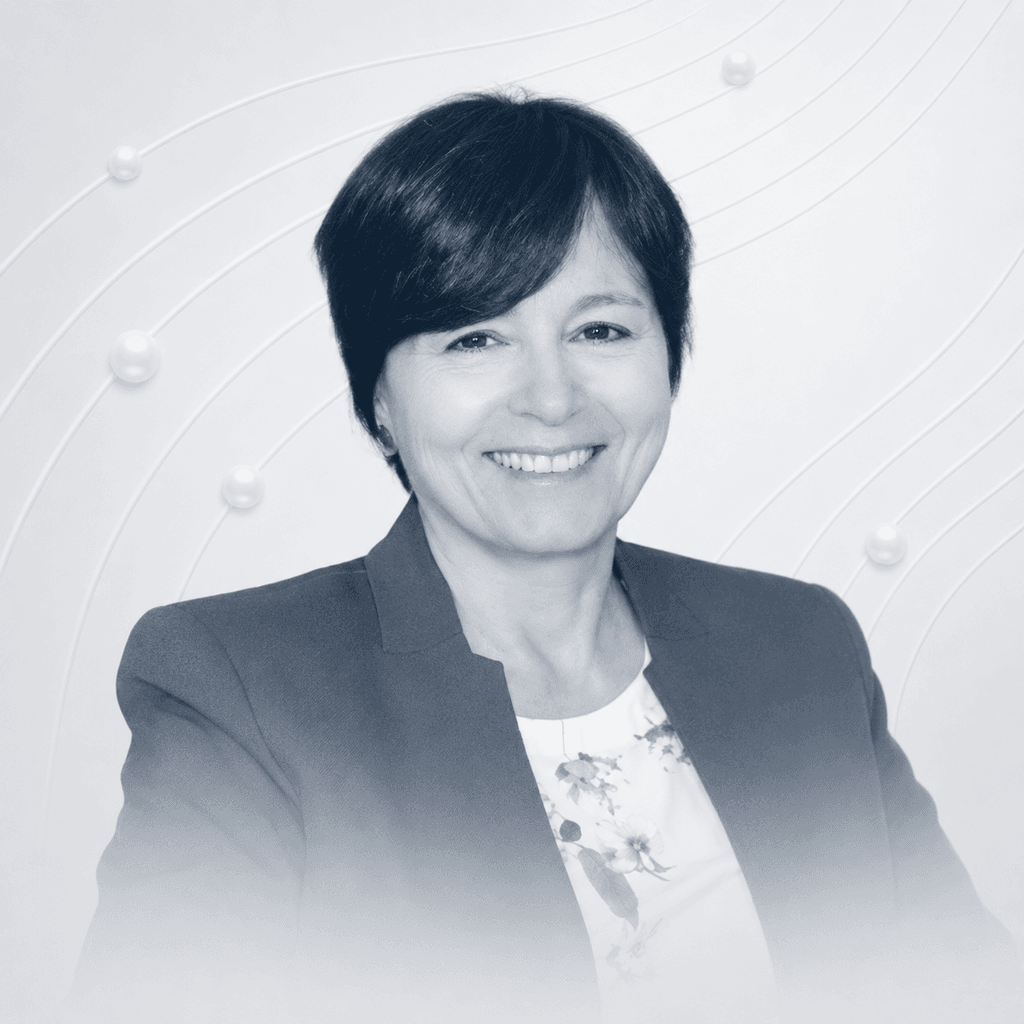
Maria Chiara Carrozza on prosthetic hand and neurorobotics
Episode 12 14.03.2012
-
 play_arrow
PLAY EPISODE
Description arrow_drop_down

Description
What will it take to build a prosthetic hand that your brain accepts as part of your own body? Maria Chiara Carrozza describes the frontier of neurorobotics, where artificial limbs must not only move on command but generate the sensory feedback that creates body ownership.
Subscribe for more from the Convergent Science Network podcast series.
Carozza defines human-robot symbiosis as a relationship where robot and user share the same objectives and are interdependent in performing tasks. Her Neuro-Robotics Research Group at Scuola Superiore Sant’Anna in Pisa develops wearable robots that read non-invasive signals, including surface electromyography, limb movements, eye tracking, and physiological indicators, to infer user intentions without surgical implants. The challenge extends beyond reading intent: the robot must also provide sensory feedback through wearable interfaces that stimulate the skin, enabling the user to perceive the environment through the artificial device.
The interview explores the rubber hand illusion as a bridge between neurophysiology and robotics. When visual and tactile signals are correlated, subjects develop body ownership for a rubber hand, experiencing a stab to the fake hand as if it were real. Carozza’s team is translating this principle into prosthetic design by embedding vibrotactile stimulators inside the socket interface between stump and artificial hand. By mapping finger contact forces to specific stimulation patterns on the residual limb, they aim to create a learned association that could eventually migrate perceptually to the fingertips, leveraging the brain’s remarkable capacity for adaptive remapping.
Carozza also describes exoskeletons for post-stroke rehabilitation, where an external articulated structure acts in parallel with the weakened natural limb. This parallel configuration creates a fundamental control problem: two manipulators must share the same goal and move in harmony, or the system fails and the patient rejects it. Success rates below 90% task completion are unacceptable because the remaining failures create frustration and social embarrassment. The iterative design process, driven by direct feedback from amputees and stroke patients, reveals that cosmetic appearance, lightweight construction, eight-hour battery life, and comfortable skin interfaces are as critical as motor performance.
Tagged as:
Body Ownership neurorobotics prosthetic hand Rubber Hand Sensory Feedback
About the author call_made
CSN Podcasts
Both the triumphs of humanity and its most evil deeds have resulted from collaboration. In a time where humanity is required to aspire to the former and minimize the latter, the question arises of how collaboration arises and why it fails. Surprisingly, this phenomenon, so central to who we are, is not well understood. Hence, a collaborative effort is required to understand collaboration in its full biological, psychological, sociological, cultural, and economic complexity and to translate this understanding into operational impact. This series of podcasts is one step toward achieving these complementary goals. The Collaboration Podcast presents interviews with people who are central orchestrators of collaboration in various domains including business, government, science, art, health, sustainability, and the military. The discussions were conducted by Prof. Dr. Paul F.M.J. Verschure and members of the Program Advisory Committee of the Ernst Strungmann Forum on Collaboration (https://www.esforum.de/forums/ESF32_Collaboration.html) during 2021 and had the goal to sketch a map of opportunities, challenges, and obstacles in human collaboration. The forum took place in May 2022, and now we would like to share this series of interviews with a broader audience. The full report of the Forum will be published in 2023 by MIT Press. The podcast was produced by the Convergent Science Network (https://www.convergentsciencenetwork.org/). Context: The stability of social systems depends critically on realizing sustainable methods of “collaboration,” yet how and by which means collaboration is achieved is not clearly understood; neither are the conditions or processes that lead to its breakdown or failure. Collaboration can be understood as cooperation between agents toward mutually constructed goals. Part of the reason for our lack of understanding is that the phenomenon of collaboration is, by nature, a highly multidisciplinary problem, and effective research into its complexities has been difficult to achieve across the broad range of scientific and technical disciplines involved. The need for a fundamental understanding of collaboration, however, has become increasingly important. Not only does humankind demand answers as it attempts to address critical challenges at multiple scales (e.g., climate change, migration, enhanced automation, social and economic inequality), but ever-increasing technological and economic means of interconnecting people and societies are disrupting long-established, familiar patterns of how we interact. Radical technological changes that are ongoing have the potential to reshape collaboration in ways that are currently hard to predict or influence (e.g., by altering configurations in interaction, information creation, and modes of communication). On one hand, such changes could disrupt hitherto stable forms of collaboration by affecting critical communication channels and traditional roles, as can be observed in the rapidly changing patterns in governance, commerce, and social interaction. Conversely, technology could lead to the emergence of novel, successful forms of collaboration that deviate from traditional “hierarchical” architectures. Evidence of this can be seen in areas as diverse as highly automated manufacturing plants, the open science movement, collaborative software repositories, user-centered services, and the sharing of economy-based modes of organization. Without a fundamental understanding of the mechanisms, processes, and boundary conditions of collaboration, it is not possible to evaluate or predict which of these possible scenarios are sustainable or even plausible. The Forum “How Collaboration Arises and Why it Fails” (May 8–13, 2022, Location: Frankfurt am Main, Germany) Chairs: Andreas Roepstorff and Paul Verschure Program Advisory Committee: Jenna Bednar, Julia R. Lupp, Bhavani R. Rao , Andreas Roepstorff, Ferdinand von Siemens, and Paul Verschure
Episodes


Timestamp
- fast_forward00:00:03 - This is the Convergent Science Network podcast. Leading researchers in the domain
- fast_forward00:00:10 - of neuroscience, brain theory and technology are interviewed by Paul Verscher and Tony Prescott.
- fast_forward00:00:19 - This is Tony Prescott for the Convergent Science Network podcast from the Barcelona
- fast_forward00:00:26 - Summer School on Cognition, Brain and Technology 2011.
- fast_forward00:00:31 - I'm here with Maria Chiara Carroza from PISA, who's the director of the Scuola
- fast_forward00:00:38 - Superiore Santana and the leader of the Neuro-Robotics Research Group.
- fast_forward00:00:44 - So, Chiara, in your talk today, you used the phrase human-robot symbiosis.
- fast_forward00:00:51 - Can you explain what you mean by that?
- fast_forward00:00:55 - Symbiosis for us, we are developing robots
- fast_forward00:00:59 - and means that the robot and the
- fast_forward00:01:02 - user of the robot should share the same objectives and are interdependent in
- fast_forward00:01:10 - going to task and in making actions and in doing some activities of daily living.
- fast_forward00:01:21 - So the robot and the human being are in contact and share the same goals.
- fast_forward00:01:28 - Okay, so how is it that the robot can understand the goals of a person?
- fast_forward00:01:33 - So this is the crucial problem to be solved,
- fast_forward00:01:36 - how to exchange information between the robot and human subject and in order
- fast_forward00:01:43 - to have the subject being in control of the robot with what we call natural control.
- fast_forward00:01:52 - And the title of your group is the Neuro-Robotics Research Group.
- fast_forward00:01:57 - So that implies that you're in some way trying to read the neural activity of
- fast_forward00:02:02 - the person. Is that right?
- fast_forward00:02:05 - The neuro-robotics means that we would like to join the knowledge in the field
- fast_forward00:02:13 - of robotics and in the field of neuroscience in order to develop better robots
- fast_forward00:02:18 - robot able to read the activity of the brain.
- fast_forward00:02:22 - It's not important to read the activity of neurons, but of the brain.
- fast_forward00:02:26 - So we would like to exploit the signals that are available in order to understand
- fast_forward00:02:32 - what the subject really wants to do and try to send this command to the robot
- fast_forward00:02:39 - in order to have the robot execute the action that the human being wants to perform.
- fast_forward00:02:45 - So for the robot to To understand the human, there are various signal channels that you could access.
- fast_forward00:02:51 - And so which are the ones that you think are the most promising?
- fast_forward00:02:55 - It's very difficult to... We are still investigating, so it's difficult to say
- fast_forward00:03:01 - which are more promising.
- fast_forward00:03:04 - We are for the moment using non-invasive signals, which means that we are not
- fast_forward00:03:09 - implanting interfaces in the brain and in the cortical areas of the brain.
- fast_forward00:03:15 - We are trying to exploit the signals that are available without providing a
- fast_forward00:03:21 - surgical implant to the subject.
- fast_forward00:03:24 - That means that we are using electromyographic signals from the surface electrodes on the skin.
- fast_forward00:03:32 - We are also using the movements of the limbs in order to detect the intention.
- fast_forward00:03:38 - We are using the movement of the eyes and all physiological signals that are
- fast_forward00:03:44 - available in order to understand what the subject wants to do,
- fast_forward00:03:48 - and also the conditions of the subject, which are important to provide a good
- fast_forward00:03:53 - interaction between the robot and the subject.
- fast_forward00:03:56 - So it sounds like this is some kind of wearable technology that people would have. Yes, yes.
- fast_forward00:04:03 - We are investigating wearable robots and in particular we are investigating wearable interfaces.
- fast_forward00:04:12 - So interfaces that are in contact with the human skin and the human body,
- fast_forward00:04:16 - able to detect the movements and also able to stimulate the human skin in order
- fast_forward00:04:23 - to provide some sensory feedback to the user.
- fast_forward00:04:26 - Because percepting the environment is important for the user.
- fast_forward00:04:31 - And so we have to provide some sensory feedback in order to achieve,
- fast_forward00:04:35 - to reach the perception in the human brain, which is a mix of sensory feedback,
- fast_forward00:04:42 - experience and knowledge and motivation.
- fast_forward00:04:45 - So we need several agents in order to provide perception.
- fast_forward00:04:51 - And perception is fundamental in order to provide natural control.
- fast_forward00:04:55 - So the types of robots that you're mainly interested in are ones that are interacting
- fast_forward00:05:01 - very closely with people.
- fast_forward00:05:02 - And one type of robot, I guess, would actually be a prosthesis,
- fast_forward00:05:06 - something like a replacement limb, which would be attached to a person and read
- fast_forward00:05:11 - these kinds of signals from their skin, for instance.
- fast_forward00:05:14 - Yes, we are investigating prosthetic hands and in particular how to control
- fast_forward00:05:21 - the hand with the brain, which means to achieve this body ownership with an artificial hand.
- fast_forward00:05:29 - That means that the artificial hand is in contact with the human skin because
- fast_forward00:05:33 - it's implanted on the stump of the subject, and we want to develop.
- fast_forward00:05:41 - A bridge between the hand and the brain in order to provide this exchange of
- fast_forward00:05:46 - signals between the hand and the brain. So this is the main point.
- fast_forward00:05:51 - So a lot of people are building robot hands, but what is special or different
- fast_forward00:05:56 - about a robot hand that could be worn by a person as a prosthesis?
- fast_forward00:06:01 - First of all, you have to develop a hand which is cosmetic, which means that
- fast_forward00:06:08 - the external appearance must be good.
- fast_forward00:06:11 - You cannot think that the user were sort of non-static hand with iron or similar,
- fast_forward00:06:22 - reminding us to Terminator or to fiction robots.
- fast_forward00:06:27 - So the user wants a hand which is similar to the natural hands and wants to
- fast_forward00:06:32 - have social interaction and satisfaction in contacting people and in being in the external world.
- fast_forward00:06:42 - So first of all, the hand should be with a cosmetic glove, then must be lightweight
- fast_forward00:06:47 - because it is implanted on the stump, so the mechanical interaction between
- fast_forward00:06:53 - the hand and the stump must be good.
- fast_forward00:06:56 - And also there is the problem of power consumption. If the hand is active,
- fast_forward00:07:01 - the power internal to the hand is coming from the battery, and And in order
- fast_forward00:07:08 - to provide eight hours or eight operating hours,
- fast_forward00:07:13 - the motors and the activities of the hand must be provided by a single battery.
- fast_forward00:07:18 - So you cannot think to plug the hand during normal activities.
- fast_forward00:07:23 - For example, during working activities or entertainment activities or similar,
- fast_forward00:07:29 - you must provide eight hours or normal operation.
- fast_forward00:07:32 - That means that the system must monitor the energy consumption and try to distribute
- fast_forward00:07:40 - the energy in an appropriate way without losing energy.
- fast_forward00:07:46 - And also that there is another problem.
- fast_forward00:07:48 - It's related to sensory feedback.
- fast_forward00:07:50 - So the hand is in contact with the environment.
- fast_forward00:07:54 - So you should provide the sensors for monitoring the interaction between the
- fast_forward00:07:59 - hand and the environment and
- fast_forward00:08:00 - also sensors for providing proprioception and body ownership to the user.
- fast_forward00:08:08 - So you mentioned body ownership and you described a really interesting experiment
- fast_forward00:08:12 - in your talk where people, subjects in the experiment somehow get a sense of
- fast_forward00:08:18 - body ownership for a hand that's made out of rubber.
- fast_forward00:08:22 - Now, how can that come about?
- fast_forward00:08:24 - Yes, this is an interesting example, well known in neurophysiology,
- fast_forward00:08:29 - and we are trying to export this typical experiment of neurophysiology into robotics.
- fast_forward00:08:38 - That is an experiment where a subject is watching a cosmetic hand,
- fast_forward00:08:45 - a rubber hand, which is close to the natural hand.
- fast_forward00:08:48 - And the subject, by doing some interaction, by brushing on the hand,
- fast_forward00:08:56 - on the rubber hand, on the natural hand, the subject is looking only at the artificial hand.
- fast_forward00:09:02 - If the hand is really similar to the natural hand, the subject starts to develop
- fast_forward00:09:07 - a sort of body ownership for the rubber hand, which starts to belong to the subject.
- fast_forward00:09:13 - So when you stab Stab the rubber hand the subject feels that you are stabbing the real hand.
- fast_forward00:09:21 - So it's something about the correlation of the sensory signals that I get from
- fast_forward00:09:26 - touch on my real hand and seeing somebody stroking the rubber hand that gives
- fast_forward00:09:32 - me this illusion that the rubber hand is part of my body.
- fast_forward00:09:36 - Yes. And so it's a mixture of the visual signal and the tactile signal.
- fast_forward00:09:41 - Okay, the task for neurophysiologists, neuroscientists is to understand if it
- fast_forward00:09:47 - is only related to vision and involving only the areas that are related to vision in the brain.
- fast_forward00:09:57 - And there are some papers demonstrating that also the sensory motor areas of
- fast_forward00:10:02 - the brain are involved in the task.
- fast_forward00:10:04 - That means that there is this involvement of perception for us.
- fast_forward00:10:08 - We are roboticists, we are much more interested in the implications for that.
- fast_forward00:10:13 - That means that we are in principle able to provide a sort of rubber hand, which really.
- fast_forward00:10:24 - Can be introduced in the loop with the brain and also the sensory motor areas
- fast_forward00:10:30 - of the brain can be involved in perceiving the hand as a natural hand.
- fast_forward00:10:36 - So, what we would like to develop is a sort of cosmetic active hand,
- fast_forward00:10:41 - which is replacing the hand which is missing.
- fast_forward00:10:45 - So it's a step forward because in that case the subject is without hand and
- fast_forward00:10:53 - must own the new hand, which is artificial.
- fast_forward00:10:57 - So, existing prostheses are presumably made out of plastic or wood or whatever.
- fast_forward00:11:05 - But if I was wearing such a hand, presumably I still have some feel of ownership
- fast_forward00:11:11 - over the hand because when I touch something with a prosthesis,
- fast_forward00:11:15 - I would still get feedback through my arm from that contact,
- fast_forward00:11:19 - even though it's mediated by a large piece of plastic.
- fast_forward00:11:23 - But you plan to go beyond that and give some direct feedback using sensors on the hand? Yes, yes.
- fast_forward00:11:31 - The stamp is providing some direct feedback about the force and the movement
- fast_forward00:11:38 - of the hand because the proprioception on the stump of the subject is still there.
- fast_forward00:11:47 - And so the subject can feel something in the stump.
- fast_forward00:11:50 - But we would like to do more because what we would like to do is that in the
- fast_forward00:11:55 - socket, which is the interface between the hand and the stump, The socket is the place,
- fast_forward00:12:03 - the mechanical interface between the subject body and the hand.
- fast_forward00:12:09 - In the socket we would like to put some new motors and these motors are intended
- fast_forward00:12:16 - to provide some stimulation on the skin.
- fast_forward00:12:19 - So we made a lot of experiments in understanding how far we can go in delivering
- fast_forward00:12:29 - different stimuli by varying the frequency and also the amplitude of the stimuli.
- fast_forward00:12:35 - And in order to assess the discriminational ability of the subject,
- fast_forward00:12:42 - what we would like to do is to make a sort of mapping between the activity of
- fast_forward00:12:48 - the hand and the stimuli that we provide internal to the socket, to the skin.
- fast_forward00:12:54 - So the subject can learn about and can learn to recognize the activity of the
- fast_forward00:13:02 - hand thanks to this mapping.
- fast_forward00:13:06 - For example, we touch the finger and we provide some stimuli and the subject
- fast_forward00:13:11 - feels on the stamp a stimuli according to the intensity of the contact force or similar.
- fast_forward00:13:19 - Or the force, the intensity of the force can be modulated by providing some
- fast_forward00:13:24 - frequency signals to the stamp of the subject.
- fast_forward00:13:30 - So this activity is in fundamental in order to provide this sensory feedback
- fast_forward00:13:35 - and to develop this body ownership for the subject.
- fast_forward00:13:39 - So you say that they feel this on the skin of the arm, but the sense is on the
- fast_forward00:13:44 - tip of the robot finger. Now, is it possible?
- fast_forward00:13:48 - That, after wearing this device for some time, even though the stimulus is on
- fast_forward00:13:53 - the arm, the stimulus is actually coming from the finger.
- fast_forward00:13:57 - So is it possible that the experience of the subject migrates so that they,
- fast_forward00:14:01 - like in the rubber hand illusion, they have the experience that the stimulus
- fast_forward00:14:06 - is on the tip of the finger?
- fast_forward00:14:08 - Yes, this is exactly the kind of experiment that we are doing now.
- fast_forward00:14:13 - We did some experiments with the subject with
- fast_forward00:14:16 - an implanted interface in the
- fast_forward00:14:19 - peripheral nervous system by stimulating the fibers of the nervous system and
- fast_forward00:14:26 - providing a sort of stimulation we can elicit some sense of the fingers that
- fast_forward00:14:32 - the subject had before having the amputation.
- fast_forward00:14:39 - So in principle, we think that it's possible to provide this kind of mapping
- fast_forward00:14:46 - and try to investigate on the reaction of the subject.
- fast_forward00:14:51 - But in order to do that, we must provide a sort of flexible interface with different
- fast_forward00:14:57 - vibrators and stimulators internal to the socket.
- fast_forward00:15:02 - And we would like to make experiments with amputees
- fast_forward00:15:06 - in order to understand how far we can go
- fast_forward00:15:09 - because in principle we have some models from neurophysiology
- fast_forward00:15:12 - we know from different experiments but
- fast_forward00:15:15 - the data with human beings are very few and
- fast_forward00:15:20 - thanks to the experiment which is not non-invasive it's not requiring surgical
- fast_forward00:15:29 - intervention we think that we would find some amputees, volunteers.
- fast_forward00:15:37 - In order to make experiments on that.
- fast_forward00:15:40 - And one of the things that we're taking advantage of here is that the brain
- fast_forward00:15:46 - maps for the body are very adaptive.
- fast_forward00:15:49 - And I guess they can change and learn to incorporate something which is actually
- fast_forward00:15:55 - an artificial limb as a replacement for a real limb.
- fast_forward00:16:00 - Yes, we rely on that. Neuroscientists are telling us that the ability of the
- fast_forward00:16:08 - brain to adapt is enormous.
- fast_forward00:16:12 - We know that the motivation for the amputee, for the subject to be in the loop
- fast_forward00:16:19 - and to achieve this kind of body ownership is strong.
- fast_forward00:16:23 - We know that subjects using prosthetic hands are waiting for a new development,
- fast_forward00:16:31 - and feeling the external environment is one of the major points when they raise
- fast_forward00:16:40 - issues about future development of the hands.
- fast_forward00:16:44 - They want to feel the external environment. environment so
- fast_forward00:16:47 - we think that because we know that
- fast_forward00:16:50 - the motivation from from the subject is fundamental in
- fast_forward00:16:53 - this kind of research so we we know
- fast_forward00:16:56 - that we can we can do something for them
- fast_forward00:16:59 - but we need some experiments so sometimes
- fast_forward00:17:03 - people that have lost a limb report a
- fast_forward00:17:06 - phantom limb experience where they feel they still
- fast_forward00:17:09 - have the limb and that it's twisted or in some painful position
- fast_forward00:17:12 - so is it possible that a prosthetic would
- fast_forward00:17:16 - be able to help them get over that phantom limb experience
- fast_forward00:17:19 - yes we know that we already developed a
- fast_forward00:17:22 - sort of virtual reality system based on our hand in order to investigate on
- fast_forward00:17:28 - people suffering from phantom limb pain and we hopefully we will be able When
- fast_forward00:17:38 - we will know more about this artificial body ownership.
- fast_forward00:17:42 - We will be able also to face this challenge, which is still a challenge for some individuals.
- fast_forward00:17:50 - They are suffering this kind of pain, which cannot be treated with normal therapy.
- fast_forward00:17:56 - So we know that this can be also a side effect, a positive side effect of our research.
- fast_forward00:18:03 - So another kind of robot technology that you're developing is not so much a
- fast_forward00:18:08 - prosthesis, but an add-on to the body that you call an exoskeleton.
- fast_forward00:18:13 - Could you tell me what that is? The exoskeleton is a sort of external structure
- fast_forward00:18:18 - which is coupled to the joint.
- fast_forward00:18:22 - So in the case of upper limb is a sort of external suit with articulated system
- fast_forward00:18:28 - which is providing assistance to the limb.
- fast_forward00:18:33 - So it's providing, for example, additional torque in order to accomplish some task in the upper limb.
- fast_forward00:18:41 - For example, in reaching an object, when the subject is weak after suffering
- fast_forward00:18:47 - a stroke or similar pathology and has the limb which is weak,
- fast_forward00:18:53 - this kind of external structure is able to provide some force to perform the task.
- fast_forward00:18:58 - So that can be done for assistance, which means a sort of tool to provide some
- fast_forward00:19:04 - additional force for the subject, or can be seen as a therapy.
- fast_forward00:19:11 - What is called the neurorehabilitation therapy, which means that this,
- fast_forward00:19:17 - by doing some exercises in combination with the exoskeleton.
- fast_forward00:19:23 - Like exercise in reaching an object in the space, so flexo-extension of the elbow or the wrist,
- fast_forward00:19:33 - the subject is recovering the synergies and recovering the ability to move again the limb.
- fast_forward00:19:43 - And these are additional to the normal, ordinary physical therapy and must be
- fast_forward00:19:51 - delivered by a therapist in combination with normal therapy.
- fast_forward00:19:56 - And we know that there are some data on behavioral experiments and also clinical
- fast_forward00:20:04 - data telling us that this kind of exercise size in combination with a robot
- fast_forward00:20:10 - are good for restoring movements.
- fast_forward00:20:13 - So I'm imagining some device that's strapped to my forearm, and then there's
- fast_forward00:20:17 - a hinge at the elbow, and then there's a piece on the upper arm as well.
- fast_forward00:20:22 - Yes. And what kind of patients would benefit from using this?
- fast_forward00:20:27 - This kind of therapy in general is aimed at restoring motion in subjects with post-stroke.
- fast_forward00:20:36 - Stroke so with weak limb after stroke and they in general they have problems in moving again their.
- fast_forward00:20:46 - Limb and they are doing some therapy for learning again to control the movement
- fast_forward00:20:53 - for the first step is for for reaching an object in the space so the first step
- fast_forward00:20:59 - is to reach the object the second is to open the hand and use the hand.
- fast_forward00:21:04 - So these kind of exercises are repetitive, which means that they have to do
- fast_forward00:21:10 - the exercise several times, and it's an exercise following a trajectory.
- fast_forward00:21:14 - For example, by holding a sort of handle in the space,
- fast_forward00:21:18 - they have to hold the handle of the joystick and move the joystick in the space
- fast_forward00:21:25 - according to a trajectory by following a prescribed trajectory,
- fast_forward00:21:29 - trajectory and doing this kind of reaching and moving in the space several times
- fast_forward00:21:35 - is useful in order to obtain motor recovery.
- fast_forward00:21:40 - So doing that with a therapist is useful but doing that with a robot assisting
- fast_forward00:21:46 - the subject which is able to provide the same force, the same pattern and in a very.
- fast_forward00:21:54 - Control the environment can provide
- fast_forward00:21:57 - a better recovery so these are people
- fast_forward00:22:00 - that have got completely normal limb function and
- fast_forward00:22:03 - the problem that they have is in the brain yeah where the stroke has damaged
- fast_forward00:22:07 - the part of the brain which would normally control the arm yes so we're counting
- fast_forward00:22:11 - on brain plasticity to find another way of controlling the arm so if we can
- fast_forward00:22:17 - in a repeatable way, move the arm using the robot,
- fast_forward00:22:21 - eventually the brain will take over. Is that how it works?
- fast_forward00:22:24 - Yes, it's like that. It's more complex because also the arm is weak because it's not used anymore.
- fast_forward00:22:32 - And the final objective is to recover also the correct synergies in the muscular
- fast_forward00:22:41 - structure of the subject.
- fast_forward00:22:43 - So it's not only a problem of brain, but it's also a problem of muscles and
- fast_forward00:22:47 - structures and to the correct movements in the space by moving the muscles, but it is exactly that.
- fast_forward00:22:55 - And from our point of view, in robotics, we have to develop such kind of systems
- fast_forward00:23:02 - which are acting in parallel to the natural limb.
- fast_forward00:23:06 - So it's completely different from prosthetics, where you replace a limb which
- fast_forward00:23:13 - is missing, so it's not a parallel.
- fast_forward00:23:16 - A system is substituting the hand.
- fast_forward00:23:20 - In that case of exoskeleton, it's much more complicated because you are introducing
- fast_forward00:23:27 - a system which is acting in parallel.
- fast_forward00:23:30 - So you have two manipulators in parallel. One is the natural limb and one is
- fast_forward00:23:35 - the artificial limb and they are moving together and this is the real symbiosis, which means that the.
- fast_forward00:23:43 - Natural and the artificial manipulators must share the same goal and do the same actions.
- fast_forward00:23:49 - If this symbiosis is not working, the system is failing.
- fast_forward00:23:55 - So this is a really big research problem, that if I have an artificial hand
- fast_forward00:24:00 - and I'm trying to control it using my brain and the hand isn't understanding
- fast_forward00:24:05 - my intentions, it could do all sorts of things that maybe I don't want it to do.
- fast_forward00:24:09 - So how are we going to avoid that? It's very difficult.
- fast_forward00:24:13 - This is our problem in developing shared control, which means that you have
- fast_forward00:24:20 - the subject, which is who is supervising the hand, and then there is an autonomous
- fast_forward00:24:26 - control system internal to the hand.
- fast_forward00:24:28 - And so for robotics, the most important thing is to have the system working
- fast_forward00:24:34 - together with appropriate harmony.
- fast_forward00:24:37 - And so when the system for us is failing,
- fast_forward00:24:41 - when it is not executing exactly what the subject is willing to do,
- fast_forward00:24:47 - and in that case, the subject wants to open the hand and the hand is not opening.
- fast_forward00:24:54 - And that is frustrating for the subject and
- fast_forward00:24:57 - in that case the subject refuses to
- fast_forward00:25:00 - use the hand because the hand is not good
- fast_forward00:25:04 - in performing the task and also for social interaction for the subject is not
- fast_forward00:25:11 - good if the sub if the hand is opening or closing or doing things when the the
- fast_forward00:25:17 - subject doesn't want in causing some embarrassing.
- fast_forward00:25:22 - Situation for the subject.
- fast_forward00:25:25 - So we know and we in our experiments we measure the,
- fast_forward00:25:31 - success percentage of tasks. So which means that if the system is good,
- fast_forward00:25:37 - you can go to 90% of success rate.
- fast_forward00:25:42 - If you go to 60%, the system is not good because that means that you have 40%
- fast_forward00:25:48 - of cases when the hand is not executing the intended task and the system is not good.
- fast_forward00:25:59 - And Because one of the goal is that they use the burden for the user to learn
- fast_forward00:26:06 - and then to use the system must be low.
- fast_forward00:26:10 - So in one of the Star Wars films, I'm sure you know, Luke Skywalker loses a
- fast_forward00:26:16 - hand in a fight with Darth Vader.
- fast_forward00:26:19 - And he goes on a hospital ship and they replace it with an artificial hand.
- fast_forward00:26:24 - Is that science fiction or is it something that we might achieve one day?
- fast_forward00:26:29 - I think we will achieve that.
- fast_forward00:26:31 - I'm sure. I'm pretty sure we will achieve. I don't know when.
- fast_forward00:26:35 - I don't know if I will be alive, but I think we will achieve that.
- fast_forward00:26:40 - And this is exactly our objective.
- fast_forward00:26:43 - So you have a wider approach.
- fast_forward00:26:47 - So you described the exoskeleton as a way of doing some kind of therapy,
- fast_forward00:26:52 - but you're interested more generally in how we could use robots in therapy.
- fast_forward00:26:57 - Are there some other ideas related to that that you're developing?
- fast_forward00:27:02 - We are also developing artificial skin and we are interested in developing the
- fast_forward00:27:07 - skin because the skin is fundamental in order to provide a safe interaction.
- fast_forward00:27:11 - It is not the skin of the robot, it is also the skin between the robot and the subject,
- fast_forward00:27:18 - which is much more important, because the interface between the robot and the
- fast_forward00:27:24 - human body must be monitored in order to avoid situations where you can provide
- fast_forward00:27:33 - too much force or too much stress to the skin of the subject.
- fast_forward00:27:38 - So we are interested in developing the skin of the robot for what concerns the
- fast_forward00:27:43 - interaction with the environment, which means the properties of the object that
- fast_forward00:27:49 - is manipulated or similar.
- fast_forward00:27:51 - And also we are interested in developing the skin between the robot and the human body.
- fast_forward00:27:57 - And in this kind of skin, we are also including the stimulation system that
- fast_forward00:28:04 - we were illustrating before.
- fast_forward00:28:06 - The skin between the robot and the human body, so this is something that goes
- fast_forward00:28:10 - inside the sleeve that fits over the arm?
- fast_forward00:28:13 - Yes, inside the sleeve, yes. Right, okay.
- fast_forward00:28:16 - And that will be sort of a tight fit but not invasive? Tight fit but not invasive. Yeah.
- fast_forward00:28:22 - And this fit is providing you the distribution of forces and stress on the human skin.
- fast_forward00:28:32 - So it's fundamental because one of the reasons why the subjects are refusing
- fast_forward00:28:38 - system is that they are providing arm to the skin and pain and even too much
- fast_forward00:28:46 - force in some particular positions.
- fast_forward00:28:50 - And this kind of force is dangerous to provide pain for the subject.
- fast_forward00:28:57 - So we know that the good fitting is fundamental for wearing the prosthesis and also the exoskeleton.
- fast_forward00:29:08 - So the big research challenge is right now, because it's still in the laboratory,
- fast_forward00:29:12 - this technology, isn't it?
- fast_forward00:29:14 - You're not yet at the stage of being able to... We are developing experiments
- fast_forward00:29:18 - in the laboratory and also we are doing experiments in clinical facilities with
- fast_forward00:29:24 - amputees in order to make trials for our interfaces.
- fast_forward00:29:29 - So it's not commercial at all.
- fast_forward00:29:31 - What do the amputees report about?
- fast_forward00:29:34 - It depends on the experiments. So their reports is useful because it's a feedback for our design.
- fast_forward00:29:40 - So our design is cyclic, which means that we make the prototype,
- fast_forward00:29:46 - we make the experiments, and then we have the feedback on the design,
- fast_forward00:29:49 - and that is fundamental.
- fast_forward00:29:50 - Some ideas are already transferred to the commercial areas, but it's not directly
- fast_forward00:29:59 - that we develop a new hand.
- fast_forward00:30:01 - We develop some ideas, some details, also some research lines and guidelines
- fast_forward00:30:08 - for designs and also mechanism and patterns.
- fast_forward00:30:11 - And these are pieces that are useful for commercial hands and for new products.
- fast_forward00:30:17 - It's interesting that you say it's an iterative process
- fast_forward00:30:20 - so you're relying on user feedback and that's
- fast_forward00:30:24 - one of the things that guides you and where you go with the design process
- fast_forward00:30:27 - yes all the development in medical devices
- fast_forward00:30:30 - is done like that by making
- fast_forward00:30:35 - experiments with subjects and users and going
- fast_forward00:30:38 - back in changing the
- fast_forward00:30:41 - design according to the user assessment okay well this is all sounds really
- fast_forward00:30:47 - exciting I wonder if you have any general predictions for how this technology
- fast_forward00:30:53 - is going to change the way our society operates in the 10-15 years from now
- fast_forward00:30:58 - I think that the Star Wars prediction is enough for the moment.
- fast_forward00:31:02 - That's a pretty ambitious one The hand plug and play Thank you very much and
- fast_forward00:31:08 - thank you for coming to BCBT.
- fast_forward00:31:13 - The CSN podcast was produced by the Convergent Science Network of Biometrics
- fast_forward00:31:20 - and Biohybrid Systems, a project funded by the European 7th Research Framework Programme.
- fast_forward00:31:28 - For more interviews, recorded lectures or upcoming conferences in the field
- fast_forward00:31:33 - of biometrics and biohybrid systems, go to csnnetwork.eu.
- fast_forward00:31:40 - Music.
Tags
Brain brain evolution Cerebellar cerebellum collaboration consciousness Cortex Cortical decision making disorders of consciousness Framework grid cells Memory mirror neurons Motor motor cortex neocortex Neural Neurons place cells Populations prediction prefrontal cortex Robots scientific collaboration Spatial

Exploring the convergence of neuroscience, robotics, and AI through conversations with leading researchers since 2010.
A project of the Convergent Science Network Foundation.
Follow us on
© CSN Podcasts. Developed by IMCreative & WEBC
Be the first to leave a comment