


play_arrow
Listeners:
Top listeners:
00:00
00:00
volume_up
chevron_left
-
 play_arrow
Paul Verschure on consciousness and distributed adaptive control CSN Podcasts
-
 play_arrow
Edvard Moser on grid cells and entorhinal cortex CSN Podcasts
-
 play_arrow
Giacomo Rizzolatti on mirror neurons and action understanding CSN Podcasts
-
 play_arrow
Robert Axelrod on game theory and prisoner's dilemma CSN Podcasts
-
 play_arrow
Adrian Owen on disorders of consciousness and vegetative state CSN Podcasts
-
 play_arrow
Jonathan Whitlock on markerless motion capture and posterior parietal cortex CSN Podcasts
-
 play_arrow
Luis Puelles on neuroanatomy and prosomeric model CSN Podcasts
-
 play_arrow
Zoltan Molnar on subplate neurons and cortical development CSN Podcasts

- arrow_back Home
- keyboard_arrow_right Podcast
- keyboard_arrow_right Season 2012
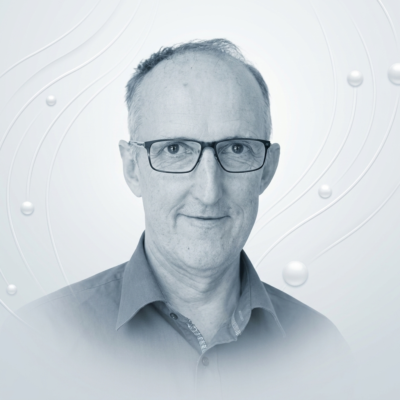
Frank Grasso on biomimetic robotics and lobster olfaction
Episode 2 14.03.2012
-
 play_arrow
PLAY EPISODE
Description arrow_drop_down

Description
How does a lobster find food in a turbulent ocean where chemical signals vanish for minutes at a time , and what can a robot lobster teach us about the strategies that work and fail? Frank Grasso explores the neuroscience of olfactory search through biomimetic robotics. Subscribe for more from the Convergent Science Network podcast series. Frank Grasso studies “crunchies and squishies”, lobsters and octopuses, not because they resemble us, but precisely because they do not. These animals face the same physical challenges as vertebrates but solve them with completely different brain and body architectures, revealing the true design space for adaptive behavior. His laboratory at Brooklyn College builds robot models of these animals, tests them under identical conditions to the real organisms, and uses the animal’s performance as a yardstick for evaluating hypotheses about neural control. The lobster work centers on olfactory search in turbulent water. Seventy percent of the lobster brain is dedicated to olfactory processing, and its chemical sensors are extraordinarily sensitive , capable of detecting concentrations equivalent to a teaspoon of rose water dissolved in Lake Champlain. But the real challenge is not sensitivity; it is intermittency. Even directly within a chemical plume, sensors may detect nothing for minutes at a time, punctuated by staccato bursts of odor pulses. Grasso’s team measured these environments directly and found that the temporal structure of the signal, its rhythm and patterning, carries spatial information that pure concentration measurements cannot provide. When robot lobsters equipped with biologically matched sensors were tested using algorithms that biologists had proposed for a century, the robots failed dramatically. Simple chemotaxis strategies that work in smooth gradients collapse in turbulent plumes. Adding flow-sensing information improved performance, but only in specific regions of the plume. The robots revealed that different distances from the source present qualitatively different information landscapes, requiring different strategies , a finding that would have been difficult to establish from animal observation alone. The octopus work addresses a different frontier: controlling a body with no hard parts. Octopus arms are muscular hydrostats , enclosed bags of water that reshape themselves through muscle-against-muscle contraction, with no skeleton at all. Three-fifths of the octopus’s half-billion neurons reside outside the central brain, distributed in a brachial plexus that may allow arms to negotiate with each other rather than requiring centralized executive control. Combined with the animal’s exceptional learning abilities , possibly an adaptation to both a complex body and exponential growth from milligrams to 90 kilograms in a single year , the octopus represents a radically different solution to the problem of embodied intelligence.
Tagged as:
biomimetic robotics Lobster lobster olfaction octopus Olfactory Search Turbulent
About the author call_made
CSN Podcasts
Both the triumphs of humanity and its most evil deeds have resulted from collaboration. In a time where humanity is required to aspire to the former and minimize the latter, the question arises of how collaboration arises and why it fails. Surprisingly, this phenomenon, so central to who we are, is not well understood. Hence, a collaborative effort is required to understand collaboration in its full biological, psychological, sociological, cultural, and economic complexity and to translate this understanding into operational impact. This series of podcasts is one step toward achieving these complementary goals. The Collaboration Podcast presents interviews with people who are central orchestrators of collaboration in various domains including business, government, science, art, health, sustainability, and the military. The discussions were conducted by Prof. Dr. Paul F.M.J. Verschure and members of the Program Advisory Committee of the Ernst Strungmann Forum on Collaboration (https://www.esforum.de/forums/ESF32_Collaboration.html) during 2021 and had the goal to sketch a map of opportunities, challenges, and obstacles in human collaboration. The forum took place in May 2022, and now we would like to share this series of interviews with a broader audience. The full report of the Forum will be published in 2023 by MIT Press. The podcast was produced by the Convergent Science Network (https://www.convergentsciencenetwork.org/). Context: The stability of social systems depends critically on realizing sustainable methods of “collaboration,” yet how and by which means collaboration is achieved is not clearly understood; neither are the conditions or processes that lead to its breakdown or failure. Collaboration can be understood as cooperation between agents toward mutually constructed goals. Part of the reason for our lack of understanding is that the phenomenon of collaboration is, by nature, a highly multidisciplinary problem, and effective research into its complexities has been difficult to achieve across the broad range of scientific and technical disciplines involved. The need for a fundamental understanding of collaboration, however, has become increasingly important. Not only does humankind demand answers as it attempts to address critical challenges at multiple scales (e.g., climate change, migration, enhanced automation, social and economic inequality), but ever-increasing technological and economic means of interconnecting people and societies are disrupting long-established, familiar patterns of how we interact. Radical technological changes that are ongoing have the potential to reshape collaboration in ways that are currently hard to predict or influence (e.g., by altering configurations in interaction, information creation, and modes of communication). On one hand, such changes could disrupt hitherto stable forms of collaboration by affecting critical communication channels and traditional roles, as can be observed in the rapidly changing patterns in governance, commerce, and social interaction. Conversely, technology could lead to the emergence of novel, successful forms of collaboration that deviate from traditional “hierarchical” architectures. Evidence of this can be seen in areas as diverse as highly automated manufacturing plants, the open science movement, collaborative software repositories, user-centered services, and the sharing of economy-based modes of organization. Without a fundamental understanding of the mechanisms, processes, and boundary conditions of collaboration, it is not possible to evaluate or predict which of these possible scenarios are sustainable or even plausible. The Forum “How Collaboration Arises and Why it Fails” (May 8–13, 2022, Location: Frankfurt am Main, Germany) Chairs: Andreas Roepstorff and Paul Verschure Program Advisory Committee: Jenna Bednar, Julia R. Lupp, Bhavani R. Rao , Andreas Roepstorff, Ferdinand von Siemens, and Paul Verschure
Episodes


Timestamp
- fast_forward00:00:03 - This is the Convergent Science Network podcast. Leading researchers in the domain
- fast_forward00:00:10 - of neuroscience, brain theory and technology are interviewed by Paul Verscher and Tony Prescott.
- fast_forward00:00:19 - This is Tony Prescott for the Convergent Science Network podcast from the Barcelona
- fast_forward00:00:23 - Cognition, Brain and Technology Summer School 2012.
- fast_forward00:00:26 - 2012, and I'm here with Frank Grasso from the Biomimetics and Cognitive Systems Laboratory.
- fast_forward00:00:34 - A cognitive robotics lab. I'm sorry. At Brooklyn College in City University, New York. That's right.
- fast_forward00:00:42 - So, Frank, I've heard you describe your research as being about crunchies and squishies.
- fast_forward00:00:48 - Ah, yeah. Can you explain what you mean by that?
- fast_forward00:00:50 - Well, that's actually not my own terminology. It's a classic terminology from
- fast_forward00:00:55 - the old old neuroethological and neurophysiological studies when people studied
- fast_forward00:01:00 - invertebrate systems as quote-unquote simple alternatives to mammals and higher organisms.
- fast_forward00:01:09 - There was this taxonomy that divided the invertebrate animals into crunchies,
- fast_forward00:01:15 - which have a hard exoskeleton like crabs and lobsters and so forth,
- fast_forward00:01:19 - and squishies, things like octopuses and snails and so forth,
- fast_forward00:01:22 - that when you step on them, they go squish.
- fast_forward00:01:26 - So given that there are so many species we could study in the world,
- fast_forward00:01:29 - and some of them are more closely related to us than others,
- fast_forward00:01:33 - why would you want to study something which was clearly very different from
- fast_forward00:01:38 - us, like a crunchy or a squishy? Precisely because it is so different.
- fast_forward00:01:42 - These animals are of comparable size to us, the ones that I've chosen to study at least.
- fast_forward00:01:47 - They operate in a world that has the same sort of physics that we have to deal
- fast_forward00:01:50 - with, we humans have to deal with, and mammals have had to deal with,
- fast_forward00:01:53 - but their bodies and their brains have completely different architectures.
- fast_forward00:01:57 - And so they have succeeded in being able to cope with this world,
- fast_forward00:02:01 - and we get the contrasts and appreciate,
- fast_forward00:02:05 - really, how the problems can be solved, not just by one system.
- fast_forward00:02:11 - So would it be fair to say that your interest is in understanding the design
- fast_forward00:02:16 - space for animals by looking at the difference between.
- fast_forward00:02:21 - These different kinds of animal designs. Yeah, I think that's fair.
- fast_forward00:02:26 - And I've been pulled in the direction of thinking more about bodies than I would
- fast_forward00:02:30 - like because I've been principally interested in brains, and the brain architecture
- fast_forward00:02:34 - is the thing that I've really been driven to.
- fast_forward00:02:38 - I was trained as a computational neuroscientist, and so I've been pulled that way.
- fast_forward00:02:43 - And it's been an area of tremendous fascination to be able
- fast_forward00:02:46 - to understand the biomechanics and and and all of
- fast_forward00:02:48 - that connects to embodiment and situatedness that i have come to embrace in
- fast_forward00:02:53 - thinking about uh how brains actually uh realize behavior and brains have evolved
- fast_forward00:03:00 - in bodies in environments and the particular uh any particular species that you look at.
- fast_forward00:03:07 - In order to understand the brain you have to understand those other parts too,
- fast_forward00:03:11 - That's the idea, absolutely.
- fast_forward00:03:13 - And so in your lab, you're studying intact animals from the point of view of
- fast_forward00:03:19 - their behaviour, as well as doing some neurophysiology?
- fast_forward00:03:22 - Well, we have done neurophysiology in the past and we hope to do it in the future,
- fast_forward00:03:27 - but it's fair to say that most of what we've done recently has been behavioural
- fast_forward00:03:33 - work with the animals, yeah.
- fast_forward00:03:34 - And the biorobotics part? So the overall principle that we've worked on here
- fast_forward00:03:40 - is this idea of implementing a robot as a way of testing hypotheses about how
- fast_forward00:03:45 - behavior is coordinated and controlled within the organism.
- fast_forward00:03:50 - So we build tanks where we can test lobster behavior and then we can test the
- fast_forward00:03:57 - robots that we build under identical conditions to those that we test the lobsters
- fast_forward00:04:01 - with and then that becomes a yardstick.
- fast_forward00:04:04 - The lobster's behavior becomes a yardstick for evaluating how successful or
- fast_forward00:04:08 - unsuccessful our ideas about how behavior is coordinated and controlled are.
- fast_forward00:04:13 - And similarly with the octopus, we have the animals under the same roof in the
- fast_forward00:04:17 - laboratory, so we can look at their behavior under that context and then build
- fast_forward00:04:22 - robots or simulations and use the performance literally as a yardstick.
- fast_forward00:04:27 - So it's very hard to build a robot lobster. I guess it's pretty near impossible,
- fast_forward00:04:32 - given current technology, to build a robot octopus.
- fast_forward00:04:36 - So in order to get useful data from your robots, what do you regard as a sufficiently
- fast_forward00:04:42 - biological-like robot model?
- fast_forward00:04:45 - So I think what you have to do is to take the top-down approach and think about
- fast_forward00:04:49 - the theory that you're implementing.
- fast_forward00:04:52 - And so if your listeners are thinking about a robot lobster or a robot octopus
- fast_forward00:04:59 - that looks like a real lobster or looks like a real octopus,
- fast_forward00:05:02 - they'll be sadly disappointed.
- fast_forward00:05:04 - But if you're thinking about what a brain needs to do, then you can do this
- fast_forward00:05:10 - thing that I called biomimetic scaling, where you make certain that the key
- fast_forward00:05:15 - features of the system you're interested in are reproduced by that robot body.
- fast_forward00:05:19 - So things like the temporal processing capabilities of a sensor,
- fast_forward00:05:23 - the speed at which the motors allow the body to translate through space,
- fast_forward00:05:29 - the spatial sampling properties of the sensors,
- fast_forward00:05:34 - the central architecture inside of the robot.
- fast_forward00:05:37 - All of those things can be matched to the key points that are suggested by the
- fast_forward00:05:41 - theory that you're testing.
- fast_forward00:05:43 - So one of the areas that you've been working on is how lobsters are able to
- fast_forward00:05:49 - detect a source of chemicals that's in the water, a sort of olfactory source.
- fast_forward00:05:55 - And can you give me a brief description of what it's like to be a lobster trying
- fast_forward00:06:00 - to search for these things?
- fast_forward00:06:02 - And what are the insights that you've got from building robot lobsters that
- fast_forward00:06:07 - you might not have had just from studying the animal? Yeah.
- fast_forward00:06:11 - Well, I think it's difficult to really know what an animal experiences.
- fast_forward00:06:17 - There's the old ethologist's idea of the umwelt.
- fast_forward00:06:21 - And we can kind of get there by saying, what senses does the animal have and
- fast_forward00:06:26 - what information comes in to that animal's brain that it's able to use?
- fast_forward00:06:31 - And that's pretty much where I feel comfortable in terms of talking about the
- fast_forward00:06:34 - experience of the animal. I wasn't really going for consciousness, actually.
- fast_forward00:06:37 - I was just saying, imagine I'm sitting in the water and I've got lobster-like senses.
- fast_forward00:06:44 - Exactly, exactly. What kind of things are happening on my senses?
- fast_forward00:06:47 - Just to talk a little bit about the consciousness level, you don't even have
- fast_forward00:06:50 - to jump to consciousness.
- fast_forward00:06:51 - I think even understanding the perceptions of an organism, those things that
- fast_forward00:06:56 - are constructed from the sensory
- fast_forward00:06:59 - inputs, requires a lot of inference and a lot of… of interpretation.
- fast_forward00:07:06 - So, but, um, uh, from with that caveat in mind, the key phrase is intermittency.
- fast_forward00:07:13 - Um, when you, uh,
- fast_forward00:07:16 - want to understand how to build the sensors to put into a robot lobster,
- fast_forward00:07:21 - you look at the nature of the signals that are coming into the brain.
- fast_forward00:07:25 - And it turns out, and folks who've studied moths.
- fast_forward00:07:29 - Before us knew about this problem of intermittency as well in the air,
- fast_forward00:07:34 - but intermittency is basically the period of time during which the sensor is
- fast_forward00:07:39 - active, it's on, It's detecting the thing of interest out there in the world.
- fast_forward00:07:44 - And the amazing thing that we found when we actually went out and measured the
- fast_forward00:07:49 - environment that the robots would be operating in or that the lobsters had operated
- fast_forward00:07:53 - in was that there were long periods of time where you would be in a place where
- fast_forward00:07:59 - a statistical average would say,
- fast_forward00:08:01 - yes, you must be inside of the region of space that it's influenced by the source of the chemical.
- fast_forward00:08:07 - But in fact, it would be long periods of time where there was no signal.
- fast_forward00:08:10 - That's what we call intermittency.
- fast_forward00:08:11 - So you could be right there in the middle of, imagine a smokestack,
- fast_forward00:08:15 - right, as a source of odor pumping out.
- fast_forward00:08:18 - You could be standing in what looks like the output from a smokestack and see
- fast_forward00:08:24 - absolutely no chemical signal there for two minutes at a time, one minute. it.
- fast_forward00:08:30 - And then you might be hit with a whole barrage of these little intermittent,
- fast_forward00:08:34 - uh, uh, pulses of, of odor.
- fast_forward00:08:37 - So it's a, it's this kind of staccato world that the animal lives in.
- fast_forward00:08:41 - And during the talk, I played these audio recordings that we had made from a turbulent odor plume.
- fast_forward00:08:49 - And, uh, if we do think about the perceptions of a lobster and maybe use an
- fast_forward00:08:54 - acoustic analogy, analogy.
- fast_forward00:08:56 - My auditory system gave me a kind of musical quality to certain positions in
- fast_forward00:09:03 - the plume and a kind of non-musical quality.
- fast_forward00:09:06 - And if you take enough samples that way, you could begin to get a sense that
- fast_forward00:09:11 - maybe different parts of space that are influenced by chemicals from a particular
- fast_forward00:09:16 - source have a quality that could be described in aggregate from that.
- fast_forward00:09:21 - And that's one of the things that we learned from studying just the sensory
- fast_forward00:09:25 - umwelt of the animal, by directly studying the chemical distributions.
- fast_forward00:09:29 - So we're talking about your typical lobster now, not just any special lobster.
- fast_forward00:09:34 - Are they chemical sensing specialists in some way? Oh, that's completely true.
- fast_forward00:09:39 - It depends upon who you read and what interpretations you place on the primary
- fast_forward00:09:45 - data, but 70% of the lobster brain is estimated to be associated with olfactory reprocessing.
- fast_forward00:09:51 - And olfactory processing is important to them because it's for finding food,
- fast_forward00:09:56 - presumably. Yeah, they use it to find food.
- fast_forward00:09:59 - Many arthropods use it to find mates. It's probable that they use it to find
- fast_forward00:10:04 - mates, although it hasn't been—lobsters use it to find mates,
- fast_forward00:10:07 - although it hasn't been definitively demonstrated.
- fast_forward00:10:10 - There's a divide between animals that have pheromones and animals that don't.
- fast_forward00:10:15 - And no one has been able to find a lobster pheromone. There have been a few claims and so forth.
- fast_forward00:10:20 - So it is some evidence in the literature from Yela Atema that they actually do find mates that way.
- fast_forward00:10:28 - They also can smell states of decomposition
- fast_forward00:10:33 - and they can reject food items that are in a too bad a state.
- fast_forward00:10:37 - Although it's kind of funny to think about what would be too bad for a lobster to take.
- fast_forward00:10:42 - So they use it for those sorts of things to get at the quality.
- fast_forward00:10:45 - So that was definitely what they'd be using it for. And the Navy was very interested
- fast_forward00:10:49 - in American lobsters because the U.S.
- fast_forward00:10:52 - Navy, because they were so good at being able to solve the spatial localization problem.
- fast_forward00:10:57 - And presumably that's because they are trying to forage using the olfactory sense.
- fast_forward00:11:04 - And it's more, I'm sorry, 70% of the brain is what we're talking about. out.
- fast_forward00:11:08 - And, um, they are capable of very fine olfactory discriminations and have very,
- fast_forward00:11:16 - very low detection thresholds.
- fast_forward00:11:18 - Um, one analogy that I heard is that you could take a lake, the size of Lake
- fast_forward00:11:23 - Champlain and put a teaspoon of rose water in it, stir it up completely.
- fast_forward00:11:28 - And then the, the, the olfactory system would be able to tell the difference
- fast_forward00:11:32 - between the lake pre and post rose water inclusion.
- fast_forward00:11:37 - Wow. So it needs so many neurons in order to be able to discriminate so many
- fast_forward00:11:44 - different types of chemicals.
- fast_forward00:11:46 - It also needs to be able to do that to give it this very high fidelity for very weak signals.
- fast_forward00:11:53 - And then it needs to do this integration over time.
- fast_forward00:11:58 - So you've started to break down some of those aspects of the problem and to
- fast_forward00:12:03 - understand the mechanisms. systems.
- fast_forward00:12:05 - Which is the one that you find most interesting? Well, the one that we focused
- fast_forward00:12:09 - on has been the timing, the one that relates to memory.
- fast_forward00:12:12 - Others have done the work that's associated with what I call the what question, what am I smelling?
- fast_forward00:12:18 - I was talking about the 70% of the brain, but the one that leads into memory
- fast_forward00:12:23 - is definitely the temporal processing part, and that's part of the reason why
- fast_forward00:12:27 - I claim to have interests in things cognitive, right?
- fast_forward00:12:30 - So the temporal processing bit is using quite a lot of that olfactory brain?
- fast_forward00:12:36 - Well, we don't know how much of the brain is being used because we've never
- fast_forward00:12:40 - been able to go in and visualize, say, with voltage-sensitive dyes during the
- fast_forward00:12:44 - brain of an animal during a tracking episode.
- fast_forward00:12:48 - But from the anatomy, which is a strong guidepost,
- fast_forward00:12:52 - you can imagine that what happens is the first volley of chemicals comes into
- fast_forward00:12:57 - the brain, a region called the
- fast_forward00:12:59 - olfactory lobe, and that does the initial sorting of the what question.
- fast_forward00:13:03 - And there's a much larger lobe, which is called the accessory lobe,
- fast_forward00:13:06 - where olfactory information is processed that's come from the – sorry,
- fast_forward00:13:13 - the accessory lobe is processed coming from the olfactory lobe.
- fast_forward00:13:17 - But also, it's a point of convergence of flow information that's also been processed.
- fast_forward00:13:22 - So it's a second-order neuropil, second-order, beautifully organized,
- fast_forward00:13:26 - cytotectonically organized structure that has a huge amount of processing.
- fast_forward00:13:31 - And it's likely that those memory relationships, in fact, are discriminated
- fast_forward00:13:39 - there, stored there for some period of time in reverberating circuits,
- fast_forward00:13:42 - just from looking at the architecture.
- fast_forward00:13:44 - So it's likely, although we don't have very much direct evidence.
- fast_forward00:13:48 - And what are the sensors like that the animal's using? Oh, the sensors are amazing. Amazing.
- fast_forward00:13:55 - You would really be surprised at the sophistication of the chemical and fluid
- fast_forward00:14:02 - mechanical sensors on a lobster.
- fast_forward00:14:05 - So if you look at a lobster, there are a number of appendages coming off of the front end of it.
- fast_forward00:14:11 - There were the large antennae, but those aren't chemosensory or mechanosensory
- fast_forward00:14:16 - in the fluid mechanical sense.
- fast_forward00:14:17 - There's the ability to sense flow. They're like parking curb detectors that,
- fast_forward00:14:21 - you know, maybe like rat's whiskers that they kind of bump into the walls with.
- fast_forward00:14:26 - But if you get down to the three centimeter long middle antennuals,
- fast_forward00:14:31 - and there are two pairs of them, there's one that has a quarter of a million
- fast_forward00:14:36 - primary chemoreceptors arranged along the length of that structure.
- fast_forward00:14:41 - The animal can move it through the water very quickly in sample space,
- fast_forward00:14:45 - or it can hold it stationary as it does when it's tracking and get a large volley of information.
- fast_forward00:14:51 - And that, that, um...
- fast_forward00:14:55 - Antenual has many segments, and each one of those segments is the home of about
- fast_forward00:14:59 - 300 primary chemoreceptor neurons that do this decomposition and fragmentation
- fast_forward00:15:07 - of the chemical composition.
- fast_forward00:15:09 - Then along the sides of those are these nine odd different kinds of flow detectors.
- fast_forward00:15:16 - And so on that one structure, you have chemical information coming in in one
- fast_forward00:15:23 - physical and temporal context and mechanical information about the flow.
- fast_forward00:15:27 - And then those flow into the brain structures that I was talking about.
- fast_forward00:15:30 - The information flows in there that way.
- fast_forward00:15:33 - And so with two of these, the animal uses two of them to be able to tell the
- fast_forward00:15:38 - difference in the quality of chemicals on the left and right side as it's moving
- fast_forward00:15:43 - into a flow, as well as the intermittency that I was talking about. out.
- fast_forward00:15:46 - And these sensors all go through a process called adaptation.
- fast_forward00:15:50 - They actually adjust their firing rate with fatigue. So it's a dynamic system
- fast_forward00:15:55 - that can make for some temporal processing in the periphery from the very beginning
- fast_forward00:15:59 - that make the story richly complicated.
- fast_forward00:16:02 - And also probably a reason why the Navy was so interested in these animals,
- fast_forward00:16:06 - because they've tapped many levels of organization of the world with this elegant sensor.
- fast_forward00:16:12 - So I think despite objecting to my question, you have actually given me quite
- fast_forward00:16:16 - a good impression of what it's like to be a lobster.
- fast_forward00:16:19 - But you haven't addressed my second half of my question. What have we learned
- fast_forward00:16:24 - by building robot models?
- fast_forward00:16:26 - Right. So we learned some things about the nature of the problem that the animal has to solve.
- fast_forward00:16:35 - And fluid mechanicians would know about these sorts of things,
- fast_forward00:16:40 - but maybe not have put them together without thinking specifically about the lobster.
- fast_forward00:16:45 - And when you attempt to use the animal as a yardstick, you know what looks normal,
- fast_forward00:16:52 - what is normal behavior.
- fast_forward00:16:53 - So we built a robot lobster. We equipped it with sensors that would provide
- fast_forward00:16:58 - the information at the right rate and the right sensory interval and the right spatial organization.
- fast_forward00:17:04 - And we turned the lobster loose, the robot lobster loose in the same conditions
- fast_forward00:17:08 - that we turned to regular lobster loose, and the behavior of the agent was completely different.
- fast_forward00:17:14 - And so we were able to say, no, this mechanism that biologists have been saying
- fast_forward00:17:19 - for a hundred years is what animals like this are doing, can't work.
- fast_forward00:17:24 - All right, that isn't the fluid mechanics yet, that's the biology.
- fast_forward00:17:28 - And then we went on to test some others.
- fast_forward00:17:32 - We were able to define different regions at different distances from the source
- fast_forward00:17:38 - of the chemical where a very simple algorithm could be effective or completely ineffective.
- fast_forward00:17:44 - And we could do an information analysis of what the information coming into
- fast_forward00:17:48 - the robot had been as it made its decisions following our rules to say, in this region,
- fast_forward00:17:54 - there was absolutely no structure and no information for guidance if you did
- fast_forward00:17:58 - a purely chemical analysis.
- fast_forward00:18:00 - If you just used chemical information coming in, and that pointed us towards the need to use flow.
- fast_forward00:18:06 - Some flow information disambiguated it, and our performance measures became
- fast_forward00:18:11 - closer to those of what a lobster actually does.
- fast_forward00:18:16 - We're learning about different parts of the fluid mechanical regime that tell
- fast_forward00:18:21 - people who would like to build robots that can track chemicals.
- fast_forward00:18:24 - These are the problems that you have to face and solve. By the way,
- fast_forward00:18:28 - these are good ways of being able to tackle them and ways that won't work at all.
- fast_forward00:18:32 - On the other hand, we're learning about strategies that don't work for the biology.
- fast_forward00:18:37 - We're moving in both directions. So the robot allows you to look at explanations
- fast_forward00:18:43 - people have proposed and to
- fast_forward00:18:45 - give them a physical test in an environment very similar to the lobster.
- fast_forward00:18:49 - And if it doesn't work, you can be fairly sure it doesn't work in the real animal,
- fast_forward00:18:54 - even though your robot lobster is in many ways completely different from the real animal.
- fast_forward00:18:59 - But on the things that matter, some aspects of its sensing and processing,
- fast_forward00:19:04 - you've copied what you think is important.
- fast_forward00:19:07 - That's right. And that's that That idea of biomimetic scaling that I was talking
- fast_forward00:19:10 - about where you say this theory requires that the animal has this kind of temporal
- fast_forward00:19:15 - and spatial comparison on its sensors, this kind of central processing, and this kind of output.
- fast_forward00:19:21 - And it doesn't have to have sensors on its feet in order to be able to do it.
- fast_forward00:19:25 - It doesn't have to have legs in order to be able to test it.
- fast_forward00:19:28 - Scientific ideas are really ideas that kind of exist as abstractions of what we think is going on.
- fast_forward00:19:36 - And if you can slay that abstraction with evidence, you've actually managed
- fast_forward00:19:40 - to make the robot reproduce physically what the requirements of the theory are.
- fast_forward00:19:46 - And then it fails to reproduce the behavior of the animal. That's a very strong
- fast_forward00:19:51 - argument that the concept, the actual theory, isn't valid.
- fast_forward00:19:56 - Well, I think we started to understand some of the reasons for your work with crunchies. Yes.
- fast_forward00:20:01 - But let's talk about squishies. So they are fundamentally different.
- fast_forward00:20:05 - And your favorite one is octopus.
- fast_forward00:20:09 - What's special about octopus?
- fast_forward00:20:11 - Well, the special thing about the octopus is that it has no hard parts.
- fast_forward00:20:15 - If we look at the arthropods, the crunchies we were talking about,
- fast_forward00:20:18 - they have a hard exoskeleton.
- fast_forward00:20:20 - If we look at vertebrates like you and I, we have a hard endo,
- fast_forward00:20:25 - an internal skeleton that muscles act against in order to be able to produce action in the world.
- fast_forward00:20:31 - And octopuses don't have any hard parts.
- fast_forward00:20:34 - Well, they have two hard parts, but they really aren't valid for what the arms do.
- fast_forward00:20:39 - So an octopus can reach out, it can grab a jar, it can pick up the jar,
- fast_forward00:20:43 - it can rotate it very much like we would like it to be able to have a robot hand do.
- fast_forward00:20:49 - It can pick up a trash can or it could pick up a small glass or a pencil with
- fast_forward00:20:54 - the same basic mechanism, right?
- fast_forward00:20:56 - Wrapping the arm around and being able to do a grasping.
- fast_forward00:20:59 - There's some suckers that are involved that we'll probably come to.
- fast_forward00:21:03 - But the way that it does this is amazing if you think about the fact that it's
- fast_forward00:21:07 - basically an extension of the water.
- fast_forward00:21:09 - The arm of the octopus is just,
- fast_forward00:21:12 - an enclosed bag of water that reshapes itself as needed for the task.
- fast_forward00:21:17 - And without any hard parts, it does this by having muscle act against muscle,
- fast_forward00:21:21 - along with some connective tissue, which kind of guides the way that the muscles
- fast_forward00:21:26 - can work, but never provides the stiffness that our skeletons or the exoskeletons
- fast_forward00:21:31 - of crustaceans like lobsters produce.
- fast_forward00:21:34 - So you use the word hydrostatic to describe this kind of system.
- fast_forward00:21:38 - So what's the sort of internal constituency of an octopus arm that gives it this property.
- fast_forward00:21:44 - So it's always helpful to have a comparison. If you look at a starfish,
- fast_forward00:21:49 - a starfish has what's called tube feet.
- fast_forward00:21:51 - And it's kind of fun to watch starfish, especially if you have a lot of patients
- fast_forward00:21:55 - because they're very slow.
- fast_forward00:21:57 - They have hundreds of feet underneath their bodies that move forward and backwards,
- fast_forward00:22:04 - and And it can attach chemically to the substrate below and propel the animal
- fast_forward00:22:09 - along by coordinating hundreds of these little feet.
- fast_forward00:22:11 - The way that those feet move is by an inflation and deflation of bags,
- fast_forward00:22:17 - like a pneumatic mechanism that we use when we have jacks that lift up cars and so forth.
- fast_forward00:22:21 - That's a hydraulic mechanism where there's a net movement of fluid.
- fast_forward00:22:25 - For the octopus, there's a so-called muscular hydrostat system where instead
- fast_forward00:22:31 - of having a net movement of fluid, there's no movement of fluid.
- fast_forward00:22:34 - And when the muscle contracts and works against that essentially fluid compartment,
- fast_forward00:22:40 - it'll increase the stiffness of that compartment locally and reshape it.
- fast_forward00:22:45 - And it's that hydrostatic principle.
- fast_forward00:22:47 - And I should say, the fellow that pioneered this is Bill Keir, 1985.
- fast_forward00:22:52 - And we're just scratching the surface of what all of that means.
- fast_forward00:22:55 - But the concept is simple and clear, and you can do it in your own backyard
- fast_forward00:22:59 - yard with a water balloon.
- fast_forward00:23:01 - You take a water balloon and you compress it in one dimension.
- fast_forward00:23:04 - There's no change in the volume of water, but the thing reshapes itself.
- fast_forward00:23:08 - So the octopus is full of water balloons pressing against each other. That's right.
- fast_forward00:23:13 - And how on earth do you use something like that to open a jar?
- fast_forward00:23:19 - Well, the bottom line is that nobody really knows everything about them and
- fast_forward00:23:24 - no one has been able to build one that does exactly what the octopus does.
- fast_forward00:23:30 - And part of the reason is that the water balloon analogy is not perfect because
- fast_forward00:23:33 - it isn't a balloon full of water.
- fast_forward00:23:36 - It functions that way in terms of some of its mechanical properties,
- fast_forward00:23:40 - but it's actually a massive muscle.
- fast_forward00:23:42 - And the muscle can be modeled as water in terms of its density and properties.
- fast_forward00:23:47 - So what you do is you have many, many muscle fibers at different orientations
- fast_forward00:23:52 - that pull against one another and reshape the geometry locally,
- fast_forward00:23:56 - and also change the local pressure to help reshape the structure.
- fast_forward00:24:00 - So to wrap around a jar, you could imagine that, and in fact,
- fast_forward00:24:04 - it's probably true that this is what happens with the so-called longitudinal
- fast_forward00:24:08 - muscles, that if the muscles on one side of the arm contract,
- fast_forward00:24:12 - it's going to produce an expansion on the other side and produce a bend, right?
- fast_forward00:24:16 - And so that's the simple idea for being able to produce this.
- fast_forward00:24:20 - And if you imagine three of these subsets of muscles down the length of the
- fast_forward00:24:25 - arm, you You could have a contraction on the left side at the base of the arm,
- fast_forward00:24:29 - the right side at the middle of the arm, and the left side towards the end of
- fast_forward00:24:32 - the arm, and you could have three bends there on the arm.
- fast_forward00:24:34 - And you could multiply that process. Instead of having three regions,
- fast_forward00:24:38 - you could have 12 or 24 and just keep going with this local activation.
- fast_forward00:24:43 - And that's why these are called hyper-redundant systems, because where our arms
- fast_forward00:24:47 - have only three major joints,
- fast_forward00:24:49 - an octopus can produce as many joints as it wants down the length of its arm,
- fast_forward00:24:53 - but this simple mechanism, and put them at any orientation that it chooses to
- fast_forward00:24:57 - by activating different muscle groups.
- fast_forward00:25:00 - Right. So for robot engineers, the idea of having multiple joints that you can
- fast_forward00:25:04 - actuate creates quite a nightmarish problem of control.
- fast_forward00:25:08 - So are there some clues into how we might solve this from looking at the octopus nervous system?
- fast_forward00:25:14 - Well, the nervous system and the structure of the arm.
- fast_forward00:25:17 - What I just described with bags of water balloons is really an isometric shape,
- fast_forward00:25:24 - the same shape in all directions.
- fast_forward00:25:27 - If you look at the structure of the octopus arm, you'll see that the muscles
- fast_forward00:25:30 - are not arranged in this perfectly homogeneous direction, arrangement.
- fast_forward00:25:37 - They have a structure with preferred masses of muscle in particular directions,
- fast_forward00:25:41 - and more importantly, connective tissue, which prevents certain types of actions from happening.
- fast_forward00:25:47 - It's not stiff like a bone, but it's enough to keep the muscles from tugging.
- fast_forward00:25:50 - And I think the study of the biomechanics of the design there is an interesting
- fast_forward00:25:55 - way to be able to get at adaptation.
- fast_forward00:25:57 - So there are structural features that the nervous system must know about as
- fast_forward00:26:02 - it attempts to control these systems and can take advantage of.
- fast_forward00:26:05 - So the nightmare that the engineers face gets some kind of what they would call
- fast_forward00:26:10 - a dimension reduction by having these structures built into the arm that provide
- fast_forward00:26:16 - local stiffness that can channel the characteristic directions of movement.
- fast_forward00:26:20 - The central nervous system of the octopus is huge.
- fast_forward00:26:25 - Um, it's, uh, it's, uh, can get something like five times 10 to the eighth neurons
- fast_forward00:26:31 - in the central nervous system. That's about a half a million, half a billion neurons.
- fast_forward00:26:35 - There are billions of neurons in the entire organism.
- fast_forward00:26:38 - Um, I'm resisting the temptation to talk about some of those interesting specializations.
- fast_forward00:26:43 - Uh, but the, um, one simple thing that Benny Hockner, not simple,
- fast_forward00:26:48 - one brilliant idea that Benny Hockner and Tamar Flash came up with for being
- fast_forward00:26:51 - able to understand how an octopus arm might work.
- fast_forward00:26:55 - So they looked at the reaching reflex of the octopus and saw that if you were
- fast_forward00:26:59 - to put a propagating wave of stiffening moving from the base to the tip and
- fast_forward00:27:04 - point the arm simply at the beginning,
- fast_forward00:27:06 - you'd be able to reach to any, sorry, point the arm from the base,
- fast_forward00:27:10 - you'd be able to reach to any point in space that you wanted to with a relatively simple motor program.
- fast_forward00:27:15 - And that could reside in the arm rather than being in the brain.
- fast_forward00:27:19 - And the nervous system of the octopus has three-fifths of its neurons at the
- fast_forward00:27:24 - central nervous system, those half a billion neurons I was talking about,
- fast_forward00:27:28 - three-fifths of them are located outside of that large central brain of the animal.
- fast_forward00:27:33 - And they are motor neurons, sensory neurons that form a ring that connect the
- fast_forward00:27:38 - various eight arms of the animal.
- fast_forward00:27:41 - And that's an organizing principle as well, I think, that hasn't been proven,
- fast_forward00:27:45 - but looks likely to be a way of, again, doing this dimension reduction.
- fast_forward00:27:51 - Instead of having the central controller know everything, the brain know everything
- fast_forward00:27:55 - about the state of everything.
- fast_forward00:27:56 - It can be more of an executive where the various arms through this large plexus
- fast_forward00:28:01 - of neurons, the brachial plexus, can negotiate with one another.
- fast_forward00:28:07 - The current state of the world and the current state of desired action and resolve the things that way.
- fast_forward00:28:13 - And I think that probably the top level explanation about the nervous system
- fast_forward00:28:17 - is that the octopus is endowed at birth with a basic behavioral repertoire,
- fast_forward00:28:22 - which makes it competent to move around.
- fast_forward00:28:25 - And then when we see an octopus learn how to unscrew a jar, which I showed in
- fast_forward00:28:30 - my talk, what's happening is they have learning capabilities that can extend that repertoire.
- fast_forward00:28:37 - Uh, maybe creating new behaviors, but maybe just working with some basic primitives
- fast_forward00:28:41 - that work for a floppy, right?
- fast_forward00:28:44 - Muscular hydrostat arm and reassemble it.
- fast_forward00:28:46 - And the learning capabilities of octopuses in just about every dimension they've
- fast_forward00:28:51 - been tested, sensory motor learning, memory, visual discrimination,
- fast_forward00:28:54 - all of those categorization, all of those things show that the animal has exceptional
- fast_forward00:28:58 - learning capabilities in its nervous system.
- fast_forward00:29:00 - And I think that's part of the dimension reduction as well.
- fast_forward00:29:04 - A capacity to come up with a solution rather than being able to arrive at all
- fast_forward00:29:09 - of the solutions and choose amongst them.
- fast_forward00:29:11 - Is it almost the case that if you have this kind of a body, you have no choice
- fast_forward00:29:15 - but to be good at learning because there may not be some other way of controlling
- fast_forward00:29:19 - it than to learn from experience?
- fast_forward00:29:21 - Yeah, I think that's a fair explanation, but there's another explanation that
- fast_forward00:29:26 - might be out there and I don't know which one of them is true.
- fast_forward00:29:29 - One of the things that's most surprising to people about octopuses is that they
- fast_forward00:29:33 - live for only a year And during that time, they go through an exponential growth rate.
- fast_forward00:29:38 - There are Pacific giant octopuses that in one year can go from being a few milligrams
- fast_forward00:29:43 - as a single egg to 90 kilograms.
- fast_forward00:29:47 - That's a huge, huge change in body size.
- fast_forward00:29:51 - And if your body is going to change by several orders of magnitude over the
- fast_forward00:29:54 - course of your life, you also might need a learning mechanism just to be able to control that body.
- fast_forward00:29:59 - But there's nothing to say that it couldn't be both as well.
- fast_forward00:30:02 - For a long time, people wondered why the short-lived octopus had this tremendous learning capability.
- fast_forward00:30:08 - Because in a mammalian-centric perspective, long-lived organisms were the organisms
- fast_forward00:30:16 - that needed to remember things.
- fast_forward00:30:17 - And so, it was thought to be a property of long-lived animals.
- fast_forward00:30:22 - This goes back to my original points that we find the alternative solutions
- fast_forward00:30:26 - when we begin to look at the way that animals operate.
- fast_forward00:30:30 - Learning in these animals is astounding, and it's probably an ecological adaptation
- fast_forward00:30:35 - to a short life and maybe a complicated body that's hard to control.
- fast_forward00:30:40 - Why do they not live for longer? Is there some reason why they would have selected
- fast_forward00:30:45 - to have short lives? Um, the idea that's been out there that I don't find satisfactory, uh, but,
- fast_forward00:30:54 - is a satisfactory answer. I don't find it completely satisfactory,
- fast_forward00:30:58 - is that they basically have pushed a snail's body plan as far as they can.
- fast_forward00:31:06 - Their muscles were slow.
- fast_forward00:31:08 - They develop three, they evolve three hearts and their circulatory system is
- fast_forward00:31:13 - at the limit of its capability to keep the body perfused.
- fast_forward00:31:18 - The idea here is that they can't live very long because they've pushed their
- fast_forward00:31:24 - physiology to the limit to be able to compete with vertebrates.
- fast_forward00:31:29 - It's called the live-fast-die-young hypothesis of Packard.
- fast_forward00:31:34 - And we know that it's not metabolically necessary for them to die young because nautilus,
- fast_forward00:31:43 - chambered nautilus, which are a branch different from octopuses,
- fast_forward00:31:48 - cuttlefishes, and squids, the ones we call the colioids, can live for 20-30 years,
- fast_forward00:31:53 - maybe more in fact in the field.
- fast_forward00:31:55 - So the physiology of the organism is such that it can support that metabolically.
- fast_forward00:32:02 - But nautilus are disappearing from the Earth in part because they really can't
- fast_forward00:32:06 - compete with the world as it is now.
- fast_forward00:32:08 - Nautilus go back 500 million years.
- fast_forward00:32:12 - It's a question about octopus, one of many, where we don't yet have the full answer.
- fast_forward00:32:16 - But one of the things about these octopus arms I think that when they're taking
- fast_forward00:32:22 - the lid off a jar it's most noticeable.
- fast_forward00:32:25 - It's not just the arm it's also the suckers that are important.
- fast_forward00:32:29 - So what's special about a sucker and how does that work together with an arm
- fast_forward00:32:34 - to do these really complicated tasks? Yeah, um.
- fast_forward00:32:38 - Roger Hanlon, a colleague of mine, has coined the phrase that for an octopus,
- fast_forward00:32:45 - the arm is a device for deploying suckers.
- fast_forward00:32:48 - And there's a lot of truth to that. The structure, the biomechanical structure
- fast_forward00:32:52 - of the arm that I was telling you about has a lot of specializations in terms
- fast_forward00:32:56 - of those connective tissues to make that sucker-bearing surface special in terms
- fast_forward00:33:02 - of the control and in terms of the musculature.
- fast_forward00:33:03 - There's no reason a priori to
- fast_forward00:33:06 - not have suckers all around the arm but for
- fast_forward00:33:09 - some reason the animal has them all along the lower
- fast_forward00:33:12 - surface the one that faces the mouth and so
- fast_forward00:33:15 - the bends that you see have a kind of a bias to avoid the suckers the suckers
- fast_forward00:33:20 - are incredibly clever use of the physical media that the octopus lives in suckers
- fast_forward00:33:28 - can generate tremendous adhesive forces with relatively low energetic input.
- fast_forward00:33:33 - Something attached to that sucker is very difficult to dislodge.
- fast_forward00:33:37 - And if you've ever wrestled with an octopus, as I have been required to do on
- fast_forward00:33:41 - several occasions in my laboratory,
- fast_forward00:33:43 - you know that not only is the animal capable of deploying 300 suckers per arm
- fast_forward00:33:50 - to attach to whatever surface it wants to attach to,
- fast_forward00:33:52 - but a single sucker, once you pluck a few of a few of them off can be almost
- fast_forward00:33:58 - impossible to get off until you induce the animal to release.
- fast_forward00:34:01 - And that's because the suckers enclose a volume of water and then compress it
- fast_forward00:34:07 - to the point where they can actually rip apart the molecular forces that hold
- fast_forward00:34:10 - the water apart, hold the water together if they need to.
- fast_forward00:34:13 - So the adhesion force of one sucker is tremendous.
- fast_forward00:34:18 - And then the adhesion force of two becomes tremendous squared.
- fast_forward00:34:22 - And when you get up to 300, you have something that's immovable.
- fast_forward00:34:25 - Very sensible design for an animal that needs to grasp things and hold on to them.
- fast_forward00:34:32 - Prey items, or to avoid being eaten, right? It's a natural adaptation for strong attachment.
- fast_forward00:34:38 - The really unexpected and neat thing is their mobility.
- fast_forward00:34:41 - And I've referred to the suckers as the fingers of the octopus.
- fast_forward00:34:46 - Where the arms, as I told you, can reach out and hit any point in space and
- fast_forward00:34:50 - can reconfigure themselves,
- fast_forward00:34:51 - the suckers not only can provide tremendous forceful adhesion,
- fast_forward00:34:56 - but can in fact do fine manipulations of small objects as the animal needs to.
- fast_forward00:35:02 - And that's something that people don't expect when they hear about an octopus sucker.
- fast_forward00:35:06 - The squids and the cuttlefish...
- fast_forward00:35:09 - They're like the toy guns that
- fast_forward00:35:10 - you had when you were a kid. You shoot against the wall and it sticks.
- fast_forward00:35:14 - Octopus, once it's got something attached, has this ring of extrinsic muscles
- fast_forward00:35:17 - around each sucker that allows them to rotate whatever is held with that vigorous
- fast_forward00:35:22 - grasp and move it forward, backward, to the side.
- fast_forward00:35:25 - And one of the really neat things is they can pass things from sucker to sucker
- fast_forward00:35:29 - with great, what we call, inter-sucker coordination. ordination.
- fast_forward00:35:32 - And the animals form a conveyor belt of suckers moving items that they like
- fast_forward00:35:36 - towards the mouth and a conveyor belt moving things they don't like away from
- fast_forward00:35:40 - the mouth to shoo them away.
- fast_forward00:35:42 - What do we know about the sensors on the suckers? Oh, they are loaded with sensors.
- fast_forward00:35:48 - There's about 10 to the fourth chemoreceptors along the rim of the sucker and
- fast_forward00:35:53 - a comparable, although smaller, number of mechanosensors.
- fast_forward00:35:57 - So these are chemotactile structures that give the
- fast_forward00:36:00 - animal a sense of um of everything
- fast_forward00:36:04 - that it's in contact with it's almost like they're tasting
- fast_forward00:36:07 - objects with their suckers they certainly do and the thing i was going to say
- fast_forward00:36:11 - is if you imagine an octopus moving along the floor of the ocean it's tasting
- fast_forward00:36:15 - everywhere it goes uh you know if you're holding an octopus it's tasting you
- fast_forward00:36:20 - uh it knows quite a bit about you maybe more than you want it to know.
- fast_forward00:36:24 - That's an uncomfortable thought.
- fast_forward00:36:27 - Yes. But that's the Umwelt question that we were talking about before.
- fast_forward00:36:31 - And if we limit ourselves to not go into wildest speculation,
- fast_forward00:36:36 - the world of an octopus is probably also dominated by chemotactile inputs.
- fast_forward00:36:40 - They have a tremendous, wonderful visual system. But remember,
- fast_forward00:36:44 - three-fifths of the nervous system feeds its way in through that brachial plexus.
- fast_forward00:36:50 - There's an awful lot of chemoreceptors out there, mechanoreceptors,
- fast_forward00:36:54 - like the lobster having correlated inputs for the same point in space.
- fast_forward00:36:58 - And a huge part of that sensory world is coming in through those suckers,
- fast_forward00:37:03 - and we just don't know enough about the central representations.
- fast_forward00:37:07 - You know, there's got to be some in there. We don't know enough.
- fast_forward00:37:10 - And so thinking about convergent evolution, it's interesting to compare the
- fast_forward00:37:15 - octopus arm with the vertebrate tongue, isn't it?
- fast_forward00:37:19 - Oh yeah, yeah. And that, again, is a hydrostatic system with huge numbers of chemoreceptors on it.
- fast_forward00:37:26 - So, I mean, how far can you push the analogy?
- fast_forward00:37:31 - I think that the analogy is very apt, except, of course, no, it's very apt.
- fast_forward00:37:38 - The mechanism is essentially the same, the musculohydrostatic principle.
- fast_forward00:37:42 - No hard parts in a tongue. And the thing that I really like to say that goes
- fast_forward00:37:46 - beyond that analogy is the communication bit. it.
- fast_forward00:37:49 - So a tongue, the tongue that I'm using right now, is capable of subtle reshaping
- fast_forward00:37:56 - a musket very quickly to make the words that people are hearing me say in this podcast clear.
- fast_forward00:38:02 - It shapes those things. You take out a person's tongue.
- fast_forward00:38:05 - They aren't able to actually speak and articulate and produce language.
- fast_forward00:38:09 - But the differences, we're in Barcelona, right? The differences in accent that
- fast_forward00:38:13 - I have as a former Bostonian, those are also communicated by the structure of
- fast_forward00:38:17 - the tongue, the differences in language,
- fast_forward00:38:20 - and they come out, if you've heard the local Catalonian speaking,
- fast_forward00:38:23 - they can come out quite quickly.
- fast_forward00:38:25 - So I talked about this important musculohydrostat aspect that really underscores
- fast_forward00:38:31 - the precision of control that you can have with this bag of muscle.
- fast_forward00:38:35 - The analogy with taste is also apt because you could think of the tongue as,
- fast_forward00:38:43 - if you forget about its linguistic capacity,
- fast_forward00:38:45 - as a way of deploying taste buds to make an evaluation about whether to accept
- fast_forward00:38:49 - or reject a particular food item.
- fast_forward00:38:52 - And there's a huge amount of knowledge about this across vertebrates and other animals as well.
- fast_forward00:38:59 - And elephant trunks are an exception to that. Right?
- fast_forward00:39:04 - Elephant trunks aren't loaded with chemoreceptors. They're that pure muscular
- fast_forward00:39:08 - sort of thing that can do heavy lifting.
- fast_forward00:39:12 - I was going to say that the human tongue has those chemosensors,
- fast_forward00:39:17 - and it's restricted to being, you know, more or less inside the mouth,
- fast_forward00:39:20 - whereas the octopus arm reaches out into space and explores the world and so forth.
- fast_forward00:39:26 - But there are chameleons which have this tongue which can strike food items
- fast_forward00:39:31 - at a very great distance.
- fast_forward00:39:33 - I don't want to quote the number, but it's longer than their body length.
- fast_forward00:39:38 - The tongue can extend out using a musculoskeletal hydrostat.
- fast_forward00:39:41 - And that would be somewhat like a squid, which also uses these as attack mechanisms.
- fast_forward00:39:45 - Exactly right. Throws them at prey.
- fast_forward00:39:47 - The squid tentacle strike. That one I know the exact number for. You can get 70% strain.
- fast_forward00:39:53 - That's a 70% increase in the length of the appendage in 500 milliseconds.
- fast_forward00:39:58 - But the chameleon puts my beautiful squid to shame in terms of its strain.
- fast_forward00:40:04 - Its strain is over 100%, which is pretty remarkable.
- fast_forward00:40:08 - 100% increase, more than 100% increase in the length of the appendage.
- fast_forward00:40:12 - So these hydrostat systems are really very different from conventional actuator
- fast_forward00:40:18 - systems that people are using in robotics. Yes.
- fast_forward00:40:21 - Now, how far are we from building a hydrostat that might actually be usefully
- fast_forward00:40:27 - deployed as part of a robot? Yeah, um...
- fast_forward00:40:32 - Nobody has actually done one yet. It seems to me that it should be a relatively
- fast_forward00:40:39 - straightforward procedure.
- fast_forward00:40:41 - But I've seen octopus-like arms that are robotic.
- fast_forward00:40:46 - Yes. These will be hydraulic or driven in some more conventional way.
- fast_forward00:40:50 - Right. The Octarm project that I worked on had a pneumatic control.
- fast_forward00:40:54 - And that's a little bit more like the starfish feet I was telling you about
- fast_forward00:40:58 - where you could inflate or deflate, add fluid and reshape the structure that way.
- fast_forward00:41:03 - It was a beautiful system in terms of being able to produce elegant curves and
- fast_forward00:41:07 - captured a lot of the properties of elephant's trunks and octopus arms,
- fast_forward00:41:11 - but it wasn't literally a muscular hydrostat system because of the net fluid flow.
- fast_forward00:41:16 - And there's some wonderful work that's being done in Italy right now,
- fast_forward00:41:19 - modeling the octopus arm and that's tendon actuated.
- fast_forward00:41:24 - And they get wonderful, beautiful control off of that.
- fast_forward00:41:28 - But again, it isn't the real muscular hydrostat principle where there's no net
- fast_forward00:41:33 - movement of fluid and contraction in one dimension produces a controlled expansion
- fast_forward00:41:37 - in another direction to reshape and bend and adjust the shape of the entity.
- fast_forward00:41:42 - We don't yet know what the advantages might be of doing it in that way, or have you some ideas?
- fast_forward00:41:49 - Advantages of this are that hyper-redundancy. So for example,
- fast_forward00:41:54 - if you wanted to rescue someone who was buried under a building,
- fast_forward00:42:00 - an arm that can reshape itself with as many bends as you want could easily be
- fast_forward00:42:06 - able to navigate moving through that space.
- fast_forward00:42:08 - We have snake robots that do that sort of thing now.
- fast_forward00:42:11 - But this would be something that could support itself and attach itself to various
- fast_forward00:42:14 - points and be able to reshape itself, maybe get food or communication down to
- fast_forward00:42:19 - someone who's buried in some rubble.
- fast_forward00:42:20 - That's a dramatic example but in general operation
- fast_forward00:42:24 - in cluttered environments is a really good way to
- fast_forward00:42:27 - use these hyper redundant systems so shape-shifting robots is as well we might
- fast_forward00:42:33 - be in the future with this yes uh although i find it hard to imagine the terminator
- fast_forward00:42:38 - 3 robot actually being realized with muscular hydrostats that's probably a good
- fast_forward00:42:43 - thing thanks very much frank You're welcome.
- fast_forward00:43:15 - Music.
Tags
Brain brain evolution Cerebellar cerebellum collaboration consciousness Cortex Cortical decision making disorders of consciousness Framework grid cells Memory mirror neurons Motor motor cortex neocortex Neural Neurons place cells Populations prediction prefrontal cortex Robots scientific collaboration Spatial

Exploring the convergence of neuroscience, robotics, and AI through conversations with leading researchers since 2010.
A project of the Convergent Science Network Foundation.
Follow us on
© CSN Podcasts. Developed by IMCreative & WEBC
Be the first to leave a comment