


play_arrow
Listeners:
Top listeners:
00:00
00:00
volume_up
chevron_left
-
 play_arrow
Paul Verschure on consciousness and distributed adaptive control CSN Podcasts
-
 play_arrow
Edvard Moser on grid cells and entorhinal cortex CSN Podcasts
-
 play_arrow
Giacomo Rizzolatti on mirror neurons and action understanding CSN Podcasts
-
 play_arrow
Robert Axelrod on game theory and prisoner's dilemma CSN Podcasts
-
 play_arrow
Adrian Owen on disorders of consciousness and vegetative state CSN Podcasts
-
 play_arrow
Jonathan Whitlock on markerless motion capture and posterior parietal cortex CSN Podcasts
-
 play_arrow
Luis Puelles on neuroanatomy and prosomeric model CSN Podcasts
-
 play_arrow
Zoltan Molnar on subplate neurons and cortical development CSN Podcasts
- arrow_back Home
- keyboard_arrow_right Podcast
- keyboard_arrow_right Season 2015
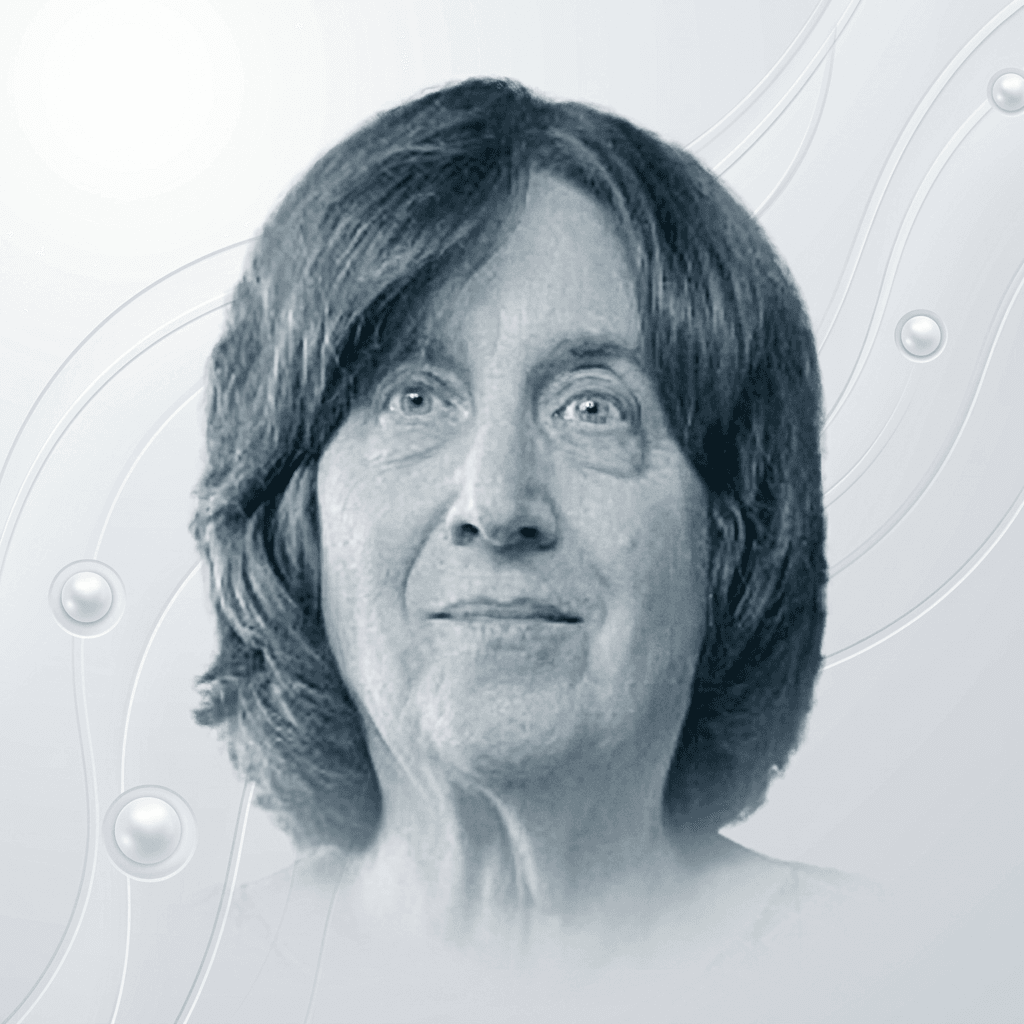
Barbara Finlay on brain evolution and evo-devo
Episode 2 15.03.2015
-
 play_arrow
PLAY EPISODE
Description arrow_drop_down

Description
Why has the basic architecture of the vertebrate brain remained essentially unchanged for 450 million years , and is that a constraint or an optimal design? Evolutionary neuroscientist Barbara Finlay presents evidence that mammalian brain development follows a remarkably conserved nonlinear timetable, transformable across species with 99 percent accuracy by turning a single dial. Subscribe for more from the Convergent Science Network podcast series. Barbara Finlay joins Paul Verschure and Tony Prescott at the BCBT summer school to discuss the principles underlying brain evolution, drawing on her translatingtime.net database spanning 18 mammalian species. Her central finding is striking: the developmental schedule of the brain, from the birth of the first neurons to the onset of behavior, can be transformed from mouse to cat to monkey to human by a single nonlinear function with extraordinary precision. This conservation extends to remarkably specific events, including when Purkinje cells are born and when layer four cortical neurons are generated. The discussion explores whether this invariance represents a developmental constraint or an actively defended optimal design. Finlay argues for the latter, noting that 450 million years of evolution have preserved this architecture across radical changes in niche , from water to land to air and back. She identifies four core learning engines present in the earliest vertebrates , cortical association, hippocampal memory, basal ganglia reinforcement learning, and cerebellar optimization , and proposes that this combination may explain the explosive success of vertebrates. The conversation also examines how the relative sizes of brain structures trade off, particularly the inverse relationship between isocortex and olfactory bulb, which appears to be mediated by timing shifts in neurogenesis. Key topics include how a nonlinear developmental timetable predicts brain structure timing across all mammals, why the lateral edges of the embryonic brain produce the most variable and plastic structures, what Paul Katz’s catalog of swimming marine mollusks reveals about the limits of evolvability, how critical periods may be self-initiated by appropriate input rather than fixed in time, and why the allocation of neural resources between sensory modalities follows predictable patterns shaped by both development and ecological niche. Part of the Convergent Science Network podcast series from the BCBT Summer School.
Tagged as:
Brain brain evolution Optimal Design
About the author call_made
CSN Podcasts
Both the triumphs of humanity and its most evil deeds have resulted from collaboration. In a time where humanity is required to aspire to the former and minimize the latter, the question arises of how collaboration arises and why it fails. Surprisingly, this phenomenon, so central to who we are, is not well understood. Hence, a collaborative effort is required to understand collaboration in its full biological, psychological, sociological, cultural, and economic complexity and to translate this understanding into operational impact. This series of podcasts is one step toward achieving these complementary goals. The Collaboration Podcast presents interviews with people who are central orchestrators of collaboration in various domains including business, government, science, art, health, sustainability, and the military. The discussions were conducted by Prof. Dr. Paul F.M.J. Verschure and members of the Program Advisory Committee of the Ernst Strungmann Forum on Collaboration (https://www.esforum.de/forums/ESF32_Collaboration.html) during 2021 and had the goal to sketch a map of opportunities, challenges, and obstacles in human collaboration. The forum took place in May 2022, and now we would like to share this series of interviews with a broader audience. The full report of the Forum will be published in 2023 by MIT Press. The podcast was produced by the Convergent Science Network (https://www.convergentsciencenetwork.org/). Context: The stability of social systems depends critically on realizing sustainable methods of “collaboration,” yet how and by which means collaboration is achieved is not clearly understood; neither are the conditions or processes that lead to its breakdown or failure. Collaboration can be understood as cooperation between agents toward mutually constructed goals. Part of the reason for our lack of understanding is that the phenomenon of collaboration is, by nature, a highly multidisciplinary problem, and effective research into its complexities has been difficult to achieve across the broad range of scientific and technical disciplines involved. The need for a fundamental understanding of collaboration, however, has become increasingly important. Not only does humankind demand answers as it attempts to address critical challenges at multiple scales (e.g., climate change, migration, enhanced automation, social and economic inequality), but ever-increasing technological and economic means of interconnecting people and societies are disrupting long-established, familiar patterns of how we interact. Radical technological changes that are ongoing have the potential to reshape collaboration in ways that are currently hard to predict or influence (e.g., by altering configurations in interaction, information creation, and modes of communication). On one hand, such changes could disrupt hitherto stable forms of collaboration by affecting critical communication channels and traditional roles, as can be observed in the rapidly changing patterns in governance, commerce, and social interaction. Conversely, technology could lead to the emergence of novel, successful forms of collaboration that deviate from traditional “hierarchical” architectures. Evidence of this can be seen in areas as diverse as highly automated manufacturing plants, the open science movement, collaborative software repositories, user-centered services, and the sharing of economy-based modes of organization. Without a fundamental understanding of the mechanisms, processes, and boundary conditions of collaboration, it is not possible to evaluate or predict which of these possible scenarios are sustainable or even plausible. The Forum “How Collaboration Arises and Why it Fails” (May 8–13, 2022, Location: Frankfurt am Main, Germany) Chairs: Andreas Roepstorff and Paul Verschure Program Advisory Committee: Jenna Bednar, Julia R. Lupp, Bhavani R. Rao , Andreas Roepstorff, Ferdinand von Siemens, and Paul Verschure
Episodes


Timestamp
- fast_forward00:00:03 - This is the Convergent Science Network podcast. Leading researchers in the domain
- fast_forward00:00:10 - of neuroscience, brain theory and technology are interviewed by Paul Verschure and Tony Prescott.
- fast_forward00:00:19 - Paul Verschure here for the Convergent Science Network podcast,
- fast_forward00:00:24 - together with Tony Prescott. Scott, and today we're talking to Barbara Findlay,
- fast_forward00:00:28 - speaker at our BCPD Summer School 2015.
- fast_forward00:00:32 - So Barbara, you've been very focused on understanding brain evolution.
- fast_forward00:00:40 - You emphasize issues of segmentation of brains, commonalities between different brains.
- fast_forward00:00:48 - What do you see as the underlying principles of brain evolution?
- fast_forward00:00:57 - Um, a very large question to start with.
- fast_forward00:01:00 - Okay. So, um, I think, I think the underlying question that I've come down on is the one that I, uh,
- fast_forward00:01:09 - that emerges from a lot of research in evolution and development at Evo Devo
- fast_forward00:01:15 - field, which is how do you design something that is adaptable?
- fast_forward00:01:22 - That is responds to change and robust does not respond to change simultaneously.
- fast_forward00:01:30 - So that's how I've started characterizing how to best understand how nervous systems evolve.
- fast_forward00:01:39 - That is distinguished in my mind from the,
- fast_forward00:01:43 - The kind of random walk model of evolution that people have had to a large extent
- fast_forward00:01:50 - in behavioral biology so far,
- fast_forward00:01:53 - which is to imagine a brain and an organism as a series of ad hoc evolved patches
- fast_forward00:02:02 - as opposed to a set of theme and variations on this adaptation and robustness.
- fast_forward00:02:11 - So is this what you mean when you talk about the filter idea?
- fast_forward00:02:15 - Idea yeah so um if
- fast_forward00:02:19 - you think about um evolution of the
- fast_forward00:02:22 - brain only in terms of adaptation and maximizing say
- fast_forward00:02:26 - how well you can detect a particular set of flowers or evade a certain predator
- fast_forward00:02:32 - or something like that you you come up with um you know particular kind of of
- fast_forward00:02:37 - nervous system that you imagine is being optimized for all these very specific uh kinds of um.
- fast_forward00:02:45 - Kinds of behavioral problems.
- fast_forward00:02:46 - But if you imagine that the same nervous system has to,
- fast_forward00:02:51 - also survive horrible catastrophes and shifts of niche and all those sorts of
- fast_forward00:02:59 - things as also part of its repertoire,
- fast_forward00:03:02 - you come up with a different kind of nervous system that you need to evolve
- fast_forward00:03:05 - rather than this sequentially adding of components.
- fast_forward00:03:09 - You come up with something that has to have a certain set of sort of core survival
- fast_forward00:03:15 - recognition learning functions as part of its repertoire, not only a set of,
- fast_forward00:03:21 - you know, maximum adaptations.
- fast_forward00:03:23 - So is it, then you're thinking less about evolution on the species level and
- fast_forward00:03:28 - more about phylogenetic change?
- fast_forward00:03:30 - It pushes you in that direction. I mean, all the causal structure is going,
- fast_forward00:03:36 - the causes, is eventually we're going to come down to the survival of this versus that individual,
- fast_forward00:03:42 - that I think the idea is to think of.
- fast_forward00:03:47 - Cumulatively over individuals, both the sort of adaptive maximization kind of
- fast_forward00:03:56 - things, can I recognize that particular kind of spot?
- fast_forward00:03:59 - Or, you know, can I find this kind of food the best versus can I find any food?
- fast_forward00:04:05 - Can I get out of this hole?
- fast_forward00:04:07 - So we've got two kinds of individual histories to amass, not just the adaptation
- fast_forward00:04:13 - one, but also the, you know, dealing with any eventuality one as well.
- fast_forward00:04:19 - And so the ones that the runs remain alive have to do both.
- fast_forward00:04:23 - So that would be the fitness aspect of it, like how appropriate is the behavior
- fast_forward00:04:27 - coming out of that system in the end.
- fast_forward00:04:29 - But then, so what you emphasize actually for also during your talk,
- fast_forward00:04:34 - what is a four key perspectives, let's say, that you follow, right?
- fast_forward00:04:38 - One is this whole idea of how do you allocate neural structure or neural modules,
- fast_forward00:04:44 - We can talk about how to define that, but how do you allocate those strategically
- fast_forward00:04:49 - in the face of these challenges for survival, right?
- fast_forward00:04:53 - And then the second one, of course, how do you exactly control the parameters of your neurogenesis?
- fast_forward00:04:59 - The fourth one was how do you get coordination to actually build a multi-component system?
- fast_forward00:05:05 - And lastly, this whole role of embodiment and motivation as additional constraints on that process.
- fast_forward00:05:11 - So these are four big categories, if you want, of questions when we look at
- fast_forward00:05:17 - this whole issue of the development of a species-specific brain.
- fast_forward00:05:21 - But now if you would have to rank order those in terms of which of these four
- fast_forward00:05:26 - categories would be understood best and which of these four is actually of the
- fast_forward00:05:31 - greatest importance for understanding,
- fast_forward00:05:34 - how would you rank order the four? Yeah.
- fast_forward00:05:46 - Uh, boy, uh, let's see. I hope we get to edit some of this out here, but, um, yes.
- fast_forward00:05:53 - Uh, those four things I, I talked about were more, um, how the sort of empirical
- fast_forward00:06:03 - gathering of data that I did, um,
- fast_forward00:06:07 - you know, separate itself into categories.
- fast_forward00:06:09 - The real categories, I think, span those.
- fast_forward00:06:13 - So there's the one category which Jerison called, I think, originally proper
- fast_forward00:06:20 - mass or something, which is allocation of neural resources to what the animal's
- fast_forward00:06:26 - actually going to encounter.
- fast_forward00:06:27 - And that is both point number one and point number four.
- fast_forward00:06:34 - Okay so um so
- fast_forward00:06:38 - we find what looked like uh something of
- fast_forward00:06:41 - easily modifiable or presets or something like that in an evolutionary sense
- fast_forward00:06:47 - of am i going to be the kind of animal that that maximizes uh chemosensation um or um.
- fast_forward00:06:59 - Visual auditory or something like that. And it seems to be that over and over
- fast_forward00:07:05 - again, most likely independently from the very first bony fish and sharks,
- fast_forward00:07:12 - amphibians, reptiles, mammals,
- fast_forward00:07:16 - that animals keep diverging
- fast_forward00:07:20 - on those same differences
- fast_forward00:07:23 - again and again as a gross allocation
- fast_forward00:07:27 - of one of neuromass to
- fast_forward00:07:30 - one or the other in terms of processing resources okay um
- fast_forward00:07:34 - but then the last bit of of
- fast_forward00:07:36 - the talk which is that um most i'd say probably most of that given that bias
- fast_forward00:07:45 - and where you're going to get your sensory information comes is going to be
- fast_forward00:07:48 - coming from how the environment and motivation instructs the animal so So in
- fast_forward00:07:54 - terms of nervous system content,
- fast_forward00:07:56 - that's the big thing.
- fast_forward00:07:59 - Now, the other two are, I think, both about processing, and those are orthogonal.
- fast_forward00:08:09 - Orthogonal so um my my
- fast_forward00:08:14 - covert theory about what makes a
- fast_forward00:08:17 - vertebrate and why vertebrates took off at the 450 million
- fast_forward00:08:21 - 500 years i did is they had in place sort of for the four big learning engines
- fast_forward00:08:28 - that were would be useful so this is uh which is things like um like cortex
- fast_forward00:08:36 - and hippocampus are both sort of association,
- fast_forward00:08:40 - information extractors and then we have reinforcement learning as embodied in basal ganglia.
- fast_forward00:08:50 - And the last sort of is the cerebellar kind of learning which is the,
- fast_forward00:08:57 - comparison and subtraction and optimization on that
- fast_forward00:09:00 - that dimension you find all those in the
- fast_forward00:09:03 - very first vertebrates um all together that's a bit of a surprise actually even
- fast_forward00:09:08 - to many professional neuroscientists who will say oh cortex that's just in mammals
- fast_forward00:09:13 - well i don't mean the cortex per se i mean the thing that the thing that the
- fast_forward00:09:18 - thing that cortex is doing is in all these other species.
- fast_forward00:09:21 - But your talk emphasized the conservation of these structures over time,
- fast_forward00:09:29 - but also the adaptability,
- fast_forward00:09:31 - and the adaptability was particularly around the relative sizes of parts of
- fast_forward00:09:37 - the brain, but even there,
- fast_forward00:09:39 - you know, the single greatest predictor of how big any bit of the brain is gonna
- fast_forward00:09:44 - be is how big the overall brain is, that's right?
- fast_forward00:09:47 - Yeah, so each part of the brain has its own rate of change with respect to total brain size.
- fast_forward00:09:56 - And apparently, no vertebrate has ever decided that the way to enlarge your brain is to,
- fast_forward00:10:05 - you know, double down on the number of motor neurons you have and nothing else.
- fast_forward00:10:11 - So what animals do, if their energetic situation or whatever allows them to support more brain,
- fast_forward00:10:21 - where that extra brain is going to go is in these sort of laterally placed association
- fast_forward00:10:27 - areas that look across sensory and motor systems.
- fast_forward00:10:31 - So there's an interesting question here around whether no vertebrates explored
- fast_forward00:10:37 - outside that space because it's not possible to go outside that space or it
- fast_forward00:10:44 - wouldn't be evolutionary.
- fast_forward00:10:45 - Advantageous, or is it just that there's certain aspects of this brain architecture
- fast_forward00:10:50 - which are locked in place which cannot now be changed easily?
- fast_forward00:10:53 - Yeah, that's a very interesting question.
- fast_forward00:10:58 - Paul Katz, who is at Georgia State University and past president of the Society
- fast_forward00:11:07 - for Neuroethology, had some data recently that just blew me away,
- fast_forward00:11:11 - which was sort of going to this particular question.
- fast_forward00:11:14 - So he studies marine mollusks, and of which there,
- fast_forward00:11:18 - I'm going to do violence to the numbers on these, but let's,
- fast_forward00:11:22 - so let's say there are 60,000 of them, give or take an order of magnitude, okay? Okay.
- fast_forward00:11:31 - And of those marine mollusks, only a very small fraction, some number,
- fast_forward00:11:39 - say a couple of orders of magnitude down, say 40 to 100, actually detached and have become mobile.
- fast_forward00:11:47 - And given the kind of work I've been doing with vertebrates,
- fast_forward00:11:51 - I fully expected to see that we would see sort of bilateral symmetry and swimming
- fast_forward00:11:59 - along by alternating contractions and.
- fast_forward00:12:05 - That's kind of the vertebrate optimal I had come to expect from seeing all those
- fast_forward00:12:09 - different kinds of things.
- fast_forward00:12:10 - What you do see couldn't be more different.
- fast_forward00:12:14 - So we have all these animals that have been attempting to swim for comparable
- fast_forward00:12:19 - periods of time and some of them are doing handsprings.
- fast_forward00:12:23 - Some of them are just looking like they're having some kind of seizure.
- fast_forward00:12:28 - Right. Some of them are doing by like, you know, and their job is,
- fast_forward00:12:31 - it's just like the evolutionary learning algorithms where they,
- fast_forward00:12:34 - you know, make animals in the
- fast_forward00:12:39 - computer reproduce if they just succeed in getting over some finish line.
- fast_forward00:12:44 - These are the same kind of things.
- fast_forward00:12:45 - And you see this same kind of wild differences in kinds of movement.
- fast_forward00:12:50 - And then I realized on seeing that stuff that truly not everything is evolvable.
- fast_forward00:12:56 - That these are animals that have become mobile and have, but...
- fast_forward00:13:03 - That's not a good starting point. Yeah, they've remained there as sort of singular
- fast_forward00:13:07 - and kind of comical examples, a lot of them.
- fast_forward00:13:10 - And so there is some data that would bear on this kind of question about what
- fast_forward00:13:17 - kinds of things permit changing.
- fast_forward00:13:21 - I guess if you read the classical account of, and by that I mean there's a book,
- fast_forward00:13:26 - Romer, which everyone reads when they study vertebrates and what they attribute
- fast_forward00:13:31 - that the sudden change in the number of extant species from,
- fast_forward00:13:35 - you know, 30 species to 40,000 species of lamprey-like animals to bony fish.
- fast_forward00:13:43 - They attribute that to the jaw, that you can now exploit so many different kinds
- fast_forward00:13:50 - of prey and eat so many different things.
- fast_forward00:13:52 - Well, jaw's all good, probably true, but there's a brain there too that suddenly appears.
- fast_forward00:14:00 - But the brain isn't so different maybe between ancestral jawless fish and the successful fish?
- fast_forward00:14:08 - Well, there's not so much forebrain. The whole parasympathetic-sympathetic division
- fast_forward00:14:14 - of the nervous system doesn't really come in until you get the jawed fishes.
- fast_forward00:14:18 - So there's been a lot of… But we don't really have any extant jawless fish of any sophistication.
- fast_forward00:14:24 - We have scavengers and bottom-feeding.
- fast_forward00:14:30 - True, but….
- fast_forward00:14:34 - You know, it certainly could be the case that there could be combinations that
- fast_forward00:14:38 - we haven't seen, but what we have there,
- fast_forward00:14:41 - the ones that did succeed, that have populated all these niches,
- fast_forward00:14:46 - do have extra brain features as well as just the jaws.
- fast_forward00:14:51 - And so I'm not saying that I know that to be the case, but there's sort of two
- fast_forward00:14:56 - points I'm trying to make here.
- fast_forward00:14:58 - One is that once you see Paul Katz's catalog of marine mollusks,
- fast_forward00:15:09 - you can see that without any particular proof at this point,
- fast_forward00:15:15 - that some things seem to be more potentially adaptable than others.
- fast_forward00:15:20 - And that not everything is possible from every starting point.
- fast_forward00:15:23 - And the other is for the traditional
- fast_forward00:15:27 - vertebrate account i think we should consider the brain and
- fast_forward00:15:30 - it's capable of not not just stop well it's the
- fast_forward00:15:33 - jaw so but but what's remarkable about the story of the brain is that this really
- fast_forward00:15:39 - quite complex structure was there so early on and it has it has been able to
- fast_forward00:15:44 - adapt while keeping that basic structure as animals for instance have moved
- fast_forward00:15:48 - out of the water and onto land, and then from there into the air,
- fast_forward00:15:52 - and then back into the water.
- fast_forward00:15:55 - Exactly. And it's done that without any change in the gross architecture.
- fast_forward00:16:00 - But there's lots of other changes around that architecture.
- fast_forward00:16:04 - But what I'm pointing out is that the neglected part of that original architecture
- fast_forward00:16:10 - may be something about this sort of multiplication or having several kinds of,
- fast_forward00:16:20 - let's call them learning engines,
- fast_forward00:16:21 - in that structure that may not really have been in a number of the other small organisms at the time,
- fast_forward00:16:29 - that maybe that's where we might be looking.
- fast_forward00:16:31 - So the preserved structure in all of those animals, for example,
- fast_forward00:16:35 - For example, if we take the four brain divisions,
- fast_forward00:16:39 - the thing called the medial pallium is recognizable as the hippocampus in mammals
- fast_forward00:16:49 - and is involved in rapid memory and navigation, those sorts of things.
- fast_forward00:16:55 - And to the extent that there is any large comparative basis,
- fast_forward00:16:59 - it's the same kind of general function in birds in the several studies.
- fast_forward00:17:04 - Also in fish, I'm not so sure about what the reptile base is.
- fast_forward00:17:09 - But here's one part of the forebrain.
- fast_forward00:17:14 - Um is remarkably consistent in sort of where
- fast_forward00:17:17 - it is and what it does over all that range so i think
- fast_forward00:17:19 - we can really look at at that kind of
- fast_forward00:17:22 - um comparative base in the in the forebrain now that we really couldn't before
- fast_forward00:17:27 - but you present a very quantitative approach to um towards trying to understand
- fast_forward00:17:33 - these invariant aspects of brain evolution and you're pointing us to our to your
- fast_forward00:17:41 - translatingtime.net domain,
- fast_forward00:17:44 - where you present data on 18 different species.
- fast_forward00:17:48 - And then you use different approaches like regression, you looked at sizes of
- fast_forward00:17:55 - different brain structures to try to get a handle on, okay, how invariant are
- fast_forward00:17:59 - these structures and their relations across these 18 species?
- fast_forward00:18:02 - So what is standing out in that relationship most in your opinion?
- fast_forward00:18:06 - The thing that utterly surprised us right from the beginning and still does,
- fast_forward00:18:13 - as we still keep making mistakes about hypothesizing the opposite,
- fast_forward00:18:20 - which is the absolute stability of mammalian brain development.
- fast_forward00:18:30 - So essentially what this model says
- fast_forward00:18:36 - and can do is that I can transform the developmental schedule of a mouse,
- fast_forward00:18:43 - and I'm talking about just the brain here from the time the first neurons are
- fast_forward00:18:47 - generated to sort of the start of the very first behavior.
- fast_forward00:18:53 - And I can simply turn a non-linear dial and with 99% accuracy predict when that's
- fast_forward00:19:04 - going to happen in a cat, in a monkey, in a human.
- fast_forward00:19:07 - And the detail of this translation is very deep.
- fast_forward00:19:12 - So when I'm saying translate the schedule, I mean, I can tell you when the Purkinje
- fast_forward00:19:17 - cells in the cerebellum are born.
- fast_forward00:19:19 - I can tell you when the cells in layer four of the metasensory cortex are born.
- fast_forward00:19:23 - I can tell you all these very very specific things about brain development across
- fast_forward00:19:27 - all these species with that amount of accuracy. Now this...
- fast_forward00:19:32 - This was originally surprising, and then I thought that changing sort of telescoping
- fast_forward00:19:38 - and compressing or shifting time things would be one of the major ways by which
- fast_forward00:19:44 - species differences would occur.
- fast_forward00:19:48 - And we have got a couple cases of that that I described,
- fast_forward00:19:52 - which is in the case of how much cortex you want versus olfactory bulb,
- fast_forward00:19:57 - and the other was how you change a retina to be nocturnal or diurnal,
- fast_forward00:20:00 - where you do get shifts of schedules with respect to each other.
- fast_forward00:20:04 - But overall, that mammalian brain development schedule stays rock steady. You don't change it.
- fast_forward00:20:12 - This is not my interpretation of these data, that is the data.
- fast_forward00:20:17 - It's nonlinear across species or within a species?
- fast_forward00:20:21 - So when I say turn a nonlinear dial, that means in order to transform the very
- fast_forward00:20:26 - early events of a mouse schedule into a monkey schedule, I don't have to change
- fast_forward00:20:31 - it very much, but to change, we get onto an exponential curve.
- fast_forward00:20:36 - But for the late events like takes first step, There's going to be much more
- fast_forward00:20:42 - relative duration between the points in the monkey scale or the human scale than the mouse scale.
- fast_forward00:20:49 - So there's not so much difference in the first events. There's big temporal
- fast_forward00:20:53 - differences in the late events, but this is just an exponential,
- fast_forward00:20:58 - predictable curve, if that makes sense.
- fast_forward00:21:01 - Right. So there's just a couple of parameters that you can capture any creature.
- fast_forward00:21:04 - Yeah. Yeah. But now, do you see this model as providing you the scaffold of
- fast_forward00:21:11 - a potential brain, or it really defines a brain?
- fast_forward00:21:15 - So I was supposed to be describing it as a sort of scaffold of a brain,
- fast_forward00:21:21 - that this maybe is a stable economical structure that is best...
- fast_forward00:21:34 - Uh you know maybe the one that positions itself best to make maximum use of experience,
- fast_forward00:21:41 - uh i think it's that um but
- fast_forward00:21:45 - that's what that's a positive way of looking at it another one might be to say
- fast_forward00:21:48 - that this is a fixed timetable you can't mess with it without i i used to think
- fast_forward00:21:54 - that i mean i that's a stephen j gold kind of argument which is that and i i
- fast_forward00:21:59 - have that title as a contrast in a lot of my papers,
- fast_forward00:22:02 - which is things like, is it developmental constraint or developmental structure? Right.
- fast_forward00:22:07 - And I keep coming back to 450 million years of defending the same structure. Right. Okay?
- fast_forward00:22:15 - I mean, I think we could have gotten out of it in that amount of time if it
- fast_forward00:22:18 - was a true constraint. So we can't do better.
- fast_forward00:22:21 - Yeah, there's a fitness peak in some way. Yeah, so I'm thinking of this more,
- fast_forward00:22:28 - I'm trying to push myself into thinking, Okay, how do I describe this as an optimal state?
- fast_forward00:22:33 - What is it optimizing as opposed to what is it, you know, why are we stuck with it?
- fast_forward00:22:39 - A lot of these basic body plan things are so actively defended on a genetic
- fast_forward00:22:45 - level by animals that it looks like not only are they not constraints of the
- fast_forward00:22:52 - sense of being stuck with a thing,
- fast_forward00:22:55 - that they're actively kept in place in the genetics of the animal.
- fast_forward00:23:03 - So that makes it reasonable and also falsifiable, too, that these are in some way optimal.
- fast_forward00:23:12 - And that's a lot of the change in the evo-devo approach to whole body and nervous
- fast_forward00:23:20 - system stuff is, okay, let's consider that this might be optimal. what is it optimizing?
- fast_forward00:23:25 - Right. But this observation is based on a number of descriptors that you use
- fast_forward00:23:32 - to look at brain development.
- fast_forward00:23:34 - It's all pretty much straightforward gross anatomy. Sure, exactly.
- fast_forward00:23:38 - But then you could make the argument actually it blinds you for other kinds
- fast_forward00:23:43 - of influences that might be more dependent on environment that might be more
- fast_forward00:23:47 - flexible or more dynamically regulated.
- fast_forward00:23:50 - Or you don't expect.
- fast_forward00:23:53 - I really am not making that distinction in any way.
- fast_forward00:23:56 - So I'm thinking that this is a way that lets you be flexible and dynamically integrated.
- fast_forward00:24:04 - Except that you're always on this fake time schedule. Yeah. Right?
- fast_forward00:24:08 - There's no way of escaping that one. Yeah.
- fast_forward00:24:12 - Because what I'm sensing is a potential conflict with the more general Evo Devo
- fast_forward00:24:18 - perspective that you also have.
- fast_forward00:24:21 - Yeah. But now we come out with a perspective that says, well,
- fast_forward00:24:25 - actually, this whole developmental program is just fixed.
- fast_forward00:24:27 - There's nothing you can do about it. Environment won't influence that.
- fast_forward00:24:31 - On the other hand, Barry Culp was telling us yesterday about the roles of stress in development.
- fast_forward00:24:36 - This might be a factor, but maybe you don't see that because the level of description
- fast_forward00:24:42 - doesn't allow you to extract these features.
- fast_forward00:24:47 - I think the talk you presented actually did balance some of that fixed constraint with some flexibility,
- fast_forward00:24:56 - because you talked then a lot about how delaying timing or delaying the onset
- fast_forward00:25:02 - of certain things, I guess, but that's within a window.
- fast_forward00:25:05 - You can't delay things indefinitely, but you can shift things around enough
- fast_forward00:25:09 - that that can have quite big changes.
- fast_forward00:25:13 - I can, for example, add two things. So
- fast_forward00:25:17 - one thing I brought up with the olfactory versus visual stuff is a sort of preset
- fast_forward00:25:25 - for a commonly encountered change in niche in animals that they would have sort
- fast_forward00:25:34 - of been filtered to have mechanisms to respond to.
- fast_forward00:25:36 - Um stress you can
- fast_forward00:25:39 - recharacterize this is is we're used to seeing a very stable environment we're
- fast_forward00:25:44 - used to seeing a very unstable environment and so it's interesting to me also
- fast_forward00:25:48 - that you see this a sort of suite of stress responses as as part of the uh this
- fast_forward00:25:56 - is this is below innate Okay,
- fast_forward00:25:59 - you know, so this is more in the, you know, the structure of the genome over
- fast_forward00:26:06 - evolutionary time that has the ability to respond to both kinds of environments.
- fast_forward00:26:15 - There's another thing I know, I tried to get started on, but haven't gotten
- fast_forward00:26:21 - too far, which is understanding critical periods and plasticity.
- fast_forward00:26:26 - So, I mean, this is in fact one of our current projects.
- fast_forward00:26:31 - So, I know nothing at this point about what the constraints are on these sorts of things.
- fast_forward00:26:38 - So, you know, is there really any, say,
- fast_forward00:26:47 - across mammal optimal period to learn certain kinds of knowledge that are good
- fast_forward00:26:53 - for particular structures?
- fast_forward00:26:55 - No one's really looked at it, tried to gather information in that way,
- fast_forward00:26:59 - or do you not do that kind of thing?
- fast_forward00:27:01 - For example, in birdsong, which has been something that's been studied a great
- fast_forward00:27:08 - deal for critical periods.
- fast_forward00:27:10 - So, um, uh.
- fast_forward00:27:14 - So a story for bird song that's often told is that the,
- fast_forward00:27:18 - you know, say the birds in this hemisphere or whatever come north and establish
- fast_forward00:27:25 - their nest and the eggs are laid and the nestlings are in the nest and they
- fast_forward00:27:30 - hear a song in the spring and they get,
- fast_forward00:27:33 - they sort of match up to their template and they learn the song and there's
- fast_forward00:27:38 - a critical period and the NMDA receptors come on and they come off.
- fast_forward00:27:41 - Okay, so maybe there's this critical period.
- fast_forward00:27:44 - But then it turns out that there's an unfortunate set of nestlings who are born
- fast_forward00:27:49 - in August, and they don't hear any song at all.
- fast_forward00:27:53 - And so what do you do? Do you just waste all that reproductive effort and grew a whole bunch of song?
- fast_forward00:27:59 - Well, it turns out it isn't like that at all.
- fast_forward00:28:03 - These animals put their critical period on hold until the next spring when they
- fast_forward00:28:09 - actually will hear some song. So this is something where the appropriate kind
- fast_forward00:28:13 - of input appears to initiate the critical period.
- fast_forward00:28:18 - So maybe the thing that would be general would not be having a certain time,
- fast_forward00:28:23 - but a certain kind of initiation.
- fast_forward00:28:26 - So self-initiated, self-terminated critical periods as opposed to things that are set in there. Right.
- fast_forward00:28:33 - So that would then allow environmental cues to actually trigger a part of a
- fast_forward00:28:39 - developmental program. Yeah.
- fast_forward00:28:41 - And you really have to understand that I'm starting from the position where
- fast_forward00:28:47 - I thought that everything was in play and that everything should have been as changeable as that.
- fast_forward00:28:53 - And there seems to be a whole lot of structural stuff that just isn't.
- fast_forward00:28:56 - And then we'll see what happens.
- fast_forward00:28:59 - But now in your description of evolution of isocortex versus olfactory bulb,
- fast_forward00:29:06 - right, over these 18 mammalian species that you looked at, you saw there's a very specific pattern.
- fast_forward00:29:12 - At first, all species are closely clustered. It's not that there is some variability
- fast_forward00:29:17 - within each species clustered.
- fast_forward00:29:20 - But you also interpret that in terms of some sort of continuum in this relationship
- fast_forward00:29:26 - between isocortex size, olfactory bulb size.
- fast_forward00:29:29 - As if it's some sort of trade-off, like more olfactory bulb, less isocortex.
- fast_forward00:29:33 - Is that really how you see it? A trade-off between these structures?
- fast_forward00:29:37 - Well, I showed you two kinds of data.
- fast_forward00:29:39 - So I showed you data on a whole lot of different mammals that showed a continuum
- fast_forward00:29:45 - both across and within taxonomic groups.
- fast_forward00:29:52 - So that would mean that, I'm going to say, looking...
- fast_forward00:29:59 - Looking within monkeys, we can find some monkeys that have virtually no olfactory
- fast_forward00:30:08 - bulb and limbic system at all, hardly, and some that have a fair amount.
- fast_forward00:30:13 - And we can find that pretty much in any one of our groups.
- fast_forward00:30:16 - Okay, so then we go back to, instead of 180 animals or so, we go back to our
- fast_forward00:30:23 - 18 that we have the really elaborate developmental data on.
- fast_forward00:30:29 - And so we can find the examples of the animals that are low and high on olfactory
- fast_forward00:30:34 - versus cortex dimensions.
- fast_forward00:30:35 - Mentions and we say okay is there a timing component to that and i can't really talk much.
- fast_forward00:30:42 - Uh about um how much
- fast_forward00:30:46 - the they are or how continuous those animals
- fast_forward00:30:50 - are i suppose i could but i don't think it's really enough data and
- fast_forward00:30:53 - and so then i can find if i just ask what let
- fast_forward00:30:57 - me you know make a split of these into high and low
- fast_forward00:31:00 - olfactory versus cortex groups um is
- fast_forward00:31:03 - there a difference in how they develop and yes there is so
- fast_forward00:31:07 - the the primates and the carnivores uh
- fast_forward00:31:10 - with the high cortex delay producing
- fast_forward00:31:14 - their cortex until later and that makes more of it because they have more time
- fast_forward00:31:20 - to develop their precursors so with the sticking point for me here is that is
- fast_forward00:31:24 - there any kind of intrinsic constraint in this developing brain that's okay
- fast_forward00:31:29 - if i'm allocating more resources to one structure,
- fast_forward00:31:32 - then let's say there's a metabolic cost and therefore I cannot grow another
- fast_forward00:31:36 - structure equally well.
- fast_forward00:31:38 - So that there's always a sort of, from a pure morphogenesis perspective, there are constraints.
- fast_forward00:31:44 - On the other hand, you go and say, no, every structure develops as an independent
- fast_forward00:31:47 - module triggered by environmental conditions, the niche you're in.
- fast_forward00:31:51 - So in principle, I could grow a huge olfactory bulb and a big cortex.
- fast_forward00:31:55 - If my environment, and actually, carnivores, some carnivores will do that, right?
- fast_forward00:32:01 - So where are we in those two interpretations?
- fast_forward00:32:06 - So brain is really expensive. So I've actually written a little bit about this.
- fast_forward00:32:12 - You can contrast two kinds of explanations.
- fast_forward00:32:16 - So one is if brain is expensive, then it's reasonable to get the kind of negative
- fast_forward00:32:24 - correlation that we see there.
- fast_forward00:32:27 - So if you have a high cortex value, you're relatively more likely to have a
- fast_forward00:32:33 - low limbic olfactory one.
- fast_forward00:32:38 - So when you have like an energetic or caloric restraint or something like that
- fast_forward00:32:43 - would be something you'd find. Another is a mechanistic constraint,
- fast_forward00:32:47 - which is something I've been looking at.
- fast_forward00:32:51 - I showed a picture that showed the fact that the thing that gives rise to the
- fast_forward00:32:56 - olfactory cortex and the cortex and the hippocampus are,
- fast_forward00:33:00 - so the neocortex is sitting right between the hippocampus and the olfactory
- fast_forward00:33:10 - cortex embryologically.
- fast_forward00:33:11 - And it looks like it would be just so easy, let's take that primordial tissue
- fast_forward00:33:17 - and give it more to the cortex.
- fast_forward00:33:18 - Let's take that and give it more to the other two, which are immediately adjacent to it.
- fast_forward00:33:24 - That implies a zero-sum game.
- fast_forward00:33:28 - That if it's that mechanism and you do it that way, it should always be push-pull like that.
- fast_forward00:33:35 - Now, the evidence I can offer against that is that it's only mammals animals?
- fast_forward00:33:42 - That have the negative correlation that I know of so far. So is that particular
- fast_forward00:33:47 - example, but are you then looking a bit too late in embryology?
- fast_forward00:33:51 - There's nothing earlier in embryology than that. This is really early,
- fast_forward00:33:54 - isn't it? Yeah, that's right.
- fast_forward00:33:55 - Because you were talking about the migration of the precursor cells,
- fast_forward00:34:00 - and this is at that stage.
- fast_forward00:34:02 - Yeah, so there is no earlier in which we could actually identify something that's
- fast_forward00:34:06 - going to give rise to the cortex.
- fast_forward00:34:07 - Okay, but one of the really interesting things I think you were showing was
- fast_forward00:34:12 - the constraint that the developmental process has on the potential for evolution,
- fast_forward00:34:19 - because you were saying that it was only the lateral parts of this embryological
- fast_forward00:34:23 - structure that had the potential to really change, and the more central parts were fairly fixed.
- fast_forward00:34:30 - Is that right? Yeah, so this is just a description of the data where if you
- fast_forward00:34:36 - lay out the embryonic brain on a front to back,
- fast_forward00:34:40 - middle to edge, that it turns out that how long the cells divide during early
- fast_forward00:34:50 - embryogenesis depends on position.
- fast_forward00:34:53 - So the closer you are to the edge, the longer, the closer you are to the front,
- fast_forward00:34:57 - the longer. Right. So this is just describing what's going on.
- fast_forward00:35:02 - But that description must be capturing some constraint, presumably,
- fast_forward00:35:05 - that we don't perhaps understand very well.
- fast_forward00:35:07 - I don't know if it's a, you know, I don't think it's a property of embryonic
- fast_forward00:35:12 - tissues to divide a lot at the edge or something. I've never heard of anything like that.
- fast_forward00:35:16 - But you know, so maybe there is something like that.
- fast_forward00:35:20 - But what I would say is sort of an interesting overall interpretation of this
- fast_forward00:35:29 - is to come at it just opposite.
- fast_forward00:35:31 - Okay, so what you do is you set up an embryonic structure that gives you variation on some dimension.
- fast_forward00:35:38 - And in this case, it's variation in the numbers of cells in the array that that
- fast_forward00:35:43 - structure is going to produce.
- fast_forward00:35:45 - Then you allocate function to that location so if you for example um,
- fast_forward00:35:56 - One thing that's quite interesting about this, there are two places in human
- fast_forward00:36:00 - brains and mammalian brains that always continue to produce neurons throughout life. What are those?
- fast_forward00:36:07 - That's the hippocampus and the olfactory bulb.
- fast_forward00:36:12 - Where are those? Those are sitting on exactly that edge there.
- fast_forward00:36:17 - Right. So if you look at bird brains,
- fast_forward00:36:20 - they produce neurons in many more places throughout life, but all you move in
- fast_forward00:36:27 - is just a little bit more towards the midline and pick up the structures that
- fast_forward00:36:32 - are sitting on that edge.
- fast_forward00:36:33 - If you're a fish, you're essentially generating all the brain throughout life,
- fast_forward00:36:37 - but you are generating sort of relatively more of it on those lateral edges.
- fast_forward00:36:42 - And I think the possibility is that you then take that variation in the size that it's going to be,
- fast_forward00:36:51 - in the potential energetic cost you're going to put into it,
- fast_forward00:36:54 - and then you can put function into it by designating those cells there in some different way.
- fast_forward00:37:01 - Right. But these are precursor cells. They've yet to specialize into particular
- fast_forward00:37:05 - neuron types. They've yet even to migrate into position.
- fast_forward00:37:08 - Well, I mean, I showed the fate map of this thing is, as we're describing it
- fast_forward00:37:14 - now in verbose, very fixed.
- fast_forward00:37:16 - So the medial part is always going to be motor neurons.
- fast_forward00:37:19 - And the next step over is going to be the visceral motor neurons.
- fast_forward00:37:23 - And so those locations mean something very specific in terms of what neuron
- fast_forward00:37:30 - is going to be being generated also means a duration.
- fast_forward00:37:33 - But when this all started out, maybe...
- fast_forward00:37:37 - The fact that assignment of type in the course of development comes after the
- fast_forward00:37:43 - decision of how long you're going to be generated means that it could be you
- fast_forward00:37:47 - assigned sort of type after the sort of size of the thing was entered into the equation.
- fast_forward00:37:56 - But I mean, it comes back to this question of how gridlocked is the design of the brain.
- fast_forward00:38:00 - And what essentially we're saying is that there's certain things that are decided
- fast_forward00:38:07 - early on in development, maybe, and if you try to change anything there,
- fast_forward00:38:10 - it might have lots of knock-on consequences. Yeah, so there's some of those things.
- fast_forward00:38:14 - But look, the things that do get big are the very things that stay out of gridlock.
- fast_forward00:38:20 - So the ones that are on the lateral edge are pretty much uniformly multisensory,
- fast_forward00:38:25 - multimotor, you know, can control different effector systems and are the very
- fast_forward00:38:32 - parts of the brain, with the exception of the very specific olfactory cortex,
- fast_forward00:38:35 - that are the most plastic and changeable in their functions.
- fast_forward00:38:39 - So you allocate more space to the specifically multimodal things,
- fast_forward00:38:47 - which can be allocated to anything.
- fast_forward00:38:49 - Yeah. But there's an interesting conclusion to that maybe, because on the one
- fast_forward00:38:53 - hand, I think it's also important to take into account the morphological constraint
- fast_forward00:38:57 - imposed by having a skull that you have to fill.
- fast_forward00:39:00 - Well, the brain generates the skull, not the other way around.
- fast_forward00:39:03 - But these things develop together. Yeah, yeah. And there will be also mechanical
- fast_forward00:39:08 - constraints on the developing brain.
- fast_forward00:39:10 - And you better lay down your brainstem before you lay down your cortex.
- fast_forward00:39:14 - Otherwise, you cannot pack it in there anymore.
- fast_forward00:39:16 - So this already defines a certain logical order, you would think.
- fast_forward00:39:21 - But then as you move out later in development, so the more primitive structures
- fast_forward00:39:28 - are laid down, it's not a surprise you might end up with the most nonspecific structures.
- fast_forward00:39:33 - Because these also should be the hyperplastic structure. because they are more
- fast_forward00:39:37 - dependent on somatic time to wire themselves into that system because they're
- fast_forward00:39:44 - under constraint, if you want.
- fast_forward00:39:46 - There's less guidance that you can give them. So maybe this already then tells
- fast_forward00:39:50 - you why these more cortical-like structures,
- fast_forward00:39:54 - these hyperplastic multimodal associative structures, are then more lateral
- fast_forward00:39:58 - and at the outside of a developing brain because they're actually,
- fast_forward00:40:02 - these are easy to specify.
- fast_forward00:40:04 - And you then leave it to their developmental to their learning capability to
- fast_forward00:40:08 - wire themselves up with the rest of the system would that make sense to you?
- fast_forward00:40:11 - Yeah there's another way of thinking about that which is quite parallel which
- fast_forward00:40:14 - is what a bunch of computer scientists thinking about control systems have done and so.
- fast_forward00:40:23 - Um, you know, so there's several things, uh, you know, several groups that have
- fast_forward00:40:30 - come down on, um, this same kind of organizational principle.
- fast_forward00:40:34 - So, so if you want to make a device that can describe sort of catastrophic loss
- fast_forward00:40:40 - and sudden gains, okay, how do you build it?
- fast_forward00:40:46 - Well what what you want to do is to keep its basic functions like getting around
- fast_forward00:40:51 - and recognizing things kind of untouched and the last thing you want to do if
- fast_forward00:40:57 - you're going to make a big,
- fast_forward00:40:59 - fancy new brain is to have you know your motor neurons on the one hand they're
- fast_forward00:41:03 - going to do something and then you have your sensory neurons and then between
- fast_forward00:41:06 - those you interpose some gigantic processing thing.
- fast_forward00:41:11 - And what you've succeeded in doing is now slowing down this organism so much
- fast_forward00:41:15 - that it will never, ever survive anything whatsoever.
- fast_forward00:41:19 - So what people found a much better control architecture to be is to keep those
- fast_forward00:41:23 - kinds of essential motor organizational functions by themselves,
- fast_forward00:41:28 - and you build a brain beside that brain. Right, okay. Okay?
- fast_forward00:41:32 - Yeah. And that's what's going on, I think, a better description here of,
- fast_forward00:41:36 - So, you're modeling, you're building a model of your brain, sort of this predictive
- fast_forward00:41:42 - thing, and evolution says, oh, that seems like a good idea, too.
- fast_forward00:41:45 - I'm glad you came to your side and thought of that, you know,
- fast_forward00:41:47 - that you are now being able to plan and simulate and integrate things while
- fast_forward00:41:53 - still kind of carrying on as usual.
- fast_forward00:41:55 - So, that means you lay down these midline structures, and then you sort of pad
- fast_forward00:41:59 - it with a hyperplastic vortex-like structure.
- fast_forward00:42:03 - Yeah, and it's literally beside in two ways. Yeah, exactly.
- fast_forward00:42:06 - So it's not, you know,
- fast_forward00:42:11 - somehow I find it easier or more pleasant to think about this sort of building
- fast_forward00:42:18 - a brain beside the brain than just having extra stuff lying around. Sure.
- fast_forward00:42:23 - But perhaps it comes down to the same. so so what so looking across all these
- fast_forward00:42:30 - pieces you've analyzed um what would you now see as the blueprint of the mammalian brain,
- fast_forward00:42:39 - um so we have um uh.
- fast_forward00:42:45 - The whole spinal motor sensory core that um you know takes care of all sort
- fast_forward00:42:55 - of essential movement and eating and breathing.
- fast_forward00:43:00 - And then we kind of add on some limbs if we're going to be fancy that our,
- fast_forward00:43:08 - sort of the fundamental operating arrangement, then I'm very much fond of a
- fast_forward00:43:16 - guy named Bjorn Merker and his views of how to,
- fast_forward00:43:22 - but he's getting into consciousness, but we don't have to discuss that so much.
- fast_forward00:43:26 - We know Bjorn very well. We just spent two weeks with him in Woods Hole. Okay, so great.
- fast_forward00:43:31 - So he views the midbrain as the place where all this basic integration comes
- fast_forward00:43:39 - together to make a sort of a sketch of operations for the animal. So what's in front of me?
- fast_forward00:43:46 - What can I do with it? What do I want to do?
- fast_forward00:43:51 - Then sort of coming from the other direction, we have the whole visceral brain
- fast_forward00:43:58 - that knows about, okay, what is my state?
- fast_forward00:44:02 - What sort of future state would I like? Am I trying to mobilize energy now or save it?
- fast_forward00:44:07 - Or, you know, what do I want to show other individuals about what my energy state is?
- fast_forward00:44:12 - And then I'm going to combine that with that same sketch.
- fast_forward00:44:16 - This is something that's part of the vertebrate makeup and highly plastic.
- fast_forward00:44:20 - It's going to be quite different from one species to the next,
- fast_forward00:44:23 - how energy is going to be allocated and how fast and towards what.
- fast_forward00:44:27 - And then we have any of these gigantic learning loops sitting around this whole thing.
- fast_forward00:44:35 - One is the slow auto-associating cortex thing, the fast auto-associating hippocampus.
- fast_forward00:44:43 - The uh one who's going to take the output of both
- fast_forward00:44:45 - those things together um the reinforcement circuitry and
- fast_forward00:44:48 - says okay which which of these combinations actually helped me and which do
- fast_forward00:44:52 - i wish to repeat as an animal and then the cerebellar like circuits that uh
- fast_forward00:44:58 - um take plans and optimize them
- fast_forward00:45:01 - um so so basically i see this uh motor motivational core with uh these,
- fast_forward00:45:09 - these second brains sitting to the side and computing the state of that basic
- fast_forward00:45:16 - operating system, I guess.
- fast_forward00:45:18 - And that would be it. So four second brains.
- fast_forward00:45:21 - Yeah. So which animal of all the species that you, in your database,
- fast_forward00:45:27 - which animal then gives us the purest reflection of that blueprint, if you want?
- fast_forward00:45:34 - Everyone. but let's say some would have reduced some parts of it they might
- fast_forward00:45:40 - have exaggerated other parts mm-hmm.
- fast_forward00:45:45 - The house cat, I don't know. Okay.
- fast_forward00:45:49 - No, I mean, since at least the mammals all are on the same general trajectories,
- fast_forward00:46:01 - it's really almost impossible to answer that question.
- fast_forward00:46:04 - But one thing that is obviously talked about is the change of size in the cortex,
- fast_forward00:46:11 - perhaps more than changes in these other second brain systems.
- fast_forward00:46:15 - Do you think too much is made of that? But it's not the case that it's the,
- fast_forward00:46:19 - you know, so it's on its exactly expected allometric line, as is the cerebellum.
- fast_forward00:46:26 - A lot of people make a lot of, you know, whether we should count neurons or
- fast_forward00:46:31 - volume or something, or caloric expense, you basically need to count them all.
- fast_forward00:46:35 - You know, so how many neurons is one measure of how big a structure is.
- fast_forward00:46:40 - How actually big it is is another measure of how big it is. or how many synapses you have.
- fast_forward00:46:46 - But the Harry Jerison story was that so-called higher mammals had bigger brains than other mammals.
- fast_forward00:46:56 - So you can dissociate brain size from body size, right?
- fast_forward00:47:02 - But you cannot dissociate internal brain structure size from brain size.
- fast_forward00:47:07 - So a certain brain will always, if it's a primate, I mean, let's set the olfactory
- fast_forward00:47:15 - parameter, okay, at the outset.
- fast_forward00:47:18 - We'll have, we have exactly the size cortex we should have for our size of brain.
- fast_forward00:47:24 - If we were a dolphin and we have more, a bigger brain, we have more cortex than us, proportionately.
- fast_forward00:47:32 - So there's no special selection on the cortex. But then there's the strong claim
- fast_forward00:47:36 - that in hominid evolution… It's not true.
- fast_forward00:47:40 - Okay. It's the right size.
- fast_forward00:47:43 - I mean, in relative terms, there's an invariance. There was a change in brain size.
- fast_forward00:47:48 - So, yeah, the thing is that the brain size, we have a really,
- fast_forward00:47:51 - really big brain for our body size.
- fast_forward00:47:54 - We have exactly the cortex size that we should have for our brain size.
- fast_forward00:47:58 - Okay. But is that a constraint that if you need, just to take the corticocentric
- fast_forward00:48:04 - view, which I don't actually hold, but sort of devil's advocate,
- fast_forward00:48:08 - if I want a bigger cortex and I have these developmental constraints,
- fast_forward00:48:13 - I just have to build a bigger brain. There's no other way around it.
- fast_forward00:48:18 - That's what evolution says so far.
- fast_forward00:48:21 - So it could be read in that way, if I'm wedded to my view that humans have this
- fast_forward00:48:26 - fantastic neocortex, and that we just grew extra bits of brain that we maybe
- fast_forward00:48:32 - don't use so much in order to make that possible.
- fast_forward00:48:35 - No, but there's something that, there's an inconsistency now here,
- fast_forward00:48:39 - because if it's always relative to overall brain size.
- fast_forward00:48:42 - Yes, there's a real problem. Earlier, but earlier we discussed that you said,
- fast_forward00:48:46 - no, you can actually have relative differences between a limbic brain,
- fast_forward00:48:53 - the limbic cortex, and the isocortex.
- fast_forward00:48:56 - Yeah, so I prefaced this whole thing with let's set the limbic factor.
- fast_forward00:49:02 - Ah, okay. You were smart. Yes, good. Okay. The second component.
- fast_forward00:49:08 - Okay, fair enough. Okay, fair enough.
- fast_forward00:49:11 - So that second component says that, yeah, my cortex scales with my brain size,
- fast_forward00:49:18 - but also I can be a cortical-oriented species, or I can be an olfactory-lymbic-oriented species.
- fast_forward00:49:25 - And that accounts for how much of the variance, roughly?
- fast_forward00:49:29 - 3% of it. Really? Oh, okay. 3% is a lot of variance, considering the range that we have here.
- fast_forward00:49:36 - That's very tiny. A lot of volume. Well, it's a small amount of variance,
- fast_forward00:49:39 - it's a large amount of tissue.
- fast_forward00:49:41 - If you're considering the difference between, you know.
- fast_forward00:49:46 - Uh mediums well i showed i showed
- fast_forward00:49:49 - a picture of uh of of a owl monkey's
- fast_forward00:49:53 - brain and a goodie brain of exactly the same mass and
- fast_forward00:49:57 - you know and and so the one is a cortex specializer and
- fast_forward00:50:00 - the cortex is hanging all over the side so you can't see the olfactory bulb
- fast_forward00:50:05 - and you can't see the cerebellum and all that in the owl monkey because the
- fast_forward00:50:08 - cortex has overgrown it but in this very same sized agouti you get a very good
- fast_forward00:50:13 - view of the olfactory bulbs and the cerebellum and everything,
- fast_forward00:50:17 - just because the cortex has it. Which is a rodent, right?
- fast_forward00:50:20 - Yeah, it's a big South American rodent.
- fast_forward00:50:23 - And so 3% sounds little, but if you look at those brains, that's a perfectly
- fast_forward00:50:30 - impressive difference.
- fast_forward00:50:32 - And I guess, staying with my devil's advocate position,
- fast_forward00:50:36 - some people would also argue that cortex has become specialized in other ways
- fast_forward00:50:43 - in primates for instance you know we have six layers of cortex like every other
- fast_forward00:50:48 - mammal but we seem to have.
- fast_forward00:50:51 - Richer networks within some of those cortical layers i mean do you do you buy
- fast_forward00:50:56 - into any of that i think you had a slide showing that the layer 2-3 was expanded
- fast_forward00:51:01 - but the point of my slide Registered network, interconnectivity at least.
- fast_forward00:51:05 - But I was trying to show that this is how the gradient of the cortex plays out over different brains.
- fast_forward00:51:16 - So yeah, in the set of animals I have in this set, the human has the largest
- fast_forward00:51:24 - cortex, but I don't have any dolphins or whales in there.
- fast_forward00:51:27 - So I can't really say that, that we somehow they're primates or anything,
- fast_forward00:51:34 - hold the prize for most complex network. And I'm not sure exactly what.
- fast_forward00:51:41 - Means, except sort of a self-reifying, my, we're complex, look at that thing, it's complex.
- fast_forward00:51:45 - Well, I think if Henry Kennedy was here, he'll be here next week,
- fast_forward00:51:49 - and he can contradict this.
- fast_forward00:51:52 - He would say that primates have this richer, within the layers,
- fast_forward00:51:59 - they have these circuits that take advantage of these additional cells that
- fast_forward00:52:04 - you have there. So you have a few sub-layers.
- fast_forward00:52:07 - I guess so the question is whether this is some virtue of being a primate or
- fast_forward00:52:12 - virtue of having a large cortex.
- fast_forward00:52:13 - Yeah. And that we just don't know yet.
- fast_forward00:52:17 - You also said that with respect to niche specificity, this might also relate to this point,
- fast_forward00:52:23 - that actually there are other processes at work as well that might be linked
- fast_forward00:52:27 - to then how that organism interacts with its niche, which might be control of hematosis,
- fast_forward00:52:33 - thalamic drive onto a cortical structure.
- fast_forward00:52:36 - Which might vary, and in general, activity-dependent volume change, right?
- fast_forward00:52:42 - So that might mean that from a developmental perspective, you have,
- fast_forward00:52:45 - let's say, a prototypical scaffold that then gets biased by how that niche and
- fast_forward00:52:51 - the embodiment is sort of driving the scaffold using these three principles.
- fast_forward00:52:55 - Would you buy that? Yeah, I mean, so taking this basic set of layers and then
- fast_forward00:53:02 - embedding it in different kinds of experience or different kinds of early instruction,
- fast_forward00:53:07 - I imagine you get all kinds of different things.
- fast_forward00:53:09 - It might then account for these differences. There might not be no contradiction.
- fast_forward00:53:13 - Yeah, I think so. And there's a lot of really basic stuff that we don't know.
- fast_forward00:53:17 - If you look at dolphin cortex, for example,
- fast_forward00:53:21 - it puts a little bit more total volume into area and less into the cortex depth and I mean what.
- fast_forward00:53:34 - My group and I, we've done a lot of modeling of this kind of thing,
- fast_forward00:53:38 - and you have only to change that sort of quit fraction in early development
- fast_forward00:53:43 - in the cortex the very slightest amount to sort of direct stuff into more neurons
- fast_forward00:53:51 - per cortical column versus more area.
- fast_forward00:53:54 - So I don't think we really know very much yet about just what the consequences
- fast_forward00:54:02 - of small changes in early developmental parameters are.
- fast_forward00:54:05 - And I've never understood why
- fast_forward00:54:10 - more layers in a cortex was supposed to be somehow intrinsically better.
- fast_forward00:54:18 - Um you know we still
- fast_forward00:54:26 - have the same um hippocampus that
- fast_forward00:54:30 - everybody else has and including the fish and and
- fast_forward00:54:33 - seems to do just fine i don't i mean i just
- fast_forward00:54:36 - don't see i mean if someone would come up and
- fast_forward00:54:39 - and show me and i defy you to find someone who
- fast_forward00:54:42 - has that here we have a five layered structure
- fast_forward00:54:45 - and look what it can do but I'm going to make six layers and oh man now we got
- fast_forward00:54:48 - calculus I mean I don't think so so it's really I mean it would be nice to actually
- fast_forward00:54:53 - see some demonstration but now it's all sort of I you know large numbers mean
- fast_forward00:54:58 - something more complex you did in your talk describe some,
- fast_forward00:55:03 - changes across cortex particularly talked about a gradient of increased compression
- fast_forward00:55:08 - going from the back of the brain to the front of the brain and then you talked
- fast_forward00:55:12 - about the front of the brain having more fan in more systems talking into the front of the brain,
- fast_forward00:55:18 - and which i got from henry kennedy's yeah study i wanted to put so and you can
- fast_forward00:55:24 - imagine that bigger brains are going to have more steps of compression exactly
- fast_forward00:55:29 - you don't have to imagine that they do.
- fast_forward00:55:31 - So by the time you get to frontal cortex, you've got more abstraction. Exactly.
- fast_forward00:55:35 - Yeah. That's how you get calculus. Yeah. Yeah. But you just conflated.
- fast_forward00:55:40 - I'm happy you explained that to us, Tony.
- fast_forward00:55:44 - We were talking about layers, you know, whether six layers of cortex is better
- fast_forward00:55:49 - than four in implementing calculus versus the number of steps that in a sort
- fast_forward00:55:55 - of hierarchy, which is a different thing altogether.
- fast_forward00:55:58 - So I can easily make an argument as to why embellishing a hierarchy might be
- fast_forward00:56:04 - a better thing for extracting more and more abstract explanation.
- fast_forward00:56:08 - And I wouldn't have to come up with it myself.
- fast_forward00:56:09 - I could come up with all kinds of computational models that people have made on exactly this point.
- fast_forward00:56:16 - So that's why finding this hierarchy from a large number of neurons in the back
- fast_forward00:56:23 - of the cortex to a very small number in the front and this progressively greater compression,
- fast_forward00:56:29 - the bigger the brain gets, sort of maps on to the computational work that people
- fast_forward00:56:35 - have done really nicely.
- fast_forward00:56:37 - You know, and so I'm not making fun of the layer thing so much,
- fast_forward00:56:40 - but there's no comparable literature that says, you know, five layers in a column
- fast_forward00:56:45 - allows me to do something differently.
- fast_forward00:56:49 - That I couldn't do with four. I've just never seen anything even take that on.
- fast_forward00:56:53 - Right. You know, so it could be.
- fast_forward00:56:55 - But in some sense, you also made the point that if I have sort of this midline
- fast_forward00:57:02 - controller, and then we have all these add-on learning machines,
- fast_forward00:57:07 - then you said, oh, if you then take Cortex, it's sort of equipotential, right?
- fast_forward00:57:13 - Starting sort of equipotential, I guess, in the smaller brains.
- fast_forward00:57:16 - But you also made that point where you said, look, what's special about,
- fast_forward00:57:19 - let's say, a language area, if you just look at it from, let's say,
- fast_forward00:57:23 - a morphological anatomical perspective, is there anything special about it?
- fast_forward00:57:28 - So you seem to be making this claim that cortex has this sort of,
- fast_forward00:57:33 - this infinite, not infinite,
- fast_forward00:57:35 - but this very hyperplastic properties that would allow it to sort of tune to
- fast_forward00:57:40 - any kind of information that it is exposed to.
- fast_forward00:57:43 - So, equipotentiality is really, for you, an important principle to understand
- fast_forward00:57:49 - how the system operates?
- fast_forward00:57:52 - Well, I'm going to sort of go empirical on this.
- fast_forward00:57:56 - Okay, so if you look across the cortex,
- fast_forward00:58:03 - the place where you see sort of the most relative diversity in gene expression
- fast_forward00:58:10 - are also the ones that are the, not the ancient parts of cortex,
- fast_forward00:58:15 - but the historically homologous parts of cortex that you can see in the same animals all the time.
- fast_forward00:58:22 - So you can, this is Leah Kruber's stuff, so you can always find a primary visual cortex.
- fast_forward00:58:27 - You can always find a primary somatosensory and an auditory cortex in all the mammals.
- fast_forward00:58:33 - And then if you look at, and so these identifiable regions have had the sort
- fast_forward00:58:38 - of most time to kind of accrue specific genetic information, okay? Yeah.
- fast_forward00:58:46 - And you see the most diversity in gene expression in them compared to the others.
- fast_forward00:58:52 - But the thing I think you pointed out, I put out in the lecture was,
- fast_forward00:58:57 - okay, so tell me something in the genetics of primary visual cortex that requires,
- fast_forward00:59:04 - that makes it optimal for being visual cortex other than getting visual information.
- fast_forward00:59:10 - Now, there may well be something, but I have been asking people for a long time
- fast_forward00:59:16 - now, and not in a hostile manner, because I really would like to know,
- fast_forward00:59:20 - okay, if you're going to make this visual cortex,
- fast_forward00:59:24 - does that mean that it has the neurotransmitter that's just perfect for the
- fast_forward00:59:29 - neurotransmitter receptor systems that are just perfect for the normal time
- fast_forward00:59:33 - course of visual events or the axon spread or whatever?
- fast_forward00:59:38 - Whatever, something about that that would really tailor primary visual cortex
- fast_forward00:59:42 - to its end. So that's what you'd want to ask.
- fast_forward00:59:45 - And so far, we only have stuff that shows up in the cortex because it gets a certain kind of input.
- fast_forward00:59:56 - So you see all these structures that almost certainly have some real innate
- fast_forward01:00:02 - component, but grow as a result of learning and experience.
- fast_forward01:00:06 - But we don't know So if there's anything in vision or somesthesis or audition
- fast_forward01:00:12 - or something that's specific to those regions and that makes the analysis of
- fast_forward01:00:17 - that kind of sensory information better because they typically end up in that particular place.
- fast_forward01:00:23 - Or maybe we are also biased in trying to interpret these areas too strongly in unimodal terms.
- fast_forward01:00:31 - Because you might find also multimodal responses in a visual area. And you certainly do.
- fast_forward01:00:37 - And that's the other half of this thing.
- fast_forward01:00:41 - You see so much stuff just recently about conversion of visual cortex into other
- fast_forward01:00:48 - uses in reading Braille or echolocation or whatever.
- fast_forward01:00:52 - Whatever, and in cases where you only, where you don't have to be blind from
- fast_forward01:00:57 - birth, but can just try to take up a braille hobby kind of recently.
- fast_forward01:01:01 - And the one interesting thing is that we're just sort of fixated on visual cortex.
- fast_forward01:01:06 - I've never seen anyone try to do anything similar, you know, does, you know,
- fast_forward01:01:15 - Do people who've lost sensation in
- fast_forward01:01:18 - their right hand use that for better understanding movies? I don't know.
- fast_forward01:01:22 - It's just that we don't tend to think of it as a surface that can be invaded
- fast_forward01:01:27 - so much or something. Right.
- fast_forward01:01:32 - So now we look very much at if you want the developmental program.
- fast_forward01:01:37 - But you also emphasized very much the role of motivation and embodiment.
- fast_forward01:01:42 - So how do those factors then really come in? To the development and the creation of a brain.
- fast_forward01:01:48 - Yeah, so, well, I originally started doing this research because I wanted to
- fast_forward01:01:56 - find out how you get brains wired for adaptive ends.
- fast_forward01:02:02 - And I wanted to find out, okay, if I wanted to be a really visual animal, how would I set that up?
- fast_forward01:02:10 - And what all this research taught me is that my initial guess about how to do
- fast_forward01:02:18 - that was entirely wrong.
- fast_forward01:02:19 - I imagine that you sort of somehow had a way of genetically identifying all
- fast_forward01:02:23 - the parts of the brain and body that were visual and you could somehow name
- fast_forward01:02:32 - them genetically and cause them to co-vary and that's how you would do that.
- fast_forward01:02:39 - Now I think that you generate this rather.
- fast_forward01:02:45 - Determinate in structure but plastic in content,
- fast_forward01:02:50 - brain and what you do to make a more visual brain is make the animal pay attention
- fast_forward01:02:59 - to its visual system particularly as for example we like to look at eyes and faces places,
- fast_forward01:03:05 - spend a lot of time learning about that,
- fast_forward01:03:08 - and then that's what the environmental loop in that, then that is what your brain comes to analyze.
- fast_forward01:03:14 - So I think if you look at where things really change in the brain from species
- fast_forward01:03:21 - to species, it's in this sort of basal forebrain, what motivational system is
- fast_forward01:03:26 - attached to those fundamental reinforcement circuitry.
- fast_forward01:03:29 - And if you're going to send an organism on a different path,
- fast_forward01:03:34 - you change what it cares about.
- fast_forward01:03:38 - And that's what I'm interested in looking at now as I think the central place
- fast_forward01:03:44 - where sort of the organism and the environment come together to specify what the brain consists of.
- fast_forward01:03:51 - And one of the things that I got from your talk was this notion of the adaptable
- fast_forward01:03:59 - nature of the vertebrate mammalian brain due to its kind of latent capacity.
- fast_forward01:04:05 - You know that we've been through this, what is it, 400 million year history of different species.
- fast_forward01:04:13 - And that in some way, modern brains have retained some of that history,
- fast_forward01:04:18 - even though you're adapted to some particular environment now,
- fast_forward01:04:24 - your ancestors were adapted to very different environments.
- fast_forward01:04:27 - And you gave the example of monkeys that have adapted to nocturnal living and
- fast_forward01:04:34 - have, I presume, fairly quickly evolved a lot of nocturnal visual capacities
- fast_forward01:04:40 - that you might see in other mammals.
- fast_forward01:04:42 - So am I right in understanding that as being quite a strong claim about the
- fast_forward01:04:48 - latent capability of the nervous system to recover these capabilities they've
- fast_forward01:04:56 - had in the past and roll them out when the opportunity arises.
- fast_forward01:04:59 - I wouldn't go quite that far. So I was making two kinds of claims there.
- fast_forward01:05:04 - One is for things that have been encountered routinely,
- fast_forward01:05:09 - like nocturnal versus diurnal, or olfactory is more useful information to me than visual,
- fast_forward01:05:20 - or the one that just came up as we were talking here, that this environment
- fast_forward01:05:27 - is really stable, this environment is not the sort of stress dimension.
- fast_forward01:05:32 - Then in those cases, you may well have the ability sort of retained to rather
- fast_forward01:05:39 - rapidly and in a coordinated way switch from one mode to another.
- fast_forward01:05:44 - Would that be sort of epigenetic in part?
- fast_forward01:05:48 - Sometimes epigenetic, but the
- fast_forward01:05:50 - ones I were talking about, none of them were epigenetic to my knowledge.
- fast_forward01:05:54 - Do you have an example in mammals of sort of epigenetic changes?
- fast_forward01:06:00 - Well, in the stress kinds of things where a particular kind of early environment
- fast_forward01:06:06 - is going to send you in a completely different direction for what kind of things
- fast_forward01:06:10 - you attend to and what motivates you and so forth.
- fast_forward01:06:14 - But that's not what I do my work on.
- fast_forward01:06:18 - But then the notion that the rest of the plasticity of the brain somehow embodies
- fast_forward01:06:27 - every possible thing that an ancestor has done, no. I don't think so.
- fast_forward01:06:32 - I don't think I've said quite that. That's a bridge too far.
- fast_forward01:06:36 - But there's a lot of what used to be called junk DNA. Now people think,
- fast_forward01:06:41 - well, actually it's got all this latent potential in it.
- fast_forward01:06:44 - And that explains the probably rapid transition.
- fast_forward01:06:48 - It's quite possible. It wouldn't be the first time.
- fast_forward01:06:52 - I have had to have been so careful talking about anything that vaguely sounds
- fast_forward01:06:58 - like that with the way biology has been and sort of adaptation.
- fast_forward01:07:02 - The notion that there could be anything other than the current adaptation state
- fast_forward01:07:08 - was such an evil thing to say for quite some time that it's taken me a while
- fast_forward01:07:14 - to get comfortable with even saying something like that out loud.
- fast_forward01:07:19 - Certainly in popular culture there's now this this this dockean view on evolution
- fast_forward01:07:26 - which just means it's very much sort of feet forward controlled by sort of these
- fast_forward01:07:33 - little fragments of DNA to dictate what the phenotype will look like.
- fast_forward01:07:38 - But now in what you're proposing it looks like the picture is becoming more
- fast_forward01:07:43 - complicated. So, do you see this really as a drastic departure from this more
- fast_forward01:07:49 - old-fashioned or old-fashioned, the traditional reductionist view?
- fast_forward01:07:53 - Or is it sort of an amendment of it?
- fast_forward01:07:58 - I don't really... It's the whole...
- fast_forward01:08:02 - The deviation that biology took to looking at only genes is the carrier of information
- fast_forward01:08:09 - at this point strikes me as just strange science.
- fast_forward01:08:13 - So, you know, so molded levels selection, for example, somehow that would be
- fast_forward01:08:20 - to me like saying, well, I can say that the properties of molecules,
- fast_forward01:08:24 - but I can never, ever describe the properties of gases, you know, which is just, you know.
- fast_forward01:08:31 - So collectively, you can talk about, in the kind of statistical language that
- fast_forward01:08:38 - I'm often using, there's variance that's accounted for at the level of species,
- fast_forward01:08:44 - there's at the level of taxon, there's all kinds of, it's the variation,
- fast_forward01:08:49 - useful variation across animals in anything you want to measure is not attached to the gene.
- fast_forward01:08:57 - And this is not a question about
- fast_forward01:09:03 - the usual, I mean, this is one version of multi-level selection arguments.
- fast_forward01:09:08 - There's one thing is all the causal structure at the level of selection for
- fast_forward01:09:13 - particular genes. But the second is just a more, you know, generic one.
- fast_forward01:09:22 - Can I use species to account for, for example, the relative,
- fast_forward01:09:28 - you know, predominance of different genes on Earth?
- fast_forward01:09:33 - Well, I'm sure the snowy owl would say that the presence of human genes on Earth
- fast_forward01:09:37 - has some sort of consequences for its frequency.
- fast_forward01:09:40 - And that's the kind of analysis of variance approach to the genome that just
- fast_forward01:09:47 - doesn't really get thought of as people have been talking about how you talk
- fast_forward01:09:53 - about causation in biology.
- fast_forward01:09:55 - So, people aren't used to considering the different levels of selection too
- fast_forward01:10:02 - much. And I think people will get better at it.
- fast_forward01:10:05 - So, Barbara, you're in this, the study of evolution and the brain for quite a while.
- fast_forward01:10:12 - And in some sense, you also have been changing your perspectives on this.
- fast_forward01:10:16 - Totally. So, if we want to follow in your footsteps, what's Barbara's law that we should adhere to?
- fast_forward01:10:25 - Um
- fast_forward01:10:27 - And there's a particular sort of unsettled or questioning state,
- fast_forward01:10:39 - which you can either ignore or you can attend to.
- fast_forward01:10:44 - And someone just told me a story, but I'm not really happy about it.
- fast_forward01:10:50 - And whenever you get that, I'm not really happy about it, pay attention to that.
- fast_forward01:10:55 - And try to figure out what the causes of why that story seems inadequate really put this major,
- fast_forward01:11:07 - you know, heavy alert system on in your head for that particular kind of gut feeling, essentially,
- fast_forward01:11:16 - that something is wrong with an explanation.
- fast_forward01:11:18 - Right. So pay attention to annoying surprises. Yes.
- fast_forward01:11:22 - So now five years from now, Tony and I are going to come and visit you at Cornell
- fast_forward01:11:26 - University to check whether you've been able to verify a prediction you're going to make today.
- fast_forward01:11:35 - So what's the most important prediction that you want to see tested in this
- fast_forward01:11:40 - time frame of about five years?
- fast_forward01:11:47 - Uh, that particular way of phrasing the question, I just, I need to rephrase
- fast_forward01:11:52 - a little because I like to,
- fast_forward01:11:55 - well, my prediction is that understanding motivational circuitry and its changes
- fast_forward01:12:03 - will be the way to understand how species differences emerge.
- fast_forward01:12:08 - But what we have is a complete absence of information about a lot of that.
- fast_forward01:12:15 - So people have really just begun. And I really think that for a lot of this
- fast_forward01:12:21 - kind of biology in general, we get into hypothesis testing way too soon.
- fast_forward01:12:29 - And the first thing that you need to do is describe the state of variation that's there.
- fast_forward01:12:34 - And so I'd be happy if I knew a lot more about what the actual variation was
- fast_forward01:12:42 - between species in there, how their motivational systems would be hooked up,
- fast_forward01:12:47 - and then we'll worry about predicting a little bit later.
- fast_forward01:12:49 - Okay, very good. Barbara Finley, thank you very much for this conversation. Okay, thank you.
- fast_forward01:12:54 - Thank you, that was great.
- fast_forward01:12:58 - The CSN podcast was produced by the Convergent Science Network of Biometrics
- fast_forward01:13:04 - and Biohybrid Systems, a project funded by the European Sevens Research Framework Program.
- fast_forward01:13:12 - For more interviews, recorded lectures, or upcoming conferences in the field
- fast_forward01:13:17 - of biometrics and biohybrid systems, go to csnnetwork.eu.
- fast_forward01:13:24 - Music.
Tags
Brain brain evolution Cerebellar cerebellum collaboration consciousness Cortex Cortical decision making disorders of consciousness Framework grid cells Memory mirror neurons Motor motor cortex neocortex Neural Neurons place cells Populations prediction prefrontal cortex Robots scientific collaboration Spatial

Exploring the convergence of neuroscience, robotics, and AI through conversations with leading researchers since 2010.
A project of the Convergent Science Network Foundation.
Follow us on
© CSN Podcasts. Developed by IMCreative & WEBC
Be the first to leave a comment