


play_arrow
Listeners:
Top listeners:
00:00
00:00
volume_up
chevron_left
-
 play_arrow
Paul Verschure on consciousness and distributed adaptive control CSN Podcasts
-
 play_arrow
Edvard Moser on grid cells and entorhinal cortex CSN Podcasts
-
 play_arrow
Giacomo Rizzolatti on mirror neurons and action understanding CSN Podcasts
-
 play_arrow
Robert Axelrod on game theory and prisoner's dilemma CSN Podcasts
-
 play_arrow
Adrian Owen on disorders of consciousness and vegetative state CSN Podcasts
-
 play_arrow
Jonathan Whitlock on markerless motion capture and posterior parietal cortex CSN Podcasts
-
 play_arrow
Luis Puelles on neuroanatomy and prosomeric model CSN Podcasts
-
 play_arrow
Zoltan Molnar on subplate neurons and cortical development CSN Podcasts
- arrow_back Home
- keyboard_arrow_right Podcast
- keyboard_arrow_right Season 2012
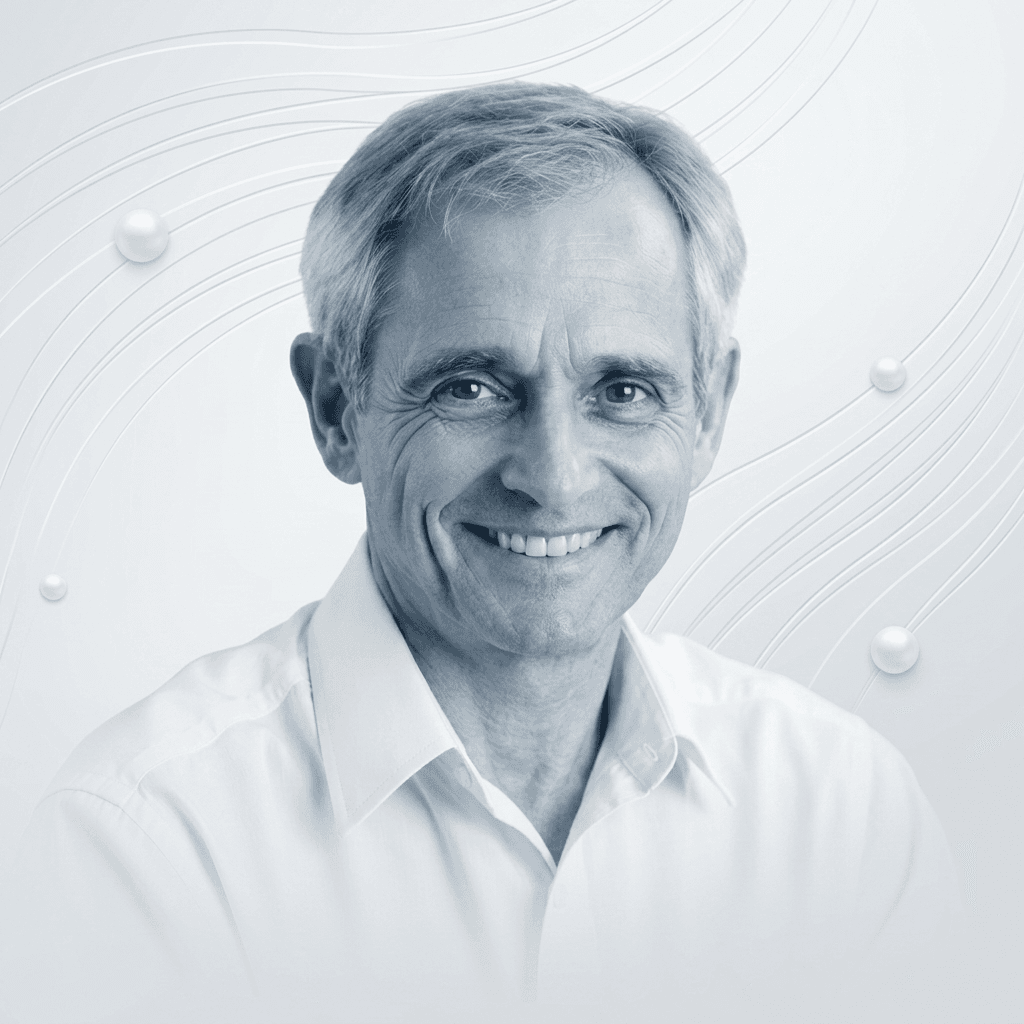
Donald Pfaff on generalized arousal and brainstem
Episode 15 14.03.2012
-
 play_arrow
PLAY EPISODE
Description arrow_drop_down

Description
Beneath every thought, every emotion, and every decision lies a primitive engine that neuroscience has ignored for 60 years. Donald Pfaff makes the case that generalized arousal is the essential foundation of all brain function, from fear to physics exams.
Subscribe for more from the Convergent Science Network podcast series.
Pfaff argues that arousal has been wrongly dismissed as non-specific background noise. He reframes it as the necessary precondition for all motivated behavior: alertness to sensory stimuli, motor activity, and emotional reactivity. The hyperthyroid individual who responds to every stimulus, cannot stand still, and weeps or laughs readily exemplifies high arousal; the hypothyroid couch potato who is sluggish, unreactive, and emotionally flat exemplifies the opposite. His high-throughput behavioral assay measures mice in isolation across sensory responsiveness, locomotion, and conditioned fear responses, 50 times per second, 24 hours a day, seven days a week.
Covariance analysis across multiple arousal-related tests reveals that generalized arousal accounts for approximately 30% of behavioral variance, a substantial foundation upon which specific drives like hunger, fear, and sex layer additional motivation. Pfaff frames this quantitatively: for the act of raiding the refrigerator at midnight, generalized arousal contributes roughly 30%, hunger drive perhaps 50%, personality factors another portion, with an irreducible margin of error that should trouble any judge deciding capital punishment cases.
The neural substrate involves both ascending and descending pathways. Five ascending neuromodulatory systems, norepinephrine, dopamine, serotonin, histamine, and acetylcholine, project from brainstem to forebrain, each clinically familiar through drugs that manipulate them. Pfaff distinguishes a phylogenetically ancient low road through the hypothalamus and basal forebrain from a high road through the thalamus to cortex. Giant neurons in the nucleus gigantocellularis of the brainstem reticular formation may serve as critical hubs, projecting both rostrally and caudally, linking arousal to both cortical activation and autonomic control. The neuropeptide CRF, operating through three receptor types, provides a specific neuromodulatory mechanism for danger-related arousal.
Tagged as:
brainstem Fear generalized arousal
About the author call_made
CSN Podcasts
Both the triumphs of humanity and its most evil deeds have resulted from collaboration. In a time where humanity is required to aspire to the former and minimize the latter, the question arises of how collaboration arises and why it fails. Surprisingly, this phenomenon, so central to who we are, is not well understood. Hence, a collaborative effort is required to understand collaboration in its full biological, psychological, sociological, cultural, and economic complexity and to translate this understanding into operational impact. This series of podcasts is one step toward achieving these complementary goals. The Collaboration Podcast presents interviews with people who are central orchestrators of collaboration in various domains including business, government, science, art, health, sustainability, and the military. The discussions were conducted by Prof. Dr. Paul F.M.J. Verschure and members of the Program Advisory Committee of the Ernst Strungmann Forum on Collaboration (https://www.esforum.de/forums/ESF32_Collaboration.html) during 2021 and had the goal to sketch a map of opportunities, challenges, and obstacles in human collaboration. The forum took place in May 2022, and now we would like to share this series of interviews with a broader audience. The full report of the Forum will be published in 2023 by MIT Press. The podcast was produced by the Convergent Science Network (https://www.convergentsciencenetwork.org/). Context: The stability of social systems depends critically on realizing sustainable methods of “collaboration,” yet how and by which means collaboration is achieved is not clearly understood; neither are the conditions or processes that lead to its breakdown or failure. Collaboration can be understood as cooperation between agents toward mutually constructed goals. Part of the reason for our lack of understanding is that the phenomenon of collaboration is, by nature, a highly multidisciplinary problem, and effective research into its complexities has been difficult to achieve across the broad range of scientific and technical disciplines involved. The need for a fundamental understanding of collaboration, however, has become increasingly important. Not only does humankind demand answers as it attempts to address critical challenges at multiple scales (e.g., climate change, migration, enhanced automation, social and economic inequality), but ever-increasing technological and economic means of interconnecting people and societies are disrupting long-established, familiar patterns of how we interact. Radical technological changes that are ongoing have the potential to reshape collaboration in ways that are currently hard to predict or influence (e.g., by altering configurations in interaction, information creation, and modes of communication). On one hand, such changes could disrupt hitherto stable forms of collaboration by affecting critical communication channels and traditional roles, as can be observed in the rapidly changing patterns in governance, commerce, and social interaction. Conversely, technology could lead to the emergence of novel, successful forms of collaboration that deviate from traditional “hierarchical” architectures. Evidence of this can be seen in areas as diverse as highly automated manufacturing plants, the open science movement, collaborative software repositories, user-centered services, and the sharing of economy-based modes of organization. Without a fundamental understanding of the mechanisms, processes, and boundary conditions of collaboration, it is not possible to evaluate or predict which of these possible scenarios are sustainable or even plausible. The Forum “How Collaboration Arises and Why it Fails” (May 8–13, 2022, Location: Frankfurt am Main, Germany) Chairs: Andreas Roepstorff and Paul Verschure Program Advisory Committee: Jenna Bednar, Julia R. Lupp, Bhavani R. Rao , Andreas Roepstorff, Ferdinand von Siemens, and Paul Verschure
Episodes



Timestamp
- fast_forward00:00:03 - This is the Convergent Science Network podcast.
- fast_forward00:00:08 - Leading researchers in the domain of neuroscience, brain theory and technology
- fast_forward00:00:13 - are interviewed by Paul Verschoor and Tony Prescott.
- fast_forward00:00:19 - This is Paul Verschoor with the Convergent Science Network podcast.
- fast_forward00:00:23 - And in this episode, that's also part of our CSN Barcelona Cognition Brain Technology
- fast_forward00:00:28 - Summer School. I'm talking with Donald Pruf.
- fast_forward00:00:32 - And Donald, you were giving a very elaborate talk, in some sense, focusing very much on,
- fast_forward00:00:41 - let's say, how the arousal system is really very much, let's say,
- fast_forward00:00:46 - a core engine of brain, mind, and behavior.
- fast_forward00:00:53 - Because in some sense also in the psychological literature, arousal is often
- fast_forward00:00:57 - seen as some sort of non-specific, an input to a steam engine and we don't think about it too much.
- fast_forward00:01:03 - So why do you believe that arousal is such a core ingredient of what makes us what we are?
- fast_forward00:01:09 - It used to be thought that the word non-specific is the worst possible word
- fast_forward00:01:15 - in behavioral neuroscience. science.
- fast_forward00:01:16 - And I've tried to turn this coin over and look on the other side and say that
- fast_forward00:01:22 - beneath every act, beneath every cognitive ability, beneath every emotional state is a primitive.
- fast_forward00:01:29 - Impetus, which is essential and powerful.
- fast_forward00:01:32 - It's necessary for any motivated behavior, and it's the place to begin.
- fast_forward00:01:37 - It's like starting at zero.
- fast_forward00:01:39 - Instead of studying the brain, if we were getting together to study the planet,
- fast_forward00:01:44 - the Earth, we would say, what's in there? What's making the whole thing work?
- fast_forward00:01:48 - And it's the magma of the Earth. It's deep, it's complicated, and it's unknown.
- fast_forward00:01:51 - And those things appeal to me. It especially appeals to me because it's been
- fast_forward00:01:57 - discarded, this subject, for about 60 years.
- fast_forward00:02:01 - The great Italian neurophysiologist Marozzi, working together with the American Horace Magoon,
- fast_forward00:02:07 - in the 1940s, really began to break the subject open.
- fast_forward00:02:11 - But then we lost our way, partly because we were interested in,
- fast_forward00:02:15 - quotes, more specific abilities,
- fast_forward00:02:17 - especially in the visual system, close quotes, and also because the tools of
- fast_forward00:02:22 - neuroscience became so detailed that we could indeed study the third dendrite
- fast_forward00:02:27 - from the left or the second nucleotide of DNA from the right,
- fast_forward00:02:31 - and therefore we thought we should.
- fast_forward00:02:33 - And in doing so, I think that we lost the ground substance of the nervous system.
- fast_forward00:02:40 - The substance, the reticular formation, which in any vertebrate nervous system,
- fast_forward00:02:46 - from the fish to the philosopher, is necessary for all motivated behaviors.
- fast_forward00:02:51 - I like the universal aspect of it, and that's why I'm studying it so hard.
- fast_forward00:02:55 - Right. But now, so you started with saying that That both when we talk about,
- fast_forward00:03:01 - let's say, emotional aspects of the brain or cognitive aspects,
- fast_forward00:03:07 - it's all sort of predicated on a basic arousal system.
- fast_forward00:03:11 - It starts out with arousal. Right. So how should I interpret that?
- fast_forward00:03:15 - Well, arousal is necessary but not sufficient, as we were saying a few minutes ago.
- fast_forward00:03:20 - What's necessary, what's sufficient. And in the case of cognitive abilities,
- fast_forward00:03:26 - we know that arousal is necessary for alertness and attention,
- fast_forward00:03:30 - which in turn are necessary for everything else.
- fast_forward00:03:32 - And so it starts with arousal, and it's good to begin at the beginning.
- fast_forward00:03:35 - With respect to emotional function, whether we are talking about temperament,
- fast_forward00:03:40 - whether we're talking about feelings or the emotion of the moment,
- fast_forward00:03:44 - the arousal is necessary for the strength of the behavior.
- fast_forward00:03:49 - And so it could be that we're just mildly annoyed or it could be that we're enraged.
- fast_forward00:03:53 - And the difference between those two is the great arousal necessary for an enraged act.
- fast_forward00:04:00 - But now, so you distinguish different layers of organization,
- fast_forward00:04:06 - both for emotional processing and cognition, each predicated on the preceding layers.
- fast_forward00:04:12 - And at the bottom of that, we then have an arousal system, right?
- fast_forward00:04:16 - But that's still, also earlier I alluded to sort of steam engine metaphor.
- fast_forward00:04:21 - I could look, okay, arousal could be the steam that you pump into this vat.
- fast_forward00:04:26 - But it still doesn't tell you a thing about what you're actually driving with that steam engine.
- fast_forward00:04:31 - So how do I get to a specific insight about what brains are up to?
- fast_forward00:04:36 - Well, in the first place, you're absolutely right. And so we may have one track
- fast_forward00:04:39 - of things which we're going toward cognition and another track of phenomena
- fast_forward00:04:43 - which we're going toward emotion.
- fast_forward00:04:44 - But we both know that I was giving, and now I'm talking about a minimalist description,
- fast_forward00:04:50 - and things are infinitely more complicated than that.
- fast_forward00:04:53 - That's what keeps neuroscientists fully employed.
- fast_forward00:04:56 - All over the world. Right. And so...
- fast_forward00:05:01 - How shall I say, how do we get to those specific abilities?
- fast_forward00:05:05 - I think the proper answer is, it's difficult. And let's talk about learning
- fast_forward00:05:11 - ability, depending on what kind of learning we're talking about.
- fast_forward00:05:14 - Are we talking about the hippocampus? Are we talking about the cortex?
- fast_forward00:05:17 - Are we talking about the frontal lobes of the cortex? It could be all of the
- fast_forward00:05:20 - above. of with respect to emotion.
- fast_forward00:05:22 - Are we talking about the emotional history of the individual?
- fast_forward00:05:25 - Are we talking about the drugs that the person is taking at the moment?
- fast_forward00:05:28 - The person's state of need with respect to hunger, thirst, and so forth?
- fast_forward00:05:32 - All of those will come into play, and it's as complicated as the human mind.
- fast_forward00:05:37 - And so I would never pretend to be able to chart for you on September 7th of 2012. 12.
- fast_forward00:05:46 - Among human abilities, I would not pretend to be able to chart for you any fully
- fast_forward00:05:52 - described task from my primitive arousal, my powerful and essential arousal
- fast_forward00:05:57 - function on the one hand, to the end game,
- fast_forward00:06:00 - that is, the finished behavioral act on the other.
- fast_forward00:06:03 - I would say even in Aplysia, the great Eric Kandel,
- fast_forward00:06:07 - Nobel Prize winner for the work on the Gill withdrawal reflex of Aplysia,
- fast_forward00:06:11 - who mapped out a minimalist circuit, but other people who study aplysia say
- fast_forward00:06:15 - that that minimalist circuit is not really the only way to do things.
- fast_forward00:06:18 - It's much more complicated than that.
- fast_forward00:06:20 - Now, I don't know how long since you've seen an aplysia, but they're stupid. Oh, really?
- fast_forward00:06:28 - And even there, things are more complicated than they seem.
- fast_forward00:06:33 - And so I think the task of neuroscience these days is to keep one's mind wide
- fast_forward00:06:37 - open as opposed to those minimalist descriptions of the mechanisms that go into
- fast_forward00:06:43 - every cognitive ability or every emotional expression,
- fast_forward00:06:46 - there are always likely to be mechanisms available to us that haven't been discussed yet.
- fast_forward00:06:51 - But you and I have been working in this field long enough that we remember the
- fast_forward00:06:56 - neuron-centric idea of the brain.
- fast_forward00:06:58 - But now, functioning in 2012, we know full well that the glial cells are doing
- fast_forward00:07:03 - very complicated things, especially with respect to glutamatergic action.
- fast_forward00:07:07 - That the brain is protected by the blood-brain barrier, We know that there are
- fast_forward00:07:11 - immune cells in the brain.
- fast_forward00:07:13 - When we were little, when you and I were kids, we could talk about the microglia
- fast_forward00:07:18 - in the brain, which are immune cells.
- fast_forward00:07:19 - But now we can talk about dendritic cells and we can talk about mast cells in
- fast_forward00:07:23 - the brain, accounting probably for neuroimmune phenomena, including depression,
- fast_forward00:07:28 - maybe the fatigue states like chronic fatigue syndrome.
- fast_forward00:07:30 - So things can be seen as infinitely complicated when we talk about the end goals
- fast_forward00:07:38 - that you were asking me for.
- fast_forward00:07:39 - I'm trying to start at the beginning I'm also
- fast_forward00:07:43 - following the dictate of Albert Einstein Albert Einstein said that every scientific
- fast_forward00:07:47 - theory should be as simple as possible but not simpler and that's why I'm starting
- fast_forward00:07:52 - at the beginning right so now we've wandered into this pretty complex jungle of around arousal.
- fast_forward00:08:01 - And things are getting indeed hairy. But on the other hand, you have sort of,
- fast_forward00:08:08 - if you want, compensated for that jump into the deep end. Yes.
- fast_forward00:08:11 - With also developing a highly specific, high-throughput behavioral essay for this.
- fast_forward00:08:16 - Yes. Right? So how does such a behavioral essay now help me to get the handle
- fast_forward00:08:21 - on this very complex notion of arousal? So here's what we needed.
- fast_forward00:08:24 - We needed a concept, which we've been talking about. out. We needed a precise
- fast_forward00:08:28 - operational definition,
- fast_forward00:08:29 - which would be that any animal or any human being is more aroused if he or she
- fast_forward00:08:35 - is more alert to sensory stimuli, more motoric activity.
- fast_forward00:08:41 - And more emotionally reactive.
- fast_forward00:08:43 - And you and I both know people who are off the scales at one end or the other.
- fast_forward00:08:48 - Consider the hyperthyroid individual, the person has too much thyroid hormone.
- fast_forward00:08:52 - He or she is responding alertly to every sensory stimulus.
- fast_forward00:08:57 - He or she is twitchy, can't stand still.
- fast_forward00:09:01 - My daughter-in-law is like that. You sit in her kitchen, she is never standing still.
- fast_forward00:09:05 - And he or she is very reactive emotionally, able to weep or able to laugh readily.
- fast_forward00:09:12 - At the other end, let's consider the hypothyroid individual.
- fast_forward00:09:17 - The person clinically does not have enough thyroid hormone. that person will
- fast_forward00:09:22 - be not reactive to sensory stimuli, sluggish, not moving around very much,
- fast_forward00:09:26 - the ultimate couch potato, and also flat emotionally.
- fast_forward00:09:31 - We know folks who are flat emotionally.
- fast_forward00:09:33 - So there's the operational definition and human examples. But I work on animal
- fast_forward00:09:38 - brains, and so we have this assay where the mice are closed off from the world.
- fast_forward00:09:44 - They're on their own little world, about one meter long and one meter wide and one meter tall.
- fast_forward00:09:50 - And we present to them sensory stimuli by computer.
- fast_forward00:09:53 - We measure their motion 50 times per second, 24 hours per day,
- fast_forward00:09:59 - seven days per week. And we measure their fear responses.
- fast_forward00:10:03 - That's what stands in for an emotional response.
- fast_forward00:10:05 - So it gives us an objective measurement, the way a physicist would want,
- fast_forward00:10:09 - of this global behavioral concept arousal.
- fast_forward00:10:14 - So we have the concept and the assay, and now we want to study the neuronal mechanisms.
- fast_forward00:10:20 - Right, exactly. So now that we have this assay and you have this high-resolution
- fast_forward00:10:24 - measurement, first is what are now, for this mouse, for this setup,
- fast_forward00:10:30 - what are the operational definitions for arousal?
- fast_forward00:10:34 - Greater response to olfactory stimuli, greater response to a very gentle touch
- fast_forward00:10:40 - stimulus, a tactile stimulus, and a greater response to a vestibular stimulus which would be shaking.
- fast_forward00:10:46 - The animal standing on something which is shaking.
- fast_forward00:10:50 - Also the animal's moving more. Also the animal, when presented with a conditioned
- fast_forward00:10:55 - stimulus for fear, for the shock,
- fast_forward00:10:58 - The animal will freeze. The animal will stand still. That's moving less.
- fast_forward00:11:02 - And moving less in response to the conditional stimulus for fear.
- fast_forward00:11:06 - That might be contradictory because moving more was the operational definition of high arousal.
- fast_forward00:11:11 - It's opposite but not contradictory because it's under very specific conditions.
- fast_forward00:11:15 - The conditioned stimulus for fear. Then the animal has to move less.
- fast_forward00:11:19 - The animal behaviorist would call it risk assessment.
- fast_forward00:11:22 - The mouse, which almost everything can eat a mouse, and the mouse is freezing,
- fast_forward00:11:27 - trying to be invisible against its environment, saying, oh my god,
- fast_forward00:11:30 - what is happening here? I'm not going to move.
- fast_forward00:11:33 - Yeah. But then that would mean the better definition might be just,
- fast_forward00:11:36 - let's say, the intensity with which the response is executed.
- fast_forward00:11:40 - Otherwise, we would have a potential inconsistency between the freezing behavior
- fast_forward00:11:45 - and exploratory behavior. The intensity and the situational dependence.
- fast_forward00:11:48 - When the animal is just wandering around, it's more activity. but
- fast_forward00:11:52 - when the animal has been given the condition stimulus for fear it's
- fast_forward00:11:55 - saying whoa let's stop let's let's let's
- fast_forward00:11:58 - not do anything until we find out what's going on sure yeah or the cat might
- fast_forward00:12:02 - get me yes so now or the hawk or or the hawk or or don himself yeah right and
- fast_forward00:12:09 - it's not healthy for a mouse to be in my laboratory right but then um so what you said is that.
- fast_forward00:12:16 - You could account for 30% of the behavior in this essay from this perspective of arousal.
- fast_forward00:12:23 - So how should I interpret that? What does that really mean? It means that the
- fast_forward00:12:26 - animal's behavior is varying, is changing all over the place.
- fast_forward00:12:30 - And when you put the animal in a large number of tests, all of which have something
- fast_forward00:12:35 - to do with arousal, you then find out what's correlated with what.
- fast_forward00:12:39 - The fancy word would be that it's a covariance matrix. tricks.
- fast_forward00:12:43 - What that really means is, is the animal who is the most aroused in this test
- fast_forward00:12:50 - also most aroused in test number two, most aroused in test number three,
- fast_forward00:12:54 - and so forth, and so forth, and so forth.
- fast_forward00:12:56 - When you do that for a large number of tests and a large number of mice,
- fast_forward00:13:00 - you can say, aha, there are certain forces beneath all of these tests that are
- fast_forward00:13:05 - regulating the animal's behavior, And these arousal-related tests.
- fast_forward00:13:09 - How much can I account for by one big, massive, let's call it generalized arousal?
- fast_forward00:13:15 - And the answer was about 30%. Now, our colleagues this morning in our meeting
- fast_forward00:13:20 - pointed out that there must be many other determinants of behavior in addition
- fast_forward00:13:24 - to generalized arousal.
- fast_forward00:13:25 - And so when the animal is responding to any individual reason for getting excited,
- fast_forward00:13:32 - let's say it's fear, let's say it's food, it's hunger, it's sex,
- fast_forward00:13:37 - anything that arouses a human being.
- fast_forward00:13:39 - For you and me, it could be a scientific exam.
- fast_forward00:13:42 - I find them very arousing. I always did too.
- fast_forward00:13:47 - Then we say, what percentage roughly of our overall excitement is due to this generalized arousal?
- fast_forward00:13:54 - Maybe 30% but then the other 70% are due to all the other complex causes of
- fast_forward00:14:00 - behavior specific causes to one situation or another but would you be willing
- fast_forward00:14:05 - to consider let's say as a second source a,
- fast_forward00:14:08 - two nonspecific arousal specific forms of arousal. Absolutely. Okay.
- fast_forward00:14:13 - And so we could talk about the arousal of the male approaching the female.
- fast_forward00:14:18 - We could talk about the arousal of an animal or a human being which has woken up because he is hungry.
- fast_forward00:14:26 - And so the orexin neurons in the hypothalamus are receiving the input that the
- fast_forward00:14:31 - animal is hungry, causing the animal to wake up or the human being to wake up.
- fast_forward00:14:36 - I wake up in the middle of the night and I head for the refrigerator.
- fast_forward00:14:40 - And then one reduces the hunger drive by eating and then one can go back to sleep.
- fast_forward00:14:45 - Right. Yeah. Okay. Yeah. But then, so how much would that add to the 30% if
- fast_forward00:14:51 - we take specific arousal into account as well? I don't know.
- fast_forward00:14:54 - Okay. What would be your bet? If you just have to bet. Think of the, okay.
- fast_forward00:14:57 - Think of the, is the prize a good glass of wine perhaps?
- fast_forward00:15:01 - If you want, sure, no problem. Okay. So let's say that every behavior is like an equation.
- fast_forward00:15:07 - If we neuroscientists are trying to go away from philosophy,
- fast_forward00:15:11 - we as young people knew that very smart guys and women, going all the way back
- fast_forward00:15:18 - to the Greeks, were talking about the causation of behavior.
- fast_forward00:15:21 - And they could elaborate very great philosophical theories about behavior.
- fast_forward00:15:25 - And we read about these century after century after century.
- fast_forward00:15:29 - How can we go away from that and turn this behavior into a science?
- fast_forward00:15:33 - And the way we do it is to have precise definitions and to think of behavior
- fast_forward00:15:37 - as quantitative equations.
- fast_forward00:15:39 - Now, for the equation of the rat who was hungry, or the human being,
- fast_forward00:15:44 - the guy who's hungry in the middle of the night, let's say on the left side
- fast_forward00:15:47 - of the equation is the behavioral result, getting up and going to the refrigerator.
- fast_forward00:15:52 - On the right side of the equation are many terms.
- fast_forward00:15:55 - The generalized arousal term is just one of them.
- fast_forward00:15:59 - Now, you're asking me, what about the rest? What about the other 70%?
- fast_forward00:16:03 - For that glass of wine, I'm going to bet for the simple act of eating that maybe
- fast_forward00:16:10 - the hunger drive accounts for another 50% perhaps.
- fast_forward00:16:13 - And so now we're up to 80%. And now you're going to ask me, what about the other 20%?
- fast_forward00:16:18 - And I'm going to say that there are other facts about the person's personality
- fast_forward00:16:23 - which make him either, maybe he feels sorry for himself.
- fast_forward00:16:27 - And that accounts for another 19%. Now, in a way, you could say,
- fast_forward00:16:32 - well, this is pretty good, because if we're right about this as scientists,
- fast_forward00:16:36 - we're accounting for a motivated behavior.
- fast_forward00:16:39 - On the other hand, I'm certainly going to have, at least as I explain in this
- fast_forward00:16:44 - fictitious manner, at least 1% to 5% due to slop.
- fast_forward00:16:49 - I'm not going to know. No. And you, as a realistic scientist,
- fast_forward00:16:52 - are going to say to me, yes, we're going to give Don one to five percent.
- fast_forward00:16:56 - But this is embarrassing in a way as a scientist, and especially a scientist
- fast_forward00:17:00 - who wants to achieve the precision of physics. And here's why.
- fast_forward00:17:02 - Suppose you were a judge, and you were deciding about an American judge,
- fast_forward00:17:07 - where there is a capital punishment.
- fast_forward00:17:09 - A person can be put to death, let's say, by lethal injection for murdering somebody.
- fast_forward00:17:14 - And you're a judge who's deciding about capital punishment. Do you want to have
- fast_forward00:17:18 - a five percent chance of error?
- fast_forward00:17:20 - That as a mature judge out of every 100 individuals whom you sentence to death,
- fast_forward00:17:26 - did you sentence five of them to death by accident? I don't think so.
- fast_forward00:17:29 - And so we're really still striving hard.
- fast_forward00:17:36 - We're trying hard to reduce that error.
- fast_forward00:17:38 - But it's clear that you want to go for the full bottle of wine and one glass is not sufficient.
- fast_forward00:17:43 - I want to go for 100%. Right. But on September 7th of 2012, I'm sure about the 30%.
- fast_forward00:17:49 - Percent and i'm guessing pretty well about the 50 percent and
- fast_forward00:17:52 - i'm pretending uh that we're just
- fast_forward00:17:55 - guessing about the other 20 right but now but now there's
- fast_forward00:17:58 - there are historical examples where people try to develop let's say a physics
- fast_forward00:18:02 - of behavior yes right in a comparable i'm thinking about clark hall for instance
- fast_forward00:18:05 - with the most elaborate theory of this kind absolutely yeah which in some sense
- fast_forward00:18:10 - also collapse under its own weight right and then he had to he had to as soon
- fast_forward00:18:15 - as a new paradigm was discovered,
- fast_forward00:18:17 - let's say eye blink conditioning was one of his difficult cases,
- fast_forward00:18:19 - he had to start to add ad hoc parameters to keep the whole thing afloat,
- fast_forward00:18:22 - and so on. I'll tell you a secret.
- fast_forward00:18:24 - The secret is that he started too complicated.
- fast_forward00:18:29 - As an ambitious and arrogant scientist, he and other people said,
- fast_forward00:18:34 - we're going to explain learning.
- fast_forward00:18:37 - We're going to take the behaviorism of B.F. Skinner and we're going to make
- fast_forward00:18:41 - it into an elaborate theory, not like B.F. Skinner, and explain learning.
- fast_forward00:18:45 - The secret is to start much simpler. Start with behaviors that the animals don't have to learn.
- fast_forward00:18:51 - Start with behaviors that have the simplest possible sensory determinants.
- fast_forward00:18:58 - The simplest possible motor outputs, and the simplest possible regulatory elements.
- fast_forward00:19:03 - And so that's what I did. I started this a long time ago, an embarrassing number of years ago.
- fast_forward00:19:09 - And as a chemistry student, I had figured out that these steroids are actually
- fast_forward00:19:16 - hormones, and they're very simple chemicals.
- fast_forward00:19:18 - A steroid hormone is a rigid, flat piece of carbon atoms, which you can draw
- fast_forward00:19:24 - on a piece of paper. If we were doing this in video, I could draw a steroid
- fast_forward00:19:28 - hormone for you in about 30 seconds.
- fast_forward00:19:30 - And it turns out that these steroid hormones regulate simple behaviors,
- fast_forward00:19:35 - not learned behaviors necessarily, but simple behaviors. And the simplest of all is sex.
- fast_forward00:19:40 - And among the simplest sex behaviors are behavior where the animal doesn't even have to locomote.
- fast_forward00:19:47 - Locomotion is pretty hard, actually. But before we go to the sex behavior,
- fast_forward00:19:52 - I think there's a step in between, right? Because I think there's another really
- fast_forward00:19:57 - important difference between what you're doing and what Clark Hull is doing.
- fast_forward00:20:00 - Because by simplifying the behavior you explain, you do not necessarily insure
- fast_forward00:20:07 - yourself against failure.
- fast_forward00:20:08 - The complexity can still be too high to come to a physics of behavior.
- fast_forward00:20:13 - Oh, yes. It's easy to fail. Exactly. There's no certainty.
- fast_forward00:20:16 - Yeah. But you, I think, have added a new ingredient in this equation,
- fast_forward00:20:21 - which is a neuroscientific one.
- fast_forward00:20:23 - Yes. Right? You have been mapping this functional interpretation of behavior
- fast_forward00:20:27 - and arousal also back onto the brain.
- fast_forward00:20:30 - And now things start to become, I think, it becomes a very different game and
- fast_forward00:20:33 - a game that Hull couldn't play because now we have new constraints.
- fast_forward00:20:37 - Yes. Now we have the neural substrate. Yes. So I think that really distinguishes
- fast_forward00:20:41 - what you're doing from these more traditional approaches.
- fast_forward00:20:43 - So how has this helped you to look at the substrate?
- fast_forward00:20:45 - What are the insights? Well, first, let's talk about the tools that compared
- fast_forward00:20:49 - to the behavioral neuroscientists, or shall we say the behavioral scientists
- fast_forward00:20:53 - of 60 years ago or 50 years ago.
- fast_forward00:20:56 - On the neuroanatomical side, we know so much more about nerve cells connected
- fast_forward00:21:00 - to other nerve cells than people did 50 years ago.
- fast_forward00:21:04 - Techniques that map cell-to-cell connectivity and discriminate individual cell
- fast_forward00:21:09 - types and say, where do these cell types go?
- fast_forward00:21:12 - This is available to us now. Now, in terms of the physiology,
- fast_forward00:21:16 - the function of neurons, we have electrical recording techniques that we didn't used to have.
- fast_forward00:21:20 - We can record from single nerve cells, whereas people couldn't do that so well 60 years ago.
- fast_forward00:21:25 - We can also not only record the cortical electroencephalogram,
- fast_forward00:21:29 - EEG, with precision, but we can analyze it with mathematical detail.
- fast_forward00:21:34 - We can get nerve cells into the dish. And instead of having it mixed up with
- fast_forward00:21:39 - all the other nerve cells in the brain, And I did this on Tuesday.
- fast_forward00:21:42 - We're now talking on Friday.
- fast_forward00:21:44 - On Tuesday, I was looking at individual nerve cells and a so-called nerve cell line.
- fast_forward00:21:49 - And I could bring my pipette in, a tiny pipette, which has a tip of one micron,
- fast_forward00:21:54 - which would be one millionth of a meter.
- fast_forward00:21:57 - And bring that next to the nerve cell and record the nerve cell's activity.
- fast_forward00:22:01 - So on the physiological electrical side, we have tools.
- fast_forward00:22:04 - Let's talk about the chemistry. We have the chemistry of neurotransmitters now
- fast_forward00:22:09 - that weren't so much known then.
- fast_forward00:22:11 - And we now know that there are these neuromodulators called neuropeptides,
- fast_forward00:22:14 - which are tiny pieces of proteins, which are now not fully described necessarily,
- fast_forward00:22:19 - but compared to 60 years ago, I mean, we're in heaven compared to 60 years. We're in nirvana.
- fast_forward00:22:24 - And now we have molecular biology. The genes expressed in the nervous system
- fast_forward00:22:28 - and the regulations of those genes by transcription factors.
- fast_forward00:22:32 - Clark Hull didn't know about DNA and he didn't know about transcription factors,
- fast_forward00:22:37 - but now we know these things. Sure, exactly.
- fast_forward00:23:08 - About the other 349 degrees or in some cases we collaborate with guys and teams
- fast_forward00:23:14 - who know about the other 349 in order to make a story and sometimes we succeed and sometimes we don't.
- fast_forward00:23:21 - You choose your problem right if you're surrounded by people who are smarter
- fast_forward00:23:25 - than you are and work long enough then you can succeed.
- fast_forward00:23:28 - Right yeah that's very good but now of all these possibilities you have have
- fast_forward00:23:33 - in the arsenal, you highlighted two in particular. So on the one end, it was to map,
- fast_forward00:23:40 - a functional notion of arousal to neuromodulation, right? And the other one
- fast_forward00:23:44 - then to map it to very specific ascending, descending neurons in the brainstem.
- fast_forward00:23:48 - So let's first look at neuromodulation.
- fast_forward00:23:50 - So how does a neuromodulation view on arousal help us to sort of get a better
- fast_forward00:23:57 - grasp on this functional notion?
- fast_forward00:24:00 - Well, we're starting with the more complex part of it, but let's talk about it.
- fast_forward00:24:05 - Neuromodulators are typically hormones or small pieces of proteins.
- fast_forward00:24:11 - And so if we think about neuromodulation of the animal alerting because there's
- fast_forward00:24:17 - danger in the environment,
- fast_forward00:24:19 - chances are we're talking about a little piece of a peptide called CRF,
- fast_forward00:24:25 - corticotropin releasing factor.
- fast_forward00:24:28 - The guy that discovered that died just about six years ago, I mean six months
- fast_forward00:24:32 - ago, and his name was Wiley Vail.
- fast_forward00:24:34 - And many years ago, maybe 20 years ago, he described these, it's about 40 amino
- fast_forward00:24:40 - acids in a row, which is CRF operating through three types of receptors.
- fast_forward00:24:45 - And the neurons, which are most essential for turning on the rest of the brain, have CRF receptors.
- fast_forward00:24:52 - And so that would be one way in which a neuromodulation could tell the individual,
- fast_forward00:24:58 - oops, you are in a situation where something bad has happened.
- fast_forward00:25:01 - You're in a part of town where you were robbed, or you're in a situation with
- fast_forward00:25:07 - your girlfriend where she's going to get angry at you.
- fast_forward00:25:10 - In these cases, you're made alert in order to not do the wrong thing,
- fast_forward00:25:15 - in the wrong part of town to avoid getting killed, with your girlfriend to avoid
- fast_forward00:25:20 - losing her, or boyfriend to avoid losing him.
- fast_forward00:25:23 - And so there's an example of how a specific chemical could set up the arousal
- fast_forward00:25:29 - system to say, whoops, let's be careful about this.
- fast_forward00:25:33 - Now, what about the pathways that are being acted upon?
- fast_forward00:25:39 - The neuroscientists will quickly start talking about pathways that go from lower
- fast_forward00:25:46 - parts of the brain, like the brain stem above the spinal cord,
- fast_forward00:25:49 - to upper parts of the brain, like the forebrain, the cerebral cortex in a human being.
- fast_forward00:25:56 - And those pathways, their chemistry is known.
- fast_forward00:25:59 - Norepinephrine and dopamine, anybody that's used cocaine or methamphetamine
- fast_forward00:26:04 - is operating on norepinephrine and dopamine systems, probably with disastrous complications.
- fast_forward00:26:10 - Serotonin, anybody who's taken his antidepressant today, selective serotonin
- fast_forward00:26:16 - reuptake inhibitor, SSRI, has been manipulating the serotonin system.
- fast_forward00:26:22 - Histamine, well, if you took your allergy medicine today, and if it was an old
- fast_forward00:26:29 - type of allergy medicine, it made you sleepy.
- fast_forward00:26:31 - And the reason it made you sleepy was because it blocked histamine receptors.
- fast_forward00:26:35 - And acetylcholine, if we're talking now about, let's say, an 85-year-old person
- fast_forward00:26:40 - who's succumbing to Alzheimer's disease,
- fast_forward00:26:42 - his doctor is giving him a drug which will slow the breakdown of acetylcholine
- fast_forward00:26:49 - so that the acetylcholine can come to that guy's cerebral cortex and try to
- fast_forward00:26:54 - keep him functioning a little bit longer. So those are five ascending systems.
- fast_forward00:26:59 - But it also turns out there are systems going from the upper part of the brain
- fast_forward00:27:02 - to the lower part of the brain. And those are more complicated to talk about.
- fast_forward00:27:07 - But I think rather than talking about their chemistry, what I'd like to say
- fast_forward00:27:11 - is that part of arousal is the autonomic nervous system.
- fast_forward00:27:15 - You and I know that the James Lange theory of emotion was that a person gets
- fast_forward00:27:20 - a sense of fear partly because his guts and his heart and his breathing are
- fast_forward00:27:24 - telling him that he's afraid.
- fast_forward00:27:26 - Well, what about those controls? The autonomic nervous system controls.
- fast_forward00:27:30 - Sympathetic nervous system and parasympathetic nervous system are controlled
- fast_forward00:27:34 - by systems going from the upper part of the brain to the lower part of the brain.
- fast_forward00:27:38 - And of course, I'm especially excited about nerve cells that could contribute to both.
- fast_forward00:27:42 - Right, exactly. Exactly. And we're going to get to those, right?
- fast_forward00:27:45 - Because in some sense, if we look at this neuromodulatory view,
- fast_forward00:27:49 - you can talk about, let's say, what you also call the high and the low road
- fast_forward00:27:52 - towards controlling arousal.
- fast_forward00:27:55 - So how should I think about that with respect to these neuromodulatory systems?
- fast_forward00:27:59 - Well, let's consider the evolution of the brain from the simplest vertebrate
- fast_forward00:28:04 - animal, which would be a fish or even a simple fish like a lamprey,
- fast_forward00:28:08 - I don't know what the Latin word for lamprey is, up to the most complicated
- fast_forward00:28:13 - individuals, which I would still think would be human beings.
- fast_forward00:28:17 - In the simplest individuals, we have the low road to arousal,
- fast_forward00:28:20 - and that would be the systems that go from the spinal cord through the lower
- fast_forward00:28:26 - part of the brainstem, down where our neck is,
- fast_forward00:28:28 - along the roof of our mouth, which would be through the hypothalamus,
- fast_forward00:28:33 - to the basal forebrain, which is quite primitive,
- fast_forward00:28:35 - and that's what we call the low road to arousal.
- fast_forward00:28:38 - And in fact, some cholinergic neurons are at the target of that low road of arousal.
- fast_forward00:28:44 - But as we move into higher forms of vertebrates, even mammals,
- fast_forward00:28:49 - we're developing that thalamocortical system.
- fast_forward00:28:52 - So that would mean that perched on top of the brainstem is something called the thalamus.
- fast_forward00:28:58 - And the thalamus is the Greek word for antechamber. And the reason it's called
- fast_forward00:29:03 - the antechamber, the thalamus, is because it is the doorway to the cerebral cortex.
- fast_forward00:29:08 - All of these high roads to arousal go through the antechamber to the crowning
- fast_forward00:29:14 - glory of the mammalian brain, the cerebral cortex.
- fast_forward00:29:17 - So, the high road would go from the lower brainstem into this thing called the
- fast_forward00:29:22 - thalamus, and then certain thalamocortical pathways would wake up.
- fast_forward00:29:27 - And when we're lucky, both of them are working, the high road and the low road.
- fast_forward00:29:32 - But all the neuromodulatory systems you alluded to earlier would completely bypass the thalamus.
- fast_forward00:29:38 - They are directly tapping into the neocortex.
- fast_forward00:29:40 - I think they do, yes. I would agree with that.
- fast_forward00:29:44 - So then this high road seems to be more based on, let's say,
- fast_forward00:29:47 - glutamatergic transduction, probably conveying signals from the periphery, memory, etc.
- fast_forward00:29:54 - Into neocortex. Is this really the distinction you would agree with?
- fast_forward00:29:57 - You have to be correct in the sense that one of the important inputs to the
- fast_forward00:30:02 - medial part of the thalamus is a glutamatergic input from the midbrain reticular
- fast_forward00:30:07 - formation, also called mesencephalic reticular formation.
- fast_forward00:30:10 - So, when the neurologist Nicholas Schiff, S-C-H-I-F-F, stimulated the brain
- fast_forward00:30:17 - of a vegetative state patient in the central thalamus, and he woke up that patient
- fast_forward00:30:22 - so that patient could be conscious.
- fast_forward00:30:25 - He lays the success of his electrical stimulation to the fact that he was stimulating
- fast_forward00:30:31 - glutamatergic inputs to the medial thalamus. Right, exactly.
- fast_forward00:30:35 - Okay, so now, so we have this high and low road. And then what you also mentioned
- fast_forward00:30:39 - earlier, in some sense, of course, we can now start to think about,
- fast_forward00:30:42 - okay, but how could these systems possibly be coupled in some way, right?
- fast_forward00:30:46 - And what you were talking about, there was a very, very unique category of cells
- fast_forward00:30:52 - that you found in the brainstem that might be, let's say, some sort of mediators
- fast_forward00:30:57 - between this high and low road of arousal, possibly.
- fast_forward00:31:00 - Okay, this is my interpretation right now. So what makes these cells so special?
- fast_forward00:31:05 - Their size and their location. You and I both know that the name of the game
- fast_forward00:31:12 - in neuroanatomy and in the brain research is just like real estate in New York City.
- fast_forward00:31:19 - Location, location, location. Probably real estate in Barcelona as well. I think so.
- fast_forward00:31:25 - I think so, yeah. And so these cells have the right connections, so to speak.
- fast_forward00:31:30 - If you're a politician and you talk to your sister, you may not be too influential.
- fast_forward00:31:36 - But if you talk to William Clinton, the former president of the United States,
- fast_forward00:31:39 - and he talks to everybody, well, then you're going to be influential.
- fast_forward00:31:43 - Talking to these nerve cells, which are called nucleus gigantocellularis,
- fast_forward00:31:47 - these nerve cells, they're huge.
- fast_forward00:31:49 - Let's call them giant nerve cells, nucleus gigantocellularis.
- fast_forward00:31:52 - Talking with them is a little bit like talking with Bill Clinton,
- fast_forward00:31:55 - because they talk in turn,
- fast_forward00:31:58 - not only to systems ascending the nervous system up in the midbrain, for example,
- fast_forward00:32:05 - but also down in the spinal cord.
- fast_forward00:32:07 - And so I believe that they have a unique role.
- fast_forward00:32:09 - Okay, but now, so what makes them gigantic? So in terms of, if you would compare
- fast_forward00:32:15 - them to your standard, let's say, layer five pyramidal cell in terms of their,
- fast_forward00:32:19 - let's say, cell body, their dendrites, their axons, how are they,
- fast_forward00:32:22 - why are they gigantic compared to those? Honestly, the answer is I don't know.
- fast_forward00:32:24 - Within the past six months, I've gone to people smarter than me.
- fast_forward00:32:28 - James Darnell, the great cell biologist who's a molecular biologist at Rockefeller
- fast_forward00:32:33 - University, and several other people like him, and said, what about these huge cells?
- fast_forward00:32:38 - Is there something about their gene expression which is likely to be unique,
- fast_forward00:32:42 - which automatically would know that I'm dealing with nucleus gigantocellularis
- fast_forward00:32:48 - neuron because it expresses the X factor?
- fast_forward00:32:51 - And all we can think of is, no, there is no X factor. It's simply more of the same.
- fast_forward00:32:58 - Now, if you were to say to me, why is there more of the same?
- fast_forward00:33:01 - I would have to get very nervous and say, I just don't know the answer to that.
- fast_forward00:33:05 - I want to find that out. And within, I would say within the next six months,
- fast_forward00:33:10 - we'll be doing molecular biological experiments attempting to answer your question. Right, exactly.
- fast_forward00:33:14 - But now, okay, let's try to understand this a little bit better,
- fast_forward00:33:16 - right? So if we talk about how they're organized in the reticular formation,
- fast_forward00:33:21 - the brainstem, how distributed are they?
- fast_forward00:33:23 - Are they very clumpy and clustered or is it sort of diffuse in the structure? They tend to be diffuse.
- fast_forward00:33:28 - And first I'll be literal and then I'll reflect on our state of knowledge in
- fast_forward00:33:32 - neuroscience at the moment. Okay.
- fast_forward00:33:35 - Uh, the reticular formation comes from the word for reticule.
- fast_forward00:33:39 - And a reticule is like a grid. And so if we were to look, let's say,
- fast_forward00:33:43 - through a microscope, and we see a bunch of vertical lines crossing and a bunch
- fast_forward00:33:46 - of horizontal lines crossing them, then we're talking about a reticule.
- fast_forward00:33:51 - When you look at a cross-section of the reticular formation,
- fast_forward00:33:54 - that's what it looks like.
- fast_forward00:33:55 - You see these cell bodies in their separate little boxes, so to speak,
- fast_forward00:33:59 - but you see these fibers zooming back and forth, vertically and horizontally,
- fast_forward00:34:03 - and that's why it was called the reticular formation.
- fast_forward00:34:06 - And so going all the way from the brain just above the spinal cord up into,
- fast_forward00:34:12 - but not including the thalamus, we have this kind of pattern.
- fast_forward00:34:16 - Now I might say that a couple of the questions that you're asking are touching
- fast_forward00:34:20 - on the very frontiers of neuroscience.
- fast_forward00:34:23 - And you and I hope that many people, not just our friends, our colleagues,
- fast_forward00:34:28 - our students, who are already in the know, so to speak, we'll listen to this
- fast_forward00:34:32 - but we also hope that many many people in many different countries.
- fast_forward00:34:36 - Who don't exactly know what this
- fast_forward00:34:38 - neuroscience is all about are going to listen to all of your podcasts.
- fast_forward00:34:42 - How many did you say you have at the moment? Well we should have about 50 by now or so.
- fast_forward00:34:45 - Yeah 50 and going right? 50 and growing. Do I hear 51? Do I hear 52?
- fast_forward00:34:50 - Oh yeah you will So and by one year from now you'll probably have 60 and so
- fast_forward00:34:54 - we hope that large numbers of people one, people who are deciding what to study And two,
- fast_forward00:34:59 - citizens who are paying for this, because we both know that good neuroscience
- fast_forward00:35:05 - and good science of any sort is dependent upon good economy.
- fast_forward00:35:08 - And good economy is dependent on governments collecting taxes and knowing that
- fast_forward00:35:13 - the scientists are doing the best possible thing with the money,
- fast_forward00:35:15 - either to push back the envelope and push back the frontiers of knowledge with
- fast_forward00:35:20 - respect to what we know about ourselves,
- fast_forward00:35:22 - or for that matter, what we know about the universe.
- fast_forward00:35:24 - So in that spirit, what I'd like to do is to say that there will be free in
- fast_forward00:35:30 - economically developing countries coming from the publisher Springer.
- fast_forward00:35:33 - So this would be the formerly German medical publisher.
- fast_forward00:35:37 - It used to be called Springer Verlag, but now it's just Springer.
- fast_forward00:35:39 - They worked at cost, and all of the editors and the authors worked for free,
- fast_forward00:35:44 - to produce an online text called Neuroscience in the 21st Century.
- fast_forward00:35:48 - And while it will be sold as a regular electronic text to universities in developed
- fast_forward00:35:53 - countries like Germany or the States or Japan.
- fast_forward00:35:56 - In large numbers of economically developing countries,
- fast_forward00:35:59 - which are identified by low gross domestic product per capita,
- fast_forward00:36:03 - and there's a specific list of 78 of these countries and another 28 where they
- fast_forward00:36:09 - get this list of Springer things for a very, very small amount of money.
- fast_forward00:36:12 - This electronic text will be published and we hope that people will make use
- fast_forward00:36:16 - of it. Besides our talking on this Friday afternoon...
- fast_forward00:36:20 - There are two organized ways of getting this out, and one would be the International
- fast_forward00:36:25 - Brain Research Organization.
- fast_forward00:36:27 - You and I call it Ebro, International Brain Research Organization,
- fast_forward00:36:31 - headquartered in Switzerland.
- fast_forward00:36:33 - And the other would be the Human Frontiers Science Program, headed in Strasbourg,
- fast_forward00:36:38 - France. And both of these organizations are devoted to the neuroscience as an
- fast_forward00:36:43 - international enterprise.
- fast_forward00:36:45 - And so all the university librarian in Zimbabwe, let's say, or in Sierra Leone
- fast_forward00:36:50 - or in Sri Lanka, the university librarian just has to tell Springer what the
- fast_forward00:36:54 - IP number of their computer is.
- fast_forward00:36:57 - And then automatically they not only get this text that
- fast_forward00:37:00 - i've done neuroscience in the 21st century 106 chapters
- fast_forward00:37:03 - including a chapter about how to set up a
- fast_forward00:37:06 - neuroscience program in a developing country the great canadian uh richard brown
- fast_forward00:37:11 - great sense of humor uh i wrote that chapter how to send how to set up a neuroscience
- fast_forward00:37:16 - program in a developing country with the order of things to do the problems
- fast_forward00:37:19 - you're going to have and so forth 106 chapters and the university librarian will get Get that text,
- fast_forward00:37:25 - and then everybody associated with the university,
- fast_forward00:37:28 - the students and faculty, get it for free.
- fast_forward00:37:30 - So we hope that this effort, which we're doing with podcasts here in Barcelona.
- fast_forward00:37:34 - Will be supplemented by Ebro's efforts and by Human Frontier's science program
- fast_forward00:37:41 - efforts. Well, that will be excellent.
- fast_forward00:37:44 - And I say that because now your questions, although we'll maybe not continue
- fast_forward00:37:49 - in that vein, are touching on the frontiers of neuroscience.
- fast_forward00:37:53 - Neuroscience what makes that large cell the
- fast_forward00:37:55 - way it is don uh nucleus gigantosalers how did it get to be that way and the
- fast_forward00:38:01 - answer is i hope to start studying that within six months right that's very
- fast_forward00:38:04 - good and so now this is an excellent initiative and then we definitely support
- fast_forward00:38:09 - that um but in some sense i would i would still i would like to go back to the
- fast_forward00:38:14 - frontier of neuroscience.
- fast_forward00:38:15 - And think a little bit more and discuss a bit more about about these these cells
- fast_forward00:38:19 - Because you said you estimate there might be around a thousand of them,
- fast_forward00:38:25 - let's say, more or less. Good guess.
- fast_forward00:38:26 - So they're embedded in this sort of matrix structure of the particular formation.
- fast_forward00:38:31 - They have both ascending and descending projections. Precisely.
- fast_forward00:38:36 - That extend over millimeters, I assume, because they have to touch… Depending
- fast_forward00:38:39 - on the size of the brain. Right, exactly.
- fast_forward00:38:42 - And you called them then the first responders. A fashion model with a long neck,
- fast_forward00:38:47 - a supermodel may have a long axon. Right, exactly.
- fast_forward00:38:53 - So now the question becomes, what are they really responding to?
- fast_forward00:38:57 - So you showed some physiology of these neurons, right?
- fast_forward00:39:01 - What do these guys like? What do they respond to? Well, your question during
- fast_forward00:39:05 - our discussions this morning was right on.
- fast_forward00:39:08 - And that is that these cells have dendrites.
- fast_forward00:39:12 - Dendrite comes from the Greek word for tree branch, which are very unusual.
- fast_forward00:39:17 - If we take the first segment of the dendrite as it emerges from the cell body,
- fast_forward00:39:21 - it has a certain length. Let's call it L.
- fast_forward00:39:23 - The next segment after that branching point will be longer than L.
- fast_forward00:39:27 - It'll be LL. And the next segment after that, going farther away from the cell
- fast_forward00:39:32 - body, will be longer than that, LLL.
- fast_forward00:39:34 - And you can picture, therefore, that these birds have very big wings.
- fast_forward00:39:39 - These nerve cells have a very large spread.
- fast_forward00:39:41 - And therefore, they're beautifully attuned to be able to pick up large numbers
- fast_forward00:39:46 - of signals from sensory neurons, sensory stimuli.
- fast_forward00:39:49 - And we know that they're capable of responding to every sensory stimulus we
- fast_forward00:39:53 - could give them. Right. Vision might be the worst.
- fast_forward00:39:55 - But since these are on the hindbrain, it was rather surprising that they responded
- fast_forward00:39:59 - as well as they did to olfactory stimuli, because the olfactory stimuli come in the nose.
- fast_forward00:40:04 - But they did respond to olfactory stimuli. So even though these are not sensory,
- fast_forward00:40:09 - these cells we're talking about are not out in the skin, or they're not in the
- fast_forward00:40:14 - eye, or they're not in the nose,
- fast_forward00:40:15 - they seem to be central for telling the rest of the central nervous system that
- fast_forward00:40:20 - something just happened.
- fast_forward00:40:21 - Right. Right, but now, what are their ascending targets?
- fast_forward00:40:25 - Ascending targets in, I'm not going to name all of them, because I might make
- fast_forward00:40:30 - somebody ill, and I probably would forget some.
- fast_forward00:40:34 - But they're going forward in the brainstem to the higher up parts of the particular formation.
- fast_forward00:40:41 - They're going to the hypothalamus, and they're going to the central thalamus,
- fast_forward00:40:45 - where you can stimulate in order to wake up the individual.
- fast_forward00:40:48 - Right, exactly. Are they also targeting structures like this periaqueductal
- fast_forward00:40:51 - gray, for instance? Yes.
- fast_forward00:40:53 - That's an incredibly important target. Yes, absolutely. Because there you would
- fast_forward00:40:56 - have more behavioral output, right? Oh, yeah.
- fast_forward00:40:58 - Because if you want to make an animal attack another animal,
- fast_forward00:41:01 - I mean, it's quite sad, actually, and quite vicious.
- fast_forward00:41:04 - Then stimulating the periaqueductal gray, that's called the central gray because
- fast_forward00:41:09 - it's right in the middle of the midbrain.
- fast_forward00:41:11 - And remember that the aqueduct is filled full of cerebrospinal fluid.
- fast_forward00:41:15 - It. It's like a land locked lake, uh, which is in the middle of the brain and
- fast_forward00:41:20 - people don't exactly know what it's doing.
- fast_forward00:41:22 - Is it, is it, is it just a pressure absorber to protect the brain from a,
- fast_forward00:41:26 - from a traumatic injury or is it a vehicle of communication?
- fast_forward00:41:29 - I think that many people would say that it's a vehicle of communication.
- fast_forward00:41:33 - They would speculate that the nervous system has a Navy, uh,
- fast_forward00:41:36 - and, and that signals can go up and down and it's people are just working that out now.
- fast_forward00:41:42 - But again, that's on the frontiers of neuroscience. Sure. Yeah.
- fast_forward00:41:45 - But on top of that, you found that, interestingly enough, some of these neurons
- fast_forward00:41:49 - are coupled rather directly, both to the circulatory system and to each other.
- fast_forward00:41:56 - Yes, to each other for sure.
- fast_forward00:41:58 - We don't know how quantitatively important that is.
- fast_forward00:42:01 - If we were to say, if this is an important part of the brain,
- fast_forward00:42:05 - this reticular formation, and its output is a certain amount,
- fast_forward00:42:08 - let's call it 100, what portion of that 100 units of output is due to them talking with each other?
- fast_forward00:42:16 - We're not sure. We're sure that it would make signaling faster, but how much faster?
- fast_forward00:42:21 - We think that some of these neurons can pick up signals from the blood,
- fast_forward00:42:24 - and we're excited about that because we know that some mental illnesses have
- fast_forward00:42:29 - something to do with the immune system.
- fast_forward00:42:31 - And if these nerve cells are picking up proteins in the blood,
- fast_forward00:42:34 - if they're receptive to proteins in the blood which reflect infections,
- fast_forward00:42:38 - for example, or even HIV, AIDS, then that would be very important.
- fast_forward00:42:42 - But right now we're in the realm of speculation.
- fast_forward00:42:45 - Although you did show in the morning that you have data that shows that these
- fast_forward00:42:48 - neurons can actually absorb substances that float around in the blood, right? It is possible.
- fast_forward00:42:53 - It is possible. But is it a small story or a big story? Sure.
- fast_forward00:42:55 - Shall we spend this weekend in the laboratory trying to find out?
- fast_forward00:42:59 - That's a good idea. But then, what's the transmitter they use?
- fast_forward00:43:05 - Glutamate. Glutamate. Some of them use GABA, and I can't figure out why. Okay. This is a puzzle.
- fast_forward00:43:13 - Glutamate is what we were expecting, and many of them do use glutamate.
- fast_forward00:43:16 - Some of them use GABA. And as you pointed out, and as Nick pointed out in our
- fast_forward00:43:21 - discussions this morning,
- fast_forward00:43:23 - even as it is important to figure out what makes these nerve cells fire their signals,
- fast_forward00:43:27 - their action potentials it's equally important to
- fast_forward00:43:30 - understand how to keep them quiet when nothing is happening right
- fast_forward00:43:33 - exactly because their their output would be meaningless if
- fast_forward00:43:37 - they're chattering away all the time sure it's like you when certain
- fast_forward00:43:40 - people can't stop talking you stop listening to them whereas another person
- fast_forward00:43:43 - he hardly says anything but when he says it we all listen right uh so how do
- fast_forward00:43:48 - we keep them quiet and it was pointed out in the morning uh discussion that
- fast_forward00:43:52 - That small nerve cells nearby the giant nerve cells might use the transmitter GABA,
- fast_forward00:43:59 - gamma-aminobutyric acid,
- fast_forward00:44:02 - in order to keep these cells shut up and quiet when there's nothing important to say.
- fast_forward00:44:07 - Yes. Very good. So then, what is their descending target?
- fast_forward00:44:12 - The entire spinal cord is the safest thing to say. Right. Both motor neurons
- fast_forward00:44:17 - directly and interneurons indirectly.
- fast_forward00:44:20 - And are there any specific patterns to these terminations they have in spinal
- fast_forward00:44:24 - cord? Not really. Not that I know of.
- fast_forward00:44:26 - The best way to study about this would be to study the work of the really accomplished
- fast_forward00:44:32 - Dutch neuroanatomist, Geert Holstege, who's in Groningen.
- fast_forward00:44:37 - Would you say? Groningen, yeah. Oh, there you are. and then in the United States
- fast_forward00:44:41 - there's a wonderful physiologist by the name of Barry Peterson with an S-O-N
- fast_forward00:44:45 - Peterson and you put his neurophysiology together with Herod's neuroanatomy
- fast_forward00:44:50 - and you have a picture of a whopping massive.
- fast_forward00:44:54 - Signal to the spinal cord but it's hard to figure out any specificity so here
- fast_forward00:45:00 - we have these neurons fairly clusters of them, they're coupled through these
- fast_forward00:45:05 - inhibitory local neurons,
- fast_forward00:45:07 - having both these ascending and descending projections,
- fast_forward00:45:11 - if you want, regulating lots of subsystems in the brain, right?
- fast_forward00:45:15 - And in some sense, you started to look at these as these neurons after you had
- fast_forward00:45:22 - been trying to dissect also these subsystems in a more complete way.
- fast_forward00:45:27 - So you were describing how you took very specific sexual behaviors,
- fast_forward00:45:30 - for instance, to try to understand how, let's say, this kind of behavior regulation could take place.
- fast_forward00:45:37 - And these first responders we just talked about, these large neurons in the
- fast_forward00:45:40 - brainstem, could be like a substrate
- fast_forward00:45:42 - that helps with this kind of behavior regulation. Yes, I think so.
- fast_forward00:45:45 - So to understand on the other side of that story, so how should I think about
- fast_forward00:45:51 - the regulation of a very basic behavioral pattern?
- fast_forward00:45:54 - So I think that so many neuroscientists are interested in how the body informs
- fast_forward00:45:59 - the brain of what needs to be done.
- fast_forward00:46:01 - After all, I think it was the talk….
- fast_forward00:46:05 - Nick's talk yesterday had the quotation from Theodosius Dobzhansky,
- fast_forward00:46:11 - a geneticist who incidentally worked on my campus at Rockefeller University,
- fast_forward00:46:15 - who was quoted as saying, nothing makes sense except in the light of evolution.
- fast_forward00:46:20 - And therefore, we have to say that the brain, and Ernhard Holstege would say
- fast_forward00:46:25 - the same thing, really has two functions, to keep the individual alive and to prolong the species.
- fast_forward00:46:32 - And so all of these motivated behaviors, which are meant to make life longer and more worthwhile,
- fast_forward00:46:38 - so to speak, longer in the case of a laboratory rat and perhaps more worthwhile
- fast_forward00:46:42 - in the case of a citizen of Spain or the citizen of the United States and so forth.
- fast_forward00:46:48 - And among those things would be the hunger and the thirst motivations,
- fast_forward00:46:51 - the fear to avoid danger.
- fast_forward00:46:52 - But what I chose to study was a very simple system, which is triggered and modulated
- fast_forward00:46:59 - by a hormone whose chemistry is very, very well known.
- fast_forward00:47:02 - These steroid hormones, the same kinds of steroids that athletes are not supposed
- fast_forward00:47:05 - to use, are simple, flat molecules.
- fast_forward00:47:09 - And it turns out that sex behavior in these lower animals absolutely depends upon them.
- fast_forward00:47:15 - Estrogens in the female and androgens in the male.
- fast_forward00:47:18 - So androgens would mean from the Greek, what is it that makes a male? The androgen.
- fast_forward00:47:24 - And estrogen, what is it that makes a female?
- fast_forward00:47:27 - And the estrogens and the androgens circulate in the blood from the ovaries
- fast_forward00:47:32 - and the testes, respectively.
- fast_forward00:47:34 - And because the brain is looking for lipid molecules, like the hormones,
- fast_forward00:47:39 - these hormones go right into the brain and they flood the entire brain,
- fast_forward00:47:43 - estrogens and androgens.
- fast_forward00:47:44 - But in certain parts of the brain, there are proteins and certain neurons that
- fast_forward00:47:50 - soak up these steroid hormones, and they're called hormone receptors.
- fast_forward00:47:54 - So an estrogen would bind to a protein called an estrogen receptor.
- fast_forward00:47:58 - A testosterone, an androgen, would bind to an androgen receptor.
- fast_forward00:48:02 - Let's stick with the estrogens.
- fast_forward00:48:04 - It turns out that this protein, which is called estrogen receptor alpha.
- fast_forward00:48:10 - Is manufactured by nerve cells in the primitive part of the forebrain,
- fast_forward00:48:14 - which is called the limbic system, the amygdala, the hippocampus,
- fast_forward00:48:18 - the septum, and so forth, and also in the hypothalamus.
- fast_forward00:48:21 - So it is a limbic hypothalamic system.
- fast_forward00:48:25 - And again, from the fish to the philosopher, the limbic hypothalamic system
- fast_forward00:48:29 - is well and thriving, working to receive hormones and to regulate behavior.
- fast_forward00:48:34 - So that was the first step of making a big advance and explaining how sex behavior
- fast_forward00:48:39 - happens is to know where the receptors are.
- fast_forward00:48:42 - Secondly, the receptors are at the top of a behavior-regulating loop.
- fast_forward00:48:47 - Now, let's think of the loop from the sensory stimulus, which would be being
- fast_forward00:48:51 - touched by the male on the flanks of the animal, and the signals go into the spinal cord,
- fast_forward00:48:56 - up the spinal cord, to the nucleus gigantocellularis, and also to the midbrain
- fast_forward00:49:01 - central gray, which you mentioned, the periaqueductal gray.
- fast_forward00:49:04 - And there, if the animal's ready to mate, If the estrogens are circulating and
- fast_forward00:49:09 - have turned on the estrogen receptor alpha, which in turn turned on certain genes,
- fast_forward00:49:14 - then a signal will come from the hypothalamus to tell that midbrain periaqueductal gray,
- fast_forward00:49:20 - yes, this is a go.
- fast_forward00:49:23 - This is ready. We are ready to mate. and then the descending side of the circuit
- fast_forward00:49:27 - goes back down through nucleus gigante cellularis back down to the spinal cord
- fast_forward00:49:32 - and it says to the spinal cord when you are touched on your flanks by the male the male.
- fast_forward00:49:39 - If dorsiflex, your spinal cord, that would mean lift your rump so that the male can fertilize.
- fast_forward00:49:46 - If and only if the female quadruped, the female with four feet,
- fast_forward00:49:51 - does that, then fertilization will occur and mating will occur.
- fast_forward00:49:55 - So we have the entire circuit. And by the way, if I can pat my colleagues on
- fast_forward00:49:59 - the back, it was the first circuit for any mammalian behavior,
- fast_forward00:50:02 - any vertebrate behavior for that matter. Now, at that point,
- fast_forward00:50:06 - as you know, we got lucky.
- fast_forward00:50:07 - Because when I started this work, the phrase transcription factor was not even
- fast_forward00:50:12 - a phrase. Nobody had that idea.
- fast_forward00:50:15 - But a transcription factor is a protein that tells a gene either to turn on
- fast_forward00:50:20 - or to turn off. It can work either way.
- fast_forward00:50:22 - And it turns out that the estrogen receptors that we had discovered are transcription
- fast_forward00:50:27 - factors which are regulated by the hormone.
- fast_forward00:50:29 - So if and only if the hormone like estradiol in a female comes from the blood
- fast_forward00:50:36 - and touches that estrogen receptor and binds to it, if and only if that happens,
- fast_forward00:50:41 - the estrogen receptor will bind to DNA,
- fast_forward00:50:45 - to a specific sequence of nucleotide bases on the DNA, and will turn on genes.
- fast_forward00:50:50 - Genes, and we know what several of those genes are.
- fast_forward00:50:52 - And then that affects the activity of that cell, it gives an estrogen-dependent
- fast_forward00:50:57 - signal back to the midbrain, and the behavior occurs.
- fast_forward00:51:00 - So at this point, we know the neuroanatomy of this behavior,
- fast_forward00:51:03 - simple behavior, we know the electrophysiology, and we know some of the functional
- fast_forward00:51:09 - genomics of the behavior.
- fast_forward00:51:11 - Right, so this is a really very complete description of a very specific behavioral.
- fast_forward00:51:18 - But the question that it raises is that, so do you believe this generalizes
- fast_forward00:51:23 - to any type of behavioral subsystem?
- fast_forward00:51:26 - Like the philosopher might not only engage in reproductive behaviors,
- fast_forward00:51:32 - they might also read a book.
- fast_forward00:51:33 - Yes. And reading a book might be on less hormonal control than reproductive behavior.
- fast_forward00:51:38 - So will it generalize to the ability of philosophers to read a book?
- fast_forward00:51:42 - The answer is I don't know. No.
- fast_forward00:51:44 - Probably, we talked about ripple analogies in one of the talks in this meeting.
- fast_forward00:51:50 - And what's probably going to happen is that my behavioral system,
- fast_forward00:51:54 - which we've explained, is like throwing the rock into the water.
- fast_forward00:51:57 - And it shows how to explain a simple man behavior, and the ripples will spread.
- fast_forward00:52:03 - And so from this example, we'll learn how to study other simple motivated behaviors,
- fast_forward00:52:08 - And we'll start approaching even more complex behaviors,
- fast_forward00:52:12 - like let's say the philosopher is a graduate student in philosophy and he would
- fast_forward00:52:17 - like to pass his test in order to get his PhD.
- fast_forward00:52:19 - And we could call that mastery motivation. What's the word?
- fast_forward00:52:24 - It's a motivation for accomplishment. And it used to be studied by something
- fast_forward00:52:28 - called a thematic apperception test.
- fast_forward00:52:32 - Mastery, there's a word...
- fast_forward00:52:35 - I'm not a native speaker, so I have an excuse. There's probably a good Dutch word for it.
- fast_forward00:52:39 - I know all the Dutch words for it. And probably the Dutch words are better than the American words.
- fast_forward00:52:45 - But you could measure people's motivation to do complicated things.
- fast_forward00:52:52 - And this philosophy graduate student, this fictitious student whom we're talking
- fast_forward00:52:56 - about, is going to have that kind of motivation.
- fast_forward00:52:59 - Now, will that sort of behavioral regulation follow the same kind of simple pattern?
- fast_forward00:53:05 - I would not bet on it. But for instance, to make it easier, would you believe
- fast_forward00:53:10 - that even in that behavior, also in that behavior, the hypothalamus would be
- fast_forward00:53:13 - playing a coordinating role as it does in the sexual behavior?
- fast_forward00:53:16 - I suspect that the hypothalamus will be down at the core of it,
- fast_forward00:53:20 - even as the magma is down at the core of the earth.
- fast_forward00:53:23 - But the magma doesn't explain everything about the earth. There are many things
- fast_forward00:53:26 - about the mountains and the oceans and the caves of the earth and the weather
- fast_forward00:53:32 - of the earth that the magna cannot explain.
- fast_forward00:53:34 - This is very important, right? Because you are saying whatever behaviors we
- fast_forward00:53:39 - observe, they're all driven by motivation.
- fast_forward00:53:41 - There's a motivational driver of this, which comes back to your arousal system in some form.
- fast_forward00:53:46 - Yes. And the core structure that is setting it up is hypothalamus.
- fast_forward00:53:50 - So in some sense, I would imply without hypothalamus, you will have no motivated
- fast_forward00:53:53 - behavior, whether they're abstract reading of books or the reproductive behaviors
- fast_forward00:53:56 - that occurred just before it. I think that's right.
- fast_forward00:53:58 - And so I think you and I are very interested in striving forward into forms
- fast_forward00:54:03 - of behavioral regulation, notably social behaviors, which are not likely to
- fast_forward00:54:08 - subsume, to be subject to this very simple model that I've worked out for sex behavior.
- fast_forward00:54:14 - They're likely to have equations that are of a different sort.
- fast_forward00:54:17 - I would make the analogy of the difference between arithmetic and calculus,
- fast_forward00:54:22 - or perhaps the difference between arithmetic and fractal geometry,
- fast_forward00:54:30 - maybe nonlinear equations.
- fast_forward00:54:33 - And they're both mathematics, but understanding arithmetic may be necessary
- fast_forward00:54:38 - for understanding more complicated forms of mathematics, but not sufficient.
- fast_forward00:54:41 - Right. But aren't you a little bit….
- fast_forward00:54:44 - Let's say, holding back too much here, because in some sense,
- fast_forward00:54:47 - if we would just pursue this line of reasoning, if you place,
- fast_forward00:54:50 - let's say, the hypothalamus always at the center of this, or these neurons,
- fast_forward00:54:55 - these gigantic neurons in the brainstem.
- fast_forward00:54:57 - You could say this is an invariant substrate of any motivated behavior.
- fast_forward00:55:01 - These guys always have to be involved, and if they're doing arithmetic,
- fast_forward00:55:05 - there's always arithmetic playing a role here.
- fast_forward00:55:08 - And they will, I agree with you, they absolutely will be involved,
- fast_forward00:55:10 - but it's going to be a lot more complicated than that.
- fast_forward00:55:12 - And so as we strive forward, I think on the one hand, the reason I'm being so
- fast_forward00:55:17 - shy about it is I don't want to be presumptuous and say, oh,
- fast_forward00:55:20 - what we discovered is going to be the Bauplan for pretty much everything there
- fast_forward00:55:23 - is. Well, that would just be silly of me to say that.
- fast_forward00:55:25 - On the other hand, as scientists, we have to be optimists and we have to be proactive.
- fast_forward00:55:30 - We have to say, yes, there is a reality out there. There are sequences of behavior
- fast_forward00:55:34 - that we want to explain, and we have the faith that they are explainable.
- fast_forward00:55:39 - And so you have robots downstairs and you already know how to regulate some
- fast_forward00:55:43 - of their behaviors and you're about to study their ability to regulate social behaviors.
- fast_forward00:55:48 - And so even though you don't know all the formula yet by which the social behaviors
- fast_forward00:55:53 - will be regulated, you have the faith that sooner or later you're going to be
- fast_forward00:55:56 - able to figure it out. Am I right? Sure, absolutely.
- fast_forward00:55:58 - But at least in my case, the robots will have to do something.
- fast_forward00:56:02 - So it's an easy test. But now, in case of the rat,
- fast_forward00:56:06 - let's say, how many of these behavioral subsystems do you think are implemented
- fast_forward00:56:13 - in these circuits and would this map onto these clusters of gigantic cells? else.
- fast_forward00:56:18 - It's easier to state an inequality than it is to guess an exact number.
- fast_forward00:56:22 - And so, for example, if we were in a guessing game and you were the great neuroscientist
- fast_forward00:56:27 - in the sky who knew the exact answer, you could say, how many of these systems
- fast_forward00:56:30 - are involved? And I would say seven.
- fast_forward00:56:32 - And you would say, wrong, you do not win the trip to Las Vegas.
- fast_forward00:56:36 - So you do not win the trip to.
- fast_forward00:56:39 - Monaco. But it's easier to say it's greater than.
- fast_forward00:56:43 - And so if I, as a person who's a sophisticated and well-educated and well-read
- fast_forward00:56:49 - neuroscientist at the moment, I would say that there's probably greater than 10.
- fast_forward00:56:53 - Greater than 10. How much greater than 10? I'm not going to say.
- fast_forward00:56:56 - Right. Okay. Very good. No, because what I, so my contention would be also,
- fast_forward00:57:01 - so having taken on to these kinds of concepts of behavior regulation, right?
- fast_forward00:57:08 - If you now start to generalize this towards more complex behaviors like social
- fast_forward00:57:11 - interaction, you very quickly see actually you have to even decompose those
- fast_forward00:57:15 - overall behavioral systems in all sorts of subsystems.
- fast_forward00:57:20 - And it's very difficult to get away with, let's say, getting to plausible social
- fast_forward00:57:25 - interaction just relying on a single kind of arousal-based drive.
- fast_forward00:57:29 - So I think it will start to fragment very rapidly.
- fast_forward00:57:33 - This will be an interesting problem to address in the future.
- fast_forward00:57:36 - I think so too. So it's dynamic.
- fast_forward00:57:38 - In the sense that everything that you're going to be studying,
- fast_forward00:57:41 - that I study with animals and are also interested in human beings,
- fast_forward00:57:44 - studying autistic children, it's dynamic in the sense that it's a flow of behavior through time.
- fast_forward00:57:51 - And on the other hand, it's things working in parallel, one system,
- fast_forward00:57:57 - a second system, a third system, all working in parallel in order to govern the behavior.
- fast_forward00:58:01 - Maybe sensory systems, motor systems, regulatory systems, all working at the same time.
- fast_forward00:58:05 - And so the equations are not going to be simple. The great British physiologist,
- fast_forward00:58:10 - Sir Charles Sherrington, he not only was maybe the best of the 20th century,
- fast_forward00:58:15 - but he trained the great Australian physiologist,
- fast_forward00:58:17 - Sir John Eccles, both Nobel Prize winners, and then they trained other guys.
- fast_forward00:58:22 - And Sir Charles Sherrington said that the job of the neuroscientist is to explain
- fast_forward00:58:27 - the flow of behavior through time.
- fast_forward00:58:30 - And so it's not just the individual reflex, the cat taking its paw away from
- fast_forward00:58:35 - the source of the damaging heat.
- fast_forward00:58:37 - But it's the sequence of behaviors, whether we're talking about simple behaviors
- fast_forward00:58:42 - like avoidance reflexes or complicated behaviors like social interactions.
- fast_forward00:58:47 - Okay, so Don, after this exploration of, let's say, arousal systems and behavior,
- fast_forward00:58:53 - two questions to finish up.
- fast_forward00:58:56 - So you've been around the blog quite a while in this business, right?
- fast_forward00:59:01 - Over 50 years. Right. And also now you've produced this marvelous book,
- fast_forward00:59:07 - Neuroscience for the 21st Century, that I hope will find many readers in your target audience.
- fast_forward00:59:14 - You've also taken a very, let's say, you're trying to develop this physics of
- fast_forward00:59:18 - behavior, but using modern neuroscience tools.
- fast_forward00:59:21 - So if you would have to give us the law, Don's law, the law we should adhere
- fast_forward00:59:26 - to in trying to understand brain and behavior, what would that law be?
- fast_forward00:59:30 - Don't be shy about it, okay? The law would be to say, don't say a law.
- fast_forward00:59:33 - And the reason is that even as we strain to accomplish the explanation of behavioral
- fast_forward00:59:42 - regulation in the simplest possible way,
- fast_forward00:59:44 - and again, we shared the idea that Einstein said every theory should be as simple
- fast_forward00:59:49 - as possible, but not simpler,
- fast_forward00:59:50 - that the temptation to do the shortcut is something that we should avoid. And so...
- fast_forward01:00:01 - I would never say that any substantial fraction of human behavior is going to
- fast_forward01:00:09 - be encompassed by a very simple lawful statement.
- fast_forward01:00:12 - It's going to be encompassed by large numbers of complex lawful statements,
- fast_forward01:00:17 - which I have the faith that neuroscientists will indeed explain over a period of time.
- fast_forward01:00:22 - But on this particular Friday afternoon, it would not only be false to try to state the law,
- fast_forward01:00:29 - but it would be discouraging because we hope that many people listening to this
- fast_forward01:00:33 - podcast will be people who are about to become neuroscientists,
- fast_forward01:00:36 - who are thinking about becoming neuroscientists.
- fast_forward01:00:38 - And if they think that it's already done, that's what I thought about physics
- fast_forward01:00:43 - when I was, therefore I went into the neurobiology.
- fast_forward01:00:46 - We want people who hear this podcast to get some sense that neuroscience is
- fast_forward01:00:52 - alive and kicking and that we're now, we're about to enter the golden age of neuroscience.
- fast_forward01:00:58 - And so if I had a law, it would be to say that we are entering the golden age
- fast_forward01:01:03 - of neuroscience. And why do I say that?
- fast_forward01:01:06 - It's because our science of how behavior is regulated has reached a stage of
- fast_forward01:01:11 - detail and sophistication, such that on the one hand, we can make use of the
- fast_forward01:01:17 - tools of physics and chemistry and mathematics,
- fast_forward01:01:19 - as you and I have talked about, to try to bring it to the service of behavioral explanation.
- fast_forward01:01:24 - Maybe simple behaviors, but we're getting there step by step by step.
- fast_forward01:01:29 - Thousands of neuroscientists across the world are getting there step by step by step.
- fast_forward01:01:34 - On the other hand, as sophisticated individuals and scientists,
- fast_forward01:01:39 - we know that as well as coming from bottom up,
- fast_forward01:01:42 - that every form of complicated human behavior is also governed by the lawfulness
- fast_forward01:01:46 - of society, that there are well-described social laws that we're all conforming
- fast_forward01:01:52 - to as civilized individuals.
- fast_forward01:01:53 - Let's call that from the collective on down to the individual.
- fast_forward01:01:57 - And so I believe that social scientists are getting more sophisticated than
- fast_forward01:02:02 - ever, and therefore we who are trying to study individual animal behavior, human behavior,
- fast_forward01:02:08 - robot behavior, can take advantage on the low side of the physical sciences
- fast_forward01:02:13 - and on the high side of the social sciences.
- fast_forward01:02:16 - And I think we're going to be doing that big time, all 216 countries and territories.
- fast_forward01:02:23 - How do I summarize that law now? What's Don's law?
- fast_forward01:02:26 - It's make use of all the tools of the physical sciences, all the tools of the
- fast_forward01:02:31 - social sciences, and that will keep you busy for 50 years. Like be inclusive and take the challenge.
- fast_forward01:02:36 - When I think of all the places this could be going on, the reason I said 216
- fast_forward01:02:40 - is because that's the numbers of countries and territories that took part in
- fast_forward01:02:45 - the Olympics in London in 2012.
- fast_forward01:02:47 - If you look at the UN right now, I think it's 196.
- fast_forward01:02:51 - And out of those 196, about half of them are in miserable economic shape.
- fast_forward01:02:57 - And so we really want the brilliant people in those countries to go to Springer
- fast_forward01:03:02 - and through perhaps Ebro, International Brain Research Organization,
- fast_forward01:03:05 - or perhaps through the Human Frontier Science Program and look for this text
- fast_forward01:03:10 - called Neuroscience in the 21st Century.
- fast_forward01:03:12 - Because we've got great scientists from all over the world. How many different
- fast_forward01:03:16 - countries contributed to that?
- fast_forward01:03:18 - Oh, I would guess inequality again.
- fast_forward01:03:22 - Certainly greater than 20 countries. Right. Greater than 20 countries.
- fast_forward01:03:26 - And they worked their hearts out to produce great stuff. Right.
- fast_forward01:03:29 - For neuroscience students all over the world. Excellent. Now,
- fast_forward01:03:32 - I'm looking forward to it.
- fast_forward01:03:33 - So, the last question then is, so five years from now, I'm going to go find
- fast_forward01:03:37 - you there at the campus of Rockefeller University.
- fast_forward01:03:39 - Yes, I'll be there. And I'm going to ask you, like, look, listen,
- fast_forward01:03:42 - Don, five years back you made this prediction.
- fast_forward01:03:44 - Yeah. And today it's pay up time, you know. You're going to lose your wine or you're going to gain it.
- fast_forward01:03:50 - What is one prediction you feel most strongly about today?
- fast_forward01:03:54 - I'd like to know what are the rules by which these giant neurons,
- fast_forward01:03:58 - nucleus giganticellularis, neurons in the reticular formation just above the
- fast_forward01:04:02 - spinal cord, what are the rules by which they operate?
- fast_forward01:04:06 - And the answer is going to come in two parts. One will be, what are the internal rules of governance?
- fast_forward01:04:11 - Is there something special about them? Is there really a factor X that we haven't conceived yet?
- fast_forward01:04:17 - Or is there a new channel? Or is there a different protein expressed?
- fast_forward01:04:20 - Or is there a different kind of mitochondrion, a fundamentally different kind
- fast_forward01:04:24 - of mitochondrion to use energy by those neurons that makes them great?
- fast_forward01:04:28 - And I would like to be able to tell you, if there is a factor X,
- fast_forward01:04:32 - and if so, what is that factor X? Right.
- fast_forward01:04:35 - Especially if there's not a factor X, then I'd like to go to the second part
- fast_forward01:04:38 - of the equation, which is to say, how are they managing their inputs?
- fast_forward01:04:42 - As you pointed out, there are many sensory surfaces that have started to receive
- fast_forward01:04:49 - these signals, somatosensory signals, olfactory signals, you name it,
- fast_forward01:04:53 - auditory signals, coming onto these dendrites.
- fast_forward01:04:55 - How exactly does that happen? If I could tell you that, then I would be able
- fast_forward01:05:00 - to tell you what is the rules of operation of these nerve cells,
- fast_forward01:05:05 - which are at the center of arousal, which I believe is at the beginning of the
- fast_forward01:05:10 - execution of every behavioral response.
- fast_forward01:05:12 - Right. So what's the specific prediction, the specific one?
- fast_forward01:05:16 - The specific prediction is going to be that there is no factor X.
- fast_forward01:05:19 - I hate to say this. I really hate to say this. This is no fun.
- fast_forward01:05:24 - That there is no factor x it's more of the
- fast_forward01:05:26 - same okay more of the same a bigger cell body more
- fast_forward01:05:29 - mitochondria more dendrites and therefore
- fast_forward01:05:32 - a greater integrative capacity and that they
- fast_forward01:05:36 - operate in groups in a fish they operated one by one but in some way i want
- fast_forward01:05:41 - to know how they operate in groups we're dealing with teamwork here exactly
- fast_forward01:05:45 - excellent well donald prof thank you very much for this conversation this is
- fast_forward01:05:48 - a great series of podcasts i hope that uh people People will listen to all 100. Very good. Thank you.
- fast_forward01:05:58 - The CSN podcast was produced by the Convergent Science Network of Biometrics
- fast_forward01:06:03 - and Biohybrid Systems, a project funded by the European Sevens Research Framework Program.
- fast_forward01:06:10 - Music.
Tags
Brain brain evolution Cerebellar cerebellum collaboration consciousness Cortex Cortical decision making disorders of consciousness Framework grid cells Memory mirror neurons Motor motor cortex neocortex Neural Neurons place cells Populations prediction prefrontal cortex Robots scientific collaboration Spatial

Exploring the convergence of neuroscience, robotics, and AI through conversations with leading researchers since 2010.
A project of the Convergent Science Network Foundation.
Follow us on
© CSN Podcasts. Developed by IMCreative & WEBC
Be the first to leave a comment