


play_arrow
Listeners:
Top listeners:
00:00
00:00
volume_up
chevron_left
-
 play_arrow
Paul Verschure on consciousness and distributed adaptive control CSN Podcasts
-
 play_arrow
Edvard Moser on grid cells and entorhinal cortex CSN Podcasts
-
 play_arrow
Giacomo Rizzolatti on mirror neurons and action understanding CSN Podcasts
-
 play_arrow
Robert Axelrod on game theory and prisoner's dilemma CSN Podcasts
-
 play_arrow
Adrian Owen on disorders of consciousness and vegetative state CSN Podcasts
-
 play_arrow
Jonathan Whitlock on markerless motion capture and posterior parietal cortex CSN Podcasts
-
 play_arrow
Luis Puelles on neuroanatomy and prosomeric model CSN Podcasts
-
 play_arrow
Zoltan Molnar on subplate neurons and cortical development CSN Podcasts
- arrow_back Home
- keyboard_arrow_right Podcast
- keyboard_arrow_right Season 2015
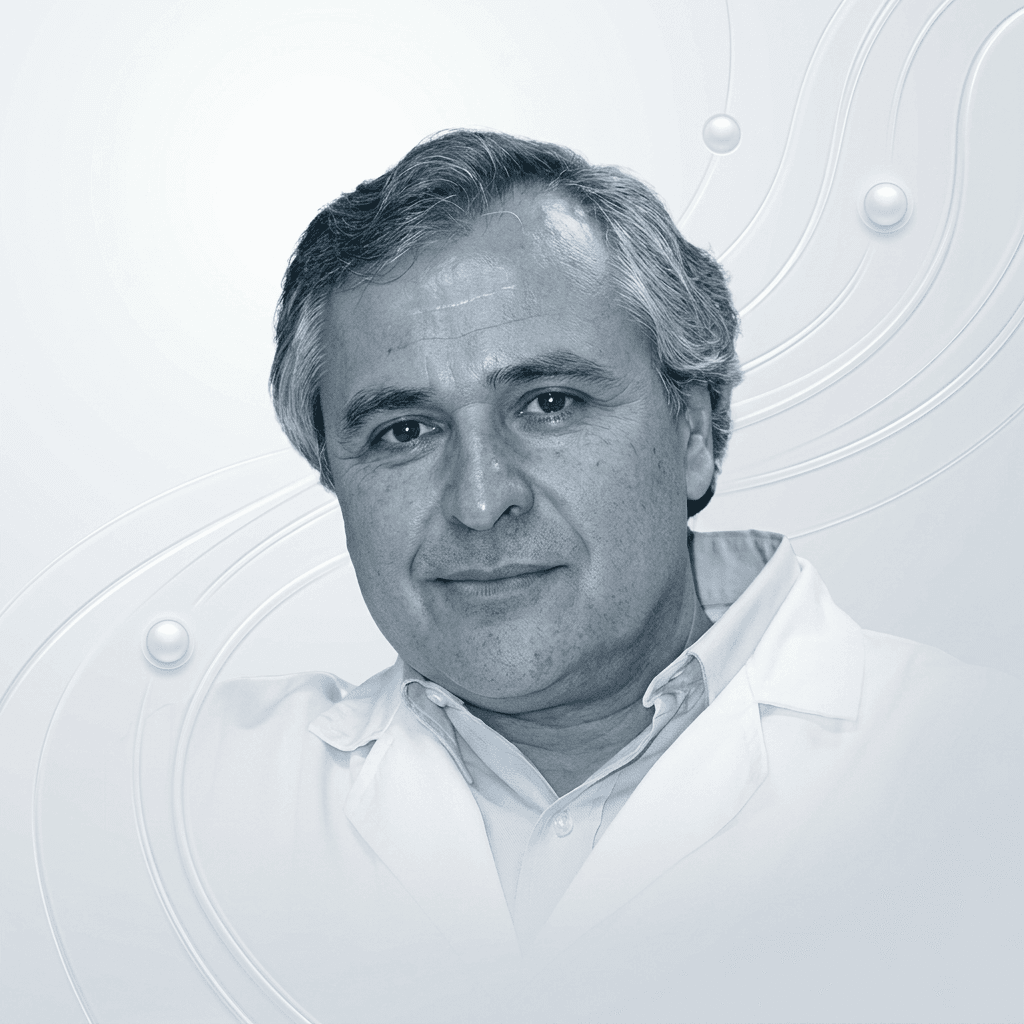
Ranulfo Romo on decision-making and somatosensory cortex
Episode 11 15.03.2015
-
 play_arrow
PLAY EPISODE
Description arrow_drop_down

Description
How does the brain transform a fleeting touch on the fingertip into a deliberate decision seconds later? Neurophysiologist Ranulfo Romo explains how sensory representations are maintained, transformed, and compared across cortical areas , revealing the slow, parametric neural code that bridges perception and decision-making. Subscribe for more from the Convergent Science Network podcast series. Ranulfo Romo joins Paul Verschure and Tony Prescott at the BCBT summer school to discuss decades of work tracing how somatosensory signals travel from primary cortex to frontal decision-making areas in the primate brain. Using a vibrotactile discrimination task in which monkeys compare two temporally separated stimuli, Romo has mapped the transformation of sensory information at each stage , from faithful isometric representations in S1 arriving within 25 milliseconds, to slowly ramping parametric codes in prefrontal and premotor areas emerging around 180 milliseconds. The discussion addresses why Romo insists on unimodal processing in primary sensory cortex, a position he has tested for over a decade against the competing multimodal hypothesis. He argues that the neural doctrine , the idea that cortical territories are defined by their thalamic inputs , still holds, and that the key scientific question is how a sensory representation is progressively transformed as it passes through successive cortical areas, each treating the signal differently before passing it on. During the delay period between stimuli, frontal neurons maintain a ramping activity that preserves the stimulus parameter while discarding irrelevant features , a process Romo links to the ancient philosophical tradition from Democritus and Epicurus about how the brain generates internal representations of the external world. Key topics include the distinction between fast sensory and slow cognitive processing systems, the role of neuromodulators in bridging these timescales, why decision-making is context-dependent and sometimes unconscious, the relationship between Libet’s conscious awareness timing and primate neurophysiology, and the challenge of procrastination as a decision-making phenomenon. Part of the Convergent Science Network podcast series from the BCBT Summer School.
Tagged as:
Brain Cortical Areas decision making Sensory somatosensory cortex
About the author call_made
CSN Podcasts
Both the triumphs of humanity and its most evil deeds have resulted from collaboration. In a time where humanity is required to aspire to the former and minimize the latter, the question arises of how collaboration arises and why it fails. Surprisingly, this phenomenon, so central to who we are, is not well understood. Hence, a collaborative effort is required to understand collaboration in its full biological, psychological, sociological, cultural, and economic complexity and to translate this understanding into operational impact. This series of podcasts is one step toward achieving these complementary goals. The Collaboration Podcast presents interviews with people who are central orchestrators of collaboration in various domains including business, government, science, art, health, sustainability, and the military. The discussions were conducted by Prof. Dr. Paul F.M.J. Verschure and members of the Program Advisory Committee of the Ernst Strungmann Forum on Collaboration (https://www.esforum.de/forums/ESF32_Collaboration.html) during 2021 and had the goal to sketch a map of opportunities, challenges, and obstacles in human collaboration. The forum took place in May 2022, and now we would like to share this series of interviews with a broader audience. The full report of the Forum will be published in 2023 by MIT Press. The podcast was produced by the Convergent Science Network (https://www.convergentsciencenetwork.org/). Context: The stability of social systems depends critically on realizing sustainable methods of “collaboration,” yet how and by which means collaboration is achieved is not clearly understood; neither are the conditions or processes that lead to its breakdown or failure. Collaboration can be understood as cooperation between agents toward mutually constructed goals. Part of the reason for our lack of understanding is that the phenomenon of collaboration is, by nature, a highly multidisciplinary problem, and effective research into its complexities has been difficult to achieve across the broad range of scientific and technical disciplines involved. The need for a fundamental understanding of collaboration, however, has become increasingly important. Not only does humankind demand answers as it attempts to address critical challenges at multiple scales (e.g., climate change, migration, enhanced automation, social and economic inequality), but ever-increasing technological and economic means of interconnecting people and societies are disrupting long-established, familiar patterns of how we interact. Radical technological changes that are ongoing have the potential to reshape collaboration in ways that are currently hard to predict or influence (e.g., by altering configurations in interaction, information creation, and modes of communication). On one hand, such changes could disrupt hitherto stable forms of collaboration by affecting critical communication channels and traditional roles, as can be observed in the rapidly changing patterns in governance, commerce, and social interaction. Conversely, technology could lead to the emergence of novel, successful forms of collaboration that deviate from traditional “hierarchical” architectures. Evidence of this can be seen in areas as diverse as highly automated manufacturing plants, the open science movement, collaborative software repositories, user-centered services, and the sharing of economy-based modes of organization. Without a fundamental understanding of the mechanisms, processes, and boundary conditions of collaboration, it is not possible to evaluate or predict which of these possible scenarios are sustainable or even plausible. The Forum “How Collaboration Arises and Why it Fails” (May 8–13, 2022, Location: Frankfurt am Main, Germany) Chairs: Andreas Roepstorff and Paul Verschure Program Advisory Committee: Jenna Bednar, Julia R. Lupp, Bhavani R. Rao , Andreas Roepstorff, Ferdinand von Siemens, and Paul Verschure
Episodes


Timestamp
- fast_forward00:00:03 - This is the Convergent Science Network podcast. All right, we're running.
- fast_forward00:00:09 - Leading researchers in the domain of neuroscience, brain theory and technology
- fast_forward00:00:13 - are interviewed by Paul Verschure and Tony Prescott.
- fast_forward00:00:16 - This is Paul Verschure for the Convergent Science Network podcast,
- fast_forward00:00:21 - together with my colleague Tony Prescott.
- fast_forward00:00:23 - And we're here at our BCBT Summer School of 2015 with Ranulfo Romo.
- fast_forward00:00:29 - Ranulfo, you came here from Mexico to share with us your incredible work and
- fast_forward00:00:37 - also this long tradition of work that you've been engaged in and understanding
- fast_forward00:00:40 - decision-making in the brain.
- fast_forward00:00:42 - So what's so special about decision-making?
- fast_forward00:00:47 - I think decision-making is the crown of brain function because sooner or later
- fast_forward00:00:57 - you have to make a decision whether it's conscious or whether it's unconscious.
- fast_forward00:01:03 - Habits, I think, for example, require decision-making.
- fast_forward00:01:08 - They probably are below our conscience. When I walk in some way,
- fast_forward00:01:14 - I have an apparatus in my spinal cord together in concert with my brain,
- fast_forward00:01:22 - allows me to move, I don't have to be very conscious.
- fast_forward00:01:26 - But from time to time, I'm conscious of where I'm going and what direction,
- fast_forward00:01:32 - where my steps are, etc., etc.
- fast_forward00:01:35 - But there are decisions. I think we are talking about decision-making in the
- fast_forward00:01:40 - way in which we can think about.
- fast_forward00:01:44 - For example, if my girlfriends ask me to marry, I can reflexively say, yes.
- fast_forward00:01:52 - I can say, listen, why don't we talk in a week?
- fast_forward00:01:56 - Or, for example, in a month, I have a friend that has delayed a decision for eight years.
- fast_forward00:02:06 - No kidding. But now you have actually looked at this problem of decision-making
- fast_forward00:02:13 - with respect to marriage in a much more compressed way, in a much more controlled way.
- fast_forward00:02:20 - You reduce it down to somatosensory decision-making, where you really have to
- fast_forward00:02:26 - combine signals from different modalities and sort of extract a meaning from
- fast_forward00:02:32 - them relative to your goals and then act accordingly.
- fast_forward00:02:35 - Okay, so why did you choose somatosensory decision-making?
- fast_forward00:02:41 - For various reasons. The first one is because I was trained in a very long tradition,
- fast_forward00:02:48 - coming from Philip Barr at Johns Hopkins in the 1920s of the past century,
- fast_forward00:02:57 - and then continued by Vernon Mountcastle.
- fast_forward00:03:00 - And third, because, believe me or not, but the reward signals were discovered
- fast_forward00:03:09 - using somatosensory signals in Freiburg with Wolfram Schultz.
- fast_forward00:03:14 - And then, trying to think about, I discovered that behind this there was a fundamental
- fast_forward00:03:22 - problem, at least for me in that time when I was young with the Bernoull-Montcastle,
- fast_forward00:03:26 - the representational problem.
- fast_forward00:03:28 - One question is how the brain represents, brain cells represent sensory inputs,
- fast_forward00:03:34 - no matter what is the sensory modality.
- fast_forward00:03:36 - Somehow, you have to generate a neural copy of the external world.
- fast_forward00:03:42 - You don't feel with your fingertips. You don't see with your eyes.
- fast_forward00:03:47 - You don't hear with your ear. You do all these sensory functions with your brain, and the question is,
- fast_forward00:03:57 - well, how does the brain manage to generate a representation of the external world?
- fast_forward00:04:04 - Just to begin, as a prelude to decision-making, perceptual decision-making.
- fast_forward00:04:09 - So then, the question is, once you start to generate sensory representations.
- fast_forward00:04:17 - You are training your network in such a way you generate experience.
- fast_forward00:04:22 - And when you generate that, you treat sensory inputs in a different way than
- fast_forward00:04:26 - if you were a naive organism.
- fast_forward00:04:29 - When you have that, you have to think about what is experience,
- fast_forward00:04:33 - which is memory, whatever you label it, whether long-term or short-term memory.
- fast_forward00:04:43 - So the question is, how do we store sensory input information in our brain that makes what we are?
- fast_forward00:04:53 - So that's one of my general questions. So at the end, we want to understand how these big problems,
- fast_forward00:05:03 - sensory representations and internal representation combine together to generate
- fast_forward00:05:10 - perceptual decision-making.
- fast_forward00:05:11 - But you can have only perception decisions alone with little experience if you
- fast_forward00:05:18 - were a very low organism animal.
- fast_forward00:05:20 - Or you can make, in your case, you use your internal experience in order to
- fast_forward00:05:26 - make decisions. You don't need sensory input sometimes.
- fast_forward00:05:29 - But now when I might move my eyes, right, to have a differential response to
- fast_forward00:05:36 - stimuli in the world, I might push a button, or I might decide to get married eight years from now.
- fast_forward00:05:42 - So these are all forms of decisions. So do you think that decisions in that
- fast_forward00:05:46 - sense are hierarchically structured, or are they really situated at a specific
- fast_forward00:05:52 - level in, let's say, a hierarchy of perceptual cognitive operations?
- fast_forward00:05:57 - If you are an eclectic man, you have to think that it happens all around us.
- fast_forward00:06:02 - It can be a hierarchical processing, different situation.
- fast_forward00:06:07 - And I think what is important in our brain functioning is that we depend a lot on context.
- fast_forward00:06:14 - So our brain adapts to the context every time.
- fast_forward00:06:20 - Context situations in such a way that one decision at this moment can be,
- fast_forward00:06:27 - Even if it's exactly the same, the same operation in another context,
- fast_forward00:06:33 - it's what's going on. We are context dependent.
- fast_forward00:06:36 - We are no more than that, I think.
- fast_forward00:06:39 - But then, so if we put it so broadly,
- fast_forward00:06:43 - so now it's decision making is very much helping us to transform,
- fast_forward00:06:50 - let's say, sensory states into an action in the service of our goals.
- fast_forward00:06:55 - So, what we have to bring together is sensory states, our motivations and goals,
- fast_forward00:07:00 - and our action repertoire in the end to produce this one output that will drive
- fast_forward00:07:04 - our skeletal muscle system.
- fast_forward00:07:06 - And given that we only have one skeletal muscle system, it better be one action.
- fast_forward00:07:11 - So, there's this funnel we have to go through to get sensory states into action.
- fast_forward00:07:16 - And this funnel is modulated by different things, goals, memory, actions.
- fast_forward00:07:19 - Yes. But now, at the beginning of this funnel stands the sensory process.
- fast_forward00:07:25 - And there, what I found interesting, in some sense, you take a very extreme perspective,
- fast_forward00:07:31 - in my opinion, on sensory processing as really insisting that a primary sensory
- fast_forward00:07:37 - area is really primary in the sense that it's uniquely dedicated to the modality
- fast_forward00:07:43 - that the thalamus dictates to it.
- fast_forward00:07:46 - So you really believe that to be the case? I do believe. and and uh.
- fast_forward00:07:52 - It's not that I believe, I think, because it depends on hypothesis and results
- fast_forward00:07:58 - and interpretation and challenging that hypothesis.
- fast_forward00:08:02 - In fact, I cannot say that I have lost more than 10 years doing experiments
- fast_forward00:08:08 - in order not to convince myself, because no matter what is the result, it's fine to me.
- fast_forward00:08:14 - For example, in one stream, many colleagues say that early sensory cortices,
- fast_forward00:08:21 - the earliest stage of processing in our cerebral cortex, is multimodal.
- fast_forward00:08:27 - In the other stream, which is almost a dogma, is that early sensory cortices are unimodal.
- fast_forward00:08:35 - They have only one capacity to process, only one modality.
- fast_forward00:08:40 - Just, let's say, visual cortex is visual cortex because it does receive an input
- fast_forward00:08:47 - coming from the retina going through the thalamus, and the thalamus dictates
- fast_forward00:08:52 - that territory to be visual.
- fast_forward00:08:54 - And for the auditory cortex, exactly the same, and for the somatosensory cortex.
- fast_forward00:08:59 - But there, in science, it's very important to insist and to challenge dogma,
- fast_forward00:09:06 - even if we lose time, In the sense that we lose money,
- fast_forward00:09:10 - we invest many hours in something that does not produce something positive,
- fast_forward00:09:17 - a positive result.
- fast_forward00:09:18 - It might be a negative one, but it's very important in order to allow hypothesis
- fast_forward00:09:23 - or interpretation of something, a fact, that is true or not true.
- fast_forward00:09:29 - So, in fact, over the last 10 years, I've been insisting and trying to document
- fast_forward00:09:35 - whether unimodal, whether multimodal, at the moment it wins unimodal.
- fast_forward00:09:41 - So, what was the key piece of data that convinced you that it was unimodal?
- fast_forward00:09:46 - I'm relying on a very simple signal that I think comes from the Cajal tradition.
- fast_forward00:09:57 - The neural doctrine in the sense that neurons
- fast_forward00:10:01 - that the brain is made of pieces of individual
- fast_forward00:10:04 - neurons that are connected together by a tiny space called synapses and that
- fast_forward00:10:12 - all the territories of our brain at least for the sensory and perceptive territories
- fast_forward00:10:18 - and dictated by our sensory lamina let's say for For example,
- fast_forward00:10:24 - somatosensory cortex is somatosensory
- fast_forward00:10:27 - because it's connected to our receptors in our skin, our body,
- fast_forward00:10:31 - in such a way that our brain makes a map of our body surface.
- fast_forward00:10:38 - And the visual cortex is visual because it's very reliant to the retina in such
- fast_forward00:10:43 - a way that the retina can be mapped out in that part of the cerebral cortex.
- fast_forward00:10:49 - And the same for the auditory cortex.
- fast_forward00:10:53 - So, in the beginning, in the mid-19th century, there was a big effort by physicists in Germany,
- fast_forward00:11:04 - Helmholtz, something that started to set out the basis of the action potential.
- fast_forward00:11:10 - That there was a transmission of signal from the skin up to the brain.
- fast_forward00:11:14 - And they were able, in the beginning of the 1920s or something like that, the English school,
- fast_forward00:11:25 - to discover the basis of the transmission.
- fast_forward00:11:32 - That the signal that uses our brain is a signal, signals.
- fast_forward00:11:36 - And Cajal had already settled out the neural doctrine.
- fast_forward00:11:40 - So I'm using a very tiny signal from this old tradition in order to map out
- fast_forward00:11:47 - the responsive properties of brain cells.
- fast_forward00:11:51 - Not only responsive properties, but once the stimulus is gone,
- fast_forward00:11:55 - something in our brain is working at this moment, and in fact I'm talking about, out.
- fast_forward00:12:01 - It's internally generated by my brain.
- fast_forward00:12:05 - You're looking at the S1 cortex particularly, and there are other somatosensory areas.
- fast_forward00:12:13 - Have you looked into those too to see whether there would be multimodal cells there?
- fast_forward00:12:18 - Because there are other projections, certainly I would know in the rat,
- fast_forward00:12:22 - where the sensory input comes in from the periphery, but may mix in in primarily
- fast_forward00:12:28 - sensory areas, perhaps more cross-modally.
- fast_forward00:12:35 - It was clear to me for about 30 years when I was working with Wolfram Schulz, a very dear colleague,
- fast_forward00:12:45 - that in order to understand the function in our brain, we have to go across cortical areas.
- fast_forward00:12:57 - So, when I started to work out in Mexico City,
- fast_forward00:13:01 - I decided to use exactly the same input and see the transformation across the
- fast_forward00:13:09 - system, which is something very important.
- fast_forward00:13:12 - It's like, for example, if I tell you something.
- fast_forward00:13:16 - You interpret it, and then you tell something to Paul, not in front of me,
- fast_forward00:13:22 - and then Paul tells to some others, something like that.
- fast_forward00:13:25 - It's like I'm passing to you directly the information, and then you treat this
- fast_forward00:13:30 - information in a different way and pass that information to Paul.
- fast_forward00:13:35 - But Paul never spoke to me.
- fast_forward00:13:38 - So it's more or less what's going on in the brain. It's a metaphor that is like
- fast_forward00:13:43 - in Spanish, which is chismoso.
- fast_forward00:13:46 - It's not a liar, but what Paul interprets from me is through you.
- fast_forward00:13:56 - It's what I'm trying to do myself across the brain,
- fast_forward00:13:59 - trying to understand what kind of representation receives a very downstream
- fast_forward00:14:07 - area outside the sensory representation,
- fast_forward00:14:13 - for example.
- fast_forward00:14:14 - Something like that. So I think that's the major contribution of my work,
- fast_forward00:14:18 - going in this direction, in which it tries to see what's going on across the brain.
- fast_forward00:14:25 - Because I think, at the end, what Paul says is the true representation for Paul.
- fast_forward00:14:34 - And when you say your true representation,
- fast_forward00:14:36 - and not necessarily exactly the same, I share with myself too.
- fast_forward00:14:42 - So I understand you're trying to do a very pure experiment.
- fast_forward00:14:45 - You're going to try to simplify it as much as you can to get at this basic process of decision-making.
- fast_forward00:14:53 - But the criticism that I guess people can make, and you already said this in
- fast_forward00:14:57 - your lecture, is that this isn't what happens in daily life.
- fast_forward00:15:01 - So much of the time, the stimuli coming from multiple modalities that are telling
- fast_forward00:15:08 - us similar information and it pays greatly to pay attention to them together.
- fast_forward00:15:14 - And also, even in the touch system, which you're describing,
- fast_forward00:15:18 - most of the time we are actively controlling the way that, for instance,
- fast_forward00:15:23 - the fingertip is moving on a surface.
- fast_forward00:15:25 - And that's going to have a huge impact on how we process that signal upstream.
- fast_forward00:15:30 - So when you're in your experiment, you essentially stimulate a passive,
- fast_forward00:15:34 - the fingertip is a passive receptor surface perhaps
- fast_forward00:15:38 - you're missing something about what
- fast_forward00:15:41 - was more common for the for the that sensory
- fast_forward00:15:44 - system to be doing which is to be actively controlled in
- fast_forward00:15:48 - finding useful information so the information is being given here there's no
- fast_forward00:15:52 - sense that i have to look it out well you're right and you're not right as always
- fast_forward00:15:57 - first yes i'm dealing with basically with the touch system and use it as a model of.
- fast_forward00:16:06 - Processing, because the general question is how a sensory representation, unimodal as you like.
- fast_forward00:16:14 - Is transformed up to Paul or something like that, and produce a function,
- fast_forward00:16:20 - which is a very complex issue.
- fast_forward00:16:22 - The second issue is, and you raise, which is very good, is that a criticism
- fast_forward00:16:28 - is very welcome. It's a passively delivered stimulus.
- fast_forward00:16:32 - And normally, for example, I am squeezing my fingers across the surface in order to get information.
- fast_forward00:16:39 - But that's the way science works. We would like to have an experiment in natural
- fast_forward00:16:46 - condition, but this is almost impossible because it's very difficult to control our variables.
- fast_forward00:16:53 - And you can dribbly, grongly in some direction because there are many cues,
- fast_forward00:17:01 - many things that must take you in a very different direction.
- fast_forward00:17:08 - And myself, I had decided to control as much as I can where I deliver the stimulus.
- fast_forward00:17:16 - Exactly the same as the people work in the visual system.
- fast_forward00:17:19 - What people in the visual system do is very simple. Normally,
- fast_forward00:17:22 - we are moving the eyes, but we have to bring the fovea in a given moment to deliver the steam.
- fast_forward00:17:28 - Otherwise, it can be in different ways and make sense of sensory processing.
- fast_forward00:17:35 - Visual processing will be very difficult.
- fast_forward00:17:37 - So that is a decision that I made because I made it.
- fast_forward00:17:42 - Of course, I can be wrong, but it provided some pieces of evidence.
- fast_forward00:17:47 - Of course, it's not telling to you how the sensory motor loop works. I do not pretend it.
- fast_forward00:17:58 - I do not pretend even to show intentionality from the active point of view.
- fast_forward00:18:07 - Because if I want my wish, which I do not know what is a wish.
- fast_forward00:18:12 - For example, my desire to do something, where does it come?
- fast_forward00:18:15 - I do not know. But eventually, if you know, you can move your hand,
- fast_forward00:18:20 - you can move your finger, you can walk, you can think about something like that,
- fast_forward00:18:25 - and then use your senses actively.
- fast_forward00:18:28 - So in my case, I do not pretend to do that.
- fast_forward00:18:31 - I tend to do it in the opposite way.
- fast_forward00:18:34 - I just simply want to see in a very, in Spanish, which is a castiza way,
- fast_forward00:18:40 - how a sensory input is represented by brain cells and bring a big network of
- fast_forward00:18:49 - our brain to thinking and deciding and using,
- fast_forward00:18:53 - if you like, the motor apparatus afterward. word.
- fast_forward00:18:56 - In other words, I'm very interested to know how is, what is.
- fast_forward00:19:02 - Behind a decision report. So let's say we convince Tony, okay,
- fast_forward00:19:10 - and the sensory stimulus is sort of ecologically valid,
- fast_forward00:19:14 - and we can discuss details of that later, then the real decision-making doesn't
- fast_forward00:19:21 - take place at that stage.
- fast_forward00:19:23 - The real decision-making takes place in areas that are sort of in frontal areas of the neocortex.
- fast_forward00:19:29 - Cortex um so what kind of network now
- fast_forward00:19:32 - gets engaged so here i have my two stimuli they might be frequency modulated
- fast_forward00:19:37 - in some way my primary visual cell metasensory areas are responding they're
- fast_forward00:19:40 - now transducing this stimulus to a prefrontal network that's going to make the
- fast_forward00:19:45 - decision so what's happening there what's going to happen in this is a very
- fast_forward00:19:49 - important question because at the end.
- fast_forward00:19:52 - Thinking early in the morning when I am alone in the dark, my dark room, or I close.
- fast_forward00:19:59 - And the other day I was thinking about what is the point of this?
- fast_forward00:20:05 - Of course, I many years ago discovered that I was not a somatosensory man.
- fast_forward00:20:11 - As the people say, I'm a visual man. I'm not visual. I'm using a model to understand something.
- fast_forward00:20:19 - So at the end, I can simplify my thinking about this.
- fast_forward00:20:24 - For example, your organism, we,
- fast_forward00:20:29 - and animals, even the lowest animal, you need to map out something which is
- fast_forward00:20:37 - happening in the external world, transform energies in something.
- fast_forward00:20:42 - And the current money to transmit something is the action potential, electrical signals.
- fast_forward00:20:50 - But there had to be receptive areas, even if in the lower levels,
- fast_forward00:20:55 - that very quickly take these signals and then do a response.
- fast_forward00:21:02 - Those are very fast systems, even the sensory ones that go up to the cerebral cortex in ourselves.
- fast_forward00:21:10 - So that takes 25 milliseconds in the somatosensory system.
- fast_forward00:21:15 - And if you think about the spinal cord, it's 10 milliseconds.
- fast_forward00:21:20 - That's exactly what happened in a war.
- fast_forward00:21:24 - But fast, and then fast responses from the motor side. You have to do bah!
- fast_forward00:21:30 - In our cases, it can be, you can treat the signals and store it in some way.
- fast_forward00:21:39 - Those are slow systems. The working memory ones, for example,
- fast_forward00:21:44 - allow you to think about. And...
- fast_forward00:21:49 - So there, those are very slow systems that depend on some other kind of transmissions,
- fast_forward00:21:56 - molecules differently to the ones associated to sensory and motor output systems.
- fast_forward00:22:03 - And there are the dopamine system, cholinergic, noradrenergic,
- fast_forward00:22:08 - serotonergic, or something like that.
- fast_forward00:22:10 - That not special cells, but are localized in such a way that can add something
- fast_forward00:22:18 - to this fast transmission and more or less slow transmission.
- fast_forward00:22:24 - So at the end, you have a trio there.
- fast_forward00:22:26 - Fast sensory input, fast motor output, and something in between.
- fast_forward00:22:31 - And you can put many things, memory, motivation, motivation,
- fast_forward00:22:35 - decision-making, subjectivity, and something like that.
- fast_forward00:22:40 - And when something is a mess out of this, then you have frustration,
- fast_forward00:22:45 - you have psychiatric problems, memory problems, et cetera, et cetera.
- fast_forward00:22:51 - But I can put in troubles. If I cut the sensory inputs, the rest doesn't work.
- fast_forward00:22:58 - If I cut the motor output, too.
- fast_forward00:23:00 - So there is something in between, extremely important. And that's the one I
- fast_forward00:23:05 - want to understand myself.
- fast_forward00:23:07 - But now, do you see this as one monolithic system that always converges onto
- fast_forward00:23:14 - then the same decision, evaluating the same information, or do you see this
- fast_forward00:23:19 - as competing subsystems?
- fast_forward00:23:21 - Absolutely, I think. For example, if I were a Martian, if I go and see Paul
- fast_forward00:23:28 - lying in the bed, if I were a neurologist, I would say it has some other problem.
- fast_forward00:23:35 - But eventually, you are in depression.
- fast_forward00:23:40 - You don't want to move. I call you, Paul.
- fast_forward00:23:44 - Paul, good morning. And you don't move. And I can say, well,
- fast_forward00:23:48 - it's a sensory deficit. Or secondly, you don't move, it's a motor deficit,
- fast_forward00:23:53 - but simple, you are out, you don't want to hear, you don't want to move.
- fast_forward00:23:59 - Those are the systems who are in troubles in between.
- fast_forward00:24:03 - A Parkinsonian person, for example, I'm sorry if I use this,
- fast_forward00:24:10 - but if Miss Universe crosses in the field it doesn't move it doesn't care.
- fast_forward00:24:20 - Something because it doesn't care probably the sensory input is there.
- fast_forward00:24:27 - There is no more motivation. There is no, there is nothing. It's an empty brain.
- fast_forward00:24:35 - So now we have the decision-making system, or however we want to call it,
- fast_forward00:24:40 - because maybe this is now more than just a decision-making system, right?
- fast_forward00:24:43 - We have a perceptual system with the motor system, and then there's the something in between.
- fast_forward00:24:48 - We're going to call that the decision-making system, or we're going to give it a different name?
- fast_forward00:24:52 - No, I think it's just, Because whatever you do in life is always decision-making.
- fast_forward00:24:59 - But decision-making needs to be expressed through a voluntary action. It's not a reflex.
- fast_forward00:25:08 - So, for example, you do not move. You can think about.
- fast_forward00:25:14 - You can even, we have a paper called postpone decision.
- fast_forward00:25:18 - For example, when you go to a bar or restaurant and the waiter comes to you
- fast_forward00:25:25 - and gives you the menu, and you say, I don't know whether to take this or that.
- fast_forward00:25:29 - Then comes the waiter in a minute and says, have you decided?
- fast_forward00:25:35 - Give me a minute, normally we say. And then, finally, you are under pressure
- fast_forward00:25:40 - and come the waiter, have you decided? And you decide.
- fast_forward00:25:43 - And then when the waiter goes, you say, why did I decide this?
- fast_forward00:25:47 - You know, so decision-making is something like that.
- fast_forward00:25:51 - When you are allowed to make a pos- a postponed decision, which is always I
- fast_forward00:25:57 - do myself, and it's called post-crastination, which is, um,
- fast_forward00:26:03 - um, a true mental problem that I have myself, for example, I do receive an email
- fast_forward00:26:10 - and I know what is my decision, but I postpone it for, I will do it tomorrow.
- fast_forward00:26:16 - And when tomorrow comes, I say, I will do it tomorrow. And at the end,
- fast_forward00:26:20 - I say to myself, what's going on with me?
- fast_forward00:26:22 - I have to make a decision. My decision was made before.
- fast_forward00:26:25 - I don't know what that. There is a colleague in Israel which is doing a modeling
- fast_forward00:26:30 - about this. It's a fantastic work.
- fast_forward00:26:33 - And I think there are some mental diseases which are not taken by certain in the society.
- fast_forward00:26:42 - But I have that problem myself. It's proscultination, not now, that.
- fast_forward00:26:48 - Right. And as we do have many memory problems, which are perfectly adaptable
- fast_forward00:26:54 - to what people can think is normal, but it's not normal if you make a simple test. Right.
- fast_forward00:27:01 - So, well, I'm quite a specialist myself in procrastination. You're not alone, I can assure you.
- fast_forward00:27:07 - But now, so, okay, we have the sensory signals. They are sort of,
- fast_forward00:27:12 - we have strongly stimulus-locked responses in the sensory areas.
- fast_forward00:27:17 - They converge over a number of steps into a premotor area like PMC.
- fast_forward00:27:24 - You pointed to a number of areas.
- fast_forward00:27:27 - So is this information reaching that area simultaneously?
- fast_forward00:27:32 - Is there any kind of coordination across these signals?
- fast_forward00:27:36 - Let's say primary somatosensory area is just in distance closer to frontal areas,
- fast_forward00:27:44 - PMC, as might be a visual signal.
- fast_forward00:27:47 - So do these areas care at all about latency matching of these areas that project to them? Of course.
- fast_forward00:27:54 - For example, the sensory input, which you can quantify in the stimulus parameters
- fast_forward00:28:02 - there, takes about 25 milliseconds, the beginning.
- fast_forward00:28:07 - You can have a very faithful representation of, at least for this stimulus.
- fast_forward00:28:13 - When you go to the frontal lobe areas that treat the stimulus in a different way, but this is...
- fast_forward00:28:25 - You can directly decode the information there. It's about 180 milliseconds.
- fast_forward00:28:30 - So there is a time, a delay time, between that sensor representation and what you see there.
- fast_forward00:28:40 - Of course, if you fill the gap between the two, you can find out some areas,
- fast_forward00:28:46 - 60 milliseconds, 100 milliseconds or something, which is a time.
- fast_forward00:28:52 - And I don't know why. Why? Why it is not directly, for example,
- fast_forward00:28:55 - from the skin to the MPC, to the frontal lobe. It needs to be treated.
- fast_forward00:29:01 - And that reminds me Benjamin Leavitt, who was very much engaged in trying to
- fast_forward00:29:07 - understand the time it takes to make conscious something.
- fast_forward00:29:13 - A sensory input, for example. He always referred to about 500 milliseconds in men.
- fast_forward00:29:20 - But his techniques were not perfect at the time. It probably is about 200 milliseconds.
- fast_forward00:29:26 - No matter what is the sensory input I have spoken with people working in the auditory system,
- fast_forward00:29:31 - in decision-making in the visual system, some of the sensory system in my case,
- fast_forward00:29:36 - it takes about a signal which is consistent with the period in which you make
- fast_forward00:29:43 - the decision, which is about 180, 200 milliseconds.
- fast_forward00:29:46 - But that's, in Libet's case, he's talking about the conscious awareness of the decision.
- fast_forward00:29:53 - So you believe that for the monkey, it's a comparable kind of process.
- fast_forward00:29:58 - There may be some differences in the timing. Sure, but qualitatively,
- fast_forward00:30:03 - it would play out in the same way that we would have.
- fast_forward00:30:05 - I do think so. Okay. Yes. Of course. So now we have, so your opinion,
- fast_forward00:30:11 - the decision-making we're talking about, just to sort of finish up the Libet aspect,
- fast_forward00:30:17 - also decision-making is always engaging conscious awareness.
- fast_forward00:30:23 - Not necessarily. Okay. For example, when you drive your car.
- fast_forward00:30:29 - You may be aware once you make the decision, you know, but in other cases,
- fast_forward00:30:36 - if you give me time, which is not always possible because you have,
- fast_forward00:30:43 - it depends, it's a very adaptable operation.
- fast_forward00:30:45 - It depends on the time constraints and what beneficial is to make a decision,
- fast_forward00:30:52 - whether you need to think about or whether you have to make a decision.
- fast_forward00:30:57 - Not in a very reflexive way, because you have brain circuits that allow you
- fast_forward00:31:03 - to think about below your conscious awareness.
- fast_forward00:31:10 - Sometimes you are conscious on that, and then you say, why did I do that? Oh, I did quite well.
- fast_forward00:31:18 - Your experiment is a little bit unusual in that respect, because you have something
- fast_forward00:31:22 - which is highly practiced, but at the same time is always intrinsically unpredictable,
- fast_forward00:31:29 - because you don't know what the next stimulus is going to be,
- fast_forward00:31:31 - but you know it's going to be one of two things.
- fast_forward00:31:33 - So you have something there, I guess you would say, why you cannot use a habit
- fast_forward00:31:40 - system because you always have to make a choice. Yes.
- fast_forward00:31:44 - And therefore, it would come into consciousness.
- fast_forward00:31:47 - It was made by purpose from the beginning. I thought a lot about this because
- fast_forward00:31:52 - I was trained by a very incredible man,
- fast_forward00:31:57 - Vernon Mountcastle, who laid out many of the ideas we use right now, believe me or not.
- fast_forward00:32:05 - And when I was working with him, in some way we treated this problem,
- fast_forward00:32:09 - and I discovered that he was doing, at least from my perspective, in a wrong way.
- fast_forward00:32:17 - Of course, he had, I thought about him, had more flexibility.
- fast_forward00:32:22 - Because he was older than me, I was eager. So everything was left.
- fast_forward00:32:28 - And then when I went back to Mexico, I said, why didn't it work? And I discovered why.
- fast_forward00:32:34 - So I made by purpose, in which in a very artificial way, I could recreate the different steps.
- fast_forward00:32:41 - Steps, you know, one without being contaminated by the next one,
- fast_forward00:32:47 - but being sure that to pass from one to two, you have to go through this step.
- fast_forward00:32:53 - Otherwise, you will be wrong at the end with simply guessing.
- fast_forward00:32:58 - So it's very, if you like, it's artificial, but everything is artificial,
- fast_forward00:33:02 - even CERN in Geneva, in order to prove the molecule, God molecule.
- fast_forward00:33:09 - So it's made by purpose. But I had to make clear that we had to have both inputs,
- fast_forward00:33:18 - a central input, an output, and then be combined.
- fast_forward00:33:22 - And I had to be able to look at both, not in a very different way,
- fast_forward00:33:29 - just simple, hard to capacity,
- fast_forward00:33:31 - with a very simple statistical technique coming from engineering and physics,
- fast_forward00:33:37 - just to the code and have them both in my hands.
- fast_forward00:33:41 - So it's a very peculiar way of doing science.
- fast_forward00:33:47 - A very simple way is pedestrian, frankly.
- fast_forward00:33:52 - But now, so what you found is that neurons in MPC, if you look at how these
- fast_forward00:34:00 - neurons respond to the task properties.
- fast_forward00:34:03 - Now, in this case, we have these frequency-modulated visual or tactile stimulation,
- fast_forward00:34:09 - and now dependent on the frequency and the difference, like before the waiting
- fast_forward00:34:15 - period and after the waiting period, the monkey has to choose for one action or the other.
- fast_forward00:34:21 - So what you show, however, is in this waiting period of up to three seconds,
- fast_forward00:34:26 - something very peculiar happens.
- fast_forward00:34:28 - And that it looks like the response of these neurons sort of also at the offset
- fast_forward00:34:34 - of the the first stimulus pair, they slowly ramp up their activity or exceed it, might vary,
- fast_forward00:34:40 - but still reflecting the key feature that should inform this decision, which is frequency.
- fast_forward00:34:47 - Okay. So, but why would that be a ramping activity?
- fast_forward00:34:51 - Why don't you just latch on to a certain representation of that frequency and
- fast_forward00:34:56 - just keep it there? What's the ramping all about?
- fast_forward00:34:58 - Let me say something that somebody today asked me about, he was posing to me
- fast_forward00:35:04 - a philosophical question.
- fast_forward00:35:05 - I admire Democritus, but recently I discovered Epicurus.
- fast_forward00:35:14 - Epicurus precedes Democritus in the ideas that there has to be a representation
- fast_forward00:35:20 - of something in the brain.
- fast_forward00:35:23 - Democritus was talking about molecules, atoms, that everything in our external
- fast_forward00:35:30 - world was made by atoms that entered through our eyes, our ears, our fingers.
- fast_forward00:35:37 - And these atoms move up to the brain.
- fast_forward00:35:41 - He said that, and in the brain, these molecules gather together and give an
- fast_forward00:35:48 - iso, in the case of the form, an object, they generate the form.
- fast_forward00:35:53 - And that that representation was important for learning, memory,
- fast_forward00:35:59 - voluntary action, and decision making.
- fast_forward00:36:02 - Democritus said that 200 and 300 years ago, 2,300 years ago.
- fast_forward00:36:08 - So, if you like, I'm a continuator of Democritus.
- fast_forward00:36:14 - So, if you like, the atoms are the action potential right now in the modern view.
- fast_forward00:36:20 - And those action potentials are how cells generate electrical signals, tiny electric.
- fast_forward00:36:28 - If you put together, you can generate the form of an image.
- fast_forward00:36:33 - In fact, Otto Creufield used this idea to study the form of visual inputs in
- fast_forward00:36:43 - the visual cortex in the cat.
- fast_forward00:36:46 - Myself, I'm using a more simple stimulus, vibration in the fingers,
- fast_forward00:36:50 - and you can see that it's not isomorphic.
- fast_forward00:36:55 - This is isometric representation. So I wanted to have something that I can see
- fast_forward00:37:03 - directly from the spikes.
- fast_forward00:37:05 - And the idea is, to me, the AC test was, what is left when the stimulus is gone?
- fast_forward00:37:14 - And I wanted to find out that.
- fast_forward00:37:17 - And with very simple statistical methods, we see that the stimulus parameter is there.
- fast_forward00:37:23 - Of course, neurons are like humans, have different ways of representing,
- fast_forward00:37:29 - but at the end it's exactly the same neural code, a parametric code, in different times.
- fast_forward00:37:35 - And I want to believe that neurons, thousands of neurons, millions of neurons,
- fast_forward00:37:40 - gather effort in order to represent something.
- fast_forward00:37:44 - And this is what is shown. Sorry, so what is Epicurus that's different from
- fast_forward00:37:49 - Democritus? No, it's the way, no, Epicurus added something.
- fast_forward00:37:55 - Democritus was more from the physical side, like a journalistic person would think right now.
- fast_forward00:38:04 - As, for example, very often the students say, what do you think of this paper, I always say.
- fast_forward00:38:12 - Well, this paper is not very good because it's very qualitative.
- fast_forward00:38:17 - And I always tell them, listen, if somebody is able to show qualitative properties
- fast_forward00:38:22 - of something, it's because he solved everything.
- fast_forward00:38:25 - Because they always criticize. It's not very quantitative.
- fast_forward00:38:29 - So, what Epicurus added is precisely the other, the qualitative thing.
- fast_forward00:38:37 - He thought about that.
- fast_forward00:38:40 - For what for is that? For example, many years when I discovered that isometric
- fast_forward00:38:46 - representation of the stimulus, I wanted to know whether it served for something,
- fast_forward00:38:50 - whether it was an artifact. So I did the reverse experiment.
- fast_forward00:38:54 - I activated artificially brain cells.
- fast_forward00:38:58 - And what happens is that the monkey or the subject had the capacity to generate
- fast_forward00:39:04 - something which is very consistent with what I observed with the natural steam.
- fast_forward00:39:12 - So there was a very causal confirmation that that representation was useful for decision-making.
- fast_forward00:39:22 - But now, so we have this slowly ramping activity.
- fast_forward00:39:28 - And for you, the key point here is that what these neurons do is sort of they
- fast_forward00:39:33 - throw away information that really doesn't matter for the decision making.
- fast_forward00:39:37 - And they conserve the information that is sort of modality independent and relevant,
- fast_forward00:39:42 - which in this case is the frequency of the modulation. Right?
- fast_forward00:39:45 - So how does that process play out? So here we have two, we have an auditory and a tactile stimulus.
- fast_forward00:39:55 - They might have a different kind of frequency response, right?
- fast_forward00:39:59 - Converging on any of these frontal areas. And now during the,
- fast_forward00:40:04 - what you showed, which is interesting, is that during the wait period where the stimulus is gone.
- fast_forward00:40:11 - The system, these frontal areas that you investigated are still modulating that signal.
- fast_forward00:40:16 - Is it only this sort of frequency-specific response starts to emerge,
- fast_forward00:40:22 - is most pronounced towards the end of the waiting period, just before the decision is made?
- fast_forward00:40:28 - So how do you see this incremental sharpening of the task-relevant information in the response?
- fast_forward00:40:35 - This is science. We have no answer for everything, but it's a fact that happens there.
- fast_forward00:40:43 - And once you have it, then you can think about it.
- fast_forward00:40:46 - The first thing which strikes me is that this is the way that happens in the brain.
- fast_forward00:40:52 - Secondly, I'm very impressed that for that cells in a very downstream area,
- fast_forward00:41:01 - far away from the sensory representation, um.
- fast_forward00:41:07 - Do that, have that neural code in that moment.
- fast_forward00:41:11 - And so it might tell you something fundamental about that.
- fast_forward00:41:16 - So the question is here, is that you are thinking about underrepresentation
- fast_forward00:41:25 - on a stimulus parameter for different modalities in the same way.
- fast_forward00:41:31 - It's an abstract, it's a supramodal, a modal if you like, but it's there.
- fast_forward00:41:37 - What is the strike the most to me? So we can think right now in models,
- fast_forward00:41:42 - in one stream trying to model and implement model and think about and do experiments
- fast_forward00:41:50 - in order to find out the biophysical basis and the architecture,
- fast_forward00:41:57 - neural architecture, which is there.
- fast_forward00:41:59 - There, no doubt that, and makes this.
- fast_forward00:42:02 - To me, the most important contribution of this,
- fast_forward00:42:06 - I'm trying to think that my work has something worth in life,
- fast_forward00:42:13 - is that I think we were the first to show in the tactile modality a way our
- fast_forward00:42:24 - brain cells store, represent information during working memory.
- fast_forward00:42:28 - Because in the case of my colleague, Goldman Rakeesh, it was always contaminated by eye movements.
- fast_forward00:42:37 - And, but it's a very, the physical space, if we want to think, is there, is there.
- fast_forward00:42:44 - But in our case, it's something learned.
- fast_forward00:42:48 - It's something, play cells are there. But the monkeys don't have to think about vibrotactile.
- fast_forward00:42:54 - Why? or by acoustic repetition.
- fast_forward00:42:58 - It's exactly the same when you go, you study medicine, your brain is not made
- fast_forward00:43:03 - to do medicine or engineering.
- fast_forward00:43:06 - You have to be trained. So this is something forged by experience,
- fast_forward00:43:11 - which means that your brain circuits can be modified by experience,
- fast_forward00:43:18 - can store information, experience, and can use it for the best or for the worst.
- fast_forward00:43:25 - That's, to me, the contribution. vision. But now in your analysis,
- fast_forward00:43:29 - you look at these cells as being either unimodal. So we look at PMC,
- fast_forward00:43:33 - right? The frontal area.
- fast_forward00:43:34 - You looked at whether these neurons were tuned unimodal or bimodal, right?
- fast_forward00:43:39 - And then what we see is that over the three seconds, initially,
- fast_forward00:43:42 - actually, they're not that strongly committed to anything.
- fast_forward00:43:46 - And in the end, we see a very strong, what you call bimodal response.
- fast_forward00:43:50 - However, would it not be then more appropriate, actually,
- fast_forward00:43:53 - as you said said earlier to call it a modal yes because
- fast_forward00:43:56 - what they care about is just that bit let's
- fast_forward00:43:59 - say they care about the semantics of the task the frequency is
- fast_forward00:44:03 - telling you something important forget the rest which you would you be happy
- fast_forward00:44:07 - with that interpretation absolutely okay good in fact i i had a i spent a lot
- fast_forward00:44:12 - of time thinking about this to me it was the most simple paper in my life to
- fast_forward00:44:17 - report but when When I started to write,
- fast_forward00:44:20 - I was confronting literature that there was nothing.
- fast_forward00:44:26 - Or the people used to say they had already discovered.
- fast_forward00:44:30 - But how to say that? How to confront the community to tell them there is nothing?
- fast_forward00:44:36 - And how to say I'm a pioneer really in this?
- fast_forward00:44:40 - So at the end, I have to think about and be very polite, and sometimes say supramodal,
- fast_forward00:44:49 - and sometimes a modal, sometimes bimodal.
- fast_forward00:44:54 - But at the end, what happens?
- fast_forward00:44:57 - We discovered very few cells unimodal, and I think it's a statistical issue.
- fast_forward00:45:03 - The network is basically more than 85, almost 90% bimodal.
- fast_forward00:45:10 - And I've been thinking, you don't have to think about...
- fast_forward00:45:16 - The brain doesn't care when once, there are circuits that treat the stimulus
- fast_forward00:45:21 - parameter, but at the end is the goal, is to treat something.
- fast_forward00:45:26 - What is fundamental here is the frequency, and the cells don't care whether
- fast_forward00:45:30 - it's acoustic, whether it's tactile, or whether it's visual.
- fast_forward00:45:34 - I think this is very, very physiologic, very natural, this.
- fast_forward00:45:39 - Yeah, Tony, go ahead. Are you able to show that these neurons are getting their
- fast_forward00:45:46 - input directly from the unimodal cells and that they're integrating?
- fast_forward00:45:51 - Or could there be some other site of integration that's perhaps viewed more
- fast_forward00:45:58 - as a sensory area so that the integration happens sooner or elsewhere and you haven't seen that yet?
- fast_forward00:46:03 - These cells are very far away from the sensory input where you see the stimulus
- fast_forward00:46:07 - parameter. There are many areas in between, and you can see the gradual contribution of these areas.
- fast_forward00:46:18 - In this, what I show, I simply wanted to contrast input and what you get there.
- fast_forward00:46:26 - But in between, it's already done the experiments.
- fast_forward00:46:29 - I can tell you there is a gradual transformation. For example, circuits,
- fast_forward00:46:35 - neurons from circuits, which are in between this area and the sensory input,
- fast_forward00:46:41 - that treat the most the responses in the sensory input in the two ways, opposite way.
- fast_forward00:46:50 - They share correlated noise, which is something common thing,
- fast_forward00:46:56 - synaptic input, something like that. Right.
- fast_forward00:47:01 - Populations of neurons, we are only in the early components,
- fast_forward00:47:05 - some others which are more delay.
- fast_forward00:47:09 - Some ones, we respond the most during the second one, which is the right moment
- fast_forward00:47:16 - in which we have to combine two different modalities.
- fast_forward00:47:19 - For example, the first is acoustic that has to be stored in working memory,
- fast_forward00:47:23 - and the second is tactile.
- fast_forward00:47:24 - Somehow, there have to be some gears in your brain that shift gears in a very
- fast_forward00:47:30 - efficient way in order to compare,
- fast_forward00:47:32 - to treat in the same way to this different sensory input coming for different
- fast_forward00:47:37 - representation in your brain.
- fast_forward00:47:40 - So that requires tremendous, it's very simple, but to analytically,
- fast_forward00:47:47 - statistically to prove a modeling is another issue.
- fast_forward00:47:51 - So there's several steps on the path to the premotor cortex.
- fast_forward00:47:55 - What about signals coming back? Are there signals from PMC which could be modulating
- fast_forward00:48:01 - the primary sensory areas?
- fast_forward00:48:02 - Yeah, we haven't discovered that. But I was surprised in another experiment
- fast_forward00:48:07 - in 2005 that we… No, no, that was 2002,
- fast_forward00:48:11 - that reported in Nature, during which we discover decision-making in downstream
- fast_forward00:48:19 - area immediately after S1 sensory primary somatosensory cortex.
- fast_forward00:48:25 - This is called secondary somatosensory cortex.
- fast_forward00:48:30 - So everybody would expect that this area is very somatosensory.
- fast_forward00:48:36 - But we discovered that it was associated to decision-making.
- fast_forward00:48:39 - They have also working memory cells and combine the working plus the sensory input.
- fast_forward00:48:49 - So when I got the beginning of the decision-making process, it happens that it was delaying.
- fast_forward00:48:59 - With respect to the media promoter cortex.
- fast_forward00:49:02 - It's like it's the frontal lobe sent back a copy. Listen, do you agree that
- fast_forward00:49:08 - I made the right decision?
- fast_forward00:49:10 - So the beginning of the decision signal was in the MPC, and then a secondary
- fast_forward00:49:16 - somatosensory. I had thought in the opposite way.
- fast_forward00:49:19 - The secondary, because it was very close to the sensory, had to be the beginner. No.
- fast_forward00:49:24 - So that showed that there has to be a feedback projection
- fast_forward00:49:28 - rejection with nobody knows okay but
- fast_forward00:49:33 - now so the data on which we base basis
- fast_forward00:49:36 - interpretation is sort of the number of neurons that are responsive in the waiting
- fast_forward00:49:42 - period to either um unimodal or the bimodal aspect of the stimulus so i guess
- fast_forward00:49:47 - you you reveal that by probe trials right that way where there's there's no
- fast_forward00:49:51 - specific reward to be gotten by the animal but we just present either one,
- fast_forward00:49:55 - the tactile stimulus or the auditory stimulus,
- fast_forward00:49:58 - and we see which neuron responds or not.
- fast_forward00:50:01 - How do you exactly get, how can you tell me, how can we figure out how many
- fast_forward00:50:07 - neurons are responsive to a certain modality in this time? Because we have to
- fast_forward00:50:11 - threshold something somewhere.
- fast_forward00:50:13 - Well, we don't make any assumption, except that we know that this area has the
- fast_forward00:50:18 - capacity because we had already shown in the TAC-TAC protocol.
- fast_forward00:50:24 - So we simply wanted to add whether the acoustic stimulus was treated in the
- fast_forward00:50:30 - same way, whether those neurons had or not the capacity.
- fast_forward00:50:33 - And the second hypothesis was whether we wanted to test whether it were if that
- fast_forward00:50:40 - area, the neuron had that capacity, were intermingled, many unimodal or were bimodal.
- fast_forward00:50:47 - So, the only thing we did was to insert the microelectrodes.
- fast_forward00:50:52 - We insert the wires, is there, leave them to recuperate the tissue because we believe.
- fast_forward00:50:59 - We perturbate the environment of brain cells.
- fast_forward00:51:05 - We let the monkey to do the task that there is no problem.
- fast_forward00:51:09 - We don't have any statistical bias. We simple, whatever is there, we pick it.
- fast_forward00:51:16 - And that's it. The only thing we require is that the neurons are there.
- fast_forward00:51:21 - That we don't lose the cells across trials, not to have statistical problems.
- fast_forward00:51:29 - So cells, they have to be stable from the beginning up to the end of the test.
- fast_forward00:51:36 - And that's it. We don't make any assumptions. So, of course,
- fast_forward00:51:39 - we would like to have the through populations, but nobody can make it.
- fast_forward00:51:46 - Even the people that think that they have massive recordings,
- fast_forward00:51:54 - EEGs, magnetoencephalographic or fMRI, that's not true.
- fast_forward00:51:59 - This is the way we are running the experiment in 2015, and there is no more,
- fast_forward00:52:06 - and we have to rely on that.
- fast_forward00:52:08 - There will be new techniques in the future, which are not available,
- fast_forward00:52:12 - even calcium signals, because they have to destroy a little bit the brain.
- fast_forward00:52:18 - In very small animals, which sometimes I think they are not doing what the people
- fast_forward00:52:22 - claim, and they are sampling only some layers, and that's it.
- fast_forward00:52:29 - So here is what we have, no more than that. Right.
- fast_forward00:52:33 - So now a traditional approach or model to think about decision-making is what's
- fast_forward00:52:39 - called drift diffusion in psychology.
- fast_forward00:52:42 - It has been popular for many years and now it has been picked up in neuroscience as well.
- fast_forward00:52:48 - And people are sort of, you know, singing that tune quite loudly nowadays that
- fast_forward00:52:54 - everything is about integration of these kinds of simple signals.
- fast_forward00:52:57 - So now in your model, you show that the number of cells that now respond to
- fast_forward00:53:04 - the decision-making variable is increasing over time in a delay period.
- fast_forward00:53:08 - So I could say, well, isn't that suggestive of a drift-diffusion model?
- fast_forward00:53:11 - Because now I have just another neuron that must read out this whole population.
- fast_forward00:53:15 - The more neurons respond to the frequency, the higher the rate it will get until
- fast_forward00:53:20 - it reaches its decision threshold.
- fast_forward00:53:22 - And there we go. Is this how you think about it?
- fast_forward00:53:25 - No. In fact, I have followed a very different way myself, thinking that having
- fast_forward00:53:31 - hypothesis, having, but in fact, every time we do a statistic, we use a model.
- fast_forward00:53:39 - But I'm not married with any model.
- fast_forward00:53:44 - Intuitively, it's very nice that there is an accumulation model. No doubt that.
- fast_forward00:53:49 - But it's true and it's not true. It depends how you treat it. and uh,
- fast_forward00:53:56 - Accumulation can be done by the population,
- fast_forward00:53:59 - and in my case, I show that the signals is more represented,
- fast_forward00:54:07 - the numerosity increases, and the quality too.
- fast_forward00:54:11 - Because it's coming very soon, the right moment in which it's like when you
- fast_forward00:54:17 - are running the 100 meters.
- fast_forward00:54:21 - When you are sitting just to listen to the ball,
- fast_forward00:54:26 - the cue signals that trigger the beginning of the 100 meters,
- fast_forward00:54:31 - your brain brings you, comes to a state in such a way that sensory input treated
- fast_forward00:54:38 - very differently in other situations.
- fast_forward00:54:42 - Sensory inputs are not treated in the same way every time.
- fast_forward00:54:46 - It's exactly the same what happens
- fast_forward00:54:48 - in this case. is coming, the second stimulus, and the monkey knows.
- fast_forward00:54:53 - And in fact, there is a timing signal superimposed on this working memory and the numerosity.
- fast_forward00:54:59 - And I want to believe that the number of neurons matters in order to do a function.
- fast_forward00:55:07 - So, but still, there must be some thresholding and comparison going on because
- fast_forward00:55:12 - all what we look at now is a decision, is there's the neurons in this premotor
- fast_forward00:55:17 - network that you measure from are saying, yes,
- fast_forward00:55:20 - the frequency is there that tells me that we should do A, let's say.
- fast_forward00:55:25 - I have to move my eyes to the left.
- fast_forward00:55:27 - So now we have the evidence, but how do we get it then transformed into actually
- fast_forward00:55:32 - executing that one action?
- fast_forward00:55:34 - This is what I like to understand.
- fast_forward00:55:37 - For example, in fact, one other issue, if I can speculate here,
- fast_forward00:55:42 - because I'm not doing an experiment, simply speaking, is that,
- fast_forward00:55:47 - out of the number of neurons and decoding directly,
- fast_forward00:55:54 - something from brain cells, I would like to understand how subjectivity emerges.
- fast_forward00:56:03 - From the activity of brain cells.
- fast_forward00:56:05 - I frankly have no idea. I know it emerges, but how?
- fast_forward00:56:11 - It's the most difficult problem in science And if we manage once to discover
- fast_forward00:56:20 - this, that could be probably the most important discovery in science for the rest of the humanity.
- fast_forward00:56:27 - I agree with you. So you come out of a tradition, if you want,
- fast_forward00:56:34 - the giants of neuroscience, right?
- fast_forward00:56:36 - We're in the Mount Castle as your mentor.
- fast_forward00:56:41 - Also, you've been delving into the brain deeply and also you have very deep
- fast_forward00:56:46 - thoughts about the brain.
- fast_forward00:56:47 - So if we want to follow that tradition, what is Ranulfo's law that we should
- fast_forward00:56:53 - now spray paint on the wall and sort of imprint in our brains every day in order
- fast_forward00:56:58 - to understand the brain? I have many mentors.
- fast_forward00:57:00 - One also could be Wolfram Schultz.
- fast_forward00:57:04 - In fact, he and I were so young that when we entered into the field,
- fast_forward00:57:10 - we didn't know, because we didn't know how to study the motor system,
- fast_forward00:57:14 - we didn't know that we were dealing with reward, which probably was one of the
- fast_forward00:57:19 - most important functions of our brain, which is subjectivity, how to treat things.
- fast_forward00:57:29 - I don't think so that I have a law.
- fast_forward00:57:34 - I think it's a particular way of treating in doing the way do science.
- fast_forward00:57:39 - And probably one of the last ones is right now science is becoming like industry
- fast_forward00:57:47 - and bureaucracy dominates politics or something like that.
- fast_forward00:57:54 - I do not know whether there will be something left by me, but at the moment,
- fast_forward00:57:59 - I'm quite happy with what I'm doing.
- fast_forward00:58:01 - My subjectivity is largely recompensated, rewarded by what I do.
- fast_forward00:58:08 - There might be something which is important.
- fast_forward00:58:12 - I have dealt with two problems. For example, how the physical work is represented
- fast_forward00:58:17 - in the brain and track the signals to make decisions together with working men or something.
- fast_forward00:58:23 - And the other one, I want to believe, together with Wolfram Schultz,
- fast_forward00:58:27 - that we'll deal with something which is very different.
- fast_forward00:58:33 - It's not a physical parameter. It's something that is generated by brain cells, the reward business.
- fast_forward00:58:40 - But in spite of that, we were able to call something. So, we're dealing in these
- fast_forward00:58:46 - two works, the physical representation in brain cells and the subjectivity represented in the brain.
- fast_forward00:58:54 - And if you like, that could be my contribution, but I have no big hypothesis yet.
- fast_forward00:59:00 - Okay. So, it's like embrace subjectivity. Would that be a good law for Renulfo?
- fast_forward00:59:05 - Or at least respect subjectivity? Of course. Yes. Yes.
- fast_forward00:59:09 - But now, so the other thing, Tony likes traveling. He wants to go to Mexico
- fast_forward00:59:14 - City. He's never been there yet.
- fast_forward00:59:16 - So five years from now, he's going to come to your doorstep with a piece of
- fast_forward00:59:19 - paper that says, look, five years ago, you made this prediction.
- fast_forward00:59:22 - And today I want to know whether you actually have falsified this.
- fast_forward00:59:26 - Being a Popperian, you would like to have it falsified. So what's the one prediction
- fast_forward00:59:31 - that you would like to commit to, to be tested within the coming five years?
- fast_forward00:59:37 - Well, we are dealing with something fundamental, too, and I haven't spoken about it.
- fast_forward00:59:44 - Most of our mental functions depend on attention.
- fast_forward00:59:49 - And I began doing experiments on this.
- fast_forward00:59:54 - And it's a big issue. So far, at this moment, nobody has been able to describe
- fast_forward01:00:02 - brain circuits associated to attention.
- fast_forward01:00:05 - And some colleagues of me think that attention is the key to understand consciousness.
- fast_forward01:00:12 - So I'm designing new experiments in which I think I will be able to hit on attentional circuits.
- fast_forward01:00:23 - In the way attention matters for work memory, attention matters for perception,
- fast_forward01:00:29 - for subjectivity or something like that. But if you like, I have done the first experiment.
- fast_forward01:00:35 - If I say my first experiment, I started three years ago.
- fast_forward01:00:39 - So we have gathered enough data, which is part of young people under training.
- fast_forward01:00:49 - Very young people that I would like to, they have enough time to continue with this tradition.
- fast_forward01:00:56 - So my next thing is to add attention to this. All right. Right.
- fast_forward01:01:01 - So, Tony, remember it. Attention.
- fast_forward01:01:04 - All right. Renulfo Romo, thank you so much for this conversation.
- fast_forward01:01:06 - It's a pleasure. Thank you. Thank you.
- fast_forward01:01:11 - The CSN podcast was produced by the Convergent Science Network of Biometrics
- fast_forward01:01:16 - and Biohybrid Systems, a project funded by the European Sevens Research Framework Program.
- fast_forward01:01:25 - For more interviews, recorded lectures, or upcoming conferences in the field
- fast_forward01:01:30 - of biomimetics and biohybrid systems, go to csnnetwork.eu.
- fast_forward01:01:36 - And thank you for listening.
- fast_forward01:01:44 - So, I made by purpose not to contaminate the sensory or the treating of this
- fast_forward01:01:51 - input, the transformation by the motor side.
- fast_forward01:01:54 - I do believe that there are motor signals coming back into there because the
- fast_forward01:02:01 - somatosensory, there is no other sensory system because it's more mixed with the motor out,
- fast_forward01:02:09 - on the motor side, you know, that somatosensory system.
- fast_forward01:02:12 - And we're dealing with the cutaneous modalities. You can deal with the deep modalities.
- fast_forward01:02:18 - It's a very complex system, this somatosensory. I think you're also simplifying
- fast_forward01:02:23 - it so that you move the spatial component in terms of where about on the skin
- fast_forward01:02:27 - that happened, whereas S2 maybe is very interesting.
- fast_forward01:02:30 - Something very important that you were not aware of this.
- fast_forward01:02:35 - The visual system treats the sensory input with the two eyes.
- fast_forward01:02:40 - There are two sensory inputs. In this case, it's a tiny patch of the skin.
- fast_forward01:02:45 - So it's allowed you to trace clean,
- fast_forward01:02:50 - the input signal at least at the entry and then it's very nice because and then
- fast_forward01:02:58 - Cajal developed I do not agree with.
- fast_forward01:03:04 - Gustavo says that the neuron doctrine made a lot of damage to I think you have
- fast_forward01:03:12 - to to take Cajal message after a certain point.
- fast_forward01:03:19 - And no more than that. And stop that, you know?
- fast_forward01:03:23 - So Cajal spoke about one of his concepts, which is called avalanche in conduction.
- fast_forward01:03:33 - And he thought about how it's possible that a tiny stimulus in the skin that
- fast_forward01:03:39 - engages few mechanoreceptors.
- fast_forward01:03:44 - Produces a very weak perceptual process.
- fast_forward01:03:48 - And he said that he traced one primary afferent that ends in the skin and then
- fast_forward01:03:54 - the other branch entering the spinal cord.
- fast_forward01:03:56 - And he said it's like an avalanche, a ball avalanche, a small one,
- fast_forward01:04:01 - a snowball that is moving, is recluding more and more and more.
- fast_forward01:04:05 - Something happened like that. The entry of that primary afferent, few primary,
- fast_forward01:04:10 - reclutes neurons in the spinal cord, then reclutes more neurons in the thalamus,
- fast_forward01:04:17 - but preserves somatotopy, and then enters into cerebral cortex.
- fast_forward01:04:21 - And columnar organization, you like, proposed by Bernoull-Mamcastle,
- fast_forward01:04:26 - have divergent some other cortical inputs, other hemisphere downstream structures.
- fast_forward01:04:33 - So there are many players from a column in S1 that puts in motion everything.
- fast_forward01:04:40 - There will be a symposium in Mountcastle on November.
- fast_forward01:04:44 - Ah, really? So I have to think about this. That's great.
- fast_forward01:04:48 - So I have to talk about models, columns, about distributed systems,
- fast_forward01:04:54 - some autosensory system, where he laid out some ideas.
- fast_forward01:04:58 - And what is left from this and what was not left? I have to be critical.
- fast_forward01:05:05 - Yes. Well, I think not much is left by now, right?
- fast_forward01:05:09 - Not much. People like these very compressed, simplified models.
- fast_forward01:05:14 - They really start to forget about the complexity.
- fast_forward01:05:17 - Yes, but if you read carefully his chapter in The Mindful Brain.
- fast_forward01:05:25 - He had an idea, but he was not beyond that, because he was scared that everything
- fast_forward01:05:36 - was wrong, Even with myself,
- fast_forward01:05:38 - because we design multiple electro recordings to hit the columns in S1.
- fast_forward01:05:44 - And very often we had a column and he didn't want to test it.
- fast_forward01:05:49 - He was scared about that. And of course, I said, why don't we,
- fast_forward01:05:54 - you know, the monkey's not working very well.
- fast_forward01:05:56 - I knew quite well that he was confronting something that.
- fast_forward01:06:01 - An idea. Yes. And once I asked him, listen, Vernon, why you never go to,
- fast_forward01:06:07 - didn't go to secondary somatosensory cortex?
- fast_forward01:06:10 - And reflexively told me, I didn't know how to go. and then and I said listen,
- fast_forward01:06:16 - why don't we go at least to the motor primary motor cortic now that's bullshit
- fast_forward01:06:22 - the motor system is the worst and I moved to Mexico in a week and he did some experiments in M1 and,
- fast_forward01:06:33 - he sent me a phone call to tell me listen I wasted time in the primary somatosensory,
- fast_forward01:06:42 - Now I see neurons associated to the session.
- fast_forward01:06:47 - Okay. So I went back to him to make some collision. We have to make some control,
- fast_forward01:06:52 - at least to do some recordings of the muscles.
- fast_forward01:06:55 - So I did some records of the muscles. And those were not decision signals.
- fast_forward01:07:01 - They were associated to motor responses.
- fast_forward01:07:04 - They were missing some controls. And in fact, we published those papers,
- fast_forward01:07:10 - that paper in 1992, that was the last paper in the cerebral cortex.
- fast_forward01:07:17 - But that paper can be criticized for many times.
- fast_forward01:07:22 - So, Ranulfo, I'm going to bring you to the... I can go. We want to talk to you
- fast_forward01:07:27 - about... Yes, I would like to. ...intention. Please.
Tags
Brain brain evolution Cerebellar cerebellum collaboration consciousness Cortex Cortical decision making disorders of consciousness Framework grid cells Memory mirror neurons Motor motor cortex neocortex Neural Neurons place cells Populations prediction prefrontal cortex Robots scientific collaboration Spatial

Exploring the convergence of neuroscience, robotics, and AI through conversations with leading researchers since 2010.
A project of the Convergent Science Network Foundation.
Follow us on
© CSN Podcasts. Developed by IMCreative & WEBC
Be the first to leave a comment