


play_arrow
Listeners:
Top listeners:
00:00
00:00
volume_up
chevron_left
-
 play_arrow
Paul Verschure on consciousness and distributed adaptive control CSN Podcasts
-
 play_arrow
Edvard Moser on grid cells and entorhinal cortex CSN Podcasts
-
 play_arrow
Giacomo Rizzolatti on mirror neurons and action understanding CSN Podcasts
-
 play_arrow
Robert Axelrod on game theory and prisoner's dilemma CSN Podcasts
-
 play_arrow
Adrian Owen on disorders of consciousness and vegetative state CSN Podcasts
-
 play_arrow
Jonathan Whitlock on markerless motion capture and posterior parietal cortex CSN Podcasts
-
 play_arrow
Luis Puelles on neuroanatomy and prosomeric model CSN Podcasts
-
 play_arrow
Zoltan Molnar on subplate neurons and cortical development CSN Podcasts

- arrow_back Home
- keyboard_arrow_right Podcast
- keyboard_arrow_right Season 2014
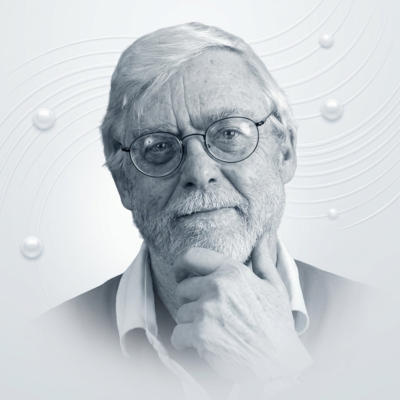
Zoltan Molnar on neocortex evolution and homology
Episode 11 15.03.2014
-
play_arrow
PLAY EPISODE
Description arrow_drop_down

Description
Did birds and mammals independently evolve the same brain circuit , and what does that mean for how we define homology? Developmental neurobiologist Zoltan Molnar presents evidence that avian and mammalian forebrains share strikingly similar gene expression patterns and functional properties despite arising from different parts of the embryonic brain. Subscribe for more from the Convergent Science Network podcast series. Zoltan Molnar joins Paul Verschure and Tony Prescott at the BCBT summer school to discuss the evolution and development of the neocortex, tracing the question back to Thomas Willis’s 1664 observation that the cerebral cortex is disproportionately enlarged in humans. Molnar argues that while the cortex is clearly central to higher cognitive function, understanding its evolution requires confronting one of the thorniest problems in evolutionary biology: the relationship between the mammalian neocortex and the avian dorsal ventricular ridge, structures that show convergent gene expression, similar electrophysiological properties, and comparable circuit organization, yet develop from different regions of the embryonic telencephalon. The discussion produces a spirited debate about the meaning of homology. Molnar insists on a developmental definition , structures are homologous only if they derive from the same part of the neuroepithelium , and presents lineage-tracing evidence that mammalian layer 4 neurons and avian nidopallium neurons originate from distinct progenitor populations. Verschure and Prescott push back, arguing that convergent gene expression and functional equivalence in the adult brain may warrant a broader evolutionary definition. The conversation also covers how highly conserved homeobox genes mark early brain segments identically across vertebrates, how thalamic inputs may drive convergent differentiation in recipient cells regardless of their developmental origin, and what Harvey Karten’s equivalent circuit hypothesis means in light of modern transcriptomic data. Key topics include why neocortex is the key structure for understanding brain evolution, how conserved developmental programs constrain but do not fully determine adult brain organization, what the reeler mutant reveals about the robustness of cortical self-organization, how sauropsids and mammals enlarged different parts of the forebrain, and why the debate over homology versus convergence remains unresolved despite decades of comparative data. Part of the Convergent Science Network podcast series from the BCBT Summer School.
Tagged as:
Circuit Gene Expression homology neocortex evolution
About the author call_made
CSN Podcasts
Both the triumphs of humanity and its most evil deeds have resulted from collaboration. In a time where humanity is required to aspire to the former and minimize the latter, the question arises of how collaboration arises and why it fails. Surprisingly, this phenomenon, so central to who we are, is not well understood. Hence, a collaborative effort is required to understand collaboration in its full biological, psychological, sociological, cultural, and economic complexity and to translate this understanding into operational impact. This series of podcasts is one step toward achieving these complementary goals. The Collaboration Podcast presents interviews with people who are central orchestrators of collaboration in various domains including business, government, science, art, health, sustainability, and the military. The discussions were conducted by Prof. Dr. Paul F.M.J. Verschure and members of the Program Advisory Committee of the Ernst Strungmann Forum on Collaboration (https://www.esforum.de/forums/ESF32_Collaboration.html) during 2021 and had the goal to sketch a map of opportunities, challenges, and obstacles in human collaboration. The forum took place in May 2022, and now we would like to share this series of interviews with a broader audience. The full report of the Forum will be published in 2023 by MIT Press. The podcast was produced by the Convergent Science Network (https://www.convergentsciencenetwork.org/). Context: The stability of social systems depends critically on realizing sustainable methods of “collaboration,” yet how and by which means collaboration is achieved is not clearly understood; neither are the conditions or processes that lead to its breakdown or failure. Collaboration can be understood as cooperation between agents toward mutually constructed goals. Part of the reason for our lack of understanding is that the phenomenon of collaboration is, by nature, a highly multidisciplinary problem, and effective research into its complexities has been difficult to achieve across the broad range of scientific and technical disciplines involved. The need for a fundamental understanding of collaboration, however, has become increasingly important. Not only does humankind demand answers as it attempts to address critical challenges at multiple scales (e.g., climate change, migration, enhanced automation, social and economic inequality), but ever-increasing technological and economic means of interconnecting people and societies are disrupting long-established, familiar patterns of how we interact. Radical technological changes that are ongoing have the potential to reshape collaboration in ways that are currently hard to predict or influence (e.g., by altering configurations in interaction, information creation, and modes of communication). On one hand, such changes could disrupt hitherto stable forms of collaboration by affecting critical communication channels and traditional roles, as can be observed in the rapidly changing patterns in governance, commerce, and social interaction. Conversely, technology could lead to the emergence of novel, successful forms of collaboration that deviate from traditional “hierarchical” architectures. Evidence of this can be seen in areas as diverse as highly automated manufacturing plants, the open science movement, collaborative software repositories, user-centered services, and the sharing of economy-based modes of organization. Without a fundamental understanding of the mechanisms, processes, and boundary conditions of collaboration, it is not possible to evaluate or predict which of these possible scenarios are sustainable or even plausible. The Forum “How Collaboration Arises and Why it Fails” (May 8–13, 2022, Location: Frankfurt am Main, Germany) Chairs: Andreas Roepstorff and Paul Verschure Program Advisory Committee: Jenna Bednar, Julia R. Lupp, Bhavani R. Rao , Andreas Roepstorff, Ferdinand von Siemens, and Paul Verschure
Episodes

play_arrow

play_arrow
play_arrow

play_arrow
Timestamp
- fast_forward00:00:03 - This is the Convergent Science Network podcast. Leading researchers in the domain
- fast_forward00:00:10 - of neuroscience, brain theory and technology are interviewed by Paul Vesure and Tony Prescott.
- fast_forward00:00:17 - It's Paul Vesure together with Tony Prescott of the Convergent Science Network
- fast_forward00:00:22 - podcast of the BCBT Summer School. cool.
- fast_forward00:00:26 - And today we're here with our speaker, Zoltan Molnar.
- fast_forward00:00:30 - And Zoltan was speaking about evolution and the development of the neocortex.
- fast_forward00:00:37 - So Zoltan, why the neocortex? Why do you think that's the right target to try
- fast_forward00:00:44 - to understand brain evolution?
- fast_forward00:00:46 - Zoltan Molnar So I think this issue has been around for quite a while.
- fast_forward00:00:50 - And in 1664, Thomas Willis started dissecting some brains, and then he noticed
- fast_forward00:00:57 - that when you compare a sheep brain with a human, the biggest difference was in the cerebral cortex.
- fast_forward00:01:03 - Brainstem, all the other regions were similar proportions.
- fast_forward00:01:07 - And he noticed that the cerebral cortex was much bigger in human in proportion,
- fast_forward00:01:13 - and also it was more convoluted.
- fast_forward00:01:16 - So again, in 1664, he looked at some patients with cognitive abnormalities,
- fast_forward00:01:23 - learning disabilities, and epilepsy.
- fast_forward00:01:27 - And he noticed that the cerebral cortex had extra foldings and a different shape.
- fast_forward00:01:33 - So he concluded that it must be the cerebral cortex, which is the substrate
- fast_forward00:01:37 - of the higher cognitive functions.
- fast_forward00:01:40 - So I believe that Willis got it absolutely right.
- fast_forward00:01:44 - So I think he put his finger on this.
- fast_forward00:01:49 - So we have a structure which really increased during evolution,
- fast_forward00:01:53 - and also even minor abnormalities in the cerebral cortex can have a huge,
- fast_forward00:01:58 - major impact on the cognitive abilities.
- fast_forward00:02:04 - Okay, but now just from some more global perspective, before we delve into the specifics of your work,
- fast_forward00:02:12 - you could argue, okay, this is maybe what they saw a few hundred years ago,
- fast_forward00:02:17 - given the tools they had at the time.
- fast_forward00:02:19 - But brain evolution is not necessarily only focusing on cortex.
- fast_forward00:02:24 - Cortex doesn't operate in isolation, right? There's also expansion of other
- fast_forward00:02:28 - structures, like for instance, basal ganglia as an example, your thalamus, and so on.
- fast_forward00:02:35 - So do you see any critical dependencies there?
- fast_forward00:02:39 - Or for your money, you would really emphasize neocortex as the key source of
- fast_forward00:02:47 - what advanced our functionality as humans? Hmm.
- fast_forward00:02:52 - So I think we didn't have enough detailed studies where you,
- fast_forward00:02:57 - for instance, scan in lots of different brains in 3D, and then you allocate names.
- fast_forward00:03:06 - So for instance, parts of basal ganglia or cerebellum or hippocampus or different thalamic nuclei,
- fast_forward00:03:16 - you know, higher order or sensory nuclei and correlate it to cognitive function.
- fast_forward00:03:22 - And I don't think it has been done properly. So I think that would be also interesting
- fast_forward00:03:26 - to extend these studies, not only to cortex or specific regions of the cortex,
- fast_forward00:03:33 - but also to other extracortical areas.
- fast_forward00:03:36 - We all know that, for instance, the cerebellum is responsible for all sorts
- fast_forward00:03:40 - of other functions, cognitive, language, motor automatisms, etc.
- fast_forward00:03:47 - So probably the cerebellum had to evolve as well, or its connections.
- fast_forward00:03:52 - Interestingly, if you look at the hippocampus, I don't think that the size varies too much, no?
- fast_forward00:03:57 - Do you think? If you look at different species. In food-storing animals,
- fast_forward00:04:01 - it's bigger. It's really bigger.
- fast_forward00:04:02 - They have to remember where they put the... Sometimes I wish my hippocampus
- fast_forward00:04:07 - would be a bit bigger to find my keys or phone.
- fast_forward00:04:11 - Right. But now, so the other thing you emphasized at the beginning of your talk
- fast_forward00:04:17 - was sort of the four elements of evolution that most people got wrong,
- fast_forward00:04:22 - or at least you pointed to one popular video on that, right?
- fast_forward00:04:26 - So if you would have to characterize brain evolution, what are then the key
- fast_forward00:04:30 - principles that are driving that?
- fast_forward00:04:34 - So the video I showed really was just helping us to get started on discussions
- fast_forward00:04:41 - cautions about the principles of evolution.
- fast_forward00:04:44 - Because if you think about it, we are sitting here with, you know.
- fast_forward00:04:50 - Eyes in the front with stereo vision.
- fast_forward00:04:52 - We have the brain developed as it is, but it's a miracle.
- fast_forward00:04:56 - Do you think that you could rewind this tape of evolution of a few million years
- fast_forward00:05:04 - and then you start again?
- fast_forward00:05:05 - Do you think we would end up with the same brain shape?
- fast_forward00:05:09 - Or sensory networks, or motor networks, that would be a very interesting test,
- fast_forward00:05:14 - that how efficient these networks are, no?
- fast_forward00:05:18 - Some people believe that you
- fast_forward00:05:19 - would probably end up with a similar organism. I'm not so sure. Why not?
- fast_forward00:05:25 - So, if you look at the cognitive function or some selected functions of a bird,
- fast_forward00:05:33 - it can be superior to us, no?
- fast_forward00:05:36 - So if they would have had some selective advantages, maybe they would dominate now, no?
- fast_forward00:05:44 - I think you could also look at events in history and say, well,
- fast_forward00:05:47 - if it wasn't for instance mass extinctions caused by objects colliding with Earth,
- fast_forward00:05:54 - then mammals maybe would never have succeeded to the extent they have.
- fast_forward00:05:59 - Have, if you go further back, maybe vertebrates would have been less successful, so yes.
- fast_forward00:06:04 - Or we wouldn't be here if, you know, a dinosaur would have sneezed while our
- fast_forward00:06:08 - ancestors were copulating, you know.
- fast_forward00:06:11 - So I think evolution is, it's a miracle that, you know, we are here now,
- fast_forward00:06:17 - and we have this kind of brain and this circuitry, but probably we could have
- fast_forward00:06:23 - evolved into very, very different directions.
- fast_forward00:06:26 - And that's an interesting task for you guys, because you want to look at these
- fast_forward00:06:31 - computational functions, and you look at the brain, and this is one possible
- fast_forward00:06:36 - solution to solve that problem.
- fast_forward00:06:39 - But you could probably solve the same problem with many other circuits, no?
- fast_forward00:06:43 - But with Sultan, I think, also in your presentation, you made a point that might
- fast_forward00:06:50 - contradict you, because you're also showing that many properties or several
- fast_forward00:06:54 - properties are highly conserved.
- fast_forward00:06:55 - Like, for instance, if you look at transcription during development,
- fast_forward00:07:01 - there are phases in this transcription that seem to be highly conserved.
- fast_forward00:07:05 - Or, for instance, the structuring of a cortical sheet in terms of a supergranular
- fast_forward00:07:11 - layer and a subgranular layer, right?
- fast_forward00:07:13 - So given that you have this conservation of certain design principles,
- fast_forward00:07:18 - you could also argue, well, that would suggest that if I would replay play the
- fast_forward00:07:23 - tape of evolution from a few million years back,
- fast_forward00:07:28 - these conserved properties would still be there and they'd still be,
- fast_forward00:07:30 - if you want, forcing a certain form of development.
- fast_forward00:07:34 - Of course, modulo properties of an environment, but I'm not sure if the end
- fast_forward00:07:39 - result would have been then radically different.
- fast_forward00:07:42 - I think the reason why we conserve developmental mechanisms is because they are there already.
- fast_forward00:07:52 - So we can't start from scratch, very radical changes in how we construct the brain.
- fast_forward00:08:01 - So we can tinker with it a little bit, but not radically new.
- fast_forward00:08:06 - So just to give another example, it's a very general principle that you generate
- fast_forward00:08:12 - the cerebral cortical cells in an inside-first, outside-lost fashion.
- fast_forward00:08:16 - But if you have one gene missing, the rilin expressed in the first layer in
- fast_forward00:08:22 - the Caja-Retche cells and they are not secreted, you reverse this inside-first,
- fast_forward00:08:27 - outside-lost gradient.
- fast_forward00:08:29 - You will end up with an outside-first, inside-lost reversed order.
- fast_forward00:08:33 - Yet this animal is surprisingly normal. It does have some motor dysfunction
- fast_forward00:08:37 - because it reels, that's where the name is coming from.
- fast_forward00:08:41 - But it's probably due to the cerebellar abnormalities rather than the cortex.
- fast_forward00:08:46 - What would be interesting to see, if you push this guy, realer,
- fast_forward00:08:50 - mutant, would that cause major problems in cognitive behavior?
- fast_forward00:08:59 - Unfortunately, in human, these are lethal very early on, intractable epilepsy
- fast_forward00:09:04 - and mental retardation, if you have a similar mutation.
- fast_forward00:09:08 - But what I'm saying is that if you just change or reverse this very conserved program,
- fast_forward00:09:17 - you still have some self-organizing principles, so they can still wire up,
- fast_forward00:09:22 - they can still process some information, maybe not as well as the normal brain,
- fast_forward00:09:28 - but our brain is quite plastic.
- fast_forward00:09:31 - It is also illustrating one of the, I think, fundamental properties that you
- fast_forward00:09:37 - also investigate in your research and described in great detail is that we all
- fast_forward00:09:41 - talk about, let's say, conserved network elements,
- fast_forward00:09:46 - regulatory networks that in turn become modulated in different ways to create
- fast_forward00:09:53 - a certain variability of brains.
- fast_forward00:09:55 - While, let's say, the core elements of these systems are actually the same,
- fast_forward00:10:02 - but it's the regulatory networks that are changing, and as a result,
- fast_forward00:10:04 - expression patterns change, right?
- fast_forward00:10:06 - Isn't that the key underlying feature we're looking at here?
- fast_forward00:10:10 - Yes, but then all these changes at some point...
- fast_forward00:10:15 - They have to provide you with an advantage during selection.
- fast_forward00:10:21 - So you set up a network and you process information, let's say visual information,
- fast_forward00:10:27 - and then you have several streams to process where, what.
- fast_forward00:10:32 - And then you suddenly recognize that, you know, a chief primate is angry with
- fast_forward00:10:40 - you, so you can run away and you're not selected out.
- fast_forward00:10:42 - So you have some advantages.
- fast_forward00:10:45 - If you have a sensory or motor system which operates more effectively.
- fast_forward00:10:50 - So, over millions of years, you somehow have to select the development of programs
- fast_forward00:10:58 - which is producing the best possible hardware on which you can then develop these circuits, no?
- fast_forward00:11:04 - So this is how I see it. I think you also pointed to some of the constraints
- fast_forward00:11:09 - that are due to evolutionary evolutionary history.
- fast_forward00:11:11 - I mean, the example you gave from Rudolf Raff's book, The Shape of Life.
- fast_forward00:11:16 - How at an early stage in development, organisms seem to converge on a similar
- fast_forward00:11:22 - pattern of organization, which in some sense may be a forced move.
- fast_forward00:11:27 - If you're going to be this kind of multi-celled creature, you have to go through
- fast_forward00:11:32 - this, is it the phenotypic stage, or what's it called.
- fast_forward00:11:35 - And maybe there are several of those in evolution.
- fast_forward00:11:39 - I think yesterday in Paul's talk, he was talking about the Cambrian explosion
- fast_forward00:11:43 - and how all the body plants, the major body plants, emerged then.
- fast_forward00:11:48 - And there have been no fundamental innovation in body plants since that time.
- fast_forward00:11:53 - It's all been evolution within certain body plants.
- fast_forward00:11:56 - And I guess what we know now
- fast_forward00:11:59 - about these gene networks is that these are very heavily conserved
- fast_forward00:12:02 - from the very early days of evolution that certain gene
- fast_forward00:12:05 - networks exist in all these different species vertebrate
- fast_forward00:12:09 - and invertebrate and are co-opted to do different
- fast_forward00:12:12 - tasks so that must be a very strong constraint on
- fast_forward00:12:16 - the parts of design space for brains and bodies
- fast_forward00:12:18 - that evolution can explore that possibly we're
- fast_forward00:12:22 - only exploring one very small area of design space and if you replay the tape
- fast_forward00:12:27 - and you change some essentially accidental events that have happened maybe we
- fast_forward00:12:32 - could have gone in another direction or maybe physics just requires uh that
- fast_forward00:12:36 - some of these things have to happen the way they have happened,
- fast_forward00:12:39 - no it also would mean then from that perspective that issue would like to develop
- fast_forward00:12:45 - a completely different set of animal species you would have to rewind up till the cambrian explosion.
- fast_forward00:12:55 - Because you have to go back to the point prior to just the definition of these
- fast_forward00:12:59 - body plans, because that's the big constraint.
- fast_forward00:13:01 - Perhaps even earlier, because the gene networks, even the basic components of
- fast_forward00:13:07 - the nervous system are there.
- fast_forward00:13:08 - Right, exactly right. In radial creatures before the cambria.
- fast_forward00:13:12 - What do you say about that, Sultan?
- fast_forward00:13:14 - I was thinking in more advanced stages of development, when you already have
- fast_forward00:13:19 - some kind of tenencephalic vesicle, and then you have sub-partitioning.
- fast_forward00:13:22 - That's very conserved in all vertebrates and mammals.
- fast_forward00:13:28 - But if we go a bit further, then that will be the challenge to identify gene
- fast_forward00:13:36 - networks which will make us different from others.
- fast_forward00:13:41 - But now in your own research, you focus very much on cortex.
- fast_forward00:13:47 - And then what you emphasized very much is also this radial expansion of cortex
- fast_forward00:13:52 - or the growth of cortex and the processes that would drive that as compared
- fast_forward00:13:58 - to, for instance, a lizard or avian brain, right?
- fast_forward00:14:01 - If we just try to turn the question we're discussing now in a bit more data-oriented
- fast_forward00:14:08 - version, what are the most obvious differences between such a lizard, avian brain and...
- fast_forward00:14:17 - The mammalian brain, in which we will find this cortical sheet that you really study.
- fast_forward00:14:23 - I often have discussion with Barbara Finley about this.
- fast_forward00:14:28 - She is telling me that if you plot,
- fast_forward00:14:34 - brain size and other parameters, we have absolutely just the right size of brain as total.
- fast_forward00:14:44 - Other species would fit in just as well, birds included.
- fast_forward00:14:50 - Where we disagree is that within that scheme, I think the relative proportions
- fast_forward00:14:56 - of our brain, they change radically.
- fast_forward00:15:00 - So the sauropsids, as I showed you, decided to enlarge different parts of the brain than from us.
- fast_forward00:15:10 - Actually, we did not decide anything. We were selected out because it was advantageous
- fast_forward00:15:16 - to have the enlarged cortex.
- fast_forward00:15:18 - The dorsal ventricular ridge or the derivatives of these structures,
- fast_forward00:15:25 - whatever they are, you know, lateral amygdala, endoperiform nucleus or claustrum,
- fast_forward00:15:30 - they are not major features of our brain.
- fast_forward00:15:33 - So we decided to enlarge the cortex.
- fast_forward00:15:36 - Now, the sauropsids decided to enlarge that bowl of cells, and they have huge
- fast_forward00:15:41 - circuits, as we discussed during the talk, inside that bowl.
- fast_forward00:15:45 - And some of them, they look very similar to the mammalian circuits.
- fast_forward00:15:49 - And after the talk, I think Tony's comment was a very good one.
- fast_forward00:15:54 - So what is the selective advantage to build the cortex, like we do, memos.
- fast_forward00:16:00 - I think the major advantage is that you can produce some embryonic transient
- fast_forward00:16:05 - circuits, and the cortex is.
- fast_forward00:16:10 - Receiving and delivering information at the time when the elements are still
- fast_forward00:16:15 - constructed and still added to it.
- fast_forward00:16:18 - So I think this is where I see a huge advantage in having the kind of structure we have.
- fast_forward00:16:23 - So we have a transient platform below the cerebral cortex and things begin to
- fast_forward00:16:28 - line up just as we generate other cortical cells.
- fast_forward00:16:33 - So I think maybe this is a big, big, big advantage.
- fast_forward00:16:37 - I don't think we can push that point too far. I mean, I mean,
- fast_forward00:16:39 - if at an early stage in hominid evolution,
- fast_forward00:16:43 - our line had been wiped out, it might be today crows that are recording interviews
- fast_forward00:16:47 - about why their brains are better than those mammals that just scurry around.
- fast_forward00:16:55 - And it's interesting that birds and mammals both have enlarged forebrains,
- fast_forward00:17:00 - but they've enlarged in different ways.
- fast_forward00:17:02 - And from my understanding, the big debate is how are those similar and different?
- fast_forward00:17:09 - And what I got from your talk today actually was a very interesting idea that
- fast_forward00:17:15 - maybe there's more flexibility in the evolution of the brain than we realize
- fast_forward00:17:20 - because starting from very different underlying architectures,
- fast_forward00:17:25 - the avian forebrain and the mammalian forebrain, although they look very different,
- fast_forward00:17:31 - are perhaps converging on something similar in terms of functional architecture.
- fast_forward00:17:36 - Is that a fair reading, or am I exaggerating your position?
- fast_forward00:17:39 - Very much so, because we talked specifically about these thalamic recipient cells,
- fast_forward00:17:44 - and these have very similar transcriptomic networks,
- fast_forward00:17:49 - and we have demonstrated that you have a significant overlap between these networks
- fast_forward00:17:54 - in layer 4 and also in the nidopallium in the birds, although they come from different parts.
- fast_forward00:18:01 - I think thalamic influence can elicit all sorts of differentiation on these cells.
- fast_forward00:18:09 - So that would be already very interesting to see. Is it activity?
- fast_forward00:18:14 - Is it the pattern of activity? Or you might even deliver some amino acids maybe
- fast_forward00:18:21 - transneuronally from the retina.
- fast_forward00:18:24 - So all these should be explored a bit further.
- fast_forward00:18:27 - So there is an influence from the thalamic fibers and we don't know what it
- fast_forward00:18:33 - is exactly that you have these convergent networks.
- fast_forward00:18:36 - And this is just the first step of the circuit.
- fast_forward00:18:39 - So we don't even know where to take the next step, no, in the avian and the mammalian brain.
- fast_forward00:18:47 - But now in the comparison of these four brains, can you say something about
- fast_forward00:18:51 - the kinds of cell types you find in mammals and birds and how similar, dissimilar these are?
- fast_forward00:18:58 - So all our work I presented today was on regions, dissected pieces of our brain, not single cell.
- fast_forward00:19:07 - So I completely agree. What would be really good is to go into single cell level.
- fast_forward00:19:14 - And then cluster these cells according to the expressed gene,
- fast_forward00:19:21 - and that's one way of identifying cell types and relate this to somatodendritic
- fast_forward00:19:26 - morphology, physiological properties, connectivity,
- fast_forward00:19:28 - and then you come up with ideas whether these evolved together or separately.
- fast_forward00:19:36 - Yeah, because what you mentioned in this discussion is in some sense there was
- fast_forward00:19:43 - this idea of Harvey Carton expressed in the 60s about the equivalent circuit hypothesis.
- fast_forward00:19:49 - And And you have tried to target that by doing, if you want,
- fast_forward00:19:53 - gene fingerprinting of these areas to allow you to establish whether we look
- fast_forward00:19:59 - at homologues or not between bird and mammals.
- fast_forward00:20:06 - So in your opinion, if you look at these genetic markers, how similar,
- fast_forward00:20:13 - dissimilar do these structures look? would you declare them being homologues
- fast_forward00:20:17 - and that Harvey Carton had it right?
- fast_forward00:20:19 - Or do you think it's a bit more complicated story?
- fast_forward00:20:24 - So as I mentioned, if you compare,
- fast_forward00:20:28 - gene expression patterns between these structures, let's say hippocampus and
- fast_forward00:20:33 - striatum, you notice that you have huge overlaps in gene expression pattern
- fast_forward00:20:37 - and also these networks have common elements.
- fast_forward00:20:42 - If you then, and also I mentioned oligodendrocytes, and then the next one was
- fast_forward00:20:49 - very interestingly layer 4, and parts of the nidopallium where you have the thalamic targeting.
- fast_forward00:20:55 - Now, just because they have a similar gene expression pattern,
- fast_forward00:20:59 - and just in the light of that particular information,
- fast_forward00:21:02 - you can't say whether they are homologous or not, because we developmental mental
- fast_forward00:21:06 - biologists, we like to talk about homology when they come from the same piece
- fast_forward00:21:11 - of the neuroepithelium, and it's not the case. We know for sure.
- fast_forward00:21:15 - So this is more of a convergent gene expression pattern.
- fast_forward00:21:19 - Now, you could argue that, okay, so why do I say that the hippocampus is then
- fast_forward00:21:23 - homologous and the striatum is homologous, but not the layer 4?
- fast_forward00:21:26 - So you're absolutely right. Just by gene expression pattern,
- fast_forward00:21:29 - I can't say that that piece of neuroepithelium is homologous to the avian hippocampus.
- fast_forward00:21:37 - It's more of the origin, lineage, chrono relationship, and the gene expression
- fast_forward00:21:43 - prove that they are similar.
- fast_forward00:21:46 - But just by gene expression, you can't really say that these are homoerogens.
- fast_forward00:21:50 - But your definition of homology seems to be a little bit biased there because
- fast_forward00:21:55 - when we talk about homology,
- fast_forward00:21:57 - what we're really trying to get at, surely, is that a common ancestor had a
- fast_forward00:22:01 - structure and that these two species we're looking at now have inherited that
- fast_forward00:22:07 - structure and adapted it from that common ancestor.
- fast_forward00:22:10 - That's what we really want to mean by homology. And then your target...
- fast_forward00:22:14 - My definition is developmental rather than evolutionary.
- fast_forward00:22:17 - So that is the problem because, you know, I can't...
- fast_forward00:22:24 - Uh use that kind of definition in developmental
- fast_forward00:22:28 - terms because they are meaningless yeah but but for
- fast_forward00:22:31 - us so homology to you isn't an evolutionary concept
- fast_forward00:22:34 - at all it's a it's uh so developmentally if you talk about homology of of structures
- fast_forward00:22:41 - it means that they arrived from the same or progenitors from the same part relative
- fast_forward00:22:47 - position of the tissue and that's not the case for these structures.
- fast_forward00:22:51 - If you talk about that, yes, you had a thalamic recipient cell group,
- fast_forward00:22:58 - which was targeted by thalamic fibers and they then initiated some sensory experience,
- fast_forward00:23:06 - yes, they perform similar function.
- fast_forward00:23:10 - But would that be homology?
- fast_forward00:23:14 - Let's turn it around. In your definition, which is a more developmental of homology,
- fast_forward00:23:22 - aren't you actually also importing a Trojan horse?
- fast_forward00:23:26 - Because you said yourself that this
- fast_forward00:23:30 - 19th century idea of development recapitulating evolution was not fully correct
- fast_forward00:23:40 - because you see divergence in development that you will not see if you recapitulate evolution.
- fast_forward00:23:47 - But now, if you insist that homology must be defined as originating in the same
- fast_forward00:23:54 - part of the neural tube, then you seem to imply that development does recapitulate phylogeny.
- fast_forward00:24:03 - No I don't imply that but I think you.
- fast_forward00:24:11 - This is just not the case, that these two cell groups are derived from the same
- fast_forward00:24:18 - part of neuroepithelium, and they were rejuggled.
- fast_forward00:24:22 - Yeah, but you cannot say that. Why not? I have all the lineage information. I can track the cells.
- fast_forward00:24:29 - I know where they come from, where they go, and they are completely separate.
- fast_forward00:24:34 - Now, let me clarify. Of course, you have freedom of speech. You can say whatever
- fast_forward00:24:38 - you want, okay? Okay, in that sense, we will respect whatever you say.
- fast_forward00:24:42 - But the point is that if you compare a developing bird brain and a developing
- fast_forward00:24:47 - mammalian brain, the timing of the developmental process will be rather different.
- fast_forward00:24:54 - So for instance, the neuroepithelium in which you will find your progenitor
- fast_forward00:24:58 - cells might start to divide at a much later stage in the mammalian brain than
- fast_forward00:25:03 - it does in the avian brain.
- fast_forward00:25:05 - And as a result, the actual layout of the neuroepithelium will have a very different shape.
- fast_forward00:25:09 - So to just then use that location at that point in time as your benchmark is
- fast_forward00:25:16 - a sure road to failure because the developmental program is radically different.
- fast_forward00:25:21 - Yes, but that's exactly what I'm saying, that if you follow the entire course of development,
- fast_forward00:25:28 - so you look at these different proportions of the mammalian or avian or reptilian
- fast_forward00:25:35 - telencephalic physicals.
- fast_forward00:25:37 - If you look at all the segments, all the neurogenesis, all the migration,
- fast_forward00:25:41 - all the clones you get from these and you trace the migration of these cells...
- fast_forward00:25:47 - I know that this is not just stage-dependent. They never, ever arrive from the same.
- fast_forward00:25:54 - So basically, that's why I'm so radically against what you are saying,
- fast_forward00:25:58 - that you know, oh, it might be just a timing effect.
- fast_forward00:26:02 - And if you look at different time, yes, they were coming from there. No.
- fast_forward00:26:07 - There is no evidence whatsoever that they ever arrive from the same progenitors
- fast_forward00:26:14 - and they just have a different migration. So they come from in very different relative positions.
- fast_forward00:26:19 - We have now markers, some basic homeobox genes which mark some of the segments
- fast_forward00:26:27 - of these and also we have some morphological features which help us and they
- fast_forward00:26:32 - are coming from different parts.
- fast_forward00:26:34 - And the avian brain adopted a strategy to amplify neurogenesis and change the
- fast_forward00:26:41 - migration of those regions whereas the mammalian is radically different.
- fast_forward00:26:45 - And that's why I think that's not a big problem. I don't care whether they are homologous or not.
- fast_forward00:26:51 - We now sorted that they are not. Well, you're making a strong claim here,
- fast_forward00:26:55 - which goes back, I think you were talking about Haeckel and his idea that very
- fast_forward00:27:01 - early on in embryology, we all look the same.
- fast_forward00:27:04 - And you're saying that there's a starting point in embryology where every vertebrate
- fast_forward00:27:10 - has essentially the same embryo.
- fast_forward00:27:12 - And from that point, you can track what happens to each bit of the embryo as
- fast_forward00:27:16 - it moves around. What I'm saying is that the telencephalic vesicle,
- fast_forward00:27:20 - so let's say I give you two or three sections.
- fast_forward00:27:26 - Matching stages from a turtle, chick, or a mouse.
- fast_forward00:27:31 - And I stain it with the same four representative Homo box genes,
- fast_forward00:27:38 - and I cover slip it, give you a microscope, and then I ask you,
- fast_forward00:27:43 - okay, tell me which one is which.
- fast_forward00:27:44 - You couldn't be able to tell me at an early stage.
- fast_forward00:27:48 - So in that sense, yes, Heckel was right that these early stages are highly conserved.
- fast_forward00:27:54 - But you know, they don't go through the, you know, later or especially the adult
- fast_forward00:27:59 - developmental stages to go to the next stage. That's where we disagree.
- fast_forward00:28:02 - But it seems a bit circular here because you're now using gene expression to
- fast_forward00:28:06 - say, this is my standard.
- fast_forward00:28:09 - This is the common pattern across all these creatures. And I know it because of the gene expression.
- fast_forward00:28:14 - But you're saying- Tony, you can use many other things. Gene expression is just one.
- fast_forward00:28:19 - But people usually accept gene expression quite well, because these are highly conserved.
- fast_forward00:28:26 - You never have a Hox gene changing its gene expression at these early stages.
- fast_forward00:28:33 - You're now saying when we come to the forebrain that gene expression seems to
- fast_forward00:28:39 - suggest that part of the dorsal ventricular ridge is similarly organized to
- fast_forward00:28:44 - neocortex, but you don't want to accept homology.
- fast_forward00:28:47 - No, no, no. The gene expression is not supporting that.
- fast_forward00:28:50 - These are very early studies from several groups, but basically if you look
- fast_forward00:28:57 - at these, you have a couple of key genes which mark a cortex, for instance.
- fast_forward00:29:04 - So that's the EMX genes.
- fast_forward00:29:06 - Then you go to this intermediate part, that's the Pax6.
- fast_forward00:29:12 - Then you have the DLX genes and so on. So So the order of these and the segments
- fast_forward00:29:17 - are highly conserved early on. I'm not saying that's the only criteria.
- fast_forward00:29:22 - You can use many other things probably, but this is clearly indicating that unfortunately.
- fast_forward00:29:30 - And cortex, developmentally, they come from different parts of the brain.
- fast_forward00:29:36 - But they converge to have the same pattern of gene expression.
- fast_forward00:29:39 - Exactly. Yeah, so finally!
- fast_forward00:29:42 - And that was a very interesting… And that's why I mentioned it in the talk,
- fast_forward00:29:49 - that that's why it was the thorniest question, the thorniest problem of.
- fast_forward00:29:54 - Evolutionary biology because the gene expression, hodology, and physiological
- fast_forward00:30:00 - properties, they all supported that they are homologous.
- fast_forward00:30:03 - But the developmental data is clear that they are not.
- fast_forward00:30:06 - But this is just as interesting. We need to be more flexible about what we mean by homology.
- fast_forward00:30:10 - Yeah, I think that's a problem. Because you're saying that at an early stage
- fast_forward00:30:12 - in the embryo, all embryos are essentially the same. And then you can see what goes on from there.
- fast_forward00:30:18 - But what we're saying now is that in the adult, although these have a very different
- fast_forward00:30:22 - developmental paths, they've converged on a very similar structure,
- fast_forward00:30:26 - at least in terms of genomes expression.
- fast_forward00:30:28 - So you could say that in the adult, they are homologous. Right.
- fast_forward00:30:31 - But in my talk, I mentioned that when I use similar terms, then I was warned
- fast_forward00:30:38 - by others, including Neuwenhuis, who is an expert in this, that he said,
- fast_forward00:30:43 - you should stick to one meaning of homology.
- fast_forward00:30:46 - And developmentally, they are not.
- fast_forward00:30:49 - Okay, so Tony, I'm afraid we will not convince Zoltanov during this podcast,
- fast_forward00:30:53 - but we will twist his arm afterwards. It took 60 years for Harvey, you know.
- fast_forward00:30:59 - No, but look, so we just, okay, so homology, at least I think this discussion
- fast_forward00:31:04 - makes clear, it's actually not completely resolved what we mean with it exactly.
- fast_forward00:31:09 - There is some controversy around its definition dependent on the field in which
- fast_forward00:31:14 - it is used. Exactly, especially your field has a problem because we know exactly.
- fast_forward00:31:19 - Okay. Now, this is exactly what we're talking to you, Zoltan,
- fast_forward00:31:22 - because you know and we don't, you see.
- fast_forward00:31:25 - No, but the point is that then if you talk about this…,
- fast_forward00:31:31 - this sort of equivalent circuit hypothesis now, okay? So the idea would be that
- fast_forward00:31:36 - functionally, this avian forebrain compared to a mammalian forebrain functionally
- fast_forward00:31:44 - might do similar things.
- fast_forward00:31:46 - It might show even, as you showed, right, similar response properties to visual stimuli.
- fast_forward00:31:51 - But in terms of its internal organization, it's different because in terms of
- fast_forward00:31:56 - its layering, it's different. So, how should I interpret that?
- fast_forward00:32:02 - Because, so in your talk, you showed that in cortex, mammalian cortex,
- fast_forward00:32:07 - you would exploit more the six layers of a mammalian cortex to perform certain operations.
- fast_forward00:32:12 - While in this avian brain, you might use a more, at least in this conceptualization
- fast_forward00:32:18 - also of Harvey Carton and others,
- fast_forward00:32:19 - a more, let's say, a sequential operation between different subzones,
- fast_forward00:32:24 - as opposed to exploiting parallel processing within layers.
- fast_forward00:32:29 - So how should I see then exactly this equivalence between these two anatomical structures?
- fast_forward00:32:35 - So, Harvey in the 60s suggested that if we just look at these circuits,
- fast_forward00:32:44 - the thalamic targeting, so the cells are in...
- fast_forward00:32:50 - Different arrangements. So the thalamic targeting cells are equivalent, let's say.
- fast_forward00:32:56 - Then the next step is the supracranial layers.
- fast_forward00:33:01 - That would be the next step. So they are located somewhere else.
- fast_forward00:33:04 - And then the final output layer is in the dorsal part of the dorsal cortex,
- fast_forward00:33:11 - hyperpolyum in sauropsids.
- fast_forward00:33:14 - And then you would have that in layer five and six in the mammalian cortex.
- fast_forward00:33:20 - So I mentioned two studies, one from Suzuki, from Hirata's lab,
- fast_forward00:33:26 - and another one from Jennifer Dugas Ford from Ragsdale's lab,
- fast_forward00:33:31 - when they looked at a handful of gene expressions,
- fast_forward00:33:35 - with the most interesting markers for the supragranular and infragranular cells,
- fast_forward00:33:41 - and that further confirmed this kind of segregation of circuit elements.
- fast_forward00:33:46 - And they supported Harvey's original idea.
- fast_forward00:33:49 - But now explain to me, there's something I don't understand.
- fast_forward00:33:53 - If you look at the mammalian cortex, you would have a continuous interaction
- fast_forward00:33:56 - throughout with thalamus, for instance, right?
- fast_forward00:34:00 - But now in this avian solution, you would only have a subzone that is sensitive to thalamic input.
- fast_forward00:34:07 - So do you see a patchy projection from a thalamus into that area?
- fast_forward00:34:12 - Because that's what it would imply.
- fast_forward00:34:14 - So I'm not an expert, unfortunately, in the thalamic projections in sauropsids,
- fast_forward00:34:20 - but they do have a parallel processing.
- fast_forward00:34:24 - So you have the collicular input is going to the nucleus rotundus,
- fast_forward00:34:29 - and then the nucleus rotundus will project then to a different part of the brain,
- fast_forward00:34:34 - to the dorsal cortex, rather than to DVR.
- fast_forward00:34:37 - Whereas the specific sensory nuclei, they go straight to the DVR.
- fast_forward00:34:43 - In mammals, of course, you have the first-order and higher-order thalamic nuclei,
- fast_forward00:34:49 - and they have completely different layer-specific innovation.
- fast_forward00:34:52 - The first-order target layer, mostly layer 4, although they go to all other
- fast_forward00:34:57 - layers, whereas the higher-order thalamic nuclei, they project mostly to layer 1.
- fast_forward00:35:04 - And also the output from the cortex itself is different to these different thalamic nuclei.
- fast_forward00:35:10 - So, from the primary sensory areas, you have layer 6 projection back to these,
- fast_forward00:35:16 - whereas to the higher order thalamic nuclei, most of the cortical input is coming from layer 5.
- fast_forward00:35:24 - So, if you have a little bit of mismatch between 6 and 5, then you can actually
- fast_forward00:35:30 - communicate cortico-cortical information via the thalamus.
- fast_forward00:35:35 - And that's an idea which Ray Guillory and Murray Sherman developed, and it's very powerful.
- fast_forward00:35:42 - And that's also indicating that you have to coordinate cortical development
- fast_forward00:35:49 - and evolution with the thalamus.
- fast_forward00:35:51 - And this is not really followed up in comparative sense. So that would be interesting to see.
- fast_forward00:35:57 - And I think that's what you asked. Yeah, that's a test of hypothesis then, right?
- fast_forward00:36:01 - There will be a consequence of this equivalent hypothesis. But you're suggesting
- fast_forward00:36:05 - in the talk that DVR neurons were having some very similar functional properties
- fast_forward00:36:11 - to, for instance, visual cortex neurons.
- fast_forward00:36:13 - Electrophysiologically, if you Paul Menger recorded from the iguana dorsal ventricular
- fast_forward00:36:19 - ridge, and it was interesting to see that the receptive field properties were
- fast_forward00:36:23 - very similar to mammalian primary visual cortex.
- fast_forward00:36:26 - And also you had multiple representations within the DVR with mirror reversals,
- fast_forward00:36:33 - which is also very interesting.
- fast_forward00:36:35 - So even if it's a nuclear representation, you still have multiple representations.
- fast_forward00:36:41 - Which is also a feature of cortical visual fields. You have dozens of visual
- fast_forward00:36:47 - areas with multiple representations.
- fast_forward00:36:50 - And is there something like a DVR microcircuit, which might be similar to a
- fast_forward00:36:56 - cortical microcircuit? You're really pushing me here.
- fast_forward00:36:59 - But according to Harvey Carton, yes. So he can see lots of similar elements. What's that confirmed?
- fast_forward00:37:06 - Lots of similar elements. And I think this would be a really good time to tackle
- fast_forward00:37:12 - this in more detail, I think, this comparative circuit analysis.
- fast_forward00:37:18 - But now the other thing, in this comparison between a mammalian brain and an
- fast_forward00:37:23 - avian brain, you also look at the development of these structures, right?
- fast_forward00:37:28 - And the point you were making is that the migration patterns during development
- fast_forward00:37:33 - to build a cortex or to build this DVR structure are actually rather different.
- fast_forward00:37:41 - But so what are the similarities between these migration patterns of the cells
- fast_forward00:37:47 - that form these areas and what are the main differences? Yes.
- fast_forward00:37:52 - So I don't know too much about this corner of the brain, you know,
- fast_forward00:37:55 - where the DVR is coming from.
- fast_forward00:37:57 - I told you that this is one of the most complex regions, so you have a lateral
- fast_forward00:38:00 - stream of migrations, and then some authors like Luis Puelles, who is an expert here,
- fast_forward00:38:10 - is suggesting that as a field,
- fast_forward00:38:12 - they produce the claustrum, amygdala, and endoperiform nucleus,
- fast_forward00:38:20 - these regions as a field, and then they differentiate further from this stream.
- fast_forward00:38:26 - Whereas in sauropsids, you develop some developmental migration patterns or lack of it,
- fast_forward00:38:35 - and then these cells protrude into the lateral ventricle, and they form this
- fast_forward00:38:40 - dorsal ventricular ridge.
- fast_forward00:38:42 - Unfortunately, I don't know too much about the subdivision with this dorsal
- fast_forward00:38:47 - ventricular ridge, but that could be also very interesting to see how they differentiate.
- fast_forward00:38:52 - So this is a key feature which is different.
- fast_forward00:38:55 - Now, the dorsal cortex, as we discussed and argued, is coming from a different
- fast_forward00:39:01 - part of the neuroepithelium, and it has an inside-first, outside-lust pattern.
- fast_forward00:39:07 - And we also mentioned reeling expression, which is actually setting of this major polarity.
- fast_forward00:39:13 - So the inside-first, outside-lust.
- fast_forward00:39:16 - But now you did mention that if you take a mammal of which you knock out PEC
- fast_forward00:39:20 - 5. PEC 6, yeah. Or PEC 6, sorry.
- fast_forward00:39:24 - Then you get in the end a brain that seems to follow this idea of a ball of
- fast_forward00:39:31 - cells being a forebrain.
- fast_forward00:39:32 - So, would you then see that as an indication that to go from DVR to a cortex
- fast_forward00:39:42 - really depends on a single regulatory gene?
- fast_forward00:39:45 - So in the talk, I mentioned a study
- fast_forward00:39:48 - which was done in collaboration with Anastasia Stojkova in Göttingen.
- fast_forward00:39:53 - And what we noticed was that if you, in the PAK6 knockout, you will have problems
- fast_forward00:40:01 - with this lateral stream of migration and differentiation,
- fast_forward00:40:05 - especially these areas, like lateral amygdala, claustrum, endoperiform nucleus.
- fast_forward00:40:10 - Nucleus, and you will begin to see a bowl of cells protruding into the lateral
- fast_forward00:40:15 - ventricle, very similar to what you see in the turtle.
- fast_forward00:40:19 - Now, we also discussed during the talk that, unfortunately, Pax6 is a master
- fast_forward00:40:24 - gene, so it's involved in lots of different other developmental steps,
- fast_forward00:40:27 - including cortical development.
- fast_forward00:40:30 - But nevertheless, this clearly indicates that, you know, just by changing some
- fast_forward00:40:36 - aspects of mammalian development, you can actually regress.
- fast_forward00:40:40 - To producing this bowl of cells.
- fast_forward00:40:44 - So I also emphasized during the talk that it's probably not the...
- fast_forward00:40:52 - I'm not saying that, you know, PAK6 was responsible for this,
- fast_forward00:40:55 - it could have been, but I think there was a very interesting rearrangement of
- fast_forward00:41:00 - that zone during evolution, and
- fast_forward00:41:03 - it's still reflected now in these basic developmental patterns in mammal.
- fast_forward00:41:08 - But in the PAK6 knockout mice, what's the behavioral signature of that?
- fast_forward00:41:14 - If you knock out in all these structures, it's death. So if you have conditional
- fast_forward00:41:19 - knockout, you can have cortex-specific, or you can have other conditional knockout,
- fast_forward00:41:25 - then it's a bit more subtle.
- fast_forward00:41:27 - And what is also interesting is if you change peptic expression at these zones,
- fast_forward00:41:33 - then this intermediate island of cells is blocking off the thalamic fibers of entering to the cortex.
- fast_forward00:41:42 - So that's why I was so interested in this mutant, because you have a thalamic phenotype.
- fast_forward00:41:47 - They can't make it through them, this part. So is it the case that the dorsal
- fast_forward00:41:51 - cortex in turtles is a true homologue in the sense that you want to use that
- fast_forward00:41:57 - word of the neocortex in mammals?
- fast_forward00:42:01 - So the same piece of neuroepithelium,
- fast_forward00:42:04 - is giving rise to the dorsal cortex in turtle and to the dorsal cortex of mammal, but the mammalian.
- fast_forward00:42:14 - Dorsal cortex, that part of the neuroepithelium, was turbocharged and is now
- fast_forward00:42:19 - producing lots of progenitors and it has an enhanced neurogenic capacity.
- fast_forward00:42:25 - And this may be because of genes including PAK6 perhaps, which are involved
- fast_forward00:42:30 - in suppressing the development of the dorsal ventricular ridge,
- fast_forward00:42:35 - which otherwise would take on this perhaps higher cognitive function.
- fast_forward00:42:39 - And is it the case that in birds they have this dorsal cortex.
- fast_forward00:42:44 - But it hasn't really changed much from the turtle?
- fast_forward00:42:46 - That's a very interesting thought, that to be able to promote the dorsal cortex,
- fast_forward00:42:53 - you have to suppress the DVR, which is very interesting.
- fast_forward00:42:57 - I always thought about it that you just cranked up the neurogenesis in the dorsal
- fast_forward00:43:04 - cortex, and then you start of sensory modalities and other motor functions were colonizing it.
- fast_forward00:43:11 - But your suggestion that you also have to suppress the other,
- fast_forward00:43:15 - then it's an interesting one.
- fast_forward00:43:17 - It is a possibility. But whatever happened,
- fast_forward00:43:23 - what I wanted to say at the middle or last part of my talk is that that part
- fast_forward00:43:30 - of neuroepithelium started to generate more neurons.
- fast_forward00:43:35 - The developmental program introduced more intermediate progenitors,
- fast_forward00:43:41 - and probably some of these intermediate progenitors, they are also amenable to regulation.
- fast_forward00:43:49 - Increasing the potential that you produce neurons according to the need of the dorsal cortex.
- fast_forward00:43:56 - So it's an other aspect of self-regulation.
- fast_forward00:44:00 - Unfortunately, if you block thalamic input at these early stages of development,
- fast_forward00:44:07 - you get the same, very similar cortical numbers.
- fast_forward00:44:11 - So it's not the thalamic input. It's probably there's an innate,
- fast_forward00:44:16 - inherent program which is producing these cell types, and the thalamic input
- fast_forward00:44:20 - is probably just modulating it.
- fast_forward00:44:23 - But now, can you tell me, what do we know really about PAK6?
- fast_forward00:44:26 - What's it regulating exactly?
- fast_forward00:44:28 - I mean, it's hundreds of genes. So, when you ask a development in neuromyelitis,
- fast_forward00:44:35 - okay, tell me how this transcription factor is acting.
- fast_forward00:44:38 - So, what they will usually say is, okay, let's get some of these transcription factors,
- fast_forward00:44:46 - produce some antibodies against them, do some chromatin immunoprecipitation
- fast_forward00:44:51 - when you precipitate these DNA parts, smaller fragments,
- fast_forward00:44:57 - then you pull out the parts which were specifically binding by this transcription factor,
- fast_forward00:45:02 - you sequence them, or you identify the genes where they bind,
- fast_forward00:45:05 - you have hundreds of binding partners,
- fast_forward00:45:08 - and then you pick one of them, and if you're lucky, that's important.
- fast_forward00:45:11 - So, this is how the field is looking at Pax6, it has been studied by many,
- fast_forward00:45:16 - many outstanding groups, and they are slowly beginning to understand how it's
- fast_forward00:45:22 - regulating eye development, brain development.
- fast_forward00:45:26 - But another interpretation, which relates to some other data you showed, is that actually,
- fast_forward00:45:31 - you know, there's a very specific temporal patterning in the migration of these
- fast_forward00:45:36 - cells and also the construction of their interconnectivity and that in itself
- fast_forward00:45:42 - can form barriers for the migration of other cells, right?
- fast_forward00:45:46 - So to actually go from a ball of cells more to in the center to a sheet at the
- fast_forward00:45:51 - outside, you must cross these kinds of barriers.
- fast_forward00:45:54 - So could the key regulatory switch be the one that's like a traffic cop helping you to regulate.
- fast_forward00:46:02 - The crossing of multiple migrating populations of cells through these kinds of bottlenecks?
- fast_forward00:46:09 - Do you see that as a possible mechanism or is that irrelevant?
- fast_forward00:46:12 - It's a very interesting question you just wrote.
- fast_forward00:46:16 - So this corner of the brain where you have either the dorsal ventricular region
- fast_forward00:46:22 - sauropsids or you have this lateral stream in mammals,
- fast_forward00:46:24 - it's interesting that you have to clear that part by the time thalamic projections
- fast_forward00:46:29 - interactions past that region and also corticofugals, without clearing that in time,
- fast_forward00:46:35 - delaying the development or altering that stream will have serious implications
- fast_forward00:46:43 - on the thalamocortical targeting.
- fast_forward00:46:46 - So lots of thalamic fibers fail to pass through that region if you have any.
- fast_forward00:46:53 - Migration problems of these cells out of the way.
- fast_forward00:46:55 - So Sonia Garrel in Ecole Normale
- fast_forward00:47:00 - in Paris looked at some of these evolutionary steps and basically she identified
- fast_forward00:47:06 - some of the factors which would help the thalamic fibers to go through the region
- fast_forward00:47:12 - and there are some evolutionarily conserved mechanism.
- fast_forward00:47:17 - So probably it's not a surprise why we have all these developmental phenotypes
- fast_forward00:47:25 - in that particular region, because it's so vulnerable for timing and migration and cell patterning.
- fast_forward00:47:33 - So, you mentioned that the neocortex becomes turbocharged in mammals,
- fast_forward00:47:42 - but it doesn't happen just all in one shot, does it?
- fast_forward00:47:46 - There's stages to that. So you mentioned that if you look at an animal like
- fast_forward00:47:51 - Monodelphus domestica,
- fast_forward00:47:52 - which seems to be similar to, in some ways, an early mammal,
- fast_forward00:47:57 - the density of neurons in the organization of the neocortex is much less than in a mouse, you say.
- fast_forward00:48:07 - And it's got something like the six-layer cortex, but there are changes that
- fast_forward00:48:11 - happen between that and later mammals, which make it even more turbocharged. I mean, is that right?
- fast_forward00:48:16 - Do you see two stages here in neocortex, or more than two stages,
- fast_forward00:48:21 - in the way that neocortex has evolved?
- fast_forward00:48:25 - Tony, this is exactly how I imagined this.
- fast_forward00:48:29 - So I think we could argue whether these intermediate progenitors are specifically mammalian or not.
- fast_forward00:48:41 - If you talk to George Streeter,
- fast_forward00:48:45 - He would argue that these intermediate progenitors are present in larger avian
- fast_forward00:48:51 - brains, and they are responsible for producing more cells in the avian brain.
- fast_forward00:48:58 - Brain, where we slightly disagree is that whether in the hyperpolyum,
- fast_forward00:49:04 - so the dorsal cortex equivalent part of the neuroepithelium,
- fast_forward00:49:10 - whether you have these intermediate progenitors in large number in birds or not.
- fast_forward00:49:17 - I would like to suggest that you don't have many of these there.
- fast_forward00:49:21 - But you might have some in the subpolyum.
- fast_forward00:49:26 - So in all mammals studied so far, including monodelphys and wallaby,
- fast_forward00:49:33 - as I showed you, we can see these intermediate progenitor cells,
- fast_forward00:49:36 - but much later in development.
- fast_forward00:49:39 - And I also showed you the cell counts for monodelphys, and it's roughly half
- fast_forward00:49:43 - of the mouse in a unit column area of the brain.
- fast_forward00:49:48 - And I also showed you that the onset of these obventricular proliferative profiles
- fast_forward00:49:56 - in the subventricular zone, they are delayed considerably, but you still have them.
- fast_forward00:50:02 - We have a little bit of an argument whether these are neurogenic divisions or not.
- fast_forward00:50:08 - They are already gliogenic with Antonello Malamaggi in Trieste,
- fast_forward00:50:13 - but we all agree that eventually you will have some divisions there,
- fast_forward00:50:17 - and they begin to produce neurons or gli.
- fast_forward00:50:21 - In my opinion, they start producing a little bit of neurons as well.
- fast_forward00:50:26 - But we have to do some clonal analysis to be sure of that. Now,
- fast_forward00:50:29 - if you look at then the elaboration of these subventricular zones,
- fast_forward00:50:33 - Henry Kennedy will be speaking here soon.
- fast_forward00:50:35 - He will probably touch on this, that if you look at the primate ventricular,
- fast_forward00:50:40 - subventricular zones, you have several subzones with lots of other progenitors.
- fast_forward00:50:44 - And they start to produce, you know, there is an explosion in numbers.
- fast_forward00:50:54 - And these progenitors, they produce neurons in many, many different levels.
- fast_forward00:51:01 - And I've shown you these interkinetic nuclear migration profiles,
- fast_forward00:51:05 - so they have to descend and divide there. These intermediate progenitors,
- fast_forward00:51:09 - they either don't have to move, like the TBR2 positive, or they move to the opposite direction.
- fast_forward00:51:15 - So you have three additional floors where you can produce neurons,
- fast_forward00:51:20 - and suddenly you can have this explosion of neuronal production in the brain,
- fast_forward00:51:27 - which is necessary, I think, to produce.
- fast_forward00:51:30 - And coupled with this, you have a stable platform in the subplate where you
- fast_forward00:51:35 - can start already building the connections.
- fast_forward00:51:37 - I think we have a very powerful developmental program which can not only continue
- fast_forward00:51:44 - to produce neurons, but already start wiring them up.
- fast_forward00:51:48 - So just to be clear, the Monadolphus has all the same progenitor types,
- fast_forward00:51:53 - or is it missing some types that other mammals have?
- fast_forward00:51:55 - The proportions are different. Right. But in my opinion, you have the radial
- fast_forward00:52:01 - glia progenitor, and you also have the TBR2 positive intermediate progenitors.
- fast_forward00:52:08 - But these progenitors are in smaller number.
- fast_forward00:52:11 - Whether they have these outer radial glia progenitors or not in very low numbers, I don't know.
- fast_forward00:52:17 - Even in mouse, it's less than 5% of the progenitors, which is actually a very
- fast_forward00:52:23 - prominent feature of the primate brain. Henry will show this.
- fast_forward00:52:28 - But now with these intermediate progenitors, does it mean some sort of modular
- fast_forward00:52:33 - construction process during development?
- fast_forward00:52:35 - That means that you first can produce a small set of layers,
- fast_forward00:52:40 - if you want, of a cortical sheet. but then you have to inject an intermediate
- fast_forward00:52:44 - progenitor on top of those layers to build your next layer, etc. Is that how you see it?
- fast_forward00:52:49 - I see it more of an amplification machinery.
- fast_forward00:52:54 - So I believe that these intermediate progenitors, they contribute to all layers,
- fast_forward00:52:59 - as I showed you with this Navnit Vashistha and Fernando Garcia Moreno paper
- fast_forward00:53:06 - where they trace the origin of these cells.
- fast_forward00:53:09 - Cells, and I think we concluded that 25 to 50% of the mouse brain cells come
- fast_forward00:53:17 - through these progenitors.
- fast_forward00:53:19 - But I don't think similar lineage analysis has been done for the outer radioglia
- fast_forward00:53:26 - cells, and that will be very important, and also for the short radioglia progenitors.
- fast_forward00:53:32 - So I think this has to be done in the future. share.
- fast_forward00:53:35 - Okay, so this linear analysis you did by actually um you,
- fast_forward00:53:42 - tagging different cells with different colors in the end, right?
- fast_forward00:53:47 - And then you could see, okay, which cells are clones of which progenitor cells.
- fast_forward00:53:54 - So, but what did you, what were the key observations in that experiment,
- fast_forward00:53:58 - which looks pretty amazing, actually?
- fast_forward00:54:01 - We only have these experiments for the TBR2 positive intermediate progenitors
- fast_forward00:54:06 - because we had access to these TBR2 Cree progenitors progenitors,
- fast_forward00:54:12 - and then we use the clone method on the top of that.
- fast_forward00:54:14 - And what we could now tell is what is the average clone size,
- fast_forward00:54:19 - how many cells you have, how many times they divide.
- fast_forward00:54:24 - We are now sure that they divide at least two, three, maybe even four times.
- fast_forward00:54:29 - But we haven't got the data for all the other progenitors.
- fast_forward00:54:33 - And you will hear from Henry in about two days about their observations,
- fast_forward00:54:39 - simulations where they imaged cortical progenitors in the primate brain in vitro,
- fast_forward00:54:48 - and then they followed these cells to the cortex,
- fast_forward00:54:51 - and then they identified the phenotype and laminar position of these cells.
- fast_forward00:54:56 - So they could have some snapshots, they could put these primate brain slices
- fast_forward00:55:01 - in the dish for, in fact, for weeks, and then they followed them,
- fast_forward00:55:06 - how they divide, where they migrate.
- fast_forward00:55:07 - And what is interesting, and what Henry and Colette are proposing,
- fast_forward00:55:13 - that these progenitors, they transform into one another in different directions.
- fast_forward00:55:18 - If this is the case, then things will become very, very complicated.
- fast_forward00:55:23 - Because if you can transfer a TBR2 positive intermediate progenitor back into
- fast_forward00:55:28 - a radial glia, or you can transfer them to an outer radial glia and vice versa,
- fast_forward00:55:34 - then things will become very, very complicated indeed.
- fast_forward00:55:37 - But do you find that a reasonable interpretation? It is, yeah.
- fast_forward00:55:41 - It is. But I haven't done any time-lapse studies as such.
- fast_forward00:55:46 - Right. Tony, your phone.
- fast_forward00:55:49 - Okay, so… I mean, somebody has to listen to this podcast, and probably they
- fast_forward00:55:54 - are all asleep by now. No, no, no. No more.
- fast_forward00:55:58 - We're just going to do the best bit. No, we're recording.
- fast_forward00:56:03 - So you in the end summarized the main results you're presenting in terms of
- fast_forward00:56:10 - innovation, conservation and convergence.
- fast_forward00:56:13 - So what did you mean with that?
- fast_forward00:56:16 - So I have to come back to this topic where we spent quite a bit of time in discussing that.
- fast_forward00:56:23 - So after all this transcriptomic analysis with Grant Bellegarde and Chris Ponting,
- fast_forward00:56:29 - combining it with the cell lineage and clonal analysis and gene expression,
- fast_forward00:56:36 - I mean, earlier gene expression, developmental gene expression,
- fast_forward00:56:39 - I had to realize that some parts of the brain where you have different developmental
- fast_forward00:56:45 - origin, they can adopt similar gene expression.
- fast_forward00:56:48 - So that's what I mean by, you know, they converged to that particular.
- fast_forward00:56:54 - In the striatum, hippocampus, oligodendrocytes, we emphasize the conservation
- fast_forward00:56:59 - of gene expression networks.
- fast_forward00:57:02 - And what was the third? Innovation. Innovation. So, when you compare brain regions,
- fast_forward00:57:12 - that's the interesting bit.
- fast_forward00:57:13 - What is new? What are the mechanisms which you don't see in other species?
- fast_forward00:57:19 - And especially during development, which we didn't do, that would be very interesting
- fast_forward00:57:23 - to see what is it, how did we get this turbocharge of the cortex?
- fast_forward00:57:29 - I think that would be a very interesting… So Zoltan, you're in this business now for a while.
- fast_forward00:57:35 - You have gained this incredible insight in the development of the neocortex.
- fast_forward00:57:41 - Even though we still have to explain to you about homology, but that's not a discussion.
- fast_forward00:57:46 - But now, given your experience in neuroscience and the study of the brain,
- fast_forward00:57:51 - if we would like to follow in your footsteps, what's Zoltan's law that we should adhere to?
- fast_forward00:57:57 - To Zoltan's law of the study of the brain.
- fast_forward00:58:01 - So here on this course, I emphasized the comparative evolutionary developmental aspect.
- fast_forward00:58:11 - But most of the work I'm doing is understanding how mammalian cortical circuits are put together.
- fast_forward00:58:21 - And I did not really talk about this part, but I'm very interested in this early
- fast_forward00:58:27 - transient platform, which is below the developing cortex, the subplate neurons.
- fast_forward00:58:33 - So these are largely transient cells.
- fast_forward00:58:36 - They are the earliest generated cells in our brain.
- fast_forward00:58:39 - If you look at subplate in the primate brain, Andrew will probably show you
- fast_forward00:58:42 - some, it's bigger than the cortical plate early on during development.
- fast_forward00:58:46 - And then these cells, after they set up all the connectivity,
- fast_forward00:58:50 - integrate into the intra and extracortical circuits, then they will disappear. appear.
- fast_forward00:58:55 - And you only have a couple of scattered interstitial white metal cells left
- fast_forward00:59:02 - over, they are cleared away, and then the final product, the cortex, will remain there.
- fast_forward00:59:08 - So I'm fascinated with the association of these scattered interstitial white metal cells.
- fast_forward00:59:14 - Residual cells to cognitive abnormalities. So it's like when you have sloppy
- fast_forward00:59:20 - builders, they leave some of the building, the scaffold behind when the adult structure is finished.
- fast_forward00:59:26 - And probably they haven't done a good job anyway in the adult structure because
- fast_forward00:59:31 - they left the scaffold inside and then they can't remove it.
- fast_forward00:59:34 - So I'm fascinated with these.
- fast_forward00:59:36 - And that's why I'm so interested in development, because I agree with Willis
- fast_forward00:59:40 - from 1664 that many of the cognitive disorders are brain developmental abnormalities
- fast_forward00:59:47 - and they are related to cortex,
- fast_forward00:59:49 - and these transient scaffold cells or the remnants of them, they tell us quite
- fast_forward00:59:56 - a bit about how the brain is constructed.
- fast_forward01:00:01 - And simply because these are the earliest generated cells, to understand them
- fast_forward01:00:05 - and understand their evolutionary origin, that's why I do quite a bit of comparative work.
- fast_forward01:00:12 - Although it's a bit more clinically driven, what I want to emphasize is that
- fast_forward01:00:16 - sometimes it's good to just step back and look at the bigger overall picture.
- fast_forward01:00:23 - Although it's a simplification, but the subplate is maybe the reptilian framework of our mammalian brain.
- fast_forward01:00:31 - And then if we're going to meet up with you in Oxford four years from now,
- fast_forward01:00:35 - and we're going to remind you of this discussion of today,
- fast_forward01:00:39 - and we're going to tell you, look, four years ago you made this prediction,
- fast_forward01:00:43 - and now we're going to go check and see if it came out.
- fast_forward01:00:46 - What's this one prediction you
- fast_forward01:00:48 - would like to make you feel most passionate about today in your own work?
- fast_forward01:00:52 - So if in the next four years I could monitor and modulate these transient scaffold
- fast_forward01:01:01 - cells in the mammalian brain and show that by modulating their function could
- fast_forward01:01:08 - alter cognitive development,
- fast_forward01:01:10 - then I would be very, very happy.
- fast_forward01:01:13 - And if I could extend it some neuropathology, so histology or even imaging,
- fast_forward01:01:19 - now we have seven Tesla machines, and if I could show that abnormal cortical
- fast_forward01:01:25 - development will have an impact on these subplate cells or vice versa,
- fast_forward01:01:29 - and then I would be very happy.
- fast_forward01:01:31 - Okay, great. Sultan Molnar, thank you very much for this conversation.
- fast_forward01:01:34 - Sultan Molnar Thank you, Paul, and thank you, Tony, for having me.
- fast_forward01:01:40 - The CSN podcast was produced by the Convergent Science Network of Biometrics
- fast_forward01:01:46 - and Biohybrid Systems, a project funded by the European 7th Research Framework Programme.
- fast_forward01:01:54 - For more interviews, recorded lectures or upcoming conferences in the field
- fast_forward01:01:59 - of biometrics and biohybrid systems, go to csnnetwork.org.
- fast_forward01:02:06 - Music.
Tags
Brain brain evolution Cerebellar cerebellum collaboration consciousness Cortex Cortical decision making disorders of consciousness Framework grid cells Memory mirror neurons Motor motor cortex neocortex Neural Neurons place cells Populations prediction prefrontal cortex Robots scientific collaboration Spatial

Exploring the convergence of neuroscience, robotics, and AI through conversations with leading researchers since 2010.
A project of the Convergent Science Network Foundation.
Follow us on
© CSN Podcasts. Developed by IMCreative & WEBC
Be the first to leave a comment