


play_arrow
Listeners:
Top listeners:
00:00
00:00
volume_up
chevron_left
-
 play_arrow
Paul Verschure on consciousness and distributed adaptive control CSN Podcasts
-
 play_arrow
Edvard Moser on grid cells and entorhinal cortex CSN Podcasts
-
 play_arrow
Giacomo Rizzolatti on mirror neurons and action understanding CSN Podcasts
-
 play_arrow
Robert Axelrod on game theory and prisoner's dilemma CSN Podcasts
-
 play_arrow
Adrian Owen on disorders of consciousness and vegetative state CSN Podcasts
-
 play_arrow
Jonathan Whitlock on markerless motion capture and posterior parietal cortex CSN Podcasts
-
 play_arrow
Luis Puelles on neuroanatomy and prosomeric model CSN Podcasts
-
 play_arrow
Zoltan Molnar on subplate neurons and cortical development CSN Podcasts

- arrow_back Home
- keyboard_arrow_right Podcast
- keyboard_arrow_right Season 2018
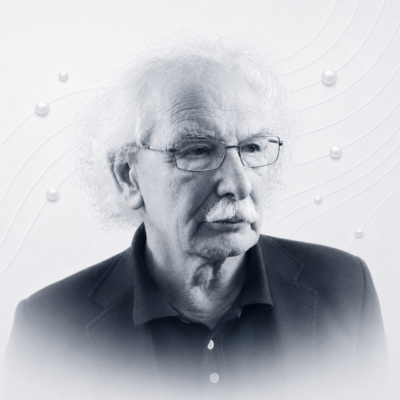
Francesca Cacucci on hippocampus development and grid cells
Episode 6 15.03.2018
-
 play_arrow
PLAY EPISODE
Description arrow_drop_down

Description
Why do grid cells, the brain’s metric system for space, appear last in development, days after place cells and head direction cells are already active? Neuroscientist Francesca Cacucci explains what the developmental sequence of spatial circuits in the rat hippocampus reveals about how the navigation system bootstraps itself, and why the sudden emergence of grid cells around postnatal day 20 may mark a genuine cognitive transition. Subscribe for more from the Convergent Science Network podcast series. Francesca Cacucci joins Paul Verschure and Tony Prescott at the BCBT summer school to discuss her research on the development of spatial representations in the rat hippocampus and entorhinal cortex. Her laboratory has documented a clear developmental timeline: head direction cells appear first, as early as postnatal day 12–13, providing a compass signal before the eyes even open. Place-like responses emerge gradually from around postnatal day 16, initially broad and concentrated near environmental boundaries. Grid cells then appear abruptly around postnatal day 20 , coinciding with the onset of organized exploratory behavior and the age at which rats first succeed on hippocampal-dependent spatial tasks. The discussion challenges the original assumption that grid cells are the primary input driving place cell formation. Since place-like responses precede grid cells developmentally, Cacucci proposes that early place responses are broad associative responses combining head direction signals with boundary features, and that grid cells provide the metric sharpening needed to refine these into precise spatial representations. This is supported by evidence that when grid cells are pharmacologically disrupted in adults, new place fields in novel environments revert to boundary-anchored, broad responses , exactly what is seen in pre-grid-cell pups. The conversation explores parallels with human cognitive development, including the relationship to Piaget’s stage theory and the surprising evidence that allocentric spatial processing may be the default mode across cultures rather than egocentric processing. Cacucci argues that development is not merely gradual refinement but includes sudden transitions , and understanding what triggers these transitions at the neural level is one of the field’s most important open questions. She advocates for moving spatial neuroscience out of featureless laboratory boxes and into more naturalistic environments. Key topics include the developmental sequence of spatial cell types, the relationship between grid cells and exploratory behavior, attractor network models versus oscillatory models, why head direction cells precede all other spatial signals, and what comparative and cross-cultural evidence tells us about the evolution of spatial cognition. Part of the Convergent Science Network podcast series from the BCBT Summer School.
Tagged as:
Around Postnatal Direction Cells grid cells Head Direction hippocampus development Spatial
About the author call_made
CSN Podcasts
Both the triumphs of humanity and its most evil deeds have resulted from collaboration. In a time where humanity is required to aspire to the former and minimize the latter, the question arises of how collaboration arises and why it fails. Surprisingly, this phenomenon, so central to who we are, is not well understood. Hence, a collaborative effort is required to understand collaboration in its full biological, psychological, sociological, cultural, and economic complexity and to translate this understanding into operational impact. This series of podcasts is one step toward achieving these complementary goals. The Collaboration Podcast presents interviews with people who are central orchestrators of collaboration in various domains including business, government, science, art, health, sustainability, and the military. The discussions were conducted by Prof. Dr. Paul F.M.J. Verschure and members of the Program Advisory Committee of the Ernst Strungmann Forum on Collaboration (https://www.esforum.de/forums/ESF32_Collaboration.html) during 2021 and had the goal to sketch a map of opportunities, challenges, and obstacles in human collaboration. The forum took place in May 2022, and now we would like to share this series of interviews with a broader audience. The full report of the Forum will be published in 2023 by MIT Press. The podcast was produced by the Convergent Science Network (https://www.convergentsciencenetwork.org/). Context: The stability of social systems depends critically on realizing sustainable methods of “collaboration,” yet how and by which means collaboration is achieved is not clearly understood; neither are the conditions or processes that lead to its breakdown or failure. Collaboration can be understood as cooperation between agents toward mutually constructed goals. Part of the reason for our lack of understanding is that the phenomenon of collaboration is, by nature, a highly multidisciplinary problem, and effective research into its complexities has been difficult to achieve across the broad range of scientific and technical disciplines involved. The need for a fundamental understanding of collaboration, however, has become increasingly important. Not only does humankind demand answers as it attempts to address critical challenges at multiple scales (e.g., climate change, migration, enhanced automation, social and economic inequality), but ever-increasing technological and economic means of interconnecting people and societies are disrupting long-established, familiar patterns of how we interact. Radical technological changes that are ongoing have the potential to reshape collaboration in ways that are currently hard to predict or influence (e.g., by altering configurations in interaction, information creation, and modes of communication). On one hand, such changes could disrupt hitherto stable forms of collaboration by affecting critical communication channels and traditional roles, as can be observed in the rapidly changing patterns in governance, commerce, and social interaction. Conversely, technology could lead to the emergence of novel, successful forms of collaboration that deviate from traditional “hierarchical” architectures. Evidence of this can be seen in areas as diverse as highly automated manufacturing plants, the open science movement, collaborative software repositories, user-centered services, and the sharing of economy-based modes of organization. Without a fundamental understanding of the mechanisms, processes, and boundary conditions of collaboration, it is not possible to evaluate or predict which of these possible scenarios are sustainable or even plausible. The Forum “How Collaboration Arises and Why it Fails” (May 8–13, 2022, Location: Frankfurt am Main, Germany) Chairs: Andreas Roepstorff and Paul Verschure Program Advisory Committee: Jenna Bednar, Julia R. Lupp, Bhavani R. Rao , Andreas Roepstorff, Ferdinand von Siemens, and Paul Verschure
Episodes

play_arrow

play_arrow
play_arrow

play_arrow
Timestamp
- fast_forward00:00:03 - This is the Convergent Science Network podcast. Leading researchers in the domain
- fast_forward00:00:10 - of neuroscience, brain theory and technology are interviewed by Paul Verschur and Tony Prescott.
- fast_forward00:00:20 - This is Paul Verschur, Convergent Science Network podcast together with Tony Prescott.
- fast_forward00:00:27 - And we're here with Francesca Caccucci.
- fast_forward00:00:30 - Who was speaking today about her work on the development of the hippocampus.
- fast_forward00:00:37 - Where actually you gave a great overview of how we can think these hippocampal
- fast_forward00:00:42 - circuits to develop in the rat.
- fast_forward00:00:46 - But if we now look at this system from a developmental perspective,
- fast_forward00:00:50 - what are the key features we want to understand?
- fast_forward00:00:54 - Okay, so what motivated me to start looking at the development of the spatial
- fast_forward00:01:00 - signals in the hippocampus.
- fast_forward00:01:02 - So try and understand a bit about the interrelationships and the relationships
- fast_forward00:01:07 - between the different components of the spatial system.
- fast_forward00:01:10 - So we know about place cells that encode location.
- fast_forward00:01:13 - We know about head direction cells, which give a sense of direction.
- fast_forward00:01:17 - And we know about grid cells, which may encode distance traveled.
- fast_forward00:01:21 - But what we didn't know, and we still, I argue, don't know, is how much they
- fast_forward00:01:27 - interact, these three components, in order
- fast_forward00:01:30 - to give a complete percept and representation of a low-centric space.
- fast_forward00:01:35 - And also, not only the interactions, but also how they are actually,
- fast_forward00:01:42 - what kind of signals feed into these single representations to give rise to these complex signals.
- fast_forward00:01:49 - Okay, so to anchor that, you also defined if you want a working hypothesis on function, right?
- fast_forward00:01:56 - So you emphasize very much this notion of episodic memory as a key function of the hippocampus.
- fast_forward00:02:04 - But how should we think about that in terms of a rat?
- fast_forward00:02:07 - I mean, because also the paradigms we're going to discuss, do you feel that
- fast_forward00:02:12 - these really uniquely probe this sort of rat construct of episodic memory or
- fast_forward00:02:17 - are we actually looking at something else?
- fast_forward00:02:18 - Okay, so my work doesn't speak at all towards episodic memory development or otherwise.
- fast_forward00:02:25 - And episodic memory, as I mentioned in the lecture, is very difficult to probe
- fast_forward00:02:29 - outside the human domain. Okay, so there have been notable exceptions.
- fast_forward00:02:37 - So Richard Morris has looked at this, Nicky Clayton has looked at episodic memories.
- fast_forward00:02:41 - Memory in animals, but it's difficult to do so because most of what we understand
- fast_forward00:02:48 - about episodic memory can be understood from verbal reports.
- fast_forward00:02:54 - So even when you ask humans about their episodic memories, that's already fraught with difficulties.
- fast_forward00:03:01 - So my work doesn't speak towards the development of episodic memory because
- fast_forward00:03:08 - I think it's too difficult in the animal model.
- fast_forward00:03:12 - And that's why what I talked about was more about the associative properties
- fast_forward00:03:16 - of memory in hippocampal circuits, and I stayed away from the episodic kind of specific.
- fast_forward00:03:24 - Specific but then so you gave us
- fast_forward00:03:27 - as a starting point an overview of the developmental trajectory
- fast_forward00:03:30 - of rats right where so in
- fast_forward00:03:33 - this development of of the rat pup to become an adult rat what do you see as
- fast_forward00:03:38 - the main steps that we should keep in mind when we now start to look at the
- fast_forward00:03:42 - development of these circuits okay so what is surprising to me so first of all
- fast_forward00:03:47 - as i said the rats are developing develop slowly like human infants so they
- fast_forward00:03:51 - go through certain steps that
- fast_forward00:03:53 - kind of are paralleled by human infants,
- fast_forward00:03:56 - both in terms of sensory and motor development.
- fast_forward00:03:59 - But what is interesting for me in terms of development are when you start seeing
- fast_forward00:04:04 - sudden transition in development,
- fast_forward00:04:06 - because development can be thought of a kind of successive refinement of,
- fast_forward00:04:12 - I don't know, sensory information or motor planning and execution,
- fast_forward00:04:17 - and that's kind of gradual generally.
- fast_forward00:04:19 - But then you see there are some things that happen during development and they happen.
- fast_forward00:04:26 - Quickly, sudden transitions. And one of them is the emergence of exploratory drive in the rat pup.
- fast_forward00:04:32 - And this was studied by Linna Dell, amongst others.
- fast_forward00:04:36 - And it seems quite interesting that this spatial exploration drive emerges within
- fast_forward00:04:41 - each pup all of a sudden around when they are 19 or 20, 21 days old.
- fast_forward00:04:47 - And so why is it? What is the critical process that makes this transition happen?
- fast_forward00:04:51 - And another interesting and parallel transition we have found in our own work
- fast_forward00:04:55 - is the emergence of the grid cells, which is really kind of abrupt.
- fast_forward00:04:59 - Right. So what is the key ingredient that is missing up until,
- fast_forward00:05:04 - let's say, the animals are 20 or 21 days old, and that kicks in and makes this
- fast_forward00:05:08 - representation all of a sudden stable to the point and extent that you can see
- fast_forward00:05:12 - it, you can detect it, for example, for grid cells.
- fast_forward00:05:15 - But now, you talked about this analogy with human development,
- fast_forward00:05:20 - but it's like in humans, an order of magnitude slower, right?
- fast_forward00:05:23 - So what happens in days in the rat happens in years in humans.
- fast_forward00:05:27 - Yes, but also we have a different lifespan, of course.
- fast_forward00:05:31 - But from that perspective, you would say they're still the same maturational
- fast_forward00:05:36 - processes. Humans are just slower.
- fast_forward00:05:40 - Possibly, yes. And also there is in terms of the parallel between brain maturity
- fast_forward00:05:44 - at birth in the human versus the rodent is quite different.
- fast_forward00:05:50 - But again, drawing direct parallels is always a bit controversial and difficult to do.
- fast_forward00:05:55 - So I don't want to be… But for you, the main anchoring point is really this
- fast_forward00:05:59 - transition to exploration.
- fast_forward00:06:00 - That's really for you the main… I think that's quite important.
- fast_forward00:06:03 - I think the big difference between humans and rats is that we are born with
- fast_forward00:06:09 - our eyes open. Yes, absolutely.
- fast_forward00:06:13 - When they open their eyes, they're still not exploring very much rats,
- fast_forward00:06:17 - but they're just beginning to be able to move around outside the nest.
- fast_forward00:06:22 - So you have this cluster of sensory and motor systems which are allowing exploration,
- fast_forward00:06:30 - but they can begin to explore outside the nest from 10, 11 days later.
- fast_forward00:06:36 - Yes, it really depends on the environmental conditions. It doesn't sound like
- fast_forward00:06:38 - it's, I mean, the 19-year-old rat pup is really quite mature in its sensory and motor capability.
- fast_forward00:06:45 - Yes. So what I'd like to distinguish is between the emergence from the nest,
- fast_forward00:06:49 - so when they leave the nest for the first time, and if you make the environment
- fast_forward00:06:52 - very warm, for instance,
- fast_forward00:06:54 - you can get rats that come out of their huddle, their group of siblings,
- fast_forward00:06:59 - their nest, very early on.
- fast_forward00:07:01 - But in general, especially in the wild, it won't happen until they are even
- fast_forward00:07:05 - 25, 26, 27. seven days old.
- fast_forward00:07:09 - And one thing is just emerging from the nest. So this just coming out of the nest.
- fast_forward00:07:14 - And the other thing is organized behavior, exploratory behavior,
- fast_forward00:07:17 - which is this thing of systematically looking and orienting towards objects
- fast_forward00:07:22 - and things that are around and systematically sampling the environment.
- fast_forward00:07:26 - And that's what Nadel was looking at when he said that it tends to happen around
- fast_forward00:07:31 - when they are 19 to 20 days old.
- fast_forward00:07:33 - And these are laboratory razia, of course, that we're talking about.
- fast_forward00:07:36 - And that's always, we need to qualify this because we don't know what happens in the wild.
- fast_forward00:07:42 - And there is very little work, as far as I am aware of, in the wild.
- fast_forward00:07:48 - Yeah, we had a talk last week from Lea Krubitzer, who's actually doing some
- fast_forward00:07:53 - experiments with semi-wild rats, laboratory rats that have been left in a wild
- fast_forward00:07:59 - place and exhibiting behaviors.
- fast_forward00:08:01 - So it might be interesting for you to follow what she's doing. Yeah.
- fast_forward00:08:05 - This is exactly the kind of work that I'm very interested in.
- fast_forward00:08:08 - Tell me, so we see a correlation and we can look now at the emergence of direction cells, play cells,
- fast_forward00:08:16 - and then grid cells, and see if we can correlate that with these behavioral
- fast_forward00:08:23 - transitions in the developing rat.
- fast_forward00:08:26 - What you showed us is that direction cells are there all along this postnatal
- fast_forward00:08:32 - day 16 and until the rat decides to step out of life.
- fast_forward00:08:36 - Even before, even when they are 12 or 13 days old. Right, so they're really
- fast_forward00:08:40 - the earliest ones. Yeah.
- fast_forward00:08:42 - Then you suggested play cells emerge gradually in that period,
- fast_forward00:08:47 - while the grid cells would then emerge very rapidly around postnatal 20, more or less.
- fast_forward00:08:57 - And that seems to align rather nicely with this exploration behavior.
- fast_forward00:09:02 - So do you really see those as coupled?
- fast_forward00:09:05 - Yeah, but I can only speculate. Yes, it's tantalizing this kind of temporal
- fast_forward00:09:10 - coincidence between the emergence of stable grid cells and the emergence of
- fast_forward00:09:16 - all the kind of both the exploratory, so natural drive towards exploration,
- fast_forward00:09:20 - but also when you test animals on hippocampal dependent tasks that you know
- fast_forward00:09:24 - they're hippocampal dependent in the adult animals,
- fast_forward00:09:27 - the pups can start solving this task only from weaning onwards,
- fast_forward00:09:30 - which is the time when we start seeing these grid cells.
- fast_forward00:09:33 - So it is interesting that these things happen at the same time.
- fast_forward00:09:37 - But at the moment, we haven't done the experiment where you either delay the
- fast_forward00:09:41 - emergence of stable grid cells and you see what happens to the emergence of navigation behavior.
- fast_forward00:09:48 - So until you do the intervention of the experiment, you cannot...
- fast_forward00:09:50 - It's just a correlation.
- fast_forward00:09:51 - It's an interesting kind of... But now do you see these transitions as also
- fast_forward00:09:55 - sort of reflecting the kind of stage-wise transitions that developmental psychologists
- fast_forward00:10:01 - have observed in humans?
- fast_forward00:10:03 - That's a difficult question. So which kind of stage-wise transition?
- fast_forward00:10:07 - Jean Piaget would argue, well, at certain ages, you are not able to perform logical operations.
- fast_forward00:10:13 - Yeah, yeah, yeah. Jean Piaget had, specifically for the special domain,
- fast_forward00:10:19 - he thought that children were, how do you say, trapped into egocentrism,
- fast_forward00:10:26 - so egocentric processing until they were very old, 10, 12 days old, years old, sorry.
- fast_forward00:10:33 - Stuck with my rats. But okay, so for Piaget, human children were egocentric
- fast_forward00:10:39 - and stuck in egocentric processing until they are 10, 12 years old.
- fast_forward00:10:44 - But now we know that that's not the case.
- fast_forward00:10:48 - It was the procedure that he was employing, testing these children.
- fast_forward00:10:52 - But the one thing that stands... What's interesting is that both in terms of for human development,
- fast_forward00:10:59 - studies on human development and also cross-cultural development,
- fast_forward00:11:02 - and comparative development seem to suggest that the default processing of spatial relationships.
- fast_forward00:11:11 - Are allocentric.
- fast_forward00:11:13 - This is the default. It's not egocentric. And this is a huge revolution in the
- fast_forward00:11:17 - kind of thinking about how space is processed generally.
- fast_forward00:11:21 - Because from our perspective of Westerners, it seems natural and intuitive that
- fast_forward00:11:27 - when we discuss space, we discuss it with reference to our location and our
- fast_forward00:11:32 - body in egocentric coordinates.
- fast_forward00:11:34 - But that's possibly because our languages trap us into thinking about space
- fast_forward00:11:40 - in egocentric coordinates mainly.
- fast_forward00:11:42 - If you go and look at other cultures where their language, they talk about,
- fast_forward00:11:48 - okay, where is the water well?
- fast_forward00:11:49 - It's north or northwest, as opposed to say it's in front of you and to the left,
- fast_forward00:11:55 - just take three steps in front of you and then two to the left.
- fast_forward00:11:59 - Then in those cultures, you see that spaces and spatial relations are processed
- fast_forward00:12:06 - allocentrically from the word go. So that's quite interesting.
- fast_forward00:12:12 - Absolutely, because it would also suggest that maybe to get to egocentric declaration
- fast_forward00:12:17 - of spatial relations might be a larger cognitive operation than the allocentric one. Yes, absolutely.
- fast_forward00:12:23 - And it would then oppose Jean Piaget's idea. Absolutely.
- fast_forward00:12:28 - You could argue, well, Jean-Pierre was wrong about many things,
- fast_forward00:12:30 - but that's easy to say afterwards because the big insight was still that these
- fast_forward00:12:35 - qualitative changes and these rapid transitions.
- fast_forward00:12:37 - And so if the rat pup moves into exploration mode on P20, is that for you then
- fast_forward00:12:44 - the rat signature of a transition,
- fast_forward00:12:47 - a cognitive transition and an operational capability of such a rat comparable
- fast_forward00:12:52 - to those of Jean-Pierre?
- fast_forward00:12:54 - Yes. So the idea of the sudden transition is still there.
- fast_forward00:12:58 - And that's what I want to draw the attention on. Yes, that development is not
- fast_forward00:13:01 - just about cumulative, monotonic, incremental, and gradual change.
- fast_forward00:13:07 - There are also these transitions. And what we don't know, we don't have a good
- fast_forward00:13:12 - handle at the neural level on what these transitions are caused by.
- fast_forward00:13:16 - So, for instance, the emergence of grid cells around 20 days old,
- fast_forward00:13:19 - when the animals are 20 days old. I don't think the grid cells are not there.
- fast_forward00:13:22 - The network is there. It's just that all of a sudden it can be anchored to the
- fast_forward00:13:27 - outside, to the cues, and therefore appears stable to us and we can detect it.
- fast_forward00:13:33 - But what we've seen, for instance, for head direction cells,
- fast_forward00:13:35 - these representations are there but they are drifting, they're unanchored from
- fast_forward00:13:39 - the frame of reference of the laboratory, and so we cannot see them as directional cells.
- fast_forward00:13:46 - I just wanted to defend Jean Piaget because his experiment, I don't think it
- fast_forward00:13:52 - was wrong, but he provided a particular tough test of alicentric,
- fast_forward00:13:57 - which was his mountain test.
- fast_forward00:13:59 - You had to imagine what the mountain looked like to an observer from the other side.
- fast_forward00:14:06 - Similar tests have been done in younger children, or I think easier tests in some ways.
- fast_forward00:14:13 - But there's a lot of data that...
- fast_forward00:14:17 - Children find it very hard to put themselves into the shoes of another person.
- fast_forward00:14:21 - Yeah, you need to make it theologically relevant to the child.
- fast_forward00:14:24 - But also, I think there's three different perspectives we have to think about here.
- fast_forward00:14:28 - There's the allocentric view, there's my egocentric view, and then there's my
- fast_forward00:14:33 - ability to think about your egocentric view.
- fast_forward00:14:36 - And then when we're thinking about child development, then people do talk a
- fast_forward00:14:42 - lot about a significant step towards theory of mind to be able to take somebody
- fast_forward00:14:47 - else's point of view. Absolutely.
- fast_forward00:14:48 - And not just theory of mind, but also just the processing of the language when
- fast_forward00:14:51 - you ask a child to put themselves in the shoes of another person.
- fast_forward00:14:55 - So how do you ask the question?
- fast_forward00:14:57 - So if you say to the child, okay, what does the word look like to the doll?
- fast_forward00:15:03 - It's a difficult, linguistically, it's a difficult statement.
- fast_forward00:15:07 - So it's very hard to perform these tasks and these experiments.
- fast_forward00:15:12 - I wasn't blaming Piaget. I'm just saying it was, yeah, it's one of these things
- fast_forward00:15:16 - where you run an experiment and you think that the conclusion is sound and then
- fast_forward00:15:20 - you realize that there was an artifact.
- fast_forward00:15:24 - Now, probably it was me saying something that got up Tony's nose.
- fast_forward00:15:27 - No, no, no, okay, okay. No, but in any case, so the important thing is that,
- fast_forward00:15:30 - again, we put our rats, which are already born in the laboratory,
- fast_forward00:15:34 - grown in the laboratory, in these kind of boxes, okay, featureless boxes.
- fast_forward00:15:39 - And I think we need to stop doing that because the world is not a featureless
- fast_forward00:15:42 - box. So we're doing the same thing as Piaget in a sense now.
- fast_forward00:15:45 - We need to introduce things into the boxes and we need to make this field of
- fast_forward00:15:51 - studying spatial navigation circuits more akin to a naturalistic.
- fast_forward00:15:57 - So we need to interrogate the circuits in more naturalistic environments.
- fast_forward00:16:03 - Sure.
- fast_forward00:16:04 - In your early experiments on these developing spatial cognition circuits that
- fast_forward00:16:09 - we could see as a red analog of cognitive development, there were a number of surprises.
- fast_forward00:16:14 - And we should now inspect those to see whether they really were surprises or actually not.
- fast_forward00:16:20 - So one surprise was that the play cells or something you could call play cell
- fast_forward00:16:26 - responses in hippocampus seemed to emerge already at around postnatal 16 before
- fast_forward00:16:33 - the grid cells emerged postnatal 20. Okay.
- fast_forward00:16:37 - So why was that such a big surprise to you at the time?
- fast_forward00:16:41 - At the time it was an incredible surprise, yes. And that's what made the paper
- fast_forward00:16:46 - become a science paper at the time because people were surprised.
- fast_forward00:16:50 - Because we were just five years from the discovery of grid cells,
- fast_forward00:16:53 - which were discovered in the entorhinal cortex.
- fast_forward00:16:56 - Everybody thought of the grid cells as being at the input, lying at the input
- fast_forward00:17:00 - end of the hippocampus, where you find place cells.
- fast_forward00:17:03 - And it's very easy by summing grid cells to obtain place cells.
- fast_forward00:17:10 - So everybody was thinking that that was the way in which the information was flowing.
- fast_forward00:17:14 - And so seeing that at least during development, and this equation didn't add
- fast_forward00:17:18 - up, then it was surprising.
- fast_forward00:17:20 - Now we know that, of course, with benefit of hindsight, things are never as
- fast_forward00:17:25 - easy as they seem. Okay? Right.
- fast_forward00:17:28 - But on the other hand, we could also argue that the place cells you observe.
- fast_forward00:17:33 - In these early days from P16, P20, so if I'm sort of.
- fast_forward00:17:40 - Putting myself in Tony's egocentric perspective, I could say they don't really
- fast_forward00:17:43 - look like place cells because, you know, they're close to the borders.
- fast_forward00:17:47 - You don't see any response that looks place cell-like in the center.
- fast_forward00:17:51 - The response fields are really very broad.
- fast_forward00:17:54 - They might be orientation invariant. Okay, I give you that. But that's already something, right?
- fast_forward00:18:02 - But it's about it. Yeah, that's about it. But then we need to ask ourselves,
- fast_forward00:18:06 - and these are very important questions, by the way.
- fast_forward00:18:08 - What is a place cell okay what are
- fast_forward00:18:11 - the fundamental characteristics that a
- fast_forward00:18:14 - neural signature needs to display in order
- fast_forward00:18:17 - to be called a place cell a place response exactly and that's very important
- fast_forward00:18:21 - this is a very important question because we see place cells cropping up everywhere
- fast_forward00:18:25 - in the brain you throw an electrode wherever you want and you can find place
- fast_forward00:18:28 - cells nowadays so so what is a place cell and i agree with you that it's not
- fast_forward00:18:33 - just looking at blobs on maps colorful or full blobs,
- fast_forward00:18:37 - we need to understand whether these responses are truly allocentric in the sense that they are.
- fast_forward00:18:44 - So what are the main characteristics of what they place there?
- fast_forward00:18:46 - First of all, that they need to be invariant to directionality.
- fast_forward00:18:49 - And that seems to be the case in the young pups place cells,
- fast_forward00:18:54 - but also that they need to be the result of integrating different cues,
- fast_forward00:19:02 - so responding to different cues.
- fast_forward00:19:03 - So when you do the Q subtraction experiment, you take away one by one the different
- fast_forward00:19:07 - bits of the laboratory that you might think are used, then the place cell must
- fast_forward00:19:12 - remain, the midplace field must remain.
- fast_forward00:19:14 - So that's another kind of litmus test. But what we could argue,
- fast_forward00:19:18 - if you look at the place cell response, is that initially what you have is just
- fast_forward00:19:23 - a broad associative response to head direction cells and some sensory features.
- fast_forward00:19:29 - And the most prominent sensory features in these empty boxes in which you put
- fast_forward00:19:33 - these pups are just surfaces.
- fast_forward00:19:35 - Yes, indeed. Indeed. And that gives you broad associative responses,
- fast_forward00:19:39 - but we can only call it a place cell if we have really this much higher acuity
- fast_forward00:19:45 - in space, much higher localization in space.
- fast_forward00:19:50 - And for that, to reach that stage, you do need the grid cells.
- fast_forward00:19:54 - But I'm not sure about that.
- fast_forward00:19:56 - No, I'm just teasing you with this idea. No, no, no. I'm not sure about that
- fast_forward00:19:59 - because I think in terms of spatial information, having larger or smaller place
- fast_forward00:20:05 - fields doesn't matter. Really doesn't matter.
- fast_forward00:20:08 - I mean, as long as if you have a kind of population code.
- fast_forward00:20:12 - If you have enough of them, you're fine. Yeah, exactly. And that's what we think
- fast_forward00:20:14 - the system might be working. But then you turn the argument around a little
- fast_forward00:20:18 - bit because I thought we were defining place cells on the basis of physiological
- fast_forward00:20:22 - characteristics and behavioral characteristics, not computational ones, right?
- fast_forward00:20:26 - Because we're saying, well, there must be a certain specificity in space and
- fast_forward00:20:30 - there must be a certain invariance to the orientation in which you enter that
- fast_forward00:20:34 - location in space, right?
- fast_forward00:20:35 - So the claim I was making is that…,
- fast_forward00:20:38 - the play cells are formed on the basis of an associative reaction to having
- fast_forward00:20:45 - heading direction and visual features. And this gives you the broad response.
- fast_forward00:20:49 - And what do you think is the extra ingredient? The spatial information coming from the grid cells.
- fast_forward00:20:56 - Okay. So in that story, it's still the grid cells as a necessary requirement
- fast_forward00:21:00 - to sharpen this broad associative response that's only combining features that are around.
- fast_forward00:21:07 - But then when in the adult, you switch off the grid cells pharmacologically,
- fast_forward00:21:12 - you don't see this massive broadening of the place cells that you would expect
- fast_forward00:21:17 - according to this theory.
- fast_forward00:21:19 - No, I can escape from that. I can wiggle my way out of that.
- fast_forward00:21:23 - Okay, okay. Tell me, tell me. That's memory.
- fast_forward00:21:26 - Okay. Now I formed a memory, so I have a strongly ingrained acquired response in my place cell.
- fast_forward00:21:33 - But to sharpen it up, that's where I need my grid cells.
- fast_forward00:21:38 - Well, yes, while I think that, and indeed, and that's why I mentioned the work,
- fast_forward00:21:43 - I think, from Pastrakova's lab about when you switch off the septum with muscimol,
- fast_forward00:21:50 - so you switch off theta and you get rid of the grid cells.
- fast_forward00:21:53 - And if you look at place cell formation in novel environments,
- fast_forward00:21:57 - that tend to happen against the edges of the environment again.
- fast_forward00:22:02 - So, yes, there is definitely something that grid cells confer to the place cell
- fast_forward00:22:06 - maps, but I don't think it's spatial information specifically.
- fast_forward00:22:10 - It's more… It's a sharpening. That's what I'm saying. It's a sharpening of the tuning.
- fast_forward00:22:14 - Yes, but it's selectively when you don't have enough features,
- fast_forward00:22:17 - so you don't have enough precision about the sensory cues because when you are
- fast_forward00:22:20 - away from this… That's exactly the point. Okay, so we're talking about the same
- fast_forward00:22:23 - thing. So, okay, so we are agreeing.
- fast_forward00:22:25 - But what I'm playing with is this idea like, oh, panic, grid cells after place cells.
- fast_forward00:22:31 - But what I'm saying is maybe before the grid cells emerge,
- fast_forward00:22:35 - emerge those cells that will become play cells
- fast_forward00:22:38 - have a broad associative response and then they require the sharpening
- fast_forward00:22:41 - from the grid cells and then they pop out as places this is
- fast_forward00:22:43 - what yes yes and the question is if you were to take away the grid set so what
- fast_forward00:22:47 - what interests me about the grid cells is you take away the grid says what is
- fast_forward00:22:51 - it that the animal cannot do anymore because it doesn't have grid so what is
- fast_forward00:22:55 - the the kind of advantage of having having evolved such a system them.
- fast_forward00:23:00 - And I think that's the real, yeah.
- fast_forward00:23:02 - So Edvard Moser was talking about an experiment in which they put developing
- fast_forward00:23:07 - rats in a spherical container where you didn't really see the walls and compared
- fast_forward00:23:13 - it with an enriched environment and a simple square environment.
- fast_forward00:23:17 - And in the sphere, the rats didn't develop grid cells.
- fast_forward00:23:22 - It took a week or so. You had to then put them into... So, I mean,
- fast_forward00:23:26 - but perhaps the rat pups are in a similar situation that, you know,
- fast_forward00:23:31 - they are in these huddles...
- fast_forward00:23:34 - All the stimulation is kind of, it's very proximal rather than distal.
- fast_forward00:23:38 - You know, what you care about is being close to your siblings who were warm,
- fast_forward00:23:43 - you know, getting nutrition from the mother.
- fast_forward00:23:45 - So you really don't need to know where you are. And it's not until you get out
- fast_forward00:23:48 - and you start exploring.
- fast_forward00:23:49 - But then the puzzle is, why is it that if we think that what grid cells are
- fast_forward00:23:53 - doing is linear integration, so telling you how far you've moved,
- fast_forward00:23:57 - let's say, let's say that you're thinking that that's one of the functions of
- fast_forward00:24:01 - grid cells, you may think that rat pups don't need to do that.
- fast_forward00:24:04 - But then why do they do this wonderful angular integration?
- fast_forward00:24:07 - Why is it that we get head direction cells?
- fast_forward00:24:09 - It's just... They must be able to get home. They do lots of orienting.
- fast_forward00:24:12 - They must get home, you know?
- fast_forward00:24:14 - Well, they need to be able to... But they can do this completely on the basis
- fast_forward00:24:16 - of chemotaxis, maybe, against men. Maybe, you say.
- fast_forward00:24:20 - Maybe it's the operational term. But maybe the difference is that the grid cells have to be learned.
- fast_forward00:24:26 - Yes, so that's it. So why is it that you need to learn about the grid cells
- fast_forward00:24:30 - and not about the head direction cells or the place cells?
- fast_forward00:24:33 - So these are the questions that I'm interested in. But the point I would be
- fast_forward00:24:37 - making is that perhaps if the experience of the rat pod is different,
- fast_forward00:24:42 - then you could shift the developmental timetable and maybe bring it forward.
- fast_forward00:24:46 - Or as an adverse case, you delay it. Yes.
- fast_forward00:24:49 - But it would be interesting to do it the other way. I don't know if anyone's
- fast_forward00:24:51 - tried to bring it forward.
- fast_forward00:24:52 - Yes. I don't think we have successfully done so.
- fast_forward00:24:55 - But also, Tony, from a comparative perspective, we could argue,
- fast_forward00:24:59 - Look, if we go to species that were on this planet before rats emerged or mammals
- fast_forward00:25:04 - in general, or that will still be there also when mammals disappear,
- fast_forward00:25:08 - thanks to us, they use….
- fast_forward00:25:13 - They do build heading vectors like ants, like desert ants, right?
- fast_forward00:25:16 - They build these heading vectors to find the home position.
- fast_forward00:25:19 - And they just essentially have like an attractor-like integrator that helps
- fast_forward00:25:23 - them just to have this big vector that always helps them to get home.
- fast_forward00:25:26 - Why not generalize that now to your rat pup? But we say, well,
- fast_forward00:25:29 - they use heading direction to have always this big home vector that says,
- fast_forward00:25:35 - not in the simple box in the lab, but if I'm in the wild, in complex environments
- fast_forward00:25:40 - with obstacles, whatever,
- fast_forward00:25:41 - I always know where home is, right?
- fast_forward00:25:43 - Without chemical cues. So that's why that will be more fundamental, right?
- fast_forward00:25:47 - And then I build the rest of the system on that initially through association.
- fast_forward00:25:50 - But then we come back to your question, which we actually should look at after
- fast_forward00:25:55 - we look at a bit more data, but time is running short.
- fast_forward00:25:59 - And you have to follow your homing vector. Yes. Okay.
- fast_forward00:26:03 - Why would we then have the grid cells? And the thing there is the grid cells
- fast_forward00:26:07 - give you a highly accurate metric representation.
- fast_forward00:26:12 - It tells you the direction you're moving into.
- fast_forward00:26:15 - It tells you something about the spatial relations in your environment.
- fast_forward00:26:18 - Grid cells have more spatial information overall than place cells.
- fast_forward00:26:22 - But you have to this works
- fast_forward00:26:25 - because it's a tractor network that follows a certain
- fast_forward00:26:28 - topology the connections in that system have to follow a
- fast_forward00:26:31 - certain topology for this to work and they need to be set up it must
- fast_forward00:26:34 - be a twistotaurus topology otherwise it's not
- fast_forward00:26:37 - going to work from a connectivity perspective so the argument could be look
- fast_forward00:26:41 - I first need to have a heading direction system and some sort of rough space
- fast_forward00:26:46 - estimation using my associative pre-play cells to have a scaffold in which I
- fast_forward00:26:52 - can now fine-tune my grid cells. Once I did that,
- fast_forward00:26:56 - Now I have my metric system. Now I can find you. So I can bootstrap now my play cells. Yes.
- fast_forward00:27:00 - Because now I have my metric system, right? So what's wrong with that story?
- fast_forward00:27:04 - No, no, there is no, nothing is wrong with the story.
- fast_forward00:27:07 - The only problem is that we are done, but we need to prove it.
- fast_forward00:27:11 - We need to prove it. Okay, how are you going to prove that? Tell me.
- fast_forward00:27:14 - I don't know if I'm going to prove it. Why not?
- fast_forward00:27:17 - But what we need to do as collectively as a field, we need to really try and
- fast_forward00:27:22 - understand what this wonderful grid cells that we all love are,
- fast_forward00:27:25 - what kind of advantage they are conferring.
- fast_forward00:27:29 - Okay? So we need to design tasks, and these are behavioral tasks that tap really
- fast_forward00:27:34 - into these properties that we think grid cells.
- fast_forward00:27:37 - Yeah, but look, the tasks that you use, like these empty boxes.
- fast_forward00:27:41 - No, no, I mean a behavioral task. Of course. I'm not doing that,
- fast_forward00:27:43 - yes. No, but right now, right now we make all our inferences,
- fast_forward00:27:47 - or most of our inferences on
- fast_forward00:27:48 - this system, using tasks that sort of natural rats are never exposed to.
- fast_forward00:27:54 - Yeah, absolutely. Isn't that a big distorting factor?
- fast_forward00:27:57 - Absolutely. Yes, it is. And that's why I was saying that we need to start making
- fast_forward00:28:02 - these recordings in more naturalistic environments.
- fast_forward00:28:05 - So I know that Edward has talked about object vector cells. So you start seeing
- fast_forward00:28:09 - new things when you insert objects all of a sudden in these fissureless environments.
- fast_forward00:28:13 - These cells akin to this were discovered also by Nierim, Jim Nierim, quite a while ago.
- fast_forward00:28:19 - So it is important for our field to move away from featureless boxes,
- fast_forward00:28:23 - which were introduced for a very good reason by Bob Muller many years ago.
- fast_forward00:28:27 - Because at the beginning, when John O'Keefe started his studies,
- fast_forward00:28:31 - he worked with very complex mazes.
- fast_forward00:28:33 - And that brought lots of complexity. And it was very difficult to understand
- fast_forward00:28:37 - what the basic phenomenon of place cell or place field was. now we can go back
- fast_forward00:28:41 - to it now that the basics have been so what's the next environment you want to see in the lab
- fast_forward00:28:47 - For me, I want to see a barrel system for the development.
- fast_forward00:28:51 - That's what I want to see. Might be a bit difficult with the electrodes.
- fast_forward00:28:55 - Yes, but we have wireless technology.
- fast_forward00:28:56 - Of course. So that's the thing. Especially in science, yes, that's what we're doing.
- fast_forward00:29:01 - Especially in science, there is the technological advancement that allows you
- fast_forward00:29:04 - to ask the questions that you really wanted to ask. And then you move on and you move on. Of course.
- fast_forward00:29:09 - That's really fantastic. Fantastic. But now, to what extent have you been able
- fast_forward00:29:12 - to also generalize your insights in the system in the RAT to humans?
- fast_forward00:29:18 - Do you think it plays out the same way or is there a transition? Are humans different?
- fast_forward00:29:24 - No, humans are not different. We're just more vicious.
- fast_forward00:29:27 - But I think that now, joke aside, I think the fundamental principles will be very similar.
- fast_forward00:29:36 - And I don't know if we have any specific evolutionary niche that makes us peculiar
- fast_forward00:29:45 - or special in spatial processing. I don't think so.
- fast_forward00:29:49 - All right. But now one of the principles you pointed to was attractor networks,
- fast_forward00:29:54 - right? This notion of attractor.
- fast_forward00:29:56 - But do you think the notion of an attractor has been helpful in the study of this system?
- fast_forward00:30:03 - I think it has been incredibly helpful. Okay, why?
- fast_forward00:30:06 - Yes, because it has made us ask questions about how information is processed,
- fast_forward00:30:15 - encoded, and also stored,
- fast_forward00:30:17 - but also retrieved by the hippocampus in general.
- fast_forward00:30:22 - So I think that's very important. And specifically for the grid cell,
- fast_forward00:30:25 - kind of after the grid cell discovery,
- fast_forward00:30:27 - it was very interesting to see that these two camps of the oscillatory model
- fast_forward00:30:31 - versus the attractor, model of how these grid cells could emerge and now we
- fast_forward00:30:37 - see a convergence between these two models.
- fast_forward00:30:40 - So I think historically as well it's been an interesting journey.
- fast_forward00:30:43 - I thought the interference models are just invalid.
- fast_forward00:30:45 - How do we see convergence of the two? Well, I'm sure you've done a podcast with
- fast_forward00:30:50 - Professor Neil Burgess who will have answered that question.
- fast_forward00:30:55 - But there's one thing we should worry about with these attractor models.
- fast_forward00:30:58 - Attractor models can almost never be wrong right because dependent even the
- fast_forward00:31:04 - interference models I could reinterpret as an attractor model because as long as you define you can,
- fast_forward00:31:12 - arbitrarily define states in the state space of your
- fast_forward00:31:15 - system and you can define the state space in such a dimensionality that you
- fast_forward00:31:19 - have stable states even if they're oscillatory it doesn't matter okay these
- fast_forward00:31:22 - are my attractor so certainly if you talk about memory since memory means there's
- fast_forward00:31:28 - a stability intrinsically it's It's sort of circular to then say, oh,
- fast_forward00:31:32 - an attractor network is fantastic to describe this, because all you're actually
- fast_forward00:31:36 - saying is there are stable points in a dynamical system.
- fast_forward00:31:41 - So shouldn't we then think beyond attractor models?
- fast_forward00:31:45 - Okay, so what would you suggest is a promising avenue to look at?
- fast_forward00:31:50 - One promising avenue might be maybe to bring in more of the specific physiological
- fast_forward00:31:54 - features that we know that this system shows. So attractor models also allow
- fast_forward00:32:00 - us to stick at a relatively abstract level.
- fast_forward00:32:03 - Where we do not necessarily take into account the huge heterogeneity,
- fast_forward00:32:07 - the modular organization, the specific anatomical topology. So let me tell you
- fast_forward00:32:09 - about the specific problem I have with attractor networks, for instance,
- fast_forward00:32:13 - for grid cells, overhead direction cells.
- fast_forward00:32:15 - In order to set them up, first of all, we don't know what kind of wiring really
- fast_forward00:32:19 - at the detailed level could support attractor network topology.
- fast_forward00:32:25 - And the real problem is that in order to set up such wiring,
- fast_forward00:32:30 - wiring you need to invoke quite complex developmental processes and so coming
- fast_forward00:32:35 - from development i want to know how you wire it up in the first place and so
- fast_forward00:32:40 - that's the other thing that people like myself and other people need to really
- fast_forward00:32:44 - work on right yeah absolutely so francesca um.
- fast_forward00:32:49 - So you're in this business for a while you're you're in a very
- fast_forward00:32:52 - rich also as you know rats in rich
- fast_forward00:32:55 - environments do great humans in rich environments do great
- fast_forward00:32:57 - as well you're in a a really rich scientific environment there at
- fast_forward00:33:01 - ucl working with great collaborators um so
- fast_forward00:33:05 - but now given your experience in
- fast_forward00:33:08 - the field what is francesca's law to study the brain what is francesca's law
- fast_forward00:33:13 - to study the brain yeah you got it okay francesca's law to study anything never
- fast_forward00:33:19 - mind the brain is to persist in the face of tragic failure and complete and utter continuous
- fast_forward00:33:26 - failure and persist and just be joyful about it and enthusiastic.
- fast_forward00:33:34 - That sounds more like an autobiographical note. Is that true?
- fast_forward00:33:38 - No, no, no, no, no. I think this is what motivates humans.
- fast_forward00:33:41 - Okay. And this is the positive side about being human, actually.
- fast_forward00:33:45 - Very good. Yeah. And then, okay, look, we're facing all sorts of problems now
- fast_forward00:33:50 - with international travel. Certainly soon I cannot go to UK anymore.
- fast_forward00:33:54 - Yes. Not only because… And Donald Trump is going to make all our boundary cells fire. Exactly.
- fast_forward00:34:00 - But we have an agent in the UK who we can send to your lab in five years from now.
- fast_forward00:34:06 - And that agent sits just next to you here at the other side of the table.
- fast_forward00:34:11 - That's a bit of a train ticket. And Tony is going to come visit your lab five
- fast_forward00:34:14 - years from now to check whether a prediction you made today was falsified or
- fast_forward00:34:18 - verified. So what's the one prediction you would like to see tested in a five-year framework?
- fast_forward00:34:23 - Okay, let me think. What's the five? Where would I?
- fast_forward00:34:28 - One prediction, five years to do it. Five years? That's what he's going to come.
- fast_forward00:34:33 - These tickets are expensive, you know, to save up.
- fast_forward00:34:40 - That hippocampus. I only have very long-term stuff that I'm interested in.
- fast_forward00:34:44 - What do you want, 10 years?
- fast_forward00:34:46 - No, I want like several lifetimes. I'm not sure Tony wants to wait that long.
- fast_forward00:34:52 - I really want to know whether the hippocampus is really just truly about space or not.
- fast_forward00:34:57 - And what about time and the other things?
- fast_forward00:35:01 - So in five years' time, you would like to see the hypothesis tested that hippocampus
- fast_forward00:35:06 - is about temporal processing?
- fast_forward00:35:07 - Yes, they're already starting to test it. But yes, yes, I'm interested in all
- fast_forward00:35:11 - these other things that hippocampus might be doing, yeah, coming out of the space box.
- fast_forward00:35:16 - All right, Francesca Cacucci, thank you very much for this conversation. Thank you. Thank you.
- fast_forward00:35:25 - The CSN podcast was produced by the Convergent Science Network of Biometrics
- fast_forward00:35:31 - and Biohybrid Systems, a project funded by the European Sevens Research Framework Program.
- fast_forward00:35:39 - For more interviews, recorded lectures, or upcoming conferences in the field
- fast_forward00:35:44 - of biomimetics and biohybrid systems go to csnnetwork.eu.
- fast_forward00:35:51 - Music.
Tags
Brain brain evolution Cerebellar cerebellum collaboration consciousness Cortex Cortical decision making disorders of consciousness Framework grid cells Memory mirror neurons Motor motor cortex neocortex Neural Neurons place cells Populations prediction prefrontal cortex Robots scientific collaboration Spatial

Exploring the convergence of neuroscience, robotics, and AI through conversations with leading researchers since 2010.
A project of the Convergent Science Network Foundation.
Follow us on
© CSN Podcasts. Developed by IMCreative & WEBC
Be the first to leave a comment