


play_arrow
Listeners:
Top listeners:
00:00
00:00
volume_up
chevron_left
-
 play_arrow
Paul Verschure on consciousness and distributed adaptive control CSN Podcasts
-
 play_arrow
Edvard Moser on grid cells and entorhinal cortex CSN Podcasts
-
 play_arrow
Giacomo Rizzolatti on mirror neurons and action understanding CSN Podcasts
-
 play_arrow
Robert Axelrod on game theory and prisoner's dilemma CSN Podcasts
-
 play_arrow
Adrian Owen on disorders of consciousness and vegetative state CSN Podcasts
-
 play_arrow
Jonathan Whitlock on markerless motion capture and posterior parietal cortex CSN Podcasts
-
 play_arrow
Luis Puelles on neuroanatomy and prosomeric model CSN Podcasts
-
 play_arrow
Zoltan Molnar on subplate neurons and cortical development CSN Podcasts

- arrow_back Home
- keyboard_arrow_right Podcast
- keyboard_arrow_right Season 2010
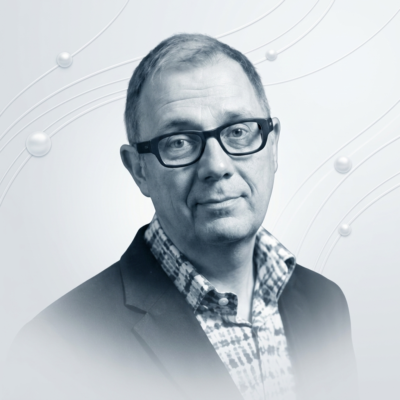
Adrian Owen on disorders of consciousness and vegetative state
Episode 7 08.03.2010
-
play_arrow
PLAY EPISODE
Description arrow_drop_down

Description
What if patients diagnosed as vegetative are actually conscious but trapped , unable to signal their awareness through any behavioral channel? Adrian Owen describes how fMRI and EEG are revealing hidden minds and opening new paths to communication. Subscribe for more from the Convergent Science Network podcast series. Adrian Owen’s research confronts one of the most unsettling problems in clinical neuroscience: the possibility that a significant minority of patients diagnosed as vegetative are in fact aware, experiencing the world much as we do, but completely unable to demonstrate it. Using fMRI, Owen and his team have identified patients who can reliably modulate their brain activity on command , imagining playing tennis to activate premotor cortex, or imagining navigating their home to activate parahippocampal regions , despite showing no behavioral signs of consciousness whatsoever. The breakthrough came with the realization that active imagery tasks, unlike passive sensory stimulation, cannot be performed automatically. When a healthy volunteer is told to imagine playing tennis and deliberately chooses not to, no premotor activation appears. This volitional quality is what distinguishes Owen’s paradigm from earlier fMRI studies that showed brain responses in vegetative patients but could not rule out reflexive processing. The tennis task proved remarkably robust , it works in every healthy subject tested, likely because any version of tennis involves vigorous arm movements that reliably engage premotor cortex, regardless of individual differences in how people imagine the game. Owen has since used this approach to establish yes-or-no communication with a patient previously assumed to be in a vegetative state. By assigning tennis imagery to “yes” and spatial navigation imagery to “no,” the patient answered autobiographical questions correctly, confirming not only awareness but access to long-term memory and language comprehension. The team is now working to transfer this technology from expensive, immobile fMRI scanners to portable EEG systems , a transition complicated by the fact that many of these patients have damaged or surgically altered skulls that disrupt standard EEG source localization. The conversation also probes deeper questions about the taxonomy of consciousness disorders. Owen suggests that the distinction between vegetative and minimally conscious states may be less about depth of consciousness and more about temporal intermittency , patients may cycle in and out of awareness rather than occupying a fixed intermediate state. He argues that the practical goal of building communication channels for non-responsive patients should take priority over philosophical debates about the nature of consciousness itself.
Tagged as:
consciousness Diagnosed Vegetative disorders of consciousness Patients Diagnosed Playing Tennis vegetative state
About the author call_made
CSN Podcasts
Both the triumphs of humanity and its most evil deeds have resulted from collaboration. In a time where humanity is required to aspire to the former and minimize the latter, the question arises of how collaboration arises and why it fails. Surprisingly, this phenomenon, so central to who we are, is not well understood. Hence, a collaborative effort is required to understand collaboration in its full biological, psychological, sociological, cultural, and economic complexity and to translate this understanding into operational impact. This series of podcasts is one step toward achieving these complementary goals. The Collaboration Podcast presents interviews with people who are central orchestrators of collaboration in various domains including business, government, science, art, health, sustainability, and the military. The discussions were conducted by Prof. Dr. Paul F.M.J. Verschure and members of the Program Advisory Committee of the Ernst Strungmann Forum on Collaboration (https://www.esforum.de/forums/ESF32_Collaboration.html) during 2021 and had the goal to sketch a map of opportunities, challenges, and obstacles in human collaboration. The forum took place in May 2022, and now we would like to share this series of interviews with a broader audience. The full report of the Forum will be published in 2023 by MIT Press. The podcast was produced by the Convergent Science Network (https://www.convergentsciencenetwork.org/). Context: The stability of social systems depends critically on realizing sustainable methods of “collaboration,” yet how and by which means collaboration is achieved is not clearly understood; neither are the conditions or processes that lead to its breakdown or failure. Collaboration can be understood as cooperation between agents toward mutually constructed goals. Part of the reason for our lack of understanding is that the phenomenon of collaboration is, by nature, a highly multidisciplinary problem, and effective research into its complexities has been difficult to achieve across the broad range of scientific and technical disciplines involved. The need for a fundamental understanding of collaboration, however, has become increasingly important. Not only does humankind demand answers as it attempts to address critical challenges at multiple scales (e.g., climate change, migration, enhanced automation, social and economic inequality), but ever-increasing technological and economic means of interconnecting people and societies are disrupting long-established, familiar patterns of how we interact. Radical technological changes that are ongoing have the potential to reshape collaboration in ways that are currently hard to predict or influence (e.g., by altering configurations in interaction, information creation, and modes of communication). On one hand, such changes could disrupt hitherto stable forms of collaboration by affecting critical communication channels and traditional roles, as can be observed in the rapidly changing patterns in governance, commerce, and social interaction. Conversely, technology could lead to the emergence of novel, successful forms of collaboration that deviate from traditional “hierarchical” architectures. Evidence of this can be seen in areas as diverse as highly automated manufacturing plants, the open science movement, collaborative software repositories, user-centered services, and the sharing of economy-based modes of organization. Without a fundamental understanding of the mechanisms, processes, and boundary conditions of collaboration, it is not possible to evaluate or predict which of these possible scenarios are sustainable or even plausible. The Forum “How Collaboration Arises and Why it Fails” (May 8–13, 2022, Location: Frankfurt am Main, Germany) Chairs: Andreas Roepstorff and Paul Verschure Program Advisory Committee: Jenna Bednar, Julia R. Lupp, Bhavani R. Rao , Andreas Roepstorff, Ferdinand von Siemens, and Paul Verschure
Episodes
play_arrow
play_arrow

play_arrow
play_arrow
Timestamp
- fast_forward00:00:00 - So this is Paul for sure with Adrian Owen, one of the speakers in our BCWT summer school.
- fast_forward00:00:06 - And Adrian showed us his latest work, which actually is opening up a whole new
- fast_forward00:00:13 - way on how we think about different kinds of neurological disorders.
- fast_forward00:00:16 - So Adrian, maybe you want to give us the short version of that. Sure. Yeah.
- fast_forward00:00:23 - We've been using fMRI to look at patients who have so-called disorders of consciousness.
- fast_forward00:00:29 - These are things like coma, vegetative state, minimally conscious state.
- fast_forward00:00:34 - And really, our main aim has been to determine whether fMRI,
- fast_forward00:00:40 - and more recently EEG, can be used to detect residual awareness.
- fast_forward00:00:46 - So can we put a patient in a scanner and determine that in spite of the fact
- fast_forward00:00:51 - that they may appear to be vegetative behaviorally, they are in fact aware?
- fast_forward00:00:56 - Aware and we did that a couple of years
- fast_forward00:00:59 - ago now with our first patient we've seen
- fast_forward00:01:02 - four or five patients since then that are
- fast_forward00:01:05 - clearly aware or can be shown to be be aware in the scanner despite having no
- fast_forward00:01:11 - behavioral signs of awareness and i suppose our most recent big result if you
- fast_forward00:01:16 - like is is to to use this method to communicate with somebody who was incapable
- fast_forward00:01:21 - of any form of communication outside of the scanner.
- fast_forward00:01:25 - Technically, this person was in a minimally conscious state.
- fast_forward00:01:28 - It had been assumed for many years that he was in a vegetative state.
- fast_forward00:01:32 - But in the scanner, he was able to answer yes or no questions by modulating his brain activity.
- fast_forward00:01:39 - But now, this is an amazing outcome in some sense, right?
- fast_forward00:01:44 - Because it's also a scary outcome
- fast_forward00:01:46 - because it means we might have been misdiagnosing a lot of these patients.
- fast_forward00:01:50 - But now, in some sense, if you want criticism, which is also often fielded against
- fast_forward00:01:56 - these approaches, it's like, yeah, but I would not even know whether you're
- fast_forward00:02:01 - aware of what I'm just talking to you.
- fast_forward00:02:02 - Because it's a typical zombie argument right where okay at
- fast_forward00:02:05 - the surface it all might look like you're aware
- fast_forward00:02:09 - you're conscious but can i really be sure so so
- fast_forward00:02:12 - how can you really be sure that your patient is minimally aware in a way i think
- fast_forward00:02:18 - this sort of discussion um you know you could say this is held back um work
- fast_forward00:02:28 - in this area i mean what we have with these patients is it's a very simple,
- fast_forward00:02:32 - practical problem, which is that some of them might actually be conscious,
- fast_forward00:02:37 - but unable to tell us that they're conscious.
- fast_forward00:02:39 - Now, by that, I'm not trying to define what consciousness is.
- fast_forward00:02:43 - I'm really just trying to say, well, their world is rather like your world or
- fast_forward00:02:47 - my world, except they can't move. They can't speak.
- fast_forward00:02:50 - They can't blink an eye. So irrespective of what consciousness might be,
- fast_forward00:02:56 - either philosophically or psychologically.
- fast_forward00:02:59 - Their sense of the world, how they feel about themselves, how they feel about
- fast_forward00:03:04 - what they know about what's going on around them, might be similar to yours
- fast_forward00:03:08 - and mine, but they're incapable of demonstrating that fact.
- fast_forward00:03:11 - Now, we know a lot about the locked-in syndrome.
- fast_forward00:03:15 - These are the cases of patients who are able to blink an eye or to move an eyebrow despite being...
- fast_forward00:03:22 - Treatments and despite them being cognitively often perfectly intact.
- fast_forward00:03:29 - So I think it's very probable that there is a sub-population of patients,
- fast_forward00:03:34 - a minority of patients, who are sort of, if you like, totally locked in.
- fast_forward00:03:38 - Again, cognitively intact, conscious, if you like, but unable to blink an eye
- fast_forward00:03:44 - or move an eyebrow or indicate in any way that they're conscious.
- fast_forward00:03:48 - So my concern really is that until now, we have had no practical way of identifying these people.
- fast_forward00:03:56 - I mean, it seems logically certain that they exist, but how,
- fast_forward00:04:00 - if they cannot respond, if they cannot produce some sort of indication that
- fast_forward00:04:04 - they're conscious, how could you ever know they were there?
- fast_forward00:04:06 - So, and this is really what we're trying to find out.
- fast_forward00:04:10 - I think it's actually a next stage to go back to your question is to say,
- fast_forward00:04:14 - well, what is their consciousness like?
- fast_forward00:04:15 - Are they really conscious like we are? At the moment, all we know is,
- fast_forward00:04:19 - you know, what we know is already very surprising, which is that they're not unconscious.
- fast_forward00:04:24 - They're not vegetables. They are, in fact, in some senses, aware of where they
- fast_forward00:04:29 - are, what situation they're in, and perhaps, you know, how they got there.
- fast_forward00:04:32 - And I think, you know, we need to move on from there now.
- fast_forward00:04:37 - But doesn't that imply possibly that maybe the idea of really hanging this on
- fast_forward00:04:43 - this hook of consciousness is maybe a big distractor?
- fast_forward00:04:46 - Because if I listen to you, if I get it right, in some sense,
- fast_forward00:04:52 - you could also argue these are more deficits of, let's say, communication and
- fast_forward00:04:55 - interfacing to the world than necessarily of experience and consciousness.
- fast_forward00:05:00 - Is that a reasonable interpretation? That's absolutely correct.
- fast_forward00:05:03 - And the reason why this gets complicated is because, you know,
- fast_forward00:05:07 - it's not really an all-or-nothing condition.
- fast_forward00:05:09 - Condition, the vegetative state is part of a whole group of different conditions
- fast_forward00:05:16 - that are more or less non-communicative.
- fast_forward00:05:21 - Minimally conscious state these are patients who are perhaps one step
- fast_forward00:05:24 - up from vegetative they are able to at least on
- fast_forward00:05:27 - some occasions indicate that they are aware
- fast_forward00:05:30 - by perhaps moving an arm occasionally or
- fast_forward00:05:33 - moving an eye and but they are not able to
- fast_forward00:05:36 - turn that into any sort of functional communication if
- fast_forward00:05:39 - a patient were able to raise their left arm for
- fast_forward00:05:42 - a yes or their right arm for a no we would conclude they
- fast_forward00:05:45 - were severely disabled probably not minimally conscious
- fast_forward00:05:49 - and so on you have all these different sort of types of conditions and
- fast_forward00:05:52 - in any given clinical situation it's very very
- fast_forward00:05:55 - easy to mix them up you know
- fast_forward00:05:58 - a vegetative patient sorry a minimally conscious patient on
- fast_forward00:06:01 - a bad day might appear to be vegetative and maybe diagnosed as vegetative and
- fast_forward00:06:06 - this obviously can have an impact on their care and an impact on the way people
- fast_forward00:06:10 - respond to them and think about them sometimes for many years so you know it
- fast_forward00:06:17 - may well be that i mean the patients that we are identifying And I think, yes,
- fast_forward00:06:21 - you know, they are not vegetative.
- fast_forward00:06:22 - It's clearly not the right description of these people.
- fast_forward00:06:25 - They have some form of communication disorder, they are, or responsivity disorder, I suppose.
- fast_forward00:06:31 - And actually, sometimes we now describe them as non-responsive patients rather
- fast_forward00:06:36 - than vegetative patients, because that is an assumption that is,
- fast_forward00:06:42 - you know, I think, based on flawed logic. Right.
- fast_forward00:06:45 - So in some sense, this might also then explain some of the criticisms against,
- fast_forward00:06:52 - for instance, this 2007 science paper where this main result came out,
- fast_forward00:06:56 - where also people would argue, well.
- fast_forward00:06:58 - This could just be, let's say, reflex-like automatic responses in the absence of experience.
- fast_forward00:07:04 - But in some sense, you could not say yes, but in some...
- fast_forward00:07:08 - Maybe that doesn't actually really matter because what we want to provide are
- fast_forward00:07:11 - then these new communication channels to also improve quality of life and quality
- fast_forward00:07:16 - of care for these patients.
- fast_forward00:07:18 - And this whole question about now this additional phenomenon of consciousness is really secondary.
- fast_forward00:07:23 - Is that a reasonable way of summarizing your approach?
- fast_forward00:07:26 - Yeah, I mean, in that sense, I think you're right that worrying too much about
- fast_forward00:07:30 - what consciousness is can be a distraction in that context.
- fast_forward00:07:33 - For example, to be able to build a brain-computer interface that would allow
- fast_forward00:07:39 - a patient who everybody else thought was vegetative and behaviorally appears
- fast_forward00:07:44 - to be entirely non-responsive,
- fast_forward00:07:46 - if our brain-computer interface of the future would allow that person to have
- fast_forward00:07:51 - a normal interaction with their family members,
- fast_forward00:07:54 - honestly, I don't really care whether we believe that person is conscious or
- fast_forward00:07:59 - not, or whether I have the scientific evidence to prove that they are conscious or not.
- fast_forward00:08:04 - If they are able to communicate with their family, then that's good enough for me.
- fast_forward00:08:09 - Absolutely. Sure, I can see that. But now, right now, technically,
- fast_forward00:08:14 - it's a bit of cumbersome technology. This is not something you're going to do at home.
- fast_forward00:08:19 - So what's the future of this? Do you see this as a portable diagnostic system
- fast_forward00:08:23 - somewhere down the line? I do.
- fast_forward00:08:25 - And I think it's not as far down the line as we might all think.
- fast_forward00:08:31 - We have recently, and I didn't talk about this in my talk today,
- fast_forward00:08:35 - but we've recently been exploring ways of transferring the fMRI technology to
- fast_forward00:08:41 - EEG. Now, obviously, EEG is cheaper. It's more portable.
- fast_forward00:08:45 - In some senses, it's easier to do. It has many problems in this patient population.
- fast_forward00:08:52 - One of the problems is to do with the brain damage. EEG systems work very well
- fast_forward00:08:57 - with brain-shaped brains.
- fast_forward00:09:00 - As soon as your brain is not brain-shaped, and that is often the case in a patient
- fast_forward00:09:04 - who's had a traumatic brain injury, has been involved in a car accident,
- fast_forward00:09:07 - for example, EEG models have a lot of problems localizing signal.
- fast_forward00:09:12 - So that's a big problem. Also, for your EEG model to work effectively,
- fast_forward00:09:18 - you really need to have a skull.
- fast_forward00:09:20 - And many of our patients have parts of their skulls missing.
- fast_forward00:09:23 - This is part of the surgical procedure involved in saving their lives.
- fast_forward00:09:28 - And this can cause all sorts of artifacts on the EEG.
- fast_forward00:09:32 - The other thing that I think is powerful by its simplicity in the fMRI is that
- fast_forward00:09:38 - is to do with the anatomical localization.
- fast_forward00:09:41 - At the end of the day, one of the tasks that we use is to ask the patient to
- fast_forward00:09:47 - imagine playing a game of tennis.
- fast_forward00:09:49 - We look for the characteristic activation in the premotor.
- fast_forward00:09:53 - But really, it doesn't actually matter whether it is in the premotor cortex or not.
- fast_forward00:09:59 - It also doesn't really matter if the premotor cortex, due to the brain injury,
- fast_forward00:10:03 - has been shifted to somewhere that it wasn't previously.
- fast_forward00:10:06 - As long as we can replicate it, and every time we ask the patient to imagine
- fast_forward00:10:11 - this task, that same area of the brain lights up, and it's robust and reliable.
- fast_forward00:10:16 - And we can use that as a communication signal. It's a little harder to do that
- fast_forward00:10:21 - with EEG because we don't have the same level of anatomical precision.
- fast_forward00:10:26 - Saying that, it's doable.
- fast_forward00:10:29 - And I have some people, some postdocs working with me in Cambridge at the moment.
- fast_forward00:10:33 - Damien Cruz presented data at a human brain mapping meeting here in Barcelona
- fast_forward00:10:38 - earlier this year, showing that it is doable with EEG in a patient who is presumed to be vegetative.
- fast_forward00:10:47 - Vegetative now there it doesn't we change the task slightly we don't have them
- fast_forward00:10:50 - imagining playing tennis we have them squeezing their imagine squeezing toes
- fast_forward00:10:55 - or imagine squeezing the right hand and this produces enough information to
- fast_forward00:11:00 - be able to decode the eg signal to.
- fast_forward00:11:04 - Determine whether the patient is signaling a yes or signaling a no now you know
- fast_forward00:11:09 - we still have some way to go it doesn't work in real time in fmri the patient
- fast_forward00:11:13 - is still in the scanner and we We know whether they're saying yes or no.
- fast_forward00:11:16 - With EEG, we have to take data away, analyze it, come back several hours later,
- fast_forward00:11:21 - and we can correctly deduce what the response was at the time.
- fast_forward00:11:26 - So some of the logistics, the technology still has to be worked out.
- fast_forward00:11:31 - But I'm quite confident that in a reasonably short time, we will have a portable
- fast_forward00:11:37 - system that will allow a patient who is behaviorally entirely non-responsive
- fast_forward00:11:42 - to be able to produce yes and no responses.
- fast_forward00:11:46 - That's very impressive. But now tell me, in some sense, this sounds a bit counterintuitive
- fast_forward00:11:52 - to me that this is right now so difficult.
- fast_forward00:11:55 - Because if you look at the existing brain-computer interface technology,
- fast_forward00:11:59 - essentially it's like, okay, you use a classifier to associate brain states
- fast_forward00:12:03 - to certain kinds of outcomes, certain kinds of behavioral outcomes.
- fast_forward00:12:06 - Comes so i would have imagined that you
- fast_forward00:12:09 - would exploit this kind of existing bci technology for your
- fast_forward00:12:12 - patients but apparently your patients have some special features
- fast_forward00:12:16 - that prevent you from doing that so what what makes
- fast_forward00:12:19 - them special it's interesting i mean we have um we have
- fast_forward00:12:22 - collaborations with some excellent bci people in europe now uh we have a grant
- fast_forward00:12:27 - so-called decoder grant for framework 7 grant specifically to try and integrate
- fast_forward00:12:32 - existing bti bci technology with is the experience that we have with vegetative
- fast_forward00:12:38 - and minimally conscious patients.
- fast_forward00:12:40 - But I tell you, I think the most difficult problem is more of a social one or a psychological one.
- fast_forward00:12:48 - And it's actually about training.
- fast_forward00:12:50 - If you look at the very best BCI systems, they involve some training.
- fast_forward00:12:56 - Now, you know, the best ones don't involve a lot of training,
- fast_forward00:12:58 - but it's some training. And that training invariably involves a social interaction
- fast_forward00:13:02 - between an experimenter, a scientist, a trainer, and a patient,
- fast_forward00:13:07 - perhaps a paraplegic patient or somebody who is incapable of moving.
- fast_forward00:13:11 - But almost always, that patient is capable of communication.
- fast_forward00:13:15 - And, you know, you imagine the scenario. You say to the person,
- fast_forward00:13:18 - well, what I want you to do is to, you know, imagine playing tennis.
- fast_forward00:13:21 - And when you do, the cursor is going to move on the screen.
- fast_forward00:13:24 - And I want you to make it go up with a bit more tennis or down with a bit less
- fast_forward00:13:27 - tennis. this. This involves a kind of a complex social interaction that's very
- fast_forward00:13:31 - hard to have with a patient that you do not necessarily know in advance is even conscious.
- fast_forward00:13:38 - And then this is the more difficult,
- fast_forward00:13:41 - situation that we're often faced with with these patients. It's not like having
- fast_forward00:13:46 - a normal interaction with somebody where they can say, hang on,
- fast_forward00:13:49 - tell me again, I didn't quite understand the instructions. Our patients can't do that.
- fast_forward00:13:53 - At the very best, our patients can imagine playing tennis in order to indicate
- fast_forward00:13:59 - yes over a five-minute period when we specifically ask them a question like,
- fast_forward00:14:04 - did you understand the instructions?
- fast_forward00:14:07 - And that whole, you know, just to ascertain that Somebody knew what you wanted
- fast_forward00:14:10 - them to do would require, you know, a little bit more effort than it would with
- fast_forward00:14:16 - somebody who could just tell you, stop, stop.
- fast_forward00:14:18 - I mean, I've lost the plot. Let's go through this again. How do I do it?
- fast_forward00:14:22 - And I think that's a, you know, it's a barrier to entry in this situation that
- fast_forward00:14:27 - you don't have normal channels of communication. Everything is much slower.
- fast_forward00:14:31 - So do you also find examples where you have patients who just don't get it?
- fast_forward00:14:37 - Yeah. Did you see they try to do something, but they do the wrong thing?
- fast_forward00:14:40 - Yeah. I mean, in many ways, well, yes, we do. I'm sure whether we know what
- fast_forward00:14:45 - they're doing or not is another matter.
- fast_forward00:14:47 - And I think that's really the problem. I'm like a patient that could talk to
- fast_forward00:14:52 - you and say, well, when you said play tennis, did you mean I'm supposed to be
- fast_forward00:14:56 - serving from the baseline or should I be up near the net?
- fast_forward00:14:59 - We can't have that sort of dialogue. We have to be very prescriptive.
- fast_forward00:15:02 - We have to tell people precisely what we want them to do in a way that we hope
- fast_forward00:15:07 - they always understand.
- fast_forward00:15:08 - And of course, inevitably, some of them won't because we all have different
- fast_forward00:15:12 - worldviews of how one plays tennis, for example.
- fast_forward00:15:16 - But how quickly do you understand from your average patient that they got it?
- fast_forward00:15:21 - Yeah, so this is the great thing about the tennis task, which,
- fast_forward00:15:24 - you know, in some senses, it's a bit strange, especially being English.
- fast_forward00:15:28 - I'm slightly sensitive having come up with this tennis playing task.
- fast_forward00:15:33 - It's a slightly odd thing to do, and perhaps it seems very English.
- fast_forward00:15:38 - And, but it could have been cricket, you know, it could have been cricket, but there you go.
- fast_forward00:15:44 - We, I think cricket probably would never have worked as well.
- fast_forward00:15:47 - And the reason is there are many more degrees of freedom with cricket than there are with tennis.
- fast_forward00:15:51 - The, the reason we ended up with tennis is because essentially we're trying
- fast_forward00:15:54 - to get people to imagine moving their arms.
- fast_forward00:15:57 - That's really all it takes. If you imagine moving your arms in a big gestural
- fast_forward00:16:02 - way, you know, waving your arms in the air, like you were waving a flag,
- fast_forward00:16:05 - that produces beautiful pre-motor activity.
- fast_forward00:16:09 - And I tell you, it works in every single person. This is not something that,
- fast_forward00:16:13 - you know, sometimes doesn't work. Absolutely everybody works.
- fast_forward00:16:16 - If you say to people, imagine playing cricket, to use your example,
- fast_forward00:16:20 - we have actually tried football, soccer before.
- fast_forward00:16:22 - What happens in healthy volunteers is typically they choose different things.
- fast_forward00:16:27 - I mean, in soccer, somebody might favor playing in goal. So they'll imagine
- fast_forward00:16:31 - standing still with a little bit of hand movement, or they might be a striker,
- fast_forward00:16:35 - in which case they'll imagine a lot of sprinting up and down the pitch.
- fast_forward00:16:40 - Similarly with cricket, are you in bat? Are you bowling?
- fast_forward00:16:43 - Are you fielding? It has many degrees of freedom. freedom tennis basically
- fast_forward00:16:46 - whichever role you choose to play in
- fast_forward00:16:49 - a game of tennis it's going to involve waving your arms around
- fast_forward00:16:52 - in the air like you're waving a flag and you know i'm joking aside i think it's
- fast_forward00:16:58 - that sort of relative invariance in how people imagine doing the task that makes
- fast_forward00:17:04 - it so reliable in the scanner and it means we don't do any training we really
- fast_forward00:17:08 - do not tell people or when I say, you know, play tennis,
- fast_forward00:17:12 - do it in this way or do it in that way, we are able to just put people in the
- fast_forward00:17:15 - scanner and say, the idea is play tennis.
- fast_forward00:17:18 - And most we will say, please don't run around too much because that tends to
- fast_forward00:17:22 - activate spatial navigation networks as well.
- fast_forward00:17:26 - So we tend to say, well, stand still when you're playing tennis and imagine
- fast_forward00:17:29 - you're serving or you're receiving on the baseline.
- fast_forward00:17:32 - But there's no great training involved and it works every time.
- fast_forward00:17:36 - But is it helping you in this case that you are exploiting.
- fast_forward00:17:43 - The asymmetries in the body representation here, for instance,
- fast_forward00:17:46 - now you involve the hand that will have a larger representation in these body
- fast_forward00:17:49 - maps than, for instance, the foot.
- fast_forward00:17:52 - Is that helping you? Yeah, we've had a lot more success with hands,
- fast_forward00:17:56 - as you say, than with feet.
- fast_forward00:18:01 - Which, given that feet are represented more medially than the hands,
- fast_forward00:18:07 - perhaps not surprising.
- fast_forward00:18:08 - Perhaps that is a good thing. although it tends to be a bilateral activity across
- fast_forward00:18:13 - the midline in the premotor cortex that we see when people you know imagine
- fast_forward00:18:17 - playing tennis so it's not a lateralization actually it's not a lateralization
- fast_forward00:18:21 - people will typically produce bilateral activity,
- fast_forward00:18:24 - also controls controls exactly yes but you know again we're quite non-prescriptive
- fast_forward00:18:30 - about how people play tennis and people will often move the you know imagine
- fast_forward00:18:34 - moving the racket to the other hand we don't say only move your right hand we say you know
- fast_forward00:18:39 - We'll try to move your hands around like you're playing tennis.
- fast_forward00:18:42 - So, you know, we haven't done sort of fine-tuned the experiment to try and generate
- fast_forward00:18:47 - a specific lateralized activity, but in part because it just works so well.
- fast_forward00:18:52 - I mean, we've had to fine-tune this experiment in some ways,
- fast_forward00:18:56 - but not to a great extent because from very early on, it proved itself to be very reliable.
- fast_forward00:19:03 - Whereas other things like we tried imagining swimming, for example,
- fast_forward00:19:07 - it just tended to be less reliable. Imagine singing a song in your head.
- fast_forward00:19:11 - Again, it was less reliable.
- fast_forward00:19:14 - But given the organization of the body representation, then you would expect
- fast_forward00:19:18 - if you would take a task that would involve parts of the face,
- fast_forward00:19:21 - like the lips, for which you know you have a huge representation,
- fast_forward00:19:24 - it might be very effective.
- fast_forward00:19:26 - Have you considered that? We have. Now, I think these things probably would
- fast_forward00:19:30 - be effective if you were actually doing the thing.
- fast_forward00:19:34 - But the important thing here is it's about imagery.
- fast_forward00:19:37 - I've been very surprised at how, in the early days when we were developing these
- fast_forward00:19:43 - tasks, how unreliable many imagery tasks that I thought would be very reliable would be.
- fast_forward00:19:49 - For example, one of the early studies we did with Melanie Boley,
- fast_forward00:19:54 - who is also speaking here today, looking at different types of imagery tasks,
- fast_forward00:19:58 - we came up with face imagery. We got people to imagine faces.
- fast_forward00:20:02 - You know, I naively thought, well, this is going to work in everybody.
- fast_forward00:20:05 - We've all got a fusiform face area.
- fast_forward00:20:07 - It's in the right fusiform gyrus for all of us. We'll all activate faces.
- fast_forward00:20:12 - Now, it turns out it's not true.
- fast_forward00:20:14 - You know, some of us will activate our FFA some of the time when we imagine
- fast_forward00:20:18 - faces, but a lot of us won't, which makes it clinically useless.
- fast_forward00:20:23 - It's not reliable enough to use.
- fast_forward00:20:25 - And, you know, when I went back and I questioned people after,
- fast_forward00:20:28 - you know, after finding this out, I question people that have done a lot of face work.
- fast_forward00:20:33 - Actually, even perceiving faces is not as reliable as we might expect it to
- fast_forward00:20:38 - be on an individual subject basis.
- fast_forward00:20:42 - If you pull apart those fabulous studies of face perception where people are
- fast_forward00:20:49 - actually seeing a face and you look at every individual subject,
- fast_forward00:20:53 - I can tell you that not
- fast_forward00:20:56 - every subject typically produces significant activity in their fusible face
- fast_forward00:21:01 - area you know every time they actually see a face so to expect it to activate
- fast_forward00:21:05 - during an imagery task i think it's probably asking too much it's not true of
- fast_forward00:21:10 - tennis imagine motor you know it's again it's not it's nothing magical about tennis but imagining,
- fast_forward00:21:15 - waving your hands around in the air i'm willing to wage you um it's hard to
- fast_forward00:21:21 - find a subject that but that does not produce activity in the premotor cortex.
- fast_forward00:21:25 - Yeah, we could want to test.
- fast_forward00:21:27 - Then on top of this, in some sense, it's very worrisome, what you're saying
- fast_forward00:21:33 - now, because you also showed in your talk that actually if you just look at
- fast_forward00:21:37 - activation maps in fMRI, you also cannot distinguish whether you look at a conscious subject,
- fast_forward00:21:42 - or an unconscious subject, a patient.
- fast_forward00:21:47 - On top of this now, you're saying in my control subjects, I cannot necessarily
- fast_forward00:21:52 - have a highly reliable replication of activity when people imagine different kinds of tasks.
- fast_forward00:22:00 - However, on the case of tennis, this is effective.
- fast_forward00:22:04 - There's high repeatability there.
- fast_forward00:22:07 - So how do you account for that? I think it's a sensitivity issue.
- fast_forward00:22:10 - I mean, I think every person has a fusiform face area, and I think that area
- fast_forward00:22:16 - is perceiving faces in every person when they see faces, and perhaps even when they imagine faces.
- fast_forward00:22:26 - But the sensitivity of fMRI is not such that in every participant we will detect
- fast_forward00:22:32 - activity in that region when they're doing the task.
- fast_forward00:22:35 - But could it also not mean that, let's say, in the fusiform cortex,
- fast_forward00:22:41 - the representation of phases is more distributed than the movement of tendons
- fast_forward00:22:46 - in your motor cortex, and therefore
- fast_forward00:22:48 - it's more difficult to pick it up reliably over different trials?
- fast_forward00:22:52 - Would that be a reasonable interpretation? Yeah, I think that's quite possibly true.
- fast_forward00:22:56 - Um i think there are many many reasons that could account for the variability you know i think.
- fast_forward00:23:01 - Pure imagery reasons too i mean it may well be that
- fast_forward00:23:04 - it's easier to imagine waving your hand
- fast_forward00:23:07 - around than it is to imagine a face do you imagine the
- fast_forward00:23:10 - face of your wife or your child or your dog or
- fast_forward00:23:12 - you know i don't know there are many
- fast_forward00:23:15 - reasons why this may be um you know
- fast_forward00:23:18 - i i know that empirically it's true that face
- fast_forward00:23:21 - imagery is less reliable than motor
- fast_forward00:23:25 - imagery in the context of imagining playing tennis similarly imagining
- fast_forward00:23:28 - i mean we thought for a long time you know sub
- fast_forward00:23:31 - vocal rehearsal might be a very good one we're all used to the idea of singing
- fast_forward00:23:36 - a song in our heads um in one of our early experiments we had uh participants
- fast_forward00:23:41 - singing christmas carols and we were probably doing our scanning in december
- fast_forward00:23:45 - or something we had participants imagining christmas carols, singing a carol.
- fast_forward00:23:49 - And again, a lot of people, a lot of the time will activate broker's area when
- fast_forward00:23:54 - they're singing Jingle Bells, but not everybody all the time.
- fast_forward00:23:58 - And the problem is, you need it to be everybody all the time.
- fast_forward00:24:02 - If you're going to make a reverse inference, if you're going to look at it and
- fast_forward00:24:05 - say, ah, yes, this person is doing what I asked them to do, they're imagining
- fast_forward00:24:10 - singing a carol or they're imagining playing tennis.
- fast_forward00:24:13 - It's essentially a reverse inference, and you don't have a lot of power in reverse
- fast_forward00:24:17 - inferences, unless you have a very reliable and robust result. Right.
- fast_forward00:24:25 - So the other aspect of the question had to do with the fact that if you would
- fast_forward00:24:30 - just look at the imaging result, you would not be able to say whether that person
- fast_forward00:24:33 - was conscious or unconscious.
- fast_forward00:24:37 - So how do you interpret that with respect to our understanding now of consciousness
- fast_forward00:24:41 - and its expression in the kind of activity, metabolic activity,
- fast_forward00:24:46 - that we can actually image with this kind of technology?
- fast_forward00:24:49 - Well, I think you have to make a very clear division between,
- fast_forward00:24:52 - let's say, what we'll call passive paradigms and active paradigms.
- fast_forward00:24:57 - And a passive paradigm is something that the brain will automatically do,
- fast_forward00:25:02 - irrespective of whether you are conscious or not.
- fast_forward00:25:05 - And that will include speech perception, face perception, all of these things.
- fast_forward00:25:10 - Now, if your fusiform face area lights up when you see a face,
- fast_forward00:25:14 - if your auditory cortex lights up, activates when you hear speech,
- fast_forward00:25:18 - you may well be conscious when that happens, but it will also likely happen
- fast_forward00:25:24 - if you are unconscious, even if you are healthy and unconscious, for example.
- fast_forward00:25:29 - Anesthetized and therefore we can't
- fast_forward00:25:33 - use it as a vehicle for determining that
- fast_forward00:25:36 - somebody is conscious you know even if it's highly correlated with consciousness
- fast_forward00:25:40 - you know it's it's it's not good enough the other types of paradigms the things
- fast_forward00:25:44 - we've been exploring are not dependent on external stimulation and these are
- fast_forward00:25:48 - i'll call them active paradigms um because what you're doing is you are
- fast_forward00:25:54 - asking somebody to generate a response with their brain.
- fast_forward00:25:58 - And this, for me, is analogous to asking somebody to raise their left hand.
- fast_forward00:26:02 - It's the same thing. You're saying, activate your premotor cortex when I ask you to.
- fast_forward00:26:07 - Now, you're not playing them a sound that you know will automatically activate it.
- fast_forward00:26:12 - And we know from the various experiments that we've done over the years usually
- fast_forward00:26:15 - to satisfy skeptical reviewers that people are capable of not generating these
- fast_forward00:26:21 - responses even when you ask them to.
- fast_forward00:26:23 - And the tennis example is a great example. If you say to somebody,
- fast_forward00:26:26 - I'm going to ask you to do something and I want you not to do it.
- fast_forward00:26:30 - In the ephemera scan, if you say, now imagine playing tennis,
- fast_forward00:26:34 - you will not see activation in the premotor cortex.
- fast_forward00:26:37 - People are perfectly capable of not generating this.
- fast_forward00:26:40 - And it's because it is an active or a willed volitional task. You have to want to do it.
- fast_forward00:26:46 - And it's that sort of want that we are using, I suppose, as our marker of consciousness.
- fast_forward00:26:51 - Our notion is that, you know, if somebody has the mental capacity to decide
- fast_forward00:26:59 - not to do something in spite of being told that they have to do it.
- fast_forward00:27:04 - Then we think that's a reasonable marker that they are conscious,
- fast_forward00:27:09 - or at least as conscious as you or I am.
- fast_forward00:27:12 - And, you know, I think distinguishing between those different fMRI tasks
- fast_forward00:27:15 - is really fundamental to this work because it's very very
- fast_forward00:27:18 - important that one doesn't think that all fmri means
- fast_forward00:27:21 - um you know any fmri activation means
- fast_forward00:27:24 - that you're conscious and similarly it isn't true that activation
- fast_forward00:27:28 - could just be an automatic thing there are certain types of
- fast_forward00:27:31 - activation that simply cannot be automatic okay so then uh if we now take take
- fast_forward00:27:39 - that interpretation of what this means for consciousness and we look at the
- fast_forward00:27:42 - kind of order that people try to give to the different states of consciousness
- fast_forward00:27:48 - you might find a person in,
- fast_forward00:27:49 - from let's say coma to fully aware.
- fast_forward00:27:54 - Is that structure that we assign to different forms of consciousness actually
- fast_forward00:27:59 - helping us or is it more of a hindrance, right, where you would go from coma
- fast_forward00:28:03 - to, let's say, minimally aware, et cetera? Yeah.
- fast_forward00:28:08 - Actually, I don't know the answer to that. There have been many surprises in
- fast_forward00:28:12 - this area over the last 10 or 12 years, and I'm very happy.
- fast_forward00:28:16 - I'll be very happy to be, you know, mostly to continue to be surprised.
- fast_forward00:28:21 - You know, it may be, for example, that the temporal aspect turns out to be more
- fast_forward00:28:27 - important than the depth aspect.
- fast_forward00:28:30 - You know, it may be that a lot of minimally conscious patients,
- fast_forward00:28:33 - it's not that they're in some intermediate state of consciousness between where
- fast_forward00:28:38 - you and I are and between a vegetative patient.
- fast_forward00:28:41 - It may be that they are intermittently conscious.
- fast_forward00:28:44 - They come in and out of consciousness. I don't find that, you know,
- fast_forward00:28:48 - very hard to believe. leave.
- fast_forward00:28:50 - I think that's something we can now explore because we, you know,
- fast_forward00:28:54 - we have a tool that we can use to more or less say that this person is conscious at this point in time.
- fast_forward00:29:00 - And obviously with longitudinal scanning, one could follow this in a minimally
- fast_forward00:29:04 - conscious patient and work out, you know, whether it is a temporal rather than a depth thing.
- fast_forward00:29:10 - Similarly with coma, you know, we don't, I mean, coma and vegetative state,
- fast_forward00:29:13 - they're often mixed up. Coma patients really are quite different.
- fast_forward00:29:16 - These are patients who appear to be asleep most of the time,
- fast_forward00:29:20 - whereas vegetative patients open their eyes and have sleep-wake cycles and to
- fast_forward00:29:24 - some extent appear to be animate.
- fast_forward00:29:28 - We've done very little research using these types of imaging approaches with coma patients.
- fast_forward00:29:35 - And it may be that we find that a lot of patients who are comatose or appear
- fast_forward00:29:40 - to be comatose do in fact have residual cognitive capabilities and perhaps even consciousness.
- fast_forward00:29:47 - I hesitate to predict that will be the case, but as I say, many things have
- fast_forward00:29:51 - surprised me and to some extent, it wouldn't surprise me if that turned out to be the case.
- fast_forward00:29:58 - So I don't think these things are not useful because up until now,
- fast_forward00:30:04 - we have to go on what we know and what we know is what we can measure and what
- fast_forward00:30:09 - we can measure up until now has been the behavior.
- fast_forward00:30:12 - And behaviorally, these are distinct conditions, coma, vegetative state,
- fast_forward00:30:16 - minimally conscious state.
- fast_forward00:30:18 - And, you know, they can be differentiated based on, you know,
- fast_forward00:30:22 - on behavior, whether it turns out that those are useless concepts in terms of
- fast_forward00:30:28 - levels of consciousness.
- fast_forward00:30:29 - I hope we now have the tools that will help us to answer that question.
- fast_forward00:30:36 - That's fantastic. But then, what's the working model of consciousness that you then apply to this?
- fast_forward00:30:42 - Like, for instance, also in the discussion this morning, one view is that you would say, well,
- fast_forward00:30:49 - you have these particular areas of the neocortex that have to be combined in,
- fast_forward00:30:56 - let's say, something you might call a global workspace or have to be massively
- fast_forward00:30:59 - integrated in order to be conscious.
- fast_forward00:31:02 - An alternative view could be that you say, no, they're actually very primitive
- fast_forward00:31:07 - subcortical structures that provide consciousness, while these higher areas
- fast_forward00:31:11 - of the cerebral cortex provide content to that ovarian complexity.
- fast_forward00:31:18 - It's rather decisive which of these two camps you step into if you now look
- fast_forward00:31:22 - at your vegetative state patient.
- fast_forward00:31:24 - Yeah. So what's your working hypothesis between these two extremes?
- fast_forward00:31:30 - Well, really, I think it's only,
- fast_forward00:31:32 - and this goes back to your question this morning, is that you can test it.
- fast_forward00:31:36 - I think that the problem until now has been, it's been very hard to come up
- fast_forward00:31:41 - with any corroborative evidence.
- fast_forward00:31:42 - You know, you can come up with something like a global workspace model of consciousness
- fast_forward00:31:47 - and we can say, well, you know, these people, healthy participants that we know
- fast_forward00:31:53 - are conscious produce this pattern of activity in their brains.
- fast_forward00:31:58 - These machines, animals, vegetative patients that we know are unconscious produce something else.
- fast_forward00:32:06 - But you don't really have, in the case of the vegetative patients,
- fast_forward00:32:09 - you don't have corroborative evidence. You can't say, we know they are not conscious
- fast_forward00:32:14 - and they have this model of consciousness fits.
- fast_forward00:32:19 - Now, I think you can. I think we could use the activation paradigm.
- fast_forward00:32:24 - As I say, it doesn't answer the question of what is consciousness,
- fast_forward00:32:27 - but I think it does allow you to have some sort of corroborative evidence and say, well,
- fast_forward00:32:31 - we can test whether these people who appear to be unconscious are actually conscious
- fast_forward00:32:36 - and then test these types of models to see whether they stand up.
- fast_forward00:32:40 - And, you know, honestly, I don't know whether they will.
- fast_forward00:32:43 - I think that's, you know, that's a suggestion that you made this morning.
- fast_forward00:32:48 - And I think it's a very good suggestion.
- fast_forward00:32:49 - This provides us with a mechanism for testing that.
- fast_forward00:32:51 - But if we look at the classics, right, the giants that inspire us like Penfield.
- fast_forward00:33:00 - He, at some point in his career, got convinced that there were much more these
- fast_forward00:33:04 - subcortical or central encephalic cores course, that would provide the key ingredients
- fast_forward00:33:10 - of, let's say, cognition and consciousness,
- fast_forward00:33:13 - because lesions to subcortical structures had a way more devastating impact on a patient than,
- fast_forward00:33:22 - lesions to the neocortex.
- fast_forward00:33:23 - And that then was an argument for him to say, well, we should look more at the
- fast_forward00:33:26 - subcortical structures.
- fast_forward00:33:27 - Do you also find that in the patients that you look at?
- fast_forward00:33:32 - Do we find whether the instruments tend to be… The similar core,
- fast_forward00:33:34 - exactly. Well, again, the problem is all, well, all patients are different. That's the problem.
- fast_forward00:33:41 - And, you know, I couldn't possibly say, yes, we generally find that's the way
- fast_forward00:33:46 - in patients because, you know, in part because there's so much variability in
- fast_forward00:33:51 - the site of the damage of the patients.
- fast_forward00:33:53 - And in part because, you know, often it's difficult to work out exactly what
- fast_forward00:33:57 - the damage is. If you've had a very traumatic brain injury, you know,
- fast_forward00:34:00 - this is not a measurable quantity.
- fast_forward00:34:03 - You know, you've got a bit of, well, you know, diffuse axonal injury is the
- fast_forward00:34:07 - perfect, you know, this is the perfect example where, you know,
- fast_forward00:34:11 - you're basically saying it's, you know, it's damage all over the place.
- fast_forward00:34:15 - So, you know, I don't think I can really say. I mean, I think we learn a lot
- fast_forward00:34:18 - from disorders like the locked-in syndrome where you,
- fast_forward00:34:22 - you know, you very often do have a very specific brainstem injury that has resulted
- fast_forward00:34:27 - in a situation where a patient is ostensibly cognitively normal but is nevertheless
- fast_forward00:34:33 - motorically almost entirely impaired perhaps only able to blink an eye or you know move an eyebrow.
- fast_forward00:34:41 - This produces I think the logical certainty that there are likely to be other
- fast_forward00:34:45 - patients that are entirely cognitively preserved yet unable to even blink an eye or move an eyebrow.
- fast_forward00:34:53 - As a scientist, it's inconceivable to me that the moment, you know,
- fast_forward00:34:56 - the lesion that knocks out eye movements also happens to knock out the whole of cognition.
- fast_forward00:35:01 - And of course, this is what we're looking at here is some kind of disconnection syndrome.
- fast_forward00:35:06 - You know, it's a lesion of a subcortical structure that is essentially disconnecting
- fast_forward00:35:13 - an and otherwise intact cortex.
- fast_forward00:35:16 - Now, that's why I would be reluctant to...
- fast_forward00:35:23 - To accept a view that this therefore makes the subcortical structures more important,
- fast_forward00:35:30 - because it could just be that you've cut off the water supply,
- fast_forward00:35:35 - you've disconnected the really important stuff up top.
- fast_forward00:35:39 - In a sense, it's going back to your comment about communication disorders.
- fast_forward00:35:43 - In a sense, what you've done is you've disconnected, you've
- fast_forward00:35:47 - severed a channel of communication between the
- fast_forward00:35:52 - brain and i say that in quotes that you know the conscious brain and the external
- fast_forward00:35:56 - world preventing either external stimulation coming in or um you know or the
- fast_forward00:36:02 - will going out you know or in some cases both very good so to to finish up i have two questions,
- fast_forward00:36:11 - um so on the one hand i'm you've been around for quite some time um making this
- fast_forward00:36:17 - incredible progress as using these really modern advances in imaging technology.
- fast_forward00:36:24 - So give me your experience in the way we approach studying the brain and understanding consciousness.
- fast_forward00:36:30 - What's the law of Adrian Owen that we should all adhere to?
- fast_forward00:36:37 - That's a very unfair question. I don't have a law. I just follow my nose.
- fast_forward00:36:41 - You know, I don't have a law. That could be a law.
- fast_forward00:36:43 - Follow your nose. I follow my hunches for sure.
- fast_forward00:36:46 - There you go. you've told me what my law is. I follow my hunches.
- fast_forward00:36:49 - I've had a lot of very strange ideas over the years, and some of them have worked out very well.
- fast_forward00:36:55 - Some of them have worked out to be, you know, complete blind alleys.
- fast_forward00:37:00 - I think, I mean, in the context of the work I've done in this particular patient
- fast_forward00:37:05 - population, what I have learned is very often that,
- fast_forward00:37:10 - the prevailing view um you know
- fast_forward00:37:13 - is not necessarily the right view and if you have a
- fast_forward00:37:15 - hunch however bizarre it might seem then follow
- fast_forward00:37:19 - that hunch so yep follow your nose um i you know i don't think 12 years ago
- fast_forward00:37:23 - at least i i know that 12 years ago and when we started to talk about these
- fast_forward00:37:28 - patients having residual cognitive function there was a tremendous amount of
- fast_forward00:37:31 - resistance to this idea because it just didn't seem like it could be at all
- fast_forward00:37:35 - likely and we've gradually worked our way through,
- fast_forward00:37:38 - you know, through this hierarchy.
- fast_forward00:37:40 - And, you know, I think if I maybe followed my nose even earlier than I did,
- fast_forward00:37:46 - we would have probably got to where we are today much more quickly than we have.
- fast_forward00:37:50 - I think, you know, the idea that somebody could actually be conscious and even
- fast_forward00:37:55 - able to communicate met with a tremendous amount of resistance,
- fast_forward00:37:59 - even at a time when I think myself So often people working with me,
- fast_forward00:38:04 - you know, are pretty sure that this must be the case.
- fast_forward00:38:07 - So follow your nose and follow it fast, I would say. Very good.
- fast_forward00:38:11 - Last one is, what's the one prediction which you really want to stick your neck out today?
- fast_forward00:38:16 - So I can come back to you five years from now and say, Adrian,
- fast_forward00:38:18 - show me, were you right or wrong?
- fast_forward00:38:20 - I predict that we will have a patient within five years who is entirely behaviorally
- fast_forward00:38:28 - incapable of demonstrating any evidence of consciousness awareness,
- fast_forward00:38:32 - yet is nevertheless capable of having a normal, and I put that in quotes,
- fast_forward00:38:39 - a normal conversation via some form of machinery, be it a brain computer interface
- fast_forward00:38:45 - or an fMRI scan with somebody in the outside world.
- fast_forward00:38:51 - So this has to be the absolute nightmare scenario, a patient who,
- fast_forward00:38:55 - under any form of clinical investigation, any form of behavioral testing,
- fast_forward00:39:00 - can exhibit no signs of conscious awareness whatsoever,
- fast_forward00:39:04 - yet in some technologically driven situation is able to have a conversation
- fast_forward00:39:11 - that most of us would consider to be perfectly normal.
- fast_forward00:39:14 - Not just yes, no questions. It's expressing opinions about the world,
- fast_forward00:39:18 - about themselves, and about the situation they're in.
- fast_forward00:39:21 - I predict we will have that scenario within five years.
- fast_forward00:39:26 - Fantastic. Aidan Nolan, thank you very much for this conversation. Thank you.
Tags
Brain brain evolution Cerebellar cerebellum collaboration consciousness Cortex Cortical decision making disorders of consciousness Framework grid cells Memory mirror neurons Motor motor cortex neocortex Neural Neurons place cells Populations prediction prefrontal cortex Robots scientific collaboration Spatial

Exploring the convergence of neuroscience, robotics, and AI through conversations with leading researchers since 2010.
A project of the Convergent Science Network Foundation.
Follow us on
© CSN Podcasts. Developed by IMCreative & WEBC
Be the first to leave a comment