


play_arrow
Listeners:
Top listeners:
00:00
00:00
volume_up
chevron_left
-
 play_arrow
Paul Verschure on consciousness and distributed adaptive control CSN Podcasts
-
 play_arrow
Edvard Moser on grid cells and entorhinal cortex CSN Podcasts
-
 play_arrow
Giacomo Rizzolatti on mirror neurons and action understanding CSN Podcasts
-
 play_arrow
Robert Axelrod on game theory and prisoner's dilemma CSN Podcasts
-
 play_arrow
Adrian Owen on disorders of consciousness and vegetative state CSN Podcasts
-
 play_arrow
Jonathan Whitlock on markerless motion capture and posterior parietal cortex CSN Podcasts
-
 play_arrow
Luis Puelles on neuroanatomy and prosomeric model CSN Podcasts
-
 play_arrow
Zoltan Molnar on subplate neurons and cortical development CSN Podcasts

- arrow_back Home
- keyboard_arrow_right Podcast
- keyboard_arrow_right Season 2010
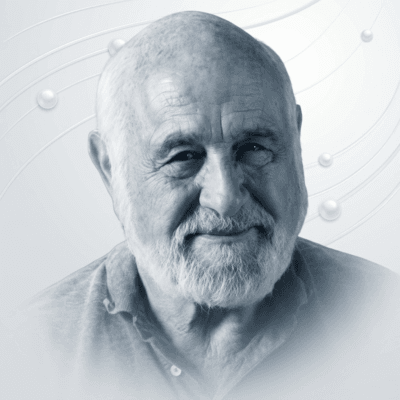
Victor Lamme on consciousness and recurrent processing
Episode 5 08.03.2010
-
 play_arrow
PLAY EPISODE
Description arrow_drop_down

Description
Can neuroscience tell us what consciousness really is , even when introspection and behavior fall short? Victor Lamme argues that recurrent neural processing, not global workspace activation, is the fundamental ingredient of conscious experience. Subscribe for more from the Convergent Science Network podcast series. Viktor Lamme opens with a challenge to the dominant paradigm in consciousness research: if we cannot reliably know what we are conscious of at any given moment, then searching for neural correlates of consciousness is fundamentally misguided. Instead, he proposes building a definition of consciousness from neuroscientific evidence itself , using neural arguments rather than behavioral reports to determine when and where conscious experience occurs. At the core of his theory are four stages of cortical processing. Stages one and two involve feedforward activation, shallow or deep, that can reach prefrontal cortex and trigger cognitive functions like attention and inhibitory control, yet remain entirely unconscious. Stages three and four involve recurrent or reentrant processing, where higher areas feed back into lower areas. Lamme’s central claim is that recurrent processing is both necessary and sufficient for consciousness. Even localized recurrence between early visual areas produces a conscious percept, albeit a primitive one, while widespread recurrence incorporating frontoparietal networks adds reportability and cognitive access without adding consciousness itself. This directly challenges global workspace theory, which holds that prefrontal-parietal broadcasting is essential for conscious experience. Lamme argues that this conflates consciousness with attention, cognitive control, and reportability. He points to evidence that prefrontal activation can occur without consciousness and that consciousness can occur without prefrontal involvement. The distinction matters clinically and scientifically: if consciousness requires only local recurrence, then patients and experimental subjects may have rich conscious experiences that they simply cannot report. The interview takes a molecular turn when Lamme describes experiments showing that recurrent signals in monkey visual cortex depend on NMDA receptors, while feedforward signals rely on AMPA receptors. This dissociation suggests that conscious processing may be uniquely linked to synaptic plasticity , raising the provocative prediction that there is no such thing as truly unconscious learning. Every instance of learning in the literature that Lamme has examined involves conditions where local recurrent processing could plausibly be occurring, even if global reportability is absent.
Tagged as:
Conscious Experience consciousness Global Workspace Recurrent recurrent processing Stages Involve
About the author call_made
CSN Podcasts
Both the triumphs of humanity and its most evil deeds have resulted from collaboration. In a time where humanity is required to aspire to the former and minimize the latter, the question arises of how collaboration arises and why it fails. Surprisingly, this phenomenon, so central to who we are, is not well understood. Hence, a collaborative effort is required to understand collaboration in its full biological, psychological, sociological, cultural, and economic complexity and to translate this understanding into operational impact. This series of podcasts is one step toward achieving these complementary goals. The Collaboration Podcast presents interviews with people who are central orchestrators of collaboration in various domains including business, government, science, art, health, sustainability, and the military. The discussions were conducted by Prof. Dr. Paul F.M.J. Verschure and members of the Program Advisory Committee of the Ernst Strungmann Forum on Collaboration (https://www.esforum.de/forums/ESF32_Collaboration.html) during 2021 and had the goal to sketch a map of opportunities, challenges, and obstacles in human collaboration. The forum took place in May 2022, and now we would like to share this series of interviews with a broader audience. The full report of the Forum will be published in 2023 by MIT Press. The podcast was produced by the Convergent Science Network (https://www.convergentsciencenetwork.org/). Context: The stability of social systems depends critically on realizing sustainable methods of “collaboration,” yet how and by which means collaboration is achieved is not clearly understood; neither are the conditions or processes that lead to its breakdown or failure. Collaboration can be understood as cooperation between agents toward mutually constructed goals. Part of the reason for our lack of understanding is that the phenomenon of collaboration is, by nature, a highly multidisciplinary problem, and effective research into its complexities has been difficult to achieve across the broad range of scientific and technical disciplines involved. The need for a fundamental understanding of collaboration, however, has become increasingly important. Not only does humankind demand answers as it attempts to address critical challenges at multiple scales (e.g., climate change, migration, enhanced automation, social and economic inequality), but ever-increasing technological and economic means of interconnecting people and societies are disrupting long-established, familiar patterns of how we interact. Radical technological changes that are ongoing have the potential to reshape collaboration in ways that are currently hard to predict or influence (e.g., by altering configurations in interaction, information creation, and modes of communication). On one hand, such changes could disrupt hitherto stable forms of collaboration by affecting critical communication channels and traditional roles, as can be observed in the rapidly changing patterns in governance, commerce, and social interaction. Conversely, technology could lead to the emergence of novel, successful forms of collaboration that deviate from traditional “hierarchical” architectures. Evidence of this can be seen in areas as diverse as highly automated manufacturing plants, the open science movement, collaborative software repositories, user-centered services, and the sharing of economy-based modes of organization. Without a fundamental understanding of the mechanisms, processes, and boundary conditions of collaboration, it is not possible to evaluate or predict which of these possible scenarios are sustainable or even plausible. The Forum “How Collaboration Arises and Why it Fails” (May 8–13, 2022, Location: Frankfurt am Main, Germany) Chairs: Andreas Roepstorff and Paul Verschure Program Advisory Committee: Jenna Bednar, Julia R. Lupp, Bhavani R. Rao , Andreas Roepstorff, Ferdinand von Siemens, and Paul Verschure
Episodes
play_arrow

play_arrow

play_arrow

play_arrow
Timestamp
- fast_forward00:00:00 - This is Paul Vershoor with Victor Laman. And Victor was just telling us about
- fast_forward00:00:06 - his theory on consciousness,
- fast_forward00:00:09 - in particular, setting up a contrast between his approach and what's also called global workspace.
- fast_forward00:00:15 - And in some sense, the starting point for you was very much the statement like,
- fast_forward00:00:19 - well, a correlation-based approach towards consciousness is just not going to
- fast_forward00:00:24 - get us there. It's not enough.
- fast_forward00:00:27 - So what's the problem with correlation?
- fast_forward00:00:30 - Well, the problem with correlation is that you have to start out with a definition,
- fast_forward00:00:36 - in this case of consciousness, of which you're sure of.
- fast_forward00:00:39 - And then you can try to find out what that means on the neural side.
- fast_forward00:00:44 - But of course, the real problem with consciousness is that we don't really know
- fast_forward00:00:48 - on the psychological or introspective side what it really is.
- fast_forward00:00:52 - We don't know what we are conscious of.
- fast_forward00:00:54 - We don't know what consciousness really is. We don't know what it's used for.
- fast_forward00:00:57 - Or we have actually no clue of what consciousness really is on the introspective,
- fast_forward00:01:06 - psychological, behavioral side.
- fast_forward00:01:08 - So then, of course, it also doesn't make any sense to just try and find a neural code of that.
- fast_forward00:01:17 - So you mean, as long as we have no satisfying definition, we don't know what
- fast_forward00:01:22 - we're correlating it with.
- fast_forward00:01:23 - Yeah, that's the basic problem. So my stance would be to build a definition
- fast_forward00:01:29 - using neuroscience, so to incorporate neuroscientific findings and neuroscientific theories inside,
- fast_forward00:01:38 - neuroscientific arguments, you might even say, into building,
- fast_forward00:01:42 - well, what you might call a new definition of consciousness,
- fast_forward00:01:46 - which, of course, to some extent incorporates the old ideas we have about consciousness
- fast_forward00:01:51 - from introspection and psychology, But to some extent also overrules or overrides
- fast_forward00:01:56 - those intuitions by things we find out from neuroscience.
- fast_forward00:02:01 - But isn't there a risk that this becomes circular? Because you're saying,
- fast_forward00:02:07 - okay, we don't have a satisfying definition right now.
- fast_forward00:02:11 - So let's try to develop one looking at more detail at neuroscience,
- fast_forward00:02:14 - but it still would imply that you have to have at least an intuition,
- fast_forward00:02:18 - which subset of phenomena you want to look at in order to develop this definition.
- fast_forward00:02:22 - So what's that guideline now that helps you to identify these phenomena?
- fast_forward00:02:27 - Yeah, the intuitions, to some extent, are fine. So, for example,
- fast_forward00:02:31 - it's not problematic to have the intuition that, say, in deep sleep or in coma
- fast_forward00:02:39 - or when you have a fully masked visual stimulus, that in those situations you
- fast_forward00:02:43 - do not have conscious sensations. Right.
- fast_forward00:02:46 - So that's an intuition which works fine. And also at the other extreme end,
- fast_forward00:02:51 - when you have a visual stimulus being presented and someone says,
- fast_forward00:02:55 - yes, I see this visual stimulus and I recognize who's in that picture,
- fast_forward00:02:58 - et cetera, et cetera, there's also no real reason to doubt that in that case
- fast_forward00:03:03 - people have conscious sensations.
- fast_forward00:03:04 - But it's particularly in the middle, in the middle ground, where you go from
- fast_forward00:03:10 - these clearly unconscious situations to these clearly conscious situations,
- fast_forward00:03:14 - where we don't really know whether people are conscious.
- fast_forward00:03:18 - We don't even know whether we self have conscious experiences.
- fast_forward00:03:21 - And that's the situation where you have to extrapolate from these extremes towards
- fast_forward00:03:26 - these situations in the middle.
- fast_forward00:03:28 - But you can only do that properly if you take into account the neuroscience,
- fast_forward00:03:32 - which goes along with it. All right, so you're saying there's like this gray
- fast_forward00:03:35 - zone that has to disentangle, and that's where we have to include more constraints.
- fast_forward00:03:41 - Constraints, of course, also from psychology and introspection,
- fast_forward00:03:45 - but I think even more rigorously constraints from neuroscience.
- fast_forward00:03:49 - To give an example, if we see all the essential characteristics of neuroscientific
- fast_forward00:03:58 - processes which go along with situations where we clearly have a conscious person,
- fast_forward00:04:03 - like when we report having a conscious person.
- fast_forward00:04:06 - If we see all the key neural ingredients of that situation also happening in
- fast_forward00:04:15 - situations where we have doubts about whether we have conscious sensation,
- fast_forward00:04:20 - then we might conclude on the basis of that neuroscientific evidence alone that
- fast_forward00:04:26 - in those cases we probably have conscious sensation simply because the neural
- fast_forward00:04:30 - mechanisms are so similar in both situations.
- fast_forward00:04:34 - Or at least are similar as long as, with respect to the essential ingredients of consciousness.
- fast_forward00:04:43 - That we have to grant consciousness to situations which intuitively we might
- fast_forward00:04:47 - think we don't have conscious sensations, like in neglect or when we suffer
- fast_forward00:04:54 - from inattentional blindness or attentional blink.
- fast_forward00:04:56 - Typically in situations where attention is removed, there you have,
- fast_forward00:05:00 - This is in particular the situation where you have this gray zone that we don't
- fast_forward00:05:07 - really know whether we have conscious sensations or not.
- fast_forward00:05:09 - Right. So given that, this doesn't explain why you use change blindness as one
- fast_forward00:05:16 - of your paradigms or not.
- fast_forward00:05:20 - Yeah, so we use change blindness to a large extent,
- fast_forward00:05:24 - showing that, on the one hand, if you take the change blindness results per
- fast_forward00:05:29 - se, you have the inclination to think that consciousness is very limited,
- fast_forward00:05:33 - limited only to what you attend to, that you only see a couple of objects at
- fast_forward00:05:37 - the same time, maybe two or three or four.
- fast_forward00:05:39 - Whereas when you do the change blindness experiment in a different way, using the, let's say,
- fast_forward00:05:46 - the iconic memory version of the experiment image where you present a cue in
- fast_forward00:05:49 - between the first image and the second image you will see that there is at least
- fast_forward00:05:54 - evidence that people have a much richer representation somewhere inside their
- fast_forward00:05:57 - heads the only thing is we don't really know whether that is a conscious representation,
- fast_forward00:06:02 - now and in tune trying to find out whether that is a conscious that rich representation
- fast_forward00:06:07 - is a conscious representation you could use neuroscience to try and find out
- fast_forward00:06:11 - whether all the essential potential ingredients for consciousness that you do
- fast_forward00:06:16 - find in situations where consciousness is unequivocal,
- fast_forward00:06:20 - whether you also find those in this rich representation,
- fast_forward00:06:27 - iconic representation, and then conclude, well, apparently, even though it's
- fast_forward00:06:34 - uncertain behaviorally and introspectively whether there's consciousness there,
- fast_forward00:06:37 - while we are sort of forced to conclude based on neuroscience that indeed people
- fast_forward00:06:43 - do have a conscious sensation there,
- fast_forward00:06:45 - and that as a result of that we are forced
- fast_forward00:06:48 - to conclude that consciousness is not limited and only limited to what attention
- fast_forward00:06:55 - is focusing on and limited in respect of that it only holds a few objects but
- fast_forward00:07:03 - that it's It's much richer than indeed you perceive a whole scene all at once.
- fast_forward00:07:06 - Are you not actually posing two questions? On the one hand, it would be like,
- fast_forward00:07:10 - what's the content of memory and under what conditions and which aspects of
- fast_forward00:07:16 - memory are accessible to conscious experience?
- fast_forward00:07:21 - Well, you do the experiments. In the way you do the experiments,
- fast_forward00:07:26 - you are addressing memory. That's correct.
- fast_forward00:07:29 - But, of course, what that tells you is what the content of consciousness is,
- fast_forward00:07:34 - at the moment you look, because it's very difficult to really know what the
- fast_forward00:07:39 - content of consciousness is at the very now, at the moment that you look.
- fast_forward00:07:45 - So the only way to go about that is ask subjects what they saw or when you've
- fast_forward00:07:50 - presented the stimulus.
- fast_forward00:07:51 - And, of course, essentially that's always about memory. But what turns out to
- fast_forward00:07:56 - be the case is that you have different forms of memory of a particular visual scene that you see.
- fast_forward00:08:01 - So you have the working memory, which is limited to a couple of objects,
- fast_forward00:08:04 - and then you have iconic memory, which is much more widespread and contains many more objects.
- fast_forward00:08:11 - And these two sorts of memory are remnants of the two different representations
- fast_forward00:08:15 - that you had while you were viewing the scene, While you were viewing the scene,
- fast_forward00:08:20 - you probably also had a focused representation,
- fast_forward00:08:26 - attention being focused on
- fast_forward00:08:30 - a few objects which you could cognitively manipulate and things like that.
- fast_forward00:08:36 - But at the same time, you also had a much richer representation containing many
- fast_forward00:08:41 - more objects which you were not attending to and which you could not cognitively
- fast_forward00:08:47 - manipulate and which is linked to this iconic memory trace.
- fast_forward00:08:51 - So the memory traces tell you something about the representation that exists
- fast_forward00:08:55 - at the moment that you look, which is, of course, the real question.
- fast_forward00:09:01 - But in the case of change blindness, there might be, let's say,
- fast_forward00:09:06 - at some level that change blindness becomes almost trivial.
- fast_forward00:09:10 - I mean, there are, let's say, given that perception means that you have to compress,
- fast_forward00:09:14 - You have to throw away, if you want, signals to get to a percept.
- fast_forward00:09:20 - So in that process, of course, there will be, let's say, pieces of information,
- fast_forward00:09:26 - objects disappearing from memory, possibly, or from consciousness,
- fast_forward00:09:32 - because it's also a necessary ingredient of just being able to perceive the world at all.
- fast_forward00:09:37 - So, from that perspective, you could argue, well, it's not a big surprise that
- fast_forward00:09:44 - it is a finite set, both iconic memory,
- fast_forward00:09:48 - but also then, let's say, your working memory for visual processing would be finite.
- fast_forward00:09:53 - So, why then can this paradigm give you an additional insight into this interaction
- fast_forward00:10:01 - between perception, attention, and consciousness?
- fast_forward00:10:07 - Well, obviously, whenever you go from a physical stimulus falling on your retina
- fast_forward00:10:14 - to representation in consciousness, there's some sort of compression going on
- fast_forward00:10:19 - and some sort of interpretation of this.
- fast_forward00:10:21 - You have things like visual illusions, which tell you that whatever is physically
- fast_forward00:10:25 - out there is not translated in a direct way into your conscious percepts.
- fast_forward00:10:32 - There's some things like memory and previous experience and all that thing going on.
- fast_forward00:10:38 - But regardless of that, what remains is that apparently in that transition from
- fast_forward00:10:45 - the physical stimulus to these mental representations,
- fast_forward00:10:49 - you have, well, so to say, different representations, different stages.
- fast_forward00:10:55 - You have a representation which is rich and detailed, which contains more or
- fast_forward00:10:59 - less the whole scene, albeit in an interpreted fashion.
- fast_forward00:11:03 - And then you have a representation which is related to the focus of attention, which is more limited.
- fast_forward00:11:10 - So you have these different representations all sitting there at the same time inside your mind.
- fast_forward00:11:15 - And the real unanswerable question, at
- fast_forward00:11:17 - least unanswerable from an introspective and behavioral point of view
- fast_forward00:11:20 - is which of these representations is is the
- fast_forward00:11:24 - conscious one that's the real that's the
- fast_forward00:11:26 - real problem and that's the thing which we cannot answer from
- fast_forward00:11:29 - introspection or behavior right so now there you um to answer now that question
- fast_forward00:11:36 - you you also are introducing a a fairly a specific uh picture on how perception
- fast_forward00:11:44 - visual perception would work right according to a number of stages.
- fast_forward00:11:47 - So what are these stages exactly and on the ground of what did you distinguish them?
- fast_forward00:11:54 - Okay, so whenever a visual stimulus is presented to our eyes,
- fast_forward00:11:59 - basically we go through four stages of cortical processing.
- fast_forward00:12:03 - First you have, let's say, a fairly shallow processing, feed-forward processing
- fast_forward00:12:11 - by early visual areas and maybe a couple of more high-level visual areas.
- fast_forward00:12:17 - And then following that, if a stimulus is attended, you will have this feed-forward
- fast_forward00:12:21 - processing penetrating all the way up to higher visual areas,
- fast_forward00:12:26 - motor areas, prefrontal cortex, etc.
- fast_forward00:12:28 - So those are the first two stages which are sort of automatically executed.
- fast_forward00:12:35 - Feed-forward processing either in the shallow or in a more extensive deep fashion,
- fast_forward00:12:41 - depending on the tension.
- fast_forward00:12:43 - And then after that you have what I call stages three and four where you have
- fast_forward00:12:47 - recurrent processing, which means higher level areas feeding back into lower
- fast_forward00:12:51 - areas and then engaging in reentrant or recurrent processing.
- fast_forward00:12:55 - And then also you can have these reentrant processes being either of a shallow
- fast_forward00:13:00 - nature in the sense that they only involve, for example, a few visual areas
- fast_forward00:13:04 - or that they grow more widespread when attention is allocated,
- fast_forward00:13:09 - to the stimuli that evoke these processes.
- fast_forward00:13:13 - But the reentrant interactions also include frontal parietal cortex and you
- fast_forward00:13:18 - have what others would typically call global workspace ignition amplification.
- fast_forward00:13:25 - Okay, so it's an incrementally more complex circuit we're looking at. Yeah, exactly.
- fast_forward00:13:31 - Also bringing in more and more top-down information, higher-level cognitive information.
- fast_forward00:13:37 - Well, I wouldn't put it that way, because already in the feed-forward activation,
- fast_forward00:13:42 - you can reach high-level areas like the prefrontal cortex.
- fast_forward00:13:46 - And we have done some experiments showing that when you have this feed-forward
- fast_forward00:13:51 - activation of prefrontal cortex, that may activate cognitive functions like
- fast_forward00:13:57 - inhibitory control or attention and things like that.
- fast_forward00:14:01 - Which tells you that these feed-forward activations, which we think on the basis
- fast_forward00:14:07 - of all kinds of experiments,
- fast_forward00:14:09 - are not generating any conscious sensations, that these feed-forward activations
- fast_forward00:14:12 - may still activate all sorts of cognitive functions like attention or cognitive
- fast_forward00:14:16 - control, but nevertheless are unconscious.
- fast_forward00:14:19 - And of course, similarly, you can have recurrent interactions interactions,
- fast_forward00:14:24 - which are either penetrating deeply or not, and that means that you would have
- fast_forward00:14:31 - conscious versions of either attention or cognitive control,
- fast_forward00:14:34 - meaning that in this view consciousness and attention or consciousness and cognitive
- fast_forward00:14:41 - control or any other cognitive function are essentially orthogonal,
- fast_forward00:14:45 - meaning that you can have both unconscious attention and conscious attention,
- fast_forward00:14:50 - that you can have both unconscious cognitive control and conscious is
- fast_forward00:14:53 - conflict control but then in these these four phases
- fast_forward00:14:56 - of processing what's the minimal configuration that
- fast_forward00:15:00 - could give me a conscious percept yeah so i think the the evidence points to
- fast_forward00:15:07 - the idea that the minimal configuration you need for having a conscious percept
- fast_forward00:15:12 - is that you need to have re-entrant recurrent interactions so stages one and two which are.
- fast_forward00:15:20 - Are entirely feed forward, even though a stage two process may reach prefrontal
- fast_forward00:15:27 - areas, high level areas, that still will be an unconscious process in the sense
- fast_forward00:15:31 - that it's not accompanied by any conscious sensation.
- fast_forward00:15:33 - It's only when you go to stage three where you have reentrant interactions or
- fast_forward00:15:38 - to stage four where you have widespread reentrant interactions,
- fast_forward00:15:41 - including frontal parietal network, that you have conscious sensations.
- fast_forward00:15:44 - That's the idea I'm pushing for.
- fast_forward00:15:48 - But this seems to be a more necessary condition for consciousness,
- fast_forward00:15:52 - and not a sufficient one.
- fast_forward00:15:54 - Yeah, this whole necessary versus sufficient argument is not getting us anywhere
- fast_forward00:16:02 - in the sense that you could always say that something is either necessary or
- fast_forward00:16:07 - sufficient or not necessary or not sufficient.
- fast_forward00:16:09 - What I'm trying to argue is that whenever you have random interactions,
- fast_forward00:16:17 - you have a conscious sensation.
- fast_forward00:16:19 - The only thing is that when these re-entrant interactions are limited to early
- fast_forward00:16:24 - visual errors, you will have a visual sensation which is not linked to cognition,
- fast_forward00:16:28 - not linked to reportability, so you cannot report it to the outside world,
- fast_forward00:16:32 - you cannot store it in working memory, etc.
- fast_forward00:16:34 - But you will still have a conscious sensation.
- fast_forward00:16:37 - And of course, when these re-entrant interactions grow more widespread to stage
- fast_forward00:16:44 - four, when they they incorporate frontal parietal,
- fast_forward00:16:48 - network, then you will have a conscious sensation which is also reportable,
- fast_forward00:16:52 - which you can cognitively manipulate, which you can attend to, etc.
- fast_forward00:16:57 - Okay, so it means on the one extreme we can say, well, you don't necessarily
- fast_forward00:17:01 - need a pure frontal engagement to have a conscious experience, right?
- fast_forward00:17:05 - This is one consequence of what you're saying.
- fast_forward00:17:08 - Yeah, that's certainly one of the important consequences.
- fast_forward00:17:12 - That's the upper bound, if you want, but now at the lower bound,
- fast_forward00:17:16 - Maybe their things are a bit more fuzzy because sometimes I would argue,
- fast_forward00:17:19 - well, a red level of a primary visual area, I will have dense recurrent interactions
- fast_forward00:17:23 - locally to the area and with thalamus and so on. So I have recurrence.
- fast_forward00:17:29 - However, if I would only stimulate V1, as also some studies have shown,
- fast_forward00:17:34 - I would not necessarily consciously experience that stimulus.
- fast_forward00:17:37 - So, it seems that this recurrence of a certain, of a minimal recurrence of a
- fast_forward00:17:44 - certain kind must be present to then lead to a conscious experience.
- fast_forward00:17:48 - So, what's that minimal requirement on recurrence?
- fast_forward00:17:52 - Yeah, there's probably some minimal requirement which we need to add to that,
- fast_forward00:17:58 - if you like, definition of consciousness.
- fast_forward00:18:01 - I'm not entirely sure what it should be. Maybe it has something to do with the
- fast_forward00:18:04 - amount of complexity of the interactions, you know, a lot of Tononi and people
- fast_forward00:18:10 - and proposals like that.
- fast_forward00:18:16 - If you would ask me, basically, I would say that, you know, whenever you have
- fast_forward00:18:23 - reentrant interactions between visual areas, you have some sort of visual percept.
- fast_forward00:18:27 - Of course, it might be a very primitive visual percept, like,
- fast_forward00:18:30 - you know, only seeing a glimmering of light without any cognition added to it,
- fast_forward00:18:35 - without you really knowing what the object is, without you, you know,
- fast_forward00:18:39 - erupt from any normal sense of vision that you would normally have.
- fast_forward00:18:44 - But still it would be a conscious percept you know and the
- fast_forward00:18:47 - only thing that is added when you when when these
- fast_forward00:18:50 - re-entrant interactions incorporate more visual areas
- fast_forward00:18:53 - let's say object selective areas or face selective areas or
- fast_forward00:18:56 - motion selective areas what you add are more layers in terms of well essentially
- fast_forward00:19:03 - how beautiful the the the visual sensation is you know we see you add colors
- fast_forward00:19:09 - you add motion you add you add you add shape you add whether it's a face or not and stuff like that.
- fast_forward00:19:14 - So all this gets added to the visual percept, but that doesn't make it a more
- fast_forward00:19:21 - conscious visual percept.
- fast_forward00:19:23 - It only makes it a ritual visual percept.
- fast_forward00:19:25 - But in every case, it's a conscious visual percept.
- fast_forward00:19:29 - The only thing is that when the recurrent iterations are very localized,
- fast_forward00:19:33 - it's a fairly poor and sorry visual percept.
- fast_forward00:19:37 - And in the other case, it's a rich and very beautiful one. Okay.
- fast_forward00:19:41 - Now, in the data that you described, though, there was another aspect that came
- fast_forward00:19:45 - to the foreground where you had these unconsciously perceived faces that you masked out.
- fast_forward00:19:51 - Remember, you had these… You generated crosses from everything,
- fast_forward00:19:55 - but actually, subconsciously, a face might have been detected.
- fast_forward00:20:00 - When you looked at that data, it looked like the main distinguishing factor
- fast_forward00:20:05 - was whether there was sustained activity or not.
- fast_forward00:20:09 - That's true. So would you accept that as a second parameter where you could
- fast_forward00:20:14 - say, well, maybe to become a consciously perceived stimulus,
- fast_forward00:20:20 - I have to trigger sufficiently sustained activity to engage these recurrent
- fast_forward00:20:27 - circuits sufficiently,
- fast_forward00:20:28 - possibly even including frontal circuits, to construct the experience. Would you buy that?
- fast_forward00:20:35 - Well, the short answer is no.
- fast_forward00:20:38 - No, simply because, you know, experimentally, it's, of course,
- fast_forward00:20:44 - very difficult to tease apart sustained activity and reentered or recurrent
- fast_forward00:20:48 - activity because you cannot have recurrent activity without it being sustained.
- fast_forward00:20:52 - Well, you might have sustained activity without it being recurrent,
- fast_forward00:20:56 - but at least the other way around, it's very difficult to tease those two apart.
- fast_forward00:21:00 - So you might argue, well, maybe it's just about the activity being sustained,
- fast_forward00:21:05 - which is generating the conscious percept.
- fast_forward00:21:06 - The only problem I have with that is that, you know, it doesn't explain anything to me.
- fast_forward00:21:12 - Why would neural activity that's more sustained give you a conscious sensation, whereas.
- fast_forward00:21:20 - Activity that is less sustained would not give you a concept.
- fast_forward00:21:22 - That doesn't make any sense to me.
- fast_forward00:21:24 - Well, on the other hand, the difference between recurrent and feed-forward processing
- fast_forward00:21:27 - is so fundamental in the sense that recurrent activity will give you the integration
- fast_forward00:21:32 - of information over different areas of the brain.
- fast_forward00:21:36 - As I've proposed in the talk, it might also give you things like more synaptic
- fast_forward00:21:42 - plasticity being engaged.
- fast_forward00:21:45 - There are many fundamental differences between recurrent activity,
- fast_forward00:21:48 - it will give you a higher complexity of the neural networks that are involved.
- fast_forward00:21:52 - But there are so many fundamental differences between recurrent activity and
- fast_forward00:21:56 - feedforward activity that I find some explanation in that being the difference
- fast_forward00:22:02 - between conscious and unconscious processing,
- fast_forward00:22:04 - which I totally do not find in short versus sustained activity.
- fast_forward00:22:10 - But imagine I would be a global workspace person. Then in some sense,
- fast_forward00:22:15 - I would agree with you on recurrent connectivity.
- fast_forward00:22:18 - I would say, no, I have highly complex and differentiated and integrated global
- fast_forward00:22:25 - interactions in these networks.
- fast_forward00:22:27 - And then I could argue, and I need at the input side of that,
- fast_forward00:22:31 - I need an activity of a certain duration to drive this global workspace sufficiently.
- fast_forward00:22:37 - So if I have one of these masking tasks, so the stimulus gets suppressed,
- fast_forward00:22:41 - I cannot drive the global workspace circuitry sufficiently. So therefore,
- fast_forward00:22:45 - a conscious percept cannot emerge.
- fast_forward00:22:48 - While if I have a more sustained activity, I can drive the global workspace
- fast_forward00:22:52 - and develop the consciously experienced percept.
- fast_forward00:22:55 - But what would be wrong with that argument?
- fast_forward00:22:58 - Well, of course, no.
- fast_forward00:23:00 - What you're saying now is that the conscious percept is not coming from the
- fast_forward00:23:04 - sustained activity itself, but from the sustained activity driving something
- fast_forward00:23:08 - else, in this case, global workspace activation.
- fast_forward00:23:12 - So essentially what you're saying is that the conscious sensation comes from
- fast_forward00:23:15 - the global workspace activation.
- fast_forward00:23:18 - But the necessary requirement of that is sustained activity.
- fast_forward00:23:24 - Well, what I've tried to point out in the presentation is that,
- fast_forward00:23:33 - of course, you could hold the case that you only have constant sensation whenever
- fast_forward00:23:38 - there's global workspace activity,
- fast_forward00:23:40 - but there are a number of theoretical, scientific, and other problems with that,
- fast_forward00:23:45 - such as that you know this entails that for some reason it's prefrontal cortex,
- fast_forward00:23:55 - activity which is important for consciousness which doesn't seem to have any
- fast_forward00:23:59 - explanatory power it's there's of course lots of evidence that you can have
- fast_forward00:24:04 - prefrontal cortex activation without you having any conscious sensation so again
- fast_forward00:24:09 - there's no real reason to assume that you have that you need to have prefrontal cortex activation,
- fast_forward00:24:15 - for generating consciousness, or the other way around.
- fast_forward00:24:18 - You can have prefrontal cortex activation without you clearly having any conscious sensation.
- fast_forward00:24:23 - When you assume the global workspace activation to be essential for consciousness,
- fast_forward00:24:29 - you always conflate consciousness with attention, you conflate consciousness
- fast_forward00:24:32 - with cognitive control, and also you're not capable of dissociating consciousness
- fast_forward00:24:36 - from a report about consciousness.
- fast_forward00:24:38 - So there are lots of reasons why consciousness.
- fast_forward00:24:43 - Saying that global workspace activation is the essential thing that you need
- fast_forward00:24:47 - for having a conscious sensation, from a scientific point of view,
- fast_forward00:24:50 - seems, well, misguided.
- fast_forward00:24:52 - So that's an important part of your story, where you're saying,
- fast_forward00:24:57 - well, global workspace is one view on conscious experience, and I disagree with
- fast_forward00:25:02 - this view for a number of reasons that you now just summarized.
- fast_forward00:25:05 - And my alternative proposal is the one of recurrent interaction of some kind.
- fast_forward00:25:11 - So um but but
- fast_forward00:25:14 - to what extent is your proposal not
- fast_forward00:25:17 - also consistent with a possible alternative interpretation
- fast_forward00:25:20 - of a global workspace because i could argue well these systems
- fast_forward00:25:23 - you point your finger to are like uh still global workspaces but at a smaller
- fast_forward00:25:29 - scale yeah not necessarily inconsistent yeah okay but of course if you know
- fast_forward00:25:36 - if i if i discuss this with uh the real proponents of global workspace theory,
- fast_forward00:25:42 - they explicitly excluded the possibility of global workspaces being possible at a more local scale.
- fast_forward00:25:51 - Because indeed, you're right. If you would acknowledge that you can have global
- fast_forward00:25:55 - workspace on a more local scale, let's say only visual cortex,
- fast_forward00:25:58 - then of course it's totally similar to what I'm saying.
- fast_forward00:26:02 - But for some reason, which by the way is a total mystery to me, uh.
- fast_forward00:26:11 - Essential tenet of global workspace theory as it has been put forward in the
- fast_forward00:26:15 - last couple of years is that it requires the global broadcasting of information
- fast_forward00:26:21 - via these prefrontal parietal networks throughout the whole brain,
- fast_forward00:26:25 - which is essentially different.
- fast_forward00:26:27 - But that seems to be the sticky point, right? There's much more debate on whether
- fast_forward00:26:31 - this frontal parietal network is a necessary ingredient of consciousness or sufficient even or not.
- fast_forward00:26:36 - Because if you would leave out this component, you would happily agree on some
- fast_forward00:26:40 - sort of adapted version of what you might call a workspace.
- fast_forward00:26:44 - Sure. I wouldn't see any reason for calling it a workspace, though.
- fast_forward00:26:49 - But, you know, scientists more easily use each other's toothbrush than each other's term.
- fast_forward00:26:59 - But aside from that, yeah, why not? Okay. So from now on, you talk about the visual workspace.
- fast_forward00:27:08 - Okay but then the other the other thing before
- fast_forward00:27:11 - getting to the to the conclusions here um what i
- fast_forward00:27:14 - found very interesting is that you also really started to to to push this notion
- fast_forward00:27:18 - of feed forward and recurrent down to to to to uh the neural substrate to the
- fast_forward00:27:24 - level of actually receptor types and so on yeah so so can you maybe explain
- fast_forward00:27:28 - that a little bit yeah so let's say from From a theoretical point of view,
- fast_forward00:27:32 - we had the, well, let's say hunch that there might be differences in the molecular
- fast_forward00:27:40 - machinery that is used for feed-forward processing as opposed to recurrent processing.
- fast_forward00:27:44 - And in particular, that recurrent processing, you know, because it satisfies
- fast_forward00:27:48 - the HEP rule and stuff like that, would be more prone to induce processes related
- fast_forward00:27:53 - to synaptic plasticity and MDA receptor activation and stuff like that.
- fast_forward00:27:56 - So, we did some experiments to sort of verify this hunch, and indeed we found
- fast_forward00:28:03 - that in monkey visual cortex.
- fast_forward00:28:05 - The recurrent signals are almost abolished when you apply NMDA receptor blockers
- fast_forward00:28:16 - like APV, while the feedforward signal is not.
- fast_forward00:28:20 - And conversely, you can block the feed-forward signal by an empire receptor
- fast_forward00:28:23 - blocker like CNQX, which doesn't interfere that much with the recurrent signals.
- fast_forward00:28:29 - So indeed, pointing out that there might be different synaptic mechanisms related
- fast_forward00:28:34 - to feed-forward and recurrent processing.
- fast_forward00:28:36 - And that triggered the idea that maybe recurrent processing is much more related
- fast_forward00:28:45 - to inducing synaptic plasticity, learning, in other words, changing your brain.
- fast_forward00:28:50 - And then of course you know ultimately this could imply that the difference
- fast_forward00:28:57 - between conscious and unconscious processing is that conscious processing changes
- fast_forward00:29:01 - your brain because it induces synaptic plasticity whereas unconscious processing
- fast_forward00:29:05 - does not change your brain which at least to me gives sort of a fundamental answer.
- fast_forward00:29:11 - Hunch or intuition about what consciousness is
- fast_forward00:29:14 - really about and what and what the difference is what the real
- fast_forward00:29:16 - difference is between conscious and unconscious processing but but
- fast_forward00:29:20 - would you be willing to to really say like well and necessary condition
- fast_forward00:29:24 - for learning in the brain is is consciousness
- fast_forward00:29:27 - yeah so uh you know
- fast_forward00:29:30 - let's say a funny prediction of
- fast_forward00:29:33 - that idea would be that there's no such thing as unconscious learning
- fast_forward00:29:36 - uh which you know is already contradicted
- fast_forward00:29:40 - by the existing literature well actually if
- fast_forward00:29:42 - you look at it closely it's not because all the instances of unconscious
- fast_forward00:29:46 - learning that i've come across are mostly about
- fast_forward00:29:49 - what i would call inattentional learning which is something else
- fast_forward00:29:52 - entirely uh so all the
- fast_forward00:29:56 - instances where you find so-called unconscious learning are
- fast_forward00:29:59 - in fact instances where uh you might
- fast_forward00:30:03 - well you you can fairly well assume that
- fast_forward00:30:06 - you still have these re-entrant processes going on on
- fast_forward00:30:08 - a local scale although not at a global scale
- fast_forward00:30:11 - so that indeed people are not able to report about these stimuli devoted to
- fast_forward00:30:15 - learning but for example unconscious learning has never in my mind at least
- fast_forward00:30:24 - been convincingly shown in
- fast_forward00:30:25 - cases where you can really be sure that there is not that there is no uh.
- fast_forward00:30:31 - Recurrent processing going on like for example when you have a fully masked
- fast_forward00:30:34 - visual stimulus which is only evoked feedforward processing,
- fast_forward00:30:39 - you will never find any learning related to such a fully masked stimulus.
- fast_forward00:30:43 - It's only in cases where you rather manipulate attentional reportability where
- fast_forward00:30:47 - you find so-called unconscious learning.
- fast_forward00:30:51 - How about motor learning, like in conditioning or forms of learning dependent on the cerebellum?
- fast_forward00:30:57 - I'm not an expert on that, so I'm going to take the 15 minutes.
- fast_forward00:31:00 - They exist, I'm telling you.
- fast_forward00:31:04 - Oh, you know, the cerebellum, that was already pointed out, of course, in various talks.
- fast_forward00:31:11 - The cerebellum is a very strange system in the sense that even though you might
- fast_forward00:31:16 - have recurrence there, there's still no... it's probably not associated with
- fast_forward00:31:20 - conscious experiences. And it's...
- fast_forward00:31:24 - I have nothing to say about the state of health. Yeah, it's too scary, you know?
- fast_forward00:31:29 - Yeah. So to conclude, I have two questions for you.
- fast_forward00:31:33 - On the one hand, you went on this trajectory actually being very closely to
- fast_forward00:31:41 - the data, physiologists, getting data in monkey and other animals.
- fast_forward00:31:45 - And now you're moving more to these really challenging questions in this domain of consciousness.
- fast_forward00:31:48 - And given that experience what's what's
- fast_forward00:31:52 - the the victor lama law you think we should all adhere to in
- fast_forward00:31:55 - our study of the brain and consciousness well i
- fast_forward00:31:57 - think there are two laws uh the first law is that you you cannot know what either
- fast_forward00:32:05 - someone else or yourself is conscious of uh at any particular moment in time
- fast_forward00:32:10 - you simply don't know what the content of consciousness is and of course the
- fast_forward00:32:15 - upshot of that is that it's useless trying to find neural correlates of consciousness.
- fast_forward00:32:22 - And I would say the second law is, sort of following from that,
- fast_forward00:32:26 - of course, that we don't need neural correlates, but we need neural arguments
- fast_forward00:32:33 - to tell us what consciousness really is.
- fast_forward00:32:36 - And if I put all the neural arguments together, together, of course,
- fast_forward00:32:40 - with psychological insights and introspective insights.
- fast_forward00:32:45 - I have the strong idea that the fundamental ingredient for consciousness is recurrence.
- fast_forward00:32:52 - So now, if five years from now, I go up to Amsterdam and I'm going to find you,
- fast_forward00:32:57 - chase you down and ask you like, okay, Victor, five years back,
- fast_forward00:33:00 - you made this prediction, I'm going to check with you whether it was right or wrong.
- fast_forward00:33:04 - What's this one prediction you were willing to stick your neck out for today?
- fast_forward00:33:09 - Day oh well one of the predictions would be
- fast_forward00:33:12 - like the things we discussed about learning
- fast_forward00:33:15 - uh this is this is something i
- fast_forward00:33:17 - i i really like very much because you know the link between reentrant connections
- fast_forward00:33:22 - and and mda receptor activation uh that's really putting some sort of fundamental
- fast_forward00:33:28 - ground under this whole idea of what consciousness is about so uh i think we at At that point,
- fast_forward00:33:36 - we will have proven that there's no such thing as really unconscious learning
- fast_forward00:33:39 - and that you, for example,
- fast_forward00:33:40 - that you only get, say, visual learning from inattention paradigms and not from
- fast_forward00:33:48 - really, well, and not from masking paradigms, for example.
- fast_forward00:33:51 - Wonderful. Victor Lowe, thank you very much for this interview. Well, you're welcome.
Tags
Brain brain evolution Cerebellar cerebellum collaboration consciousness Cortex Cortical decision making disorders of consciousness Framework grid cells Memory mirror neurons Motor motor cortex neocortex Neural Neurons place cells Populations prediction prefrontal cortex Robots scientific collaboration Spatial

Exploring the convergence of neuroscience, robotics, and AI through conversations with leading researchers since 2010.
A project of the Convergent Science Network Foundation.
Follow us on
© CSN Podcasts. Developed by IMCreative & WEBC
Be the first to leave a comment