

play_arrow
Listeners:
Top listeners:
00:00
00:00
volume_up
chevron_left
-
 play_arrow
Paul Verschure on consciousness and distributed adaptive control CSN Podcasts
-
 play_arrow
Edvard Moser on grid cells and entorhinal cortex CSN Podcasts
-
 play_arrow
Giacomo Rizzolatti on mirror neurons and action understanding CSN Podcasts
-
 play_arrow
Robert Axelrod on game theory and prisoner's dilemma CSN Podcasts
-
 play_arrow
Adrian Owen on disorders of consciousness and vegetative state CSN Podcasts
-
 play_arrow
Jonathan Whitlock on markerless motion capture and posterior parietal cortex CSN Podcasts
-
 play_arrow
Luis Puelles on neuroanatomy and prosomeric model CSN Podcasts
-
 play_arrow
Zoltan Molnar on subplate neurons and cortical development CSN Podcasts
- arrow_back Home
- keyboard_arrow_right Podcast
- keyboard_arrow_right Season 2010
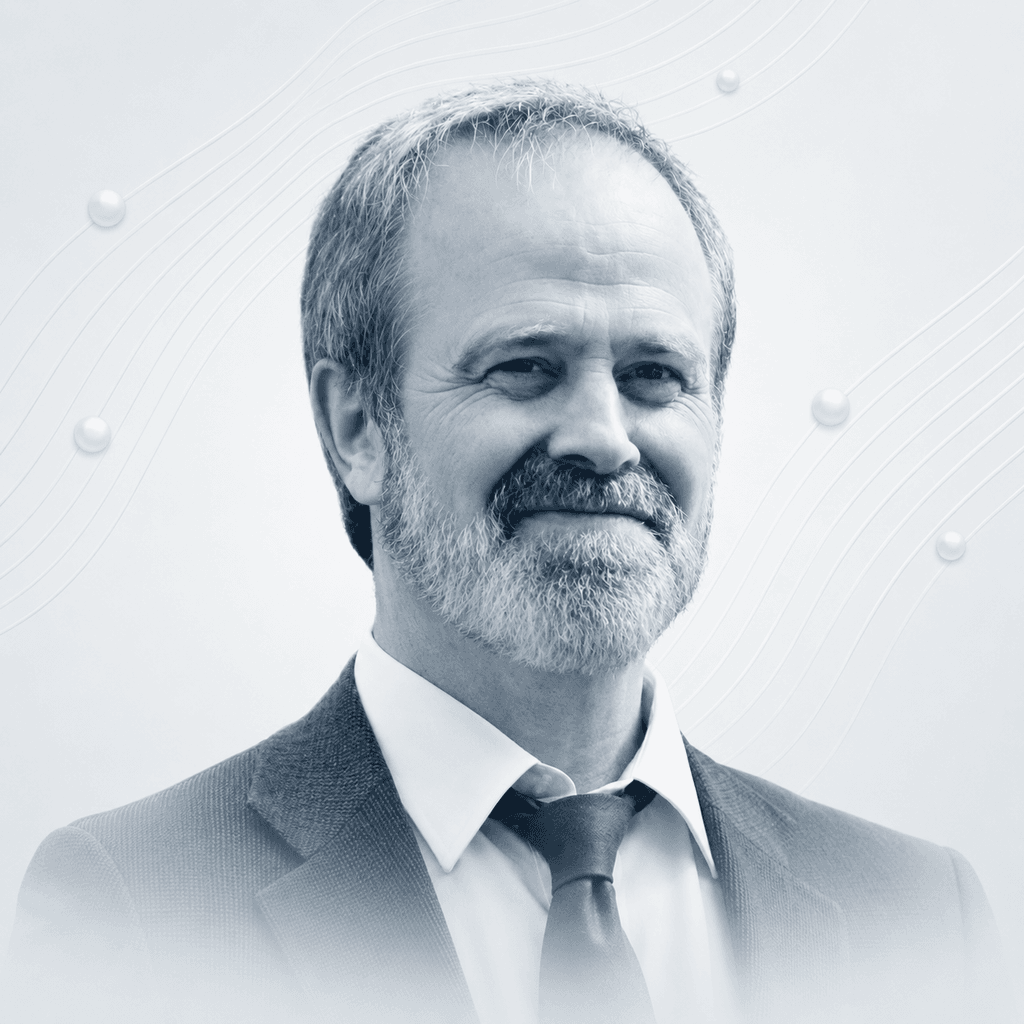
Terrence Deacon on evo-devo and brain development
Episode 9 08.03.2010
-
 play_arrow
PLAY EPISODE
Description arrow_drop_down

Description
How does evolution build brains without a blueprint? Terrence Deacon reveals how self-organizing developmental processes, constrained by diffusible molecular signals, generate the neural architecture that natural selection then sculpts through competition and functional use. Subscribe for more from the Convergent Science Network podcast series. Terence Deacon brings the evo-devo perspective to brain science, arguing that understanding how brains are built during development is essential to understanding how they evolved. The core insight is that evolution does not modify adult brains directly , it modifies developmental programs. Since development relies heavily on self-organizing processes at every level, from gene regulatory networks to cell migration to axon guidance, the space of possible evolutionary changes is profoundly constrained by what development can produce. Deacon describes a two-phase process in brain construction. Early development is remarkably conserved across vertebrates: a neural tube divides into segments, segments differentiate into compartments, and generic form-production mechanisms generate a variety of circuits. This phase is so similar across species that embryonic brains of fish, birds, and mammals are nearly indistinguishable. The second phase involves selection: signals from sense organs, muscular systems, and inter-regional competition sculpt the generic architecture into species-specific functional circuits. Connections that are functionally validated persist; others are eliminated. The interview draws on Deacon’s cross-species transplantation experiments, which produced striking results. Cortical cells transplanted anywhere in the brain grow axons only to targets appropriate for cortex , even in adult brains, even across species as different as pigs and rats. This means that molecular guidance cues persist throughout life, long after the developmental period when they were originally needed. Deacon suggests these cues serve ongoing plasticity and local synaptic maintenance rather than being mere developmental leftovers. He also describes clinical applications: pig fetal dopamine cells transplanted into Parkinsonian rats and eventually human patients found their targets, formed functional cross-species synapses, and produced measurable clinical improvement. Deacon challenges the common assumption that genes directly specify brain architecture. Instead, he describes cascading self-organization: genes regulate each other in network patterns, producing diffusible signals that create concentration gradients, which in turn activate or silence genes in neighboring cells. Even finger formation relies on this interplay , cells between digits are instructed to die by the intersection of multiple diffusion fields, not by a gene that says “build a finger here.”
Tagged as:
Adult Brains Architecture brain development Cells Transplanted Signals
About the author call_made
CSN Podcasts
Both the triumphs of humanity and its most evil deeds have resulted from collaboration. In a time where humanity is required to aspire to the former and minimize the latter, the question arises of how collaboration arises and why it fails. Surprisingly, this phenomenon, so central to who we are, is not well understood. Hence, a collaborative effort is required to understand collaboration in its full biological, psychological, sociological, cultural, and economic complexity and to translate this understanding into operational impact. This series of podcasts is one step toward achieving these complementary goals. The Collaboration Podcast presents interviews with people who are central orchestrators of collaboration in various domains including business, government, science, art, health, sustainability, and the military. The discussions were conducted by Prof. Dr. Paul F.M.J. Verschure and members of the Program Advisory Committee of the Ernst Strungmann Forum on Collaboration (https://www.esforum.de/forums/ESF32_Collaboration.html) during 2021 and had the goal to sketch a map of opportunities, challenges, and obstacles in human collaboration. The forum took place in May 2022, and now we would like to share this series of interviews with a broader audience. The full report of the Forum will be published in 2023 by MIT Press. The podcast was produced by the Convergent Science Network (https://www.convergentsciencenetwork.org/). Context: The stability of social systems depends critically on realizing sustainable methods of “collaboration,” yet how and by which means collaboration is achieved is not clearly understood; neither are the conditions or processes that lead to its breakdown or failure. Collaboration can be understood as cooperation between agents toward mutually constructed goals. Part of the reason for our lack of understanding is that the phenomenon of collaboration is, by nature, a highly multidisciplinary problem, and effective research into its complexities has been difficult to achieve across the broad range of scientific and technical disciplines involved. The need for a fundamental understanding of collaboration, however, has become increasingly important. Not only does humankind demand answers as it attempts to address critical challenges at multiple scales (e.g., climate change, migration, enhanced automation, social and economic inequality), but ever-increasing technological and economic means of interconnecting people and societies are disrupting long-established, familiar patterns of how we interact. Radical technological changes that are ongoing have the potential to reshape collaboration in ways that are currently hard to predict or influence (e.g., by altering configurations in interaction, information creation, and modes of communication). On one hand, such changes could disrupt hitherto stable forms of collaboration by affecting critical communication channels and traditional roles, as can be observed in the rapidly changing patterns in governance, commerce, and social interaction. Conversely, technology could lead to the emergence of novel, successful forms of collaboration that deviate from traditional “hierarchical” architectures. Evidence of this can be seen in areas as diverse as highly automated manufacturing plants, the open science movement, collaborative software repositories, user-centered services, and the sharing of economy-based modes of organization. Without a fundamental understanding of the mechanisms, processes, and boundary conditions of collaboration, it is not possible to evaluate or predict which of these possible scenarios are sustainable or even plausible. The Forum “How Collaboration Arises and Why it Fails” (May 8–13, 2022, Location: Frankfurt am Main, Germany) Chairs: Andreas Roepstorff and Paul Verschure Program Advisory Committee: Jenna Bednar, Julia R. Lupp, Bhavani R. Rao , Andreas Roepstorff, Ferdinand von Siemens, and Paul Verschure
Episodes
play_arrow
play_arrow

play_arrow

play_arrow
Timestamp
- fast_forward00:00:00 - This is Paul Vachor with Terence Deacon, who in the school was presenting this
- fast_forward00:00:06 - view, which is sometimes called Evo Devo, with respect to understanding of the brain and behavior.
- fast_forward00:00:14 - So what does Evo Devo actually really entail? What does this mean?
- fast_forward00:00:19 - It has different meanings, of course, for different people.
- fast_forward00:00:22 - But the main idea is that development constrains the pathways that evolution can take.
- fast_forward00:00:30 - For the simple reason that the evolution of species is an evolution of changes
- fast_forward00:00:35 - in developmental programs.
- fast_forward00:00:37 - It's not a change of adults. It's a change in the way you build bodies and the
- fast_forward00:00:43 - way that bodies interact.
- fast_forward00:00:44 - And so if development limits the way things can be built or biases the way things
- fast_forward00:00:51 - can be built, or if there's only a few ways that things can be built,
- fast_forward00:00:55 - then that will limit and influence the course of evolution.
- fast_forward00:01:00 - And so it's changed recently because
- fast_forward00:01:03 - much more about the genetic control of development is now known and how particularly
- fast_forward00:01:10 - various kinds of form and repetition of form gets generated in terms of genetics
- fast_forward00:01:16 - has changed the field a great deal so that we can now not just talk about embryogenesis,
- fast_forward00:01:21 - but molecular embryogenesis.
- fast_forward00:01:26 - But couldn't you then argue that this gives us, let's say, more insight in the
- fast_forward00:01:31 - specific implementation of evolutionary processes, but it's not changing the general concept?
- fast_forward00:01:39 - Or does it really change the general concept? No, I think you're right.
- fast_forward00:01:41 - In one sense, Darwin's argument, as I would like to describe it,
- fast_forward00:01:46 - is almost completely agnostic about how things are produced,
- fast_forward00:01:53 - how variations are produced, how forms are produced, or even how organisms are reproduced.
- fast_forward00:01:58 - And because it doesn't depend upon any particular way that you build an organism,
- fast_forward00:02:05 - it is acceptable when we find new ways that organisms are produced,
- fast_forward00:02:11 - when it was discovered that genes, for example, played a role in transmission
- fast_forward00:02:16 - of traits, in the beginning of the 20th century.
- fast_forward00:02:18 - It became a new field, but it didn't change Darwin's insight when we discovered
- fast_forward00:02:23 - that the nature of the gene was a molecule in the early 1950s.
- fast_forward00:02:27 - It changed the way we understand how the process worked, but it didn't change
- fast_forward00:02:32 - the concept of natural selection.
- fast_forward00:02:34 - And similarly, now that we understand much more about how genes produce body parts and functions,
- fast_forward00:02:40 - it still doesn't change natural selection, but it provides us lots of additional
- fast_forward00:02:45 - information about the mechanisms that are, in a sense, exposed to the pressures
- fast_forward00:02:50 - of natural selection. Okay.
- fast_forward00:02:53 - But to introduce that aspect, those of development, you emphasize quite a bit
- fast_forward00:02:58 - this notion of self-organization and self-organizing systems.
- fast_forward00:03:02 - So why is that relevant for this discussion?
- fast_forward00:03:05 - So it's relevant because the crucial problem in life is the second law of thermodynamics.
- fast_forward00:03:12 - That is, organized systems, unless they're frozen in time, will tend to degrade spontaneously.
- fast_forward00:03:19 - Simultaneously if what needs to happen
- fast_forward00:03:22 - is you need to maintain structure and maintain particularly
- fast_forward00:03:25 - dynamic processes within constrained
- fast_forward00:03:29 - limits there needs to be some way of generating those constraints generating
- fast_forward00:03:34 - those forms and what we do know is that self-organizing processes are the only
- fast_forward00:03:40 - ways that forms are generated with thermodynamic input that means that you need to
- fast_forward00:03:47 - continually put energy and materials into a process, to continually perturb it.
- fast_forward00:03:55 - But if you do so in a regular way, it will produce regularities and maintain them.
- fast_forward00:04:01 - And so a number of people, really since the 1950s, have focused more and more
- fast_forward00:04:06 - on the role of various kinds of self-organizing systems.
- fast_forward00:04:10 - Now, the problem is when you get a very complex organism, you get both sides of that.
- fast_forward00:04:16 - You get both things that become structure, a little bit like they're frozen,
- fast_forward00:04:19 - that they become in a sense the foundation upon which you can build further
- fast_forward00:04:24 - processes to produce further forms, which then can be fixed in place and where
- fast_forward00:04:30 - you can build further forms.
- fast_forward00:04:31 - And in effect, a lot of complex organisms depend upon these many stages of differentiating a platform.
- fast_forward00:04:40 - And then building upon it so that when genes of animal bodies divide them into
- fast_forward00:04:45 - segments, those segments are, in a sense, small modules that can work within themselves.
- fast_forward00:04:53 - Within those segments, there are subsequent processes that divide those segments
- fast_forward00:04:57 - into compartments, and now they can work within themselves.
- fast_forward00:05:00 - But in each case, the original process has a self-organizing feature.
- fast_forward00:05:05 - And then once it's stable, it can now become the basis for other kinds of interactions.
- fast_forward00:05:09 - Actions so so clearly clearly you have really thought
- fast_forward00:05:12 - about this a lot but in some sense if we would sort of backtrack
- fast_forward00:05:15 - if if we talk about the construction of form
- fast_forward00:05:18 - in the face of the second law thermodynamics in
- fast_forward00:05:22 - some sense i i think you're talking about a very
- fast_forward00:05:25 - specific way of creating form because surely i can i can take some lego bricks
- fast_forward00:05:30 - and construct a form as i hear you see i've constructed the format having to
- fast_forward00:05:33 - worry about self-organization but but obviously you you're You're limiting this
- fast_forward00:05:38 - to a process of the structuring of form using microscopic elements that themselves are, if you want,
- fast_forward00:05:45 - also the substrate exposed to the second law of thermodynamics.
- fast_forward00:05:47 - That's right. So what's so special about that process of construction that it
- fast_forward00:05:54 - should worry about this generation of disorder?
- fast_forward00:05:58 - And why is then self-organization the solution?
- fast_forward00:06:01 - So in one sense, it follows from Darwin's original insights.
- fast_forward00:06:06 - And what Darwin was recognizing was that you need form,
- fast_forward00:06:12 - you need differences and variations of form in order to have natural selection
- fast_forward00:06:17 - work, in order to choose some of
- fast_forward00:06:19 - them that are consistent with their environments and others that are not.
- fast_forward00:06:24 - Darwin's whole purpose in developing this theory was to some extent to escape
- fast_forward00:06:29 - teleological arguments, purposeful arguments in which the end was prefigured somehow.
- fast_forward00:06:35 - Now, when I as a person modify my world with respect to some desired end,
- fast_forward00:06:42 - I can produce form because of that.
- fast_forward00:06:44 - Because of this, in a sense, I have a representation of a future form and I
- fast_forward00:06:49 - need to produce it. The problem with life, of course, is that it doesn't have
- fast_forward00:06:53 - this kind of forethought until we have animals with brains.
- fast_forward00:06:57 - As soon as we have animals with brains, everything changes. But before that,
- fast_forward00:07:02 - and in building animals with brains, you need to do it without forethought.
- fast_forward00:07:06 - You need to do it, in a sense, post hoc, after the fact.
- fast_forward00:07:10 - The fittedness of a form has to be produced after the fact, by selection.
- fast_forward00:07:15 - That means the form is produced irrespective of its consequence initially.
- fast_forward00:07:20 - And it's only preserved because it produces that cut to it.
- fast_forward00:07:23 - So how should I think then about the development of, for instance,
- fast_forward00:07:27 - the brain from that perspective of self-organization? What does this mean concretely?
- fast_forward00:07:32 - So interestingly enough, if you think about the logic in which you need to build
- fast_forward00:07:37 - form and then you need to select that forms, some forms, with respect to how
- fast_forward00:07:43 - they fit in their environment.
- fast_forward00:07:45 - One of the things that happens with brains is that the early stages of brain
- fast_forward00:07:48 - development in all vertebrates is very, very similar.
- fast_forward00:07:52 - The way that cell groups are produced, the way that the different,
- fast_forward00:07:55 - you might call them even segments of the brain are produced.
- fast_forward00:07:58 - It's a tube that simply gets divided into segments, and then those segments differentiate.
- fast_forward00:08:03 - That's very consistent across most vertebrates.
- fast_forward00:08:06 - In mammals and birds particularly, we have this phase later on in which within these segments,
- fast_forward00:08:14 - there begins to be, once you've organized it into parts that have particular forms,
- fast_forward00:08:19 - and that's a very generic feature so that you can actually look at the brains
- fast_forward00:08:24 - of most vertebrates at an early stage in their development and cannot tell them apart easily.
- fast_forward00:08:30 - It's only later that they become partitioned into components.
- fast_forward00:08:34 - But now you have exactly the same problem. You can produce lots of forms with
- fast_forward00:08:39 - a sort of generic form production system, which is very, very primitive.
- fast_forward00:08:43 - And then later on, as signals come in from the periphery, from your sense organs,
- fast_forward00:08:49 - or when there's interaction between muscular systems and sensory systems in the nervous system,
- fast_forward00:08:56 - signals now passing through the nervous system actually play a secondary role
- fast_forward00:09:00 - in selecting which of those circuits, which of those forms persist.
- fast_forward00:09:05 - But again, like the theory of evolution itself, you need to produce a variety
- fast_forward00:09:10 - of forms and regularities, and then...
- fast_forward00:09:14 - Put them in competition with each other in the context of an environment.
- fast_forward00:09:18 - And that seems to be crucial for the brain. One of the ways that we were able
- fast_forward00:09:22 - to identify that was using transplants across species.
- fast_forward00:09:26 - One of the reasons I went into this work was to find out how different species
- fast_forward00:09:32 - were in terms of how their circuits were built.
- fast_forward00:09:35 - And by using tissue from one species and another species.
- fast_forward00:09:40 - Transplanting it into another species' brain and watching how it grows into
- fast_forward00:09:43 - that brain, we could begin to see if there was many differences in the way the
- fast_forward00:09:48 - axons, the output branches, found their targets, or whether there were similarities.
- fast_forward00:09:53 - And what we found was there were remarkable similarities, similarities that
- fast_forward00:09:57 - were much stronger than we ever expected between species that were quite different.
- fast_forward00:10:00 - They're all species of mammals.
- fast_forward00:10:02 - I suspect that if we could have done this across birds and mammals or even into
- fast_forward00:10:06 - reptiles, that we would have found very conserved features.
- fast_forward00:10:10 - Can you give an example of these conserved features? Well, so, for example,
- fast_forward00:10:14 - we were able to show that you can take cortical cells and put them just about
- fast_forward00:10:18 - anywhere in the brain, and their axons will grow out to only the appropriate
- fast_forward00:10:24 - targets for cortical cells,
- fast_forward00:10:26 - but not targets in the brain that are not cortical.
- fast_forward00:10:29 - But later on, we wouldn't find function until the competition had eliminated
- fast_forward00:10:35 - some of these connections.
- fast_forward00:10:36 - So there was an initial sort of what I would call generic phase in which the
- fast_forward00:10:41 - cells found any and all targets that were appropriate for cortex.
- fast_forward00:10:46 - But then some of those got eliminated and got cut back, in effect, by function.
- fast_forward00:10:52 - We found this particularly in the, we used cells from the midbrain,
- fast_forward00:10:56 - which are dopaminergic cells.
- fast_forward00:10:58 - But in taking those cells from our donors, we couldn't separate them from other
- fast_forward00:11:03 - cells of the midbrain, which are not carrying dopamine.
- fast_forward00:11:06 - Now, dopamine is crucial for the function of most motor behaviors,
- fast_forward00:11:11 - particularly associated with a disease called Parkinsonism.
- fast_forward00:11:15 - And we produced animals that had
- fast_forward00:11:18 - parkinsonism and our attempt was to
- fast_forward00:11:20 - repair the damage by putting cells
- fast_forward00:11:24 - from another animal back in that produced
- fast_forward00:11:28 - this dopamine this neurotransmitter that controlled that
- fast_forward00:11:31 - interestingly enough we were putting two kinds of cells in dopamine cells and
- fast_forward00:11:35 - other cells as well because we couldn't separate them out and what we found
- fast_forward00:11:39 - is that the dopamine cells found their appropriate targets and over time began
- fast_forward00:11:45 - to alleviate the Parkinson effects in our donor animals, our host animals.
- fast_forward00:11:50 - The other cells sent their axons, even though they're placed in the same place,
- fast_forward00:11:54 - they sent their outputs to entirely different places, a place called the thalamus,
- fast_forward00:11:58 - and made connections there and also influenced the thalamic functions.
- fast_forward00:12:03 - So that even though the cells were put in the wrong place, in fact in an adult
- fast_forward00:12:08 - animal, not a baby animal, The output branches made their connections,
- fast_forward00:12:13 - but their function took time.
- fast_forward00:12:16 - So although they made connections and although the connections became useful,
- fast_forward00:12:20 - that is, they became active synapses in which neurotransmitters were crossing
- fast_forward00:12:24 - between the different neurons of different species.
- fast_forward00:12:27 - So we could, for example, see a pig presynaptic axon attached to a rat postsynaptic
- fast_forward00:12:35 - button and functioning appropriately.
- fast_forward00:12:39 - And what happened in this case is that,
- fast_forward00:12:43 - The synapses were formed, but we did not see function immediately.
- fast_forward00:12:48 - But as some synapses were eliminated and the system was sculpted,
- fast_forward00:12:52 - in effect, by having signals pass through it, the animals gradually improved their function.
- fast_forward00:12:58 - They never were perfect, but they improved their function, suggesting that over
- fast_forward00:13:03 - time, it took two processes.
- fast_forward00:13:05 - It took making connections, and then it took a process of shaping those connections,
- fast_forward00:13:10 - probably for functional optimization and so on. But the humans just never really worked.
- fast_forward00:13:15 - It worked partially. So there was a transplantation.
- fast_forward00:13:19 - First of all, there have been transplantations from human fetal tissue into
- fast_forward00:13:24 - adult Parkinson's patients.
- fast_forward00:13:25 - And they did alleviate, in many cases, some of the difficulties.
- fast_forward00:13:29 - The most severe cases were cases where it wasn't Parkinsonism,
- fast_forward00:13:33 - but actually a loss of function because of a drug overdose effect that actually
- fast_forward00:13:38 - damaged the system. We actually used it in our experiments to actually produce
- fast_forward00:13:42 - artificial Parkinsonism.
- fast_forward00:13:43 - Yeah, that's where the MPTP comes from. MPTP, exactly.
- fast_forward00:13:47 - So what we did in this process is that we created Parkinsonism and then improved it.
- fast_forward00:13:54 - In humans, we also tried to transplant not just from human fetuses,
- fast_forward00:13:59 - which is a difficult thing to do for a variety of both physical reasons,
- fast_forward00:14:05 - experimental reasons, But also for ethical reasons.
- fast_forward00:14:07 - There were lots of problems with it, particularly at the time we were doing this.
- fast_forward00:14:11 - So we began to test these cross-species transplants.
- fast_forward00:14:15 - The first thing we had to show was that it worked across species.
- fast_forward00:14:19 - So we used pigs as our donors and rats as our hosts initially.
- fast_forward00:14:23 - Showed that the connections were made and that there was improvement.
- fast_forward00:14:26 - We then used pigs and monkeys as recipients and showed that there was some effect in monkeys.
- fast_forward00:14:32 - We had some problem because the monkeys were rejecting the grafts in ways that
- fast_forward00:14:37 - the rats did not reject those grafts. It had already been shown that rat grafts
- fast_forward00:14:43 - in monkeys were not rejected, interestingly enough.
- fast_forward00:14:46 - It turns out that all pig tissue is rejected very quickly in humans.
- fast_forward00:14:53 - And we didn't know this when we first started the process.
- fast_forward00:14:57 - During the process, we found that we were able to show that there was no secondary
- fast_forward00:15:01 - problem, no secondary damage, even if the graft completely failed,
- fast_forward00:15:06 - even if it completely died.
- fast_forward00:15:08 - So it was deemed reasonable to use this in what they called safety trials to test clinically.
- fast_forward00:15:15 - And so there were 12 volunteers, all who had very advanced stage Parkinsonism,
- fast_forward00:15:20 - and they were transplanted with pig fetal dopamine cells.
- fast_forward00:15:24 - Actually, as they say, dopamine and a few other kinds of cells.
- fast_forward00:15:27 - The first two patients improved considerably, eventually rejected their grafts
- fast_forward00:15:34 - and their improvement went down.
- fast_forward00:15:36 - In fact, the first patient was our very most successful case.
- fast_forward00:15:40 - He was transplanted. He had lived much of his life in the past five years before
- fast_forward00:15:45 - this, almost completely immobile.
- fast_forward00:15:48 - He would have these periods of mobility.
- fast_forward00:15:52 - He was on dopamine, I mean, dopamine replacement, L-dopa.
- fast_forward00:15:55 - But it turns out that in advanced stages, the L-dopa produces,
- fast_forward00:16:00 - when you're able to move, it produces lots of uncontrollable movement and then
- fast_forward00:16:06 - oscillates with periods of complete inability to move.
- fast_forward00:16:09 - So there's what we call an on and off state.
- fast_forward00:16:13 - And at the stage that he was advanced, he was in much more time in the off stage than the on stage.
- fast_forward00:16:19 - And even when he was on, his movements were almost uncontrollable.
- fast_forward00:16:22 - But after the transplant, he had many more periods of time of on and was not
- fast_forward00:16:30 - having any of these secondary movement problems, so much so that he decreased
- fast_forward00:16:34 - his L-DOPA levels down considerably.
- fast_forward00:16:37 - And that also minimized the secondary effect.
- fast_forward00:16:40 - So that, in fact, he was actually doing better. This is a man,
- fast_forward00:16:44 - as I said, who was pretty much immobilized for about five years.
- fast_forward00:16:46 - He subsequently painted his fence, and he had played golf as a younger man and
- fast_forward00:16:54 - was practicing a golf swing.
- fast_forward00:16:55 - And I have a wonderful picture of him after the transplant, swinging a golf
- fast_forward00:16:59 - club, hitting a golf ball.
- fast_forward00:17:00 - Not very well, but this is something that would have been completely impossible before this.
- fast_forward00:17:05 - But now this works, as far as I understood it.
- fast_forward00:17:10 - You're saying there's a scaffold within the nervous system that coordinates
- fast_forward00:17:15 - the outgrowth of processes, right?
- fast_forward00:17:19 - And this scaffold actually maintains itself throughout the lifetime of the organism.
- fast_forward00:17:25 - And that's what, in these cases, is actually being exploited by the tissue. That's right.
- fast_forward00:17:30 - How should I think exactly about that? Well, it was actually a surprise.
- fast_forward00:17:34 - We didn't know. One of the reasons we did this is we didn't know if they would
- fast_forward00:17:37 - find their targets. So early on, all the transplants we did were in the very
- fast_forward00:17:43 - target, the very same tissue that was the normal target.
- fast_forward00:17:46 - And it was only after we found by transplanting in different places that the
- fast_forward00:17:51 - axons did find their target, even in adult brains, which surprised us.
- fast_forward00:17:56 - It said, yes, these signaling molecules, guidance molecules must be present.
- fast_forward00:18:02 - But here's the surprising thing.
- fast_forward00:18:05 - Adult forebrain, that is, this is anywhere in the central nervous system.
- fast_forward00:18:09 - After you mature, there are lots of molecules that appear that stop axons from growing.
- fast_forward00:18:15 - They literally block the growth of axons. Now, we don't know.
- fast_forward00:18:19 - There's different ways that this can happen.
- fast_forward00:18:21 - It can happen because the axons, they actually have to pull themselves forward.
- fast_forward00:18:25 - And if they don't have anything they can hold on to, so to speak,
- fast_forward00:18:28 - they can't pull themselves forward. There are also inhibitory molecules that
- fast_forward00:18:31 - send the axons in the other direction or just keep.
- fast_forward00:18:35 - Cause these sort of finger-like growth features called growth cones to collapse.
- fast_forward00:18:41 - This is true in adult brains. And so when we transplanted fetal tissue into
- fast_forward00:18:46 - adult brains, the axons grew very, very much slower than they would have in
- fast_forward00:18:52 - a fetus or in a young organism.
- fast_forward00:18:54 - So it took a long time to grow there. But by transplanting, and we only did
- fast_forward00:19:00 - this, we're only able to find this by transplanting from pig brains,
- fast_forward00:19:03 - which are very large and take a long time to mature, into rat brains,
- fast_forward00:19:07 - which are small and take a short time to mature.
- fast_forward00:19:09 - The rat axons could not grow long enough to find their targets if they were placed far away.
- fast_forward00:19:17 - But pigs, because they took a long time to mature, those cells actually did find their target.
- fast_forward00:19:23 - And that proved to us that even though adult brains, for some reason,
- fast_forward00:19:29 - don't want axons to grow,
- fast_forward00:19:31 - nevertheless, keep the information about how to find targets,
- fast_forward00:19:35 - even though, as far as we could tell, it's not useful for that purpose.
- fast_forward00:19:39 - However, so this is great. So here we have this nervous system,
- fast_forward00:19:43 - and it's as if throughout this nervous system, all sorts of paths are being
- fast_forward00:19:47 - labeled with different kinds of markers to still guide growth,
- fast_forward00:19:51 - even though, as you're saying now, the processes that should make use of this
- fast_forward00:19:55 - information stop to appear at some point in life.
- fast_forward00:20:00 - But now, if you look at lesions to the brain, as in the case of stroke,
- fast_forward00:20:05 - then again, you might see this kind of sprouting of processes.
- fast_forward00:20:10 - So, do you see that as a reason why these markers are still there?
- fast_forward00:20:15 - Or do you really see this as just a leftover of some developmental program and
- fast_forward00:20:19 - not to be used again in the future? That's a great question.
- fast_forward00:20:21 - First of all, we don't know for sure.
- fast_forward00:20:24 - But I think there's also a third option. than the one that i
- fast_forward00:20:26 - like though i think it could well be a partial
- fast_forward00:20:30 - repair the problem is after damage and even though there are all kinds of uh
- fast_forward00:20:36 - irritation and damage related effects it doesn't seem to eliminate these inhibitory
- fast_forward00:20:41 - molecules they are there and this is one of the reasons that stroke there's
- fast_forward00:20:45 - minimal recovery after stroke or minimal recovery after spinal cord injury.
- fast_forward00:20:50 - Growing across the injured site is very difficult. Now, in the peripheral nervous
- fast_forward00:20:54 - system, that's not true.
- fast_forward00:20:55 - But for stroke, it's also not necessarily true, right? After stroke,
- fast_forward00:20:58 - you have a rather dramatic, also spontaneous recovery.
- fast_forward00:21:02 - But then, of course, there's some ceiling effect there. Yes,
- fast_forward00:21:05 - right, right. And so what we find is that there is local growth.
- fast_forward00:21:09 - And there's even some neurogenesis locally, as far as we can tell.
- fast_forward00:21:14 - But it's relatively short distance.
- fast_forward00:21:17 - The really important connections, of course, in the brain are crossing long distances.
- fast_forward00:21:21 - By long distances in the brain, I mean a few centimeters, but that's a very
- fast_forward00:21:25 - long distance for a tiny little cell.
- fast_forward00:21:27 - And that kind of growth just simply doesn't happen.
- fast_forward00:21:31 - And so in the attempt to find ways to help people recover from brain damage,
- fast_forward00:21:36 - one of the things that we've been trying to do and many people have tried to
- fast_forward00:21:39 - do is to come up with ways to either aid the growth of axons by giving them
- fast_forward00:21:45 - a new pathway to grow through.
- fast_forward00:21:47 - And one of the ways to do that is, for example, to implant a peripheral nerve
- fast_forward00:21:51 - into the brain, because the peripheral nerves have a kind of a tube made up
- fast_forward00:21:56 - of myelin that the nerves can grow through.
- fast_forward00:21:59 - And so when you get damage to your periphery, you often can regrow your nerves
- fast_forward00:22:02 - as they find this pathway.
- fast_forward00:22:04 - And some people have shown that if you put in these kinds of extra cables,
- fast_forward00:22:09 - you can get some growth across a damage But generally, it doesn't occur.
- fast_forward00:22:14 - Now, what I think is going on is that, first of all, I don't think it's just leftover.
- fast_forward00:22:19 - I don't think it aids damage in the way we're thinking about it.
- fast_forward00:22:23 - But one of the things that happens is that locally, there is lots of movement
- fast_forward00:22:28 - that is within very short distances, within neuronal distances,
- fast_forward00:22:31 - neuronal cell body distances.
- fast_forward00:22:33 - There's lots of changes of axons and dendrites. Dendrites are reabsorbed.
- fast_forward00:22:39 - Synapses are pulled off. off or dissociate in various ways and move around.
- fast_forward00:22:45 - We now know that in learning, there can be lots of movement and change in synaptic
- fast_forward00:22:49 - density and dendrites can increase the number of synapses on them and so on and so forth.
- fast_forward00:22:55 - So we know that there is plasticity at this very local level.
- fast_forward00:23:00 - To make those connections, there had to be target information.
- fast_forward00:23:04 - Now, the target information may be just local, but everywhere in the brain, it's going to be local.
- fast_forward00:23:09 - And so if that target information is everywhere, they are still now used just
- fast_forward00:23:14 - simply to keep synapses in place to say, look, if you break up,
- fast_forward00:23:18 - don't go wandering elsewhere.
- fast_forward00:23:19 - Stick around because there's likely to be another option here.
- fast_forward00:23:23 - Right. So my sense is that it's actually playing a
- fast_forward00:23:26 - role in the plasticity and the
- fast_forward00:23:29 - learning capacity of brains but now is there is there
- fast_forward00:23:32 - also a possibility that um this has
- fast_forward00:23:34 - to do with let's say neurogenesis uh during in
- fast_forward00:23:38 - the adult brain yes you know as you know right the textbook
- fast_forward00:23:41 - knowledge was like well it all stops after a few months yes in humans but there's
- fast_forward00:23:45 - more and more evidence that we still see neurogenesis also in adult brains and
- fast_forward00:23:49 - is that maybe the reason why you still want to have these different guidance
- fast_forward00:23:54 - cues around to make sure that these things embed themselves in surrounding tissues correctly.
- fast_forward00:23:59 - Is that a possible interpretation of this as well? It's possible,
- fast_forward00:24:02 - but I'm less convinced of it for the following reason.
- fast_forward00:24:05 - First of all, the mouse neurogenesis occurs in just a few places where we really see it extensively.
- fast_forward00:24:12 - So in a part called the dentate gyrus of the hippocampus, we can actually see
- fast_forward00:24:17 - cells decline and then be replaced quite regularly.
- fast_forward00:24:20 - Also in an area that lines the ventricles, these open spaces within the brain, there is an area,
- fast_forward00:24:27 - the subventricular zone, in which you actually do find new cells being produced
- fast_forward00:24:34 - and extends out into the olfactory bulb, in fact.
- fast_forward00:24:37 - As far as I know, there's very little migration out of those zones into long distances.
- fast_forward00:24:43 - And for short distance axon connections, and the dentate gyrus,
- fast_forward00:24:48 - for example, are all short distance connections.
- fast_forward00:24:50 - They don't go very long distance. These are granule cells, basically.
- fast_forward00:24:54 - And they only connect to the nearest pyramidal cells.
- fast_forward00:24:58 - Those short distances probably are not going to be inhibited by these growth-inhibiting molecules.
- fast_forward00:25:03 - It's only the long-distance connections that are. Right, okay.
- fast_forward00:25:06 - So I think the issue is that mature brains don't want large-scale chain,
- fast_forward00:25:12 - but they want to allow and even make possible short-distance chain.
- fast_forward00:25:16 - So I kind of think about it as an asymptotic process, that early on long-distance
- fast_forward00:25:21 - reorganization is possible.
- fast_forward00:25:23 - And as you mature, the length of distance in which plasticity can occur gets
- fast_forward00:25:28 - shorter and shorter until it becomes within a few millimeters.
- fast_forward00:25:32 - Very good. But then how about to link that again to this earlier discussion
- fast_forward00:25:37 - about, let's say, the self-organization of development?
- fast_forward00:25:41 - Because in some sense, you could argue that this more global organization of
- fast_forward00:25:45 - the body and the nervous system and its parts is, in that sense,
- fast_forward00:25:50 - not fully self-organizing.
- fast_forward00:25:51 - I mean, a lot of regulatory genes that really try to control and lay down very
- fast_forward00:25:56 - specific aspects of body and brain and organs and so on.
- fast_forward00:26:01 - And so in the description you just gave, that would mean that these more global
- fast_forward00:26:05 - structures are also under more genetic control.
- fast_forward00:26:09 - Right. They create specific forms, if you want, while at the local level,
- fast_forward00:26:13 - you might then allow more of these self-organizing processes to fill in the details.
- fast_forward00:26:17 - Would you accept that cartoon? I would actually reverse it.
- fast_forward00:26:21 - Okay. And here's how I would say it. First of all, a lot of the organization
- fast_forward00:26:24 - that homeotic genes produce is the result of self-organizing processes within genes.
- fast_forward00:26:30 - That is, these genes are in networks with respect to each other,
- fast_forward00:26:33 - turning each other on and off in interesting patterns.
- fast_forward00:26:37 - And it's the pattern of genes turning each other on and off that produces regularity,
- fast_forward00:26:42 - basically a recursion kind of relationship that you could model even in a neural net model.
- fast_forward00:26:48 - The subsequent level is in which cells in different regions now are producing
- fast_forward00:26:53 - diffusible processes produced by their genes,
- fast_forward00:26:57 - which are binding to the genome in neighboring genes, and in neighboring cells,
- fast_forward00:27:02 - excuse me, that have diffused away.
- fast_forward00:27:04 - But the diffusion has pattern to it.
- fast_forward00:27:07 - And they then turn each other on and off, turn other cells on and off by turning
- fast_forward00:27:11 - their genes on and modifying their genes.
- fast_forward00:27:14 - But now here's the interesting thing about diffusionary processes.
- fast_forward00:27:17 - They overlap in complicated ways.
- fast_forward00:27:20 - There's not just one molecule diffusing from one site. There are dozens of molecules
- fast_forward00:27:24 - diffusing from different sites.
- fast_forward00:27:26 - And so a particular cell, in a sense, knows where it is by virtue of having
- fast_forward00:27:31 - genes that are responsive to the relative concentration of a few of these diffusible
- fast_forward00:27:37 - membrane, these diffusible proteins.
- fast_forward00:27:39 - Or diffused, they're even smaller than proteins mostly.
- fast_forward00:27:42 - And that then activates and inactivates different genes in those cells.
- fast_forward00:27:47 - That's a process that's also self-organizing. So it's not fair to say that genes
- fast_forward00:27:53 - are like control and everything else is self-organizing.
- fast_forward00:27:59 - That the genes are self-organizing amongst themselves, produce cellular patterning
- fast_forward00:28:05 - that then produces diffusible relationships and cell migration relationships that self-organize.
- fast_forward00:28:12 - That they then set up a pattern. So in a sense, it's each time you're setting up a new platform.
- fast_forward00:28:19 - The selection part actually is always after that.
- fast_forward00:28:23 - So, for example, even as simple as building your fingers, one of the things
- fast_forward00:28:27 - that happens is there's a diffusion of these diffusible processes across the
- fast_forward00:28:31 - hand, which at early stages is just a sheet of tissue. issue.
- fast_forward00:28:36 - And at different points along this sheet, there are interacting molecules that
- fast_forward00:28:42 - turn on and off certain genes.
- fast_forward00:28:44 - And one of the sets of genes that they turn off are genes that are called calf
- fast_forward00:28:49 - space genes and other genes.
- fast_forward00:28:50 - But what they do is that they cause cells to kill themselves,
- fast_forward00:28:53 - suicide kind of messages.
- fast_forward00:28:55 - And they tell the cells to stop reproducing and to, in fact,
- fast_forward00:28:59 - engage in a kind of suicide.
- fast_forward00:29:01 - And so the spaces between your fingers are actually generated by signals that
- fast_forward00:29:07 - are, in a sense, the result of these interacting diffusions.
- fast_forward00:29:11 - And the cells responding to those interacting diffusions. If you change the
- fast_forward00:29:16 - concentration, for example, of diffusion, you can produce a hand with two thumbs, one on each end.
- fast_forward00:29:22 - What's happened is that it's not that the genes have said, build a thumb over
- fast_forward00:29:26 - here and a little finger over here.
- fast_forward00:29:28 - What they've said is that if you're in a particular position in this diffusion space, act this way.
- fast_forward00:29:35 - So it's a complicated combination. Yes, but this is interesting,
- fast_forward00:29:39 - right? Because this diffusion or the molecule that sets up these gradients,
- fast_forward00:29:45 - in some sense, it's been posing a very strong constraint on the self-organizing process.
- fast_forward00:29:49 - That's right. So it's not completely bottom-up, self-organizing local interaction.
- fast_forward00:29:54 - There's a very strong top-down constraint now.
- fast_forward00:29:57 - For example, the size of the tissue matters because diffusion,
- fast_forward00:30:02 - for example, can't go certain distances.
- fast_forward00:30:04 - It only works certain distances. And that's one of the interesting things about
- fast_forward00:30:08 - brains, in fact, because brains and mammalian bodies and mammalian brains are
- fast_forward00:30:12 - many orders of magnitude different in scale.
- fast_forward00:30:16 - It's hard to imagine that the same diffusible process would generate a brain
- fast_forward00:30:22 - that's very big and a brain that's very small.
- fast_forward00:30:24 - Absolutely. That brings me to the next issue that I really would like to inspect
- fast_forward00:30:28 - in a bit more detail, because you have spent quite some time on a more or less
- fast_forward00:30:33 - a comparative analysis of brains. What I would like to know is what's the common design, right?
- fast_forward00:30:39 - Because we could argue, look, of all possible brains that ever existed on this
- fast_forward00:30:43 - planet, there must be a common design.
- fast_forward00:30:45 - If there's no common design behind these, we're lost as scientists.
- fast_forward00:30:48 - No? No, that's right. So if there's anyone now, at least in this room,
- fast_forward00:30:53 - who would know what the common design is, it's you. So I would like to know what it is.
- fast_forward00:30:58 - There's a couple of stages of commonality, of course.
- fast_forward00:31:02 - When you have organisms that have to move and have to move in one direction,
- fast_forward00:31:08 - typically you have to have a head end and a tail end.
- fast_forward00:31:11 - And almost always you have bilateral symmetry.
- fast_forward00:31:15 - You have two sides to it. So you have left and right, front and back, top and bottom.
- fast_forward00:31:19 - Those dimensions get set up very early in life. And it's not just vertebrates like us.
- fast_forward00:31:26 - Insects and worms all have this feature. And in fact, some organisms like sponges
- fast_forward00:31:31 - that don't have this feature when they're mature,
- fast_forward00:31:34 - when their embryos actually do have this feature, and they end up effectively
- fast_forward00:31:38 - digesting their nervous systems after they've stopped moving and they found
- fast_forward00:31:41 - a place to set themselves up.
- fast_forward00:31:43 - But to move, you need to put sense organs towards the front where you're moving
- fast_forward00:31:48 - towards, because you need to get information about something that's distant.
- fast_forward00:31:52 - You need to predict, basically. And I think one of the things that brains are about is predicting.
- fast_forward00:31:57 - If you're moving, you have to predict what are the consequences of your movement.
- fast_forward00:32:01 - So it looks as though brains have been put up front for that reason.
- fast_forward00:32:05 - Now, it turns out that's a good position because up front is also where you
- fast_forward00:32:08 - want your mouth, where you're going to target food.
- fast_forward00:32:12 - And so you now have to have a bunch of organs to bring things into your digestive
- fast_forward00:32:17 - system. So there's lots of reasons to concentrate the nervous system up front if you're moving.
- fast_forward00:32:22 - In one direction, if you have a head and a tail, so to speak.
- fast_forward00:32:25 - Now, that's true for insects, it's true for worms, and it's true for vertebrates.
- fast_forward00:32:30 - But in all of this, you referred back to this fairly, let's say,
- fast_forward00:32:35 - classic idea of McLean about the tree on the brain. Yeah, that's right.
- fast_forward00:32:38 - So is that where we actually would say, look, we have these three levels of
- fast_forward00:32:42 - the reptilian brain moving forward towards, let's say, the simple vertebrate
- fast_forward00:32:49 - brain to, let's say, the human brain, right?
- fast_forward00:32:51 - Is there any truth to that still?
- fast_forward00:32:54 - Is this a useful heuristic to think about the brain?
- fast_forward00:32:57 - I think it's a useful heuristic only in a very vague functional sense.
- fast_forward00:33:02 - In terms of the anatomy and evolution of the brains, I think it's completely false.
- fast_forward00:33:07 - And here's why. When we look at almost any fish brain, including jawless fish,
- fast_forward00:33:15 - very primitive fish, all the major what we call encephalon regions are there.
- fast_forward00:33:21 - So the most forward part, the teal encephalon, that in mammals like you and
- fast_forward00:33:26 - I, is quite enlarged and quite exaggerated compared to the rest,
- fast_forward00:33:30 - is there in all vertebrates.
- fast_forward00:33:31 - And even, in fact, in insects, there's corresponding structures.
- fast_forward00:33:35 - They're not doing the same thing. They're a very different kind of structure.
- fast_forward00:33:38 - But, in fact, some of the same genes are involved in producing that furthest
- fast_forward00:33:43 - forward most structure in the brain.
- fast_forward00:33:45 - So that the layout of genes from front to back is very similar.
- fast_forward00:33:49 - And the kinds of functions that are going front to back are very similar.
- fast_forward00:33:53 - So the most forward feature is in almost all brains, sensing chemicals,
- fast_forward00:33:59 - which is the nose, basically, as far forward as you can.
- fast_forward00:34:04 - Behind that, you need, in part, I think about it because chemicals are one of
- fast_forward00:34:08 - those things that you can get a sense of from a very long distance because you
- fast_forward00:34:12 - get a gradient of concentration.
- fast_forward00:34:13 - Concentration and that can actually predict not only
- fast_forward00:34:16 - into the future where you're going but actually what was there
- fast_forward00:34:19 - uh it is a wonderful predictive even into the
- fast_forward00:34:22 - past you know right in a sense retro addictive kind of capability and so i like
- fast_forward00:34:26 - to think about the furthest forward parts of the brain as being the most predictive
- fast_forward00:34:30 - parts and as you move back they're more and more proximate to the body so for
- fast_forward00:34:35 - example the next one back um typically is vision vision can predict things in far distance.
- fast_forward00:34:43 - But as you move back from that, you get things that have to do with touch,
- fast_forward00:34:47 - whether it's the touch of sound, which is basically a modified touch system,
- fast_forward00:34:52 - or the touch of the surface of your body. Now it's very proximate.
- fast_forward00:34:56 - So then, in effect, you've got this sort of projection system out front.
- fast_forward00:35:00 - I think one of the reasons that there's so much similarity in brains of animals
- fast_forward00:35:05 - that have a brain and a front end is precisely because of that.
- fast_forward00:35:10 - Precisely because of that need of movement. And what's interesting is that recently
- fast_forward00:35:14 - it's been discovered, now that we understand the genes that are generating,
- fast_forward00:35:18 - laying out that pattern in the first place.
- fast_forward00:35:22 - It's a very primitive pattern. So primitive that it's now possible that you
- fast_forward00:35:28 - can take the gene that's responsible for producing much of the forebrain in humans.
- fast_forward00:35:32 - It's called OTX2 is the name given to it. It was actually named for a homologous
- fast_forward00:35:38 - gene in the fly called orthodentical.
- fast_forward00:35:42 - And the fly gene produces the dorsal part of the head, the front part of the
- fast_forward00:35:46 - head, actually, and much of the brain.
- fast_forward00:35:50 - Now, it's not the gene that codes for the brain. It's what codes for the very front part.
- fast_forward00:35:56 - In vertebrates like you and I, it also codes for the front part,
- fast_forward00:35:59 - which turns out to be much of our forebrain.
- fast_forward00:36:03 - Otx2 and orthodentical are very similar to each other so scientists not in our
- fast_forward00:36:09 - group but other scientists have have eliminated the ot the orthodentical gene
- fast_forward00:36:14 - in flies so that the fly if it develops does not develop a normal head it's
- fast_forward00:36:19 - lacking a big part of its brain,
- fast_forward00:36:22 - but the human gene the human otx2 gene which is related to this gene can be
- fast_forward00:36:28 - spliced back into the fly genome.
- fast_forward00:36:30 - And a fly can develop, and its forebrain will develop.
- fast_forward00:36:35 - It's not absolutely normal, but it's remarkably normal.
- fast_forward00:36:39 - And what that tells you, first of all, is that that gene is not about building our brain or a fly brain.
- fast_forward00:36:44 - It's about starting out. There's going to be a partition up here.
- fast_forward00:36:49 - And that tells you that, first of
- fast_forward00:36:50 - all, the gene is carrying information in context, in a sense like a word.
- fast_forward00:36:55 - Word can mean something very different in a different context.
- fast_forward00:36:57 - Well, Well, this gene can mean something very different in a different context,
- fast_forward00:37:00 - but only in a context that's up in the front of the head. Right, exactly.
- fast_forward00:37:05 - So one of the things that's been important about this is that we've discovered
- fast_forward00:37:09 - that that initial plan is very,
- fast_forward00:37:12 - very primitive because flies and humans carry a common ancestor that was probably
- fast_forward00:37:17 - nearly a half a billion years back in time.
- fast_forward00:37:20 - That tells you that that conservatism has been around a very, very long time.
- fast_forward00:37:26 - Now, I think the reason it has is because so much else depends upon it.
- fast_forward00:37:29 - Once everything else depends upon it, like it's like the trunk of a tree,
- fast_forward00:37:34 - everything else depends upon it.
- fast_forward00:37:36 - And if you damage that or change it in any fundamental way, then lots of things will fail.
- fast_forward00:37:41 - And so I think one of the reasons that these early stages are conserved is for exactly that reason.
- fast_forward00:37:47 - And now tell me, so how would you call this principle?
- fast_forward00:37:52 - Would you still say like, okay, there's like the front, the middle and the back
- fast_forward00:37:56 - and the front is more focused towards, let's say, the environment and predicting
- fast_forward00:38:01 - your interaction with environment.
- fast_forward00:38:04 - And the more we go to the back, the more we start to deal with,
- fast_forward00:38:06 - let's say, the body and control of the body and the bit in the middle interfaces
- fast_forward00:38:10 - between these two systems. Is this roughly a reasonable summary?
- fast_forward00:38:14 - It's not bad. And this is where the McLean idea is, you might say,
- fast_forward00:38:19 - an interesting intuition to get started.
- fast_forward00:38:21 - Because what he claims is that, of course, what he calls the reptilian brain
- fast_forward00:38:25 - is mostly involved in automatic behaviors and regulating the body.
- fast_forward00:38:31 - What he called the paleomammalian brain is mostly involved in an interface between
- fast_forward00:38:37 - the exteroceptive senses and motor control systems. systems and these automatic drive systems.
- fast_forward00:38:45 - So it's the system that he associated with arousal emotions.
- fast_forward00:38:49 - And emotion, if you think about the nature of emotion, it's sort of,
- fast_forward00:38:52 - I like to think about it as the accelerator and the brake pedal problem.
- fast_forward00:38:56 - That what you, even though you want to go fast and you're revving your motor,
- fast_forward00:39:00 - sometimes you have to hold the brake because conditions aren't quite right.
- fast_forward00:39:05 - Right. So he basically considered the, what he called it, the limbic system.
- fast_forward00:39:12 - It turns out to be almost entirely four brain systems, telencephalic systems,
- fast_forward00:39:17 - that are very far forward in the brain.
- fast_forward00:39:21 - His argument was, however, that in evolution, one was added on top of the other.
- fast_forward00:39:25 - We now know that all three of those layers in various forms were there in all
- fast_forward00:39:31 - vertebrates, even in the simplest ones we look at.
- fast_forward00:39:34 - What's another similarity, however, is that as brains have gotten bigger,
- fast_forward00:39:39 - and particularly as we move to birds and mammoths,
- fast_forward00:39:42 - um there is a progressive enlargement of
- fast_forward00:39:44 - those more forward than those more behind
- fast_forward00:39:47 - so that the teal encephalon enlarges much more rapidly than the rest of the
- fast_forward00:39:52 - brain and this is true even going from small mammal brains to large mammal brains
- fast_forward00:39:56 - that the proportion of the teal encephalon to the rest of the brain behind it
- fast_forward00:40:01 - teal encephalon being the part most far far forward um is more
- fast_forward00:40:06 - equivalent in, say, a mouse or a rat.
- fast_forward00:40:08 - But when you get to a human, it is completely overshadowing the rest of the brain.
- fast_forward00:40:14 - And so we see, when we look at the surface of a human brain,
- fast_forward00:40:17 - all we really see is telencephalon, and then at the back, the cerebellum.
- fast_forward00:40:21 - Cerebellum is probably the exception to this, because the cerebellum has also
- fast_forward00:40:25 - enlarged, but it's partway down the system.
- fast_forward00:40:29 - But that means the way you're describing it would suggest that it would be maybe
- fast_forward00:40:33 - not reasonable to treat the components of this brain as independent modules.
- fast_forward00:40:41 - Because apparently from the beginning, there's a plan that really tries to keep
- fast_forward00:40:46 - all these three structures together and also as a co-evolving system.
- fast_forward00:40:50 - Right. So would you agree with that? Or do you believe that we can look at this
- fast_forward00:40:54 - nervous system from this more modular perspective as, okay,
- fast_forward00:40:56 - let's just understand what this cortical column does in isolation from its connections
- fast_forward00:41:03 - to subcortical structures and surrounding tissue and so on. So do you believe
- fast_forward00:41:07 - in these kinds of modules?
- fast_forward00:41:08 - Or should we really think more about, let's say, an integrated system that we
- fast_forward00:41:14 - cannot just decompose in those terms? Well, certainly I strongly am leaning
- fast_forward00:41:19 - towards the latter, a more holistic view of the brain.
- fast_forward00:41:23 - But I think it's important to recognize that as brains develop,
- fast_forward00:41:28 - they become more modular.
- fast_forward00:41:30 - And even thinking about function, a skill ultimately becomes modular.
- fast_forward00:41:34 - That is, it becomes more unconscious, more automatic, more invariant over time as we develop the skill.
- fast_forward00:41:41 - So in one sense, there's functional modularity. One of the things that brains
- fast_forward00:41:44 - are about is generating functional modularity to produce this,
- fast_forward00:41:48 - because when you have something that's extremely predictable,
- fast_forward00:41:51 - it's ideal if you don't have to think about it.
- fast_forward00:41:53 - It's ideal if you can run it off in its most optimal form, but it doesn't start out that way usually.
- fast_forward00:42:01 - Now, I think in general, that's true about development of the brain.
- fast_forward00:42:04 - The brain develops and is relatively undifferentiated, and these so-called modules,
- fast_forward00:42:09 - modular parts, develop.
- fast_forward00:42:11 - Developed so columns are a fairly late developing feature the
- fast_forward00:42:14 - columns are something that are the result of axons coursing
- fast_forward00:42:18 - into the cortex and competing with each other and chasing each other out so
- fast_forward00:42:22 - to speak from different sources and creating this kind of sculpting into modules
- fast_forward00:42:27 - so in that sense the module is a consequence not a cause so to speak of this
- fast_forward00:42:32 - process right so not to sort of.
- fast_forward00:42:36 - Get me to the conclusions of this discussion. So you've been very deeply involved
- fast_forward00:42:43 - in this research. You have a deep understanding of the brain.
- fast_forward00:42:47 - We're trying to catch up, which will take a lot of time.
- fast_forward00:42:51 - So what's this one law of Terence Deacon you want us to adhere to in understanding mind and brain? One law?
- fast_forward00:42:57 - Yeah, only one. Only one? Yeah, yeah, yeah.
- fast_forward00:43:00 - I have been quoted for a law. Some people even call it Deacon.
- fast_forward00:43:05 - You're right people, but you're wrong people. Oh, by the right people. Oh, okay.
- fast_forward00:43:08 - And it was called the displacement hypothesis. Now, it's not a law about brain
- fast_forward00:43:13 - function. It's a law about brain development.
- fast_forward00:43:17 - And the displacement hypothesis has basically— It's not a law.
- fast_forward00:43:20 - It's not a hypothesis. I know, but it is a law. I think it is a law. Okay.
- fast_forward00:43:24 - Now, there are probably many laws. I'm not sure which is my favorite one,
- fast_forward00:43:27 - but this is the one that I'm known for, so I'll keep it going. on.
- fast_forward00:43:31 - The displacement rule, if you want to think about it, is that because connections
- fast_forward00:43:37 - in the brain in the final stages of development are competing with each other
- fast_forward00:43:42 - for space, competing for targets,
- fast_forward00:43:45 - they compete on the basis of signals passing through them.
- fast_forward00:43:48 - We call it activity-dependent competition.
- fast_forward00:43:52 - And what happens is that there's a standard rule, and it's not my rule, this is an.
- fast_forward00:44:00 - The neurons that fire together wire together. It's not wrong,
- fast_forward00:44:04 - and it really dates back to the work of Donald Hebb, of course.
- fast_forward00:44:08 - But it turns out that size matters.
- fast_forward00:44:12 - Because if you've got many axons coming into a target that fire together,
- fast_forward00:44:18 - they're going to have more control over that target than smaller numbers of axons.
- fast_forward00:44:24 - And so one of my arguments about the development of brains is that as brains
- fast_forward00:44:31 - have developed and evolved,
- fast_forward00:44:32 - one of the ways that they've changed function and biased their function one
- fast_forward00:44:37 - way or another is to cause more cells to be produced somewhere as opposed to somewhere else.
- fast_forward00:44:42 - And in doing that, you cause those that are enlarged to have a better chance
- fast_forward00:44:47 - of making connections in some place.
- fast_forward00:44:49 - And those that have been shrunk down will tend to lose their connections.
- fast_forward00:44:53 - And so instead of having specific information about where your wires should go.
- fast_forward00:45:00 - It allows the brain to send the wires many places and then let the competition decide.
- fast_forward00:45:06 - So a fairly simple process of just changing relative numbers,
- fast_forward00:45:10 - changing how much, how many cell divisions take place here and there,
- fast_forward00:45:14 - you actually can control the wiring of the brain.
- fast_forward00:45:17 - Right. So Deacon's law is size matters. Size matters.
- fast_forward00:45:20 - Cool. And the important thing about that is, of course, human brains are unusually
- fast_forward00:45:24 - large, unusually large for our bodies. and we have parts of our brains that
- fast_forward00:45:29 - are unusually enlarged with respect to other parts.
- fast_forward00:45:32 - And what that means is that that's a clue about what makes our brains different than other brains.
- fast_forward00:45:38 - Very good. Then to finish up, if five years from now I'm going to go visit you,
- fast_forward00:45:44 - and I'm going to ask you, look, Terence, five years back you made this one prediction
- fast_forward00:45:48 - and today I'm going to check whether it came out.
- fast_forward00:45:51 - What's this one prediction which you really commit yourself to today?
- fast_forward00:45:54 - My one prediction is not about the brain.
- fast_forward00:45:57 - That's fine. It's about the origins of life.
- fast_forward00:46:00 - And I have argued, and it's now a big part of my work,
- fast_forward00:46:03 - that the simplest reproductive molecular
- fast_forward00:46:07 - process that reproduces itself and maintains the constraints to maintain its
- fast_forward00:46:14 - own structure and reproductive capacity is made up of two reciprocal self-organizing
- fast_forward00:46:20 - processes that happen all the time in living processes, not very often in non-living processes.
- fast_forward00:46:26 - One is called self-assembly. It's a process by which molecules,
- fast_forward00:46:30 - for example, form the coats of viruses.
- fast_forward00:46:33 - And with similar molecules, because they have a geometric relationship to each
- fast_forward00:46:37 - other, they tend to form polyhedrons or tubes spontaneously because they stick
- fast_forward00:46:42 - together edge to edge. They form containers spontaneously.
- fast_forward00:46:45 - The other process that's ubiquitous in the cell biology, the molecular biology
- fast_forward00:46:50 - of the cell, is what we call autocatalysis.
- fast_forward00:46:53 - Processes catalysts that have a circular relationship
- fast_forward00:46:56 - where one catalyst produces another produces another which produces
- fast_forward00:46:59 - the first but that means it will amplify that process
- fast_forward00:47:02 - it turns out if you mix those two processes
- fast_forward00:47:05 - together each of them have demands that are required in order to work and they
- fast_forward00:47:11 - produce form as a consequence they produce a regularity as a consequence and
- fast_forward00:47:16 - it turns out that the boundary conditions that allow each of them are produced
- fast_forward00:47:21 - by the other. So let me describe what I mean.
- fast_forward00:47:24 - And that is that the boundary conditions for autocatalysis, the crucial one
- fast_forward00:47:29 - is having all the reciprocal catalysts that depend on each other have to be
- fast_forward00:47:35 - proximate to each other. They have to stay close together.
- fast_forward00:47:38 - But typically what will happen in a solution, of course, is they will diffuse away from each other.
- fast_forward00:47:42 - So autocatalytic processes in an open solution basically undermine themselves.
- fast_forward00:47:48 - But how do I make a textual prediction Prediction, which can be wrong.
- fast_forward00:47:52 - So that's what I'm going to do here. So the second thing, if an autocatalytic
- fast_forward00:47:57 - process produces as a side product a molecule that self-assembles into a container.
- fast_forward00:48:04 - Then that container will tend to grow where the autocatalysis is fastest.
- fast_forward00:48:09 - And become an amplifier. Well, it will enclose, actually. So what will happen
- fast_forward00:48:14 - is it will tend to capture those catalysts.
- fast_forward00:48:16 - Now, catalysis will therefore stop. it will become non-dynamic because you'll run out of substrate.
- fast_forward00:48:24 - But now you have a complex, I call it an autocell, that has enclosed,
- fast_forward00:48:30 - but it encloses the catalysts that are necessary to make it again if it's broken.
- fast_forward00:48:35 - So that if it's broken in any kind of environment, say heated up and it breaks
- fast_forward00:48:40 - open, what will happen is now the catalysts can begin to make more catalysts
- fast_forward00:48:45 - and make more or shell molecules,
- fast_forward00:48:47 - they will tend to, shell will tend to form where there's the most catalysts.
- fast_forward00:48:51 - They will enclose it again and will now have a capacity to reproduce.
- fast_forward00:48:55 - So what I've argued is that, in fact, life doesn't start with DNA or RNA.
- fast_forward00:49:00 - It starts out as simple as this.
- fast_forward00:49:04 - And that this is something that we can produce in the laboratory.
- fast_forward00:49:07 - Now, we have not succeeded yet, but I think we can. And we've done so.
- fast_forward00:49:12 - We begin to approach it by simulations, trying to get more and more chemically
- fast_forward00:49:16 - accurate simulations of this process.
- fast_forward00:49:19 - So five years from now, I can see this self-replicating autocatalytic process at work in your lab.
- fast_forward00:49:26 - And I think it will be very useful for nanotechnology because it's the key feature
- fast_forward00:49:34 - to nanotechnology to make it work is self-replication.
- fast_forward00:49:37 - If you can get self-replication, now nanotechnology becomes very,
- fast_forward00:49:41 - very powerful and robust.
- fast_forward00:49:42 - Well, this is a system much simpler than a biological system,
- fast_forward00:49:46 - no DNA, no RNA, that replicates itself in a very simple way and could be controlled.
- fast_forward00:49:53 - Interestingly enough the process is also
- fast_forward00:49:56 - not chemically specific any molecules
- fast_forward00:50:00 - that can act as catalysts and any molecules that can
- fast_forward00:50:02 - act as self-assembling molecules are capable of doing that that may not just
- fast_forward00:50:08 - be organic molecules this is a general chemical process that i think is possibly
- fast_forward00:50:13 - capable and even mineral like processes i happen to think that the beginnings
- fast_forward00:50:19 - of this are the beginnings of life, even though this is not really alive.
- fast_forward00:50:23 - There's no constant metabolism here. There's no information molecules.
- fast_forward00:50:27 - But I think this is how life begins.
- fast_forward00:50:30 - Now, there's one extra step to this.
- fast_forward00:50:33 - To start this process, you need catalysts. And catalysts are typically molecules
- fast_forward00:50:38 - with large reactive surfaces.
- fast_forward00:50:40 - In the primitive Earth, any place where there's water, You tend to break big
- fast_forward00:50:46 - molecules up. They dissolve into smaller molecules.
- fast_forward00:50:49 - One of the problems with origins of life stories is that we don't really have
- fast_forward00:50:53 - ways that these molecules can be built up unless they get dried out on clay or something like that.
- fast_forward00:50:59 - I'm actually convinced that this process begins in the outer solar system.
- fast_forward00:51:04 - It begins with molecules made up of hydrogen cyanide.
- fast_forward00:51:09 - It turns out that probably the most abundant large molecules in our solar system
- fast_forward00:51:16 - are hydrogen cyanide polymers,
- fast_forward00:51:18 - in which hydrogen cyanide is a carbon-nitrogen-hydrogen link.
- fast_forward00:51:24 - And it makes a polymer by getting
- fast_forward00:51:27 - rid of the hydrogen and leaking another nitrogen to the carbon
- fast_forward00:51:30 - the result is you get a polymer that is
- fast_forward00:51:33 - carbon nitrogen carbon nitrogen carbon nitrogen carbon nitrogen
- fast_forward00:51:36 - and it then can fold up and
- fast_forward00:51:39 - make a complicated three-dimensional shape it can only form in the absence of
- fast_forward00:51:43 - liquid water but in the outer solar system where water is all frozen it can
- fast_forward00:51:48 - form easily and there are many people who now think that the dark bands on some
- fast_forward00:51:52 - of these planets are very rich hydrogen cyanide polymer zones.
- fast_forward00:51:57 - What's interesting about hydrogen cyanide polymers is that backbone I just described
- fast_forward00:52:01 - is the backbone of a protein.
- fast_forward00:52:03 - A protein has a backbone that's carbon-nitrogen, carbon-nitrogen,
- fast_forward00:52:06 - carbon-nitrogen, with side chains on it.
- fast_forward00:52:09 - It turns out when you put hydrogen cyanide polymer molecules,
- fast_forward00:52:13 - they're called polyamidines, in water, their side
- fast_forward00:52:16 - chains get eliminated and replaced by
- fast_forward00:52:20 - carbohydrates and what results is peptides
- fast_forward00:52:23 - that is not amino acids first
- fast_forward00:52:26 - but proteins first but beginning from these molecules from from the outer planets
- fast_forward00:52:32 - so i my view of the origins of life and i think it's testable because i think
- fast_forward00:52:37 - first of all we're going to be able to send probes out and identify the amount
- fast_forward00:52:42 - of hydrogen cyanide polymers that are out there.
- fast_forward00:52:44 - And second of all, we're going to be able to find, I think, some of these primitive
- fast_forward00:52:48 - forms that I just described, these what I call autocels.
- fast_forward00:52:52 - I think we're going to find fossils of autocels on Mars.
- fast_forward00:52:56 - And I think so because the first place that they would have likely formed will
- fast_forward00:52:59 - have been on Mars early on when there was some liquid water on Mars.
- fast_forward00:53:03 - But it's closest to the outer planets where it's going to get a strong rain of these molecules.
- fast_forward00:53:08 - So I have a series of predictions about the origins of life that I think are
- fast_forward00:53:12 - going to turn out to be very good.
- fast_forward00:53:15 - Terence Deacon, thank you very much for this conversation. I'll see you in five years. All right.
Tags
Brain brain evolution Cerebellar cerebellum collaboration consciousness Cortex Cortical decision making disorders of consciousness Framework grid cells Memory mirror neurons Motor motor cortex neocortex Neural Neurons place cells Populations prediction prefrontal cortex Robots scientific collaboration Spatial

Exploring the convergence of neuroscience, robotics, and AI through conversations with leading researchers since 2010.
A project of the Convergent Science Network Foundation.
Follow us on
© CSN Podcasts. Developed by IMCreative & WEBC
Be the first to leave a comment