


play_arrow
Listeners:
Top listeners:
00:00
00:00
volume_up
chevron_left
-
 play_arrow
Paul Verschure on consciousness and distributed adaptive control CSN Podcasts
-
 play_arrow
Edvard Moser on grid cells and entorhinal cortex CSN Podcasts
-
 play_arrow
Giacomo Rizzolatti on mirror neurons and action understanding CSN Podcasts
-
 play_arrow
Robert Axelrod on game theory and prisoner's dilemma CSN Podcasts
-
 play_arrow
Adrian Owen on disorders of consciousness and vegetative state CSN Podcasts
-
 play_arrow
Jonathan Whitlock on markerless motion capture and posterior parietal cortex CSN Podcasts
-
 play_arrow
Luis Puelles on neuroanatomy and prosomeric model CSN Podcasts
-
 play_arrow
Zoltan Molnar on subplate neurons and cortical development CSN Podcasts
- arrow_back Home
- keyboard_arrow_right Podcast
- keyboard_arrow_right Season 2018
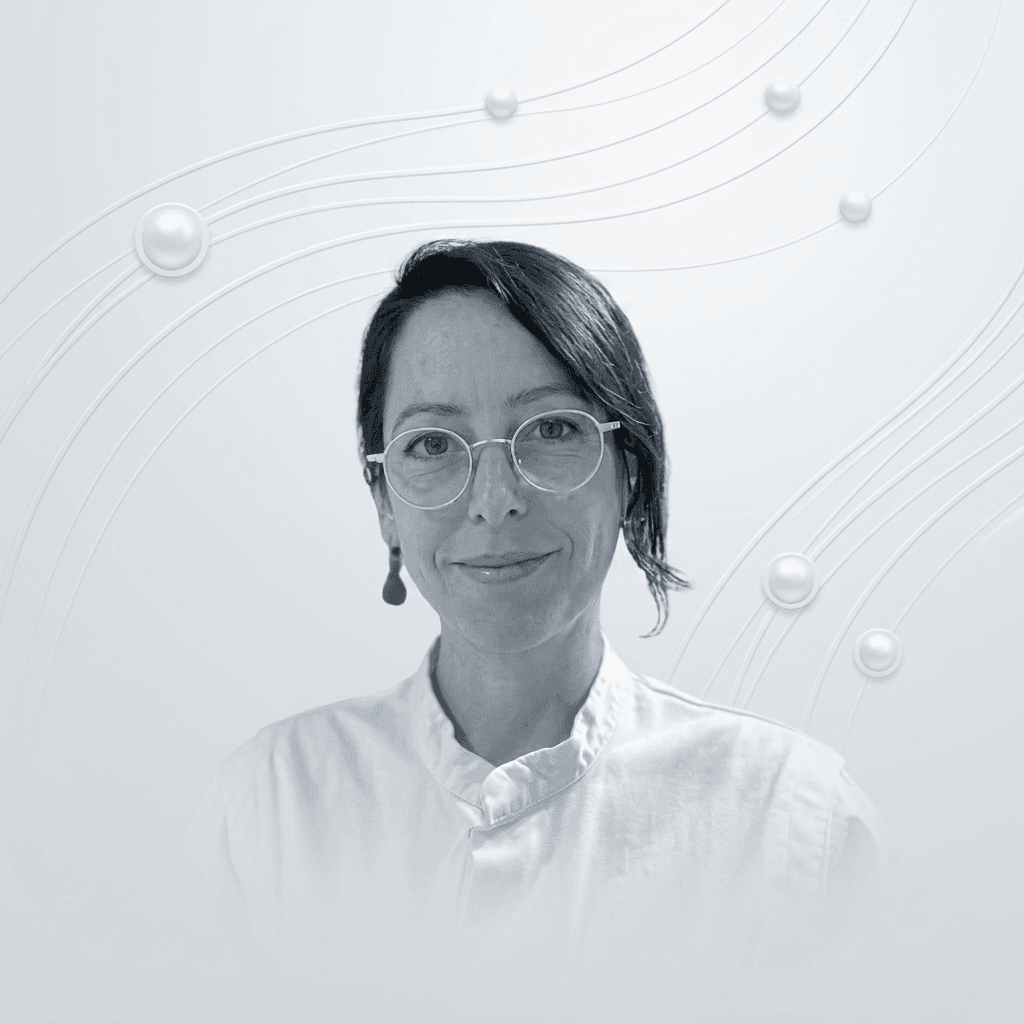
Aurore Thibaut on disorders of consciousness and vegetative state
Episode 4 15.03.2018
-
 play_arrow
PLAY EPISODE
Description arrow_drop_down

Description
What if one-third of patients diagnosed as vegetative are actually conscious but trapped in bodies that cannot respond? Consciousness researcher Aurore Thibaut explains the 30% misdiagnosis rate in disorders of consciousness and how combining brain stimulation with complexity measures may finally give clinicians a reliable window into awareness when behavior fails. Subscribe for more from the Convergent Science Network podcast series. Aurore Thibaut of the University of Liège joins Paul Verschure at the BCBT summer school to discuss the clinical challenge of assessing consciousness in patients with severe brain injuries. Even with the best behavioral scale available, the Coma Recovery Scale-Revised, the misdiagnosis rate remains around 30%, because patients may be fully conscious yet unable to demonstrate it due to aphasia, motor impairment, pain, or fluctuating vigilance. Thibault describes the clinical categories from coma through unresponsive wakefulness syndrome to minimally conscious states, and explains why detecting the first sign of consciousness matters enormously for prognosis, rehabilitation decisions, and end-of-life choices. The discussion focuses on a promising approach that combines transcranial magnetic stimulation (TMS) with high-density EEG to measure the perturbational complexity index (PCI) , a single number reflecting how complex and differentiated the brain’s response is to a controlled perturbation. So far, this measure has achieved 100% accuracy in distinguishing conscious from unconscious states at the single-patient level, and has identified chronic patients classified as vegetative who later recovered. However, Thibault emphasizes that the technique is still in the research phase: sessions take hours, stimulation sites must be adapted to each patient’s lesion pattern, and it remains unknown whether the measure can predict recovery when applied in the acute stage. The conversation also explores the distinction between internal consciousness (self-directed thought, the default mode network) and external consciousness (awareness of the environment, the lateral frontoparietal network), the surprising finding that locked-in syndrome patients report happiness levels comparable to healthy controls, and the thalamocortical model that explains why certain drugs like zolpidem can transiently restore responsiveness in some patients. Key topics include clinical misdiagnosis of consciousness, the perturbational complexity index, TMS-EEG methodology, internal versus external consciousness networks, locked-in syndrome quality of life, and translating neuroscience tools into clinical practice. Part of the Convergent Science Network podcast series from the BCBT Summer School.
Tagged as:
Clinical Complexity Index consciousness disorders of consciousness Misdiagnosis Rate Perturbational Complexity vegetative state
About the author call_made
CSN Podcasts
Both the triumphs of humanity and its most evil deeds have resulted from collaboration. In a time where humanity is required to aspire to the former and minimize the latter, the question arises of how collaboration arises and why it fails. Surprisingly, this phenomenon, so central to who we are, is not well understood. Hence, a collaborative effort is required to understand collaboration in its full biological, psychological, sociological, cultural, and economic complexity and to translate this understanding into operational impact. This series of podcasts is one step toward achieving these complementary goals. The Collaboration Podcast presents interviews with people who are central orchestrators of collaboration in various domains including business, government, science, art, health, sustainability, and the military. The discussions were conducted by Prof. Dr. Paul F.M.J. Verschure and members of the Program Advisory Committee of the Ernst Strungmann Forum on Collaboration (https://www.esforum.de/forums/ESF32_Collaboration.html) during 2021 and had the goal to sketch a map of opportunities, challenges, and obstacles in human collaboration. The forum took place in May 2022, and now we would like to share this series of interviews with a broader audience. The full report of the Forum will be published in 2023 by MIT Press. The podcast was produced by the Convergent Science Network (https://www.convergentsciencenetwork.org/). Context: The stability of social systems depends critically on realizing sustainable methods of “collaboration,” yet how and by which means collaboration is achieved is not clearly understood; neither are the conditions or processes that lead to its breakdown or failure. Collaboration can be understood as cooperation between agents toward mutually constructed goals. Part of the reason for our lack of understanding is that the phenomenon of collaboration is, by nature, a highly multidisciplinary problem, and effective research into its complexities has been difficult to achieve across the broad range of scientific and technical disciplines involved. The need for a fundamental understanding of collaboration, however, has become increasingly important. Not only does humankind demand answers as it attempts to address critical challenges at multiple scales (e.g., climate change, migration, enhanced automation, social and economic inequality), but ever-increasing technological and economic means of interconnecting people and societies are disrupting long-established, familiar patterns of how we interact. Radical technological changes that are ongoing have the potential to reshape collaboration in ways that are currently hard to predict or influence (e.g., by altering configurations in interaction, information creation, and modes of communication). On one hand, such changes could disrupt hitherto stable forms of collaboration by affecting critical communication channels and traditional roles, as can be observed in the rapidly changing patterns in governance, commerce, and social interaction. Conversely, technology could lead to the emergence of novel, successful forms of collaboration that deviate from traditional “hierarchical” architectures. Evidence of this can be seen in areas as diverse as highly automated manufacturing plants, the open science movement, collaborative software repositories, user-centered services, and the sharing of economy-based modes of organization. Without a fundamental understanding of the mechanisms, processes, and boundary conditions of collaboration, it is not possible to evaluate or predict which of these possible scenarios are sustainable or even plausible. The Forum “How Collaboration Arises and Why it Fails” (May 8–13, 2022, Location: Frankfurt am Main, Germany) Chairs: Andreas Roepstorff and Paul Verschure Program Advisory Committee: Jenna Bednar, Julia R. Lupp, Bhavani R. Rao , Andreas Roepstorff, Ferdinand von Siemens, and Paul Verschure
Episodes
play_arrow
play_arrow
play_arrow

play_arrow
Timestamp
- fast_forward00:00:03 - This is the Convergent Science Network podcast. Leading researchers in the domain
- fast_forward00:00:10 - of neuroscience, brain theory and technology are interviewed by Paul Verscher and Tony Prescott.
- fast_forward00:00:22 - So it's the Convergent Science Network podcast at our 10th anniversary BCBT summer school.
- fast_forward00:00:31 - I'm here with Aurore Thibault of the University of Liège in Belgium and University
- fast_forward00:00:36 - Hospital where she investigates consciousness.
- fast_forward00:00:40 - And in your talk this morning, you gave us a very extensive overview of the
- fast_forward00:00:47 - different approaches that people take to assess clinically the level of consciousness of patients.
- fast_forward00:00:53 - So, what are the exact problems there that you face in the clinic in assessing consciousness?
- fast_forward00:01:00 - Consciousness so um we have there are
- fast_forward00:01:03 - different uh types of problems that we can face so we
- fast_forward00:01:08 - have to understand that those patients they have really
- fast_forward00:01:11 - really severe brain injuries that we can't always
- fast_forward00:01:14 - um objective and so some
- fast_forward00:01:18 - patients they have aphasia so they can be fully conscious but
- fast_forward00:01:22 - they just don't understand when you are talking to them
- fast_forward00:01:25 - or um you they can
- fast_forward00:01:27 - have severe motor or impairment or such
- fast_forward00:01:31 - a lot of pain that also reduce the level of consciousness
- fast_forward00:01:34 - or like the way they can express consciousness so we
- fast_forward00:01:38 - have um we have to understand those patients
- fast_forward00:01:41 - we are we need ourselves to be patients so this is from the clinical point of
- fast_forward00:01:47 - view that um that it doesn't mean that if a patient when we when we ask something
- fast_forward00:01:52 - if we don't see something it's not that the patient is not able to do it or doesn't want to do it,
- fast_forward00:01:58 - but it may be because his state of vigilance is low or he's in pain or he's
- fast_forward00:02:03 - just paraplegic, such things. So this is from the...
- fast_forward00:02:09 - The clinical point of view, like from a clinician. But we also have to face
- fast_forward00:02:14 - families' expectations, for instance.
- fast_forward00:02:17 - So we need to, of course, we want to see a sign of consciousness.
- fast_forward00:02:21 - We saw earlier this morning that it's so important to detect such signs of consciousness
- fast_forward00:02:26 - because we know that it will affect the prognosis, but also it may affect end-of-life decision and.
- fast_forward00:02:33 - A rehabilitation program, the effort that will be put to bring these patients
- fast_forward00:02:40 - to a good rehabilitation program and so on.
- fast_forward00:02:42 - So it's really important to detect this first sign of consciousness.
- fast_forward00:02:46 - But on the other hand, we need to be clear and we need to be sure when we see
- fast_forward00:02:50 - something that it is true and it's something that is conscious and not just a reflex.
- fast_forward00:02:57 - So somehow it's really hard that we have this scale. And so,
- fast_forward00:03:00 - for instance, we have the auditory function and the common following.
- fast_forward00:03:04 - And the patient needs to do it like at least three times out of four.
- fast_forward00:03:08 - So I'm going to ask you, try to squeeze my hand really, really strongly.
- fast_forward00:03:13 - And if the patient does it only twice out of four, then it doesn't count.
- fast_forward00:03:17 - And sometimes also it's because that's the rule. We need to have rules and we
- fast_forward00:03:21 - need to be sure that it's not like a grasping reflex, for instance.
- fast_forward00:03:24 - So this for us it's also hard,
- fast_forward00:03:29 - but for the family it's really hard to make them understand that all the movements
- fast_forward00:03:33 - they see or sometimes they have the impression that their son they are following
- fast_forward00:03:37 - them in the room and to make them understand that this might not be a sign of
- fast_forward00:03:41 - that it's not a real visual pursuit or such thing so it's really hard sometimes to.
- fast_forward00:03:48 - To disentangle what is actually conscious and what is not.
- fast_forward00:03:54 - And us as clinicians trying to find a sign of consciousness,
- fast_forward00:03:58 - but we need to be 100% sure that it's conscious, and dealing with the families
- fast_forward00:04:02 - with all their expectations.
- fast_forward00:04:05 - So it's sometimes really challenging. So how many different levels or forms
- fast_forward00:04:11 - of consciousness do you distinguish in the clinic?
- fast_forward00:04:13 - So as disorder of consciousness itself, itself so
- fast_forward00:04:16 - far we i mean we really like to
- fast_forward00:04:19 - categorize and to subcategorize um
- fast_forward00:04:24 - so so far consciousness at
- fast_forward00:04:27 - least for patients like us has been seen
- fast_forward00:04:30 - as dichotomic so you are conscious or non-conscious
- fast_forward00:04:33 - now we think that it's maybe more like a continuum
- fast_forward00:04:36 - but now we have different um states
- fast_forward00:04:40 - so we have the patients that are in coma uh no
- fast_forward00:04:44 - eyes opening and no consciousness of their
- fast_forward00:04:47 - environment and then give you the vegetative state
- fast_forward00:04:50 - we prefer now unresponsive wakefulness syndrome for
- fast_forward00:04:53 - the patients uh recovered eyes opening but that
- fast_forward00:04:56 - doesn't mean that they are conscious it's just eye opening and
- fast_forward00:05:00 - it's not even related to sleep wake cycle um your
- fast_forward00:05:03 - physiological sleep wake cycle and then you
- fast_forward00:05:06 - have this minimally conscious state where the patients are
- fast_forward00:05:09 - minimally conscious but they are still
- fast_forward00:05:12 - not able to communicate so you can't interact functionally with them but they
- fast_forward00:05:18 - can show some sign of consciousness and in this state there are the minimally
- fast_forward00:05:24 - conscious state minus and non-reflexive movement and then when they recover
- fast_forward00:05:27 - some language abilities such as common following,
- fast_forward00:05:31 - intelligible verbalization or intentional communication.
- fast_forward00:05:35 - We say that they are in minimally conscious state, plus because they can understand.
- fast_forward00:05:40 - Us a bit. So now,
- fast_forward00:05:43 - How many patients are we talking about? How many?
- fast_forward00:05:47 - Patients. So in the general population, how many patients do you encounter?
- fast_forward00:05:54 - So luckily, it's just a really very small population.
- fast_forward00:05:58 - So for instance, it's a couple of hundreds I know in Belgium and same in the Netherlands.
- fast_forward00:06:03 - So it's really not a lot. But that's also something that's why it's so hard
- fast_forward00:06:11 - to find treatments for them because it's not a stroke or Alzheimer's.
- fast_forward00:06:15 - We have so many pharmaceutical companies that will try to sponsor your study.
- fast_forward00:06:21 - So it's really hard to get attention for such a small population of patients.
- fast_forward00:06:27 - And then what's the accuracy we have today in assessing the state of these patients?
- fast_forward00:06:34 - So, clinically, we know that if we use the GCS or the Glasgow Coma Scale,
- fast_forward00:06:40 - which is the one that is the most used in intensive care, where we really need
- fast_forward00:06:44 - to assess correctly those patients in fact,
- fast_forward00:06:46 - the rate of clinical misdiagnosis is still 30%, so it's really high.
- fast_forward00:06:51 - Then if we use a more accurate scale, such as a Coma-Virgil scale revise,
- fast_forward00:06:57 - so yeah, true, Maybe we, clinically, we will be able to correctly assess, like, we think,
- fast_forward00:07:06 - we thought before, 100% of the patients, because it is still the best clinical
- fast_forward00:07:11 - scale, the most accurate.
- fast_forward00:07:13 - But still, even though those patients are clinically unconscious,
- fast_forward00:07:19 - when we assess the patient with different types of neuroimaging tools,
- fast_forward00:07:25 - then we still see that about 30% of So one third present brain activity that
- fast_forward00:07:33 - is closer to either minimally conscious state or even higher state of consciousness.
- fast_forward00:07:38 - Okay, but then you also in your talk described a new approach,
- fast_forward00:07:43 - which was combining perturbations of the brain using TMS with different complexity
- fast_forward00:07:52 - measures to look at what the impact is of these perturbations on brain networks.
- fast_forward00:07:56 - Works, and you show to us that if you use the appropriate classifiers,
- fast_forward00:08:00 - like support vector machines, I think is what you used, that you can then rather
- fast_forward00:08:04 - accurately distinguish these different patient groups.
- fast_forward00:08:08 - So do you really see that then as a solution to this diagnostic problem you're describing?
- fast_forward00:08:16 - I think in the intensive care or like early rehabilitation units,
- fast_forward00:08:22 - it's still not a solution because I think it's not,
- fast_forward00:08:26 - it's in too early stage and it's almost impossible in this stage to implement that in clinics.
- fast_forward00:08:35 - It's really made for research centers.
- fast_forward00:08:39 - So in that like practical point of view, it's, we will not be able to do that today or tomorrow.
- fast_forward00:08:46 - But I think maybe in the near future, we are working on that on different paradigms
- fast_forward00:08:51 - or like using other stimuli rather than this TMS, this transgenic magnetic stimulation,
- fast_forward00:09:00 - and also simpler or easier to interpret or direct like an algorithm that could
- fast_forward00:09:10 - give direct feedback of the state of the patients like this PCI,
- fast_forward00:09:13 - this perturbational complexity index. If this could be done.
- fast_forward00:09:18 - If we're going to get a response like two minutes after, then yes,
- fast_forward00:09:22 - I think at this point, this could be useful, even though we are still investigating
- fast_forward00:09:29 - in that technique. And we discussed that earlier today.
- fast_forward00:09:33 - We know that we said that so far, the accuracy is 100% and that we can detect
- fast_forward00:09:41 - consciousness at the single patient's level,
- fast_forward00:09:43 - which is already a huge step as compared to other techniques such as MRI and PET scan.
- fast_forward00:09:49 - However, that doesn't mean we still need to understand that if a patient is
- fast_forward00:09:55 - diagnosed as being in a vegetative state because of the index,
- fast_forward00:09:59 - That doesn't mean that for sure he will never recover because we did that with
- fast_forward00:10:04 - like subacutocronic patients.
- fast_forward00:10:06 - And then there were like two years post-injury and then they in vegetative state
- fast_forward00:10:10 - or unresponsive bifurcated syndrome.
- fast_forward00:10:12 - And then we did this TMS EEG and we saw that they were above this threshold.
- fast_forward00:10:17 - And then, okay, and one year forward, indeed, they recovered.
- fast_forward00:10:21 - That's great. But we now have to do that like at different time points.
- fast_forward00:10:25 - At one week post-injury, at one month post-injury, and so on.
- fast_forward00:10:30 - And just to have a better understanding of when can it predict the recovery.
- fast_forward00:10:34 - If it's only for chronic patients, or it can be also for acute or subacute.
- fast_forward00:10:39 - And this still we don't know. So we still have to investigate in that sense a lot.
- fast_forward00:10:45 - So if you look at this classification, you've also distinct threshold values, right?
- fast_forward00:10:50 - Where you say, well, we lower this threshold of complexity in the response.
- fast_forward00:10:54 - It's a vegetative state.
- fast_forward00:10:55 - If it's above that threshold, it's minimally conscious.
- fast_forward00:10:59 - And then there's a next threshold after which you might say,
- fast_forward00:11:02 - well, this patient is actually normal, probably asleep or recovered.
- fast_forward00:11:07 - So, but now if you talk about life and death decisions, right?
- fast_forward00:11:13 - Do you really see this measure that there is going to be a threshold value where
- fast_forward00:11:17 - you're going to say, well, below this threshold, we can switch off the machines?
- fast_forward00:11:24 - At this point, we can't do that. Sure. We can't because, as I said, we don't know when.
- fast_forward00:11:32 - I mean, we did that again with chronic patients, and then they recovered.
- fast_forward00:11:35 - But now in the acute stage, we can't use that threshold because we know that
- fast_forward00:11:39 - the brain, maybe at that time, we were sure that the patient were in unresponsive
- fast_forward00:11:43 - wakefulness syndrome, but that doesn't mean that, I mean, this patient that
- fast_forward00:11:46 - had the injury three days before,
- fast_forward00:11:49 - that maybe two days later is going to recover.
- fast_forward00:11:51 - That we don't know. So today, we really can't use that.
- fast_forward00:11:54 - Technique but do you think it will go in that direction
- fast_forward00:11:57 - would you recommend it i think
- fast_forward00:12:01 - we need to to do studies to yeah to do
- fast_forward00:12:04 - like um tds sorry tms eg in the intensive care like very early as we do the
- fast_forward00:12:11 - n20 the somatic sensory potential just to and so far this is the only technique
- fast_forward00:12:18 - and only diagnostic too that we can use to make like and with like a very high,
- fast_forward00:12:24 - sensitivity rate to make sure the patient is the chance of recovery are like
- fast_forward00:12:29 - minimal and so and we know that this kind of like.
- fast_forward00:12:36 - Treatment withdrawal are done based on this NGT test but that's the only one
- fast_forward00:12:41 - so if one day TMS-CG is gonna be used for that maybe but but I'm not sure.
- fast_forward00:12:48 - I think it's going to be a good predictor of recovery, but I'm not sure if we're
- fast_forward00:12:52 - going to be able to use it as early as the intensive care.
- fast_forward00:12:56 - Okay. So then, but how objective is the method really?
- fast_forward00:13:02 - Because, so you depend now on the TMS, that means you have to stimulate at a
- fast_forward00:13:07 - certain location with a certain intensity and a certain duration.
- fast_forward00:13:10 - You have to measure at other locations, But now, dependent on the lesions that
- fast_forward00:13:15 - patients have, you might have to induce variability because an area where you
- fast_forward00:13:19 - stimulated one patient, that area isn't there anymore in the other patient.
- fast_forward00:13:22 - So how do you assure that the method stays objective?
- fast_forward00:13:27 - So far, I think that there are really a few patients where we couldn't do it.
- fast_forward00:13:32 - That was impossible to apply to tests because we have different stimulating areas.
- fast_forward00:13:39 - Area and so so far we're always able
- fast_forward00:13:41 - to to to find one that where we could like we were
- fast_forward00:13:44 - sure of what we were recording was true um but
- fast_forward00:13:48 - that's true we have to adapt to the patients uh also something that is really
- fast_forward00:13:52 - important that like now it takes hours to do it so that means that we can't
- fast_forward00:13:59 - in the if we take the example of the intensive care we can't uh apply this tms for
- fast_forward00:14:06 - two hours, it's impossible. It's like practically impossible.
- fast_forward00:14:10 - So there are like many, many limitations that are... That's why it's still in the research process.
- fast_forward00:14:16 - It's not going to be tomorrow that we are going to use it in clinic. But...
- fast_forward00:14:22 - But yeah, there are a lot of limitations that we need to surpass and to see
- fast_forward00:14:26 - how accurate it can be, where we have to place the stimulation,
- fast_forward00:14:32 - depending on the patient's brain lesion.
- fast_forward00:14:34 - Or if we can, a solution, and this is what we are going to do soon,
- fast_forward00:14:39 - is to test other types of stimulation.
- fast_forward00:14:43 - Like, for instance, maybe we can use sounds, which is way less invasive than TMS.
- fast_forward00:14:52 - But as you said, like TMS, the problem is if we are stimulating a brain vision
- fast_forward00:14:57 - that is dead, we don't watch if the patient is dead. So we are always going to face limitations.
- fast_forward00:15:02 - But I think the thing is we need to see what could be used in most of the patients
- fast_forward00:15:10 - and what can be easily implemented into clinics.
- fast_forward00:15:13 - Because research is beautiful, it's really exciting, but at
- fast_forward00:15:16 - the end the aim is to be able to use that technique
- fast_forward00:15:19 - to have like a proper diagnostic so for
- fast_forward00:15:22 - example in yes we are really lucky so we can see the patients for a week and
- fast_forward00:15:28 - then we have we can do tms eeg we can do fmri we can do pet scan we can do high
- fast_forward00:15:32 - density eegs and then with all those tests and like many many clinical assessments
- fast_forward00:15:37 - and we can pose a diagnostic and even though we're not like 100% sure,
- fast_forward00:15:41 - but if it's only high density, she showed some sign of consciousness.
- fast_forward00:15:45 - So it's always a long discussion, but even with all those techniques that are
- fast_forward00:15:50 - amazing, and I'm not sure how many centers can provide that,
- fast_forward00:15:54 - we're still not 100% sure sometimes.
- fast_forward00:15:58 - We receive some dose and then we follow the patient and you can see,
- fast_forward00:16:01 - oh yes, this patient recovers something.
- fast_forward00:16:02 - Thing and so yeah it's
- fast_forward00:16:06 - still a discussion but we need to make neuroimaging tools
- fast_forward00:16:10 - available and that can
- fast_forward00:16:13 - be used in in clinics so that's why i think
- fast_forward00:16:16 - that eeg is a really good options we can find like
- fast_forward00:16:19 - a bit entropy like it's like just three electrodes and we can already do good
- fast_forward00:16:23 - measurements but we also need to find the algorithm behind just to make them
- fast_forward00:16:29 - like to so they can analyze the data like real time and so can give a feedback,
- fast_forward00:16:36 - like a real-time feedback.
- fast_forward00:16:37 - So we talked about the communication in the fMRI and then, but what...
- fast_forward00:16:44 - I mean, it's amazing to know that 30% of the patients are actually conscious,
- fast_forward00:16:48 - even though they can't show that to us and to their family.
- fast_forward00:16:53 - But we can't bring the patients to the fMRI every time we want to ask them a question, right?
- fast_forward00:16:59 - Right. But then, so, again, I want to have, of course, the clinical objectives
- fast_forward00:17:04 - of these measures, which are really very important and relevant.
- fast_forward00:17:07 - But on the other hand, studying these patients has also helped us to understand
- fast_forward00:17:12 - consciousness. And this is also one reason why this whole research field is
- fast_forward00:17:17 - driving itself forward.
- fast_forward00:17:20 - In your presentation, you made an important distinction there between what you
- fast_forward00:17:25 - called an internal consciousness and an external consciousness that you felt,
- fast_forward00:17:28 - at least in these patient groups you look at, is always popping out as an important
- fast_forward00:17:33 - distinguishing feature.
- fast_forward00:17:34 - So what do you mean exactly with internal and external consciousness?
- fast_forward00:17:38 - Consciousness oh so um so the internal consciousness is the consciousness of
- fast_forward00:17:44 - yourself so what we call also like the little voice okay so when you are like oh for instance you you,
- fast_forward00:17:51 - hurt yourself and you're in pain and then you focus on yourself so this is like
- fast_forward00:17:55 - really or when you your internal thoughts that's the internal consciousness
- fast_forward00:17:59 - and then external consciousness gonna be the consciousness of your environment
- fast_forward00:18:03 - so if you are listening to someone talking This is the external consciousness.
- fast_forward00:18:08 - And they are anti-correlated. That doesn't mean that if one is up, the other one is zero.
- fast_forward00:18:12 - But that's usually if you're like fully concentrated on yourself,
- fast_forward00:18:18 - you will be less aware of what is happening around you.
- fast_forward00:18:20 - And this has been shown many times and the contrary as well.
- fast_forward00:18:24 - And so we did a study where we compared those two kinds of consciousness.
- fast_forward00:18:30 - So more internal related issues.
- fast_forward00:18:36 - Thought and then more external related thought and then
- fast_forward00:18:39 - we compared the the network that were activated for
- fast_forward00:18:42 - one and the other and so we saw that we had
- fast_forward00:18:44 - like the external consciousness network which is the lateral
- fast_forward00:18:47 - frontal parietal cortices and then the
- fast_forward00:18:50 - internal one uh which is more like the mesofrontal cortex anterior singular
- fast_forward00:18:55 - cortex and then precuneus and and um posterior singular cortex so one is external
- fast_forward00:19:02 - for the external consciousness network and one is more internal for the internal
- fast_forward00:19:07 - consciousness network.
- fast_forward00:19:08 - And normally they should be anti-correlated.
- fast_forward00:19:11 - So when one is activated, the other one is not.
- fast_forward00:19:14 - So the internal consciousness system, you would then equate with a more metacognitive
- fast_forward00:19:19 - self-reflective state.
- fast_forward00:19:21 - It's not necessarily experience of hunger or of a state of the body.
- fast_forward00:19:26 - It's really more a metacognitive self-reflective state.
- fast_forward00:19:29 - Yeah. This is how we do it. But maybe we do it like, you know,
- fast_forward00:19:32 - more simplistic way of the way we categorize consciousness between two components,
- fast_forward00:19:40 - awareness, wakefulness, but yes.
- fast_forward00:19:43 - But then do you envision that also as, let's say, two subsystems of consciousness that sort of.
- fast_forward00:19:51 - Exclusively are active it's either one or
- fast_forward00:19:54 - the other no it's not exclusive okay it's not exclusive
- fast_forward00:19:57 - i mean i i'm not saying that again if you are listening
- fast_forward00:20:00 - to me right now you are not you're not
- fast_forward00:20:03 - conscious of yourself at all it's like but when one is highly activated then
- fast_forward00:20:09 - the other one is less activated so they are in a competitive relation is that
- fast_forward00:20:13 - what you would say are they competing i'm not i'm not sure i would say that
- fast_forward00:20:17 - they are competing but at least for instance what But with a new study,
- fast_forward00:20:22 - there we were focusing on the default mode network.
- fast_forward00:20:25 - And so we know that within the network, the area needs to be highly connected.
- fast_forward00:20:35 - But then we found out that in patients with disorder of consciousness,
- fast_forward00:20:38 - we also have hyper-connectivity, which is pathologic.
- fast_forward00:20:43 - So, for instance, in LC control, when the default mode network is highly connected,
- fast_forward00:20:50 - then there is no connection with other brain regions.
- fast_forward00:20:54 - While in patients, you have this hyper-connectivity, meaning that concurrently, at the same time.
- fast_forward00:21:03 - The areas that should be connected in the default mode network,
- fast_forward00:21:07 - then other areas are also activated.
- fast_forward00:21:11 - And this is like the pathological hyper-connectivity only seen in patients with
- fast_forward00:21:15 - disorder of consciousness. But in this case, connectivity would mean some correlation
- fast_forward00:21:18 - structure in the data that you measure from the brain, either EEG or fMRI. So here's an fMRI.
- fast_forward00:21:25 - So it's a rather slow signal, and it's related to, let's say,
- fast_forward00:21:29 - correlations among the different measurement points.
- fast_forward00:21:33 - But now, would that mean that some correlations go up that connect these subsystems?
- fast_forward00:21:40 - Or are the intrinsic correlations within the subsystems going down,
- fast_forward00:21:44 - so you are revealing the inter-subsystem correlation? Can you distinguish these two explanations?
- fast_forward00:21:55 - Those are really good questions, but do you mean like, I would say that depending
- fast_forward00:22:03 - on the state of your mind,
- fast_forward00:22:08 - then one system will be first activated,
- fast_forward00:22:11 - and then the other one will be less.
- fast_forward00:22:14 - From a pure, let's say, fMRI perspective, what I'm measuring is correlations
- fast_forward00:22:19 - among my voxels, right? And you could say for the control condition,
- fast_forward00:22:24 - I see a certain correlation within these two subsystems, and I don't see it between.
- fast_forward00:22:30 - But now you could argue that underlying that is some causal structure,
- fast_forward00:22:34 - and that maintains this intra-module correlation.
- fast_forward00:22:40 - And as a result, you don't see any inter-module correlation.
- fast_forward00:22:43 - But now in the coma patient, it's this intra-module correlation that you might
- fast_forward00:22:48 - lose. And as a result, you are unmasking this relationship between the two modules.
- fast_forward00:22:55 - So is it really indicative of anything that is specific to these states of consciousness?
- fast_forward00:23:01 - Or is it just like an artifact of, let's say, losing internal coupling within systems?
- fast_forward00:23:06 - So that's a bit the question I'm after. Can we distinguish that?
- fast_forward00:23:10 - I think that in the state that we are now, we are not able to do that as specific.
- fast_forward00:23:17 - Fake but yeah I think it's more like in coma patients then it's going to be
- fast_forward00:23:24 - this more like anarchic activity and as like so many.
- fast_forward00:23:34 - Brain regions are damaged then it can be
- fast_forward00:23:37 - possible that one of them is
- fast_forward00:23:39 - trying to to reactivate it instead of the other one and
- fast_forward00:23:42 - then it just creates some kind of arnotchic uh connectivity that is like in
- fast_forward00:23:47 - fact more that creates more damage that or at least yeah functional damage that
- fast_forward00:23:52 - it if it yeah so more like an arnotchic right so now then um what you also then
- fast_forward00:23:59 - discussed in in that context,
- fast_forward00:24:01 - was the subjective experience in that sense of these patients.
- fast_forward00:24:05 - And in particular, you talked about locked-in syndrome patients where you looked
- fast_forward00:24:10 - at their reported state of, let's say, satisfaction with life or happiness.
- fast_forward00:24:14 - And you had this surprising result that actually they showed levels of satisfaction
- fast_forward00:24:20 - or happiness with life that was comparable to healthy controls,
- fast_forward00:24:24 - which, of course, to us sounds very counterintuitive because their bandwidth
- fast_forward00:24:29 - of communication with the world is severely reduced.
- fast_forward00:24:33 - So how do you interpret that result?
- fast_forward00:24:35 - Do you really think it is an accurate reflection of their state of being?
- fast_forward00:24:41 - Or is there some, let's say, recalibration also for them of what happiness means?
- fast_forward00:24:48 - I think the two propositions are correct.
- fast_forward00:24:52 - So first, it needs to be said, and it was acknowledged in the paper, that,
- fast_forward00:24:59 - We send the questionnaires to thousands of patients and only a small proportion replied.
- fast_forward00:25:06 - So it's possible that we got the reply from people that are actually not that
- fast_forward00:25:11 - depressed. That's a possibility.
- fast_forward00:25:13 - So maybe this really interesting result where we see that the patients in Lactin
- fast_forward00:25:21 - syndrome on average are not unhappy, but they looked as happy as LC controls.
- fast_forward00:25:30 - I mean, on average, again, I mean, not at a single subject level,
- fast_forward00:25:34 - but so that's a possibility.
- fast_forward00:25:37 - And then that's true to that those patients,
- fast_forward00:25:41 - they can find the happiness in other things that we first is almost impossible
- fast_forward00:25:48 - to conceive because we are not in, I mean, the way they are.
- fast_forward00:25:52 - I met a lot of locked-in patients, and they are going on vacation.
- fast_forward00:25:58 - That's why it's like, oh, how can they go on vacation? But they do,
- fast_forward00:26:01 - and they go like twice, three times a year.
- fast_forward00:26:04 - And they still have like a really good relationship with their family.
- fast_forward00:26:08 - But one thing that we found out in that study and other follow-up studies is
- fast_forward00:26:15 - that the more a patient is able to interact with the environment,
- fast_forward00:26:18 - the happier he is, which makes sense. So that means that that's true.
- fast_forward00:26:22 - Interaction with your environment is an important factor for someone to be happy.
- fast_forward00:26:29 - So I don't know.
- fast_forward00:26:31 - It would be so interesting, for instance, that we had those patients that are
- fast_forward00:26:35 - in complete locked-in syndrome when even they can't move their eyes.
- fast_forward00:26:39 - So the only way, I mean, we had a case of patients like that.
- fast_forward00:26:43 - So it was impossible to know that the patient was conscious without neuroimaging.
- fast_forward00:26:50 - It was impossible, but we did this, that she was conscious thanks to the PET scan.
- fast_forward00:26:57 - And we thought, oh my God, the PET scan looks like you and me.
- fast_forward00:27:01 - I mean, it was impressive.
- fast_forward00:27:02 - And then we did other tests and they all said, okay, yes, indeed,
- fast_forward00:27:07 - it looks like she's really, she's conscious.
- fast_forward00:27:10 - But still, it was, she couldn't communicate like how we are used to see in Lactin
- fast_forward00:27:17 - syndrome with the eyes no movement at all nothing and so yeah can we say that
- fast_forward00:27:24 - this patient might be happy in a way.
- fast_forward00:27:29 - I have no idea, but this is a question that could be asked.
- fast_forward00:27:32 - But now with these patients, they also showed
- fast_forward00:27:35 - us that there are methods that use fMRI recordings with mental imagery to help
- fast_forward00:27:44 - people to at least give yes or no answers by imagining that they are behaving
- fast_forward00:27:49 - in some context or navigating some environment, right?
- fast_forward00:27:52 - Do you think this would be a useful interface for all these patients,
- fast_forward00:27:58 - or do you think it's too cumbersome and it's not going to work yet?
- fast_forward00:28:01 - I think the EEG one is going to maybe be easier to apply in clinics again.
- fast_forward00:28:08 - But also the thing with all those motor imagery is that we have a really high rate of false negative.
- fast_forward00:28:17 - So many patients in minimally conscious state that are clinically answering
- fast_forward00:28:22 - to comments, they can't perform the task.
- fast_forward00:28:25 - And also 75 to 80% of the LC control, they can't do it.
- fast_forward00:28:30 - So we also need to find a way to make sure like an easy way and in a way like
- fast_forward00:28:35 - a task, a motor test can be, I mean, done by almost everyone.
- fast_forward00:28:40 - And how are you going to deal with the variability of the neural response across all these patients?
- fast_forward00:28:44 - Yeah, repeated assessments, I guess. Mm-hmm. Okay. I mean, there is no other solutions.
- fast_forward00:28:51 - There's a really nice study that was published really recently in Archaeophysiology, and,
- fast_forward00:28:56 - we have to do at least five clinical assessments, so if we take these five clinical
- fast_forward00:29:02 - assessments, maybe that we need to do five FMRI or five EEGs,
- fast_forward00:29:07 - and yeah, it's kind of burdensome, but.
- fast_forward00:29:11 - They're fluctuating so we have no other options we have to
- fast_forward00:29:14 - could you imagine that that in those patients we we
- fast_forward00:29:16 - start to implant devices an e-cock or something to measure uh states of the
- fast_forward00:29:23 - brain to actually help communication would you see that as a way forward yeah
- fast_forward00:29:27 - i think we we i mean not us but other laptop doing it already with locked in
- fast_forward00:29:31 - patients so yeah this is something that may be
- fast_forward00:29:34 - useful and and and maybe you're sorry to find like
- fast_forward00:29:37 - perfect time to to to say
- fast_forward00:29:40 - okay this is the moment when we have to do something with the subject right
- fast_forward00:29:44 - so now in your talk you also showed us a
- fast_forward00:29:47 - possible let's say mechanical interpretation of states of consciousness that's
- fast_forward00:29:53 - focused very much on the thermocortical system going back to to nick schiff
- fast_forward00:29:57 - and and others way to look at It's basically the modulation of the thalamo-cortical
- fast_forward00:30:03 - system that will define these states of consciousness.
- fast_forward00:30:07 - And in that specific model, you also look at additional subcortical loops over
- fast_forward00:30:11 - the basal ganglia and so on, right?
- fast_forward00:30:12 - And it's a bit a sort of model you might also apply to Parkinsonism or so on, right?
- fast_forward00:30:17 - So it's really whether you are switching the thalamus in pathological states
- fast_forward00:30:21 - of low frequency bursting. thing.
- fast_forward00:30:25 - Do you feel that that model is sufficient to understand these patients you look
- fast_forward00:30:30 - at or is it more like really a very first approximation of what we need and what is missing?
- fast_forward00:30:36 - So yeah I think so far it's been a really nice model that can explain.
- fast_forward00:30:45 - Why some treatments work and why others don't.
- fast_forward00:30:48 - The most impressive one is the Zalpidem, of course, but so far it fits.
- fast_forward00:30:53 - And for instance, with TDCS, we have tried TDCS in different cortical areas
- fast_forward00:30:59 - and the prefrontal one is the one that works the best.
- fast_forward00:31:03 - So we were, okay, yeah, it makes totally sense. But true,
- fast_forward00:31:07 - I think it's still like an hypothesis
- fast_forward00:31:10 - processes and and but it's a nice
- fast_forward00:31:13 - direction if we need to to try new treatments to
- fast_forward00:31:16 - to at least have a rationale behind what we
- fast_forward00:31:19 - do and and that could be yeah some of some health if we want to target some
- fast_forward00:31:25 - specific brain regions right which is the model does not really account or include
- fast_forward00:31:31 - the role of neuromodulators for instance right it doesn't explicitly take it
- fast_forward00:31:35 - into account right i I think it doesn't take into account everything.
- fast_forward00:31:38 - It's really specific to... It was like... I mean, the model existed before,
- fast_forward00:31:44 - but it was used for disorder of consciousness due to zolpidem because it was
- fast_forward00:31:48 - really specific to this drug.
- fast_forward00:31:51 - And I think that this might be really useful to explain,
- fast_forward00:31:57 - again, some treatments, but maybe only in anoxic patients because maybe the
- fast_forward00:32:02 - stratum is not injured at all in some traumatic patient. and then why TDCS is working.
- fast_forward00:32:07 - So no, of course, I think it doesn't fit everything, but...
- fast_forward00:32:12 - It works well, and maybe it works for very, very specific patients,
- fast_forward00:32:16 - and then we can fully use it to try to treat them and improve their recovery.
- fast_forward00:32:21 - But, yeah, we still need to understand that better.
- fast_forward00:32:24 - Okay. So, look, you finished your PhD in Liège with Steve Lorais,
- fast_forward00:32:30 - and now you did your postdoc in Boston,
- fast_forward00:32:34 - and now you're moving back to Liège to sort of build your career as a young
- fast_forward00:32:40 - and upcoming scientist.
- fast_forward00:32:43 - But now in your experience in this field, not as a clinician,
- fast_forward00:32:46 - what would be Aurora's law to study consciousness and the mind?
- fast_forward00:32:54 - I think I would like to believe that the unresponsive wakefulness syndrome does
- fast_forward00:33:01 - not exist and we don't have the tool yet to detect consciousness in every patient.
- fast_forward00:33:06 - Patients uh we have seen patients that were inanimate positive
- fast_forward00:33:10 - boyfriend syndrome for years and then one day they
- fast_forward00:33:13 - recovered uh like three years later they could they were able to to talk even
- fast_forward00:33:18 - though they because of severe spasticity and motor impairment they will never
- fast_forward00:33:22 - be able to walk again or be like independent but still so this yeah i think
- fast_forward00:33:27 - i would like to to to believe that
- fast_forward00:33:31 - this is a possibility and to try to find a way so we will be able to find this
- fast_forward00:33:39 - consciousness even in patients that are clinically unresponsive.
- fast_forward00:33:45 - So keep hope. Always keep hope. So five years from now, I'm going to come visit
- fast_forward00:33:51 - you in Liège, whether you like it or not.
- fast_forward00:33:55 - And I'm going to check then whether a prediction you're going to make today
- fast_forward00:33:59 - was falsified or verified.
- fast_forward00:34:02 - So what's the one prediction that you would like to see really tested in this
- fast_forward00:34:07 - five-year framework or time frame?
- fast_forward00:34:12 - So I'm going to be really clinical again, but I think that a lot of treatment
- fast_forward00:34:19 - options are available, but we can't use them.
- fast_forward00:34:22 - And I would like to stimulate the translation of such treatment.
- fast_forward00:34:28 - One of them is the TDCS. For me, it's an amazing tool, and that's why I did
- fast_forward00:34:32 - my PhD at the Neuromodulation Lab with Felipe Fregni.
- fast_forward00:34:36 - I think it is so hard to translate that to clinics, And I mentioned before that
- fast_forward00:34:40 - it was really hard to get attention for these very small populations of patients.
- fast_forward00:34:46 - So my hope is that we can have clinical trials and have this translation to
- fast_forward00:34:54 - clinics and use all the treatments we have.
- fast_forward00:34:59 - We have so many things that we can use for such patients that will increase
- fast_forward00:35:03 - either the comfort or the recovery for sure. and this is something that I will
- fast_forward00:35:07 - always work for. So, my hope.
- fast_forward00:35:10 - All right. All right, Thibault. Thank you very much for this conversation.
- fast_forward00:35:13 - Thank you so much for inviting me.
- fast_forward00:35:15 - Music.
- fast_forward00:35:20 - The CSN Podcast was produced by the Convergent Science Network of Biometrics
- fast_forward00:35:26 - and Biohybrid Systems, a project funded by the European 7th Research Framework Program.
- fast_forward00:35:34 - For more interviews, recorded lectures, or upcoming conferences in the field
- fast_forward00:35:39 - of biometrics and biohybrid systems, go to csnnetwork.eu.
- fast_forward00:35:46 - Music.
- fast_forward00:35:46 - And thank you for listening.
Tags
Brain brain evolution Cerebellar cerebellum collaboration consciousness Cortex Cortical decision making disorders of consciousness Framework grid cells Memory mirror neurons Motor motor cortex neocortex Neural Neurons place cells Populations prediction prefrontal cortex Robots scientific collaboration Spatial

Exploring the convergence of neuroscience, robotics, and AI through conversations with leading researchers since 2010.
A project of the Convergent Science Network Foundation.
Follow us on
© CSN Podcasts. Developed by IMCreative & WEBC
Be the first to leave a comment